

×

Laos🇱🇦 | hikesGibbon Experience
canopy zip-lines, treehouse stays, wildlife habitat | things to do and best time to go

Explore Tad Fane Waterfall TrekExplore Phou Louey Trek

Backpacking in Gibbon Experience
🏆 Top pickhike ranked #1
By Johan Kruseman 🇳🇱 | last update: 21 April, 2026

Your harness bites into your hips as you step off the wooden platform and let gravity grab you; jungle air slams your face, the cable sings, and for ten wild seconds it’s just green, wind, and the hollow thump of your heart. This is the Gibbon Experience, deep in the Bokeo Nature Reserve in northwest Laos, near the Thai border. The “hike” is really a rolling combo of steep, sweaty jungle ascents and zipline traverses between treehouses, with leeches in wet season, slick clay underfoot, and humidity that soaks your shirt before breakfast. The payoff is sunrise above the canopy, distant gibbon calls, and treehouse coffee with your legs dangling over a hundred meters of air. It’s harder and more immersive than the gentler treks around Luang Namtha or Nong Khiaw, and getting there means a long, bumpy ride from Huay Xai, but public buses and slow boats make that jump doable.

Discover everything you want to know in the 📖 Laos Travel Guide.
Best time to go: November - March
Duration: 2 days
Distance: 20 kilometers
Total ascent: 1,200 meters
Loading the map 🌍
CLICK TO FILTER
city
town
village
unique site
national park
hike
beach
attraction
festival
region
SHOW COUNTRY‘S BESTSHOW ALL

✨ Why go?
Ranked #1 hike in Laos
What sets this place apart

The Gibbon Experience in Laos is a magnet for backpackers craving adventure. Picture this: you’re trekking through dense jungle, the air thick with humidity, and the sounds of wildlife echoing around you. The scenery-to-effort ratio here is unbeatable. You’ll sweat it out on the trails, but every step brings you closer to breathtaking views of cascading waterfalls and lush canopies.

Getting there is a breeze. Public transport options whisk you from Luang Prabang to the trailhead without breaking the bank. The low cost of the experience means you can splurge on a cold beer afterward without guilt.

What’s more, the hike offers flexible distances. Whether you’re a seasoned trekker or a casual wanderer, you can tailor your journey to fit your pace. You’ll find yourself zipping through the treetops … read more 👉
The Gibbon Experience in Laos is a magnet for backpackers craving adventure. Picture this: you’re trekking through dense jungle, the air thick with humidity, and the sounds of wildlife echoing around you. The scenery-to-effort ratio here is unbeatable. You’ll sweat it out on the trails, but every step brings you closer to breathtaking views of cascading waterfalls and lush canopies.

Getting there is a breeze. Public transport options whisk you from Luang Prabang to the trailhead without breaking the bank. The low cost of the experience means you can splurge on a cold beer afterward without guilt.

What’s more, the hike offers flexible distances. Whether you’re a seasoned trekker or a casual wanderer, you can tailor your journey to fit your pace. You’ll find yourself zipping through the treetops on zip lines, feeling the rush of wind as you soar above the jungle floor.

The Gibbon Experience fits seamlessly into a longer backpacking route, making it a perfect pit stop. The effort you put in pays off when you finally catch sight of the gibbons swinging through the trees, a reminder that the journey is just as rewarding as the destination.
Get the complete Travel Guide for Laos
Everything organized for offline planning — routes, highlights, costs & tips

See what’s inside 👉

Get the Travel Guide -
  1. Sleeping in the treehouses — You actually spend the night up in wooden treehouses 20-30 metres above the forest floor, which means waking to mist, birdsong and often gibbon calls before anyone’s cooked breakfast. It’s basic but magical: being literally inside the canopy is the big reason people come.
  2. Canopy zip-line network — The trail isn’t just a walk; it’s a series of long zips that connect platforms through the treetops. Flying between giant trees gives a perspective you don’t get on most hikes — full-speed, treetop views and the proper adrenaline hit between trekking sections.
  3. Dawn gibbon chorus and tracking — The reserve’s biggest draw: hearing (and sometimes seeing) endangered gibbons calling at first light. Guided tracking sessions, radio monitoring and call playback give you one
  4. read more 👉
  1. Sleeping in the treehouses — You actually spend the night up in wooden treehouses 20-30 metres above the forest floor, which means waking to mist, birdsong and often gibbon calls before anyone’s cooked breakfast. It’s basic but magical: being literally inside the canopy is the big reason people come.
  2. Canopy zip-line network — The trail isn’t just a walk; it’s a series of long zips that connect platforms through the treetops. Flying between giant trees gives a perspective you don’t get on most hikes — full-speed, treetop views and the proper adrenaline hit between trekking sections.
  3. Dawn gibbon chorus and tracking — The reserve’s biggest draw: hearing (and sometimes seeing) endangered gibbons calling at first light. Guided tracking sessions, radio monitoring and call playback give you one of the best chances in Laos to experience these rare primates in their natural habitat.
  4. Remote ridge viewpoints — Expect long ridge walks that open onto wide panoramas of forested valleys and jagged karst silhouettes. Sunsets and sunrises from these high points feel big and empty — the kind of vistas that remind you you’re deep inside protected wilderness.
  5. Community camps and conservation culture — The route threads ranger camps and village-run posts, so the hike doubles as a hands-on conservation visit. You’ll meet local guides, learn about anti-poaching and reforestation efforts, and see how ecotourism directly supports the people protecting the forest.
Spotted a mistake or missing something? Contact me.

🌤️ When to go?Best time to hike the Gibbon Experience


  • Weather: The dry season from November to February is prime time. Expect crisp air and minimal rain, perfect for trekking through dense jungle without slipping on mud. The wet season (May to October) turns trails into slippery challenges and floods some river crossings.

  • Temperature: Daytime temps hover around 20-25°C (68-77°F) in the dry season, cool enough to keep you moving without overheating. Nights can dip to 10°C (50°F), so pack layers. The wet season heats up to 28-32°C (82-90°F), making the humidity a real sweat-fest.

  • Daylight Hours: Around 11-12 hours of daylight during the dry season gives you ample time to push through long days on the trail. The wet season sees slightly shorter days, but the real limiter is the rain, which can cut your daylight hours in half.

  • Crowds: The
  • read more 👉

  • Weather: The dry season from November to February is prime time. Expect crisp air and minimal rain, perfect for trekking through dense jungle without slipping on mud. The wet season (May to October) turns trails into slippery challenges and floods some river crossings.

  • Temperature: Daytime temps hover around 20-25°C (68-77°F) in the dry season, cool enough to keep you moving without overheating. Nights can dip to 10°C (50°F), so pack layers. The wet season heats up to 28-32°C (82-90°F), making the humidity a real sweat-fest.

  • Daylight Hours: Around 11-12 hours of daylight during the dry season gives you ample time to push through long days on the trail. The wet season sees slightly shorter days, but the real limiter is the rain, which can cut your daylight hours in half.

  • Crowds: The dry season draws more trekkers, especially December and January, so expect a livelier vibe but book early. The wet season is quieter, offering solitude but at the cost of tougher conditions and fewer services.

  • Seasonal Activities: Dry season aligns with local festivals and wildlife spotting, adding cultural and natural highlights to your trek. The wet season’s lush greenery is a visual feast but comes with the risk of leeches and swollen rivers.

  • Price Fluctuations: Peak season (dry months) sees higher prices for permits and accommodations. Off-season drops rates significantly but be ready to trade comfort for cost savings.


Pro-tip: Aim for late November or early February—dry trails, manageable crowds, and cooler temps combine for a gritty, rewarding trek that feels earned every step of the way.


source: climatestotravel.comJANJanuary: excellent for travelingFEBFebruary: highly recommended for travelingMARMarch: good for travelingAPRApril: fair for travelingMAYMay: fair for travelingJUNJune: fair for travelingJULJuly: fair for travelingAUGAugust: fair for travelingSEPSeptember: fair for travelingOCTOctober: fair for travelingNOVNovember: excellent for travelingDECDecember: excellent for traveling
laos-hike-gibbon-experience
© Google |

✈️ The ultimate backpacker shortcutLaos Travel Guide

Skip weeks of research and hit the road with confidence. Get 256 pages of proven routes, transport advice, and real safety insights—built for your phone and 100% offline-ready.
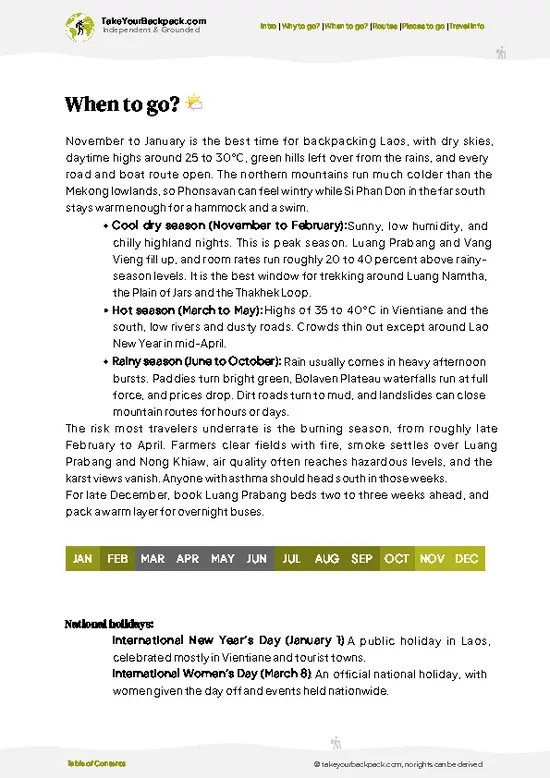
example page 0 from our offline Travel Guide for Laosexample page 1 from our offline Travel Guide for Laosexample page 2 from our offline Travel Guide for Laosexample page 3 from our offline Travel Guide for Laosexample page 4 from our offline Travel Guide for Laos
🎒 Your 256-page offline travel companion
5, 10 & 15-day routes paced for real travel
80 ranked highlights with honest skip-it advice
Logistics solved: Best areas to stay & transport
Safety blueprints: Common local scams to avoid
No Wi-Fi? No problem: Phone-optimized offline PDF
👉 See all 30+ guide features

📅 Plan smarter in minutes, not weeks
Realistic travel times & pacing
Best months per region
Festivals & national holidays
Budget expectations

🗺️ Go to the right places, skip the overrated ones
80 ranked highlights across the country
Hidden gems beyond the tourist trail
Honest pros & cons of destinations
Top hikes, parks & viewpoints
Lesser-known places most travelers miss
Clear “worth it vs skip it” guidance

🛏️ Travel smoothly without rookie mistakes
Best areas to stay
Transport systems explained simply
Local transport tradeoffs
Common scams & safety advice
SIM cards, money & practical tips
What to expect before arrival

🌍 Understand the country, not just visit it
Culture & traditions
52 Essential phrases & customs
Festivals worth planning around
Traveler-friendly historical context
Insights that make places more meaningful

📱 Built for real travel conditions
Fully downloadable PDF
Works completely offline
Optimized for phone use
Useful in remote areas & buses
Everything in one place
Save weeks of stressful planning
Get instant access to the full guide directly. 30-day money-back guarantee.


Sent to your inbox immediately after payment • 100% Secure Checkout
Best Backpacking Travel Advisor 2025 tourism awardBest Backpacking
Travel Advisor
2025
What others say about Take Your Backpack Guides:
⭐⭐⭐⭐⭐
Fantastic, amazing amount of information!
⭐⭐⭐⭐⭐
My goodness this is amazing, it's what I've been looking for hats off too you!
⭐⭐⭐⭐⭐
I think this is absolutely BRILLIANT
⭐⭐⭐⭐
Very complete and informative. It's still missing places, but I gotta to commend you
⭐⭐⭐⭐⭐
This is truly amazing, thank you, can't wait to explore it with my kids!
⭐⭐⭐⭐⭐
Awesome resource, thank you!
⭐⭐⭐⭐⭐
This is amazing! Can't wait to explore the ones I haven't seen
⭐⭐⭐⭐
I love this! Well done, great idea.
⭐⭐⭐⭐⭐
Thanks for taking the time to make this gem!
⭐⭐⭐⭐⭐
This might be the best website I've ever seen.
⭐⭐⭐⭐⭐
Congratulations, and thank you so much for your work; it's incredibly valuable.
⭐⭐⭐⭐
In all seriousness I think you did a great job pointing out the important spots
⭐⭐⭐⭐⭐
10/10 very good
⭐⭐⭐⭐⭐
As someone who's only just starting to visit regularly this is awesome, thank you.
⭐⭐⭐⭐
Thank you very much! I'm going to visit my dad, it's going to be very useful!
⭐⭐⭐⭐⭐
This is really cool! We'll be travelling for the first time and this definitely come in handy.
⭐⭐⭐⭐⭐
You are now our minister of culture, congratulations 👨‍💼
⭐⭐⭐⭐⭐
Just wanted to tell you that this is a pearl! Going to follow your recommendations.
⭐⭐⭐⭐⭐
This is so cool. I'll definitely be using the resource for my travels soon.
⭐⭐⭐⭐⭐
This is very impressive! Good work.
⭐⭐⭐⭐⭐
This is an amazing and informative site. Very well done!

🛏️ Where to stay?How to pick the right area

If you enjoy meeting fellow travelers, consider choosing hostels with high ratings for atmosphere. On the other hand, if you prefer having your own space, a hotel might be a better option.

🥾 Hike detailsTrail overview: what to expect on the hike

Total Distance: The Gibbon Experience trail covers about 10 to 15 kilometers, depending on the specific route you choose and any detours you might take to explore the area.

Estimated Duration: Plan for around 2 to 4 days to fully enjoy the experience, as most travelers take their time to soak in the scenery, relax in treehouses, and possibly do some zip-lining.

Difficulty Level: This trail is generally considered moderate to challenging. You’ll encounter some steep sections and uneven terrain, so good fitness levels and sturdy shoes are recommended.

Starting Point: The journey kicks off in … read more 👉
Total Distance: The Gibbon Experience trail covers about 10 to 15 kilometers, depending on the specific route you choose and any detours you might take to explore the area.

Estimated Duration: Plan for around 2 to 4 days to fully enjoy the experience, as most travelers take their time to soak in the scenery, relax in treehouses, and possibly do some zip-lining.

Difficulty Level: This trail is generally considered moderate to challenging. You’ll encounter some steep sections and uneven terrain, so good fitness levels and sturdy shoes are recommended.

Starting Point: The journey kicks off in the town of Huay Xai. You can get there via a bus or minivan from places like Luang Prabang or Chiang Rai. Once in Huay Xai, you’ll need to book a tour with the Gibbon Experience company, which will handle your transport to the starting point.

Major Landmarks Along the Route:
  • Treehouses: These are your sleeping spots, perched high up and offering stunning views of the forest canopy.
  • Zip-lines: One of the highlights of the experience, some lines stretch over 300 meters and let you glide through the treetops.
  • Waterfalls: There are several scenic spots along the way where you can take a dip or just enjoy the sound of cascading water.

Type of Terrain and Scenery: Expect a mix of rugged trails, steep climbs, and some flatter areas. The scenery is breathtaking, with dense jungle, towering trees, and panoramic views from the hilltops. The trails can be muddy, especially after rain, so be prepared for a bit of slipping and sliding.

Typical Vegetation and Wildlife:
  • Vegetation: You’ll walk through lush tropical forests, filled with towering trees, ferns, and vibrant orchids.
  • Wildlife: Keep your eyes peeled for gibbons swinging through the trees, as well as various bird species, butterflies, and maybe even a few monkeys if you’re lucky.

This trail is a fantastic way to immerse yourself in the natural beauty of Laos while also enjoying a bit of adventure. Just remember to pack light, stay hydrated, and take your time to appreciate the stunning surroundings!
⚠️ Hiking info can sometimes be outdated or inaccurate. Before you hit the trail, check the latest conditions with locals. If you do spot anything that's off, I'd love to hear from you, so I can update it for fellow travelers.

🛡️ SafetyStaying Safe: What Travelers Should Know

The Gibbon Experience in Laos is a thrilling blend of adventure and nature, but it demands respect and preparation. Expect sudden weather changes; the jungle can shift from sunny to downpour in minutes. Dress in moisture-wicking layers and pack a lightweight rain jacket.

The trails are a mix of well-trodden paths and rugged terrain. Steep sections will get your heart racing, and some river crossings require careful footing. Trekking poles can be a game-changer here, helping you maintain balance on slippery rocks.

Wildlife encounters are part of the magic. You might spot gibbons swinging through the trees or hear their calls echoing in the canopy. Keep a respectful distance; these creatures are wild and should remain undisturbed.

Timing is crucial. Start early to avoid the heat and crowds, … read more 👉
The Gibbon Experience in Laos is a thrilling blend of adventure and nature, but it demands respect and preparation. Expect sudden weather changes; the jungle can shift from sunny to downpour in minutes. Dress in moisture-wicking layers and pack a lightweight rain jacket.

The trails are a mix of well-trodden paths and rugged terrain. Steep sections will get your heart racing, and some river crossings require careful footing. Trekking poles can be a game-changer here, helping you maintain balance on slippery rocks.

Wildlife encounters are part of the magic. You might spot gibbons swinging through the trees or hear their calls echoing in the canopy. Keep a respectful distance; these creatures are wild and should remain undisturbed.

Timing is crucial. Start early to avoid the heat and crowds, and always carry enough water. The reward? A breathtaking view from the treetops or the first cold beer at the end of a long day—moments that make every step worthwhile.

Other Laotian hikes near Gibbon Experience

Explore more nearby:


👉 Discover all hikes

Or checkout all Laos has to offer (think cities, towns, villages, national parks, hikes, beaches, festivals)
Country photo of Laos

I 💚 feedbackWhat to keep in mind

The Gibbon Experience is a wild ride. You’re not just zip-lining through the treetops; you’re diving into the heart of the jungle. Expect mud, sweat, and a few scrapes, but the thrill of soaring above the canopy is worth every bit. The best surprise? Hearing the gibbons call at dawn—it’s a moment that’ll stick with you. Just a heads-up: the hike can be tough, so pack your grit along with your gear. Embrace the challenge; the views and the vibe will blow your mind.

✍️ Help improve this page!
The information on this page is based on in-depth research, insights shared by experienced travelers, and feedback from the local travel community in Laos. While every effort is made to keep the information accurate and current, conditions can change — so if you spot anything incorrect or outdated, please get in touch.


🙋‍♂️ Give feedback

👋 Meet the authorWho’s Behind Take Your Backpack?

Johan, backpacker and founder of TakeYourBackpackHi, I’m Johan (Netherlands 🇳🇱), the creator of TakeYourBackpack. Over the past decade, I’ve backpacked through 80+ countries across six continents, gaining extensive experience with independent travel, long-term trips, and overland routes.

This site is built on a combination of firsthand travel experience and carefully curated insights from other backpackers. Many guides are based on places I’ve personally visited, while others bring together tips, observations, and practical advice shared by trusted travelers I’ve met along the way.

The goal is to provide realistic, experience-driven guidance — not generic itineraries — so you can explore destinations with better context, clearer expectations, and more confidence.

Get Full Country Guide |
Instant download • 80 highlights • Full Offline guide