×

Laos🇱🇦 | best hikesDiscover the 9 Best hikes Across Laos

In Laos, hiking is a journey through lush landscapes and vibrant cultures, where each trail offers a unique glimpse into the heart of the country. The difficulty of hikes varies widely, from gentle paths winding through rice paddies to steep ascents in the rugged mountains of the north. Seasonal changes play a crucial role; the dry season (November to April) provides clearer trails and stunning views, while the rainy season can transform paths into muddy challenges.

Choosing the right hike shapes your backpacking experience, influencing everything from budget and safety to cultural immersion. Trails near Luang Prabang offer rich historical context, while those in Vang Vieng promise breathtaking karst scenery. Each choice impacts your overall vibe, making it essential to align your hike with your travel style and recovery needs.

By Johan Kruseman 🇳🇱 | Updated June 18, 2026
Explore the best beaches in Laos

Why go?Why These hike Stand Out

Hiking in Laos offers a unique blend of terrain variety and cultural immersion that sets it apart from other countries. The landscape ranges from rugged mountains to lush valleys, providing a rich tapestry of experiences. The altitude varies significantly, with trails that challenge even seasoned hikers, yet reward them with breathtaking vistas. However, this diversity comes with trade-offs; higher altitudes can mean cooler temperatures and unpredictable weather, particularly during the rainy season, which can make trails slippery and treacherous.

The trail infrastructure in Laos is often less developed than in more popular trekking destinations, which can lead to a more authentic experience. While this may deter some, it also means fewer crowds and a deeper connection to the environment. … read more 👉
Hiking in Laos offers a unique blend of terrain variety and cultural immersion that sets it apart from other countries. The landscape ranges from rugged mountains to lush valleys, providing a rich tapestry of experiences. The altitude varies significantly, with trails that challenge even seasoned hikers, yet reward them with breathtaking vistas. However, this diversity comes with trade-offs; higher altitudes can mean cooler temperatures and unpredictable weather, particularly during the rainy season, which can make trails slippery and treacherous.

The trail infrastructure in Laos is often less developed than in more popular trekking destinations, which can lead to a more authentic experience. While this may deter some, it also means fewer crowds and a deeper connection to the environment. Hikers should be prepared for logistical challenges, such as limited access to amenities and the need for careful planning regarding safety and navigation.

Moreover, the cultural context enriches the hiking experience. Trails often pass through remote villages where traditional lifestyles remain intact, offering glimpses into the daily lives of the Laotian people. However, this also means that hikers must be respectful and aware of local customs.

Ultimately, the trade-offs in Laos—between accessibility and immersion, difficulty and reward—create a hiking experience that is both challenging and deeply rewarding, making every step feel significant.
Our Approach to Ranking
The list of best hikes in Laos is created based on scenery, challenge, trail quality, landmarks, and overall enjoyment. If you feel a hike is missing in this list, please let us know.

When to go?Optimal Periods for Travel

Seasonality


Laos experiences a tropical climate, which significantly influences hiking conditions. The dry season, typically from November to April, offers the most favorable weather. Expect clear skies and cooler temperatures, especially in the higher altitudes. This period allows for longer daylight hours, making it ideal for extended hikes.

As the dry season progresses, temperatures can rise, particularly in the lowlands. This can lead to increased fatigue on the trails, so hydration becomes crucial. The trails are generally more accessible during this time, with less mud and fewer obstacles.

The shoulder seasons, May and October, present a mixed bag. May marks the onset of the rainy season, bringing humidity and sporadic downpours. Trails can become slippery and challenging, but … read more 👉

Seasonality


Laos experiences a tropical climate, which significantly influences hiking conditions. The dry season, typically from November to April, offers the most favorable weather. Expect clear skies and cooler temperatures, especially in the higher altitudes. This period allows for longer daylight hours, making it ideal for extended hikes.

As the dry season progresses, temperatures can rise, particularly in the lowlands. This can lead to increased fatigue on the trails, so hydration becomes crucial. The trails are generally more accessible during this time, with less mud and fewer obstacles.

The shoulder seasons, May and October, present a mixed bag. May marks the onset of the rainy season, bringing humidity and sporadic downpours. Trails can become slippery and challenging, but the lush greenery and fewer crowds offer a different kind of beauty. October, while still wet, begins to clear up, providing a chance to enjoy the rejuvenated landscape.

The rainy season, from June to September, poses significant challenges. Heavy rainfall can lead to trail closures and increased risk of landslides. However, for those willing to brave the elements, the vibrant scenery and fewer hikers can be rewarding.

Planning around these seasonal patterns ensures safety and maximizes the scenic payoff of hiking in Laos.

hike hoppingSuggested Travel Strategies

General Routing Logic

Travelers should cluster hikes regionally to minimize travel time and maximize trail time. Start in the north, where the rugged terrain offers challenging hikes like those in the Luang Prabang region. Move southward, hitting the scenic trails around Vang Vieng and then further down to the Bolaven Plateau. This direction allows for a natural progression from high-altitude treks to more moderate hikes, easing the body into varying levels of exertion.

Typical Time Needed

Allocate at least two to three days per major hiking area. This allows for recovery time between hikes, which is crucial given the elevation changes and humidity. Each hike can range from a few hours to a full day, so plan accordingly. Factor in time for travel between stops, as road conditions can be … read more 👉

General Routing Logic

Travelers should cluster hikes regionally to minimize travel time and maximize trail time. Start in the north, where the rugged terrain offers challenging hikes like those in the Luang Prabang region. Move southward, hitting the scenic trails around Vang Vieng and then further down to the Bolaven Plateau. This direction allows for a natural progression from high-altitude treks to more moderate hikes, easing the body into varying levels of exertion.

Typical Time Needed

Allocate at least two to three days per major hiking area. This allows for recovery time between hikes, which is crucial given the elevation changes and humidity. Each hike can range from a few hours to a full day, so plan accordingly. Factor in time for travel between stops, as road conditions can be unpredictable.

Common Planning Mistakes

One common pitfall is underestimating the physical demands of the trails. Many travelers rush through hikes, sacrificing depth of experience for speed. Prioritize quality over quantity; a well-paced hike with time to soak in the surroundings will yield richer rewards than a rushed itinerary.

Trade-offs and Constraints

Consider the balance between effort and reward. Some trails may require significant energy but offer breathtaking views or unique cultural experiences. Budget constraints can also affect comfort levels; opting for local accommodations can enhance the experience but may require more flexibility in planning.

The ListMust-Visit hikes in Laos

1 Gibbon Experience

canopy zip-lines, treehouse stays, wildlife habitat

Sleep in treetop cabins and travel by zip-line, listening for gibbons and spotting rare birds in a protected forest corridor.

laos-hike-gibbon-experience
© Google |

2 100 Waterfalls Trek

jungle ascent, bamboo ladders, cascading pools

Navigate a maze of slippery rocks and hand-built ladders, climbing through dense forest to reach a series of cool, secluded pools.

3 Nong Khiaw to Muang Ngoi Trek

river crossings, limestone cliffs, ethnic villages

Cross rivers and forested valleys, moving between isolated communities and dramatic karst scenery rarely seen by outsiders.

4 Nam Ha National Protected Area

biodiverse forest, hill tribe routes, river valleys

Traverse dense forest and open valleys, encountering diverse plant life and passing through communities with distinct traditions.

5 Bolaven Plateau Loop

coffee plantations, plateau villages, waterfall circuits

Ride or hike through highland farms, passing remote villages and a string of waterfalls set among fertile volcanic soil.

laos-hike-bolaven-plateau-loop
© Google |

6 Phou Louey Trek

cloud forest, wildlife tracking, remote ridges

Ascend into cool, misty forests, searching for animal tracks and panoramic views from narrow ridgelines far from settlements.

7 Tad Fane Waterfall Trek

twin falls, misty gorge, rainforest edge

Follow forest trails to a deep gorge where twin waterfalls plunge into a mist-filled chasm surrounded by dense greenery.

laos-hike-tad-fane-waterfall-trek
© Google |

8 Luang Prabang Waterfall

turquoise pools, forest walkways, multi-tiered falls

Walk shaded paths to a series of blue pools and limestone cascades, with opportunities for swimming and quiet exploration.

laos-hike-luang-prabang-waterfall
© Google |

9 Phou Khoun Mountain

mountain pass, panoramic viewpoints, winding ascent

Climb a twisting route to high viewpoints, where sweeping vistas reveal the intersection of mountain ridges and distant valleys.

Loading the map 🌍

Expert viewExpert Commentary on hikes

Trail Logistics

Laos offers a diverse range of hikes, each with its own character and challenges. Aim for at least three to five hikes to truly appreciate the country’s varied landscapes. You’ll encounter everything from lush jungles to rugged mountains, each demanding a different level of fitness and preparation.

Expect to spend anywhere from a few hours to several days on the trails. Day hikes can be as short as three hours, while multi-day treks may stretch over a week. Budget your time wisely; the heat and humidity can sap your energy quickly. Early mornings are your best bet for cooler temperatures and fewer crowds.

Altitude and Difficulty

Many trails in Laos are at high altitudes, particularly in the northern regions. This can lead to altitude sickness if you’re not acclimatized. … read more 👉

Trail Logistics

Laos offers a diverse range of hikes, each with its own character and challenges. Aim for at least three to five hikes to truly appreciate the country’s varied landscapes. You’ll encounter everything from lush jungles to rugged mountains, each demanding a different level of fitness and preparation.

Expect to spend anywhere from a few hours to several days on the trails. Day hikes can be as short as three hours, while multi-day treks may stretch over a week. Budget your time wisely; the heat and humidity can sap your energy quickly. Early mornings are your best bet for cooler temperatures and fewer crowds.

Altitude and Difficulty

Many trails in Laos are at high altitudes, particularly in the northern regions. This can lead to altitude sickness if you’re not acclimatized. Start with easier hikes to gauge your fitness level before tackling steeper, more strenuous paths. The terrain can be uneven, with rocky outcrops and slippery sections, so sturdy footwear is essential.

Pacing is crucial. Don’t rush; take breaks to hydrate and soak in the surroundings. The reward for your effort often comes at the summit or a scenic overlook, where the view stretches for miles, revealing the intricate patchwork of rice paddies and distant mountains.

Recovery and Preparation

Recovery is as important as the hike itself. After a long day on the trail, treat yourself to local cuisine. The food in Laos is a celebration of flavors, and a hearty meal can work wonders for your energy levels. Consider bringing along some snacks like nuts or dried fruit for quick energy boosts during your hike.

Plan your hikes around local festivals or cultural events. This adds a layer of richness to your experience, allowing you to engage with the community. However, be mindful of the local customs and dress appropriately, especially in rural areas.

Budget and Travel Constraints

Traveling in Laos is generally affordable, but costs can add up depending on your hiking style. If you opt for guided tours, expect to pay more, but you’ll gain invaluable local insights. Alternatively, self-guided hikes can save money but require more research and preparation.

Transportation can be a challenge. Roads may be rough, and public transport is limited. Factor in travel time when planning your hikes. Some trails may require a long drive to reach the trailhead, so be prepared for a full day of travel and hiking.

Safety and Cultural Considerations

Safety should always be a priority. Carry a basic first-aid kit and know how to use it. Cell service can be spotty in remote areas, so download maps beforehand. Inform someone of your hiking plans, especially if you’re venturing into less-traveled regions.

Culturally, Laos is rich and diverse. Engage with locals, but do so respectfully. Always ask permission before taking photos, especially of people. This fosters goodwill and enriches your experience.

In summary, the best hikes in Laos offer a blend of physical challenge and cultural immersion. With thoughtful planning and a spirit of adventure, you’ll find that the effort you put in is well worth the breathtaking views and authentic experiences waiting for you on the trails.

✈️ The backpacker research shortcutLaos Travel Guide

An offline-friendly backpacking guide with optimized travel routes, ranked highlights, transport advice, and the best areas to stay.
example page 0 from our offline Travel Guide for Laos
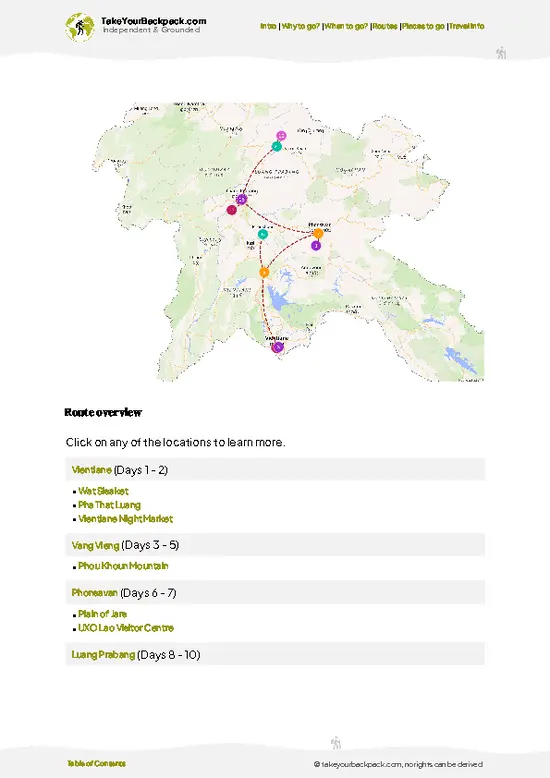
example page 1 from our offline Travel Guide for Laos
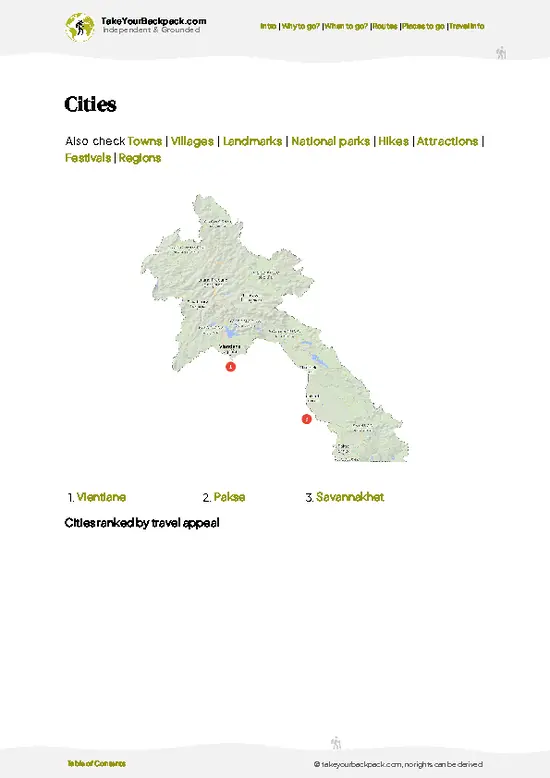
example page 2 from our offline Travel Guide for Laos
example page 3 from our offline Travel Guide for Laos
example page 4 from our offline Travel Guide for Laos
example page 5 from our offline Travel Guide for Laos
example page 6 from our offline Travel Guide for Laos
example page 7 from our offline Travel Guide for Laos
The digital guide (313 pages) contains:
80 highlights, ranked by travel appeal
Optimized 5, 10 & 15-day travel routes
Cities, national parks, landmarks, beaches
How to get around
Offline-friendly for travel without Wi-Fi
👉 Click to see all 30+ guide features

📅 Plan smarter in minutes, not weeks
Month by month travel advice
Festivals & national holidays
Budget expectations

🗺️ Go to the right places, skip the overrated ones
Honest pros & cons of destinations
Top hikes, parks & viewpoints
Lesser-known places most travelers miss
Clear “worth it vs skip it” guidance

🛏️ Travel smoothly without rookie mistakes
Best areas to stay
Transport systems explained simply
Common scams & safety advice
SIM cards, money & practical tips

🌍 Understand the country, not just visit it
Culture & traditions
52 Essential phrases & customs
Festivals worth planning around
Traveler-friendly historical context
Insights that make places more meaningful

📱 Built for real travel conditions
Fully downloadable PDF
Works completely offline
Optimized for phone use
Useful in remote areas & buses
Everything in one place
Save weeks of stressful planning
Get instant access to your full guide. 30‑day money-back guarantee.


By proceeding you agree to our terms.
Sent to your inbox immediately after payment • 100% Secure Checkout
Best Backpacking Travel Advisor 2025 tourism awardBest Backpacking
Travel Advisor
2025
What others say about Take Your Backpack Guides:
⭐⭐⭐⭐⭐
Fantastic, amazing amount of information!
⭐⭐⭐⭐⭐
My goodness this is amazing, it's what I've been looking for hats off too you!
⭐⭐⭐⭐⭐
I think this is absolutely BRILLIANT
⭐⭐⭐⭐
Very complete and informative. It's still missing places, but I gotta to commend you
⭐⭐⭐⭐⭐
This is truly amazing, thank you, can't wait to explore it with my kids!
⭐⭐⭐⭐⭐
Awesome resource, thank you!
⭐⭐⭐⭐⭐
This is amazing! Can't wait to explore the ones I haven't seen
⭐⭐⭐⭐
I love this! Well done, great idea.
⭐⭐⭐⭐⭐
Thanks for taking the time to make this gem!
⭐⭐⭐⭐⭐
This might be the best website I've ever seen.
⭐⭐⭐⭐⭐
Congratulations, and thank you so much for your work; it's incredibly valuable.
⭐⭐⭐⭐
In all seriousness I think you did a great job pointing out the important spots
⭐⭐⭐⭐⭐
10/10 very good
⭐⭐⭐⭐⭐
As someone who's only just starting to visit regularly this is awesome, thank you.
⭐⭐⭐⭐
Thank you very much! I'm going to visit my dad, it's going to be very useful!
⭐⭐⭐⭐⭐
This is really cool! We'll be travelling for the first time and this definitely come in handy.
⭐⭐⭐⭐⭐
You are now our minister of culture, congratulations 👨‍💼
⭐⭐⭐⭐⭐
Just wanted to tell you that this is a pearl! Going to follow your recommendations.
⭐⭐⭐⭐⭐
This is so cool. I'll definitely be using the resource for my travels soon.
⭐⭐⭐⭐⭐
This is very impressive! Good work.
⭐⭐⭐⭐⭐
This is an amazing and informative site. Very well done!

🛏️ Where to stay?Top Areas to Stay

Yes — Laos has plenty of hostels and budget accommodation concentrated in Luang Prabang (Old Quarter/riverside), Vang Vieng (riverfront/main strip), Vientiane (city centre/riverside), Pakse (central/market area) and the 4000 Islands (Don Det/Don Khone).
Choose Luang Prabang for the best selection of guesthouses, direct access to temples and a safe, quiet night scene though prices can be higher; pick Vang Vieng for outdoor activities and a lively riverside strip but expect noisy, party-oriented hostels; use Vientiane as a calm transport hub with basic-budget options near the Mekong; opt for Pakse when you need a base for the Bolaven Plateau and onward buses despite fewer choices; and head to … read more 👉
Yes — Laos has plenty of hostels and budget accommodation concentrated in Luang Prabang (Old Quarter/riverside), Vang Vieng (riverfront/main strip), Vientiane (city centre/riverside), Pakse (central/market area) and the 4000 Islands (Don Det/Don Khone).
Choose Luang Prabang for the best selection of guesthouses, direct access to temples and a safe, quiet night scene though prices can be higher; pick Vang Vieng for outdoor activities and a lively riverside strip but expect noisy, party-oriented hostels; use Vientiane as a calm transport hub with basic-budget options near the Mekong; opt for Pakse when you need a base for the Bolaven Plateau and onward buses despite fewer choices; and head to Don Det/Don Khone for the cheapest bungalows, very slow island life and limited facilities or transport.
Book ahead for Luang Prabang in high season and plan extra time for transfers to and from the islands or Pakse because schedules and amenities are often basic.

If you enjoy meeting fellow travelers, consider choosing hostels with high ratings for atmosphere. On the other hand, if you prefer having your own space, a hotel might be a better option.

LaosDiscover the Country

👋 Meet the founderWho’s Behind Take Your Backpack?

Johan, backpacker and founder of TakeYourBackpackHi, I’m Johan (Netherlands 🇳🇱), the creator of TakeYourBackpack. Over the past decade, I’ve backpacked through 80+ countries across six continents, gaining extensive experience with independent travel, long-term trips, and overland routes.

This site is built on a combination of firsthand travel experience and carefully curated insights from other backpackers. Many guides are based on places I’ve personally visited, while others bring together tips, observations, and practical advice shared by trusted travelers I’ve met along the way.

The goal is to provide realistic, experience-driven guidance — not generic itineraries — so you can explore destinations with better context, clearer expectations, and more confidence.

Get full Laos guide •
Instant download • 80 highlights • Full Offline guide