v2.webp)
- Wat Xieng Thong — The crown jewel of Luang Prabang’s temples: low-sweeping roofs, intricate gilded mosaics and centuries of royal patronage. It’s where Lao temple architecture shines and good photos come naturally.
- Mount Phousi (Phou Si) — A short, steep climb through little shrines to a hilltop stupa with panoramic views over the Mekong and town. Sunrise or sunset up here is melodramatic for a reason; it’s also full of small shrines and quiet corners if you want to linger.
- Royal Palace Museum (Haw Kham) — Housed in the former king’s palace, the museum combines colonial architecture with royal artifacts, Buddha images and a golden library. Good for context: it explains how Luang Prabang became the town you see today.
- Tak Bat (Morning Alms procession) — The daily ritual where saffron-robed
- Wat Xieng Thong — The crown jewel of Luang Prabang’s temples: low-sweeping roofs, intricate gilded mosaics and centuries of royal patronage. It’s where Lao temple architecture shines and good photos come naturally.
- Mount Phousi (Phou Si) — A short, steep climb through little shrines to a hilltop stupa with panoramic views over the Mekong and town. Sunrise or sunset up here is melodramatic for a reason; it’s also full of small shrines and quiet corners if you want to linger.
- Royal Palace Museum (Haw Kham) — Housed in the former king’s palace, the museum combines colonial architecture with royal artifacts, Buddha images and a golden library. Good for context: it explains how Luang Prabang became the town you see today.
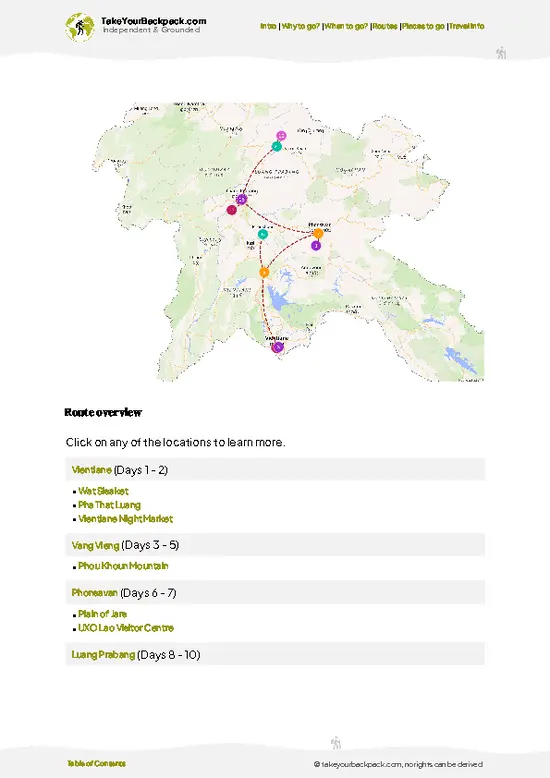
- Tak Bat (Morning Alms procession) — The daily ritual where saffron-robed monks receive offerings from locals; genuinely moving if you watch respectfully from the sidelines. It’s a living tradition — read the etiquette, skip the flash photos, and go early.
- Wat Visoun (That Makmo) — Famous for its unusual “watermelon” stupa and one of the town’s oldest monastic sites. The compound feels lived-in and peaceful, with interesting old Buddha images and courtyard life to observe.
- Wat Sene Soukharam — A compact, richly decorated temple near the center with fine lacquer work and a friendly local vibe. Less crowded than Xieng Thong but historically important — a good stop between other sights.
- Traditional Arts and Ethnology Centre (TAEC) — Small, well-curated museum run by Lao staff that explains the country’s ethnic groups, textiles and material culture without the tourist gloss. If you care about context and stories behind the handicrafts you’ll see around town, this is where to learn them.
- Morning Market (Phousi/Talat Sene area) — A bustling, local market where vendors sell fresh produce, sticky rice, insects, and Lao snacks — excellent for street food and people-watching. It’s where the town actually lives outside the temple façades.
- Luang Prabang Night Market (Sisavangvong Road) — Stretches along the riverfront with hand-woven textiles, silverwork and Lao street bites; more touristy but useful for discovering local crafts and meeting artisans. Haggle politely and look for stalls where people actually make things on-site.
- Wat Aham and the Old Quarter streets — Wat Aham is a small, atmospheric temple near the base of Phousi with quirky guardian statues; the surrounding narrow streets and colonial shops are the real reward. Walk here without a map, poke into cafés, galleries and private temples — the town’s character is best felt on foot.
Spotted a mistake or missing something? Contact us.

Laos Buffalo Dairy Tours Interact, Learn and Taste Fresh Flavors

Luang Prabang: Craft Your Own Aroma Candle in Heritage Home

Evening Bamboo weaving & Cooking classes join-in

Pony Riding in Luang Prabang

Home-cooked dinner & Baci ceremony with Villagers in Ban Nasang

Luang Prabang Mekong Sunset Cruise and Hot Pot Dinner

Luang Prabang: Kuang Si Waterfall & Rice Farm Tour

Luang Prabang Cuisine & Culture: The Hungry Tuk Tuk

Luang Prabang Foodie Walking Tour and Monk Blessing


 Best Backpacking
.jpg) Hi, I’m Johan (Netherlands 🇳🇱), the creator of TakeYourBackpack. Over the past 3 decades, I’ve backpacked through 90+ countries across six continents, gaining extensive experience with independent travel, long-term trips, and overland routes.
Hi, I’m Johan (Netherlands 🇳🇱), the creator of TakeYourBackpack. Over the past 3 decades, I’ve backpacked through 90+ countries across six continents, gaining extensive experience with independent travel, long-term trips, and overland routes.