×

Laos🇱🇦 | best townsDiscover the 9 Best towns Across Laos

Laos is a tapestry of towns, each with its own pulse and personality. From the bustling streets of Vientiane to the serene banks of Luang Prabang, the regional differences shape your experience profoundly. In the north, towns like Nong Khiaw offer rugged landscapes and a slower pace, perfect for backpacking and independent travel. Meanwhile, southern towns like Pakse buzz with a vibrant market scene, catering to those seeking cultural immersion.

Seasonal nuances also play a role; the dry season invites exploration, while the rainy season can transform trails into muddy challenges. Choosing the right town affects your vibe, budget, and even safety, making it essential to align your travel style with the local atmosphere.

By Johan Kruseman 🇳🇱 | Updated June 16, 2026
Explore the best villages in Laos

Why go?Why These town Stand Out

Laos towns pulse with a unique rhythm, shaped by their cultural heritage and geographic diversity. Unlike bustling cities in neighboring countries, these towns offer a slower pace, allowing travelers to immerse themselves in local life. The French colonial architecture in places like Luang Prabang whispers stories of a bygone era, while the vibrant markets in smaller towns showcase the rich tapestry of Laotian cuisine—think fresh herbs, sticky rice, and aromatic spices.

The climatic variations across regions influence not just the landscape but also the lifestyle. In the north, the cooler temperatures invite cozy evenings by the fire, while the south basks in tropical warmth, perfect for exploring lush jungles and rivers. This diversity means that itinerary planning can hinge on the trade-offsread more 👉
Laos towns pulse with a unique rhythm, shaped by their cultural heritage and geographic diversity. Unlike bustling cities in neighboring countries, these towns offer a slower pace, allowing travelers to immerse themselves in local life. The French colonial architecture in places like Luang Prabang whispers stories of a bygone era, while the vibrant markets in smaller towns showcase the rich tapestry of Laotian cuisine—think fresh herbs, sticky rice, and aromatic spices.

The climatic variations across regions influence not just the landscape but also the lifestyle. In the north, the cooler temperatures invite cozy evenings by the fire, while the south basks in tropical warmth, perfect for exploring lush jungles and rivers. This diversity means that itinerary planning can hinge on the trade-offs between accessibility and depth of exploration. Some towns are easier to reach but may lack the immersive experiences found in more remote areas.

Travelers should also consider the infrastructure. Roads can be challenging, and public transport options may be limited, which can affect travel times. However, these constraints often lead to richer encounters with local culture. The effort to reach a quieter town can yield profound rewards—authentic interactions, breathtaking views, and a deeper understanding of Laotian life.
Our Approach to Ranking
The list of best towns in Laos is created based on charm, local culture, atmosphere, hidden gems, and visitor appeal. If you feel a town is missing in this list, please let us know.

When to go?Optimal Periods for Travel

Seasonality shapes the experience of towns in Laos significantly. The dry season, typically from November to April, brings clear skies and cooler temperatures. This is when local festivals burst into life, drawing visitors eager to witness vibrant traditions. The atmosphere is electric, with streets filled with the sounds of laughter and celebration.

Rainy season, from May to October, transforms the landscape. The air thickens with humidity, and the scent of wet earth fills the streets. While the rain can be heavy, it also brings a lushness to the surroundings. Fewer tourists mean quieter streets and a more intimate glimpse into daily life. However, some roads may become impassable, and outdoor activities can be limited.

Shoulder seasons offer a mixed bag. Late October and early May can … read more 👉
Seasonality shapes the experience of towns in Laos significantly. The dry season, typically from November to April, brings clear skies and cooler temperatures. This is when local festivals burst into life, drawing visitors eager to witness vibrant traditions. The atmosphere is electric, with streets filled with the sounds of laughter and celebration.

Rainy season, from May to October, transforms the landscape. The air thickens with humidity, and the scent of wet earth fills the streets. While the rain can be heavy, it also brings a lushness to the surroundings. Fewer tourists mean quieter streets and a more intimate glimpse into daily life. However, some roads may become impassable, and outdoor activities can be limited.

Shoulder seasons offer a mixed bag. Late October and early May can be ideal for those seeking a balance. The weather is transitioning, and while crowds are lighter, the charm of local life remains. Costs may dip slightly, making it a savvy choice for budget-conscious travelers.

Peak periods coincide with major festivals, which can lead to crowded conditions. Planning around these events can enhance the experience, but be prepared for higher prices and bustling streets. Understanding these seasonal dynamics is crucial for making the most of a visit to Laos.

town hoppingSuggested Travel Strategies

Regional Clustering
To make the most of your time in Laos, group towns by region. Start in the north with Luang Prabang, where the morning alms ceremony and the scent of fresh baguettes fill the air. From there, head east to Vang Vieng, known for its limestone karsts and the thrill of tubing on the Nam Song River. This route allows for a natural flow, minimizing backtracking and maximizing experiences.

Optimal Sequencing
After Vang Vieng, consider heading south to Vientiane. The capital offers a blend of French colonial architecture and local markets, perfect for a leisurely exploration. Finally, wrap up your journey in the south with Pakse, where the Bolaven Plateau’s coffee plantations and waterfalls await. This sequence balances urban experiences with nature, ensuring a well-rounded … read more 👉
Regional Clustering
To make the most of your time in Laos, group towns by region. Start in the north with Luang Prabang, where the morning alms ceremony and the scent of fresh baguettes fill the air. From there, head east to Vang Vieng, known for its limestone karsts and the thrill of tubing on the Nam Song River. This route allows for a natural flow, minimizing backtracking and maximizing experiences.

Optimal Sequencing
After Vang Vieng, consider heading south to Vientiane. The capital offers a blend of French colonial architecture and local markets, perfect for a leisurely exploration. Finally, wrap up your journey in the south with Pakse, where the Bolaven Plateau’s coffee plantations and waterfalls await. This sequence balances urban experiences with nature, ensuring a well-rounded trip.

Time Management
Allocate at least two to three days per town. This pacing allows for immersion without the rush. Travelers often underestimate travel times between towns; road conditions can be unpredictable, so factor in extra time for transfers.

Common Pitfalls
Avoid cramming too many stops into a short timeframe. This leads to fatigue and missed opportunities. Prioritize depth over speed; savor the local cuisine, engage with residents, and soak in the atmosphere. Each town has its own rhythm, and rushing through them diminishes the experience. Embrace flexibility; sometimes the best moments come from unplanned detours.

The ListMust-Visit towns in Laos

1 Luang Prabang

UNESCO old quarter, saffron-robed monks, night market

Wake early for alms-giving, explore gilded temples, and sample street food in a city where tradition and daily life intertwine.

2 Vang Vieng

limestone karsts, river tubing, backpacker enclave

Float down the Nam Song, hike to blue lagoons, and take in dramatic scenery in a town known for outdoor adventure.

laos-city-vang-vieng
© Google |

3 Vieng Xai

limestone caves, war history, remote valley

Trace the legacy of conflict through vast cave networks and quiet landscapes, where daily life unfolds amid reminders of the past.

4 Thakhek

French architecture, river promenade, loop route hub

Start or finish the Thakhek Loop in a town marked by colonial facades and a relaxed riverside atmosphere.

laos-city-thakhek
© Google |

5 Phonsavan

Plain of Jars, UXO history, plateau town

Visit a windswept town at the heart of the Plain of Jars, where war history and archaeological sites shape the landscape.

6 Huay Xai

Mekong border crossing, slow boat port, hilltop fort

Begin or end your Mekong journey in a border town with river views and a historic fort overlooking the water.

7 Phongsali

tea plantations, mountain ridges, remote hill town

Climb to a cool mountain town surrounded by tea fields and traditional villages, far from Laos’s main travel routes.

8 Sam Neua

market center, Hmong textiles, cave headquarters

Explore a northeastern town known for its ethnic markets and as a gateway to the historic caves of the Pathet Lao.

laos-city-sam-neua
© Google |

9 Ban Xieng Ngeun

mountain pass, roadside market, rural stopover

Pause in a highland village that serves as a rest point for travelers crossing between valleys and remote northern routes.

Loading the map 🌍

Expert viewExpert Commentary on towns

Regional Clusters
Laos is a patchwork of towns, each with its own rhythm and character. I recommend focusing on three to five towns to get a true feel for the country. The northern region, with its cooler climate and mountainous terrain, contrasts sharply with the laid-back vibe of the south, where the Mekong River flows lazily. Each area offers a unique slice of life, from the bustling markets to the serene temples.

In the north, you’ll find towns that are gateways to trekking and hill tribe experiences. The trails can be steep and rugged, testing your endurance, but the payoff is worth every bead of sweat. Picture yourself standing atop a ridge, the sun setting behind distant peaks, casting a golden hue over the valleys below. In the south, the pace slows down. Here, the towns are often … read more 👉
Regional Clusters
Laos is a patchwork of towns, each with its own rhythm and character. I recommend focusing on three to five towns to get a true feel for the country. The northern region, with its cooler climate and mountainous terrain, contrasts sharply with the laid-back vibe of the south, where the Mekong River flows lazily. Each area offers a unique slice of life, from the bustling markets to the serene temples.

In the north, you’ll find towns that are gateways to trekking and hill tribe experiences. The trails can be steep and rugged, testing your endurance, but the payoff is worth every bead of sweat. Picture yourself standing atop a ridge, the sun setting behind distant peaks, casting a golden hue over the valleys below. In the south, the pace slows down. Here, the towns are often defined by their proximity to the river. You might find yourself lounging in a hammock, a cold Beerlao in hand, as the sun dips below the horizon, painting the sky in shades of orange and pink.

Travel Rhythm
The travel rhythm in Laos is unhurried. Expect to spend a few days in each town to soak in the local culture and scenery. This isn’t a country for a whirlwind tour; it’s about savoring the moments. You’ll want to factor in travel time between towns, which can be longer than you anticipate due to winding roads and occasional delays. Buses are the primary mode of transport, and while they can be an adventure in themselves, they also require patience.

Consider the trade-off: you might spend a day or two on the road, but that journey often leads to unexpected encounters with locals or stunning landscapes. The bus rides can be grueling, but they also offer a chance to witness the daily life of Laotians, from farmers tending to their fields to children waving from the roadside.

Local Charm
Each town has its own charm, shaped by local customs and traditions. In the north, you might stumble upon a night market filled with the aroma of grilled meats and sticky rice. The laughter of children playing nearby adds a layer of warmth to the scene. In the south, the laid-back cafes along the river invite you to linger, sip coffee, and watch the world go by.

Cultural considerations are essential. Laos is a predominantly Buddhist country, and respecting local customs is crucial. Dress modestly when visiting temples, and be mindful of local etiquette, especially when interacting with monks. The warmth of the locals can be infectious, but it’s important to approach with respect and an open heart.

Logistical Considerations
Infrastructure can be a challenge. Roads may be bumpy, and services can be limited in more remote areas. However, this is part of the adventure. Embrace the unpredictability. When planning your route, prioritize towns that resonate with your interests—whether it’s trekking, cultural immersion, or simply unwinding by the river.

Budget-wise, Laos is generally affordable, but costs can vary significantly between regions. Expect to spend more in tourist-heavy areas, while off-the-beaten-path towns can offer incredible value.

Ultimately, the beauty of Laos lies in its contrasts. The grit of the streets and the burn of the trails lead to moments that linger long after you’ve left. Each town is a chapter in a larger story, waiting for you to explore its pages.

✈️ The backpacker research shortcutLaos Travel Guide

An offline-friendly backpacking guide with optimized travel routes, ranked highlights, transport advice, and the best areas to stay.
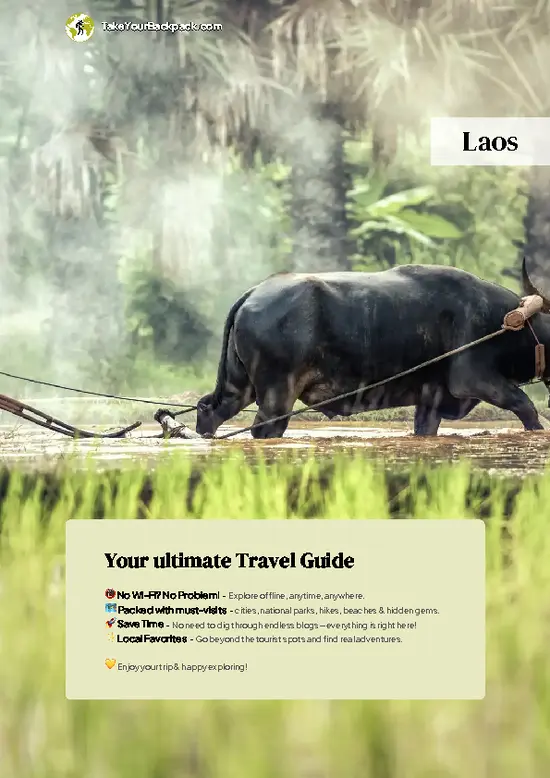
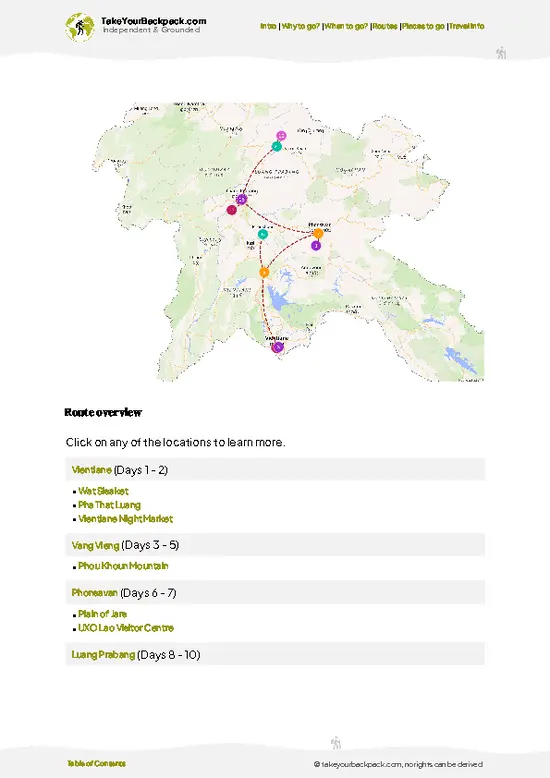
example page 0 from our offline Travel Guide for Laos
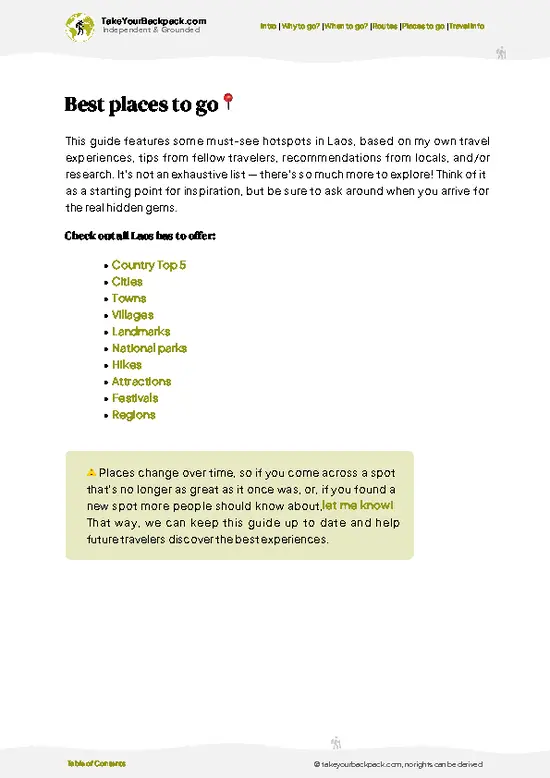
example page 1 from our offline Travel Guide for Laos
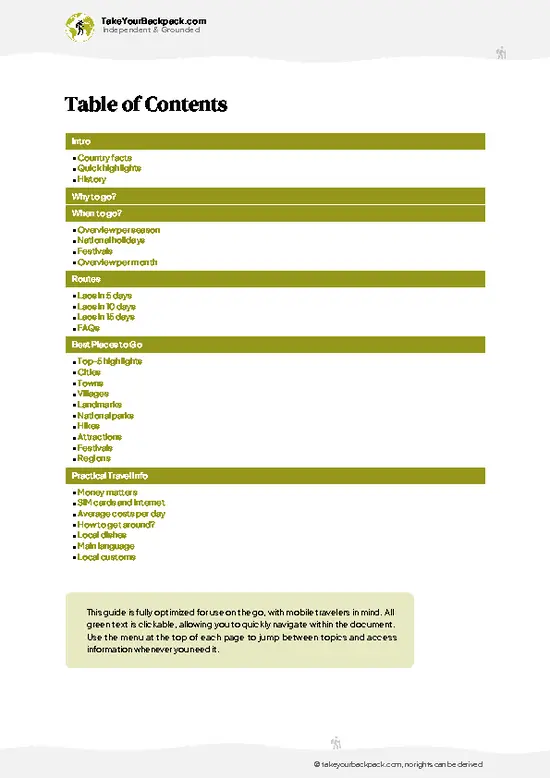
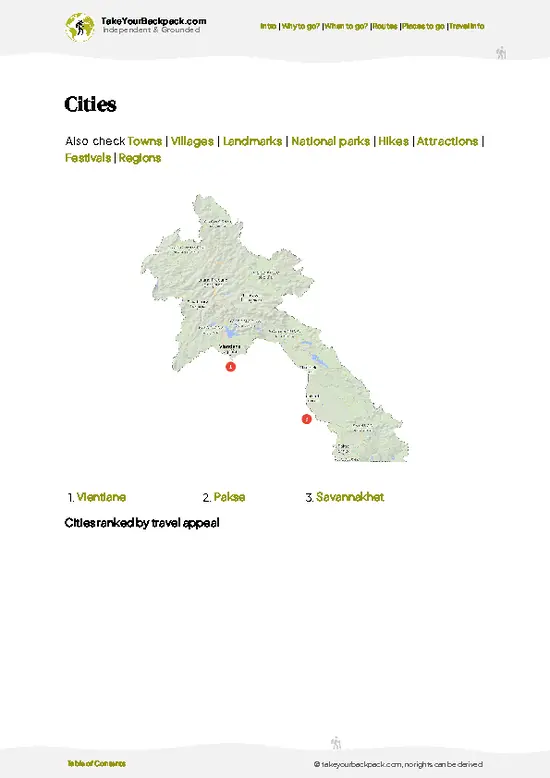
example page 2 from our offline Travel Guide for Laos
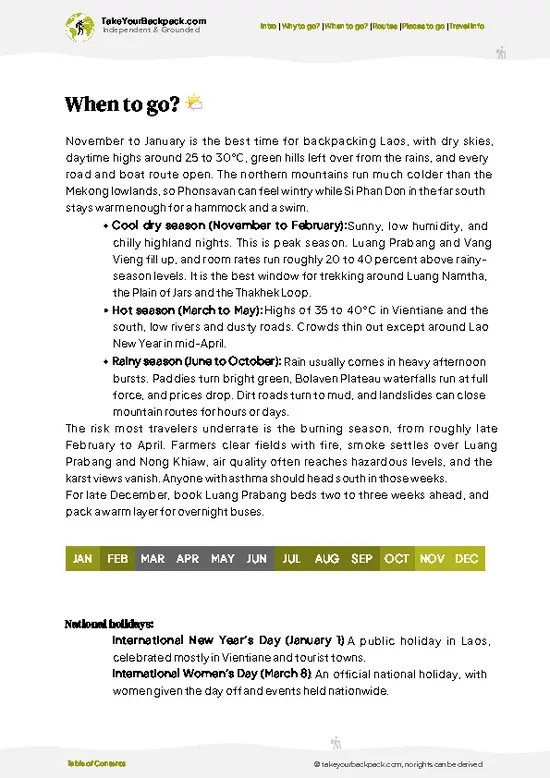
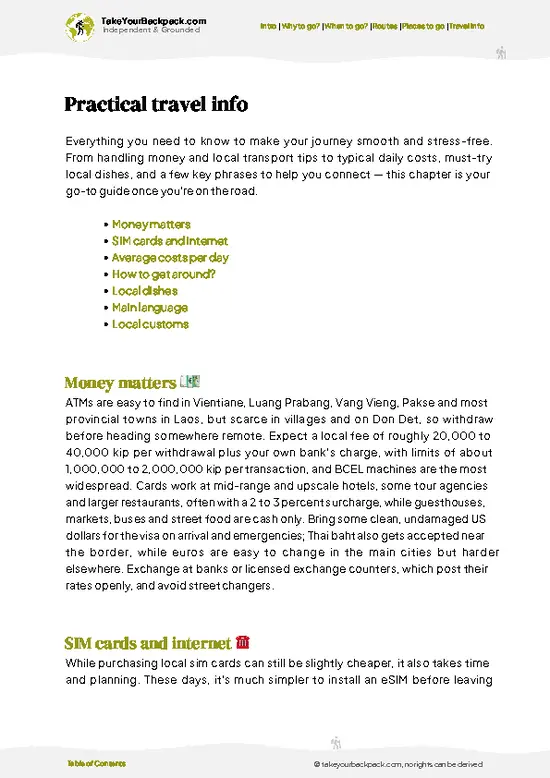
example page 3 from our offline Travel Guide for Laos
example page 4 from our offline Travel Guide for Laos
example page 5 from our offline Travel Guide for Laos
example page 6 from our offline Travel Guide for Laos
example page 7 from our offline Travel Guide for Laos
The digital guide (313 pages) contains:
80 highlights, ranked by travel appeal
Optimized 5, 10 & 15-day travel routes
Cities, national parks, landmarks, beaches
How to get around
Offline-friendly for travel without Wi-Fi
👉 Click to see all 30+ guide features

📅 Plan smarter in minutes, not weeks
Month by month travel advice
Festivals & national holidays
Budget expectations

🗺️ Go to the right places, skip the overrated ones
Honest pros & cons of destinations
Top hikes, parks & viewpoints
Lesser-known places most travelers miss
Clear “worth it vs skip it” guidance

🛏️ Travel smoothly without rookie mistakes
Best areas to stay
Transport systems explained simply
Common scams & safety advice
SIM cards, money & practical tips

🌍 Understand the country, not just visit it
Culture & traditions
52 Essential phrases & customs
Festivals worth planning around
Traveler-friendly historical context
Insights that make places more meaningful

📱 Built for real travel conditions
Fully downloadable PDF
Works completely offline
Optimized for phone use
Useful in remote areas & buses
Everything in one place
Save weeks of stressful planning
Get instant access to your full guide. 30‑day money-back guarantee.


By proceeding you agree to our terms.
Sent to your inbox immediately after payment • 100% Secure Checkout
Best Backpacking Travel Advisor 2025 tourism awardBest Backpacking
Travel Advisor
2025
What others say about Take Your Backpack Guides:
⭐⭐⭐⭐⭐
Fantastic, amazing amount of information!
⭐⭐⭐⭐⭐
My goodness this is amazing, it's what I've been looking for hats off too you!
⭐⭐⭐⭐⭐
I think this is absolutely BRILLIANT
⭐⭐⭐⭐
Very complete and informative. It's still missing places, but I gotta to commend you
⭐⭐⭐⭐⭐
This is truly amazing, thank you, can't wait to explore it with my kids!
⭐⭐⭐⭐⭐
Awesome resource, thank you!
⭐⭐⭐⭐⭐
This is amazing! Can't wait to explore the ones I haven't seen
⭐⭐⭐⭐
I love this! Well done, great idea.
⭐⭐⭐⭐⭐
Thanks for taking the time to make this gem!
⭐⭐⭐⭐⭐
This might be the best website I've ever seen.
⭐⭐⭐⭐⭐
Congratulations, and thank you so much for your work; it's incredibly valuable.
⭐⭐⭐⭐
In all seriousness I think you did a great job pointing out the important spots
⭐⭐⭐⭐⭐
10/10 very good
⭐⭐⭐⭐⭐
As someone who's only just starting to visit regularly this is awesome, thank you.
⭐⭐⭐⭐
Thank you very much! I'm going to visit my dad, it's going to be very useful!
⭐⭐⭐⭐⭐
This is really cool! We'll be travelling for the first time and this definitely come in handy.
⭐⭐⭐⭐⭐
You are now our minister of culture, congratulations 👨‍💼
⭐⭐⭐⭐⭐
Just wanted to tell you that this is a pearl! Going to follow your recommendations.
⭐⭐⭐⭐⭐
This is so cool. I'll definitely be using the resource for my travels soon.
⭐⭐⭐⭐⭐
This is very impressive! Good work.
⭐⭐⭐⭐⭐
This is an amazing and informative site. Very well done!

🛏️ Where to stay?Top Areas to Stay

Yes — Laos has plenty of hostels and budget accommodation concentrated in Luang Prabang (Old Quarter/riverside), Vang Vieng (riverfront/main strip), Vientiane (city centre/riverside), Pakse (central/market area) and the 4000 Islands (Don Det/Don Khone).
Choose Luang Prabang for the best selection of guesthouses, direct access to temples and a safe, quiet night scene though prices can be higher; pick Vang Vieng for outdoor activities and a lively riverside strip but expect noisy, party-oriented hostels; use Vientiane as a calm transport hub with basic-budget options near the Mekong; opt for Pakse when you need a base for the Bolaven Plateau and onward buses despite fewer choices; and head to … read more 👉
Yes — Laos has plenty of hostels and budget accommodation concentrated in Luang Prabang (Old Quarter/riverside), Vang Vieng (riverfront/main strip), Vientiane (city centre/riverside), Pakse (central/market area) and the 4000 Islands (Don Det/Don Khone).
Choose Luang Prabang for the best selection of guesthouses, direct access to temples and a safe, quiet night scene though prices can be higher; pick Vang Vieng for outdoor activities and a lively riverside strip but expect noisy, party-oriented hostels; use Vientiane as a calm transport hub with basic-budget options near the Mekong; opt for Pakse when you need a base for the Bolaven Plateau and onward buses despite fewer choices; and head to Don Det/Don Khone for the cheapest bungalows, very slow island life and limited facilities or transport.
Book ahead for Luang Prabang in high season and plan extra time for transfers to and from the islands or Pakse because schedules and amenities are often basic.

If you enjoy meeting fellow travelers, consider choosing hostels with high ratings for atmosphere. On the other hand, if you prefer having your own space, a hotel might be a better option.

LaosDiscover the Country

👋 Meet the founderWho’s Behind Take Your Backpack?

Johan, backpacker and founder of TakeYourBackpackHi, I’m Johan (Netherlands 🇳🇱), the creator of TakeYourBackpack. Over the past decade, I’ve backpacked through 80+ countries across six continents, gaining extensive experience with independent travel, long-term trips, and overland routes.

This site is built on a combination of firsthand travel experience and carefully curated insights from other backpackers. Many guides are based on places I’ve personally visited, while others bring together tips, observations, and practical advice shared by trusted travelers I’ve met along the way.

The goal is to provide realistic, experience-driven guidance — not generic itineraries — so you can explore destinations with better context, clearer expectations, and more confidence.

Get full Laos guide •
Instant download • 80 highlights • Full Offline guide