v2.webp)
- Phou Den Din massif — the ridge-top viewpoints: Long, raw ridgelines give proper mountain feels — steep trails lead to wide vistas where you can watch layers of forest roll away into the distance and catch dramatic sunrises or a sea of clouds after rain. It’s the best place for a straightforward “wow” moment in the park.
- Primary evergreen and cloud forest: Old-growth stands of evergreen and cloud forest are the park’s backbone — moss-draped trunks, thick understory and orchids everywhere. Botanists and quiet walkers will love the dense, wild feel; it’s also where much of the park’s biodiversity is concentrated.
- Wildlife habitat for big mammals and shy critters: Phou Den Din still shelters large forest mammals — think elephants, gaur, serow and various deer — plus primates and carnivores.
- Phou Den Din massif — the ridge-top viewpoints: Long, raw ridgelines give proper mountain feels — steep trails lead to wide vistas where you can watch layers of forest roll away into the distance and catch dramatic sunrises or a sea of clouds after rain. It’s the best place for a straightforward “wow” moment in the park.
- Primary evergreen and cloud forest: Old-growth stands of evergreen and cloud forest are the park’s backbone — moss-draped trunks, thick understory and orchids everywhere. Botanists and quiet walkers will love the dense, wild feel; it’s also where much of the park’s biodiversity is concentrated.
- Wildlife habitat for big mammals and shy critters: Phou Den Din still shelters large forest mammals — think elephants, gaur, serow and various deer — plus primates and carnivores. Sightings are rare and often elusive, but morning/late-afternoon treks and staying near water sources improve your odds; camera traps are common in conservation reports here.
- Birdwatching — hornbills, forest specialists and migrants: The park is a stronghold for forest-dependent birds: hornbills, laughingthrushes, babblers and a host of understory species turn up for patient observers. Bring a decent pair of binoculars and expect rewarding, if often quiet, encounters.
- Seasonal waterfalls and mountain streams: After the rains the ridges feed a series of attractive cascades and clear plunge pools tucked into the valleys. They’re perfect for a cooling break on a hot hike and make otherwise long treks feel worth the effort.
- Caves and karst outcrops: Limestone pockets and small cave systems dot parts of the park, harboring bats and interesting rock formations. They’re not commercial showcaves — more the type you poke into with a headlamp and a guide — so expect a bit of adventure and mud.
- Remote ethnic villages and cultural trail experiences: Trails connect small, traditional villages where local guides run homestays and show off upland rice farming, weaving and local foods. It’s a respectful way to break up the hiking, learn about land stewardship, and keep tourism dollars in community hands.
Spotted a mistake or missing something? Contact us.

Vientiane Cultural Tour with Private Guide

Vientiane Cuisine & Culture: The Hungry Tuk Tuk
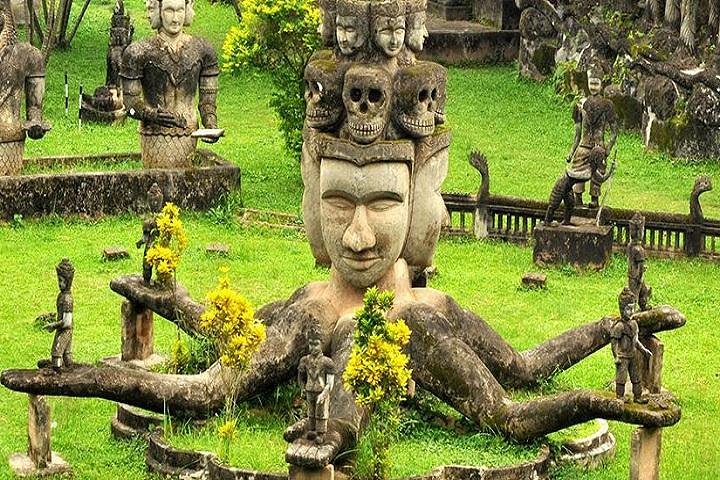
Private Tour: Vientiane City Tour Full Day with Buddha Park
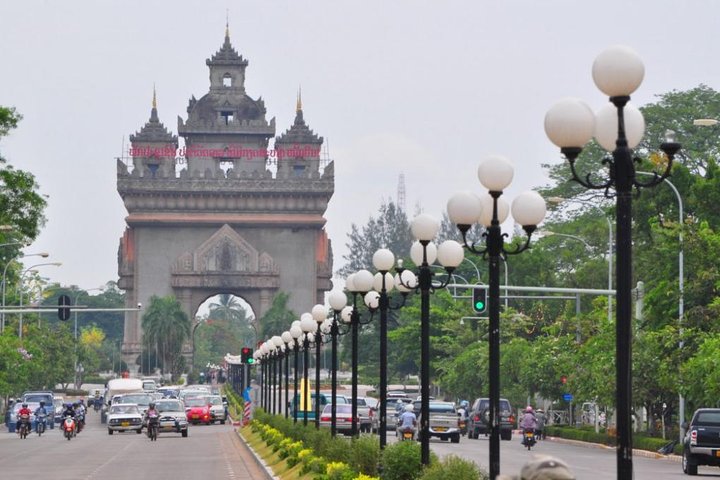
Vientiane Half-Day City Tour

Vientiane Private Full-Day Tour with Buddha Park and Lunch

1-Day Tour to Vang Vieng with Private Guide

Laos Railway Tickets Easily: Avoid Long Queues & Wasted Time

Vientiane Private Transfer: Wattay Airport -Hotel-Railway Station

Laos Railway: Train Tickets Easily - Skip the Lines - No worries

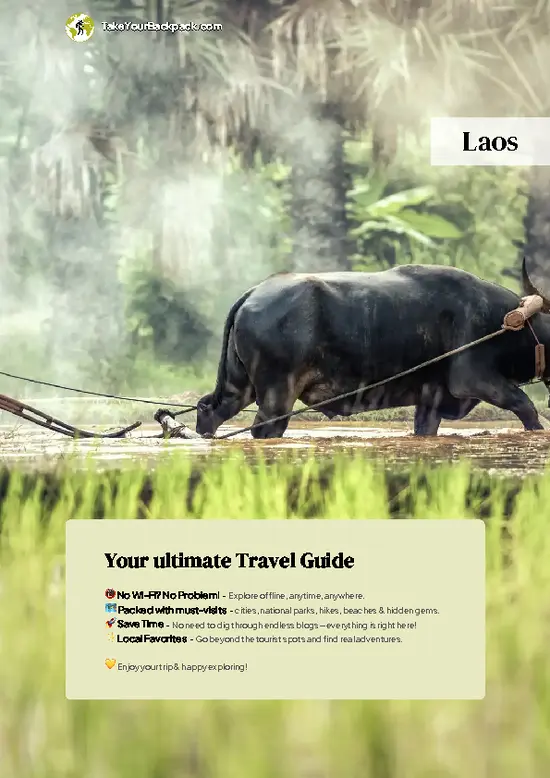



 Best Backpacking
.jpg) Hi, I’m Johan (Netherlands 🇳🇱), the creator of TakeYourBackpack. Over the past decade, I’ve backpacked through 80+ countries across six continents, gaining extensive experience with independent travel, long-term trips, and overland routes.
Hi, I’m Johan (Netherlands 🇳🇱), the creator of TakeYourBackpack. Over the past decade, I’ve backpacked through 80+ countries across six continents, gaining extensive experience with independent travel, long-term trips, and overland routes.