×

Laos🇱🇦 | best national parksDiscover the 10 Best national parks Across Laos

Laos is home to some of Southeast Asia’s most captivating national parks, each offering unique landscapes and wildlife that cater to various backpacking styles. These parks are defined by their rich biodiversity, from dense jungles to limestone karsts, and they vary significantly by region and season. For instance, the northern parks like Nam Ha are ideal for trekking during the cooler months, while southern parks like Bolaven Plateau offer lush waterfalls and coffee plantations, best explored in the rainy season.

Choosing the right national park affects your vibe, budget, and cultural immersion. Some parks are more accessible, making them perfect for independent travel, while others require a bit more effort to reach, rewarding you with solitude and authentic experiences. Understanding these nuances ensures your adventure in Laos is both enriching and memorable.

By Johan Kruseman 🇳🇱 | Updated June 6, 2026
Explore the best hikes in Laos

Why go?Why These national park Stand Out

Laos is a canvas of untamed landscapes and biodiversity, making its national parks stand out in Southeast Asia. The rugged mountains, dense jungles, and winding rivers create a backdrop that feels both ancient and alive. Unlike more commercialized parks in neighboring countries, Laos offers a sense of solitude and authenticity. Here, the trails are less trodden, and the wildlife is often more vibrant, from elusive gibbons to rare orchids.

However, this beauty comes with trade-offs. Accessibility can be a challenge; many parks are remote, requiring time and effort to reach. This means travelers must weigh the investment of travel time against the depth of exploration. The reward is often a richer experience, where the sights and sounds of nature envelop you, far from the crowds.

Culturally, … read more 👉
Laos is a canvas of untamed landscapes and biodiversity, making its national parks stand out in Southeast Asia. The rugged mountains, dense jungles, and winding rivers create a backdrop that feels both ancient and alive. Unlike more commercialized parks in neighboring countries, Laos offers a sense of solitude and authenticity. Here, the trails are less trodden, and the wildlife is often more vibrant, from elusive gibbons to rare orchids.

However, this beauty comes with trade-offs. Accessibility can be a challenge; many parks are remote, requiring time and effort to reach. This means travelers must weigh the investment of travel time against the depth of exploration. The reward is often a richer experience, where the sights and sounds of nature envelop you, far from the crowds.

Culturally, Laos is steeped in history, with its parks often serving as a refuge for traditional practices and local communities. The climate varies, with the rainy season bringing lush greenery but also muddy trails, while the dry season offers clearer paths but can lead to harsher conditions.

Understanding these nuances is crucial. The infrastructure may not always match the standards of more developed nations, but this adds to the adventure. Embrace the grit of the journey, and the parks will reveal their true essence.
Why These Made the Cut
The list of best national parks in Laos is created based on landscapes, wildlife, adventure opportunities, facilities, and overall experience. If you feel a national park is missing in this list, please let us know.

When to go?Optimal Periods for Travel

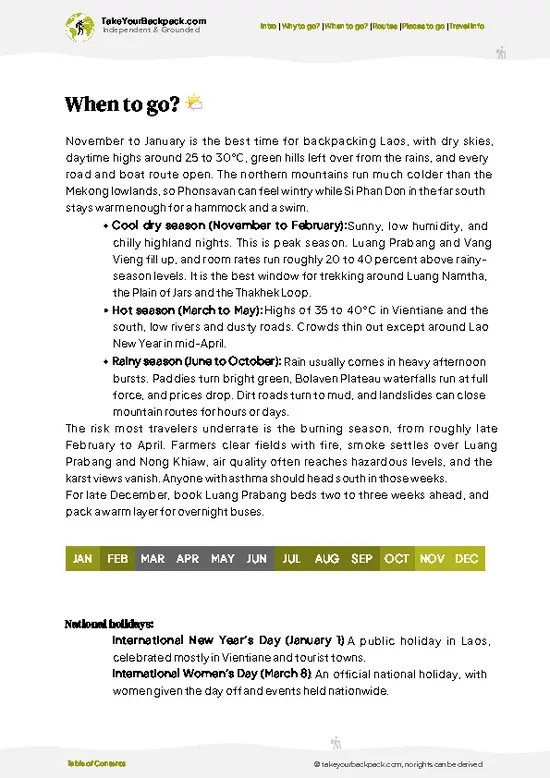
Seasonality plays a crucial role in experiencing the national parks of Laos. The country generally has a tropical climate, with distinct wet and dry seasons. The dry season, from November to April, offers the best conditions for exploration. Expect clear skies and cooler temperatures, ideal for wildlife visibility. Trails are more accessible, and the risk of rain is minimal. However, this is also peak tourist season, meaning trails can feel crowded, and accommodations may be pricier.

Shoulder seasons—late October and early May—present a mixed bag. Rainfall begins to increase in late October, but wildlife is still active, and the landscape is lush. May marks the start of the wet season, with humidity rising and trails becoming muddier. This period can deter some travelers, but it also means … read more 👉
Seasonality plays a crucial role in experiencing the national parks of Laos. The country generally has a tropical climate, with distinct wet and dry seasons. The dry season, from November to April, offers the best conditions for exploration. Expect clear skies and cooler temperatures, ideal for wildlife visibility. Trails are more accessible, and the risk of rain is minimal. However, this is also peak tourist season, meaning trails can feel crowded, and accommodations may be pricier.

Shoulder seasons—late October and early May—present a mixed bag. Rainfall begins to increase in late October, but wildlife is still active, and the landscape is lush. May marks the start of the wet season, with humidity rising and trails becoming muddier. This period can deter some travelers, but it also means fewer crowds and lower costs.

Rainy season runs from May to October. Expect heavy downpours, especially in July and August. While the parks may seem less inviting, this is when the flora thrives, and the wildlife is often more visible as animals come out to forage. However, trail conditions can be challenging, and some areas may be inaccessible.

Understanding these seasonal dynamics is essential for planning an effective trip to Laos’s national parks.

national park hoppingSuggested Travel Strategies

To efficiently combine multiple national parks across Laos, start by clustering parks regionally. The north, with its rugged mountains and lush forests, contrasts sharply with the south’s limestone karsts and riverine landscapes. Begin in the north, perhaps at Nam Ha National Park, then make your way southward through Phou Khao Khouay, and finish in the south at Dong Phayayen. This route allows for a natural progression, minimizing backtracking and maximizing exposure to diverse ecosystems.

Plan for at least two to three days in each park to soak in the atmosphere and engage with the trails. This pacing allows for exploration without the rush, letting the sweat of the hike translate into the reward of breathtaking views. Each park has its own rhythm; rushing through them can lead to missed read more 👉
To efficiently combine multiple national parks across Laos, start by clustering parks regionally. The north, with its rugged mountains and lush forests, contrasts sharply with the south’s limestone karsts and riverine landscapes. Begin in the north, perhaps at Nam Ha National Park, then make your way southward through Phou Khao Khouay, and finish in the south at Dong Phayayen. This route allows for a natural progression, minimizing backtracking and maximizing exposure to diverse ecosystems.

Plan for at least two to three days in each park to soak in the atmosphere and engage with the trails. This pacing allows for exploration without the rush, letting the sweat of the hike translate into the reward of breathtaking views. Each park has its own rhythm; rushing through them can lead to missed experiences, like a quiet moment by a waterfall or the thrill of spotting wildlife.

Common pitfalls include over-scheduling and underestimating travel times. Roads can be rough, and weather unpredictable. Flexibility is key. Prioritize depth over speed; a longer stay in one park can yield richer experiences than a whirlwind tour. Budget considerations also play a role; accommodations and transport vary widely, so plan accordingly for comfort versus cost.

Ultimately, the journey through Laos’s national parks is about balance. Embrace the grit of the trails, and let the effort lead to moments that linger long after the trip ends.

The ListMust-Visit national parks in Laos

1 Nam Et-Phou Louey National Protected Area

mountain ridges, night safaris, carnivore conservation

Join guided night excursions and climb forested ridges, searching for rare wildlife in a park known for its conservation efforts.

2 Bokeo Nature Reserve

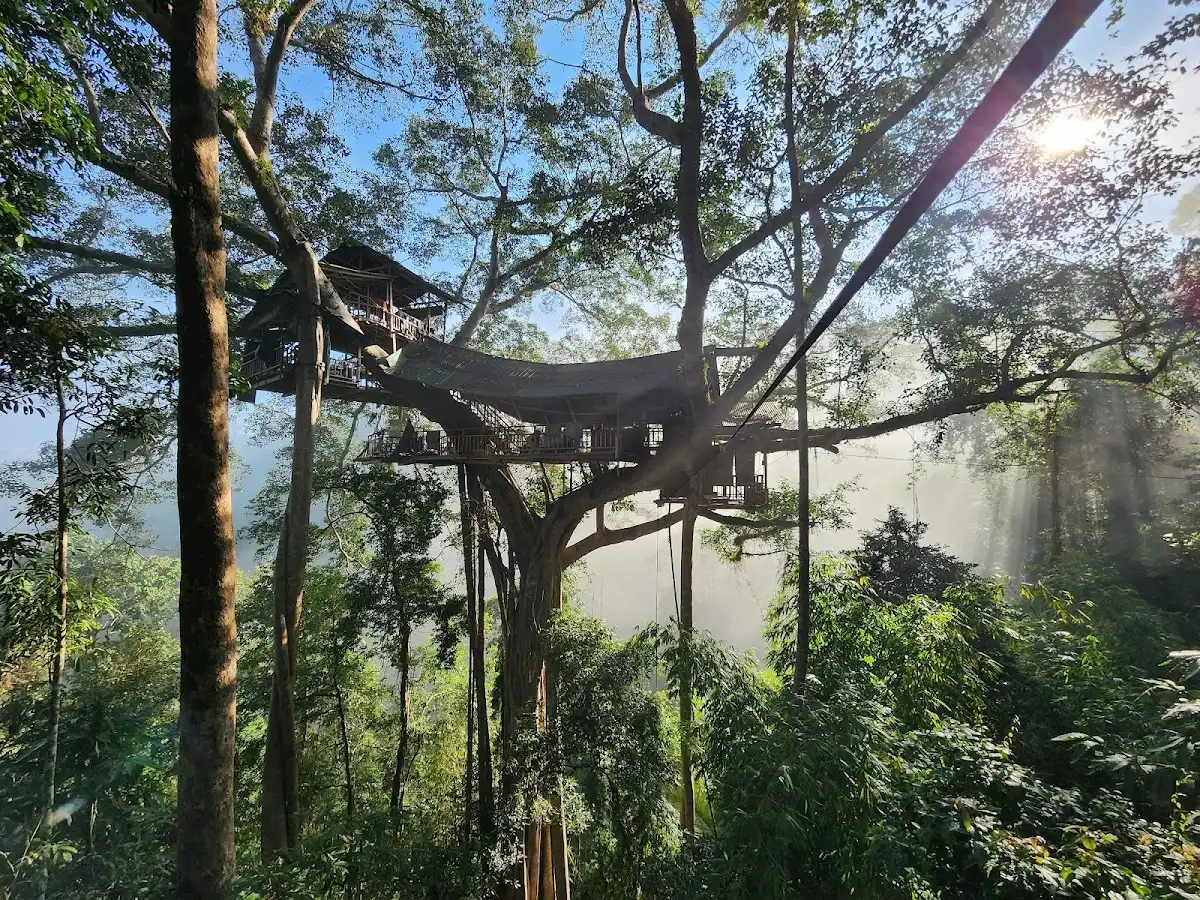
canopy walkways, black-crested gibbons, riverine forest

Walk suspended above the forest floor, spotting rare primates and exploring riverbank habitats in one of Laos’s most accessible reserves.

laos-national-park-bokeo-nature-reserve
© Google |

3 Phou Khao Khouay National Bio-Diversity Conservation Area

pine forest, sandstone cliffs, orchid meadows

Stroll through pine woods and wildflower meadows, discovering waterfalls and panoramic views within easy reach of the capital.

4 Xe Pian National Protected Area

wetland lakes, rare waterbirds, elephant habitat

Navigate a mosaic of marshes and forest, where elusive wildlife and seasonal flooding shape the rhythms of both animals and local communities.

5 Hin Namno National Protected Area

karst towers, limestone caves, underground rivers

Descend into a labyrinth of caves and towering rock formations, where subterranean rivers and dramatic cliffs define the park’s unique terrain.

6 Dong Hua Sao National Bio-Diversity Conservation Area

cascading waterfalls, plateau woodlands, coffee plantations

Wander among waterfalls and forested plateaus, where cool air and cultivated slopes blend with pockets of wild, unspoiled habitat.

laos-national-park-dong-hua-sao-national-bio-diversity-conservation-area
© Google |

7 Phou Hin Poun National Protected Area

limestone karst, hidden lagoons, cave systems

Explore a landscape of jagged rocks and secret pools, where caves and limestone outcrops create a maze for adventurous travelers.

8 Nakai-Nam Theun National Biodiversity Conservation Area

upland plateaus, river valleys, endemic mammals

Venture through remote highlands and river corridors, encountering landscapes that shelter endangered species and traditional villages far from main roads.

9 Xe Sap National Biodiversity Conservation Area

cloud forests, rugged peaks, cross-border wilderness

Trek steep slopes and misty ridges, discovering a borderland where dense forests and shifting weather create a haven for rare flora and fauna.

10 Nam Kading National Protected Area

deep gorges, fast-flowing rivers, hornbill sightings

Travel through steep valleys and dense forest, where rushing water and the calls of hornbills echo across dramatic landscapes.

11 Phou Xang He National Protected Area

savanna grasslands, sandstone outcrops, ethnic villages

Traverse open grasslands and rocky plateaus, meeting communities whose livelihoods are closely tied to the rhythms of the land.

12 Phou Den Din National Protected Area

remote hills, old-growth forest, gibbon territory

Hike through isolated uplands and ancient trees, listening for the calls of primates in a region rarely visited by outsiders.

13 Phou Xieng Thong National Protected Area

Mekong riverbanks, dry dipterocarp woods, turtle nesting sites

Follow sandy trails along the Mekong and through dry forests, where riverine life and rare reptiles coexist in a quiet corner of southern Laos.

14 Phou Phanang National Protected Area

lowland forest, bamboo thickets, proximity to Vientiane

Escape the city for a patchwork of forest and bamboo, where local trails and wildlife encounters are accessible yet still feel wild.

laos-national-park-phou-phanang-national-protected-area
© Google |

Think you know Laos?

Prove you’re a true local — uncover 4 lesser-known national parks in Laos that locals tend to keep to themselves.
Loading the map 🌍

Expert viewExpert Commentary on national parks

Terrain
Laos is a land of rugged mountains, dense forests, and winding rivers. The national parks here reflect that wild spirit. Expect steep trails that will test your legs and lungs. The terrain varies dramatically; some parks feature limestone karsts that rise sharply from the ground, while others are cloaked in thick jungle. The trails can be muddy and slippery during the rainy season, so prepare for a workout. The payoff? Reaching a summit where the horizon stretches endlessly, revealing a patchwork of green valleys and distant peaks.

Park Infrastructure
Infrastructure in Laos’ national parks is often basic but functional. Expect limited facilities, which means you’ll need to be self-sufficient. Some parks have designated campsites, while others require you to pitch a tent wherever … read more 👉
Terrain
Laos is a land of rugged mountains, dense forests, and winding rivers. The national parks here reflect that wild spirit. Expect steep trails that will test your legs and lungs. The terrain varies dramatically; some parks feature limestone karsts that rise sharply from the ground, while others are cloaked in thick jungle. The trails can be muddy and slippery during the rainy season, so prepare for a workout. The payoff? Reaching a summit where the horizon stretches endlessly, revealing a patchwork of green valleys and distant peaks.

Park Infrastructure
Infrastructure in Laos’ national parks is often basic but functional. Expect limited facilities, which means you’ll need to be self-sufficient. Some parks have designated campsites, while others require you to pitch a tent wherever you find a flat spot. Water sources are usually available, but always treat it before drinking. The lack of amenities can feel daunting, but it also means fewer crowds and a more authentic experience. Just remember, the more remote the park, the more effort it takes to get there. This can be a trade-off between comfort and immersion in nature.

Wildlife Activity
Wildlife in Laos is diverse, but spotting it can be hit or miss. Early mornings and late afternoons are prime times for animal activity. Keep your eyes peeled for gibbons swinging through the trees or the elusive black bear. Birdwatching is also rewarding, with many species unique to the region. However, the more time you spend in a park, the better your chances of encountering wildlife. If you’re short on time, prioritize parks known for specific animals, but be prepared for the possibility of disappointment. Nature doesn’t operate on a schedule.

Time and Budget
Visiting two to three national parks is a realistic goal for most travelers. Each park deserves at least two to three days to fully appreciate its offerings. Factor in travel time between parks, which can be significant due to rough roads and limited transport options. Budget-wise, expect to spend on park fees, food, and gear. While Laos is generally affordable, remote areas can drive up costs. The trade-off here is between seeing more parks and diving deeper into fewer ones. If you rush, you might miss the subtle beauty of a quiet moment in the forest.

Planning and Prioritizing
When planning your trip, consider the seasonal variations. The dry season (November to April) is ideal for trekking, while the wet season can make trails treacherous. Prioritize parks based on your interests—whether it’s hiking, wildlife, or cultural experiences. Local guides can enhance your experience, providing insights into the flora and fauna, but they come at a cost. Always respect local customs and be mindful of your impact on the environment.

Safety and Cultural Considerations
Safety in the parks is generally good, but always stay aware of your surroundings. Some areas may have unexploded ordnance from past conflicts, so stick to marked trails. Cultural sensitivity is crucial; many parks are near local communities. Engage respectfully, and consider supporting local economies by hiring guides or purchasing handmade crafts. This not only enriches your experience but also fosters goodwill.

In the end, the journey through Laos’ national parks is about embracing the grit and glory of nature. The sweat on your brow and the ache in your legs will be worth it when you find yourself standing in a serene valley, the sun setting behind the mountains, a cold beer in hand, and the world feeling just right.

✈️ The backpacker research shortcutLaos Travel Guide

An offline-friendly backpacking guide with optimized travel routes, ranked highlights, transport advice, and the best areas to stay.
example page 0 from our offline Travel Guide for Laos
example page 1 from our offline Travel Guide for Laos
example page 2 from our offline Travel Guide for Laos
example page 3 from our offline Travel Guide for Laos
example page 4 from our offline Travel Guide for Laos
example page 5 from our offline Travel Guide for Laos
example page 6 from our offline Travel Guide for Laos
example page 7 from our offline Travel Guide for Laos
The digital guide (313 pages) contains:
80 highlights, ranked by travel appeal
Optimized 5, 10 & 15-day travel routes
Cities, national parks, landmarks, beaches
How to get around
Offline-friendly for travel without Wi-Fi
👉 Click to see all 30+ guide features

📅 Plan smarter in minutes, not weeks
Month by month travel advice
Festivals & national holidays
Budget expectations

🗺️ Go to the right places, skip the overrated ones
Honest pros & cons of destinations
Top hikes, parks & viewpoints
Lesser-known places most travelers miss
Clear “worth it vs skip it” guidance

🛏️ Travel smoothly without rookie mistakes
Best areas to stay
Transport systems explained simply
Common scams & safety advice
SIM cards, money & practical tips

🌍 Understand the country, not just visit it
Culture & traditions
52 Essential phrases & customs
Festivals worth planning around
Traveler-friendly historical context
Insights that make places more meaningful

📱 Built for real travel conditions
Fully downloadable PDF
Works completely offline
Optimized for phone use
Useful in remote areas & buses
Everything in one place
Save weeks of stressful planning
Get instant access to your full guide. 30‑day money-back guarantee.


By proceeding you agree to our terms.
Sent to your inbox immediately after payment • 100% Secure Checkout
Best Backpacking Travel Advisor 2025 tourism awardBest Backpacking
Travel Advisor
2025
What others say about Take Your Backpack Guides:
⭐⭐⭐⭐⭐
Fantastic, amazing amount of information!
⭐⭐⭐⭐⭐
My goodness this is amazing, it's what I've been looking for hats off too you!
⭐⭐⭐⭐⭐
I think this is absolutely BRILLIANT
⭐⭐⭐⭐
Very complete and informative. It's still missing places, but I gotta to commend you
⭐⭐⭐⭐⭐
This is truly amazing, thank you, can't wait to explore it with my kids!
⭐⭐⭐⭐⭐
Awesome resource, thank you!
⭐⭐⭐⭐⭐
This is amazing! Can't wait to explore the ones I haven't seen
⭐⭐⭐⭐
I love this! Well done, great idea.
⭐⭐⭐⭐⭐
Thanks for taking the time to make this gem!
⭐⭐⭐⭐⭐
This might be the best website I've ever seen.
⭐⭐⭐⭐⭐
Congratulations, and thank you so much for your work; it's incredibly valuable.
⭐⭐⭐⭐
In all seriousness I think you did a great job pointing out the important spots
⭐⭐⭐⭐⭐
10/10 very good
⭐⭐⭐⭐⭐
As someone who's only just starting to visit regularly this is awesome, thank you.
⭐⭐⭐⭐
Thank you very much! I'm going to visit my dad, it's going to be very useful!
⭐⭐⭐⭐⭐
This is really cool! We'll be travelling for the first time and this definitely come in handy.
⭐⭐⭐⭐⭐
You are now our minister of culture, congratulations 👨‍💼
⭐⭐⭐⭐⭐
Just wanted to tell you that this is a pearl! Going to follow your recommendations.
⭐⭐⭐⭐⭐
This is so cool. I'll definitely be using the resource for my travels soon.
⭐⭐⭐⭐⭐
This is very impressive! Good work.
⭐⭐⭐⭐⭐
This is an amazing and informative site. Very well done!

🛏️ Where to stay?Accommodation Highlights

Yes — Laos has plenty of hostels and budget accommodation concentrated in Luang Prabang (Old Quarter/riverside), Vang Vieng (riverfront/main strip), Vientiane (city centre/riverside), Pakse (central/market area) and the 4000 Islands (Don Det/Don Khone).
Choose Luang Prabang for the best selection of guesthouses, direct access to temples and a safe, quiet night scene though prices can be higher; pick Vang Vieng for outdoor activities and a lively riverside strip but expect noisy, party-oriented hostels; use Vientiane as a calm transport hub with basic-budget options near the Mekong; opt for Pakse when you need a base for the Bolaven Plateau and onward buses despite fewer choices; and head to … read more 👉
Yes — Laos has plenty of hostels and budget accommodation concentrated in Luang Prabang (Old Quarter/riverside), Vang Vieng (riverfront/main strip), Vientiane (city centre/riverside), Pakse (central/market area) and the 4000 Islands (Don Det/Don Khone).
Choose Luang Prabang for the best selection of guesthouses, direct access to temples and a safe, quiet night scene though prices can be higher; pick Vang Vieng for outdoor activities and a lively riverside strip but expect noisy, party-oriented hostels; use Vientiane as a calm transport hub with basic-budget options near the Mekong; opt for Pakse when you need a base for the Bolaven Plateau and onward buses despite fewer choices; and head to Don Det/Don Khone for the cheapest bungalows, very slow island life and limited facilities or transport.
Book ahead for Luang Prabang in high season and plan extra time for transfers to and from the islands or Pakse because schedules and amenities are often basic.

If you enjoy meeting fellow travelers, consider choosing hostels with high ratings for atmosphere. On the other hand, if you prefer having your own space, a hotel might be a better option.

LaosSee More of Laos

👋 Meet the founderWho’s Behind Take Your Backpack?

Johan, backpacker and founder of TakeYourBackpackHi, I’m Johan (Netherlands 🇳🇱), the creator of TakeYourBackpack. Over the past decade, I’ve backpacked through 80+ countries across six continents, gaining extensive experience with independent travel, long-term trips, and overland routes.

This site is built on a combination of firsthand travel experience and carefully curated insights from other backpackers. Many guides are based on places I’ve personally visited, while others bring together tips, observations, and practical advice shared by trusted travelers I’ve met along the way.

The goal is to provide realistic, experience-driven guidance — not generic itineraries — so you can explore destinations with better context, clearer expectations, and more confidence.

Get full Laos guide •
Instant download • 80 highlights • Full Offline guide