×

Laos🇱🇦 | landmarksPlain of Jarsancient stone jars, archaeological mystery, plateau landscape | things to do and best time to go

Explore Phou Si MountainExplore Tad Lo Waterfall

Backpacking in Plain of Jars
🌟 Highlightunique site ranked #3
By Johan Kruseman 🇳🇱 | Updated June 9, 2026

Most people arrive at the Plain of Jars expecting some kind of Southeast Asian Stonehenge-on-steroids; it isn’t that. It’s quieter, rougher around the edges, and the “mystery” feels more archaeological than mystical. The jars sit on rolling plateaus around Phonsavan in Xieng Khouang Province, in the northeast of Laos, a region still scarred by past bombing.

For backpackers, the draw is subtle but powerful. Huge stone jars scattered across grassy hills, bomb craters beside them, UXO warning markers in the soil – it’s beautiful in a raw, uneasy way. The wow-factor is more “slow burn in your brain” than instant postcard hit, and the photo potential depends a lot on light and your eye, not just the site. Crowds are light, costs are reasonable, but getting there takes time and bumpy roads. The vibe is reflective, slightly eerie, and very, very human.

Discover everything you want to know in the 📖 Laos Travel Guide.


Get your Laos guide
80 ranked highlights, routes & tips, works offline (313 pages)
Loading the map 🌍
CLICK TO FILTER
cities
towns
villages
landmarks
national parks
hikes
beaches
attractions
festivals
regions
SHOW COUNTRY’S BESTSHOW ALL

✨ Why go?
Ranked #3 unique site in Laos
What makes this unique site worth visiting

The Plain of Jars in Laos isn’t just another stop on the backpacker trail; it’s a mind-bending experience that challenges your perception of history. Sure, you’ll encounter crowds, especially during peak season, but don’t let that deter you. The mystery of these ancient stone jars—some weighing over a ton—will leave you pondering their purpose long after you’ve left.

What makes this site truly worth your time is its uniqueness. You won’t find anything like it anywhere else. The jars are scattered across the landscape, creating a surreal atmosphere that feels untouched by modernity. Plus, it’s affordable; entry fees are minimal, and you can easily explore the area on a budget.

Accessibility is a breeze, with local transport options available from nearby towns like Phonsavan. It fits seamlessly … read more 👉
The Plain of Jars in Laos isn’t just another stop on the backpacker trail; it’s a mind-bending experience that challenges your perception of history. Sure, you’ll encounter crowds, especially during peak season, but don’t let that deter you. The mystery of these ancient stone jars—some weighing over a ton—will leave you pondering their purpose long after you’ve left.

What makes this site truly worth your time is its uniqueness. You won’t find anything like it anywhere else. The jars are scattered across the landscape, creating a surreal atmosphere that feels untouched by modernity. Plus, it’s affordable; entry fees are minimal, and you can easily explore the area on a budget.

Accessibility is a breeze, with local transport options available from nearby towns like Phonsavan. It fits seamlessly into a broader route through Laos, allowing you to experience the rich culture and stunning landscapes of the region. So, while the Instagram hype might paint it as just another pretty spot, the real magic lies in the stories these jars hold and the adventure of getting there.
Want to include Plain of Jars in your Laos route?
Create a personalized Laos itinerary that includes Plain of Jars and the places that fit your trip — based on your travel style, budget, and available time. Get your route in seconds.

Generate my trip

💡 HighlightsMust-see experiences and standout moments

  • Megalithic jars themselves — The giant stone jars are the whole reason you’re here: carved from sandstone (and a few from granite), scattered in mysterious groups. Their size, variety and the fact that nobody wrote down who made them gives the place an eerie, hook-you-in kind of charm.
  • Site 1 (the main cluster) — Closest to Phonsavan and easiest to walk around, Site 1 has the classic concentric layouts and lots of jars in different states of repair. It’s great for getting a real feel for the scale and layout without hours of hiking.
  • Site 2 (largest jars and excavations) — Home to some of the biggest, most intact jars and where archaeologists have dug up burial goods and human remains. If you want the “what-we-know-so-far” context, this is the site that shows the funerary theory best.
read more 👉
  • Megalithic jars themselves — The giant stone jars are the whole reason you’re here: carved from sandstone (and a few from granite), scattered in mysterious groups. Their size, variety and the fact that nobody wrote down who made them gives the place an eerie, hook-you-in kind of charm.
  • Site 1 (the main cluster) — Closest to Phonsavan and easiest to walk around, Site 1 has the classic concentric layouts and lots of jars in different states of repair. It’s great for getting a real feel for the scale and layout without hours of hiking.
  • Site 2 (largest jars and excavations) — Home to some of the biggest, most intact jars and where archaeologists have dug up burial goods and human remains. If you want the “what-we-know-so-far” context, this is the site that shows the funerary theory best.
  • Site 3 (hilltop jars & views) — Perched on a grassy ridge, Site 3 rewards a short climb with panoramic views of the plains and karst outcrops. It’s also one of the best spots for late-afternoon light and feeling very small in a very old landscape.
  • UXO history and the UXO information stops — The Plain of Jars is inseparable from Laos’s wartime bombing legacy; you’ll see signs of clearance work and can visit small displays about unexploded ordnance and ongoing clearance. Important to see and sobering — and stay on marked paths and never touch anything suspicious.
  • Local villages and markets — Nearby Hmong and Khmu villages and the Phonsavan market give a real-life snapshot of daily life: textiles, simple street food, and a chance to meet people whose families have lived here for generations. It adds human texture to the stones.
  • Sunrise/sunset light and landscape photography — The low light turns the jars into dramatic silhouettes and lifts the mist off the valley on cooler mornings. Even if you’re not a photographer, watching the plains change color is worth the alarm clock.
Spotted a mistake or missing something? Contact us.

Things to do near Plain of Jars

Ratings based on Tripadvisor reviews. When you book through this link, you support our work at no extra cost to you.

🌤️ When to go?When to go for the best experience


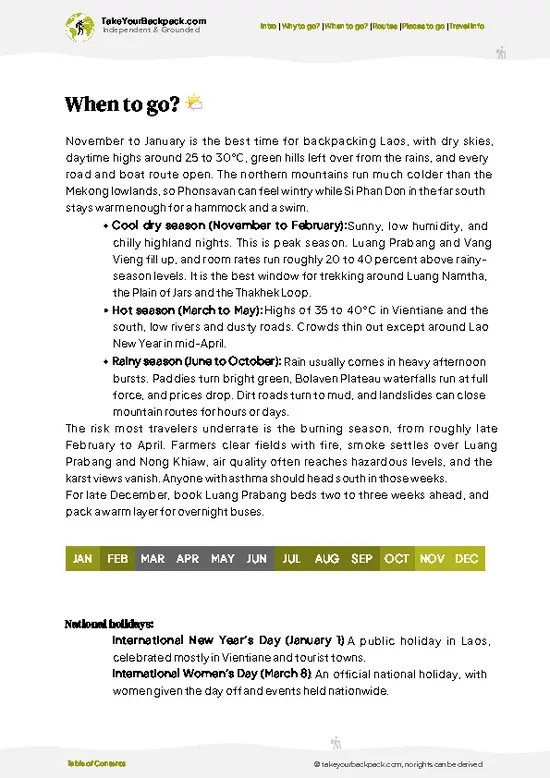
  • Weather: The dry season from November to February is your best bet. Expect cool mornings and dry trails, perfect for hiking between the jars. The wet season (May to October) turns the site into a muddy slog, with heavy rains often washing out paths and making some areas inaccessible.

  • Temperature: In the dry season, daytime highs hover around 20-25°C (68-77°F), dropping to a chilly 10-15°C (50-59°F) at night. The wet season heats up to 30-35°C (86-95°F), but humidity makes it feel hotter and stickier.

  • Daylight Hours: Daylight remains fairly consistent year-round, roughly 11-12 hours daily. Early starts are key to beat the heat and crowds, especially in the dry season.

  • Crowds: The dry season draws the bulk of visitors, especially December and January. Don’t expect solitude, but crowds
read more 👉

  • Weather: The dry season from November to February is your best bet. Expect cool mornings and dry trails, perfect for hiking between the jars. The wet season (May to October) turns the site into a muddy slog, with heavy rains often washing out paths and making some areas inaccessible.

  • Temperature: In the dry season, daytime highs hover around 20-25°C (68-77°F), dropping to a chilly 10-15°C (50-59°F) at night. The wet season heats up to 30-35°C (86-95°F), but humidity makes it feel hotter and stickier.

  • Daylight Hours: Daylight remains fairly consistent year-round, roughly 11-12 hours daily. Early starts are key to beat the heat and crowds, especially in the dry season.

  • Crowds: The dry season draws the bulk of visitors, especially December and January. Don’t expect solitude, but crowds here are manageable compared to other Southeast Asian hotspots. The wet season sees far fewer tourists, offering a quieter, more contemplative experience if you can handle the mud.

  • Seasonal Activities: Dry season allows for exploring nearby villages and markets without weather hassles. The wet season brings lush greenery and fewer tourists but limits side trips and can disrupt travel plans.

  • Price Fluctuations: Accommodation and tours spike in the dry season, particularly around the holidays. Off-season (wet months) offers steep discounts but comes with trade-offs in comfort and accessibility.


Pro-tip: Aim for late November or early February—dry, cool, and just before or after peak crowds—so you get the Plain of Jars with fewer hassles and better prices.


source: climatestotravel.comJANJanuary: excellent for travelingFEBFebruary: highly recommended for travelingMARMarch: good for travelingAPRApril: fair for travelingMAYMay: fair for travelingJUNJune: fair for travelingJULJuly: fair for travelingAUGAugust: fair for travelingSEPSeptember: fair for travelingOCTOctober: fair for travelingNOVNovember: highly recommended for travelingDECDecember: excellent for traveling
when-to-go

✈️ The backpacker research shortcutLaos Travel Guide

An offline-friendly backpacking guide with optimized travel routes, ranked highlights, transport advice, and the best areas to stay.
example page 0 from our offline Travel Guide for Laos
example page 1 from our offline Travel Guide for Laos
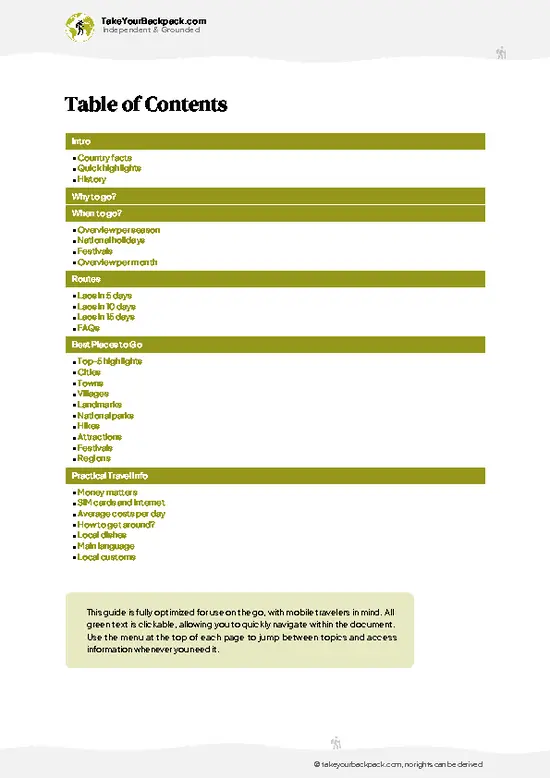
example page 2 from our offline Travel Guide for Laos
example page 3 from our offline Travel Guide for Laos
example page 4 from our offline Travel Guide for Laos
example page 5 from our offline Travel Guide for Laos
example page 6 from our offline Travel Guide for Laos
example page 7 from our offline Travel Guide for Laos
The digital guide (313 pages) contains:
80 highlights, ranked by travel appeal
Optimized 5, 10 & 15-day travel routes
Cities, national parks, landmarks, beaches
How to get around
Offline-friendly for travel without Wi-Fi
👉 Click to see all 30+ guide features

📅 Plan smarter in minutes, not weeks
Month by month travel advice
Festivals & national holidays
Budget expectations

🗺️ Go to the right places, skip the overrated ones
Honest pros & cons of destinations
Top hikes, parks & viewpoints
Lesser-known places most travelers miss
Clear “worth it vs skip it” guidance

🛏️ Travel smoothly without rookie mistakes
Best areas to stay
Transport systems explained simply
Common scams & safety advice
SIM cards, money & practical tips

🌍 Understand the country, not just visit it
Culture & traditions
52 Essential phrases & customs
Festivals worth planning around
Traveler-friendly historical context
Insights that make places more meaningful

📱 Built for real travel conditions
Fully downloadable PDF
Works completely offline
Optimized for phone use
Useful in remote areas & buses
Everything in one place
Save weeks of stressful planning
Get instant access to your full guide. 30‑day money-back guarantee.


By proceeding you agree to our terms.
Sent to your inbox immediately after payment • 100% Secure Checkout
Best Backpacking Travel Advisor 2025 tourism awardBest Backpacking
Travel Advisor
2025
What others say about Take Your Backpack Guides:
⭐⭐⭐⭐⭐
Fantastic, amazing amount of information!
⭐⭐⭐⭐⭐
My goodness this is amazing, it's what I've been looking for hats off too you!
⭐⭐⭐⭐⭐
I think this is absolutely BRILLIANT
⭐⭐⭐⭐
Very complete and informative. It's still missing places, but I gotta to commend you
⭐⭐⭐⭐⭐
This is truly amazing, thank you, can't wait to explore it with my kids!
⭐⭐⭐⭐⭐
Awesome resource, thank you!
⭐⭐⭐⭐⭐
This is amazing! Can't wait to explore the ones I haven't seen
⭐⭐⭐⭐
I love this! Well done, great idea.
⭐⭐⭐⭐⭐
Thanks for taking the time to make this gem!
⭐⭐⭐⭐⭐
This might be the best website I've ever seen.
⭐⭐⭐⭐⭐
Congratulations, and thank you so much for your work; it's incredibly valuable.
⭐⭐⭐⭐
In all seriousness I think you did a great job pointing out the important spots
⭐⭐⭐⭐⭐
10/10 very good
⭐⭐⭐⭐⭐
As someone who's only just starting to visit regularly this is awesome, thank you.
⭐⭐⭐⭐
Thank you very much! I'm going to visit my dad, it's going to be very useful!
⭐⭐⭐⭐⭐
This is really cool! We'll be travelling for the first time and this definitely come in handy.
⭐⭐⭐⭐⭐
You are now our minister of culture, congratulations 👨‍💼
⭐⭐⭐⭐⭐
Just wanted to tell you that this is a pearl! Going to follow your recommendations.
⭐⭐⭐⭐⭐
This is so cool. I'll definitely be using the resource for my travels soon.
⭐⭐⭐⭐⭐
This is very impressive! Good work.
⭐⭐⭐⭐⭐
This is an amazing and informative site. Very well done!

🛏️ Where to stay?How to pick the right area

The Plain of Jars in Laos is a treasure, but let’s cut through the Instagram haze. Crowds can be thick, and the costs of getting there can sneak up on you. But don’t let that deter you; the real magic lies in the surrounding areas where backpackers can find a home.

Start in Phonsavan. It’s the closest town and has a laid-back vibe that welcomes solo travelers. You’ll find a mix of guesthouses and budget lodges, all within walking distance of the local market and eateries. This is where you can swap stories with fellow adventurers over a bowl of noodle soup.

Then there’s the nearby village of … read more 👉
The Plain of Jars in Laos is a treasure, but let’s cut through the Instagram haze. Crowds can be thick, and the costs of getting there can sneak up on you. But don’t let that deter you; the real magic lies in the surrounding areas where backpackers can find a home.

Start in Phonsavan. It’s the closest town and has a laid-back vibe that welcomes solo travelers. You’ll find a mix of guesthouses and budget lodges, all within walking distance of the local market and eateries. This is where you can swap stories with fellow adventurers over a bowl of noodle soup.

Then there’s the nearby village of Muang Khoun. It’s quieter, with a more authentic feel. Here, you can connect with locals and experience the culture without the touristy gloss. The accommodations are basic but safe, and the hospitality is genuine.

Both areas offer easy access to the jars, but the real value is in the community. You’ll leave with more than just photos; you’ll have stories and friendships that last well beyond your trip. Embrace the journey, and you’ll find the true essence of Laos.

👛 Costs (as of 16 April 2026)Money, prices, and spending tips

Visiting the Plain of Jars in Laos is a unique experience, but it comes with its own set of costs that you should be aware of.
  • Entrance Fee: Expect to pay around $2 to $3 USD for entry to the site. This fee helps maintain the area, but it’s a small price for the chance to explore these ancient stone jars scattered across the landscape.
  • Transportation: Getting to the Plain of Jars can vary widely. If you’re coming from Phonsavan, a tuk-tuk ride will cost about $15 to $20 USD for a round trip. Renting a bicycle is cheaper, around $2 to $5 USD for the day, but be prepared for some uphill pedaling.
  • Accommodation: Options range from budget guesthouses at about $10 to $15 USD per night to mid-range hotels around $25 to $50 USD. If you want something more upscale, expect to pay upwards of $60 USD. The
read more 👉
Visiting the Plain of Jars in Laos is a unique experience, but it comes with its own set of costs that you should be aware of.
  • Entrance Fee: Expect to pay around $2 to $3 USD for entry to the site. This fee helps maintain the area, but it’s a small price for the chance to explore these ancient stone jars scattered across the landscape.
  • Transportation: Getting to the Plain of Jars can vary widely. If you’re coming from Phonsavan, a tuk-tuk ride will cost about $15 to $20 USD for a round trip. Renting a bicycle is cheaper, around $2 to $5 USD for the day, but be prepared for some uphill pedaling.
  • Accommodation: Options range from budget guesthouses at about $10 to $15 USD per night to mid-range hotels around $25 to $50 USD. If you want something more upscale, expect to pay upwards of $60 USD. The key is to find a place that fits your vibe while keeping you close to the action.
  • Food and Drink: Meals in local eateries are incredibly affordable. You can grab a hearty bowl of noodle soup for about $1 to $3 USD. If you opt for a sit-down restaurant, expect to spend around $5 to $10 USD for a meal. Don’t forget to try the local beer, which is usually around $1 USD.
  • Guided Tours: If you want to dive deeper into the history and significance of the jars, consider a guided tour. Prices typically range from $20 to $50 USD, depending on the inclusions. This can be a worthwhile investment to enrich your understanding of this fascinating site.

Plan your budget wisely, and you’ll find that the Plain of Jars offers a rich experience without breaking the bank.


source: tourismlaos.org
⚠️ Prices can change and everyone travels differently, so take this as a rough guide. Hope it helps you plan your adventure!

Other Laotian landmarks near Plain of Jars

Explore more nearby:

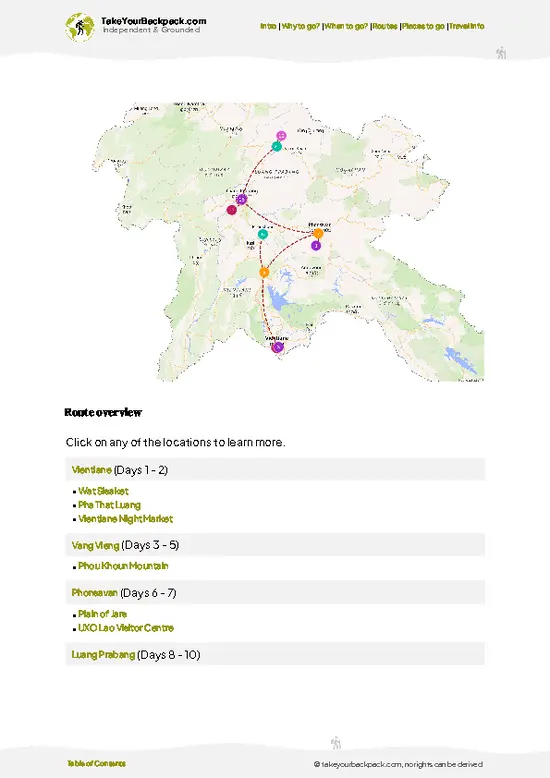
  • Phou Si Mountain—hilltop views, sunset lookout, Luang Prabang panorama| 125 km away
  • Kuang Si Waterfall—tiered pools, turquoise water, forest backdrop| 131 km away
  • Pha That Luang—golden stupa, Buddhist monument, national symbol| 156 km away

💡 Not sure where to go next?
Create a personalized itinerary for Laos including Plain of Jars and the places that fit your trip.

Generate my itinerary

👉 Discover all landmarks

Or checkout all Laos has to offer (think cities, towns, villages, national parks, hikes, beaches, festivals)
Country photo of Laos

We 💚 feedbackSumming up the experience

The Plain of Jars isn’t just about those ancient stone vessels; it’s about the eerie stillness that wraps around you. Expect crowds, especially at the main sites, but don’t let that deter you. The real magic lies in the lesser-known fields, where you can wander alone, feeling the weight of history. Bring a good pair of shoes; the terrain can be tricky. And don’t skip the local food stalls—those bowls of noodle soup are a delightful surprise that’ll fuel your adventure.

✍️ Help improve this page!
The information on this page is based on in-depth research, insights shared by experienced travelers, and feedback from the local travel community in Laos. While every effort is made to keep the information accurate and current, conditions can change — so if you spot anything incorrect or outdated, please get in touch.


🙋‍♂️ Give feedback

👋 Meet the founderWho’s Behind Take Your Backpack?

Johan, backpacker and founder of TakeYourBackpackHi, I’m Johan (Netherlands 🇳🇱), the creator of TakeYourBackpack. Over the past decade, I’ve backpacked through 80+ countries across six continents, gaining extensive experience with independent travel, long-term trips, and overland routes.

This site is built on a combination of firsthand travel experience and carefully curated insights from other backpackers. Many guides are based on places I’ve personally visited, while others bring together tips, observations, and practical advice shared by trusted travelers I’ve met along the way.

The goal is to provide realistic, experience-driven guidance — not generic itineraries — so you can explore destinations with better context, clearer expectations, and more confidence.

Get full Laos guide •
Instant download • 80 highlights • Full Offline guide