×

Laos🇱🇦 | landmarksWat PhuKhmer ruins, hillside sanctuary, ancient temple complex | things to do and best time to go

Explore Tad Lo WaterfallExplore Muang Ngoi Neua

Backpacking in Wat Phu
👍 Recommendedunique site ranked #4
By Johan Kruseman 🇳🇱 | Updated June 15, 2026

Everyone shows up to Wat Phu chasing the “Angkor Wat of Laos” tagline, then wonders why it feels smaller, quieter, and less polished than the photos. That’s the wrong metric. What actually matters here is how the ruined Khmer temple clings to the side of a sacred mountain, with frangipani trees, crumbling lintels, and a slow Mekong haze that makes time feel elastic. Wat Phu sits in southern Laos, near Champasak town, overlooking the river and the flat rice plains. For backpackers, it’s cheap to enter, mildly annoying to reach, and absolutely not a one-photo-and-done spectacle. The wow-factor is subtle, more spiritual than cinematic, and the crowds are usually light enough that you’ll hear monks before tourists. It’s hot, stairs are brutal, signage is thin, but the mix of history, mountain energy, and wide-open sky pays you back if you linger.

Discover everything you want to know in the 📖 Laos Travel Guide.


Get your Laos guide
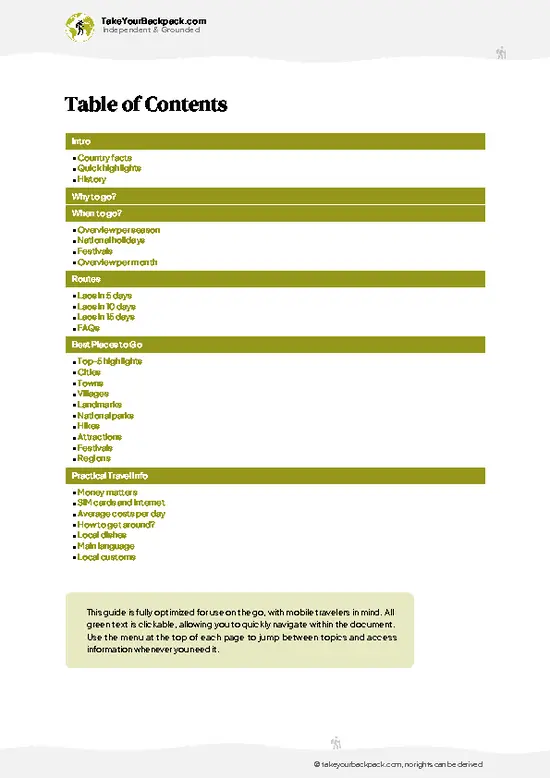
80 ranked highlights, routes & tips, works offline (313 pages)
Loading the map 🌍
CLICK TO FILTER
cities
towns
villages
landmarks
national parks
hikes
beaches
attractions
festivals
regions
SHOW COUNTRY’S BESTSHOW ALL

✨ Why go?
Ranked #4 unique site in Laos
Why visitors keep coming back

Wat Phu isn’t just another Instagram backdrop; it’s a living testament to ancient Khmer civilization. Yes, you’ll encounter crowds, especially during peak season, but don’t let that deter you. The effort-to-reward ratio is solid. The entrance fee is a mere few dollars, and the site’s rich history and stunning architecture make it worth every cent.

What sets Wat Phu apart is its uniqueness. Unlike the more famous Angkor Wat, this place feels more intimate and less commercialized. You can wander through the ruins, absorbing the spiritual energy that lingers in the air. The views from the top are breathtaking, offering a panorama of the surrounding landscape that’s hard to beat.

Incorporating Wat Phu into your travel route is a no-brainer. It naturally fits into a broader journey through southern … read more 👉
Wat Phu isn’t just another Instagram backdrop; it’s a living testament to ancient Khmer civilization. Yes, you’ll encounter crowds, especially during peak season, but don’t let that deter you. The effort-to-reward ratio is solid. The entrance fee is a mere few dollars, and the site’s rich history and stunning architecture make it worth every cent.

What sets Wat Phu apart is its uniqueness. Unlike the more famous Angkor Wat, this place feels more intimate and less commercialized. You can wander through the ruins, absorbing the spiritual energy that lingers in the air. The views from the top are breathtaking, offering a panorama of the surrounding landscape that’s hard to beat.

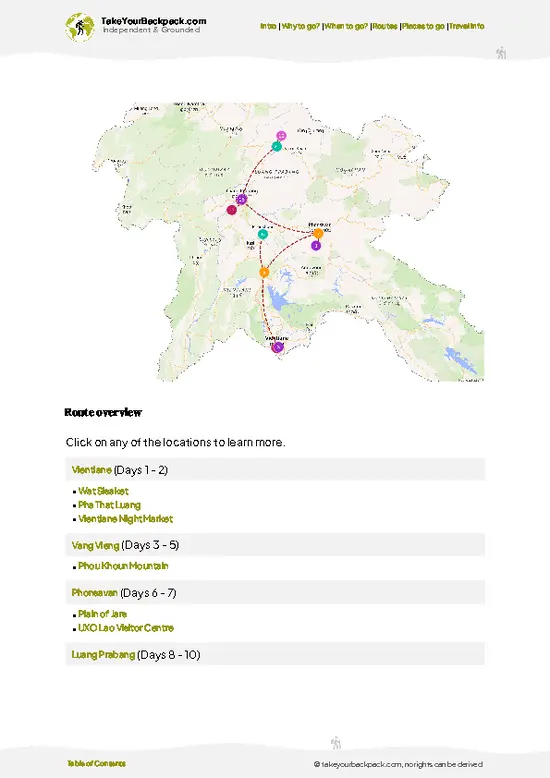
Incorporating Wat Phu into your travel route is a no-brainer. It naturally fits into a broader journey through southern Laos, making it an easy stop between Pakse and the 4000 Islands. So, if you’re looking for a slice of authenticity in a world of tourist traps, make time for Wat Phu. It’s a masterpiece that deserves a spot on your itinerary.
Want to include Wat Phu in your Laos route?
Create a personalized Laos itinerary that includes Wat Phu and the places that fit your trip — based on your travel style, budget, and available time. Get your route in seconds.

Generate my trip

💡 HighlightsPlaces and moments you shouldn't skip

  • Main sanctuary (prasat) and Shiva lingam — The heart of Wat Phu is a compact sandstone sanctuary built for Shiva; the carved lintel and the remains of the lingam show the site’s original Hindu function and are unusually well-preserved for a regional Khmer temple.
  • The terraced approach and naga stairway — A long, atmospheric sequence of terraces and a naga-lined stair create a dramatic climb that still reads like a ritual procession, with worn stone and river views that feel older than history.
  • Alignment with Mount Phu Kao (the sacred mountain) — Wat Phu isn’t a standalone ruin — it was deliberately aligned to the mountain above, which was treated as a natural sacred emblem. That landscape-temple fusion is what makes the site architecturally and spiritually distinctive.
  • Early Khmer lintels
read more 👉
  • Main sanctuary (prasat) and Shiva lingam — The heart of Wat Phu is a compact sandstone sanctuary built for Shiva; the carved lintel and the remains of the lingam show the site’s original Hindu function and are unusually well-preserved for a regional Khmer temple.
  • The terraced approach and naga stairway — A long, atmospheric sequence of terraces and a naga-lined stair create a dramatic climb that still reads like a ritual procession, with worn stone and river views that feel older than history.
  • Alignment with Mount Phu Kao (the sacred mountain) — Wat Phu isn’t a standalone ruin — it was deliberately aligned to the mountain above, which was treated as a natural sacred emblem. That landscape-temple fusion is what makes the site architecturally and spiritually distinctive.
  • Early Khmer lintels and bas-reliefs — The carved scenes of Hindu mythology and finely cut lintels span pre-Angkorian to Angkorian styles, offering a compact primer on Khmer sculpture without trekking to Angkor.
  • Sacred spring and cave shrines higher up — Follow the path above the temples to find a cave and perennial spring that fed the sanctuary; pilgrims still use these pockets of water and rock for rituals, linking past practice to present devotion.
  • Views over the Mekong and Champasak plain — From the terraces you get lowland panoramas and great sunset light over the Mekong; the sweeping view helps explain why the site was chosen in the first place.
  • Boun Wat Phou festival and living culture — Each year locals gather for the Wat Phu festival with processions, offerings and traditional music. It’s a good chance to see the site as a living religious place, not just a pile of stones.
  • Champasak Cultural Landscape (UNESCO context) — Wat Phu is the centerpiece of a wider, protected cultural landscape that traces centuries of settlement and religious change. Archaeology, continuity and conservation all meet here, which is rare in Southeast Asia.
Spotted a mistake or missing something? Contact us.

🌤️ When to go?Best time to visit Wat Phu


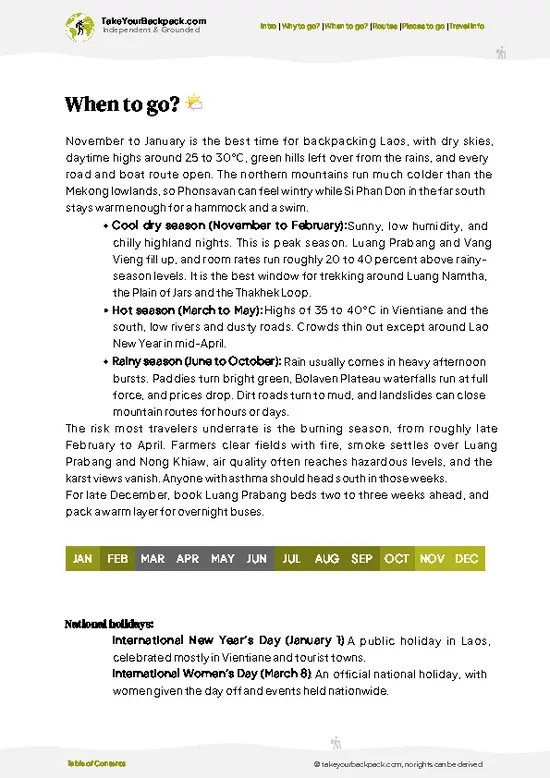
  • Weather: The dry season from November to February is your best bet—less mud, fewer mosquitoes, and a break from the relentless heat. Expect daytime temps around 20-25°C (68-77°F), which is downright comfortable for exploring ruins without turning into a sweat puddle.

  • Temperature: Outside the dry season, especially April and May, temps can spike to 35°C (95°F) or more, making the climb up Wat Phu’s terraces a test of endurance rather than enjoyment.

  • Daylight Hours: Daylight is fairly consistent year-round, roughly 11-12 hours daily. Early morning visits let you catch soft light on the ruins and beat the heat and crowds.

  • Crowds: Peak tourist season aligns with the dry months, so expect more visitors, especially on weekends. Off-season means fewer people but be ready for occasional rain
read more 👉

  • Weather: The dry season from November to February is your best bet—less mud, fewer mosquitoes, and a break from the relentless heat. Expect daytime temps around 20-25°C (68-77°F), which is downright comfortable for exploring ruins without turning into a sweat puddle.

  • Temperature: Outside the dry season, especially April and May, temps can spike to 35°C (95°F) or more, making the climb up Wat Phu’s terraces a test of endurance rather than enjoyment.

  • Daylight Hours: Daylight is fairly consistent year-round, roughly 11-12 hours daily. Early morning visits let you catch soft light on the ruins and beat the heat and crowds.

  • Crowds: Peak tourist season aligns with the dry months, so expect more visitors, especially on weekends. Off-season means fewer people but be ready for occasional rain and slippery paths.

  • Seasonal Activities: The Lao New Year in mid-April brings vibrant local celebrations nearby, but it’s also the hottest and wettest time—choose your priorities.

  • Price Fluctuations: Accommodation and transport costs rise during the dry season and festivals. Off-season offers better deals but fewer services and less predictable weather.


Pro-tip: Aim for late November or January mornings—cool, quiet, and the ruins glow in the soft light before the day crowds roll in.


source: climatestotravel.comJANJanuary: excellent for travelingFEBFebruary: excellent for travelingMARMarch: good for travelingAPRApril: fair for travelingMAYMay: fair for travelingJUNJune: fair for travelingJULJuly: fair for travelingAUGAugust: fair for travelingSEPSeptember: fair for travelingOCTOctober: good for travelingNOVNovember: excellent for travelingDECDecember: excellent for traveling
when-to-go

✈️ The backpacker research shortcutLaos Travel Guide

An offline-friendly backpacking guide with optimized travel routes, ranked highlights, transport advice, and the best areas to stay.
example page 0 from our offline Travel Guide for Laos
example page 1 from our offline Travel Guide for Laos
example page 2 from our offline Travel Guide for Laos
example page 3 from our offline Travel Guide for Laos
example page 4 from our offline Travel Guide for Laos
example page 5 from our offline Travel Guide for Laos
example page 6 from our offline Travel Guide for Laos
example page 7 from our offline Travel Guide for Laos
The digital guide (313 pages) contains:
80 highlights, ranked by travel appeal
Optimized 5, 10 & 15-day travel routes
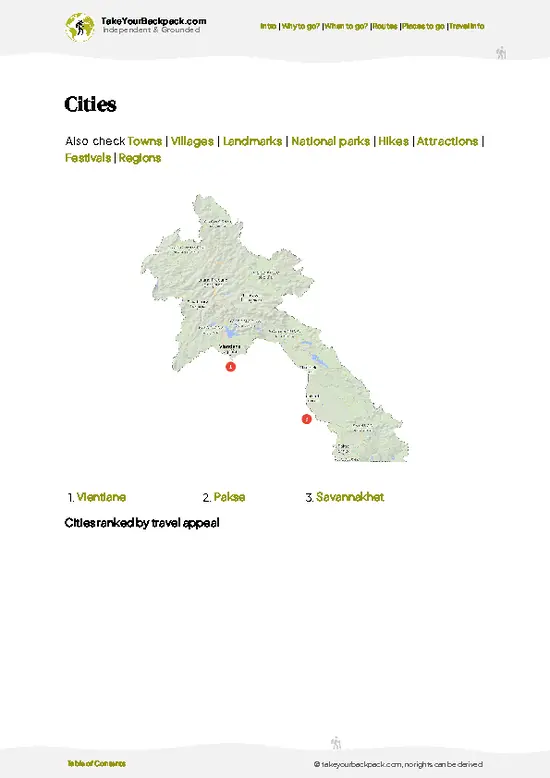
Cities, national parks, landmarks, beaches
How to get around
Offline-friendly for travel without Wi-Fi
👉 Click to see all 30+ guide features

📅 Plan smarter in minutes, not weeks
Month by month travel advice
Festivals & national holidays
Budget expectations

🗺️ Go to the right places, skip the overrated ones
Honest pros & cons of destinations
Top hikes, parks & viewpoints
Lesser-known places most travelers miss
Clear “worth it vs skip it” guidance

🛏️ Travel smoothly without rookie mistakes
Best areas to stay
Transport systems explained simply
Common scams & safety advice
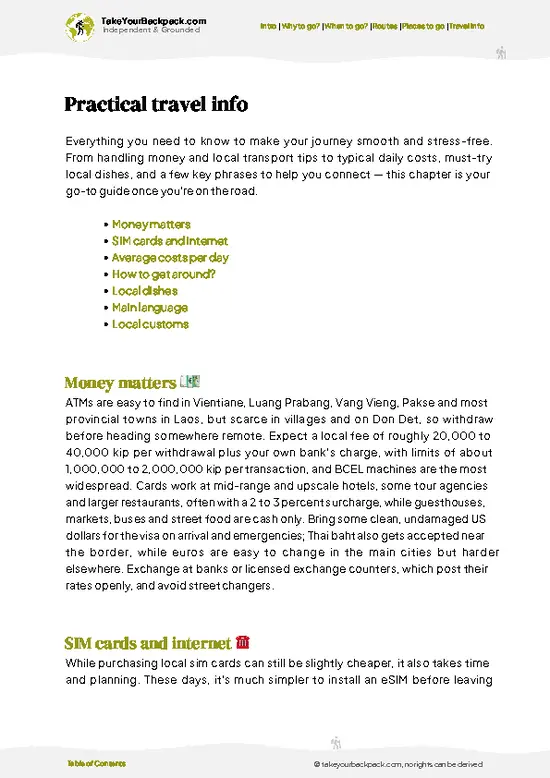
SIM cards, money & practical tips

🌍 Understand the country, not just visit it
Culture & traditions
52 Essential phrases & customs
Festivals worth planning around
Traveler-friendly historical context
Insights that make places more meaningful

📱 Built for real travel conditions
Fully downloadable PDF
Works completely offline
Optimized for phone use
Useful in remote areas & buses
Everything in one place
Save weeks of stressful planning
Get instant access to your full guide. 30‑day money-back guarantee.


By proceeding you agree to our terms.
Sent to your inbox immediately after payment • 100% Secure Checkout
Best Backpacking Travel Advisor 2025 tourism awardBest Backpacking
Travel Advisor
2025
What others say about Take Your Backpack Guides:
⭐⭐⭐⭐⭐
Fantastic, amazing amount of information!
⭐⭐⭐⭐⭐
My goodness this is amazing, it's what I've been looking for hats off too you!
⭐⭐⭐⭐⭐
I think this is absolutely BRILLIANT
⭐⭐⭐⭐
Very complete and informative. It's still missing places, but I gotta to commend you
⭐⭐⭐⭐⭐
This is truly amazing, thank you, can't wait to explore it with my kids!
⭐⭐⭐⭐⭐
Awesome resource, thank you!
⭐⭐⭐⭐⭐
This is amazing! Can't wait to explore the ones I haven't seen
⭐⭐⭐⭐
I love this! Well done, great idea.
⭐⭐⭐⭐⭐
Thanks for taking the time to make this gem!
⭐⭐⭐⭐⭐
This might be the best website I've ever seen.
⭐⭐⭐⭐⭐
Congratulations, and thank you so much for your work; it's incredibly valuable.
⭐⭐⭐⭐
In all seriousness I think you did a great job pointing out the important spots
⭐⭐⭐⭐⭐
10/10 very good
⭐⭐⭐⭐⭐
As someone who's only just starting to visit regularly this is awesome, thank you.
⭐⭐⭐⭐
Thank you very much! I'm going to visit my dad, it's going to be very useful!
⭐⭐⭐⭐⭐
This is really cool! We'll be travelling for the first time and this definitely come in handy.
⭐⭐⭐⭐⭐
You are now our minister of culture, congratulations 👨‍💼
⭐⭐⭐⭐⭐
Just wanted to tell you that this is a pearl! Going to follow your recommendations.
⭐⭐⭐⭐⭐
This is so cool. I'll definitely be using the resource for my travels soon.
⭐⭐⭐⭐⭐
This is very impressive! Good work.
⭐⭐⭐⭐⭐
This is an amazing and informative site. Very well done!

🛏️ Where to stay?Best areas and accommodation options

Staying near Wat Phu, a UNESCO World Heritage site, can be a mixed bag. The crowds can be overwhelming, especially during peak season. But don’t let that deter you; there’s a way to experience the real magic without getting sucked into the tourist trap.

Head to the town of Champasak. It’s just a short ride from Wat Phu and has a laid-back vibe that’s perfect for backpackers. You’ll find a mix of budget guesthouses and homestays that offer a genuine feel of local life. The best part? You can chat with fellow travelers over a cheap meal or a cold Beerlao, swapping stories and tips.

Another option … read more 👉
Staying near Wat Phu, a UNESCO World Heritage site, can be a mixed bag. The crowds can be overwhelming, especially during peak season. But don’t let that deter you; there’s a way to experience the real magic without getting sucked into the tourist trap.

Head to the town of Champasak. It’s just a short ride from Wat Phu and has a laid-back vibe that’s perfect for backpackers. You’ll find a mix of budget guesthouses and homestays that offer a genuine feel of local life. The best part? You can chat with fellow travelers over a cheap meal or a cold Beerlao, swapping stories and tips.

Another option is to stay in the nearby village of Ban Phu. It’s quieter and gives you a chance to connect with locals. You might even find a family willing to host you, offering meals and insights into their daily lives.

Both areas are safe and welcoming, with plenty of opportunities for socializing. You’ll be close enough to Wat Phu to explore at your own pace, avoiding the rush while soaking in the site’s ancient energy. Embrace the simplicity and authenticity; that’s where the real journey begins.

👛 Costs (as of 22 April 2026)Typical daily expenses

Visiting Wat Phu in Laos can be a rewarding experience, but it comes with its own set of costs that you should be aware of.
  • Entrance Fee: Expect to pay around $3 to $5 USD for the entrance fee. This gives you access to the temple complex and its stunning views. It’s a small price for a site that’s rich in history and culture.
  • Transportation: Getting to Wat Phu can vary widely. If you’re coming from Pakse, a tuk-tuk ride will set you back about $15 to $25 USD. Alternatively, you can rent a motorbike for around $5 to $10 USD per day, giving you the freedom to explore at your own pace.
  • Guided Tours: If you prefer a deeper dive into the history, consider a guided tour. Prices range from $20 to $50 USD, depending on the inclusions. This often covers transportation and a knowledgeable guide who can
read more 👉
Visiting Wat Phu in Laos can be a rewarding experience, but it comes with its own set of costs that you should be aware of.
  • Entrance Fee: Expect to pay around $3 to $5 USD for the entrance fee. This gives you access to the temple complex and its stunning views. It’s a small price for a site that’s rich in history and culture.
  • Transportation: Getting to Wat Phu can vary widely. If you’re coming from Pakse, a tuk-tuk ride will set you back about $15 to $25 USD. Alternatively, you can rent a motorbike for around $5 to $10 USD per day, giving you the freedom to explore at your own pace.
  • Guided Tours: If you prefer a deeper dive into the history, consider a guided tour. Prices range from $20 to $50 USD, depending on the inclusions. This often covers transportation and a knowledgeable guide who can bring the site’s stories to life.
  • Food and Drink: There are local eateries nearby where you can grab a meal for $2 to $5 USD. Don’t miss trying some local dishes. Water and snacks will add another $1 to $3 USD to your budget.
  • Souvenirs: If you’re looking to take a piece of Wat Phu home, budget around $5 to $15 USD for local crafts or trinkets. It’s a nice way to support local artisans while remembering your visit.

Be prepared for crowds, especially during peak tourist seasons. The experience can feel commercialized at times, but the real magic lies in the ancient stones and the stories they hold.


source: tourismlaos.org
⚠️ Prices can change and everyone travels differently, so take this as a rough guide. Hope it helps you plan your adventure!

Other Laotian landmarks near Wat Phu

Explore more nearby:

  • Tad Lo Waterfall—multi-level falls, rural village, Bolaven Plateau| 90 km away
  • Kong Lor Cave—limestone cavern, underground river, boat passage| 363 km away
  • Pha That Luang—golden stupa, Buddhist monument, national symbol| 486 km away

💡 Not sure where to go next?
Create a personalized itinerary for Laos including Wat Phu and the places that fit your trip.

Generate my itinerary

👉 Discover all landmarks

Or checkout all Laos has to offer (think cities, towns, villages, national parks, hikes, beaches, festivals)
Country photo of Laos

We 💚 feedbackSumming up the experience

Wat Phu isn’t just another ancient site; it’s a vibe. Sure, the crowds can be a drag, especially during peak season, but if you wander off the main path, you’ll find pockets of tranquility. The best surprise? The local food stalls nearby—try the sticky rice and grilled fish. Just a heads-up: the humidity can be brutal, so hydrate and take it slow. Embrace the moment; the energy here is palpable, and it’ll stick with you long after you leave.

✍️ Help improve this page!
The information on this page is based on in-depth research, insights shared by experienced travelers, and feedback from the local travel community in Laos. While every effort is made to keep the information accurate and current, conditions can change — so if you spot anything incorrect or outdated, please get in touch.


🙋‍♂️ Give feedback

👋 Meet the founderWho’s Behind Take Your Backpack?

Johan, backpacker and founder of TakeYourBackpackHi, I’m Johan (Netherlands 🇳🇱), the creator of TakeYourBackpack. Over the past decade, I’ve backpacked through 80+ countries across six continents, gaining extensive experience with independent travel, long-term trips, and overland routes.

This site is built on a combination of firsthand travel experience and carefully curated insights from other backpackers. Many guides are based on places I’ve personally visited, while others bring together tips, observations, and practical advice shared by trusted travelers I’ve met along the way.

The goal is to provide realistic, experience-driven guidance — not generic itineraries — so you can explore destinations with better context, clearer expectations, and more confidence.

Get full Laos guide •
Instant download • 80 highlights • Full Offline guide