×

Lebanon🇱🇧 | national parksBchaaleh Olivesancient olive trees, terraced hillsides, rural heritage | things to do and best time to go

Explore Tyre Coast Nature ReserveExplore Jabal Moussa Biosphere Reserve

Backpacking in Bchaaleh Olives
👀 For curious travelersnational park ranked #13
By Johan Kruseman 🇳🇱 | Updated June 6, 2026

Most people only realize after they leave that Bchaaleh Olives is one of the few places in Lebanon where you can wander among truly ancient olive trees for free, without turnstiles or tour buses draining your time and cash. It sits above Batroun in northern Lebanon, in the hills inland from the coast. As a backpacker destination, it’s low-key: short, mellow hikes between terraces, big views toward the mountains, birds and lizards rather than headline wildlife, and usually very light crowds. Access is easier with a car or hitching, public transport is patchy, and camping or cheap rooms are basic village-level, not trail-town slick. Compared with busier reserves like Tannourine Cedars or Horsh Ehden, Bchaaleh feels more like a lived-in agricultural landscape than a formal national park, which is either its charm or its limitation, depending on how much infrastructure you want.

Discover everything you want to know in the 📖 Lebanon Travel Guide.
Safety warning

The current risk level for Lebanon is high. Check the advice before going.


Get your Lebanon guide
89 ranked highlights, routes & tips, works offline (331 pages)
Loading the map 🌍
CLICK TO FILTER
cities
towns
landmarks
national parks
hikes
beaches
attractions
festivals
regions
SHOW COUNTRY’S BESTSHOW ALL

✨ Why go?
Ranked #13 national park in Lebanon
What makes it a must-see national park

Backpackers flock to Bchaaleh Olives for its blend of independent exploration and budget-friendly options. The park offers camping and nearby hostels, making it easy to stretch your wallet while enjoying nature. With a variety of trails, from gentle strolls to challenging hikes, there’s something for every skill level. This isn’t just a place for guided tours; it’s a haven for self-guided travelers who crave freedom. You can set your own pace, soak in the stunning landscapes, and discover hidden spots without a crowd. Just be aware of the seasonal weather; it can change quickly, so pack accordingly. This way, you’ll preserve your energy and budget for the moments that truly matter.
Want to include Bchaaleh Olives in your Lebanon route?
Create a personalized Lebanon itinerary that includes Bchaaleh Olives and the places that fit your trip — based on your travel style, budget, and available time. Get your route in seconds.

Generate my trip

💡 HighlightsDon't-miss highlights and experiences

  • Ancient olive groves — Rows of gnarled, knobbly olive trees that look like living sculptures. Some specimens are centuries old; wandering among them gives a real sense of time and traditional land use.
  • Raptor migration lookout spots — Bchaaleh sits on a major flyway. In autumn and spring you can see swathes of hawks, buzzards and vultures streaming past — bring binoculars and a patience for long, rewarding sky-watching sessions.
  • Terraced landscapes and dry-stone walls — The patchwork of hand-built terraces is beautiful up close and useful to study: they show how people shaped the slope for olives and crops, and make for interesting, photogenic hiking terrain.
  • Hiking ridgelines and short loops — Trails here are compact but varied: gentle farm tracks, steeper rises to ridge viewpoints,
read more 👉
  • Ancient olive groves — Rows of gnarled, knobbly olive trees that look like living sculptures. Some specimens are centuries old; wandering among them gives a real sense of time and traditional land use.
  • Raptor migration lookout spots — Bchaaleh sits on a major flyway. In autumn and spring you can see swathes of hawks, buzzards and vultures streaming past — bring binoculars and a patience for long, rewarding sky-watching sessions.
  • Terraced landscapes and dry-stone walls — The patchwork of hand-built terraces is beautiful up close and useful to study: they show how people shaped the slope for olives and crops, and make for interesting, photogenic hiking terrain.
  • Hiking ridgelines and short loops — Trails here are compact but varied: gentle farm tracks, steeper rises to ridge viewpoints, and shady stretches under olive and oak. Good for half-day hikes without needing big gear.
  • Sunset Mediterranean and valley viewpoints — From several high spots you get wide views over the coast and inland valleys. Sunset light on the olive trees is especially pretty — bring a light jacket and water if you stay late.
  • Spring wildflowers and aromatic herbs — In spring the terraces and roadside scrub fill with poppies, thyme, sage and other Mediterranean herbs, which means color, scent and lots of insects for birdwatching and macro photography.
  • Traditional oil-press ruins and cultural traces — Scattered stone presses, old paths and ruined farm buildings hint at the local olive-oil culture; they’re neat to explore and give context to the living groves around them.
Spotted a mistake or missing something? Contact us.

Things to do near Bchaaleh Olives

Ratings based on Tripadvisor reviews. When you book through this link, you support our work at no extra cost to you.

🌤️ When to go?Choosing the right time of year


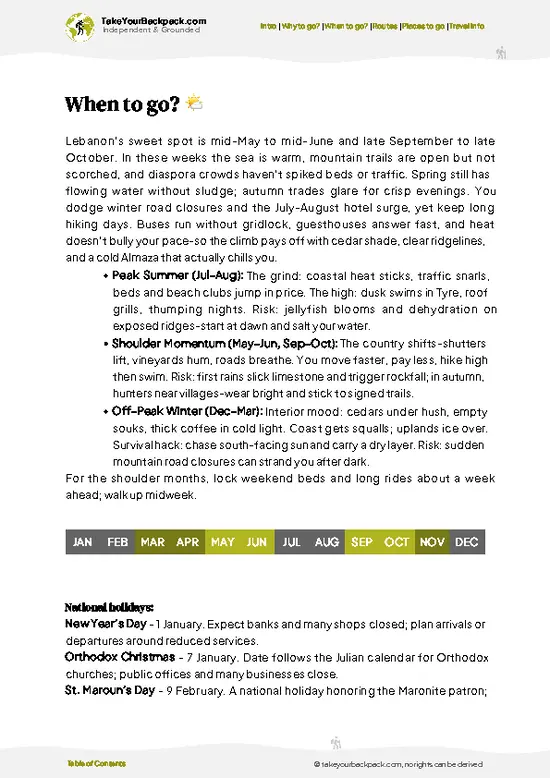
  • Weather: Spring (April to June) offers mild, dry conditions ideal for hiking, with temperatures ranging from 15°C to 25°C (59°F to 77°F). Summers get hot and dry, often exceeding 30°C (86°F), which can drain your energy fast.

  • Temperature: Fall (September to November) cools down to a comfortable 18°C to 26°C (64°F to 79°F), perfect for long days on the trail without overheating or shivering.

  • Daylight Hours: Spring and fall provide roughly 12 to 14 hours of daylight, giving you enough time to explore without rushing or needing to camp in the dark.

  • Crowds: Peak summer months attract local tourists escaping the coast, so trails can get busy. Visiting shoulder seasons means fewer people and a quieter experience.

  • Seasonal Activities: Olive harvesting happens in late fall, offering a unique
read more 👉

  • Weather: Spring (April to June) offers mild, dry conditions ideal for hiking, with temperatures ranging from 15°C to 25°C (59°F to 77°F). Summers get hot and dry, often exceeding 30°C (86°F), which can drain your energy fast.

  • Temperature: Fall (September to November) cools down to a comfortable 18°C to 26°C (64°F to 79°F), perfect for long days on the trail without overheating or shivering.

  • Daylight Hours: Spring and fall provide roughly 12 to 14 hours of daylight, giving you enough time to explore without rushing or needing to camp in the dark.

  • Crowds: Peak summer months attract local tourists escaping the coast, so trails can get busy. Visiting shoulder seasons means fewer people and a quieter experience.

  • Seasonal Activities: Olive harvesting happens in late fall, offering a unique cultural glimpse but expect limited trail access and higher local prices.

  • Price Fluctuations: Accommodation and transport costs spike during summer and harvest season. Booking in spring or early fall can save you money and hassle.


Pro-tip: Aim for late spring or early fall to dodge crowds, avoid extreme heat, and keep your budget intact—this balance preserves your energy for what really counts: the trail.


source: climatestotravel.comJANJanuary: fair for travelingFEBFebruary: fair for travelingMARMarch: good for travelingAPRApril: excellent for travelingMAYMay: excellent for travelingJUNJune: highly recommended for travelingJULJuly: fair for travelingAUGAugust: fair for travelingSEPSeptember: excellent for travelingOCTOctober: excellent for travelingNOVNovember: good for travelingDECDecember: fair for traveling
when-to-go

✈️ The backpacker research shortcutLebanon Travel Guide

An offline-friendly backpacking guide with optimized travel routes, ranked highlights, transport advice, and the best areas to stay.
example page 0 from our offline Travel Guide for Lebanon
example page 1 from our offline Travel Guide for Lebanon
example page 2 from our offline Travel Guide for Lebanon
example page 3 from our offline Travel Guide for Lebanon
example page 4 from our offline Travel Guide for Lebanon
example page 5 from our offline Travel Guide for Lebanon
example page 6 from our offline Travel Guide for Lebanon
example page 7 from our offline Travel Guide for Lebanon
The digital guide (331 pages) contains:
89 highlights, ranked by travel appeal
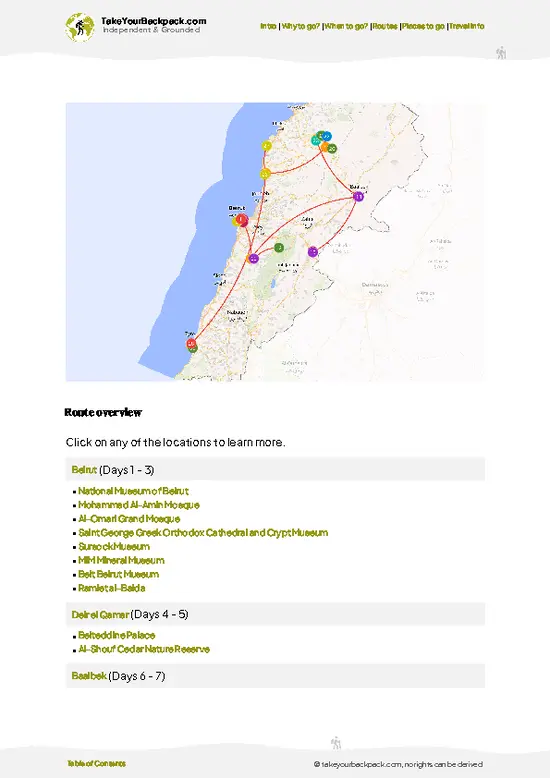
Optimized 5, 10 & 15-day travel routes
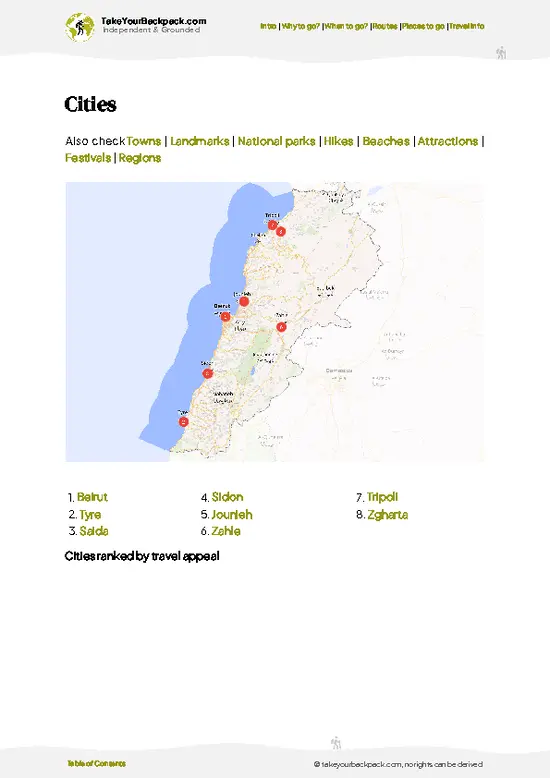
Cities, national parks, landmarks, beaches
How to get around
Offline-friendly for travel without Wi-Fi
👉 Click to see all 30+ guide features

📅 Plan smarter in minutes, not weeks
Month by month travel advice
Festivals & national holidays
Budget expectations

🗺️ Go to the right places, skip the overrated ones
Honest pros & cons of destinations
Top hikes, parks & viewpoints
Lesser-known places most travelers miss
Clear “worth it vs skip it” guidance

🛏️ Travel smoothly without rookie mistakes
Best areas to stay
Transport systems explained simply
Common scams & safety advice
SIM cards, money & practical tips

🌍 Understand the country, not just visit it
Culture & traditions
52 Essential phrases & customs
Festivals worth planning around
Traveler-friendly historical context
Insights that make places more meaningful

📱 Built for real travel conditions
Fully downloadable PDF
Works completely offline
Optimized for phone use
Useful in remote areas & buses
Everything in one place
Save weeks of stressful planning
Get instant access to your full guide. 30‑day money-back guarantee.


By proceeding you agree to our terms.
Sent to your inbox immediately after payment • 100% Secure Checkout
Best Backpacking Travel Advisor 2025 tourism awardBest Backpacking
Travel Advisor
2025
What others say about Take Your Backpack Guides:
⭐⭐⭐⭐⭐
Fantastic, amazing amount of information!
⭐⭐⭐⭐⭐
My goodness this is amazing, it's what I've been looking for hats off too you!
⭐⭐⭐⭐⭐
I think this is absolutely BRILLIANT
⭐⭐⭐⭐
Very complete and informative. It's still missing places, but I gotta to commend you
⭐⭐⭐⭐⭐
This is truly amazing, thank you, can't wait to explore it with my kids!
⭐⭐⭐⭐⭐
Awesome resource, thank you!
⭐⭐⭐⭐⭐
This is amazing! Can't wait to explore the ones I haven't seen
⭐⭐⭐⭐
I love this! Well done, great idea.
⭐⭐⭐⭐⭐
Thanks for taking the time to make this gem!
⭐⭐⭐⭐⭐
This might be the best website I've ever seen.
⭐⭐⭐⭐⭐
Congratulations, and thank you so much for your work; it's incredibly valuable.
⭐⭐⭐⭐
In all seriousness I think you did a great job pointing out the important spots
⭐⭐⭐⭐⭐
10/10 very good
⭐⭐⭐⭐⭐
As someone who's only just starting to visit regularly this is awesome, thank you.
⭐⭐⭐⭐
Thank you very much! I'm going to visit my dad, it's going to be very useful!
⭐⭐⭐⭐⭐
This is really cool! We'll be travelling for the first time and this definitely come in handy.
⭐⭐⭐⭐⭐
You are now our minister of culture, congratulations 👨‍💼
⭐⭐⭐⭐⭐
Just wanted to tell you that this is a pearl! Going to follow your recommendations.
⭐⭐⭐⭐⭐
This is so cool. I'll definitely be using the resource for my travels soon.
⭐⭐⭐⭐⭐
This is very impressive! Good work.
⭐⭐⭐⭐⭐
This is an amazing and informative site. Very well done!

🛏️ Where to stay?Best areas to stay in Lebanon

For backpackers heading to Bchaaleh Olives National Park, your best bet is to stay in nearby towns like Bcharre or Qadisha Valley. Bcharre offers a few budget-friendly guesthouses and hostels, perfect for meeting fellow travelers. The town’s charm lies in its proximity to the park and the stunning views of the surrounding mountains.

Inside the park, options are limited. There are no established accommodations, so plan to camp if you’re feeling adventurous. Just be aware of the weather and pack accordingly.

Qadisha Valley, a UNESCO World Heritage site, has some quaint lodges and homestays that … read more 👉
For backpackers heading to Bchaaleh Olives National Park, your best bet is to stay in nearby towns like Bcharre or Qadisha Valley. Bcharre offers a few budget-friendly guesthouses and hostels, perfect for meeting fellow travelers. The town’s charm lies in its proximity to the park and the stunning views of the surrounding mountains.

Inside the park, options are limited. There are no established accommodations, so plan to camp if you’re feeling adventurous. Just be aware of the weather and pack accordingly.

Qadisha Valley, a UNESCO World Heritage site, has some quaint lodges and homestays that provide a more authentic experience. These places often serve local cuisine, giving you a taste of Lebanese culture.

Avoid the tourist traps in larger cities; they can drain your budget without offering much in return. Stick to these towns for a more enriching experience.

👛 Costs (as of 9 November 2025)Typical daily expenses

Visiting Bchaaleh Olives in Lebanon can be a rewarding experience, but it’s essential to be aware of the costs involved to avoid surprises.

Entry fees for the park generally range from €5 to €10 per person. This fee grants you access to the trails and the stunning olive groves. If you plan to take a guided tour, expect to pay an additional €15 to €30, depending on the length and depth of the tour.

Parking is usually available, but it can cost around €2 to €5 for the day. If you’re considering food options, local eateries nearby offer meals for about €10 to €20. Bring cash, as some places may not accept cards.

Lastly, if you’re looking to purchase local olive oil or products, prices can vary widely. A decent bottle of olive oil might set you back €10 to €25, depending on quality and size. … read more 👉
Visiting Bchaaleh Olives in Lebanon can be a rewarding experience, but it’s essential to be aware of the costs involved to avoid surprises.

Entry fees for the park generally range from €5 to €10 per person. This fee grants you access to the trails and the stunning olive groves. If you plan to take a guided tour, expect to pay an additional €15 to €30, depending on the length and depth of the tour.

Parking is usually available, but it can cost around €2 to €5 for the day. If you’re considering food options, local eateries nearby offer meals for about €10 to €20. Bring cash, as some places may not accept cards.

Lastly, if you’re looking to purchase local olive oil or products, prices can vary widely. A decent bottle of olive oil might set you back €10 to €25, depending on quality and size.

Plan accordingly, and you’ll preserve your energy and budget for the moments that truly matter.
⚠️ Prices can change and everyone travels differently, so take this as a rough guide. Hope it helps you plan your adventure!

🥾 TrailsWhere to hike in Bchaaleh Olives: trails for every level

Bchaaleh Olives National Park is a hidden gem in Lebanon, offering some stunning hiking opportunities that cater to various skill levels. The terrain is a mix of rocky paths and lush olive groves, with panoramic views that make every step worth it. You might catch glimpses of local wildlife, like the elusive Lebanese mountain goat or some colorful birds flitting through the trees.

One of the standout trails is the Olive Grove Loop. Here are the details:
  • Length: 5 km
  • Estimated Duration: 2-3 hours
  • Difficulty Level: Moderate
  • Key Features: Breathtaking views of the valley, ancient olive trees, and a
read more 👉
Bchaaleh Olives National Park is a hidden gem in Lebanon, offering some stunning hiking opportunities that cater to various skill levels. The terrain is a mix of rocky paths and lush olive groves, with panoramic views that make every step worth it. You might catch glimpses of local wildlife, like the elusive Lebanese mountain goat or some colorful birds flitting through the trees.

One of the standout trails is the Olive Grove Loop. Here are the details:
  • Length: 5 km
  • Estimated Duration: 2-3 hours
  • Difficulty Level: Moderate
  • Key Features: Breathtaking views of the valley, ancient olive trees, and a small stream
  • Terrain: Rocky paths with some steep sections, but generally well-marked

Another option is the Summit Trail, which is a bit more challenging:
  • Length: 8 km
  • Estimated Duration: 4-5 hours
  • Difficulty Level: Hard
  • Key Features: Panoramic views from the summit, diverse flora, and a chance to spot wildlife
  • Terrain: Steep inclines and rocky sections; good hiking boots are a must

Getting to the park is pretty straightforward. You can hop on a local bus from Beirut, which takes about two hours. Just keep in mind that it can get crowded on weekends, especially during peak season. As for the entrance fee, it’s generally quite affordable, making it a budget-friendly option for travelers. Just pack some water and snacks, and you’re all set for a day of adventure!
⚠️ Hiking info can sometimes be outdated or inaccurate. Before you hit the trail, check the latest conditions with locals. If you do spot anything that's off, I'd love to hear from you, so I can update it for fellow travelers.

🛡️ SafetyScams, Hazards, and Annoyances

Bchaaleh Olives is generally safe and well-managed, but a few realities can enhance your experience. Weather can shift quickly, so pack layers and a reliable rain jacket. The terrain varies; some trails are steep and rocky, requiring good footing and careful navigation. Watch for loose stones, especially after rain, which can make trails slippery.

Wildlife is present but usually shy. If you spot animals, observe from a distance and avoid feeding them. Most importantly, stay hydrated and pace yourself, especially on longer hikes. Early mornings are ideal for cooler temperatures and fewer crowds. With these tips, you’ll preserve your energy and budget for the moments that truly matter.

Other Lebanese national parks near Bchaaleh Olives

Explore more nearby:


💡 Not sure where to go next?
Create a personalized itinerary for Lebanon including Bchaaleh Olives and the places that fit your trip.

Generate my itinerary

👉 Discover all national parks

Or checkout all Lebanon has to offer (think cities, towns, villages, national parks, hikes, beaches, festivals)
Country photo of Lebanon

We 💚 feedbackIs it worth it?

Bchaaleh Olives is a slice of authentic Lebanese life. The vibe is relaxed, with locals sharing stories over fresh bread and olive oil. Don’t miss the chance to sample the homemade za’atar; it’s a game changer. Just be aware that the roads can be tricky—take it slow to soak in the scenery without stress.

✍️ Help improve this page!
The information on this page is based on in-depth research, insights shared by experienced travelers, and feedback from the local travel community in Lebanon. While every effort is made to keep the information accurate and current, conditions can change — so if you spot anything incorrect or outdated, please get in touch.


🙋‍♂️ Give feedback

👋 Meet the founderWho’s Behind Take Your Backpack?

Johan, backpacker and founder of TakeYourBackpackHi, I’m Johan (Netherlands 🇳🇱), the creator of TakeYourBackpack. Over the past decade, I’ve backpacked through 80+ countries across six continents, gaining extensive experience with independent travel, long-term trips, and overland routes.

This site is built on a combination of firsthand travel experience and carefully curated insights from other backpackers. Many guides are based on places I’ve personally visited, while others bring together tips, observations, and practical advice shared by trusted travelers I’ve met along the way.

The goal is to provide realistic, experience-driven guidance — not generic itineraries — so you can explore destinations with better context, clearer expectations, and more confidence.

Get full Lebanon guide •
Instant download • 89 highlights • Full Offline guide