
×

Lesotho🇱🇸 | townsHa RamabantaPony trails, trading post, ridge lookout, kraals and rondavels | things to do and best time to go

Explore Ha MofokaExplore Ha Ntsi

Backpacking in Ha Ramabanta
👌 Worth visitingtown ranked #7
By Johan Kruseman 🇳🇱 | Updated October 22, 2026

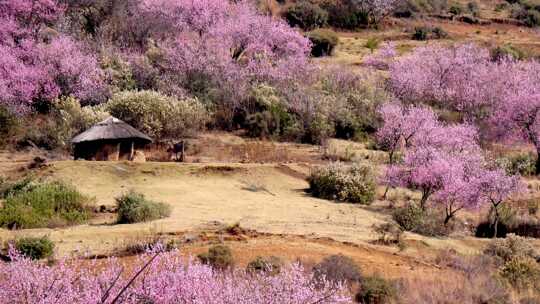
Ha Ramabanta puts you in the Maseru district highlands, where pony trails start right at the edge of the village and nobody is selling you a tour. It sits in the western highlands of Lesotho, on the mountain road running south and east from the capital toward Semonkong. Expect stone-walled kraals, rondavels with thatched roofs, goats crossing the gravel, and cold, dry air that smells of dung fires. There is no nightlife and no real sightseeing list, so skip any plan built around attractions. Do come for walking, riding and watching village life. Hostel-style socializing is thin, and you meet other travelers mostly at the trading post or on the trail. A first day works best as an easy morning walk along the ridge, a long lunch, then an afternoon ride or a talk with locals.

Discover everything you want to know in the 📖 Lesotho Travel Guide.


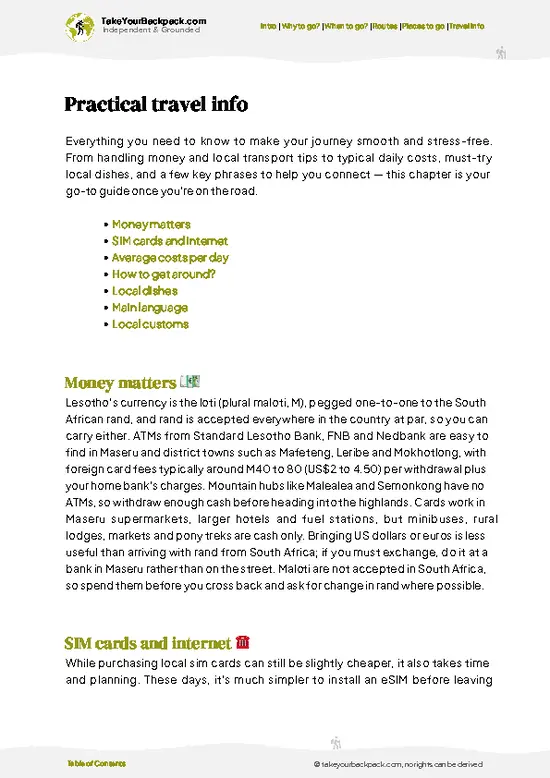
example page 0 from our offline Travel Guide for Lesotho
example page 1 from our offline Travel Guide for Lesotho
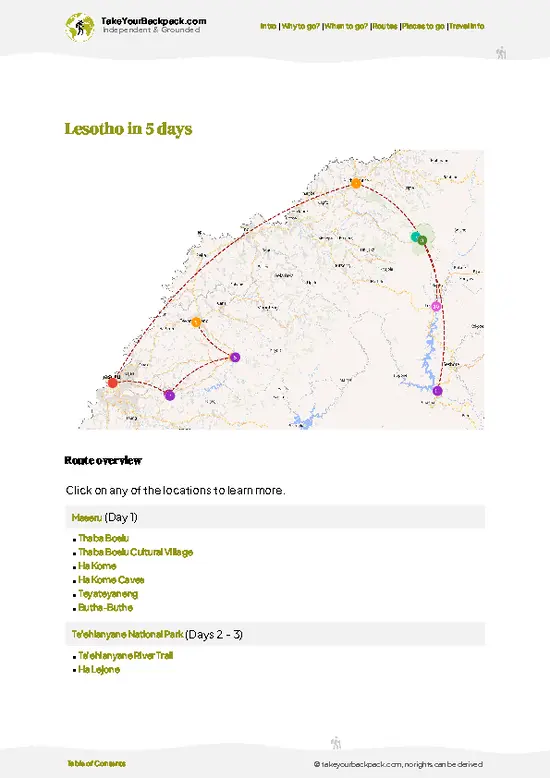
example page 2 from our offline Travel Guide for Lesotho
example page 3 from our offline Travel Guide for Lesotho
example page 4 from our offline Travel Guide for Lesotho
example page 5 from our offline Travel Guide for Lesotho
example page 6 from our offline Travel Guide for Lesotho
example page 7 from our offline Travel Guide for Lesotho
Loading the map 🌍
CLICK TO FILTER
cities
towns
villages
landmarks
national parks
hikes
attractions
festivals
regions
SHOW COUNTRY’S BESTSHOW ALL

✨ Why go?
Ranked #7 town in Lesotho
Why Ha Ramabanta should be on your travel list

Ha Ramabanta suits the traveler who wants the Lesotho highlands without the structure of a lodge circuit. The village is a waypoint on the road toward Semonkong, so many people pass through, but those who linger a night or two get the better part: pony trekking on Basotho horses along ridge paths, and walks between villages where herders in Basotho blankets wave you down for a chat. Accommodation is simple and small, so it feels like staying in someone’s neighborhood rather than a resort. Evenings are quiet, and that is the point. Hikers, slow travelers and solo backpackers who like their own company will be happy here. Groups chasing bars or a packed schedule should treat it as a brief stop on the way to the bigger waterfalls. Bring warm layers, cash in the local currency and patience for slow transport.

💡 HighlightsKey sights and experiences for travelers

  1. Ramabanta Trading Post: The village’s anchor and the place where hikers, riders and locals cross paths. Expect basic supplies, a chance to ask about trails and guides, and the best odds of meeting other travelers. Go in the morning when the road is busy. Free to visit, 30 minutes to an hour.
  2. Pony trekking from Ha Ramabanta: Sure-footed Basotho ponies carry you along ridges and down to river crossings, with herders’ huts and terraced fields along the way. Mornings are calmer and clearer. Rides run from about US$15 to 40 depending on length, from 2 hours to a full day.
  3. Village walk and ridge lookout: A self-guided stroll past rondavels, kraals and small maize plots to the high ground above the settlement. Late afternoon gives long shadows over the valleys. Free, 1 to 2 hours. Greet everyone you
… read more 👉
  1. Ramabanta Trading Post: The village’s anchor and the place where hikers, riders and locals cross paths. Expect basic supplies, a chance to ask about trails and guides, and the best odds of meeting other travelers. Go in the morning when the road is busy. Free to visit, 30 minutes to an hour.
  2. Pony trekking from Ha Ramabanta: Sure-footed Basotho ponies carry you along ridges and down to river crossings, with herders’ huts and terraced fields along the way. Mornings are calmer and clearer. Rides run from about US$15 to 40 depending on length, from 2 hours to a full day.
  3. Village walk and ridge lookout: A self-guided stroll past rondavels, kraals and small maize plots to the high ground above the settlement. Late afternoon gives long shadows over the valleys. Free, 1 to 2 hours. Greet everyone you pass, and ask before photographing people.
Day trips from Ha Ramabanta can include the Maletsunyane Falls at Semonkong, the Morija Museum and Archives, and Thaba Bosiu, the flat-topped mountain where the Basotho nation began. Pony treks are best arranged a day ahead so a horse and guide are ready.
Spotted a mistake or missing something? Contact us.

Things to do near Ha Ramabanta

Ratings based on Tripadvisor reviews. When you book through this link, you support our work at no extra cost to you.

🏘️ NeighborhoodsHow different areas shape the experience

Ha Ramabanta is a scatter of hillside hamlets along the Maseru to Thaba-Tseka road, so you explore it in pieces and mostly on foot. Here is where to spend your time.
  • Roadside Strip: The main road near the taxi stop is the busiest ground you will find. Expect minibus horns, blue-and-white taxis, small shops selling bread, paraffin and airtime, and women frying fat cakes (vetkoek) in oil you can smell from fifty meters. Ten minutes is enough, but this is where you buy supplies.
  • Ha Ramabanta Village Lanes: Climb the footpaths above the road and the noise drops fast. Round stone and thatch houses sit among peach trees and maize plots, dogs bark from every gate, and herd boys whistle at sheep. Greet everyone with “Lumela” and you will be answered warmly. This is the part that deserves your afternoon,
… read more 👉
Ha Ramabanta is a scatter of hillside hamlets along the Maseru to Thaba-Tseka road, so you explore it in pieces and mostly on foot. Here is where to spend your time.
  • Roadside Strip: The main road near the taxi stop is the busiest ground you will find. Expect minibus horns, blue-and-white taxis, small shops selling bread, paraffin and airtime, and women frying fat cakes (vetkoek) in oil you can smell from fifty meters. Ten minutes is enough, but this is where you buy supplies.
  • Ha Ramabanta Village Lanes: Climb the footpaths above the road and the noise drops fast. Round stone and thatch houses sit among peach trees and maize plots, dogs bark from every gate, and herd boys whistle at sheep. Greet everyone with “Lumela” and you will be answered warmly. This is the part that deserves your afternoon, though the slopes are steep and the dust is thick.
  • Senqunyane River Valley: Down at the water the air cools and the cliffs close in. Walking here is slow, rocky and shadeless at midday, but the river sounds and the pale sandstone make it the best stretch for photographs. Go early.
  • Evenings: Nightlife is a shebeen with a battery speaker and cold Maluti beer. After dark there are few lights, so carry a headlamp.

⌛️ 1 daySeeing the highlights in 24 hours

This is a river-and-ridge day, built around the Senqu valley and the Ha Ramabanta village lanes rather than any indoor sight.
7:30 AM: Breakfast at your guesthouse
Eat early and fill two liters of water. Mornings here are cool and quiet, with roosters, cowbells and the thin smoke of cooking fires drifting across the stone-and-thatch homes.
8:30 AM: Walk the village lanes
Stroll the main road past the small shops, the clinic and the primary school. Greet everyone with “Lumela”; it opens conversations fast. Buy bread, fruit and airtime from a roadside shop for later.
10:00 AM: Ridge walk above the village
Take a dirt track uphill on foot toward the grazing slopes. Herd boys move cattle and sheep here, often wrapped in blankets and wearing gumboots. The climb is steady, and the views over the valley … read more 👉
This is a river-and-ridge day, built around the Senqu valley and the Ha Ramabanta village lanes rather than any indoor sight.
7:30 AM: Breakfast at your guesthouse
Eat early and fill two liters of water. Mornings here are cool and quiet, with roosters, cowbells and the thin smoke of cooking fires drifting across the stone-and-thatch homes.
8:30 AM: Walk the village lanes
Stroll the main road past the small shops, the clinic and the primary school. Greet everyone with “Lumela”; it opens conversations fast. Buy bread, fruit and airtime from a roadside shop for later.
10:00 AM: Ridge walk above the village
Take a dirt track uphill on foot toward the grazing slopes. Herd boys move cattle and sheep here, often wrapped in blankets and wearing gumboots. The climb is steady, and the views over the valley and the distant Maloti peaks justify every breath. Ask a local before heading off, since paths cross private fields.
12:30 PM: Lunch in the village
Head back down for a simple plate of pap with cabbage or stew at a local eatery, or eat the picnic you packed. Keep it unhurried because the midday sun is strong at this altitude.
2:00 PM: Visit a neighborhood far from the main road
Wander to the outlying hamlets on the quieter side of the valley, a part of the area that rarely sees a visitor. Wave to women hauling water and watch kids playing with wire cars. Ask permission before taking photos.
4:30 PM: River edge
Walk down toward the river and sit on the rocks as the afternoon cools. Swallows work the air over the water, and the hills turn soft and golden.
6:00 PM: Dinner and early night
Return for a hot meal and a chat with your host. The night sky is dark and thick with stars, so step outside before bed.

🌤️ When to go?Best time to visit Ha Ramabanta

  • Summer (Nov to Feb): Days run 22 to 28°C (72 to 82°F), with afternoon thunderstorms and green slopes. Daylight stretches past 14 hours. Roads can turn to mud, and rivers rise quickly.
  • Autumn (Mar to May): Clear skies, 15 to 22°C (59 to 72°F) by day and cool nights. Hiking is easiest and crowds are almost nonexistent.
  • Winter (Jun to Aug): Days reach 8 to 14°C (46 to 57°F), nights fall well below freezing, and snow can close the high passes. Daylight is about 10 hours. Fewer minibuses run.
  • Spring (Sep to Oct): Warming to 16 to 24°C (61 to 75°F), windy and dry, with blossoms on the peach trees.
Prices barely change by season here, so choose by road conditions and book a ride out before the afternoon storms.

source: climatestotravel.comJANJanuary: excellent for travelingFEBFebruary: excellent for travelingMARMarch: excellent for travelingAPRApril: highly recommended for travelingMAYMay: fair for travelingJUNJune: below average for travelingJULJuly: below average for travelingAUGAugust: fair for travelingSEPSeptember: good for travelingOCTOctober: highly recommended for travelingNOVNovember: excellent for travelingDECDecember: excellent for traveling
when-to-go

✈️ The backpacker research shortcutLesotho Travel Guide

An offline-friendly backpacking guide with optimized travel routes, ranked highlights, transport advice, and the best areas to stay.
example page 0 from our offline Travel Guide for Lesotho
example page 1 from our offline Travel Guide for Lesotho
example page 2 from our offline Travel Guide for Lesotho
example page 3 from our offline Travel Guide for Lesotho
example page 4 from our offline Travel Guide for Lesotho
example page 5 from our offline Travel Guide for Lesotho
example page 6 from our offline Travel Guide for Lesotho
example page 7 from our offline Travel Guide for Lesotho
The digital guide (154 pages) contains:
✅ 35 highlights, ranked by travel appeal
✅ Optimized 2, 3 & 5-day travel routes
✅ Cities, national parks, landmarks, beaches
✅ How to get around
✅ Offline-friendly for travel without Wi-Fi
👉 Click to see all 30+ guide features

📅 Plan smarter in minutes, not weeks
✅ Month by month travel advice
✅ Festivals & national holidays
✅ Budget expectations

🗺️ Go to the right places, skip the overrated ones
✅ Honest pros & cons of destinations
✅ Top hikes, parks & viewpoints
✅ Lesser-known places most travelers miss
✅ Clear “worth it vs skip it” guidance

🛏️ Travel smoothly without rookie mistakes
✅ Best areas to stay
✅ Transport systems explained simply
✅ Common scams & safety advice
✅ SIM cards, money & practical tips

🌍 Understand the country, not just visit it
✅ Culture & traditions
✅ 52 Essential phrases & customs
✅ Festivals worth planning around
✅ Traveler-friendly historical context
✅ Insights that make places more meaningful

📱 Built for real travel conditions
✅ Fully downloadable PDF
✅ Works completely offline
✅ Optimized for phone use
✅ Useful in remote areas & buses
✅ Everything in one place
Stop searching, start planning
Get instant access to your full guide. 30‑day money-back guarantee.
+ Add another guide for just

By proceeding you agree to our terms.
Sent to your inbox immediately after payment • 100% Secure Checkout
Best Backpacking Travel Advisor 2025 tourism awardBest Backpacking
Travel Advisor
2025
What others say about Take Your Backpack Guides:
⭐⭐⭐⭐⭐
Fantastic, amazing amount of information!
⭐⭐⭐⭐⭐
My goodness this is amazing, it's what I've been looking for hats off too you!
⭐⭐⭐⭐⭐
I think this is absolutely BRILLIANT
⭐⭐⭐⭐
Very complete and informative. It's still missing places, but I gotta to commend you
⭐⭐⭐⭐⭐
This is truly amazing, thank you, can't wait to explore it with my kids!
⭐⭐⭐⭐⭐
Awesome resource, thank you!
⭐⭐⭐⭐⭐
This is amazing! Can't wait to explore the ones I haven't seen
⭐⭐⭐⭐
I love this! Well done, great idea.
⭐⭐⭐⭐⭐
Thanks for taking the time to make this gem!
⭐⭐⭐⭐⭐
This might be the best website I've ever seen.
⭐⭐⭐⭐⭐
Congratulations, and thank you so much for your work; it's incredibly valuable.
⭐⭐⭐⭐
In all seriousness I think you did a great job pointing out the important spots
⭐⭐⭐⭐⭐
10/10 very good
⭐⭐⭐⭐⭐
As someone who's only just starting to visit regularly this is awesome, thank you.
⭐⭐⭐⭐
Thank you very much! I'm going to visit my dad, it's going to be very useful!
⭐⭐⭐⭐⭐
This is really cool! We'll be travelling for the first time and this definitely come in handy.
⭐⭐⭐⭐⭐
You are now our minister of culture, congratulations 👨‍💼
⭐⭐⭐⭐⭐
Just wanted to tell you that this is a pearl! Going to follow your recommendations.
⭐⭐⭐⭐⭐
This is so cool. I'll definitely be using the resource for my travels soon.
⭐⭐⭐⭐⭐
This is very impressive! Good work.
⭐⭐⭐⭐⭐
This is an amazing and informative site. Very well done!

🛏️ Where to stay?How to pick the right area

The roadside area near the taxi stop is the practical choice for a budget stay in Ha Ramabanta. Accommodation here is very limited and there are no dorm-style hostels, so expect basic guesthouse rooms or a homestay arranged locally, usually US$10 to 25 a night. Staying near the road means you can catch the early minibus out without a long walk in the dark, and the shops for food and airtime are close. It gets noisy with taxi horns at dawn and music from a shebeen on some evenings, so earplugs help.

The quieter village lanes uphill are the second option. Here a family homestay is the typical bed, … read more 👉
The roadside area near the taxi stop is the practical choice for a budget stay in Ha Ramabanta. Accommodation here is very limited and there are no dorm-style hostels, so expect basic guesthouse rooms or a homestay arranged locally, usually US$10 to 25 a night. Staying near the road means you can catch the early minibus out without a long walk in the dark, and the shops for food and airtime are close. It gets noisy with taxi horns at dawn and music from a shebeen on some evenings, so earplugs help.

The quieter village lanes uphill are the second option. Here a family homestay is the typical bed, calm after dark, and a good way to meet people. Lighting is poor, so walking back at night needs a headlamp, and you should settle in before dusk. Bring a warm sleeping bag outside summer, since rooms are rarely heated. Arrange your stay by asking at the shops or the local chief’s household, and carry small cash because there is no card payment.

🚌 Getting aroundHow to get around Ha Ramabanta

From the roadside taxi stop where minibuses drop you, the village lanes and the shops start within a two-minute walk, so you rarely need another ride. Ha Ramabanta is spread along one road and the surrounding footpaths, with little traffic apart from the minibuses, which are crowded and loud but run reliably in daylight. Most backpackers arrive by shared taxi and then walk.
  • Walking: The best way to see the village and river. Paths are dusty, steep and stony, so wear proper shoes and carry water. Free.
  • Minibus taxi: The workhorse along the Maseru to Thaba-Tseka road. Expect US$3 to 6 for the ride to or from Maseru (roughly 2.5 to 3.5 hours), packed with sacks of maize and chatter. They leave when full, mostly between early morning and mid-afternoon, and few run after dark.
  • Short local hops: Shared
… read more 👉
From the roadside taxi stop where minibuses drop you, the village lanes and the shops start within a two-minute walk, so you rarely need another ride. Ha Ramabanta is spread along one road and the surrounding footpaths, with little traffic apart from the minibuses, which are crowded and loud but run reliably in daylight. Most backpackers arrive by shared taxi and then walk.
  • Walking: The best way to see the village and river. Paths are dusty, steep and stony, so wear proper shoes and carry water. Free.
  • Minibus taxi: The workhorse along the Maseru to Thaba-Tseka road. Expect US$3 to 6 for the ride to or from Maseru (roughly 2.5 to 3.5 hours), packed with sacks of maize and chatter. They leave when full, mostly between early morning and mid-afternoon, and few run after dark.
  • Short local hops: Shared taxis or 4x4 pickups cover nearby villages for about US$1 to 3. There are no fixed timetables, so ask at the stop.
  • Hitching: Common in the mountains and usually costs the same as a taxi fare. Pickup beds are windy and cold, so bring a layer. Daylight only.
  • Pony hire: The classic way into the valleys, about US$10 to 20 a day with a guide arranged through the village. It is slow and bumpy, and worth it for the remote trails that vehicles cannot reach.
Leave the road by early afternoon, since the last minibuses fill up quickly and rain turns tracks slick.

👛 Costs (as of 22 October 2026)What things cost and how to budget

Ha Ramabanta costs about US$37 a day for a backpacker in high season, since lodging is basic and everything is bought locally with cash.
CategoryBudget RangeLocal Reality
Dorm accommodationUS$10 to 20No hostels. A simple guesthouse room or homestay is the usual option.
MealsUS$6 to 10Pap with stew, fat cakes and shop-bought bread. Few restaurants.
Local transportUS$3 to 6Minibus taxis and short pickup hops. Longer trips to Maseru cost more.
Basic activities/entry feesUS$5 to 10Local guides for walks, pony hire costs extra.
Miscellaneous expensesUS$2 to 4Airtime, snacks and bottled water.
Total Daily BudgetUS$37Cash only, with no reliable ATM nearby.
Buy food in bulk in Maseru before you travel, since village shops stock a limited range at higher prices. Locals accept the loti, and South African rand also circulate.
⚠️ Prices can change and everyone travels differently, so take this as a rough guide. Hope it helps you plan your adventure!

🚌 Day tripsWhere to go beyond the main area

Ha Ramabanta works as a base for walking and riding trips, though transport is thin, so start early and return before dark.
Senqunyane River Gorge:
The river cuts a rocky valley below the village. A half-day walk costs nothing, and a local guide at around US$5 to 10 helps you find the safer paths. Go in autumn or spring when the water is low. First-timers often start at noon and run out of shade and water.

Semonkong and Maletsunyane Falls:
The 192 m falls lie west along the road, a ride of roughly 2 to 3 hours each way by minibus with a change, about US$8 to 15 return. Summer rains give the biggest flow. Leave before dawn, because the last connections back are early.
👉 Explore Maletsunyane Falls
Pony Trek to Mountain Villages:
A guided day ride to nearby hamlets costs about US$10 to 20 including … read more 👉
Ha Ramabanta works as a base for walking and riding trips, though transport is thin, so start early and return before dark.
Senqunyane River Gorge:
The river cuts a rocky valley below the village. A half-day walk costs nothing, and a local guide at around US$5 to 10 helps you find the safer paths. Go in autumn or spring when the water is low. First-timers often start at noon and run out of shade and water.

Semonkong and Maletsunyane Falls:
The 192 m falls lie west along the road, a ride of roughly 2 to 3 hours each way by minibus with a change, about US$8 to 15 return. Summer rains give the biggest flow. Leave before dawn, because the last connections back are early.
👉 Explore Maletsunyane Falls
Pony Trek to Mountain Villages:
A guided day ride to nearby hamlets costs about US$10 to 20 including the pony. You cross grassland and rocky slopes and share tea in a household. Choose dry months, wear long trousers and pack a rain layer.

🛡️ SafetySafety Tips and Common Scams in Ha Ramabanta

Ha Ramabanta is a quiet rural village, and the main risks are practical ones. Petty theft is uncommon but happens near the taxi stop, so keep your phone and cash out of sight and your bag in front of you in crowded minibuses. Walk only in daylight. Paths are rocky, there is almost no lighting after dark, and the weather can turn quickly, so carry a headlamp and a rain layer. Dogs and livestock on the trails are usually harmless, but give them space. Women and solo travelers generally report friendly treatment. Greet people, ask before photographing anyone, and avoid drinking heavily at a shebeen late at night. Scams are rare, though prices for guides and ponies can start high, so agree on the fare first. Cold snaps in winter can be dangerous for hikers, so tell your host your route.

FAQCommon questions from travelers

Ha Ramabanta is worth a short visit if you want a quiet mountain village far from tour groups, rather than only a stopover. You can walk the Senqunyane River valley, share a meal with a host family and ride a pony to nearby hamlets. It has few facilities, so most travelers treat it as a one or two night detour on the road between Maseru and the highlands.
Ha Ramabanta needs about one to two days. One day covers the village lanes and a river walk of three to four hours, while a second day allows a guided pony ride, which costs roughly US$10 to 20. Add a day each way if you want to continue to Semonkong or the Thaba-Tseka road.
Ha Ramabanta can be done as a long day from Maseru, but it is tiring. The minibus ride takes about 2.5 to 3.5 hours each way and costs US$3 to 6, leaving only a few hours on the ground. Services thin out after mid-afternoon, so staying one night gives a much better visit.
⚠️ Things can change over time, so always validate details locally before you go.

Other Basotho towns near Ha Ramabanta

Explore more nearby:

  • Ha Mofoka—river valley, local homesteads, agricultural land| 26 km away
  • Ha Ntsi—small village, rural landscape, community life| 28 km away
  • Semonkong—Maletsunyane Falls, highland village, pony trekking| 31 km away

💡 Not sure where to go next?
Create a personalized itinerary for Lesotho including Ha Ramabanta and the places that fit your trip.

Generate my itinerary

👉 Discover all towns

Or checkout all Lesotho has to offer (think cities, towns, villages, national parks, hikes, beaches, festivals)
Country photo of Lesotho

We 💚 feedbackFinal thoughts on visiting Ha Ramabanta

Ha Ramabanta is best on a clear, cold morning, when frost still sits on the grass and the first ponies are being saddled. I would stay the night, ride early and leave after lunch. Pack a warm layer even in summer, because the evenings turn sharp once the sun slips behind the ridge.

✍️ Help improve this page!
The information on this page is based on in-depth research, insights shared by experienced travelers, and feedback from the local travel community in Lesotho. While every effort is made to keep the information accurate and current, conditions can change — so if you spot anything incorrect or outdated, please get in touch.


🙋‍♂️ Give feedback

👋 Meet the founderWho’s Behind Take Your Backpack?

Johan, backpacker and founder of TakeYourBackpackHi, I’m Johan (Netherlands 🇳🇱), the creator of TakeYourBackpack. Over the past 3 decades, I’ve backpacked through 90+ countries across six continents, gaining extensive experience with independent travel, long-term trips, and overland routes.

This site is built on a combination of firsthand travel experience and carefully curated insights from other backpackers. Many guides are based on places I’ve personally visited, while others bring together tips, observations, and practical advice shared by trusted travelers I’ve met along the way.

The goal is to provide realistic, experience-driven guidance — not generic itineraries — so you can explore destinations with better context, clearer expectations, and more confidence.