×

Lesotho🇱🇸 | attractionsLesotho National Museum and Art Gallery
Basotho heritage, contemporary art, curated exhibits | things to do and best time to go

Explore Semonkong Cultural VillageExplore Morija Arts & Cultural Festival Grounds

Backpacking in Lesotho National Museum and Art Gallery
👌 Worth visitingattraction ranked #8
By Johan Kruseman 🇳🇱 | Updated April 6, 2026

Everyone’s seen the filtered shots: glassy-eyed travelers posing in front of Lesotho National Museum and Art Gallery, as if the building itself is the main event. Here’s the truth—if you’re coming for blockbuster architecture or a Louvre-sized art collection, you’ll be underwhelmed. The real magic is what’s inside: a raw, unvarnished look at Basotho history and creativity, told by Basotho themselves. You’ll find it in Maseru, right in the heart of Lesotho’s capital, easy enough to reach by foot if you’re staying downtown. For backpackers, this isn’t a place to tick off a bucket list; it’s a place to get your bearings, to understand the country beyond the mountain passes and pony treks. The exhibits are compact but punchy, with honest storytelling and zero tourist gloss. Entry is cheap, crowds are rare, and the vibe is refreshingly low-key—no one’s hustling you for a guided tour. Compared to Lesotho’s wild landscapes, this is a cerebral pit stop, but it’s the only spot in the country where the nation’s soul is laid out in plain view.

Discover everything you want to know in the 📖 Lesotho Travel Guide.
Loading the map 🌍
CLICK TO FILTER
city
town
village
unique site
national park
hike
attraction
festival
region
SHOW COUNTRY‘S BESTSHOW ALL

✨ Why go?
Ranked #8 attraction in Lesotho
What makes it a must-see attraction

Lesotho’s National Museum and Art Gallery isn’t just another stop on the map—it’s a checkpoint where the country’s soul gets real. Forget the glossy Instagram shots; this place is about raw, unfiltered history and culture that you won’t find plastered on postcards. Yes, it’s a bit off the beaten path and the crowds are manageable, but that’s exactly why it’s worth your time. Inside, you’ll find artifacts and artworks that tell the story of Lesotho’s rugged past and resilient people, from ancient rock art to contemporary Basotho creativity. This isn’t a museum that panders to tourists; it’s a living archive that demands attention and respect.

For backpackers, it’s a major milestone on the route through Lesotho—an anchor point where you can pause and really digest the country’s identity beyond … read more 👉
Lesotho’s National Museum and Art Gallery isn’t just another stop on the map—it’s a checkpoint where the country’s soul gets real. Forget the glossy Instagram shots; this place is about raw, unfiltered history and culture that you won’t find plastered on postcards. Yes, it’s a bit off the beaten path and the crowds are manageable, but that’s exactly why it’s worth your time. Inside, you’ll find artifacts and artworks that tell the story of Lesotho’s rugged past and resilient people, from ancient rock art to contemporary Basotho creativity. This isn’t a museum that panders to tourists; it’s a living archive that demands attention and respect.

For backpackers, it’s a major milestone on the route through Lesotho—an anchor point where you can pause and really digest the country’s identity beyond the mountains and landscapes. The effort to get here pays off with a deep cultural immersion that’s hard to match elsewhere in Southern Africa. It’s not flashy, but it’s authentic, and that authenticity hits harder than any adrenaline rush. If you want to understand Lesotho beyond the surface, this museum is non-negotiable.
Get the complete Travel Guide for Lesotho
Everything organized for offline planning — routes, highlights, costs & tips

See what’s inside 👉

Get the Travel Guide -

💡 HighlightsEssential experiences to have while visiting Lesotho National Museum and Art Gallery

1. The Dinosaur Footprints Exhibit
Forget the sanitized, glass-box fossil displays you’ve seen elsewhere. Here, you’re face-to-face with real, ancient dinosaur footprints—actual tracks pressed into Lesotho’s red earth over 200 million years ago. These aren’t replicas or digital projections. They’re the raw, unfiltered evidence that this land was once a stomping ground for creatures you only meet in textbooks. It’s not just a science lesson; it’s a jolt of perspective. You’re standing where giants walked, in a country most people can’t find on a map.


2. Basotho Cultural Artifacts
This isn’t your average “tribal mask behind glass” situation. The museum’s collection of Basotho blankets, hats (the iconic mokorotlo), and everyday tools is a crash course in living culture. You’ll see how the Basotho … read more 👉
1. The Dinosaur Footprints Exhibit
Forget the sanitized, glass-box fossil displays you’ve seen elsewhere. Here, you’re face-to-face with real, ancient dinosaur footprints—actual tracks pressed into Lesotho’s red earth over 200 million years ago. These aren’t replicas or digital projections. They’re the raw, unfiltered evidence that this land was once a stomping ground for creatures you only meet in textbooks. It’s not just a science lesson; it’s a jolt of perspective. You’re standing where giants walked, in a country most people can’t find on a map.


2. Basotho Cultural Artifacts
This isn’t your average “tribal mask behind glass” situation. The museum’s collection of Basotho blankets, hats (the iconic mokorotlo), and everyday tools is a crash course in living culture. You’ll see how the Basotho people have turned necessity into art—blankets that double as armor against the mountain cold, hats that are both fashion and identity. The best part? The displays are refreshingly honest about colonial history and cultural resilience. No sugarcoating, just the real story of how people adapt, resist, and create.


3. Contemporary Lesotho Art Gallery
If you think African art is all wood carvings and beadwork, this gallery will snap you out of it. The rotating exhibitions showcase bold, sometimes confrontational work by Lesotho’s living artists—painters, sculptors, photographers—who tackle everything from urbanization to gender politics. It’s raw, it’s modern, and it’s a direct line to what’s on people’s minds right now. You’ll leave with a sense of what Lesotho is dreaming, fearing, and fighting for, not just what it used to be.


4. The Storytelling Room
This isn’t a dusty archive. It’s a living, breathing space where oral tradition is king. On certain days, you’ll catch local storytellers spinning Basotho legends and folktales—sometimes in English, sometimes in Sesotho, always with a punch of drama. It’s not just entertainment; it’s a masterclass in how stories shape identity. If you’re lucky enough to catch a session, you’ll understand why oral history is still the heartbeat of this country.


5. The Museum’s Architecture
Most museums are boxes. This one is a statement. The building itself is a blend of modern lines and Basotho motifs, designed to feel both rooted and forward-looking. The use of local stone and traditional patterns isn’t just for show—it’s a physical manifesto about pride and progress. Even if you’re not an architecture nerd, you’ll feel the difference. This place doesn’t just house culture; it embodies it.
Spotted a mistake or missing something? Contact us.

🌤️ When to go?Seasonal considerations and timing


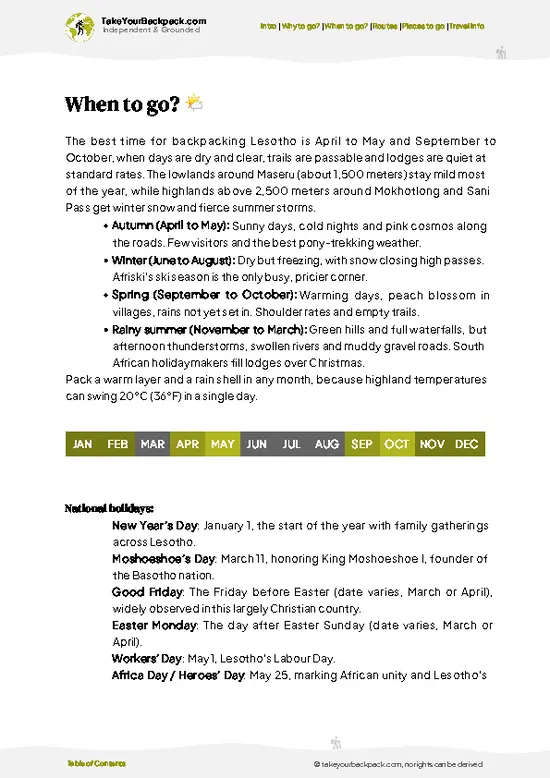
  • Weather: Lesotho’s climate is a high-altitude mix, meaning winters (June to August) can be biting cold, often dropping below freezing at night, while summers (December to February) bring warm days around 25°C (77°F) but can be wet with afternoon showers. Spring (September to November) and autumn (March to May) offer the most stable weather, with mild temperatures and less rain.

  • Temperature: Expect winter lows around -5°C (23°F) to highs near 10°C (50°F). Summer highs hit 25°C (77°F), but nights stay cool. Shoulder seasons hover between 15-20°C (59-68°F), perfect for wandering without overheating or freezing.

  • Daylight Hours: Summer days stretch to about 13-14 hours, giving you more time to explore. Winter shrinks daylight to roughly 10 hours, so plan your museum visits accordingly to
read more 👉

  • Weather: Lesotho’s climate is a high-altitude mix, meaning winters (June to August) can be biting cold, often dropping below freezing at night, while summers (December to February) bring warm days around 25°C (77°F) but can be wet with afternoon showers. Spring (September to November) and autumn (March to May) offer the most stable weather, with mild temperatures and less rain.

  • Temperature: Expect winter lows around -5°C (23°F) to highs near 10°C (50°F). Summer highs hit 25°C (77°F), but nights stay cool. Shoulder seasons hover between 15-20°C (59-68°F), perfect for wandering without overheating or freezing.

  • Daylight Hours: Summer days stretch to about 13-14 hours, giving you more time to explore. Winter shrinks daylight to roughly 10 hours, so plan your museum visits accordingly to avoid rushing in the dark.

  • Crowds: The museum sees a quiet flow year-round, but expect a slight uptick during local school holidays (July and December). This is not a tourist hotspot, so you’ll mostly have space to breathe and absorb the exhibits.

  • Seasonal Activities: Spring and autumn bring cultural festivals and art events in Maseru, enhancing your museum experience with live performances and markets. Winter’s chill limits outdoor activities, while summer’s rains can disrupt travel plans.

  • Price Fluctuations: Entrance fees remain stable year-round, but accommodation and transport costs spike during peak local holidays and festivals. Booking in shoulder seasons can save you cash and hassle.


Pro-tip: Aim for September to November or March to May for the best blend of weather, cultural buzz, and wallet-friendly travel—skip the extremes and soak in Lesotho’s art scene without the fuss.


source: climatestotravel.comJANJanuary: good for travelingFEBFebruary: good for travelingMARMarch: excellent for travelingAPRApril: excellent for travelingMAYMay: excellent for travelingJUNJune: fair for travelingJULJuly: fair for travelingAUGAugust: fair for travelingSEPSeptember: excellent for travelingOCTOctober: excellent for travelingNOVNovember: excellent for travelingDECDecember: good for traveling
when-to-go

✈️ The backpacker research shortcutLesotho Travel Guide

An offline-friendly backpacking guide with optimized travel routes, ranked highlights, transport advice, and the best areas to stay.
example page 0 from our offline Travel Guide for Lesothoexample page 1 from our offline Travel Guide for Lesothoexample page 2 from our offline Travel Guide for Lesothoexample page 3 from our offline Travel Guide for Lesothoexample page 4 from our offline Travel Guide for Lesothoexample page 5 from our offline Travel Guide for Lesotho
The digital guide (178 pages) contains:
48 highlights, ranked by travel appeal
Optimized 2, 3 & 5-day travel routes
Best neighborhoods to stay
How to get around
Offline-friendly for travel without Wi-Fi
👉 See all 30+ guide features

📅 Plan smarter in minutes, not weeks
Month by month travel advice
Festivals & national holidays
Budget expectations

🗺️ Go to the right places, skip the overrated ones
Honest pros & cons of destinations
Top hikes, parks & viewpoints
Lesser-known places most travelers miss
Clear “worth it vs skip it” guidance

🛏️ Travel smoothly without rookie mistakes
Best areas to stay
Transport systems explained simply
Common scams & safety advice
SIM cards, money & practical tips

🌍 Understand the country, not just visit it
Culture & traditions
52 Essential phrases & customs
Festivals worth planning around
Traveler-friendly historical context
Insights that make places more meaningful

📱 Built for real travel conditions
Fully downloadable PDF
Works completely offline
Optimized for phone use
Useful in remote areas & buses
Everything in one place
Save weeks of stressful planning
Get instant access to the full guide directly. 30-day money-back guarantee.


Sent to your inbox immediately after payment • 100% Secure Checkout
Best Backpacking Travel Advisor 2025 tourism awardBest Backpacking
Travel Advisor
2025
What others say about Take Your Backpack Guides:
⭐⭐⭐⭐⭐
Fantastic, amazing amount of information!
⭐⭐⭐⭐⭐
My goodness this is amazing, it's what I've been looking for hats off too you!
⭐⭐⭐⭐⭐
I think this is absolutely BRILLIANT
⭐⭐⭐⭐
Very complete and informative. It's still missing places, but I gotta to commend you
⭐⭐⭐⭐⭐
This is truly amazing, thank you, can't wait to explore it with my kids!
⭐⭐⭐⭐⭐
Awesome resource, thank you!
⭐⭐⭐⭐⭐
This is amazing! Can't wait to explore the ones I haven't seen
⭐⭐⭐⭐
I love this! Well done, great idea.
⭐⭐⭐⭐⭐
Thanks for taking the time to make this gem!
⭐⭐⭐⭐⭐
This might be the best website I've ever seen.
⭐⭐⭐⭐⭐
Congratulations, and thank you so much for your work; it's incredibly valuable.
⭐⭐⭐⭐
In all seriousness I think you did a great job pointing out the important spots
⭐⭐⭐⭐⭐
10/10 very good
⭐⭐⭐⭐⭐
As someone who's only just starting to visit regularly this is awesome, thank you.
⭐⭐⭐⭐
Thank you very much! I'm going to visit my dad, it's going to be very useful!
⭐⭐⭐⭐⭐
This is really cool! We'll be travelling for the first time and this definitely come in handy.
⭐⭐⭐⭐⭐
You are now our minister of culture, congratulations 👨‍💼
⭐⭐⭐⭐⭐
Just wanted to tell you that this is a pearl! Going to follow your recommendations.
⭐⭐⭐⭐⭐
This is so cool. I'll definitely be using the resource for my travels soon.
⭐⭐⭐⭐⭐
This is very impressive! Good work.
⭐⭐⭐⭐⭐
This is an amazing and informative site. Very well done!

🛏️ Where to stay?Best areas and accommodation options

Lesotho National Museum and Art Gallery sits in Maseru, the capital city, which is where you want to base yourself if you’re backpacking. Forget the glossy brochures that make Maseru sound like a quiet, tucked-away town. It’s a bustling city with all the noise, traffic, and chaos you’d expect from a capital in a developing country. That’s part of its charm—real life, not a sanitized tourist bubble.

For backpackers, the best areas to stay are those close to the city center, particularly around the Main Market and the vicinity of the National Museum itself. This zone is where you’ll find a mix … read more 👉
Lesotho National Museum and Art Gallery sits in Maseru, the capital city, which is where you want to base yourself if you’re backpacking. Forget the glossy brochures that make Maseru sound like a quiet, tucked-away town. It’s a bustling city with all the noise, traffic, and chaos you’d expect from a capital in a developing country. That’s part of its charm—real life, not a sanitized tourist bubble.

For backpackers, the best areas to stay are those close to the city center, particularly around the Main Market and the vicinity of the National Museum itself. This zone is where you’ll find a mix of budget guesthouses and small hostels that attract solo travelers and backpackers looking to connect. It’s safe enough during the day, and the locals are friendly, often eager to share stories or point you toward authentic Basotho experiences. The social vibe here is genuine—no forced hostel parties, just travelers swapping tips over cheap local beer or street food.

Avoid the outskirts or overly posh neighborhoods. They’re quieter but isolate you from the pulse of the city and the museum’s cultural context. Staying near the museum means you’re within walking distance of markets, local eateries, and public transport, which is crucial because taxis and buses are the lifeblood of getting around here. It’s not luxury, but it’s real, and that’s what makes the experience stick with you long after you leave.

👛 Costs (as of 1 February 2026)Typical daily expenses

As of the most recent estimates, the Lesotho National Museum and Art Gallery charges an entrance fee of approximately M50 (about €2.50) for adults. Additional costs may include guided tours or special exhibitions, but specific details are not readily available. It's advisable to contact the museum directly for the most current information.

source: gov.ls
⚠️ Prices can change and everyone travels differently, so take this as a rough guide. Hope it helps you plan your adventure!

Other Basotho attractions near Lesotho National Museum and Art Gallery

Explore more nearby:


👉 Discover all attractions

Or checkout all Lesotho has to offer (think cities, towns, villages, national parks, hikes, beaches, festivals)
Country photo of Lesotho

We 💚 feedbackFinal thoughts on visiting Lesotho National Museum and Art Gallery

The Lesotho National Museum and Art Gallery isn’t going to flood your feed with crowds or flashy exhibits, and that’s exactly why it’s worth your time. It’s quiet, almost intimate, like stepping into a local’s living room where history and art aren’t polished for tourists but lived and breathed. The real magic is in the raw stories—Basotho culture, struggles, and triumphs—told through artifacts and art that don’t shout for attention but quietly demand respect. Just don’t expect air conditioning or fancy amenities; come ready to engage, not just glance.

✍️ Help improve this page!
The information on this page is based on in-depth research, insights shared by experienced travelers, and feedback from the local travel community in Lesotho. While every effort is made to keep the information accurate and current, conditions can change — so if you spot anything incorrect or outdated, please get in touch.


🙋‍♂️ Give feedback

👋 Meet the founderWho’s Behind Take Your Backpack?

Johan, backpacker and founder of TakeYourBackpackHi, I’m Johan (Netherlands 🇳🇱), the creator of TakeYourBackpack. Over the past decade, I’ve backpacked through 80+ countries across six continents, gaining extensive experience with independent travel, long-term trips, and overland routes.

This site is built on a combination of firsthand travel experience and carefully curated insights from other backpackers. Many guides are based on places I’ve personally visited, while others bring together tips, observations, and practical advice shared by trusted travelers I’ve met along the way.

The goal is to provide realistic, experience-driven guidance — not generic itineraries — so you can explore destinations with better context, clearer expectations, and more confidence.

Get Full Country Guide |
Instant download • 48 highlights • Full Offline guide