×

Lesotho🇱🇸 | attractionsMorija Arts & Cultural Festival Groundsopen-air stage, annual festival, creative workshops | things to do and best time to go

Explore Lesotho National Museum and Art GalleryExplore Pony Trekking & Cultural Centre

Backpacking in Morija Arts & Cultural Grounds
👌 Worth visitingattraction ranked #7
By Johan Kruseman 🇳🇱 | Updated June 25, 2026

Here’s the curveball: the Morija Arts & Cultural Festival Grounds are not some polished, year-round carnival of Basotho culture—outside festival season, the place is often quiet enough to hear your own boots crunching gravel. Morija itself sits about 45 minutes south of Maseru, tucked in the low hills that feel more like a village crossroads than a tourist magnet. If you’re picturing a slick, Instagram-ready spectacle, reset your expectations. The real magic here is the raw, communal energy when the festival is on—think pounding drums, impromptu dance circles, and a crowd that’s mostly locals, not selfie-chasing travelers. Yes, during the festival, it gets crowded and prices spike (accommodation especially), but outside those days, you’ll find a sleepy, lived-in vibe and a chance to actually talk to artists and elders without a queue. Compared to Lesotho’s mountain treks or pony adventures, Morija’s draw is cultural immersion, not adrenaline. It’s not cheap during peak, but the payoff is a front-row seat to Basotho creativity—unfiltered, unpredictable, and absolutely worth the detour if you crave substance over spectacle.

Discover everything you want to know in the 📖 Lesotho Travel Guide.


Get your Lesotho guide
42 ranked highlights, routes & tips, works offline (178 pages)
Loading the map 🌍
CLICK TO FILTER
cities
towns
villages
landmarks
national parks
hikes
attractions
festivals
regions
SHOW COUNTRY’S BESTSHOW ALL

✨ Why go?
Ranked #7 attraction in Lesotho
The unique appeal for travelers

The Morija Arts & Cultural Festival Grounds in Lesotho aren’t just another stop on the tourist checklist—they’re a raw, unfiltered pulse of the nation’s soul. Sure, you’ll find crowds during festival season, and yes, the costs can spike when everyone’s chasing the same experience. But here’s the kicker: this place is a milestone for any backpacker serious about understanding Lesotho beyond the postcard.

Morija is where history and culture collide with a fierce pride that’s impossible to fake. It’s not just about watching performances or browsing crafts; it’s about stepping into a living narrative that’s been shaped by centuries of Basotho resilience and creativity. The festival grounds serve as a cultural compass, pointing you toward the heart of Lesotho’s identity with every drumbeat and … read more 👉
The Morija Arts & Cultural Festival Grounds in Lesotho aren’t just another stop on the tourist checklist—they’re a raw, unfiltered pulse of the nation’s soul. Sure, you’ll find crowds during festival season, and yes, the costs can spike when everyone’s chasing the same experience. But here’s the kicker: this place is a milestone for any backpacker serious about understanding Lesotho beyond the postcard.

Morija is where history and culture collide with a fierce pride that’s impossible to fake. It’s not just about watching performances or browsing crafts; it’s about stepping into a living narrative that’s been shaped by centuries of Basotho resilience and creativity. The festival grounds serve as a cultural compass, pointing you toward the heart of Lesotho’s identity with every drumbeat and dance step.

For backpackers, the effort-to-reward ratio is off the charts. You’re not just a spectator—you’re part of a communal heartbeat that’s both grounding and electrifying. This isn’t a tourist trap; it’s a rite of passage, a place where the country’s past and present fuse into something genuinely transformative. If you’re charting a route through Lesotho, skipping Morija means missing the story that makes the whole journey worth it.
Want to include Morija Arts & Cultural Festival Grounds in your Lesotho route?
Create a personalized Lesotho itinerary that includes Morija Arts & Cultural Festival Grounds and the places that fit your trip — based on your travel style, budget, and available time. Get your route in seconds.

Generate my trip

💡 HighlightsEssential experiences to have while visiting Morija Arts & Cultural Grounds

1. Live Sesotho Music Performances
Forget the sanitized, over-produced festival acts you see on social media. At Morija, the music is raw, loud, and alive. You’ll hear everything from traditional famo accordion bands to Basotho jazz and gospel, played by musicians who aren’t chasing global fame—they’re playing for their neighbors, their families, and you, the outsider who’s lucky enough to be in the crowd. The energy is contagious. You’ll dance, even if you’re the type who claims you don’t dance. This isn’t background noise; it’s the heartbeat of the festival.


2. Traditional Dance Battles
This isn’t a polite, staged “cultural demonstration.” The dance-offs at Morija are competitive, athletic, and sometimes a little chaotic. Picture young men in full Basotho regalia—blankets, boots, and hats—stomping … read more 👉
1. Live Sesotho Music Performances
Forget the sanitized, over-produced festival acts you see on social media. At Morija, the music is raw, loud, and alive. You’ll hear everything from traditional famo accordion bands to Basotho jazz and gospel, played by musicians who aren’t chasing global fame—they’re playing for their neighbors, their families, and you, the outsider who’s lucky enough to be in the crowd. The energy is contagious. You’ll dance, even if you’re the type who claims you don’t dance. This isn’t background noise; it’s the heartbeat of the festival.


2. Traditional Dance Battles
This isn’t a polite, staged “cultural demonstration.” The dance-offs at Morija are competitive, athletic, and sometimes a little chaotic. Picture young men in full Basotho regalia—blankets, boots, and hats—stomping and spinning in the dust, cheered on by a crowd that knows every move. The pride is palpable. You’re not just watching; you’re swept up in the rivalry and the rhythm. If you want a souvenir photo, take it fast—these dancers don’t pose, they perform.


3. Artisan Market (Real, Not Tourist-Trap Crafts)
You’ll see plenty of woven baskets and beadwork, but this isn’t the airport gift shop. The artisans here are the real deal—many are from the surrounding villages, and their work is both functional and fiercely local. You’ll find hand-carved walking sticks, intricate hats, and blankets that are actually used in daily Basotho life. Prices are fair, but don’t expect a bargain-basement flea market. You’re paying for skill, tradition, and the story behind each piece. Skip the mass-produced trinkets and talk to the makers. That’s where the magic is.


4. Storytelling and Poetry Slams
If you think you know African oral tradition, Morija will raise the bar. The festival’s storytelling sessions aren’t just for kids—they’re a showcase of wit, memory, and Basotho humor. Poetry slams here are electric, with performers weaving Sesotho and English, tackling everything from politics to heartbreak. The crowd is vocal and unfiltered. If a story drags, you’ll hear about it. When a poem lands, the applause is thunderous. This is the soul of the festival, and it’s as real as it gets.


5. Communal Feasting (Basotho Style)
You won’t find overpriced food trucks or Instagrammable fusion cuisine. Instead, you’ll eat what the locals eat: papa (maize porridge), moroho (wild greens), and slow-cooked stews, served up in big communal pots. Grab a plate, find a spot on the grass, and dig in. The food is hearty, the portions are generous, and the conversations are even better. If you’re looking for a sanitized, “safe” culinary experience, look elsewhere. If you want to taste Lesotho, this is it.
Spotted a mistake or missing something? Contact us.

Things to do near Morija Arts & Cultural Festival Grounds

Ratings based on Tripadvisor reviews. When you book through this link, you support our work at no extra cost to you.

🌤️ When to go?Weather, crowds, and seasonal trade-offs


  • Weather: Lesotho’s high-altitude climate means sharp contrasts. From June to August, expect chilly, dry winters with daytime temps around 10°C (50°F) but nights can plunge below freezing. Summers, from November to March, bring warmth—up to 28°C (82°F)—and occasional afternoon thunderstorms that can disrupt outdoor events.

  • Temperature: Spring (September to November) and autumn (March to May) offer the most comfortable temperatures, hovering between 15-22°C (59-72°F), perfect for long days outdoors without sweating buckets or shivering.

  • Daylight Hours: Peak daylight stretches from October to March, giving you up to 13 hours of light. In winter months, daylight shrinks to about 10 hours, which can cramp your festival and exploration time.

  • Crowds: The festival peaks in late September
read more 👉

  • Weather: Lesotho’s high-altitude climate means sharp contrasts. From June to August, expect chilly, dry winters with daytime temps around 10°C (50°F) but nights can plunge below freezing. Summers, from November to March, bring warmth—up to 28°C (82°F)—and occasional afternoon thunderstorms that can disrupt outdoor events.

  • Temperature: Spring (September to November) and autumn (March to May) offer the most comfortable temperatures, hovering between 15-22°C (59-72°F), perfect for long days outdoors without sweating buckets or shivering.

  • Daylight Hours: Peak daylight stretches from October to March, giving you up to 13 hours of light. In winter months, daylight shrinks to about 10 hours, which can cramp your festival and exploration time.

  • Crowds: The festival peaks in late September and early October, drawing local artists and tourists alike. Expect a lively buzz but also packed grounds and higher prices. Off-peak months see fewer visitors, offering a more intimate vibe but less festival action.

  • Seasonal Activities: The festival aligns with the end of winter and start of spring, showcasing traditional Basotho music, crafts, and dance. Outside festival dates, the grounds are quieter, letting you soak in the cultural heritage without the noise.

  • Price Fluctuations: Accommodation and transport costs spike during festival season (September-October). Booking early is essential. Off-season months (May-August) offer better deals but fewer activities.


Pro-tip: Aim for late September to early October to catch the festival’s full energy with manageable weather, but if you crave space and savings, visit just before or after the main event.


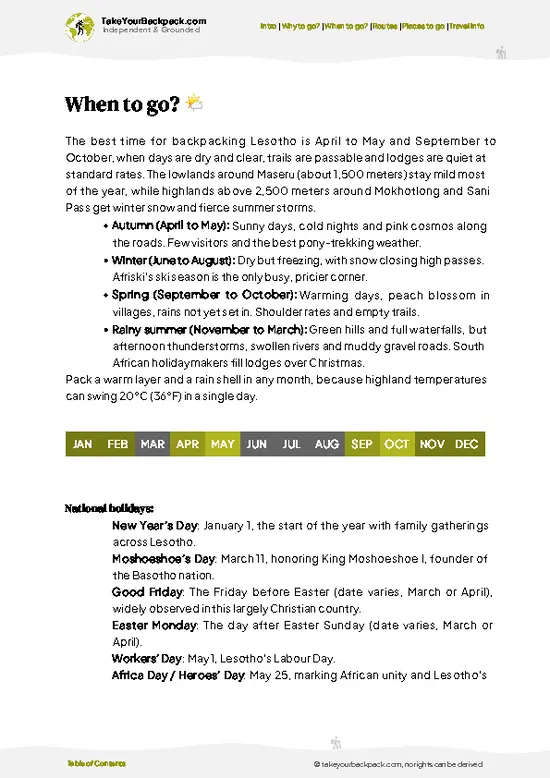
source: climatestotravel.comJANJanuary: good for travelingFEBFebruary: good for travelingMARMarch: highly recommended for travelingAPRApril: highly recommended for travelingMAYMay: fair for travelingJUNJune: fair for travelingJULJuly: fair for travelingAUGAugust: fair for travelingSEPSeptember: excellent for travelingOCTOctober: excellent for travelingNOVNovember: highly recommended for travelingDECDecember: good for traveling
lesotho-attraction-morija-arts-cultural-festival-grounds v1
© Google |

✈️ The backpacker research shortcutLesotho Travel Guide

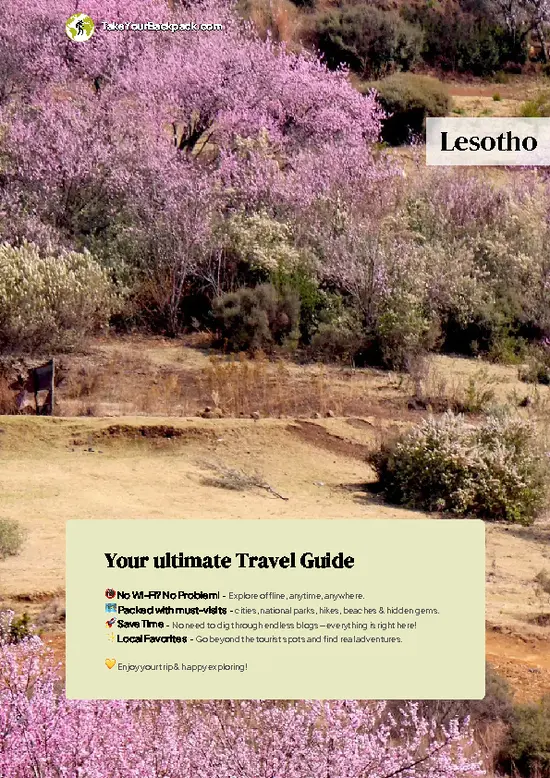
An offline-friendly backpacking guide with optimized travel routes, ranked highlights, transport advice, and the best areas to stay.
example page 0 from our offline Travel Guide for Lesotho
example page 1 from our offline Travel Guide for Lesotho
example page 2 from our offline Travel Guide for Lesotho
example page 3 from our offline Travel Guide for Lesotho
example page 4 from our offline Travel Guide for Lesotho
example page 5 from our offline Travel Guide for Lesotho
example page 6 from our offline Travel Guide for Lesotho
example page 7 from our offline Travel Guide for Lesotho
The digital guide (178 pages) contains:
42 highlights, ranked by travel appeal
Optimized 2, 3 & 5-day travel routes
Cities, national parks, landmarks, beaches
How to get around
Offline-friendly for travel without Wi-Fi
👉 Click to see all 30+ guide features

📅 Plan smarter in minutes, not weeks
Month by month travel advice
Festivals & national holidays
Budget expectations

🗺️ Go to the right places, skip the overrated ones
Honest pros & cons of destinations
Top hikes, parks & viewpoints
Lesser-known places most travelers miss
Clear “worth it vs skip it” guidance

🛏️ Travel smoothly without rookie mistakes
Best areas to stay
Transport systems explained simply
Common scams & safety advice
SIM cards, money & practical tips

🌍 Understand the country, not just visit it
Culture & traditions
52 Essential phrases & customs
Festivals worth planning around
Traveler-friendly historical context
Insights that make places more meaningful

📱 Built for real travel conditions
Fully downloadable PDF
Works completely offline
Optimized for phone use
Useful in remote areas & buses
Everything in one place
Save weeks of stressful planning
Get instant access to your full guide. 30‑day money-back guarantee.


By proceeding you agree to our terms.
Sent to your inbox immediately after payment • 100% Secure Checkout
Best Backpacking Travel Advisor 2025 tourism awardBest Backpacking
Travel Advisor
2025
What others say about Take Your Backpack Guides:
⭐⭐⭐⭐⭐
Fantastic, amazing amount of information!
⭐⭐⭐⭐⭐
My goodness this is amazing, it's what I've been looking for hats off too you!
⭐⭐⭐⭐⭐
I think this is absolutely BRILLIANT
⭐⭐⭐⭐
Very complete and informative. It's still missing places, but I gotta to commend you
⭐⭐⭐⭐⭐
This is truly amazing, thank you, can't wait to explore it with my kids!
⭐⭐⭐⭐⭐
Awesome resource, thank you!
⭐⭐⭐⭐⭐
This is amazing! Can't wait to explore the ones I haven't seen
⭐⭐⭐⭐
I love this! Well done, great idea.
⭐⭐⭐⭐⭐
Thanks for taking the time to make this gem!
⭐⭐⭐⭐⭐
This might be the best website I've ever seen.
⭐⭐⭐⭐⭐
Congratulations, and thank you so much for your work; it's incredibly valuable.
⭐⭐⭐⭐
In all seriousness I think you did a great job pointing out the important spots
⭐⭐⭐⭐⭐
10/10 very good
⭐⭐⭐⭐⭐
As someone who's only just starting to visit regularly this is awesome, thank you.
⭐⭐⭐⭐
Thank you very much! I'm going to visit my dad, it's going to be very useful!
⭐⭐⭐⭐⭐
This is really cool! We'll be travelling for the first time and this definitely come in handy.
⭐⭐⭐⭐⭐
You are now our minister of culture, congratulations 👨‍💼
⭐⭐⭐⭐⭐
Just wanted to tell you that this is a pearl! Going to follow your recommendations.
⭐⭐⭐⭐⭐
This is so cool. I'll definitely be using the resource for my travels soon.
⭐⭐⭐⭐⭐
This is very impressive! Good work.
⭐⭐⭐⭐⭐
This is an amazing and informative site. Very well done!

🛏️ Where to stay?Choosing the right base

The Morija Arts & Cultural Festival is a magnet for travelers chasing authentic Basotho culture, but let’s cut through the Instagram gloss: this isn’t a bustling urban hub with endless nightlife or a backpacker’s party scene. The crowds swell during festival time, but outside those days, Morija is a quiet town where the real charm lies in its slow pace and genuine local interactions.

If you want to be close to the festival grounds, your best bet is to stay in the heart of Morija itself. This area is safe, compact, and where you’ll find the pulse of the community. It’s not about flashy hostels … read more 👉
The Morija Arts & Cultural Festival is a magnet for travelers chasing authentic Basotho culture, but let’s cut through the Instagram gloss: this isn’t a bustling urban hub with endless nightlife or a backpacker’s party scene. The crowds swell during festival time, but outside those days, Morija is a quiet town where the real charm lies in its slow pace and genuine local interactions.

If you want to be close to the festival grounds, your best bet is to stay in the heart of Morija itself. This area is safe, compact, and where you’ll find the pulse of the community. It’s not about flashy hostels or trendy cafés—think simple guesthouses and family-run lodgings where you can swap stories with other travelers and locals alike. The vibe here is low-key but welcoming, perfect for solo backpackers who want to connect without the noise of tourist traps.

For those who want a bit more buzz, the nearby town of Maseru offers more options and a livelier atmosphere, but it’s a 45-minute drive away, which means you’ll miss the early morning and late-night festival moments that make Morija special. Staying in Morija means embracing the slow rhythm of Basotho life, where the real magic happens in the conversations, the crafts, and the unfiltered cultural exchange—not just the staged performances.

👛 Costs (as of 3 February 2026)Travel costs and budget guide for Morija Arts & Cultural Grounds

As of 2025, a day pass for the Morija Arts & Cultural Festival in Lesotho costs between €5 and €15. ([takeyourbackpack.com](https://www.takeyourbackpack.com/backpacking-in-lesotho/visit-morija-arts-and-cultural-festival/?utm_source=openai))

source: morijamuseum.org
⚠️ Prices can change and everyone travels differently, so take this as a rough guide. Hope it helps you plan your adventure!

Other Basotho attractions near Morija Arts & Cultural Grounds

Explore more nearby:


💡 Not sure where to go next?
Create a personalized itinerary for Lesotho including Morija Arts & Cultural Grounds and the places that fit your trip.

Generate my itinerary

👉 Discover all attractions

Or checkout all Lesotho has to offer (think cities, towns, villages, national parks, hikes, beaches, festivals)
Country photo of Lesotho

We 💚 feedbackParting advice and final tips

The Morija Arts & Cultural Festival Grounds aren’t some polished, Instagram-perfect scene. Expect crowds during festival time, and yes, it can feel a bit chaotic. But here’s the kicker: the real magic is in the raw, unfiltered energy of local artists pouring their soul into every performance and craft. You won’t find slick tourist traps here—just genuine Basotho culture that grabs you by the collar and won’t let go. If you’re ready to dive past the surface, this place will surprise you in ways no brochure ever could.

✍️ Help improve this page!
The information on this page is based on in-depth research, insights shared by experienced travelers, and feedback from the local travel community in Lesotho. While every effort is made to keep the information accurate and current, conditions can change — so if you spot anything incorrect or outdated, please get in touch.


🙋‍♂️ Give feedback

👋 Meet the founderWho’s Behind Take Your Backpack?

Johan, backpacker and founder of TakeYourBackpackHi, I’m Johan (Netherlands 🇳🇱), the creator of TakeYourBackpack. Over the past decade, I’ve backpacked through 80+ countries across six continents, gaining extensive experience with independent travel, long-term trips, and overland routes.

This site is built on a combination of firsthand travel experience and carefully curated insights from other backpackers. Many guides are based on places I’ve personally visited, while others bring together tips, observations, and practical advice shared by trusted travelers I’ve met along the way.

The goal is to provide realistic, experience-driven guidance — not generic itineraries — so you can explore destinations with better context, clearer expectations, and more confidence.

Get full Lesotho guide •
Instant download • 42 highlights • Full Offline guide