×

Lesotho🇱🇸 | best attractionsYour Guide to the 9 Best attractions in Lesotho

Lesotho’s attractions are defined by its rugged highlands, remote villages, and seasonal shifts that shape every experience. From the icy grip of winter in the Maloti Mountains to the sun-drenched valleys below, each region offers distinct challenges and rewards for backpackers. Choosing the right destination here means balancing ease of travel, budget, and cultural immersion—whether you seek the raw burn of a mountain trek or the quiet pulse of rural life, your choice sets the tone for safety, vibe, and authentic connection.

By Johan Kruseman 🇳🇱 | Updated September 4, 2026
Explore the best festivals in Lesotho

Why go?Key Factors That Shape the Experience

Lesotho’s attractions stand apart because the entire country is perched high in the Maloti Mountains, making geography the defining feature of any visit. This elevation shapes everything: the air is thinner, the weather swings sharply, and the landscape demands effort to explore. Unlike more accessible destinations, Lesotho’s rugged terrain means reaching its key sites often involves long drives on rough roads or multi-hour hikes. This trade-off limits casual sightseeing but rewards those willing to commit with a raw, unfiltered connection to the land and culture. The country’s isolation has preserved traditional Basotho life, offering a cultural depth that contrasts sharply with more commercialized neighbors. However, infrastructure is sparse, so travelers must balance the desire for immersive, … read more 👉
Lesotho’s attractions stand apart because the entire country is perched high in the Maloti Mountains, making geography the defining feature of any visit. This elevation shapes everything: the air is thinner, the weather swings sharply, and the landscape demands effort to explore. Unlike more accessible destinations, Lesotho’s rugged terrain means reaching its key sites often involves long drives on rough roads or multi-hour hikes. This trade-off limits casual sightseeing but rewards those willing to commit with a raw, unfiltered connection to the land and culture. The country’s isolation has preserved traditional Basotho life, offering a cultural depth that contrasts sharply with more commercialized neighbors. However, infrastructure is sparse, so travelers must balance the desire for immersive, authentic experiences against the reality of limited amenities and slower travel. In Lesotho, every step forward is earned—and the payoff is a landscape and lifestyle that feel genuinely untouched.
Our Approach to Ranking
The list of best attractions in Lesotho is created based on cultural significance or entertainment value. If you feel a attraction is missing in this list, please let us know.

When to go?When to Plan Your Trip

Seasonal Rhythms Shape the Experience

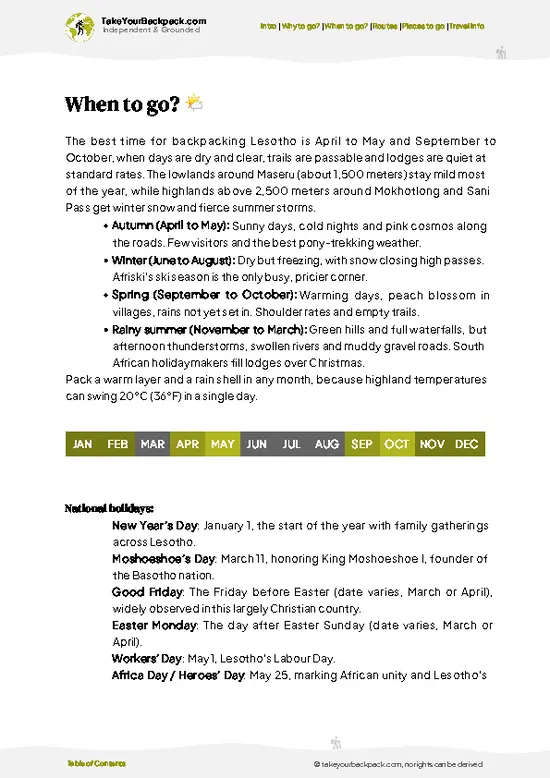
Lesotho’s high-altitude terrain means weather swings are sharp and tangible. Winters bring biting cold and snow, transforming the landscape into a stark, white canvas that’s perfect for winter sports but can make some trails slippery and remote areas harder to reach. Summers are warm but not stifling, with afternoon thunderstorms that refresh the air and deepen the green hues of the mountains.

The best window to explore most attractions falls in the late spring to early autumn months when the weather is stable, the trails are dry, and the vistas stretch clear under wide blue skies. Shoulder seasons offer quieter paths and better deals but come with unpredictable weather—expect sudden showers or chilly mornings. Peak periods, often coinciding with local … read more 👉

Seasonal Rhythms Shape the Experience

Lesotho’s high-altitude terrain means weather swings are sharp and tangible. Winters bring biting cold and snow, transforming the landscape into a stark, white canvas that’s perfect for winter sports but can make some trails slippery and remote areas harder to reach. Summers are warm but not stifling, with afternoon thunderstorms that refresh the air and deepen the green hues of the mountains.

The best window to explore most attractions falls in the late spring to early autumn months when the weather is stable, the trails are dry, and the vistas stretch clear under wide blue skies. Shoulder seasons offer quieter paths and better deals but come with unpredictable weather—expect sudden showers or chilly mornings. Peak periods, often coinciding with local holidays or festivals, bring livelier atmospheres but also higher prices and busier accommodations.

Travelers should weigh the trade-off between crisp, clear days and the raw, sometimes rugged conditions that make Lesotho’s rewards feel hard-won and deeply satisfying.

attraction hoppingTips for Visiting Multiple Destinations

Routing through Lesotho’s rugged heart demands a clear sense of direction and respect for the terrain’s pace. The country’s attractions naturally cluster by region—mountain villages, highland plateaus, and cultural hubs—so grouping stops within these zones minimizes backtracking and maximizes immersion. Start with broader regions before drilling down into specific sites to avoid exhausting travel days.


Expect to spend at least half a day at each major stop to absorb the atmosphere and navigate unpaved roads that slow progress. Rushing through multiple sites in a single day often sacrifices the sensory payoff—the crisp mountain air, the quiet of remote trails, or the texture of local markets. Flexibility is key; weather and road conditions can shift plans abruptly.


Balancing speed and depth

read more 👉

Routing through Lesotho’s rugged heart demands a clear sense of direction and respect for the terrain’s pace. The country’s attractions naturally cluster by region—mountain villages, highland plateaus, and cultural hubs—so grouping stops within these zones minimizes backtracking and maximizes immersion. Start with broader regions before drilling down into specific sites to avoid exhausting travel days.


Expect to spend at least half a day at each major stop to absorb the atmosphere and navigate unpaved roads that slow progress. Rushing through multiple sites in a single day often sacrifices the sensory payoff—the crisp mountain air, the quiet of remote trails, or the texture of local markets. Flexibility is key; weather and road conditions can shift plans abruptly.


Balancing speed and depth means choosing between a fast, surface-level sweep or a slower, richer experience. Budget constraints often push travelers toward basic accommodations, but investing in comfort can recharge energy for demanding hikes or long drives. Ultimately, strategic sequencing and realistic pacing turn Lesotho’s rugged challenges into a rewarding journey rather than a checklist of stops.

The ListThe Best attractions of Lesotho

1 Katse Dam Visitor Centre

mountain reservoir, engineering viewpoint, alpine landscape

Tour the high-altitude dam and learn how water management has shaped the region’s environment and the lives of surrounding communities.

lesotho-attraction-katse-dam-visitor-centre
© Google |

2 Thaba Bosiu Cultural Village

fortified plateau, Basotho history, interpretive tours

Walk the historic plateau and join guided tours that recount the formation of the Basotho nation and its enduring legacy.

lesotho-attraction-thaba-bosiu-cultural-village v1
© Google |

3 Morija Museum & Archives

historic manuscripts, ethnographic displays, missionary legacy

Browse collections documenting Lesotho’s past, including rare documents and objects that trace the country’s religious and social evolution.

lesotho-attraction-morija-museum-archives
© Google |

4 Liphofung Cultural and Historical Site Visitor Centre

rock shelter, San rock art, archaeological finds

Examine ancient rock paintings and explore the site’s layered history, from prehistoric habitation to present-day cultural significance.

lesotho-attraction-liphofung-cultural-and-historical-site-visitor-centre
© Google |

5 Semonkong Cultural Village

thatched rondavels, local crafts, highland customs

Participate in daily routines and craft demonstrations that reflect the rhythms and traditions of highland village life.

6 Pony Trekking & Cultural Centre

Basotho ponies, guided rides, rural homestays

Ride through mountain trails on local ponies and experience village hospitality while learning about traditional ways of life.

7 Morija Arts & Cultural Festival Grounds

open-air stage, annual festival, creative workshops

Attend performances and interactive events that bring together artists, musicians, and visitors in a dynamic celebration of local expression.

lesotho-attraction-morija-arts-cultural-festival-grounds v1
© Google |

9 Royal Palace

monarchical residence, ceremonial grounds, restricted access

View the exterior of the royal residence and observe the symbolic role of the monarchy in Lesotho’s contemporary society.

Loading the map 🌍

Expert viewInsights from Locals and Experts

Expert Commentary


Lesotho’s attractions demand a mindset that embraces both ruggedness and reward. You won’t be ticking off a dozen spots in a week without feeling the strain of travel here. The country’s terrain is uncompromising—mountains that rise sharply, roads that test your patience, and weather that can shift from sun to sleet in a heartbeat. Because of this, I recommend focusing on no more than three to five key attractions to truly absorb what makes Lesotho unique. Trying to cram more in risks turning your trip into a blur of bumpy drives and missed moments.

Budget-wise, expect to spend more time and money on transport than you might elsewhere in Southern Africa. Fuel and vehicle hire costs are higher due to the remote, mountainous roads, and public transport options are limited … read more 👉

Expert Commentary


Lesotho’s attractions demand a mindset that embraces both ruggedness and reward. You won’t be ticking off a dozen spots in a week without feeling the strain of travel here. The country’s terrain is uncompromising—mountains that rise sharply, roads that test your patience, and weather that can shift from sun to sleet in a heartbeat. Because of this, I recommend focusing on no more than three to five key attractions to truly absorb what makes Lesotho unique. Trying to cram more in risks turning your trip into a blur of bumpy drives and missed moments.

Budget-wise, expect to spend more time and money on transport than you might elsewhere in Southern Africa. Fuel and vehicle hire costs are higher due to the remote, mountainous roads, and public transport options are limited and slow. Factor in extra time for travel between sites, as distances that look short on a map can take hours on narrow, gravel roads. This isn’t a place for the impatient or those expecting smooth highways. But the payoff is in the atmosphere—the crisp mountain air, the sound of wind through the grass, and the sight of traditional Basotho life unfolding in real time.

Planning your visit means balancing ambition with realism. Prioritize attractions that offer a mix of cultural insight and natural spectacle, but be ready to adjust based on weather and road conditions. Some sites are accessible only by 4x4 or on foot, so physical readiness and flexible timing are essential. Safety is straightforward but non-negotiable: respect local customs, dress modestly, and always check in with locals or guides before heading into remote areas. The Basotho people are welcoming but conservative, and understanding their rhythms enriches your experience.

One of my sharper memories is the burn in my legs after a steep hike, followed by the quiet satisfaction of watching a sunset spill gold over the highlands. That moment, when the effort crystallizes into something tangible, is what Lesotho’s attractions deliver. They’re not easy to reach, but that’s exactly why they matter.

✈️ The backpacker research shortcutLesotho Travel Guide

An offline-friendly backpacking guide with optimized travel routes, ranked highlights, transport advice, and the best areas to stay.
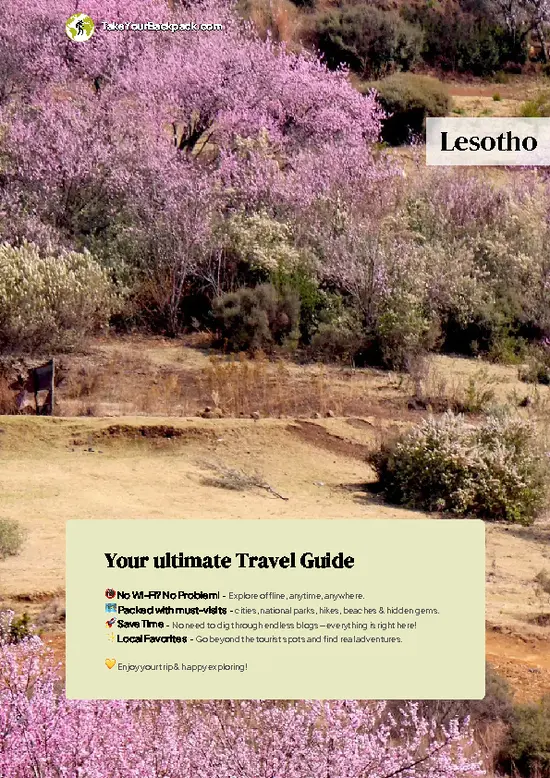
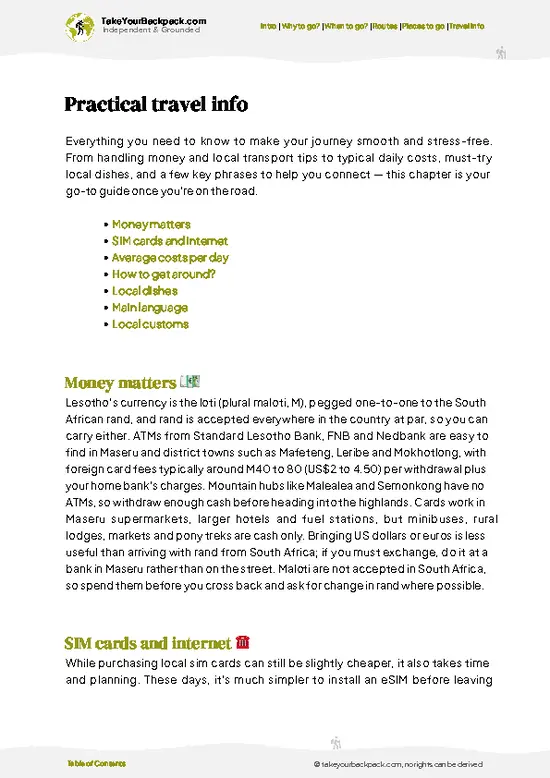
example page 0 from our offline Travel Guide for Lesotho
example page 1 from our offline Travel Guide for Lesotho
example page 2 from our offline Travel Guide for Lesotho
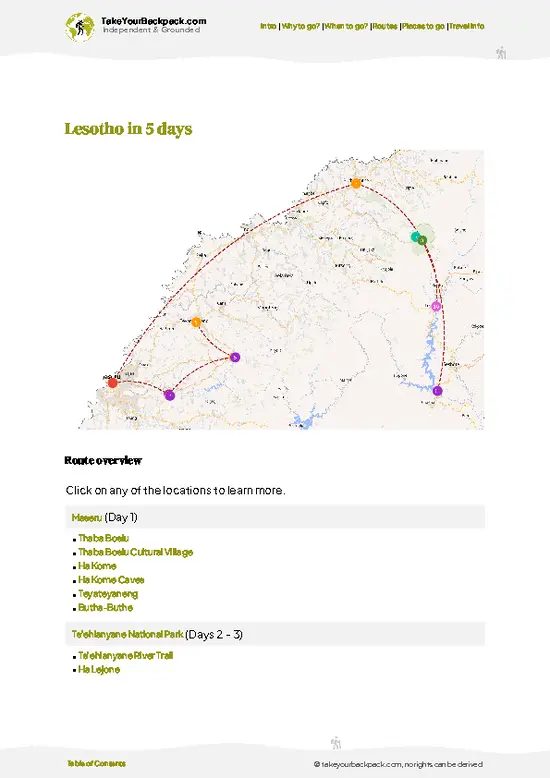
example page 3 from our offline Travel Guide for Lesotho
example page 4 from our offline Travel Guide for Lesotho
example page 5 from our offline Travel Guide for Lesotho
example page 6 from our offline Travel Guide for Lesotho
example page 7 from our offline Travel Guide for Lesotho
The digital guide (178 pages) contains:
42 highlights, ranked by travel appeal
Optimized 2, 3 & 5-day travel routes
Cities, national parks, landmarks, beaches
How to get around
Offline-friendly for travel without Wi-Fi
👉 Click to see all 30+ guide features

📅 Plan smarter in minutes, not weeks
Month by month travel advice
Festivals & national holidays
Budget expectations

🗺️ Go to the right places, skip the overrated ones
Honest pros & cons of destinations
Top hikes, parks & viewpoints
Lesser-known places most travelers miss
Clear “worth it vs skip it” guidance

🛏️ Travel smoothly without rookie mistakes
Best areas to stay
Transport systems explained simply
Common scams & safety advice
SIM cards, money & practical tips

🌍 Understand the country, not just visit it
Culture & traditions
52 Essential phrases & customs
Festivals worth planning around
Traveler-friendly historical context
Insights that make places more meaningful

📱 Built for real travel conditions
Fully downloadable PDF
Works completely offline
Optimized for phone use
Useful in remote areas & buses
Everything in one place
Save weeks of stressful planning
Get instant access to your full guide. 30‑day money-back guarantee.
+ Add another guide for just £5.98

By proceeding you agree to our terms.
Sent to your inbox immediately after payment • 100% Secure Checkout
Best Backpacking Travel Advisor 2025 tourism awardBest Backpacking
Travel Advisor
2025
What others say about Take Your Backpack Guides:
⭐⭐⭐⭐⭐
Fantastic, amazing amount of information!
⭐⭐⭐⭐⭐
My goodness this is amazing, it's what I've been looking for hats off too you!
⭐⭐⭐⭐⭐
I think this is absolutely BRILLIANT
⭐⭐⭐⭐
Very complete and informative. It's still missing places, but I gotta to commend you
⭐⭐⭐⭐⭐
This is truly amazing, thank you, can't wait to explore it with my kids!
⭐⭐⭐⭐⭐
Awesome resource, thank you!
⭐⭐⭐⭐⭐
This is amazing! Can't wait to explore the ones I haven't seen
⭐⭐⭐⭐
I love this! Well done, great idea.
⭐⭐⭐⭐⭐
Thanks for taking the time to make this gem!
⭐⭐⭐⭐⭐
This might be the best website I've ever seen.
⭐⭐⭐⭐⭐
Congratulations, and thank you so much for your work; it's incredibly valuable.
⭐⭐⭐⭐
In all seriousness I think you did a great job pointing out the important spots
⭐⭐⭐⭐⭐
10/10 very good
⭐⭐⭐⭐⭐
As someone who's only just starting to visit regularly this is awesome, thank you.
⭐⭐⭐⭐
Thank you very much! I'm going to visit my dad, it's going to be very useful!
⭐⭐⭐⭐⭐
This is really cool! We'll be travelling for the first time and this definitely come in handy.
⭐⭐⭐⭐⭐
You are now our minister of culture, congratulations 👨‍💼
⭐⭐⭐⭐⭐
Just wanted to tell you that this is a pearl! Going to follow your recommendations.
⭐⭐⭐⭐⭐
This is so cool. I'll definitely be using the resource for my travels soon.
⭐⭐⭐⭐⭐
This is very impressive! Good work.
⭐⭐⭐⭐⭐
This is an amazing and informative site. Very well done!

🛏️ Where to stay?Where to Stay: Lesotho Edition

Yes — Lesotho has hostels and budget guesthouses, chiefly in the capital and in trekker hubs; expect basic dorms or simple private rooms, communal facilities, seasonal closures and long overland transfers, so carry cash and a warm sleeping layer.
The best concentration is in Maseru (most options, easy transport and supplies, more nightlife but mixed urban safety and utilitarian rooms); Malealea and the southern highlands (trekking-focused, community-run stays, quiet nights and excellent trails but sparse transport and services); Semonkong (close to the big waterfall and adventure activities, scenic and peaceful, limited beds and seasonal road issues); and Mokhotlong/Thaba‑Tseka (gateway for … read more 👉
Yes — Lesotho has hostels and budget guesthouses, chiefly in the capital and in trekker hubs; expect basic dorms or simple private rooms, communal facilities, seasonal closures and long overland transfers, so carry cash and a warm sleeping layer.
The best concentration is in Maseru (most options, easy transport and supplies, more nightlife but mixed urban safety and utilitarian rooms); Malealea and the southern highlands (trekking-focused, community-run stays, quiet nights and excellent trails but sparse transport and services); Semonkong (close to the big waterfall and adventure activities, scenic and peaceful, limited beds and seasonal road issues); and Mokhotlong/Thaba‑Tseka (gateway for higher-altitude treks and the Sani Pass area, very remote with few budget beds, rough roads and minimal nightlife).

If you enjoy meeting fellow travelers, consider choosing hostels with high ratings for atmosphere. On the other hand, if you prefer having your own space, a hotel might be a better option.

LesothoExplore Beyond This Category

👋 Meet the founderWho’s Behind Take Your Backpack?

Johan, backpacker and founder of TakeYourBackpackHi, I’m Johan (Netherlands 🇳🇱), the creator of TakeYourBackpack. Over the past decade, I’ve backpacked through 80+ countries across six continents, gaining extensive experience with independent travel, long-term trips, and overland routes.

This site is built on a combination of firsthand travel experience and carefully curated insights from other backpackers. Many guides are based on places I’ve personally visited, while others bring together tips, observations, and practical advice shared by trusted travelers I’ve met along the way.

The goal is to provide realistic, experience-driven guidance — not generic itineraries — so you can explore destinations with better context, clearer expectations, and more confidence.

Get full Lesotho guide •
Instant download • 42 highlights • Full Offline guide