v2.webp)
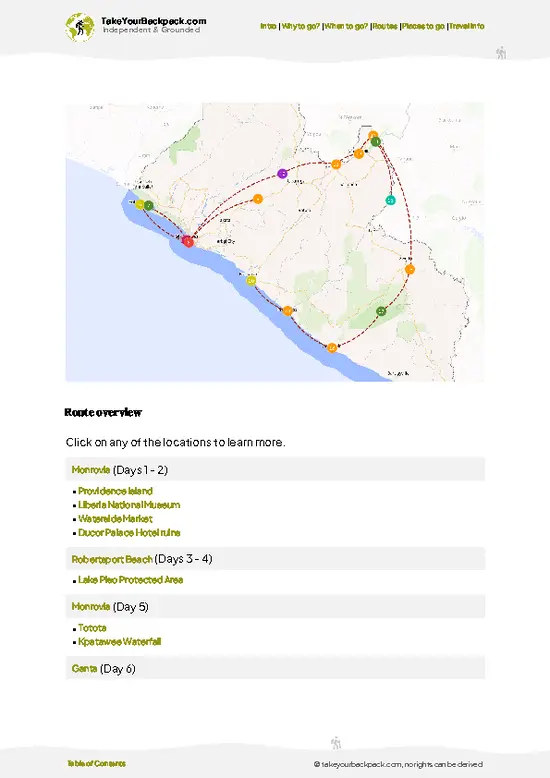
- Greenville Beach: The wide Atlantic shoreline is the town's best-known sight, with pale sand, drying fishing nets and strong surf. Swimming is risky because of rip currents, so paddle at the edge and watch locals. Go early morning or late afternoon, free, 1 to 2 hours.
- Fishing landing at the Sinoe River mouth: Dugout canoes come in here with the catch, and the haul is sorted and sold on the sand within minutes. It is the most direct look at local working life. Best in the early morning, free, about 1 hour. Ask before taking photos.
- Greenville Central Market: Stalls sell cassava leaf, palm oil, dried fish and bush meat, with cloth and basic hardware alongside. Prices are low and bargaining is gentle. Visit in the morning when stock is freshest, spend US$2 to 5 on snacks or fruit, allow 1 hour.
- Greenville Beach: The wide Atlantic shoreline is the town's best-known sight, with pale sand, drying fishing nets and strong surf. Swimming is risky because of rip currents, so paddle at the edge and watch locals. Go early morning or late afternoon, free, 1 to 2 hours.
- Fishing landing at the Sinoe River mouth: Dugout canoes come in here with the catch, and the haul is sorted and sold on the sand within minutes. It is the most direct look at local working life. Best in the early morning, free, about 1 hour. Ask before taking photos.
- Greenville Central Market: Stalls sell cassava leaf, palm oil, dried fish and bush meat, with cloth and basic hardware alongside. Prices are low and bargaining is gentle. Visit in the morning when stock is freshest, spend US$2 to 5 on snacks or fruit, allow 1 hour.
- Settler-era streets and churches: Older wooden and concrete buildings recall the Mississippi settlers who founded the town in the 1830s. Some are weathered, some in use, and a slow walk shows the contrast with newer tin-roofed neighborhoods. Free, 1 to 2 hours, best in soft morning light.
- Port of Greenville area: The harbor and waterfront show how goods and people reach this isolated county by sea. Walk the edge of the working area and watch cargo and boats at the quay. Free, around 30 to 45 minutes, and ask permission before photographing port facilities.
Spotted a mistake or missing something? Contact us.

 Best Backpacking
.jpg) Hi, I’m Johan (Netherlands 🇳🇱), the creator of TakeYourBackpack. Over the past 3 decades, I’ve backpacked through 90+ countries across six continents, gaining extensive experience with independent travel, long-term trips, and overland routes.
Hi, I’m Johan (Netherlands 🇳🇱), the creator of TakeYourBackpack. Over the past 3 decades, I’ve backpacked through 90+ countries across six continents, gaining extensive experience with independent travel, long-term trips, and overland routes.