×

Liberia🇱🇷 | citiesMonroviaAtlantic coastline, bustling markets, government quarter, postwar architecture | things to do and best time to go

Explore Silver BeachExplore Harper

Backpacking in Monrovia
🏆 Top pickcity ranked #1
By Johan Kruseman 🇳🇱 | Updated June 8, 2026

If you crave polished infrastructure, seamless public transport, or a city that caters to Instagram checklists, Monrovia will frustrate you. But here’s the trade: for backpackers who thrive on raw, real-world energy, Monrovia is a masterclass in adaptation and reward. Wedged between the Atlantic and mangrove swamps on Liberia’s west coast, this city is a living lesson in resilience. The National Museum is small but loaded with artifacts that survived decades of upheaval. Waterside Market is chaos incarnate—bargain hard, watch your pockets, and you’ll find everything from kola nuts to knockoff sneakers. Nightlife is unpredictable but memorable, with beach bars that pulse until sunrise if you know where to look. Costs are higher than you’d expect for West Africa, and solo travelers will notice the lack of a backpacker circuit—this isn’t Accra or Freetown. Safety is manageable with street smarts, but comfort is always a negotiation. Monrovia rewards curiosity, not convenience.

Discover everything you want to know in the 📖 Liberia Travel Guide.


Get your Liberia guide
61 ranked highlights, routes & tips, works offline (260 pages)
Loading the map 🌍
CLICK TO FILTER
cities
towns
landmarks
national parks
hikes
beaches
attractions
festivals
regions
SHOW COUNTRY’S BESTSHOW ALL

✨ Why go?
Ranked #1 city in Liberia
What sets this place apart

Monrovia, the capital of Liberia, is a strategic stop for backpackers weaving through West Africa. It’s not just a place to pass through; it’s a basecamp for day trips into the surrounding beauty. The city offers a mix of affordable hostels that cater to budget travelers, making it easy to rest up before your next adventure.

You’ll find a variety of local food options that won’t break the bank, from street vendors to cozy eateries. The walkability of Monrovia is a plus; you can easily explore neighborhoods and soak in the local vibe without needing a taxi.

When the sun sets, the nightlife comes alive, offering a chance to mingle with locals and fellow travelers alike. Plus, Monrovia serves as a convenient hub for onward travel, whether you’re heading to the lush countryside or other coastal … read more 👉
Monrovia, the capital of Liberia, is a strategic stop for backpackers weaving through West Africa. It’s not just a place to pass through; it’s a basecamp for day trips into the surrounding beauty. The city offers a mix of affordable hostels that cater to budget travelers, making it easy to rest up before your next adventure.

You’ll find a variety of local food options that won’t break the bank, from street vendors to cozy eateries. The walkability of Monrovia is a plus; you can easily explore neighborhoods and soak in the local vibe without needing a taxi.

When the sun sets, the nightlife comes alive, offering a chance to mingle with locals and fellow travelers alike. Plus, Monrovia serves as a convenient hub for onward travel, whether you’re heading to the lush countryside or other coastal towns.

While it may not have the same draw as other major cities, Monrovia’s high-value experiences lie in its authenticity and accessibility. If you’re looking for a genuine taste of Liberia, this city is worth more than just a fleeting visit.
Want to include Monrovia in your Liberia route?
Create a personalized Liberia itinerary that includes Monrovia and the places that fit your trip — based on your travel style, budget, and available time. Get your route in seconds.

Generate my trip

💡 HighlightsEssential experiences to have while visiting Monrovia

  • Providence Island — The tiny island where freed African-American settlers first stepped ashore; it’s short boat ride from downtown and a quiet, powerful place to feel Monrovia’s founding history up close.
  • The Cotton Tree — The famous, centuries-old tree in downtown Monrovia that’s woven into the city’s origin stories; an easy stop for photos and to soak up local lore and street life around Broad Street.
  • Liberia National Museum — Small but meaningful: artifacts, colonial-era photos and objects that give context to Liberia’s history and culture. Worth a visit to make sense of what you see around the city.
  • Ducor Palace Hotel (ruins/viewpoint) — The hulking former luxury hotel on the hill is an eerie, photogenic reminder of Monrovia’s ups and downs and offers one of the best vantage points
read more 👉
  • Providence Island — The tiny island where freed African-American settlers first stepped ashore; it’s short boat ride from downtown and a quiet, powerful place to feel Monrovia’s founding history up close.
  • The Cotton Tree — The famous, centuries-old tree in downtown Monrovia that’s woven into the city’s origin stories; an easy stop for photos and to soak up local lore and street life around Broad Street.
  • Liberia National Museum — Small but meaningful: artifacts, colonial-era photos and objects that give context to Liberia’s history and culture. Worth a visit to make sense of what you see around the city.
  • Ducor Palace Hotel (ruins/viewpoint) — The hulking former luxury hotel on the hill is an eerie, photogenic reminder of Monrovia’s ups and downs and offers one of the best vantage points over the coastline and downtown.
  • Waterside Market (Red Light area) — The bustling waterfront market where you’ll find fish, fabrics, phone repair stalls and street food; chaotic, colorful and a very real taste of daily Monrovia commerce.
  • Broad Street (Downtown) — Monrovia’s main artery: colonial-era facades, government buildings, cafés and street vendors. Walk it slowly to catch the rhythm of the city and small historical markers tucked into the blocks.
  • Mamba Point & the Coastal Walk — The embassies-and-hotels peninsula with cleaner beachfront stretches, good sunset views, and sea breezes — a calmer contrast to the hectic markets of central Monrovia.
  • The Executive Mansion (State House) — The president’s official residence; you can’t wander inside but the building and surrounding ceremonial grounds are significant to Liberia’s political life and make for informative viewing from the outside.
  • Capitol Building / Capitol Hill area — The seat of Liberia’s legislature and a compact district of monuments and administrative buildings; interesting to see the civic center and imagine the nation’s debates at work.
  • Congo Town Market & Local Eateries — A neighborhood market and street-food strip popular with residents; great for tasting Liberian dishes, meeting people, and seeing everyday urban life away from tourist spots.
For easy day trips just outside Monrovia, consider the beaches and small islands around Bushrod Island and Virginia/Paynesville, the Firestone rubber plantation at Harbel in Margibi County, and the nearby coastal villages and shoreline that are all reachable within a couple of hours.
Spotted a mistake or missing something? Contact us.

Things to do near Monrovia

Ratings based on Tripadvisor reviews. When you book through this link, you support our work at no extra cost to you.

🏘️ NeighborhoodsKey areas and districts to know

Monrovia, the capital of Liberia, is a vibrant city with distinct neighborhoods that cater to different backpacker needs. Here’s how to navigate its unique areas.

Central Monrovia: This is the heart of the city, buzzing with energy. You’ll find markets, shops, and local eateries. It’s walkable, but be cautious of traffic. Costs are moderate, making it suitable for both short and longer stays. Nightlife is lively, with bars and music venues nearby, perfect for those wanting to soak in the local culture.

Sinkor: A bit more upscale, Sinkor offers a laid-back vibe with beach access. It’s a great spot for relaxation after a day of exploring. Prices can be higher here, especially for accommodations, but the atmosphere is worth it. Walkability is decent, and you can find cafes and restaurants that … read more 👉
Monrovia, the capital of Liberia, is a vibrant city with distinct neighborhoods that cater to different backpacker needs. Here’s how to navigate its unique areas.

Central Monrovia: This is the heart of the city, buzzing with energy. You’ll find markets, shops, and local eateries. It’s walkable, but be cautious of traffic. Costs are moderate, making it suitable for both short and longer stays. Nightlife is lively, with bars and music venues nearby, perfect for those wanting to soak in the local culture.

Sinkor: A bit more upscale, Sinkor offers a laid-back vibe with beach access. It’s a great spot for relaxation after a day of exploring. Prices can be higher here, especially for accommodations, but the atmosphere is worth it. Walkability is decent, and you can find cafes and restaurants that cater to various tastes. Ideal for longer stays if you want a mix of comfort and local life.

Paynesville: Located just outside the city center, Paynesville is quieter and more residential. It’s less touristy, which means lower costs for food and lodging. Walkability is limited, so public transport is necessary. This area is great for those looking to immerse themselves in everyday Liberian life, making it suitable for longer stays.

Bushrod Island: This area is more industrial, but it offers a unique perspective on Monrovia. Accommodations are cheaper, and you’ll find local markets. It’s less walkable, so plan your transport. Nightlife is minimal, making it a good choice for those seeking peace and a longer stay to explore the local scene.

Understanding these neighborhoods helps you choose the right base for your adventure, balancing time, money, and comfort effectively.

⌛️ 1 day1-day itinerary for Monrovia

Monrovia, Liberia, is a city where history and resilience collide. With its vibrant street life and rich cultural tapestry, it offers a unique glimpse into West African life. You’ll find a blend of colonial architecture, bustling markets, and the warm smiles of locals eager to share their stories.

Start your day in the historic district of Sinkor. Grab a breakfast of fresh cassava bread and spicy pepper sauce at a local eatery. The morning air is filled with the sounds of vendors setting up their stalls, and you can feel the city waking up. After breakfast, stroll along the beach at Atlantic Ocean Boulevard. The waves crashing against the shore provide a refreshing backdrop as you soak in the coastal vibe.

As the sun climbs higher, head to the National Museum of Liberia. It’s not just a … read more 👉
Monrovia, Liberia, is a city where history and resilience collide. With its vibrant street life and rich cultural tapestry, it offers a unique glimpse into West African life. You’ll find a blend of colonial architecture, bustling markets, and the warm smiles of locals eager to share their stories.

Start your day in the historic district of Sinkor. Grab a breakfast of fresh cassava bread and spicy pepper sauce at a local eatery. The morning air is filled with the sounds of vendors setting up their stalls, and you can feel the city waking up. After breakfast, stroll along the beach at Atlantic Ocean Boulevard. The waves crashing against the shore provide a refreshing backdrop as you soak in the coastal vibe.

As the sun climbs higher, head to the National Museum of Liberia. It’s not just a building; it’s a treasure trove of artifacts that tell the story of Liberia’s past. Spend a couple of hours here, absorbing the history and perhaps chatting with a curator about the exhibits. This is a spot often overlooked by tourists, but it’s a gem that adds depth to your understanding of the country.

For lunch, venture to the bustling Waterside Market. Here, you can sample local dishes like jollof rice or fufu while mingling with locals. The market is a sensory overload—colors, sounds, and smells collide in a delightful chaos.

In the afternoon, make your way to the vibrant neighborhood of Mamba Point. Visit the Ducor Palace Hotel, a once-glamorous structure that now stands as a poignant reminder of the city’s turbulent past. The views from the top are stunning, offering a panoramic look at Monrovia and the ocean beyond.

As evening approaches, find a spot along the beach to watch the sunset. The sky transforms into a canvas of oranges and purples, a perfect end to your day. Consider dining at a local seafood restaurant, where you can enjoy fresh catch while listening to the sounds of the ocean.

Monrovia may not be on every traveler’s radar, but it’s a city that rewards those who take the time to explore its layers. Each moment spent here is a chance to connect with its spirit, making your trip not just a visit, but an experience that resonates.
Turn your Monrovia visit into an Liberia adventure
Build a complete Liberia route with Monrovia, hidden gems, must-see destinations, and realistic travel times included.

Generate my trip

🌤️ When to go?When to go for the best experience


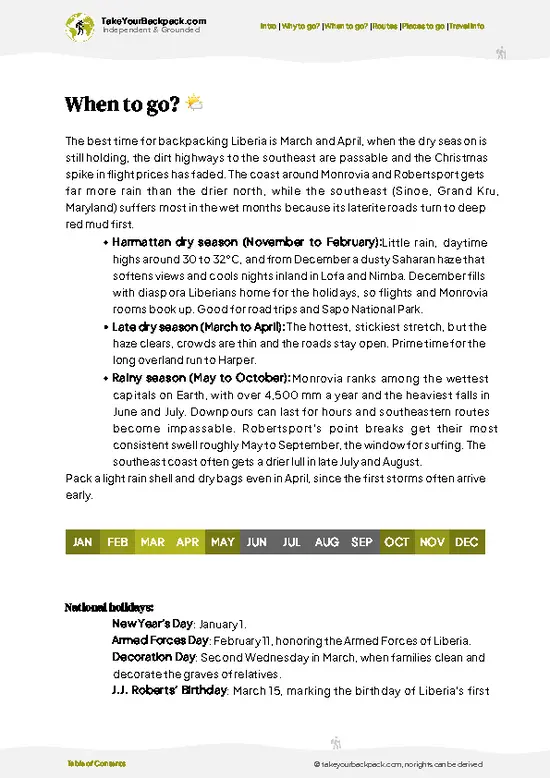
  • Topic: Weather – Monrovia’s climate is tropical, with a heavy rainy season from May to October. Expect daily downpours that can last hours, turning trails into mud baths and slowing travel. The dry season, November to April, offers clearer skies and easier trekking conditions.

  • Topic: Temperature – Temperatures hover between 24°C and 31°C (75°F to 88°F) year-round. The dry season feels more comfortable with lower humidity, while the rainy season’s heat combines with moisture to create a sticky, oppressive atmosphere.

  • Topic: Daylight Hours – Daylight remains fairly constant, around 12 hours daily, with sunrise near 6:00 AM and sunset close to 6:00 PM. This consistency means you can plan hikes and city exploration without worrying about shifting daylight.

  • Topic: Crowds – Tourist traffic
read more 👉

  • Topic: Weather – Monrovia’s climate is tropical, with a heavy rainy season from May to October. Expect daily downpours that can last hours, turning trails into mud baths and slowing travel. The dry season, November to April, offers clearer skies and easier trekking conditions.

  • Topic: Temperature – Temperatures hover between 24°C and 31°C (75°F to 88°F) year-round. The dry season feels more comfortable with lower humidity, while the rainy season’s heat combines with moisture to create a sticky, oppressive atmosphere.

  • Topic: Daylight Hours – Daylight remains fairly constant, around 12 hours daily, with sunrise near 6:00 AM and sunset close to 6:00 PM. This consistency means you can plan hikes and city exploration without worrying about shifting daylight.

  • Topic: Crowds – Tourist traffic peaks during the dry season, especially December to February, when international visitors flock in. This means more competition for budget accommodations but also more social opportunities and events.

  • Topic: Seasonal Activities – The dry season hosts cultural festivals and outdoor markets, adding layers to your experience. The rainy season limits outdoor events but offers lush landscapes and fewer tourists.

  • Topic: Price Fluctuations – Prices for lodging and tours spike during the dry season’s peak months. Traveling just before or after this window can save money without sacrificing weather quality.


Pro-tip: Aim for late November or early March to strike the perfect balance between decent weather, manageable crowds, and better prices—your smartest move for a high-value Monrovia trip.


source: climatestotravel.comJANJanuary: highly recommended for travelingFEBFebruary: highly recommended for travelingMARMarch: highly recommended for travelingAPRApril: good for travelingMAYMay: fair for travelingJUNJune: fair for travelingJULJuly: fair for travelingAUGAugust: fair for travelingSEPSeptember: fair for travelingOCTOctober: fair for travelingNOVNovember: highly recommended for travelingDECDecember: highly recommended for traveling
when-to-go

✈️ The backpacker research shortcutLiberia Travel Guide

An offline-friendly backpacking guide with optimized travel routes, ranked highlights, transport advice, and the best areas to stay.
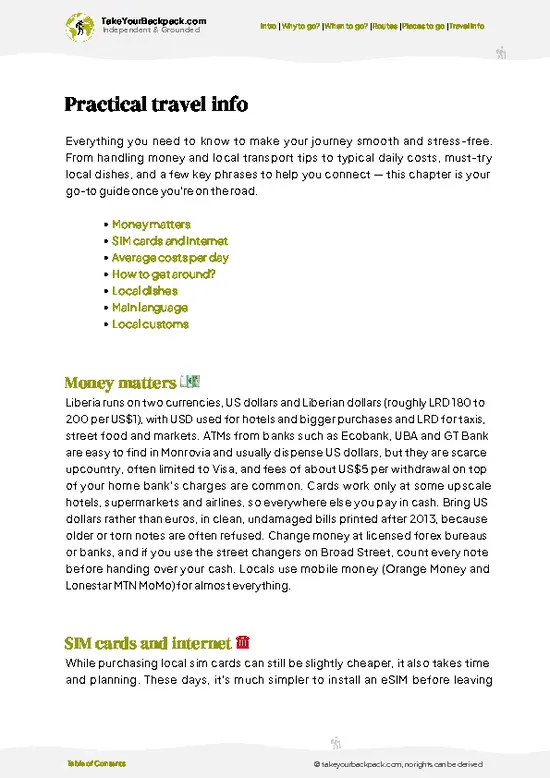
example page 0 from our offline Travel Guide for Liberia
example page 1 from our offline Travel Guide for Liberia
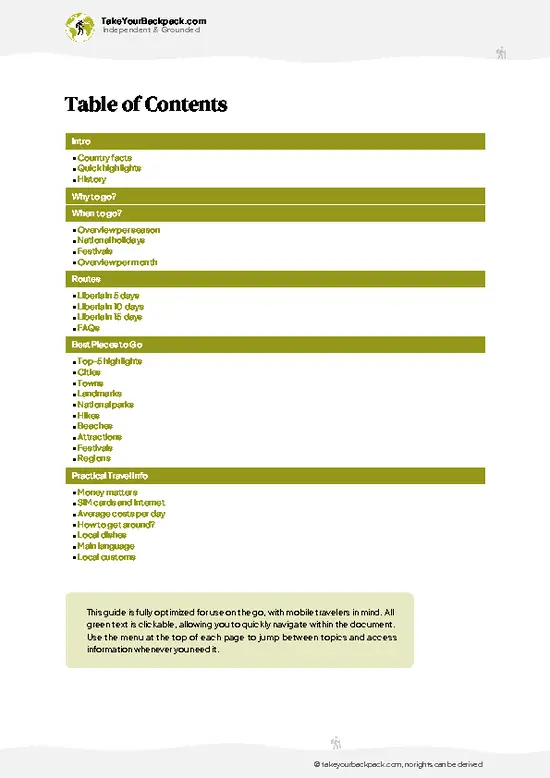
example page 2 from our offline Travel Guide for Liberia
example page 3 from our offline Travel Guide for Liberia
example page 4 from our offline Travel Guide for Liberia
example page 5 from our offline Travel Guide for Liberia
example page 6 from our offline Travel Guide for Liberia
example page 7 from our offline Travel Guide for Liberia
The digital guide (260 pages) contains:
61 highlights, ranked by travel appeal
Optimized 5, 10 & 15-day travel routes
Cities, national parks, landmarks, beaches
How to get around
Offline-friendly for travel without Wi-Fi
👉 Click to see all 30+ guide features

📅 Plan smarter in minutes, not weeks
Month by month travel advice
Festivals & national holidays
Budget expectations

🗺️ Go to the right places, skip the overrated ones
Honest pros & cons of destinations
Top hikes, parks & viewpoints
Lesser-known places most travelers miss
Clear “worth it vs skip it” guidance

🛏️ Travel smoothly without rookie mistakes
Best areas to stay
Transport systems explained simply
Common scams & safety advice
SIM cards, money & practical tips

🌍 Understand the country, not just visit it
Culture & traditions
Local customs
Festivals worth planning around
Traveler-friendly historical context
Insights that make places more meaningful

📱 Built for real travel conditions
Fully downloadable PDF
Works completely offline
Optimized for phone use
Useful in remote areas & buses
Everything in one place
Save weeks of stressful planning
Get instant access to your full guide. 30‑day money-back guarantee.


By proceeding you agree to our terms.
Sent to your inbox immediately after payment • 100% Secure Checkout
Best Backpacking Travel Advisor 2025 tourism awardBest Backpacking
Travel Advisor
2025
What others say about Take Your Backpack Guides:
⭐⭐⭐⭐⭐
Fantastic, amazing amount of information!
⭐⭐⭐⭐⭐
My goodness this is amazing, it's what I've been looking for hats off too you!
⭐⭐⭐⭐⭐
I think this is absolutely BRILLIANT
⭐⭐⭐⭐
Very complete and informative. It's still missing places, but I gotta to commend you
⭐⭐⭐⭐⭐
This is truly amazing, thank you, can't wait to explore it with my kids!
⭐⭐⭐⭐⭐
Awesome resource, thank you!
⭐⭐⭐⭐⭐
This is amazing! Can't wait to explore the ones I haven't seen
⭐⭐⭐⭐
I love this! Well done, great idea.
⭐⭐⭐⭐⭐
Thanks for taking the time to make this gem!
⭐⭐⭐⭐⭐
This might be the best website I've ever seen.
⭐⭐⭐⭐⭐
Congratulations, and thank you so much for your work; it's incredibly valuable.
⭐⭐⭐⭐
In all seriousness I think you did a great job pointing out the important spots
⭐⭐⭐⭐⭐
10/10 very good
⭐⭐⭐⭐⭐
As someone who's only just starting to visit regularly this is awesome, thank you.
⭐⭐⭐⭐
Thank you very much! I'm going to visit my dad, it's going to be very useful!
⭐⭐⭐⭐⭐
This is really cool! We'll be travelling for the first time and this definitely come in handy.
⭐⭐⭐⭐⭐
You are now our minister of culture, congratulations 👨‍💼
⭐⭐⭐⭐⭐
Just wanted to tell you that this is a pearl! Going to follow your recommendations.
⭐⭐⭐⭐⭐
This is so cool. I'll definitely be using the resource for my travels soon.
⭐⭐⭐⭐⭐
This is very impressive! Good work.
⭐⭐⭐⭐⭐
This is an amazing and informative site. Very well done!

🛏️ Where to stay?How to pick the right area

Monrovia’s backpacker sweet spot is the Sinkor district. It’s the city’s unofficial hub for budget travelers, striking a smart balance between safety, social buzz, and access to essentials. Sinkor isn’t flashy, but it’s where you’ll find the most hostels geared toward solo backpackers and small groups. The vibe here is low-key but lively enough to meet fellow travelers without the pressure of a party scene. Streets are walkable, with local markets, eateries, and some nightlife that won’t blow your budget or your senses.

Compared to downtown Monrovia, which can feel chaotic and less secure after … read more 👉
Monrovia’s backpacker sweet spot is the Sinkor district. It’s the city’s unofficial hub for budget travelers, striking a smart balance between safety, social buzz, and access to essentials. Sinkor isn’t flashy, but it’s where you’ll find the most hostels geared toward solo backpackers and small groups. The vibe here is low-key but lively enough to meet fellow travelers without the pressure of a party scene. Streets are walkable, with local markets, eateries, and some nightlife that won’t blow your budget or your senses.

Compared to downtown Monrovia, which can feel chaotic and less secure after dark, Sinkor offers a more controlled environment. It’s also better connected to transport routes, making day trips or airport runs less of a headache. The trade-off? You won’t be in the thick of the city’s busiest commercial action, but that’s a win if you want to avoid noise and crowds while still having options nearby.

Other neighborhoods like Mamba Point lean toward upscale and pricey, which kills the budget vibe. West Point, on the other hand, is vibrant but less safe and not ideal for solo travelers unfamiliar with the local scene. Sinkor’s sweet spot is its blend of practicality and social potential—a place where you can rest easy, connect with others, and keep your wallet intact.

🚌 Getting aroundMoving around without the hassle

Monrovia moves at its own rhythm—less a clockwork machine and more a pulse you feel in the streets. It’s not about strict timetables or shiny transit apps; it’s about reading the flow of people, the honks, the sudden surges of minibuses, and the occasional lull when the city catches its breath. Here, time is flexible, and comfort is a relative term. You’ll find that your best bet is to embrace the unpredictability, turning the city’s transit into a strategic game where patience and local savvy pay off more than a fast ride or a cushy seat.


  • Walking: The ultimate budget move and the best way to soak in Monrovia’s street life. It’s free, flexible, and often faster than waiting for a ride in traffic jams. Be ready for uneven sidewalks and the occasional stray dog, but the city’s compact core
read more 👉
Monrovia moves at its own rhythm—less a clockwork machine and more a pulse you feel in the streets. It’s not about strict timetables or shiny transit apps; it’s about reading the flow of people, the honks, the sudden surges of minibuses, and the occasional lull when the city catches its breath. Here, time is flexible, and comfort is a relative term. You’ll find that your best bet is to embrace the unpredictability, turning the city’s transit into a strategic game where patience and local savvy pay off more than a fast ride or a cushy seat.


  • Walking: The ultimate budget move and the best way to soak in Monrovia’s street life. It’s free, flexible, and often faster than waiting for a ride in traffic jams. Be ready for uneven sidewalks and the occasional stray dog, but the city’s compact core rewards your effort with unexpected discoveries.


  • Shared Minibuses (Local “Bush Taxis”): These are the workhorses of Monrovia’s transit. They run roughly from dawn until dusk, with fares around $0.25 to $0.50. Expect cramped conditions and no fixed schedule—minibuses leave when full, so your wait time depends on luck and timing. They’re slow but dirt-cheap, and a crash course in local life.


  • Motorcycle Taxis (“Okadas”): When time is tight but your budget is still lean, okadas offer a quick, if bumpy, way through traffic. Prices vary but usually hover around $1 to $2 for short hops. They’re fast and nimble but come with a comfort trade-off—no suspension, no helmet guarantees, and a front-row seat to the city’s chaos.


  • Regular Taxis: More comfortable and private, taxis are a step up in cost—expect to pay $5 or more for typical rides within the city. They run on your schedule, which is a luxury in Monrovia, but traffic can still turn a 15-minute trip into 45. Worth it if you’re carrying heavy gear or traveling after dark.


  • Motorbike Rentals: For the confident and adventurous, renting a motorbike gives you full control over your schedule and routes. Rentals start around $15 per day. It’s a gamble on your comfort and safety, but it transforms your mobility and lets you explore beyond the city’s core at your own pace.


Monrovia’s transit is a balancing act between time, money, and comfort. You can save cash by walking or squeezing into a minibus, but it costs you time and ease. Pay more for a taxi or motorbike rental, and you buy back precious hours and a smoother ride. The savvy traveler reads these trade-offs like a map, picking the right mode for the moment—sometimes slow and cheap, sometimes fast and pricey, always tuned to the city’s unpredictable beat.

👛 Costs (as of 1 June 2025)Travel costs and budget guide for Monrovia

Backpacking in Monrovia, Liberia, involves a clear set of trade-offs between cost, convenience, and comfort. Understanding these will help you navigate the city without surprises.
  • Dorm Accommodation (High Season): Expect to pay around $15 to $25 per night. High season drives prices up due to demand, and options are limited, so booking ahead is wise.
  • Dorm Accommodation (Off-Season): Prices drop to about $10 to $18 per night. Fewer travelers mean more bargaining power, but the quality and availability of dorm beds can fluctuate.
  • Meals: Street food and local eateries offer meals for $2 to $5. Western-style restaurants or tourist spots push that to $7-$12. Cooking your own food is rare but possible with some guesthouses.
  • Local Transport: Minibuses and shared taxis cost roughly $0.25 to $0.
read more 👉
Backpacking in Monrovia, Liberia, involves a clear set of trade-offs between cost, convenience, and comfort. Understanding these will help you navigate the city without surprises.
  • Dorm Accommodation (High Season): Expect to pay around $15 to $25 per night. High season drives prices up due to demand, and options are limited, so booking ahead is wise.
  • Dorm Accommodation (Off-Season): Prices drop to about $10 to $18 per night. Fewer travelers mean more bargaining power, but the quality and availability of dorm beds can fluctuate.
  • Meals: Street food and local eateries offer meals for $2 to $5. Western-style restaurants or tourist spots push that to $7-$12. Cooking your own food is rare but possible with some guesthouses.
  • Local Transport: Minibuses and shared taxis cost roughly $0.25 to $0.50 per ride. They’re cheap but can be crowded and unpredictable in schedule.
  • City Transport Pass: Monrovia doesn’t have a formal city transport pass system. Budgeting around $2 to $4 daily for multiple rides is realistic if you plan to move around a lot.
  • Basic Activities/Entry Fees: Most cultural sites and local attractions charge between $3 and $7. Organized tours or special experiences can cost more, but these are optional and often negotiable.
  • Miscellaneous Expenses: This includes bottled water, snacks, occasional tips, and small purchases. Budget around $3 to $6 daily to cover these without stress.

Total daily costs for backpacking in Monrovia generally range from about $20 on a tight budget during off-season to $45 if you lean towards more comfort and convenience in high season. Knowing where your money goes lets you decide what’s worth splurging on and where to tighten up.
⚠️ Prices can change and everyone travels differently, so take this as a rough guide. Hope it helps you plan your adventure!

🚌 Day tripsShort trips worth adding

Monrovia, Liberia, serves as a vibrant launchpad for day trips that blend adventure with cultural immersion. Here are some standout options that make the most of your time and money.

Kpatawee Waterfall
Just a couple of hours from Monrovia, Kpatawee Waterfall is a refreshing escape into nature. The hike to the falls is a mix of easy trails and some rocky patches, rewarding you with a stunning cascade that invites a dip. Bring a packed lunch to enjoy by the water, and don’t forget your camera—this spot is a photographer’s dream. Expect to spend around $10 on transport and entrance fees. The best time to visit is during the dry season, from November to April, when the trails are less muddy. A common mistake? Underestimating the hike; wear sturdy shoes.
👉 Explore Kpatawee Waterfall

Lake read more 👉
Monrovia, Liberia, serves as a vibrant launchpad for day trips that blend adventure with cultural immersion. Here are some standout options that make the most of your time and money.

Kpatawee Waterfall
Just a couple of hours from Monrovia, Kpatawee Waterfall is a refreshing escape into nature. The hike to the falls is a mix of easy trails and some rocky patches, rewarding you with a stunning cascade that invites a dip. Bring a packed lunch to enjoy by the water, and don’t forget your camera—this spot is a photographer’s dream. Expect to spend around $10 on transport and entrance fees. The best time to visit is during the dry season, from November to April, when the trails are less muddy. A common mistake? Underestimating the hike; wear sturdy shoes.
👉 Explore Kpatawee Waterfall

Lake Piso
A bit further afield, Lake Piso offers a tranquil day of exploration. This expansive lagoon is perfect for kayaking or simply lounging on the beach. You can catch a local boat for about $15, which includes a guide who can share stories about the area. The journey takes about 2.5 hours, but the serene views make it worthwhile. Visit during the dry season for the best experience, and remember to pack snacks, as options are limited. Many first-timers miss the chance to engage with local fishermen—don’t be shy!


Buchanan
Head south to Buchanan, a coastal town rich in history and culture. The trip takes about 2 hours by shared taxi, costing around $5. Once there, explore the local markets and enjoy fresh seafood at beachside shacks. The laid-back vibe is perfect for a leisurely day. Aim for a weekday visit to avoid crowds, and don’t skip the chance to chat with locals about their stories. A common pitfall is sticking to the touristy spots—wander a bit to find hidden treasures.
👉 Explore Buchanan

Sapo National Park
For the more adventurous, Sapo National Park is a must-visit. It’s about a 3-hour drive, costing around $20 for transport. The park is home to diverse wildlife and lush rainforests. Guided tours are available, and while they can be pricier, they’re worth it for the insights. The best time to visit is during the dry season, but be prepared for some muddy trails. First-timers often overlook the need for a guide—don’t go solo unless you’re experienced.
👉 Explore Sapo National Park

These day trips from Monrovia offer a mix of nature, culture, and adventure, making your backpacking experience in Liberia truly rewarding.
Want to know what more Liberia offers?
The Liberia Travel Guide describes 61 highlights, from cities to national parks, from beaches to hikes

Get the Travel Guide -

🍲 FoodEating & Drinking in Monrovia

In Monrovia, food is a vibrant tapestry of flavors that tells the story of its people. You can’t miss trying jollof rice, a spicy, tomato-based dish that’s a staple across West Africa. Pair it with grilled fish or chicken, seasoned to perfection and served with a side of fried plantains. The pepper soup, often made with fish or goat, is a local favorite that warms the soul, especially after a long day of exploring.

Backpackers will find their culinary adventures in markets and on the streets. The bustling Red Light Market is a sensory overload, where vendors sell everything from fresh produce to sizzling street food. Grab a bowl of fufu, a starchy dough-like dish, and dip it into a rich, savory soup. It’s communal dining at its best, where sharing is the norm and strangers become friends … read more 👉
In Monrovia, food is a vibrant tapestry of flavors that tells the story of its people. You can’t miss trying jollof rice, a spicy, tomato-based dish that’s a staple across West Africa. Pair it with grilled fish or chicken, seasoned to perfection and served with a side of fried plantains. The pepper soup, often made with fish or goat, is a local favorite that warms the soul, especially after a long day of exploring.

Backpackers will find their culinary adventures in markets and on the streets. The bustling Red Light Market is a sensory overload, where vendors sell everything from fresh produce to sizzling street food. Grab a bowl of fufu, a starchy dough-like dish, and dip it into a rich, savory soup. It’s communal dining at its best, where sharing is the norm and strangers become friends over a meal.

When it comes to drinks, don’t overlook the local palm wine. It’s sweet, slightly fermented, and best enjoyed fresh from the tap. Etiquette here is relaxed; it’s common to toast and share drinks, fostering a sense of community. Just remember, meals are often enjoyed at a leisurely pace, so embrace the rhythm and savor every bite.

🛡️ SafetyScams, Hazards, and Annoyances

Monrovia is generally safe for travelers, but a little awareness goes a long way. Stick to well-trodden areas like downtown and the beach, especially during the day. As a solo traveler, keep your wits about you at night. The streets can feel quiet, and it’s wise to avoid wandering too far from populated spots after dark.

Scams here are not rampant, but be cautious of overly friendly strangers offering unsolicited help. They might expect a tip or lead you to shops where prices are inflated. Always negotiate prices upfront, whether for taxis or souvenirs.

Everyday annoyances include the occasional street vendor who might be a bit persistent. A polite but firm “no, thank you” usually does the trick. Carry yourself confidently; looking lost can attract unwanted attention. Trust your instincts, … read more 👉
Monrovia is generally safe for travelers, but a little awareness goes a long way. Stick to well-trodden areas like downtown and the beach, especially during the day. As a solo traveler, keep your wits about you at night. The streets can feel quiet, and it’s wise to avoid wandering too far from populated spots after dark.

Scams here are not rampant, but be cautious of overly friendly strangers offering unsolicited help. They might expect a tip or lead you to shops where prices are inflated. Always negotiate prices upfront, whether for taxis or souvenirs.

Everyday annoyances include the occasional street vendor who might be a bit persistent. A polite but firm “no, thank you” usually does the trick. Carry yourself confidently; looking lost can attract unwanted attention. Trust your instincts, and you’ll navigate Monrovia with ease, enjoying its vibrant culture without unnecessary stress.

Where to go next

Monrovia isn’t the only highlight in Liberia. Explore all what Liberia has to offer.
Country photo of Liberia

We 💚 feedbackKey takeaways before you go

Monrovia has a pulse that’s hard to ignore. The energy is raw, the people are genuine, and the street food? A delightful surprise that’ll have you craving more. Try the jollof rice from a local vendor; it’s a flavor explosion. Just a heads-up: the roads can be a challenge, so plan your travel times wisely. Embrace the chaos, and you’ll find beauty in the everyday. This city isn’t polished, but that’s where its charm lies. Dive in and enjoy the ride.

✍️ Help improve this page!
The information on this page is based on in-depth research, insights shared by experienced travelers, and feedback from the local travel community in Liberia. While every effort is made to keep the information accurate and current, conditions can change — so if you spot anything incorrect or outdated, please get in touch.


🙋‍♂️ Give feedback

👋 Meet the founderWho’s Behind Take Your Backpack?

Johan, backpacker and founder of TakeYourBackpackHi, I’m Johan (Netherlands 🇳🇱), the creator of TakeYourBackpack. Over the past decade, I’ve backpacked through 80+ countries across six continents, gaining extensive experience with independent travel, long-term trips, and overland routes.

This site is built on a combination of firsthand travel experience and carefully curated insights from other backpackers. Many guides are based on places I’ve personally visited, while others bring together tips, observations, and practical advice shared by trusted travelers I’ve met along the way.

The goal is to provide realistic, experience-driven guidance — not generic itineraries — so you can explore destinations with better context, clearer expectations, and more confidence.

Get full Liberia guide •
Instant download • 61 highlights • Full Offline guide