×

Liberia🇱🇷 | townsSalalaRubber rows, latex tapping, highway stalls, Bong County | things to do and best time to go

Explore River CessExplore Totota

Backpacking in Salala
👌 Worth visitingtown ranked #14
By Johan Kruseman 🇳🇱 | Updated October 22, 2026

Salala is known mostly for its rubber, and the straight rows of tapped trees along the road are the reason anyone stops. What matters just as much is the highway market, where you can eat, restock and talk with locals, which most travelers drive past. Salala sits in Bong County, in central Liberia, on the road running inland from the coast. Expect red dust, the sour tang of latex, and diesel haze, with almost no hostel scene. The plantation edges and market deserve your time; there are no museums or nightlife to chase. Slow travelers and curious road-trippers will like it; anyone wanting hostels and social evenings won’t.

Discover everything you want to know in the 📖 Liberia Travel Guide.


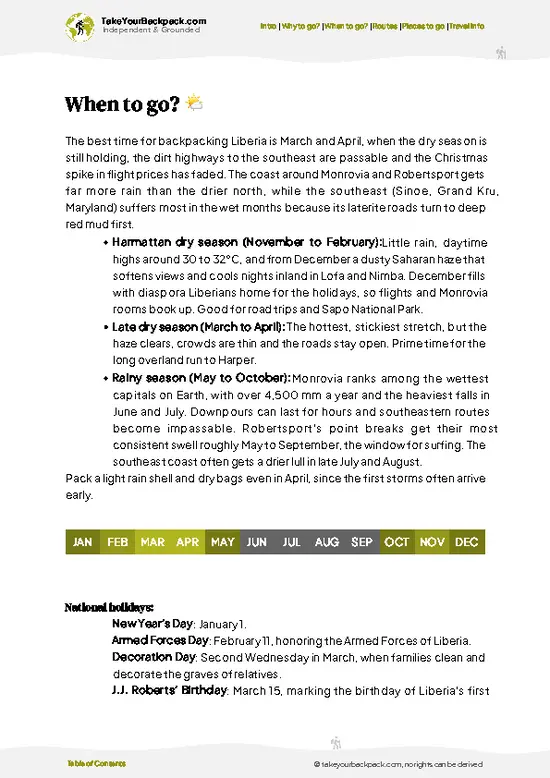
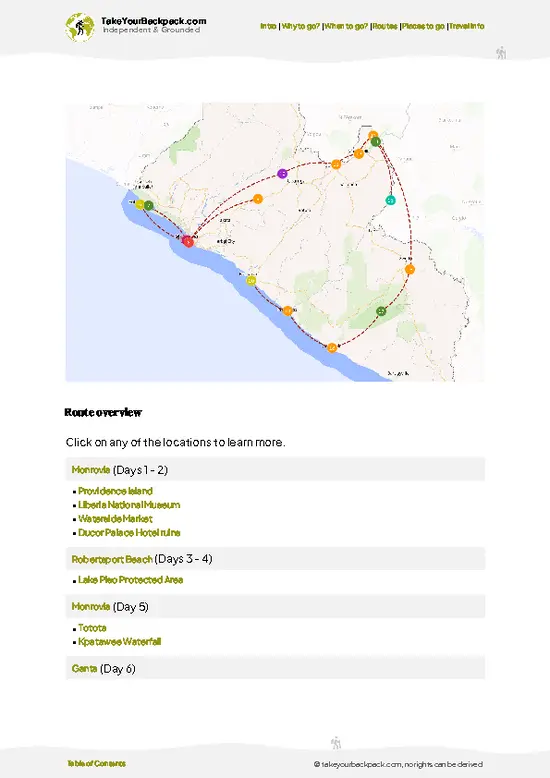
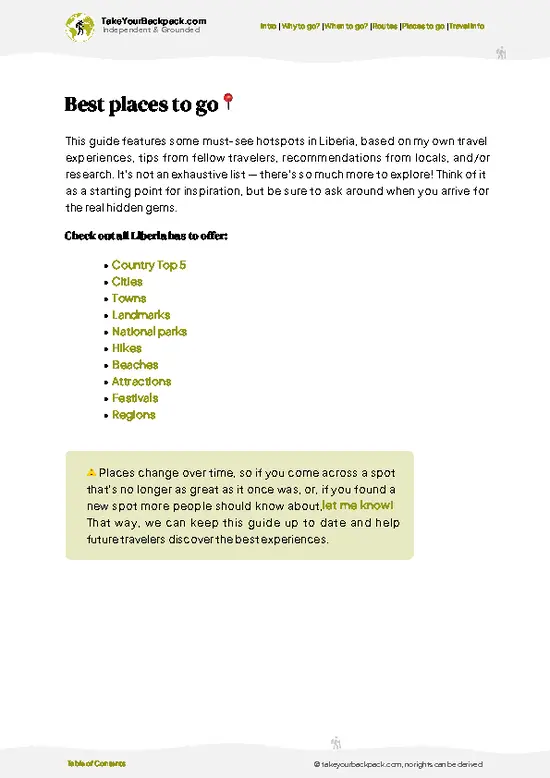
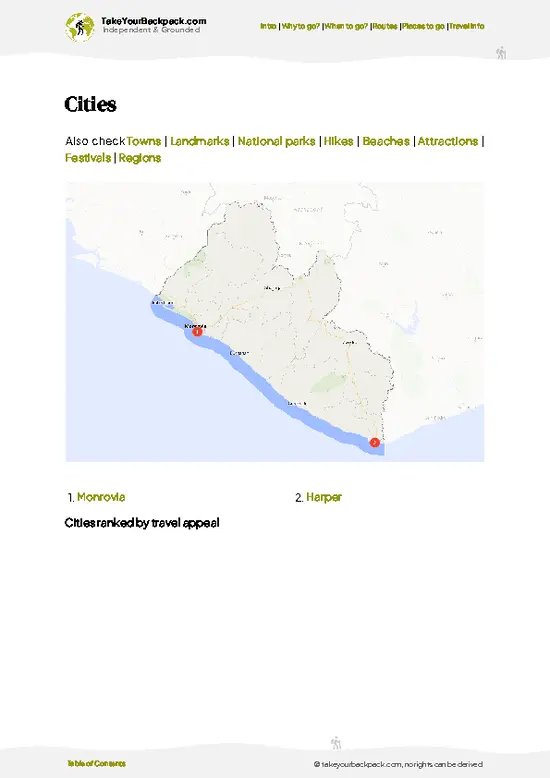
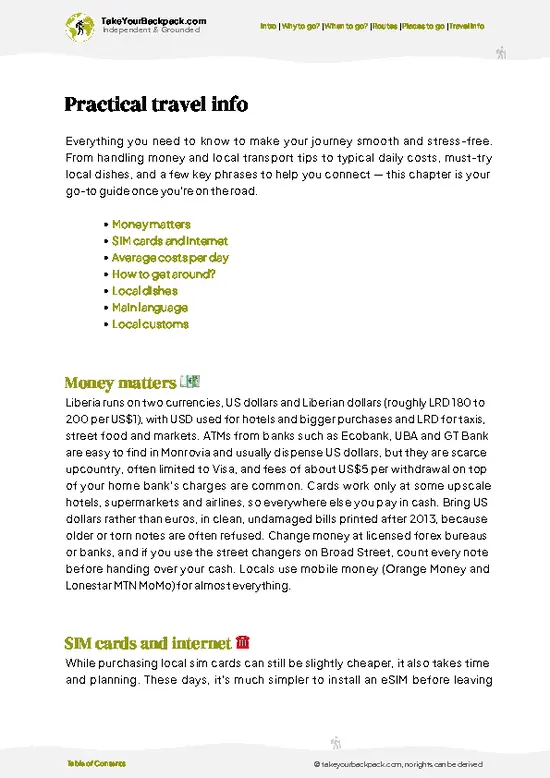
example page 0 from our offline Travel Guide for Liberia
example page 1 from our offline Travel Guide for Liberia
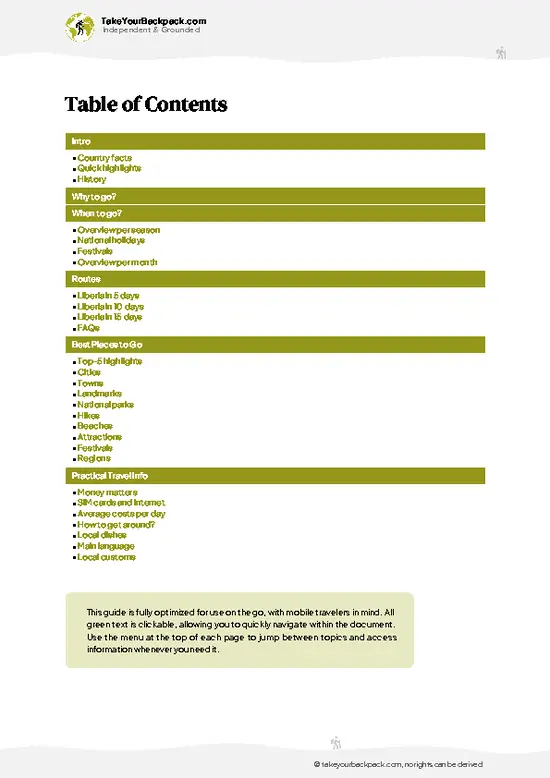
example page 2 from our offline Travel Guide for Liberia
example page 3 from our offline Travel Guide for Liberia
example page 4 from our offline Travel Guide for Liberia
example page 5 from our offline Travel Guide for Liberia
example page 6 from our offline Travel Guide for Liberia
example page 7 from our offline Travel Guide for Liberia
Loading the map 🌍
CLICK TO FILTER
cities
towns
landmarks
national parks
hikes
beaches
attractions
festivals
regions
SHOW COUNTRY’S BESTSHOW ALL

✨ Why go?
Ranked #14 town in Liberia
Reasons people choose to visit here

Salala earns a stop because it shows you working Liberia, not a polished version of it. The town sits among rubber plantations, so a short walk takes you from tin-roofed shops into rows of trees with cut spirals and cups collecting white latex. The highway market is the other draw: cassava, palm oil, charcoal, cold drinks and hot pepper soup change hands beside idling vehicles. Most travelers stay a few hours or one night, since facilities are basic and the social scene is local rather than backpacker. It suits patient solo travelers, overlanders and anyone who likes learning how an export crop shapes a community. If you need cafés and dorms, keep going.

💡 HighlightsTop highlights of Salala

  1. Rubber plantation rows: The trees around Salala are the town’s defining sight. Walk the edges of the plantation, watch the spiral cuts and the latex dripping into cups, and note the sharp, sour smell. Go early in the morning when tapping happens. It is usually free to look from the road, but ask before entering company land. Allow 1 to 2 hours.
  2. Salala highway market: The roadside stalls are the town’s social center. You will see piles of cassava, bundles of greens, palm oil in recycled bottles and charcoal sacks, with sellers calling out to passing vehicles. Morning is busiest and freshest. Snacks and drinks cost roughly US$0.50 to 3. Allow 45 minutes to 1 hour.
  3. Tapping workers at dawn: Seeing workers set out at first light gives you a real view of the town’s economy. Early light is cool, birds
… read more 👉
  1. Rubber plantation rows: The trees around Salala are the town’s defining sight. Walk the edges of the plantation, watch the spiral cuts and the latex dripping into cups, and note the sharp, sour smell. Go early in the morning when tapping happens. It is usually free to look from the road, but ask before entering company land. Allow 1 to 2 hours.
  2. Salala highway market: The roadside stalls are the town’s social center. You will see piles of cassava, bundles of greens, palm oil in recycled bottles and charcoal sacks, with sellers calling out to passing vehicles. Morning is busiest and freshest. Snacks and drinks cost roughly US$0.50 to 3. Allow 45 minutes to 1 hour.
  3. Tapping workers at dawn: Seeing workers set out at first light gives you a real view of the town’s economy. Early light is cool, birds are loud and the trunks glisten. Stay respectful, keep distance and ask before taking photos. There is no fee, though a small tip for a guide is welcome. Allow about 1 hour.
  4. Salala town streets: A slow walk past zinc-roofed shops, barbers, phone-charging stands and small cookshops shows daily life away from the main road. Late afternoon is pleasant once the heat eases. It costs nothing, and a bowl of rice with soup runs roughly US$1.50 to 3. Allow 1 hour.
Salala also works as a jumping-off point for day trips to Kakata and Gbarnga, both on the same inland road corridor, where you will find larger markets and more services.
The plantation rows at dawn are the best choice for a first visit.
Spotted a mistake or missing something? Contact us.

🏘️ NeighborhoodsHow different areas shape the experience

Salala is a small Bong County town on the road between Monrovia and Gbarnga, and it sorts itself into a few areas you can cross on foot in minutes.
  • Main road junction: This is where you spend your time. Taxis and motorbikes idle in red dust, vendors fry plantain and cassava, and loudspeakers play Liberian gospel and hiplife from dawn. It is loud, hot and the best place to eat and find a ride.
  • Market area: Stalls of palm oil, dried fish, cassava leaf and secondhand clothes crowd the edges of the road. Go in the morning, when the produce is freshest and the light is soft. Walk it slowly; the ground gets muddy after rain.
  • Residential lanes: Zinc-roofed houses, kids playing football, and cooking smoke drift through the evening. Pleasant for a stroll, but there is little to see and nothing to do after
… read more 👉
Salala is a small Bong County town on the road between Monrovia and Gbarnga, and it sorts itself into a few areas you can cross on foot in minutes.
  • Main road junction: This is where you spend your time. Taxis and motorbikes idle in red dust, vendors fry plantain and cassava, and loudspeakers play Liberian gospel and hiplife from dawn. It is loud, hot and the best place to eat and find a ride.
  • Market area: Stalls of palm oil, dried fish, cassava leaf and secondhand clothes crowd the edges of the road. Go in the morning, when the produce is freshest and the light is soft. Walk it slowly; the ground gets muddy after rain.
  • Residential lanes: Zinc-roofed houses, kids playing football, and cooking smoke drift through the evening. Pleasant for a stroll, but there is little to see and nothing to do after dark.
  • Surrounding farmland and rubber trees: Skip these unless you have a local guide; the paths are unmarked and the heat is heavy by midday.

⌛️ 1 daySeeing the highlights in 24 hours

6:30 AM, plantation edge: Start where the trees begin, because tapping happens in the cool early hours and the light is soft. Walk the track slowly and watch the latex fill the cups.
8:30 AM, highway market: Walk back to the road for breakfast of fried dough or rice and soup, and chat with the sellers as the stalls fill up.
10:30 AM, town streets: Wander the side lanes past barbers, tailors and charging stands. This quiet backstreet stretch is the part most people driving through never see.
12:30 PM, lunch: Pick a busy cookshop for cassava leaf or pepper soup. A crowd of locals is your best sign.
2:00 PM, rest: Sit in shade through the hottest hours and drink plenty of water.
4:30 PM, village paths behind the road: Take an unhurried walk on footpaths away from the highway, where children play and … read more 👉
6:30 AM, plantation edge: Start where the trees begin, because tapping happens in the cool early hours and the light is soft. Walk the track slowly and watch the latex fill the cups.
8:30 AM, highway market: Walk back to the road for breakfast of fried dough or rice and soup, and chat with the sellers as the stalls fill up.
10:30 AM, town streets: Wander the side lanes past barbers, tailors and charging stands. This quiet backstreet stretch is the part most people driving through never see.
12:30 PM, lunch: Pick a busy cookshop for cassava leaf or pepper soup. A crowd of locals is your best sign.
2:00 PM, rest: Sit in shade through the hottest hours and drink plenty of water.
4:30 PM, village paths behind the road: Take an unhurried walk on footpaths away from the highway, where children play and cooking fires start. Greet everyone you pass. Head back to the road before dark.

🌤️ When to go?Seasonal considerations and timing

  • Dry Season (November to March): Best for travel, with highs of 30 to 33°C (86 to 91°F), dusty harmattan haze and passable roads. Prices for rides rise slightly.
  • Shoulder (April and October): Humid, 24 to 31°C (75 to 88°F), with growing storms.
  • Rainy Season (May to September): Torrential downpours, mud-slicked roads and temperatures of 22 to 28°C (72 to 82°F). Fares can climb when roads worsen, but crowds are nonexistent.
Travel in the morning, before afternoon storms or heat build.

source: climatestotravel.comJANJanuary: highly recommended for travelingFEBFebruary: highly recommended for travelingMARMarch: excellent for travelingAPRApril: excellent for travelingMAYMay: fair for travelingJUNJune: below average for travelingJULJuly: below average for travelingAUGAugust: below average for travelingSEPSeptember: fair for travelingOCTOctober: fair for travelingNOVNovember: good for travelingDECDecember: highly recommended for traveling
when-to-go

✈️ The backpacker research shortcutLiberia Travel Guide

An offline-friendly backpacking guide with optimized travel routes, ranked highlights, transport advice, and the best areas to stay.
example page 0 from our offline Travel Guide for Liberia
example page 1 from our offline Travel Guide for Liberia
example page 2 from our offline Travel Guide for Liberia
example page 3 from our offline Travel Guide for Liberia
example page 4 from our offline Travel Guide for Liberia
example page 5 from our offline Travel Guide for Liberia
example page 6 from our offline Travel Guide for Liberia
example page 7 from our offline Travel Guide for Liberia
The digital guide (211 pages) contains:
✅ 49 highlights, ranked by travel appeal
✅ Optimized 5, 10 & 15-day travel routes
✅ Cities, national parks, landmarks, beaches
✅ How to get around
✅ Offline-friendly for travel without Wi-Fi
👉 Click to see all 30+ guide features

📅 Plan smarter in minutes, not weeks
✅ Month by month travel advice
✅ Festivals & national holidays
✅ Budget expectations

🗺️ Go to the right places, skip the overrated ones
✅ Honest pros & cons of destinations
✅ Top hikes, parks & viewpoints
✅ Lesser-known places most travelers miss
✅ Clear “worth it vs skip it” guidance

🛏️ Travel smoothly without rookie mistakes
✅ Best areas to stay
✅ Transport systems explained simply
✅ Common scams & safety advice
✅ SIM cards, money & practical tips

🌍 Understand the country, not just visit it
✅ Culture & traditions
✅ Local customs
✅ Festivals worth planning around
✅ Traveler-friendly historical context
✅ Insights that make places more meaningful

📱 Built for real travel conditions
✅ Fully downloadable PDF
✅ Works completely offline
✅ Optimized for phone use
✅ Useful in remote areas & buses
✅ Everything in one place
Stop searching, start planning
Get instant access to your full guide. 30‑day money-back guarantee.
+ Add another guide for just

By proceeding you agree to our terms.
Sent to your inbox immediately after payment • 100% Secure Checkout
Best Backpacking Travel Advisor 2025 tourism awardBest Backpacking
Travel Advisor
2025
What others say about Take Your Backpack Guides:
⭐⭐⭐⭐⭐
Fantastic, amazing amount of information!
⭐⭐⭐⭐⭐
My goodness this is amazing, it's what I've been looking for hats off too you!
⭐⭐⭐⭐⭐
I think this is absolutely BRILLIANT
⭐⭐⭐⭐
Very complete and informative. It's still missing places, but I gotta to commend you
⭐⭐⭐⭐⭐
This is truly amazing, thank you, can't wait to explore it with my kids!
⭐⭐⭐⭐⭐
Awesome resource, thank you!
⭐⭐⭐⭐⭐
This is amazing! Can't wait to explore the ones I haven't seen
⭐⭐⭐⭐
I love this! Well done, great idea.
⭐⭐⭐⭐⭐
Thanks for taking the time to make this gem!
⭐⭐⭐⭐⭐
This might be the best website I've ever seen.
⭐⭐⭐⭐⭐
Congratulations, and thank you so much for your work; it's incredibly valuable.
⭐⭐⭐⭐
In all seriousness I think you did a great job pointing out the important spots
⭐⭐⭐⭐⭐
10/10 very good
⭐⭐⭐⭐⭐
As someone who's only just starting to visit regularly this is awesome, thank you.
⭐⭐⭐⭐
Thank you very much! I'm going to visit my dad, it's going to be very useful!
⭐⭐⭐⭐⭐
This is really cool! We'll be travelling for the first time and this definitely come in handy.
⭐⭐⭐⭐⭐
You are now our minister of culture, congratulations 👨‍💼
⭐⭐⭐⭐⭐
Just wanted to tell you that this is a pearl! Going to follow your recommendations.
⭐⭐⭐⭐⭐
This is so cool. I'll definitely be using the resource for my travels soon.
⭐⭐⭐⭐⭐
This is very impressive! Good work.
⭐⭐⭐⭐⭐
This is an amazing and informative site. Very well done!

🛏️ Where to stay?Choosing the right base

Stay near the main road junction in Salala, where basic guesthouses cluster and rides pass all day. Dedicated hostels do not exist, so expect simple private rooms, often with a fan and bucket bath, and power that depends on a generator. Noise from trucks and music starts early, so bring earplugs. After dark the junction remains lit and has people about, which makes it the more comfortable option for a solo traveler. The quieter residential edges are calmer but darker, and you may walk on unlit lanes. Book ahead by phone if you can, and confirm whether the generator runs overnight.

🚌 Getting aroundHow to get around Salala

Waiting for a shared taxi to fill at the wrong hour is the costliest mistake in Salala, so reach the junction early, ideally before 8 am, when cars leave toward Monrovia and Gbarnga. Salala sits on a busy highway, which means plenty of through traffic, but not many formal services. The town itself is small enough to walk, and public transport is informal and unscheduled.
  • Walking: Free, and the right choice for the junction, market and nearby lanes. Expect red dust in the dry season and ankle-deep mud in the rains.
  • Shared taxis: These run along the main road to Gbarnga and Monrovia, typically US$5 to 10 per seat depending on the destination, and they leave once full. Sit by the window; the cabins are cramped and hot.
  • Motorbike taxis (“okada”): The quickest way to reach villages off the highway,
… read more 👉
Waiting for a shared taxi to fill at the wrong hour is the costliest mistake in Salala, so reach the junction early, ideally before 8 am, when cars leave toward Monrovia and Gbarnga. Salala sits on a busy highway, which means plenty of through traffic, but not many formal services. The town itself is small enough to walk, and public transport is informal and unscheduled.
  • Walking: Free, and the right choice for the junction, market and nearby lanes. Expect red dust in the dry season and ankle-deep mud in the rains.
  • Shared taxis: These run along the main road to Gbarnga and Monrovia, typically US$5 to 10 per seat depending on the destination, and they leave once full. Sit by the window; the cabins are cramped and hot.
  • Motorbike taxis (“okada”): The quickest way to reach villages off the highway, usually US$1 to 3 per ride. Agree on the fare first and ask for a helmet, which is often not offered.
  • Private hire: A whole car for the day costs about US$60 to 100 including fuel, worth it only if you are splitting with others or heading to remote spots.
Services thin out by late afternoon, so plan on moving before dusk.

👛 Costs (as of 22 October 2026)How expensive it really is

Salala costs about US$37 to 63 a day for a backpacker, using a basic guesthouse room and local food.
CategoryBudget RangeLocal Reality
Dorm accommodationUS$15 to 30No dorms; a simple private room with a fan is the norm.
MealsUS$6 to 12Rice with cassava leaf, fried fish or chicken at roadside kitchens.
Local transportUS$3 to 8Motorbike hops and shared taxi seats.
Basic activities/entry feesUS$0 to 5Mostly free walking, with occasional guide tips.
Miscellaneous expensesUS$3 to 8Water, phone data and small snacks.
Total Daily BudgetUS$37 to 63Per person, per day, in high season.
Carry small US dollar or Liberian dollar bills, since change is scarce and eating at local kitchens saves the most money.
⚠️ Prices can change and everyone travels differently, so take this as a rough guide. Hope it helps you plan your adventure!

🚌 Day tripsWhere to go beyond the main area

Salala works as a base for day trips by road, though the options are rural and need an early start.Gbarnga: The capital of Bong County is the most practical outing, offering a larger market, banks with ATMs and the Cuttington University area. Shared taxis take around 1 to 1.5 hours, and a return trip costs about US$10 to 20. Go in the dry season and travel back before dark.
Kakata: This Margibi County town lies toward Monrovia and is known for rubber plantations and a lively market. Allow 1 to 2 hours each way, with fares of roughly US$5 to 10 each direction. First-timers often leave too late and get stuck.
Firestone Plantation area: Rubber estates stretch for miles along the road toward Harbel, and the rows of tapped trees are quiet and shaded. Reaching it takes about 1.5 to 2.5 hours, and … read more 👉
Salala works as a base for day trips by road, though the options are rural and need an early start.Gbarnga: The capital of Bong County is the most practical outing, offering a larger market, banks with ATMs and the Cuttington University area. Shared taxis take around 1 to 1.5 hours, and a return trip costs about US$10 to 20. Go in the dry season and travel back before dark.
Kakata: This Margibi County town lies toward Monrovia and is known for rubber plantations and a lively market. Allow 1 to 2 hours each way, with fares of roughly US$5 to 10 each direction. First-timers often leave too late and get stuck.
Firestone Plantation area: Rubber estates stretch for miles along the road toward Harbel, and the rows of tapped trees are quiet and shaded. Reaching it takes about 1.5 to 2.5 hours, and a driver for the day costs US$60 to 100. Visits usually require permission, so arrange access ahead.

🛡️ SafetySafety Tips and Common Scams in Salala

Salala is a small, generally calm highway town, and most problems are minor. Keep your phone and cash out of sight in the crowded junction and market, where petty theft can happen. Do not walk the unlit lanes alone at night, and take a motorbike taxi with a known driver if you must move after dark. Police and informal checkpoints on the road are routine; stay polite and carry a copy of your passport. Overcharging for rides is the main annoyance, so ask locals the fare first. Solo women usually draw attention but little hassle.

FAQFrequently asked questions about Salala

Salala is mainly a stopover on the road between Monrovia and Gbarnga, with a lively junction market but few formal sights. Its appeal is local life, roadside food and nearby rubber country. Travelers seeking attractions are better served in Gbarnga, about 1 to 1.5 hours away.
One night or a single afternoon is enough for Salala. That covers the market in the morning, a walk through the lanes and a meal at the junction. If you add a trip to Gbarnga or Kakata, plan for two days.
Salala can be reached as a day trip from Monrovia, roughly 2 to 3 hours each way by shared taxi depending on traffic and road conditions. A return trip costs about US$10 to 20. Leave early and be back before dark, since there is little to occupy a full day.
⚠️ Things can change over time, so always validate details locally before you go.

Other Liberian towns near Salala

Explore more nearby:

  • Totota—Highway junction, lorry park, roadside food stalls| 20 km away
  • Bopolu—Gola forest, traditional chiefdom, remote access| 55 km away
  • Careysburg—Cool climate, old mission buildings, agricultural plots| 59 km away

💡 Not sure where to go next?
Create a personalized itinerary for Liberia including Salala and the places that fit your trip.

Generate my itinerary

👉 Discover all towns

Or checkout all Liberia has to offer (think cities, towns, villages, national parks, hikes, beaches, festivals)
Country photo of Liberia

We 💚 feedbackSumming up the experience

Most people overlook the dawn shift, when Salala’s tappers walk into the trees and the whole town hums before the highway wakes up. Get there early, bring small bills for snacks, and greet people before lifting a camera. I would skip midday heat entirely.

✍️ Help improve this page!
The information on this page is based on in-depth research, insights shared by experienced travelers, and feedback from the local travel community in Liberia. While every effort is made to keep the information accurate and current, conditions can change — so if you spot anything incorrect or outdated, please get in touch.


🙋‍♂️ Give feedback

👋 Meet the founderWho’s Behind Take Your Backpack?

Johan, backpacker and founder of TakeYourBackpackHi, I’m Johan (Netherlands 🇳🇱), the creator of TakeYourBackpack. Over the past 3 decades, I’ve backpacked through 90+ countries across six continents, gaining extensive experience with independent travel, long-term trips, and overland routes.

This site is built on a combination of firsthand travel experience and carefully curated insights from other backpackers. Many guides are based on places I’ve personally visited, while others bring together tips, observations, and practical advice shared by trusted travelers I’ve met along the way.

The goal is to provide realistic, experience-driven guidance — not generic itineraries — so you can explore destinations with better context, clearer expectations, and more confidence.