×

Liberia🇱🇷 | townsVoinjamaLofa capital, central mosque, Lorma and Mandingo quarters, Guinea-border cloth | things to do and best time to go

Explore SanniquellieExplore Foya

Backpacking in Voinjama
🏆 Top picktown ranked #3
By Johan Kruseman 🇳🇱 | Updated October 22, 2026

Voinjama has a large Muslim community, and the first sound of the day is often the call to prayer drifting over tin roofs, with church choirs joining in later. The town is the capital of Lofa County in the north of Liberia, close to the Guinea border, and it sits at the end of a long, red-dirt journey. In the rains that road turns to chocolate soup, and you will feel every rut. Facilities are basic, power is patchy, and there is no backpacker circuit to lean on. What you get instead is a working highland market town, with a lively central market, motorbike taxis whining through the dust, and cool evenings after the heat fades. Travelers are rare, so meeting other backpackers is unlikely, but locals are quick to start a conversation. It works best as a deep-north stop and a gateway to forested hills, not as a place to tick off sights. Evenings end with charcoal smoke, rice pots and a hum of generators.

Discover everything you want to know in the 📖 Liberia Travel Guide.


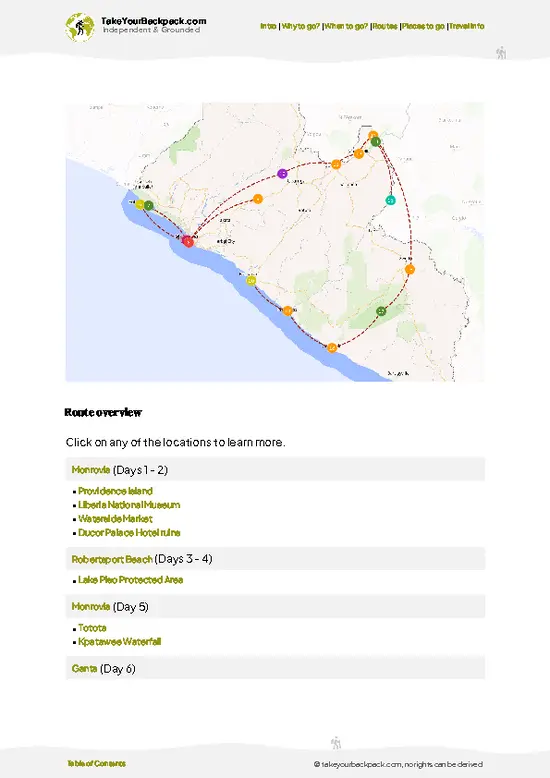
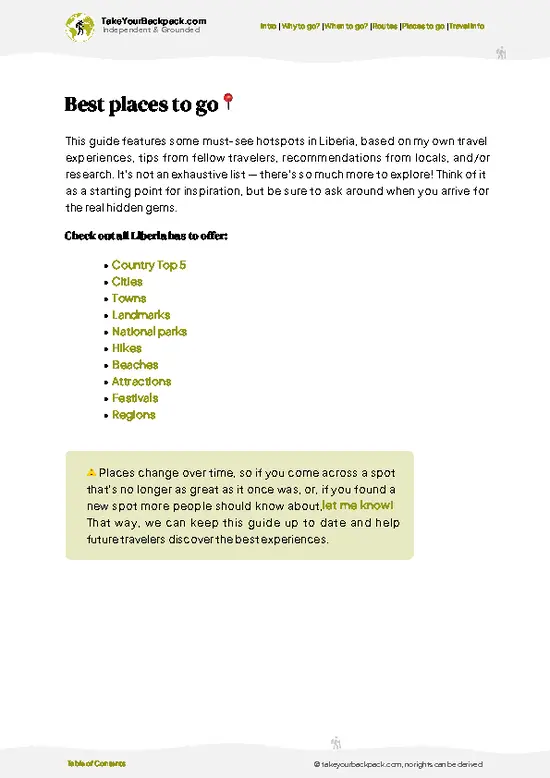
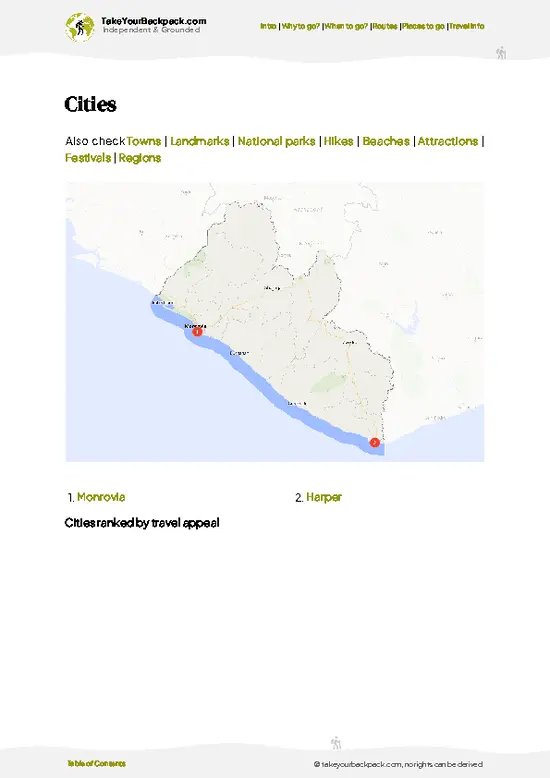
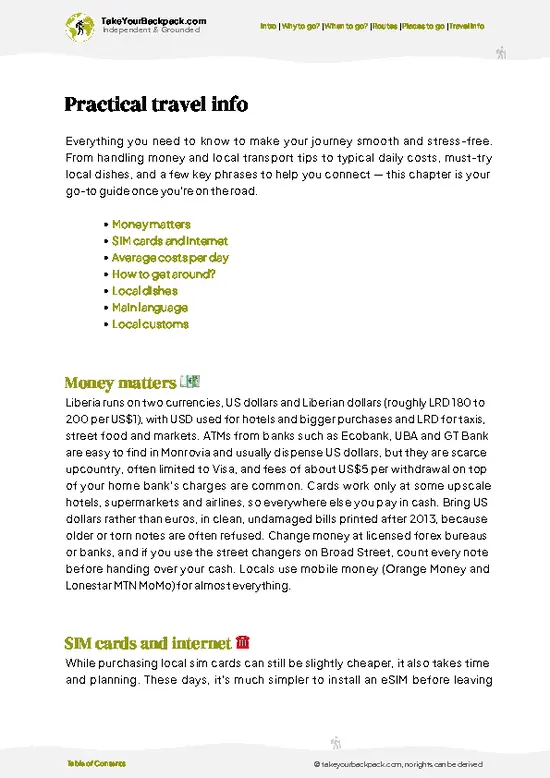
example page 0 from our offline Travel Guide for Liberia
example page 1 from our offline Travel Guide for Liberia
example page 2 from our offline Travel Guide for Liberia
example page 3 from our offline Travel Guide for Liberia
example page 4 from our offline Travel Guide for Liberia
example page 5 from our offline Travel Guide for Liberia
example page 6 from our offline Travel Guide for Liberia
example page 7 from our offline Travel Guide for Liberia
Loading the map 🌍
CLICK TO FILTER
cities
towns
landmarks
national parks
hikes
beaches
attractions
festivals
regions
SHOW COUNTRY’S BESTSHOW ALL

✨ Why go?
Ranked #3 town in Liberia
Why visitors keep coming back

Voinjama is where you go when Monrovia and the coast have started to feel like the whole country and you want the other half. The draw is the north itself: the Lorma, Kissi and Mandingo communities living side by side, the pace of a real county seat, and the highlands of the Wologizi Mountains rising beyond town. Few foreigners pass through, so a guesthouse owner or a motorbike driver will often become your guide, and a plain meal of rice with palm oil stew turns into a long talk. Most people stay two or three nights, enough to wander the central market, walk the quarters and arrange a trip into the hills. It suits slow, self-reliant travelers who are comfortable with rough roads, cold bucket showers and patchy phone signal. It does not suit anyone after nightlife or polish. If you want a … read more 👉
Voinjama is where you go when Monrovia and the coast have started to feel like the whole country and you want the other half. The draw is the north itself: the Lorma, Kissi and Mandingo communities living side by side, the pace of a real county seat, and the highlands of the Wologizi Mountains rising beyond town. Few foreigners pass through, so a guesthouse owner or a motorbike driver will often become your guide, and a plain meal of rice with palm oil stew turns into a long talk. Most people stay two or three nights, enough to wander the central market, walk the quarters and arrange a trip into the hills. It suits slow, self-reliant travelers who are comfortable with rough roads, cold bucket showers and patchy phone signal. It does not suit anyone after nightlife or polish. If you want a Liberia that has not been repackaged for visitors, this is a sound place to spend a few days.

💡 HighlightsEssential experiences to have while visiting Voinjama

  1. Voinjama Central Market: The center of town life and the best place to see how the north trades. Stalls sell cassava leaf, dried fish, palm oil in recycled bottles, secondhand clothes and cloth from across the Guinea border. Go in the morning when the choice is widest and the heat is mild. Entry is free, a snack or small purchase runs about US$1 to 3, and an hour or two is plenty.
  2. Voinjama Central Mosque: The town has a large Muslim community, mostly Mandingo, and the main mosque is the clearest sign of it. Visit around the late afternoon prayers, when the neighborhood fills with men in long robes and the courtyard hums. Dress modestly, cover your shoulders and knees, and ask before stepping inside or taking photos. Free, about 20 to 30 minutes.
  3. Old quarters walk: Wander the lanes where the
… read more 👉
  1. Voinjama Central Market: The center of town life and the best place to see how the north trades. Stalls sell cassava leaf, dried fish, palm oil in recycled bottles, secondhand clothes and cloth from across the Guinea border. Go in the morning when the choice is widest and the heat is mild. Entry is free, a snack or small purchase runs about US$1 to 3, and an hour or two is plenty.
  2. Voinjama Central Mosque: The town has a large Muslim community, mostly Mandingo, and the main mosque is the clearest sign of it. Visit around the late afternoon prayers, when the neighborhood fills with men in long robes and the courtyard hums. Dress modestly, cover your shoulders and knees, and ask before stepping inside or taking photos. Free, about 20 to 30 minutes.
  3. Old quarters walk: Wander the lanes where the Lorma, Kissi and Mandingo neighborhoods run into each other. You pass mud-brick and zinc-roofed homes, women pounding cassava and kids playing football with a plastic bag ball. Early morning or late afternoon is the comfortable time. Free, 1 to 2 hours, and a local friend or driver makes greetings easier.
  4. Lofa County hill viewpoints on the town edge: Walk or ride a motorbike taxi up one of the rises around town for a view over tin roofs and green forest toward the Guinea highlands. Go in the dry months for clear air and just before dusk for softer light. Motorbike fare is about US$1 to 2, and 45 minutes is enough.
Beyond town, the Wologizi Mountains, the market and old-town streets of Zorzor and the forest villages around Kolahun are the best bases for day trips from Voinjama. For a first visit, start with the central market, since it shows you the whole town in one morning.
Spotted a mistake or missing something? Contact us.

🏘️ NeighborhoodsWhere things are and how it's laid out

Voinjama is small enough to learn on foot in an afternoon, and its areas blur into one another along a few red-dirt roads running through Lofa County’s hills.
  • Town Center and Main Market: The market streets around the central junction fill by mid-morning with the clatter of motorbikes, radios and women calling out prices for cassava, palm oil, peppers and dried fish. Hot pepper soup and rice with palm butter come out of small cookshops, and you eat standing at plastic tables with dust on your sandals. Walk it all in twenty minutes, and you leave knowing where everything is.
  • Zomo Road and the Guinea Side: The road toward the Guinea border carries trucks, motorbike taxis and traders, so the air smells of diesel and woodsmoke. Money changers, phone-credit sellers and tea stalls line it. It is a
… read more 👉
Voinjama is small enough to learn on foot in an afternoon, and its areas blur into one another along a few red-dirt roads running through Lofa County’s hills.
  • Town Center and Main Market: The market streets around the central junction fill by mid-morning with the clatter of motorbikes, radios and women calling out prices for cassava, palm oil, peppers and dried fish. Hot pepper soup and rice with palm butter come out of small cookshops, and you eat standing at plastic tables with dust on your sandals. Walk it all in twenty minutes, and you leave knowing where everything is.
  • Zomo Road and the Guinea Side: The road toward the Guinea border carries trucks, motorbike taxis and traders, so the air smells of diesel and woodsmoke. Money changers, phone-credit sellers and tea stalls line it. It is a good place to watch the border trade and to find a cheap, strong sugary coffee at dawn. Expect heat and noise, and no shade.
  • Hillside Residential Neighborhoods: Quieter lanes of mud-brick and zinc-roof homes climb the slopes behind town. Roosters, church singing on Sundays and children’s football games set the soundtrack. Paths turn slick after rain, so you need decent shoes. The reward is a view over green hills and the town’s rooftops at the end of the day, with cooking fires starting up.
  • Mosque and Church Quarter: Muslim and Christian communities live side by side here, and you hear the call to prayer and hymns in the same hour. Evenings are calm, with little nightlife beyond a few bars playing Liberian and Guinean music, which suits an early night.

⌛️ 1 dayA smart one-day plan

A market morning leads into a slow walking day through a town with no tour buses.
7:30 AM, breakfast near the central market: Start with fried dough or bread, sweet tea and eggs from a street vendor, then watch traders unload stock. It is the best moment to see produce arrive and to start greeting people.
9:00 AM, Voinjama Central Market: Browse the stalls for cassava leaf, dried fish, palm oil and cloth. Buy a few snacks and try to bargain gently. Give yourself about two hours, since everyone will want to chat.
11:30 AM, Old quarters walk: Stroll the Lorma, Kissi and Mandingo lanes on foot. Say hello often, ask before taking photos, and notice how the building styles and languages shift from block to block.
1:00 PM, Lunch at a local cookshop: Order rice with palm butter or potato greens and sit … read more 👉
A market morning leads into a slow walking day through a town with no tour buses.
7:30 AM, breakfast near the central market: Start with fried dough or bread, sweet tea and eggs from a street vendor, then watch traders unload stock. It is the best moment to see produce arrive and to start greeting people.
9:00 AM, Voinjama Central Market: Browse the stalls for cassava leaf, dried fish, palm oil and cloth. Buy a few snacks and try to bargain gently. Give yourself about two hours, since everyone will want to chat.
11:30 AM, Old quarters walk: Stroll the Lorma, Kissi and Mandingo lanes on foot. Say hello often, ask before taking photos, and notice how the building styles and languages shift from block to block.
1:00 PM, Lunch at a local cookshop: Order rice with palm butter or potato greens and sit with the lunch crowd. It is simple, filling and the best place for conversation.
2:30 PM, Rest: Take the hottest part of the day off in the shade or at your guesthouse.
4:00 PM, Town-edge hill viewpoint: Take a motorbike taxi or walk uphill for a view across the rooftops toward the forested highlands. This is off the usual route and gives you the wider landscape you will not see from the market.
5:30 PM, Voinjama Central Mosque: Stand quietly at the edge of the courtyard as people gather for evening prayers, dressed modestly and asking before any photos.
7:00 PM, Dinner and charcoal glow: Finish with grilled fish or chicken from a roadside stand, then walk back under the sound of generators and night insects.

🌤️ When to go?Seasonal considerations and timing

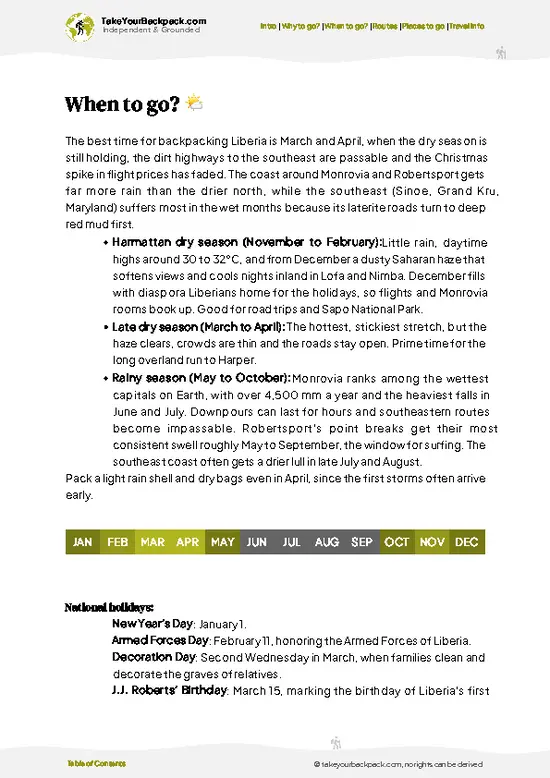
November to March is the easiest window for Voinjama, with dry roads, clear skies and cool mornings.
  • Dry Season (November to March): Days reach 30 to 34°C (86 to 93°F) and nights fall to 18 to 22°C (64 to 72°F). The Harmattan haze can dull views in December and January. Roads are firmest, so transport is quicker, and prices for rides edge up.
  • Transition (April and October): Humid heat of 28 to 33°C (82 to 91°F) with building storms. Roads begin to soften, but crowds stay thin.
  • Rainy Season (May to September): Heavy downpours of 25 to 29°C (77 to 84°F) turn Lofa County’s dirt roads into slick, rutted mud. Trips from the capital can stretch by many hours, and bush trails become difficult. Daylight is shorter by only a little, but cloud cuts the usable light.
  • Holidays: Christmas and New Year bring
… read more 👉
November to March is the easiest window for Voinjama, with dry roads, clear skies and cool mornings.
  • Dry Season (November to March): Days reach 30 to 34°C (86 to 93°F) and nights fall to 18 to 22°C (64 to 72°F). The Harmattan haze can dull views in December and January. Roads are firmest, so transport is quicker, and prices for rides edge up.
  • Transition (April and October): Humid heat of 28 to 33°C (82 to 91°F) with building storms. Roads begin to soften, but crowds stay thin.
  • Rainy Season (May to September): Heavy downpours of 25 to 29°C (77 to 84°F) turn Lofa County’s dirt roads into slick, rutted mud. Trips from the capital can stretch by many hours, and bush trails become difficult. Daylight is shorter by only a little, but cloud cuts the usable light.
  • Holidays: Christmas and New Year bring returning families, so seats on vehicles fill earlier.
Book your onward ride a day ahead in December and arrive at the motor park early.


source: climatestotravel.comJANJanuary: highly recommended for travelingFEBFebruary: excellent for travelingMARMarch: excellent for travelingAPRApril: excellent for travelingMAYMay: good for travelingJUNJune: fair for travelingJULJuly: fair for travelingAUGAugust: fair for travelingSEPSeptember: good for travelingOCTOctober: good for travelingNOVNovember: highly recommended for travelingDECDecember: highly recommended for traveling
when-to-go

✈️ The backpacker research shortcutLiberia Travel Guide

An offline-friendly backpacking guide with optimized travel routes, ranked highlights, transport advice, and the best areas to stay.
example page 0 from our offline Travel Guide for Liberia
example page 1 from our offline Travel Guide for Liberia
example page 2 from our offline Travel Guide for Liberia
example page 3 from our offline Travel Guide for Liberia
example page 4 from our offline Travel Guide for Liberia
example page 5 from our offline Travel Guide for Liberia
example page 6 from our offline Travel Guide for Liberia
example page 7 from our offline Travel Guide for Liberia
The digital guide (211 pages) contains:
✅ 49 highlights, ranked by travel appeal
✅ Optimized 5, 10 & 15-day travel routes
✅ Cities, national parks, landmarks, beaches
✅ How to get around
✅ Offline-friendly for travel without Wi-Fi
👉 Click to see all 30+ guide features

📅 Plan smarter in minutes, not weeks
✅ Month by month travel advice
✅ Festivals & national holidays
✅ Budget expectations

🗺️ Go to the right places, skip the overrated ones
✅ Honest pros & cons of destinations
✅ Top hikes, parks & viewpoints
✅ Lesser-known places most travelers miss
✅ Clear “worth it vs skip it” guidance

🛏️ Travel smoothly without rookie mistakes
✅ Best areas to stay
✅ Transport systems explained simply
✅ Common scams & safety advice
✅ SIM cards, money & practical tips

🌍 Understand the country, not just visit it
✅ Culture & traditions
✅ Local customs
✅ Festivals worth planning around
✅ Traveler-friendly historical context
✅ Insights that make places more meaningful

📱 Built for real travel conditions
✅ Fully downloadable PDF
✅ Works completely offline
✅ Optimized for phone use
✅ Useful in remote areas & buses
✅ Everything in one place
Stop searching, start planning
Get instant access to your full guide. 30‑day money-back guarantee.
+ Add another guide for just

By proceeding you agree to our terms.
Sent to your inbox immediately after payment • 100% Secure Checkout
Best Backpacking Travel Advisor 2025 tourism awardBest Backpacking
Travel Advisor
2025
What others say about Take Your Backpack Guides:
⭐⭐⭐⭐⭐
Fantastic, amazing amount of information!
⭐⭐⭐⭐⭐
My goodness this is amazing, it's what I've been looking for hats off too you!
⭐⭐⭐⭐⭐
I think this is absolutely BRILLIANT
⭐⭐⭐⭐
Very complete and informative. It's still missing places, but I gotta to commend you
⭐⭐⭐⭐⭐
This is truly amazing, thank you, can't wait to explore it with my kids!
⭐⭐⭐⭐⭐
Awesome resource, thank you!
⭐⭐⭐⭐⭐
This is amazing! Can't wait to explore the ones I haven't seen
⭐⭐⭐⭐
I love this! Well done, great idea.
⭐⭐⭐⭐⭐
Thanks for taking the time to make this gem!
⭐⭐⭐⭐⭐
This might be the best website I've ever seen.
⭐⭐⭐⭐⭐
Congratulations, and thank you so much for your work; it's incredibly valuable.
⭐⭐⭐⭐
In all seriousness I think you did a great job pointing out the important spots
⭐⭐⭐⭐⭐
10/10 very good
⭐⭐⭐⭐⭐
As someone who's only just starting to visit regularly this is awesome, thank you.
⭐⭐⭐⭐
Thank you very much! I'm going to visit my dad, it's going to be very useful!
⭐⭐⭐⭐⭐
This is really cool! We'll be travelling for the first time and this definitely come in handy.
⭐⭐⭐⭐⭐
You are now our minister of culture, congratulations 👨‍💼
⭐⭐⭐⭐⭐
Just wanted to tell you that this is a pearl! Going to follow your recommendations.
⭐⭐⭐⭐⭐
This is so cool. I'll definitely be using the resource for my travels soon.
⭐⭐⭐⭐⭐
This is very impressive! Good work.
⭐⭐⭐⭐⭐
This is an amazing and informative site. Very well done!

🛏️ Where to stay?How to pick the right area

The best area for a budget stay in Voinjama is the town center near the main market and motor park, where nearly all the simple guesthouses and the few small hotels are clustered. Dedicated hostels and dorm beds are rare in town, so expect basic private rooms with a fan and shared or simple private bathrooms, at prices well below those in Monrovia. Staying here puts you within walking distance of food stalls, money changers and the vehicles heading out in the morning, which matters when departures are early and seats go fast.

Noise is the trade-off. Motorbikes, generators and market chatter start … read more 👉
The best area for a budget stay in Voinjama is the town center near the main market and motor park, where nearly all the simple guesthouses and the few small hotels are clustered. Dedicated hostels and dorm beds are rare in town, so expect basic private rooms with a fan and shared or simple private bathrooms, at prices well below those in Monrovia. Staying here puts you within walking distance of food stalls, money changers and the vehicles heading out in the morning, which matters when departures are early and seats go fast.

Noise is the trade-off. Motorbikes, generators and market chatter start before dawn, and bars near the junction can play music into the evening. Power cuts are common, so look for a place with a generator or solar backup, and bring earplugs and a headlamp.

The quieter second option is the residential hillside area slightly above the center. Streets are calmer at night, breezes are cooler, and a short walk or motorbike ride brings you back to the market. Lighting on dirt lanes is limited, so walk back with a torch or take a motorbike after dark. Cash is the norm for payment, so carry small US dollar bills.

🚌 Getting aroundGetting around like a local

Voinjama is easiest to cover on foot, because the market, the main junction, the motor park and most guesthouses sit within about 2 km (1.2 miles) of each other. Traffic is light apart from motorbikes and a few trucks, there is no public bus network, and you move around by shared taxi, motorbike or your own legs. Roads outside town are the hard part, and they decide how long any journey takes.
  • Walking: Free, and the best way to see the market, the hillside lanes and the Zomo Road. Mornings are cool and smell of woodsmoke and frying dough. By midday the red dust and heat climb, so carry water and wear closed shoes after rain, when the mud is slick. You get greetings from nearly everyone you pass.
  • Motorbike Taxis (Okada): The standard way to cross town quickly, usually US$0.50 to 1.50 a ride within
… read more 👉
Voinjama is easiest to cover on foot, because the market, the main junction, the motor park and most guesthouses sit within about 2 km (1.2 miles) of each other. Traffic is light apart from motorbikes and a few trucks, there is no public bus network, and you move around by shared taxi, motorbike or your own legs. Roads outside town are the hard part, and they decide how long any journey takes.
  • Walking: Free, and the best way to see the market, the hillside lanes and the Zomo Road. Mornings are cool and smell of woodsmoke and frying dough. By midday the red dust and heat climb, so carry water and wear closed shoes after rain, when the mud is slick. You get greetings from nearly everyone you pass.
  • Motorbike Taxis (Okada): The standard way to cross town quickly, usually US$0.50 to 1.50 a ride within town, higher at night or in rain. Agree the price first, hold on tight, and expect bumps, dust and a view over the hills from the ridge roads. Ask for a helmet, which is not always available.
  • Shared Taxis and Tuk-Tuks: Three-wheelers and cars run set routes around the main roads for about US$0.25 to 1 per seat. They fill before leaving, so you wait ten to twenty minutes, packed in with baskets of vegetables and the local radio.
  • Shared Vehicles to Other Towns: Minibuses and shared cars leave from the motor park for Kolahun, Zorzor, Gbarnga and Monrovia, generally from early morning until early afternoon. To Monrovia, expect roughly US$25 to 40 and a long day of 10 to 14 hours in the dry season, much longer in heavy rain. Short hops cost US$3 to 10. Seats are tight, but the road passes forest, hills and roadside stalls selling roasted corn and plantain chips.
  • Private Hire: Motorbikes or 4x4s can be chartered by the day for trips beyond town, from about US$40 to 100 depending on distance and road conditions. It costs more but gets you to villages and waterfalls that have no regular service.

👛 Costs (as of 22 October 2026)Typical daily expenses

Voinjama costs a backpacker about US$12 to 20 a day, with a total daily budget of US$44 in the high season. Prices run higher than the stated ranges in the rainy season when supplies from Monrovia are delayed.
CategoryBudget RangeLocal Reality
Dorm accommodationUS$12 to 20 (basic guesthouse room, high season; US$10 to 15 low season)True dorms are rare, so you pay for a simple private room with a fan. Price is per room, so sharing helps.
MealsUS$8 to 12Rice with cassava leaf, palm butter or fish at cookshops costs US$2 to 4. Eggs and bread for breakfast cost less than US$2.
Local transportUS$3 to 6Motorbike rides cost US$0.50 to 1.50 within town. Shared taxis are cheaper.
Basic activities/entry feesUS$0 to 5Most sights are free, such as markets and village walks. Guides or small community fees can
… read more 👉
Voinjama costs a backpacker about US$12 to 20 a day, with a total daily budget of US$44 in the high season. Prices run higher than the stated ranges in the rainy season when supplies from Monrovia are delayed.
CategoryBudget RangeLocal Reality
Dorm accommodationUS$12 to 20 (basic guesthouse room, high season; US$10 to 15 low season)True dorms are rare, so you pay for a simple private room with a fan. Price is per room, so sharing helps.
MealsUS$8 to 12Rice with cassava leaf, palm butter or fish at cookshops costs US$2 to 4. Eggs and bread for breakfast cost less than US$2.
Local transportUS$3 to 6Motorbike rides cost US$0.50 to 1.50 within town. Shared taxis are cheaper.
Basic activities/entry feesUS$0 to 5Most sights are free, such as markets and village walks. Guides or small community fees can cost a few dollars.
Miscellaneous expensesUS$5 to 8Water, phone credit, generator charging and small tips. Pay in Liberian or US dollars, in small bills.
Total Daily BudgetUS$44Costs rise sharply if you hire a vehicle for trips beyond town.
Bring small US dollar bills and change money in the market in the morning, when cash is most available, because ATMs are scarce and unreliable.
⚠️ Prices can change and everyone travels differently, so take this as a rough guide. Hope it helps you plan your adventure!

🚌 Day tripsWhere to go beyond the main area

Voinjama works as a base for a few rewarding day trips, though roads are rough and vehicles are infrequent, so start early and hire transport if you want flexibility.
Kolahun and the Lofa River Villages:
A shared car to Kolahun takes about 1.5 to 2.5 hours on dirt road in the dry season and costs around US$4 to 8 each way. The town sits in forested hills close to the Sierra Leone and Guinea borders, and market day brings traders from across the frontier. Go between December and March, because rain can cut the road. First-timers often leave too late and get stuck overnight.
👉 Explore Kolahun
Zorzor:
Zorzor is a Loma and Kpelle crossroads town roughly 1 to 2 hours away by shared car, US$3 to 7 each way. It is the place to see Poro and Sande cultural traditions respectfully, ideally with a local … read more 👉
Voinjama works as a base for a few rewarding day trips, though roads are rough and vehicles are infrequent, so start early and hire transport if you want flexibility.
Kolahun and the Lofa River Villages:
A shared car to Kolahun takes about 1.5 to 2.5 hours on dirt road in the dry season and costs around US$4 to 8 each way. The town sits in forested hills close to the Sierra Leone and Guinea borders, and market day brings traders from across the frontier. Go between December and March, because rain can cut the road. First-timers often leave too late and get stuck overnight.
👉 Explore Kolahun
Zorzor:
Zorzor is a Loma and Kpelle crossroads town roughly 1 to 2 hours away by shared car, US$3 to 7 each way. It is the place to see Poro and Sande cultural traditions respectfully, ideally with a local contact, and to eat fresh bush-farm rice and palm oil dishes. Dry season is best, and a return vehicle is easiest before mid-afternoon.

Guinea Border Area at Macenta Road:
A short motorbike ride out the Guinea-bound road, about 30 to 60 minutes and US$5 to 15 round trip, shows the cross-border trade of bikes, rice and fuel, with Loma hill country around you. Keep your passport and visa documents ready for checkpoints, and do not try to cross without proper papers. Early morning is best.

Gbarnga:
Gbarnga is a long day of 4 to 6 hours each way by road, so it suits only a dry-season push and is better as a transit point. Shared seats cost around US$10 to 18, and the town has markets and Cuttington University nearby.

🛡️ SafetyScams, Hazards, and Annoyances

Voinjama is generally calm and friendly, and most problems that catch travelers out are petty rather than violent. Keep your phone and cash out of sight in the market, where crowds are tight, and carry small bills so you are not flashing large notes. Night-time streets have little lighting and uneven ground, so walk with a torch or take a motorbike home, and solo travelers, especially women, do better returning before late evening. Motorbike rides are the biggest real risk, with poor roads and few helmets, so ask for one and have the rider slow down. Police and immigration checkpoints along the border road are routine. Keep your passport and visa papers handy and stay polite and patient. Unofficial fees occasionally get requested, so ask for a receipt and smile. Use only bottled or treated … read more 👉
Voinjama is generally calm and friendly, and most problems that catch travelers out are petty rather than violent. Keep your phone and cash out of sight in the market, where crowds are tight, and carry small bills so you are not flashing large notes. Night-time streets have little lighting and uneven ground, so walk with a torch or take a motorbike home, and solo travelers, especially women, do better returning before late evening. Motorbike rides are the biggest real risk, with poor roads and few helmets, so ask for one and have the rider slow down. Police and immigration checkpoints along the border road are routine. Keep your passport and visa papers handy and stay polite and patient. Unofficial fees occasionally get requested, so ask for a receipt and smile. Use only bottled or treated water, and take malaria precautions, as mosquitoes are common after dusk. Photographing officials, border posts or ceremonies without permission causes trouble, so ask first.

FAQCommon questions from travelers

Voinjama is worth visiting if you want rural Lofa County, Loma culture and a border-region market town far from the coast. Most visitors stay one to three days, using it as a base for Kolahun and Zorzor, and the long dirt road from Monrovia (10 to 14 hours in the dry season) means it is a real destination rather than a quick stop. Tourist facilities are basic, but the welcome is warm.
Voinjama needs two to three days for most backpackers. One day covers the market, hillside lanes and the Zomo Road, and a second allows a trip to Kolahun or Zorzor, 1.5 to 2.5 hours away. Add a third day if you want village visits or to build in a buffer for slow roads in the rainy season.
Voinjama is not realistic as a day trip from Monrovia, since the road takes about 10 to 14 hours each way in the dry season and longer in rain. From closer towns such as Zorzor (1 to 2 hours) or Kolahun (1.5 to 2.5 hours), a day trip is possible with an early start and about US$4 to 8 each way by shared car. Overnighting in Voinjama gives you a much more comfortable visit.
⚠️ Things can change over time, so always validate details locally before you go.

Other Liberian towns near Voinjama

Explore more nearby:

  • Foya—Borderland outpost, rice fields, remote clinics| 51 km away
  • Kolahun—Lofa forest, farming villages, unpaved roads| 58 km away
  • Ganta—Commercial center, border trade, busy roundabout| 157 km away

💡 Not sure where to go next?
Create a personalized itinerary for Liberia including Voinjama and the places that fit your trip.

Generate my itinerary

👉 Discover all towns

Or checkout all Liberia has to offer (think cities, towns, villages, national parks, hikes, beaches, festivals)
Country photo of Liberia

We 💚 feedbackIs it worth it?

Voinjama is at its best in the dry months, and in the cool early morning when the market is loading and the air smells of woodsmoke. I would plan for that window, carry small bills and a headlamp for power cuts, and leave a spare day in case the roads slow you down.

✍️ Help improve this page!
The information on this page is based on in-depth research, insights shared by experienced travelers, and feedback from the local travel community in Liberia. While every effort is made to keep the information accurate and current, conditions can change — so if you spot anything incorrect or outdated, please get in touch.


🙋‍♂️ Give feedback

👋 Meet the founderWho’s Behind Take Your Backpack?

Johan, backpacker and founder of TakeYourBackpackHi, I’m Johan (Netherlands 🇳🇱), the creator of TakeYourBackpack. Over the past 3 decades, I’ve backpacked through 90+ countries across six continents, gaining extensive experience with independent travel, long-term trips, and overland routes.

This site is built on a combination of firsthand travel experience and carefully curated insights from other backpackers. Many guides are based on places I’ve personally visited, while others bring together tips, observations, and practical advice shared by trusted travelers I’ve met along the way.

The goal is to provide realistic, experience-driven guidance — not generic itineraries — so you can explore destinations with better context, clearer expectations, and more confidence.