×

Libya🇱🇾 | attractionsApolloniaByzantine basilica, sunken quays, seaside theater, swimming cove | things to do and best time to go

Explore Cyrene Archaeological SiteExplore Ghadames Old Town

Backpacking in Apollonia
🌟 Highlightattraction ranked #7
By Johan Kruseman 🇳🇱 | Updated October 22, 2026

Wind off the Mediterranean flattens the grass between the columns, and gulls wheel over a roofless Byzantine church whose floor still shows pale marble patterns. That is Apollonia, on the coast of northeastern Libya, in Cyrenaica, about 20 kilometers north of Cyrene. The scale is modest, so skip any plan to spend a full day here. The western church complex, the theater and the drowned harbor edge are what deserve your time. The scattered walls of houses and the later fortifications are fine for a quick look but won’t hold your attention. Crowds are rare to nonexistent, which is both the appeal and the warning: no cafes, no signage worth trusting. The site is free of touts and full of atmosphere, and the beach below is an easy swim. Check current security conditions and arrange a local guide before you go.

Discover everything you want to know in the 📖 Libya Travel Guide.
Safety warning

The current risk level for Libya is high. Check the advice before going.


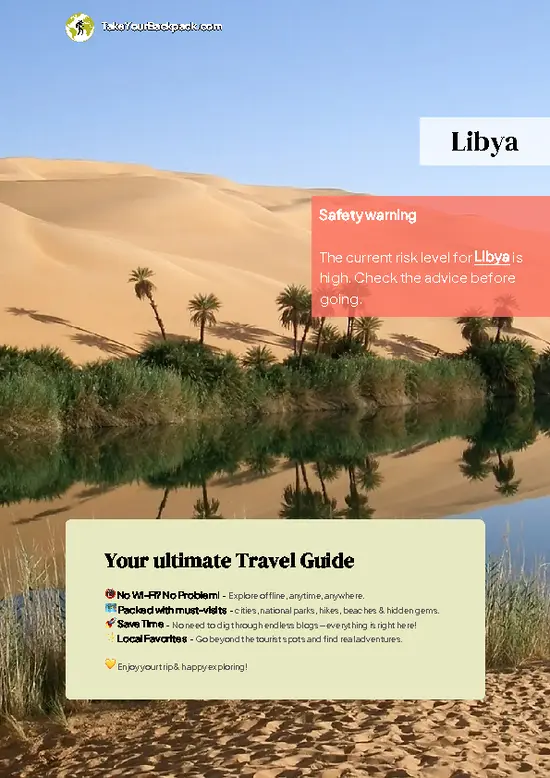
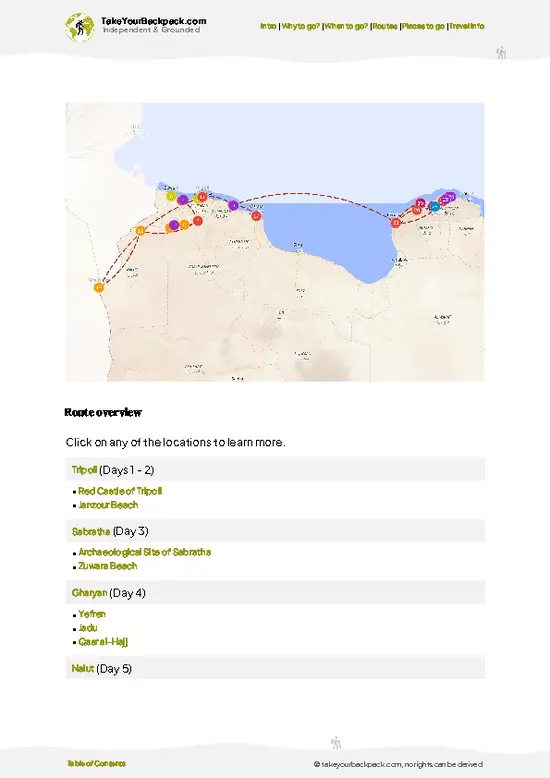
example page 0 from our offline Travel Guide for Libya
example page 1 from our offline Travel Guide for Libya
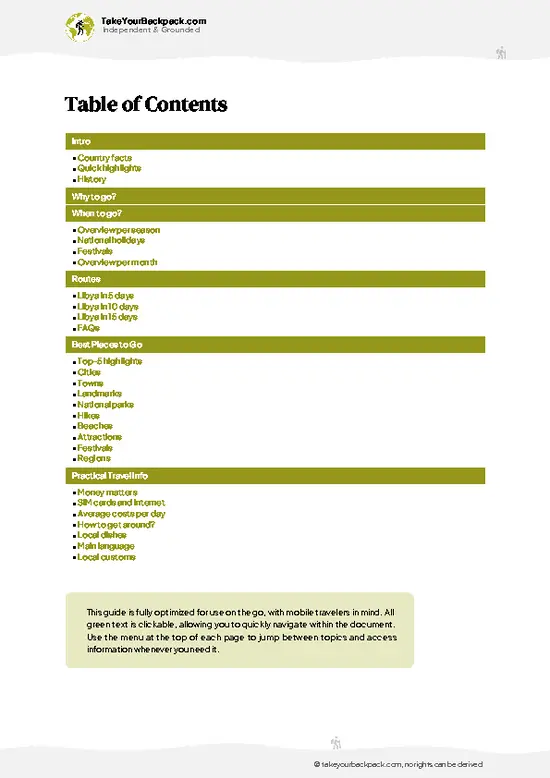
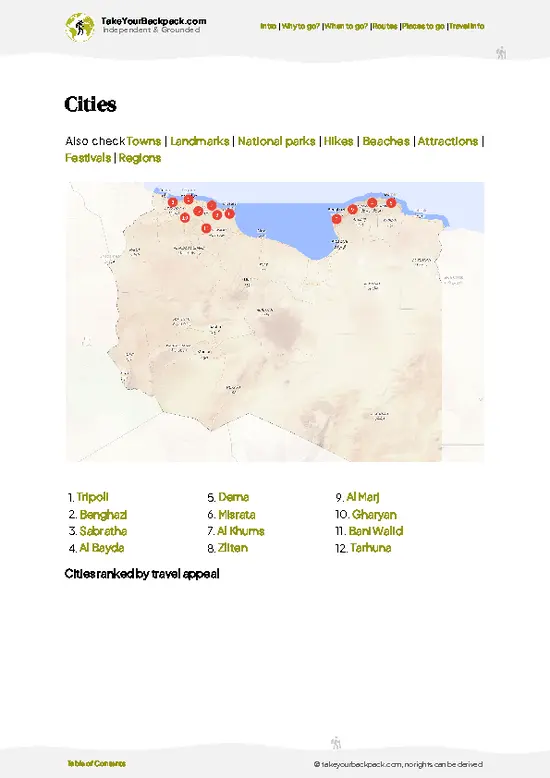
example page 2 from our offline Travel Guide for Libya
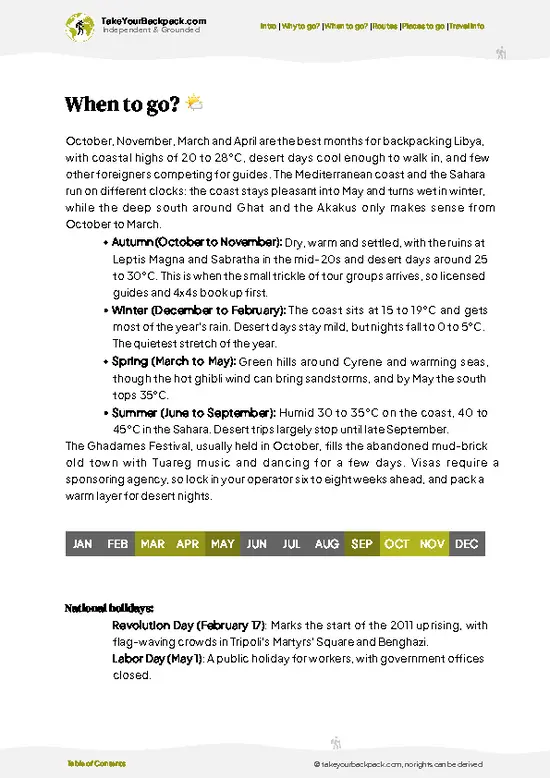
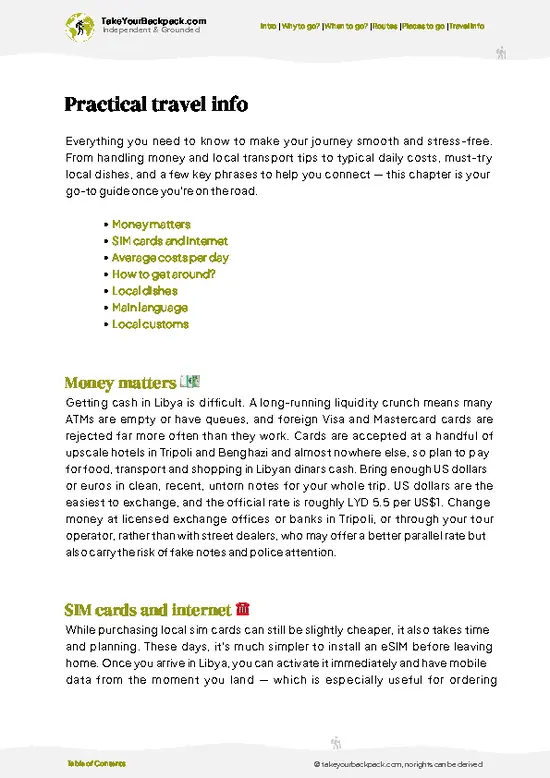
example page 3 from our offline Travel Guide for Libya
example page 4 from our offline Travel Guide for Libya
example page 5 from our offline Travel Guide for Libya
example page 6 from our offline Travel Guide for Libya
example page 7 from our offline Travel Guide for Libya
Loading the map 🌍
CLICK TO FILTER
cities
towns
landmarks
national parks
hikes
beaches
attractions
festivals
regions
SHOW COUNTRY’S BESTSHOW ALL

✨ Why go?
Ranked #7 attraction in Libya
What sets this place apart

Apollonia gives you a Greek and Byzantine port city with the sea still lapping at its edges, and almost nobody else around. Founded as the harbor of Cyrene, it lets you read the story of the whole Cyrenaican coast in one compact walk. The submerged quays and warehouses along the shoreline show how much of the ancient port the sea has taken back, and few Mediterranean sites let you see that so plainly.

The second reason is the Byzantine layer. The three-aisled east church and the larger west church are among the best-preserved Christian buildings on this coast, with columns, apses and mosaic fragments you can walk right up to. For anyone linking Cyrene, Ptolemais and the Green Mountain, Apollonia is the natural seaside stop, and the one place where a swim fits between ruins. The empty site … read more 👉
Apollonia gives you a Greek and Byzantine port city with the sea still lapping at its edges, and almost nobody else around. Founded as the harbor of Cyrene, it lets you read the story of the whole Cyrenaican coast in one compact walk. The submerged quays and warehouses along the shoreline show how much of the ancient port the sea has taken back, and few Mediterranean sites let you see that so plainly.

The second reason is the Byzantine layer. The three-aisled east church and the larger west church are among the best-preserved Christian buildings on this coast, with columns, apses and mosaic fragments you can walk right up to. For anyone linking Cyrene, Ptolemais and the Green Mountain, Apollonia is the natural seaside stop, and the one place where a swim fits between ruins. The empty site means you can take photographs without a single stranger in the frame, which is rare at ancient sites of this quality anywhere in the Mediterranean.

💡 HighlightsTop highlights of Apollonia

  1. The Byzantine West Church: the most imposing building on site, with a basilica plan, rows of columns and marble floor patterns that still read clearly.
  2. The East Church: smaller and older, with a baptistery and mosaic traces. It shows how early Christian worship was arranged here.
  3. The Submerged Harbor: walls, quays and storage rooms lie just beneath the water and along the shoreline. Calm days give the best view, and snorkelers see the most.
  4. The Greek Theater: a small seaside theater with the sea as its backdrop. Sit on the tiers and the acoustics carry across the stage area.
  5. The Byzantine Palace: a large administrative complex with courtyards and rooms near the center. It hints at the city’s role as a provincial capital.
  6. The City Walls and Gate: stretches of fortification cross the site, reminding
… read more 👉
  1. The Byzantine West Church: the most imposing building on site, with a basilica plan, rows of columns and marble floor patterns that still read clearly.
  2. The East Church: smaller and older, with a baptistery and mosaic traces. It shows how early Christian worship was arranged here.
  3. The Submerged Harbor: walls, quays and storage rooms lie just beneath the water and along the shoreline. Calm days give the best view, and snorkelers see the most.
  4. The Greek Theater: a small seaside theater with the sea as its backdrop. Sit on the tiers and the acoustics carry across the stage area.
  5. The Byzantine Palace: a large administrative complex with courtyards and rooms near the center. It hints at the city’s role as a provincial capital.
  6. The City Walls and Gate: stretches of fortification cross the site, reminding you that the port needed defending as much as serving trade.
  7. The Beach Below the Ruins: a quiet strip of sand and rock for a swim with ancient stones in view.
The beach costs nothing at all, while the ruins themselves usually involve only a small guard fee, if any.
Spotted a mistake or missing something? Contact us.

🌤️ When to go?Best time to visit Apollonia

Spring and autumn give the most comfortable weather at Apollonia, with sea breezes keeping the ruins pleasant for walking.
  • Spring (March to May): Highs of 18 to 26°C (64 to 79°F), wildflowers on the slopes above the harbor, and long daylight for exploring the Byzantine churches. Occasional hot, dusty ghibli winds can arrive in late spring.
  • Summer (June to August): Highs of 28 to 33°C (82 to 91°F) with humidity off the Mediterranean. Shade is scarce on the site, so go early. This is when swimming off the rocky shore is best, and local families come to the coast.
  • Autumn (September to November): Highs of 22 to 30°C (72 to 86°F), warm water, and softer light for photographing the submerged quays.
  • Winter (December to February): Highs of 14 to 18°C (57 to 64°F), the wettest months, with rain and chilly
… read more 👉
Spring and autumn give the most comfortable weather at Apollonia, with sea breezes keeping the ruins pleasant for walking.
  • Spring (March to May): Highs of 18 to 26°C (64 to 79°F), wildflowers on the slopes above the harbor, and long daylight for exploring the Byzantine churches. Occasional hot, dusty ghibli winds can arrive in late spring.
  • Summer (June to August): Highs of 28 to 33°C (82 to 91°F) with humidity off the Mediterranean. Shade is scarce on the site, so go early. This is when swimming off the rocky shore is best, and local families come to the coast.
  • Autumn (September to November): Highs of 22 to 30°C (72 to 86°F), warm water, and softer light for photographing the submerged quays.
  • Winter (December to February): Highs of 14 to 18°C (57 to 64°F), the wettest months, with rain and chilly wind. Few visitors, and the site can be muddy.
Prices for local transport and rooms barely shift by season, so choose by weather and aim for a morning visit.


source: climatestotravel.comJANJanuary: fair for travelingFEBFebruary: fair for travelingMARMarch: highly recommended for travelingAPRApril: good for travelingMAYMay: highly recommended for travelingJUNJune: below average for travelingJULJuly: below average for travelingAUGAugust: below average for travelingSEPSeptember: highly recommended for travelingOCTOctober: good for travelingNOVNovember: highly recommended for travelingDECDecember: fair for traveling
when-to-go

✈️ The backpacker research shortcutLibya Travel Guide

An offline-friendly backpacking guide with optimized travel routes, ranked highlights, transport advice, and the best areas to stay.
example page 0 from our offline Travel Guide for Libya
example page 1 from our offline Travel Guide for Libya
example page 2 from our offline Travel Guide for Libya
example page 3 from our offline Travel Guide for Libya
example page 4 from our offline Travel Guide for Libya
example page 5 from our offline Travel Guide for Libya
example page 6 from our offline Travel Guide for Libya
example page 7 from our offline Travel Guide for Libya
The digital guide (205 pages) contains:
✅ 45 highlights, ranked by travel appeal
✅ Optimized 5, 10 & 15-day travel routes
✅ Cities, national parks, landmarks, beaches
✅ How to get around
✅ Offline-friendly for travel without Wi-Fi
👉 Click to see all 30+ guide features

📅 Plan smarter in minutes, not weeks
✅ Month by month travel advice
✅ Festivals & national holidays
✅ Budget expectations

🗺️ Go to the right places, skip the overrated ones
✅ Honest pros & cons of destinations
✅ Top hikes, parks & viewpoints
✅ Lesser-known places most travelers miss
✅ Clear “worth it vs skip it” guidance

🛏️ Travel smoothly without rookie mistakes
✅ Best areas to stay
✅ Transport systems explained simply
✅ Common scams & safety advice
✅ SIM cards, money & practical tips

🌍 Understand the country, not just visit it
✅ Culture & traditions
✅ 52 Essential phrases & customs
✅ Festivals worth planning around
✅ Traveler-friendly historical context
✅ Insights that make places more meaningful

📱 Built for real travel conditions
✅ Fully downloadable PDF
✅ Works completely offline
✅ Optimized for phone use
✅ Useful in remote areas & buses
✅ Everything in one place
Stop searching, start planning
Get instant access to your full guide. 30‑day money-back guarantee.
+ Add another guide for just

By proceeding you agree to our terms.
Sent to your inbox immediately after payment • 100% Secure Checkout
Best Backpacking Travel Advisor 2025 tourism awardBest Backpacking
Travel Advisor
2025
What others say about Take Your Backpack Guides:
⭐⭐⭐⭐⭐
Fantastic, amazing amount of information!
⭐⭐⭐⭐⭐
My goodness this is amazing, it's what I've been looking for hats off too you!
⭐⭐⭐⭐⭐
I think this is absolutely BRILLIANT
⭐⭐⭐⭐
Very complete and informative. It's still missing places, but I gotta to commend you
⭐⭐⭐⭐⭐
This is truly amazing, thank you, can't wait to explore it with my kids!
⭐⭐⭐⭐⭐
Awesome resource, thank you!
⭐⭐⭐⭐⭐
This is amazing! Can't wait to explore the ones I haven't seen
⭐⭐⭐⭐
I love this! Well done, great idea.
⭐⭐⭐⭐⭐
Thanks for taking the time to make this gem!
⭐⭐⭐⭐⭐
This might be the best website I've ever seen.
⭐⭐⭐⭐⭐
Congratulations, and thank you so much for your work; it's incredibly valuable.
⭐⭐⭐⭐
In all seriousness I think you did a great job pointing out the important spots
⭐⭐⭐⭐⭐
10/10 very good
⭐⭐⭐⭐⭐
As someone who's only just starting to visit regularly this is awesome, thank you.
⭐⭐⭐⭐
Thank you very much! I'm going to visit my dad, it's going to be very useful!
⭐⭐⭐⭐⭐
This is really cool! We'll be travelling for the first time and this definitely come in handy.
⭐⭐⭐⭐⭐
You are now our minister of culture, congratulations 👨‍💼
⭐⭐⭐⭐⭐
Just wanted to tell you that this is a pearl! Going to follow your recommendations.
⭐⭐⭐⭐⭐
This is so cool. I'll definitely be using the resource for my travels soon.
⭐⭐⭐⭐⭐
This is very impressive! Good work.
⭐⭐⭐⭐⭐
This is an amazing and informative site. Very well done!

🛏️ Where to stay?Choosing the right base

Shahhat, a few kilometers up the escarpment, is the practical place to sleep, since Apollonia has almost no accommodation of its own.
Shahhat sits beside the ruins of Cyrene and has the basic guesthouses, small cafes, and grocery shops a budget traveler needs. Staying here lets you walk or share a short taxi to both ancient sites, and the town is calm, with locals who are curious and welcoming to visitors. Expect simple rooms rather than a social hostel scene.
Susa, the modern village right beside the ruins, is a quieter option if you want to wake up by the sea. Choices are limited, so arrange things … read more 👉
Shahhat, a few kilometers up the escarpment, is the practical place to sleep, since Apollonia has almost no accommodation of its own.
Shahhat sits beside the ruins of Cyrene and has the basic guesthouses, small cafes, and grocery shops a budget traveler needs. Staying here lets you walk or share a short taxi to both ancient sites, and the town is calm, with locals who are curious and welcoming to visitors. Expect simple rooms rather than a social hostel scene.
Susa, the modern village right beside the ruins, is a quieter option if you want to wake up by the sea. Choices are limited, so arrange things in advance and ask locally about informal rooms.
Beida, about 30 to 40 minutes inland by road, is the larger base. It has more rooms, restaurants, ATMs, and transport connections, and it suits anyone who prefers a proper town. Solo travelers should check the current security situation and, where possible, arrange a local contact or guide before arriving.

👛 Costs (as of 22 October 2026)How expensive it really is

Apollonia costs roughly US$46 to 79 a day for a backpacker, with entry fees low and accommodation the main expense.
CategoryBudget RangeLocal Reality
Site entryUS$1 to 5A small ticket, paid in cash in Libyan dinar. Fees vary and sometimes depend on the caretaker.
Accommodation (low season)US$15 to 30Basic guesthouse rooms in Shahhat or Beida.
Accommodation (high season)US$20 to 35Slightly higher in summer, when domestic visitors arrive.
FoodUS$6 to 12Grilled fish, sandwiches, and rice dishes at local cafes.
Local transportUS$5 to 12Shared taxis or a private taxi from Shahhat to the coast.
Guide (optional)US$10 to 15Helpful for the churches and the sunken harbor.
Total Daily BudgetUS$46 to 79Based on high-season lodging and a guide.


source: lonelyplanet.com
⚠️ Prices can change and everyone travels differently, so take this as a rough guide. Hope it helps you plan your adventure!

FAQCommon questions from travelers

Half a day is enough for Apollonia, about 2 to 3 hours for the Byzantine churches, the Greek theater, the palace, and the coastal walls. Pair it with Cyrene, roughly 20 kilometers away, for a full day, or add a second day to explore Shahhat and Susa slowly. Start early in summer, as there is little shade.
Apollonia is worth the very small entry fee, usually US$1 to 5, because you get a Mediterranean port with ruins running down to the water. The east church, the Byzantine palace, and the submerged harbor structures are the highlights. Few places in North Africa are so uncrowded, so the price is hard to fault.
Apollonia lies on the coast at Susa, about 20 kilometers from Cyrene and roughly 20 minutes by road from Shahhat. From Shahhat, a taxi costs around US$5 to 12, and shared cars run along the coastal road. From Beida, allow 30 to 40 minutes by road, and from Benghazi about 3 hours, so check current security conditions before traveling.
⚠️ Things can change over time, so always validate details locally before you go.

Other Libyan attractions near Apollonia

Explore more nearby:

  • Cyrene Archaeological Site—limestone temples, necropolis, Hellenic cityscape| 15 km away
  • Qasr Libya Mosaic Museum—Church floor mosaics, Greek inscriptions, Olbia village, plateau farmland| 62 km away
  • Ptolemais—Palace of the Columns, vaulted cistern, Roman theatre, monumental arch| 97 km away

💡 Not sure where to go next?
Create a personalized itinerary for Libya including Apollonia and the places that fit your trip.

Generate my itinerary

👉 Discover all attractions

Or checkout all Libya has to offer (think cities, towns, villages, national parks, hikes, beaches, festivals)
Country photo of Libya

We 💚 feedbackSumming up the experience

Apollonia suits history-minded travelers who like empty sites, and anyone who would trade crowds for silence and a sea view. I would bring snorkeling gear, a hat and your own food, and I would pair it with Cyrene on the same trip. Skip it if you need facilities or guided signs.

✍️ Help improve this page!
The information on this page is based on in-depth research, insights shared by experienced travelers, and feedback from the local travel community in Libya. While every effort is made to keep the information accurate and current, conditions can change — so if you spot anything incorrect or outdated, please get in touch.


🙋‍♂️ Give feedback

👋 Meet the founderWho’s Behind Take Your Backpack?

Johan, backpacker and founder of TakeYourBackpackHi, I’m Johan (Netherlands 🇳🇱), the creator of TakeYourBackpack. Over the past 3 decades, I’ve backpacked through 90+ countries across six continents, gaining extensive experience with independent travel, long-term trips, and overland routes.

This site is built on a combination of firsthand travel experience and carefully curated insights from other backpackers. Many guides are based on places I’ve personally visited, while others bring together tips, observations, and practical advice shared by trusted travelers I’ve met along the way.

The goal is to provide realistic, experience-driven guidance — not generic itineraries — so you can explore destinations with better context, clearer expectations, and more confidence.