×

Libya🇱🇾 | attractionsPtolemaisPalace of the Columns, vaulted cistern, Roman theatre, monumental arch | things to do and best time to go

Explore Benghazi National MuseumExplore Tadrart Acacus Rock Art Sites

Backpacking in Ptolemais
👍 Recommendedattraction ranked #8
By Johan Kruseman 🇳🇱 | Updated October 22, 2026

Ptolemais has almost no visitors, so you can walk a Greek-Roman city with nobody else in the frame. It sits on the coastal plain in the northeast of Libya, along the Mediterranean, roughly between Benghazi and Derna. Expect no ticket queues, no tour buses and very little infrastructure, which also means no cafes and few signs. The Roman mosaics, the Cistern and the Palace of the Columns are the draw; the scattered rubble fields between them are not worth lingering over. Access depends on the security situation and on arranging a driver or guide, and that can cost more than the site itself. The vibe is quiet, windy and salt-bleached. Ptolemais suits history lovers and photographers with patience and flexibility. It will frustrate anyone who needs polished facilities or fixed schedules.

Discover everything you want to know in the 📖 Libya Travel Guide.
Safety warning

The current risk level for Libya is high. Check the advice before going.


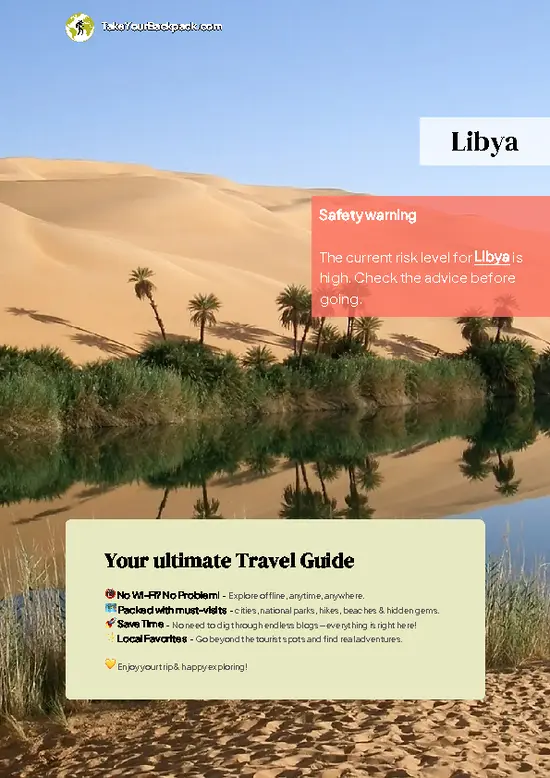
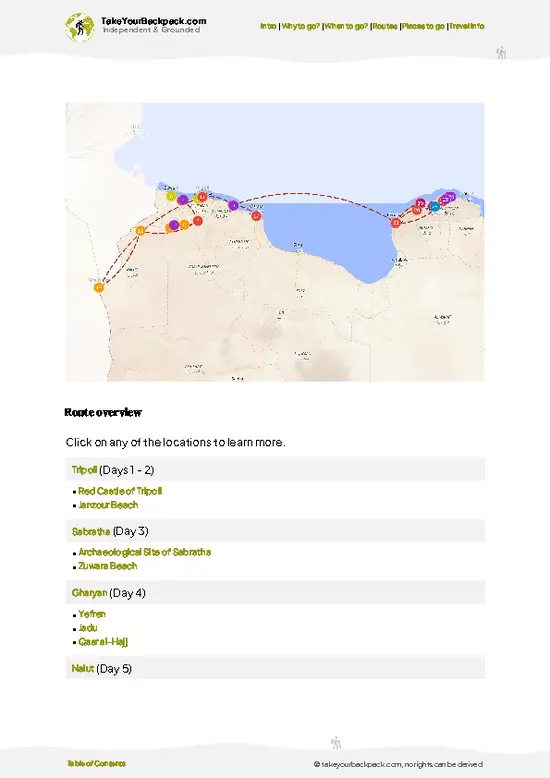
example page 0 from our offline Travel Guide for Libya
example page 1 from our offline Travel Guide for Libya
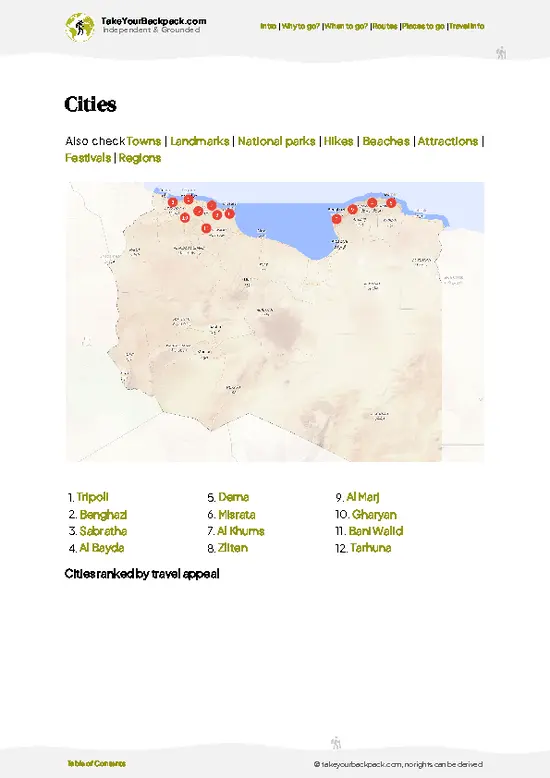
example page 2 from our offline Travel Guide for Libya
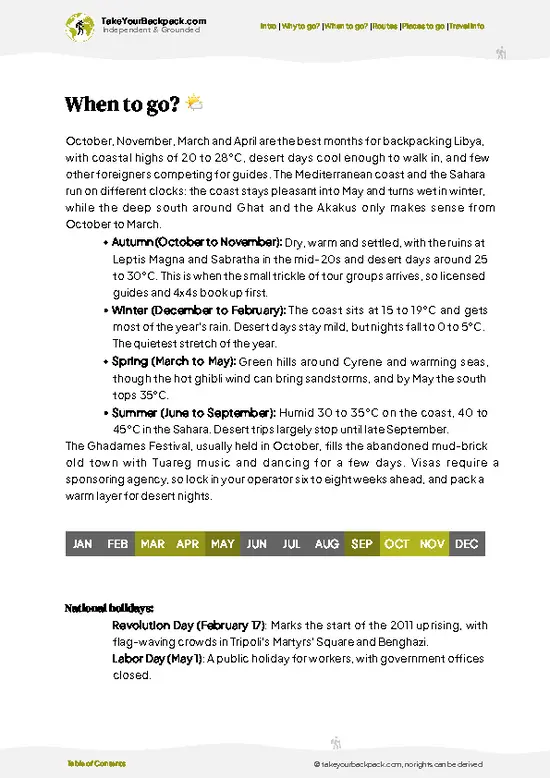
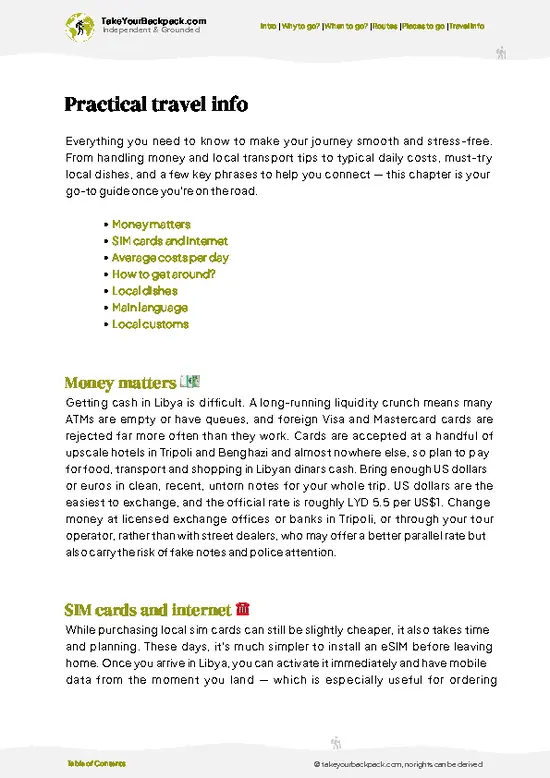
example page 3 from our offline Travel Guide for Libya
example page 4 from our offline Travel Guide for Libya
example page 5 from our offline Travel Guide for Libya
example page 6 from our offline Travel Guide for Libya
example page 7 from our offline Travel Guide for Libya
Loading the map 🌍
CLICK TO FILTER
cities
towns
landmarks
national parks
hikes
beaches
attractions
festivals
regions
SHOW COUNTRY’S BESTSHOW ALL

✨ Why go?
Ranked #8 attraction in Libya
Why Ptolemais should be on your travel list

Ptolemais gives you Cyrenaica without the Cyrene crowds, and that is the main argument. The city was laid out on a Hellenistic grid and later rebuilt under Rome, so you can read both periods in the same walk. The Palace of the Columns still has a peristyle courtyard with standing shafts and mosaic floors that make the scale of a wealthy villa easy to grasp. Then there is the Roman Cistern, a vaulted underground reservoir that explains how a dry coast fed a city. On a Libya route that links Cyrene, Apollonia and Benghazi, Ptolemais is the coastal piece that fills the gap between the hill sites and the sea. You come for solitude, big stone, and the sense that you are the only person in a very large place.

💡 HighlightsMust-see experiences and standout moments

  1. Palace of the Columns: the best-known building, a large Hellenistic-Roman residence with a columned courtyard and mosaic floors still visible.
  2. Roman Cistern: a huge vaulted underground water store, cool and echoing, and a clear lesson in how the city survived on rainwater.
  3. Byzantine Fortress and walls: stretches of the city wall and gateways show how the town was fortified in later centuries.
  4. Theatre: a modest Roman theatre cut into the slope, good for a seat and a view toward the sea.
  5. Odeon: a small covered hall for music and council meetings, easy to reach from the main avenues.
  6. Tetrapylon and Monumental Arch: a ceremonial gateway marking the old main street, rewarding for photographs in low light.
  7. Museum: a small collection of finds from the site, including sculpture and inscriptions, where access
… read more 👉
  1. Palace of the Columns: the best-known building, a large Hellenistic-Roman residence with a columned courtyard and mosaic floors still visible.
  2. Roman Cistern: a huge vaulted underground water store, cool and echoing, and a clear lesson in how the city survived on rainwater.
  3. Byzantine Fortress and walls: stretches of the city wall and gateways show how the town was fortified in later centuries.
  4. Theatre: a modest Roman theatre cut into the slope, good for a seat and a view toward the sea.
  5. Odeon: a small covered hall for music and council meetings, easy to reach from the main avenues.
  6. Tetrapylon and Monumental Arch: a ceremonial gateway marking the old main street, rewarding for photographs in low light.
  7. Museum: a small collection of finds from the site, including sculpture and inscriptions, where access allows.
Ptolemais can be covered in about three to four hours at an unhurried pace.
Spotted a mistake or missing something? Contact us.

🌤️ When to go?Weather, crowds, and seasonal trade-offs

  • Spring (March to May): Ptolemais is at its most comfortable, with highs of 18 to 26°C (64 to 79°F) and green fields around the Greek and Roman ruins. Wildflowers bloom in March and April, though the occasional hot, dusty ghibli wind can arrive in May.
  • Summer (June to August): Highs reach 29 to 33°C (84 to 91°F) on the coast, and the ruins offer almost no shade. Crowds are minimal, but the midday glare is punishing.
  • Autumn (September to November): Highs of 22 to 30°C (72 to 86°F) and clear light make this good for photography. Rain returns late in the season.
  • Winter (December to February): Highs of 14 to 19°C (57 to 66°F), lows near 7°C (45°F), and the heaviest rain. Days are short, so you have fewer hours of light.
Go early in the morning in any season, since the site is open and unshaded.

source: climatestotravel.comJANJanuary: highly recommended for travelingFEBFebruary: highly recommended for travelingMARMarch: highly recommended for travelingAPRApril: excellent for travelingMAYMay: good for travelingJUNJune: fair for travelingJULJuly: below average for travelingAUGAugust: below average for travelingSEPSeptember: good for travelingOCTOctober: excellent for travelingNOVNovember: highly recommended for travelingDECDecember: highly recommended for traveling
when-to-go

✈️ The backpacker research shortcutLibya Travel Guide

An offline-friendly backpacking guide with optimized travel routes, ranked highlights, transport advice, and the best areas to stay.
example page 0 from our offline Travel Guide for Libya
example page 1 from our offline Travel Guide for Libya
example page 2 from our offline Travel Guide for Libya
example page 3 from our offline Travel Guide for Libya
example page 4 from our offline Travel Guide for Libya
example page 5 from our offline Travel Guide for Libya
example page 6 from our offline Travel Guide for Libya
example page 7 from our offline Travel Guide for Libya
The digital guide (205 pages) contains:
✅ 45 highlights, ranked by travel appeal
✅ Optimized 5, 10 & 15-day travel routes
✅ Cities, national parks, landmarks, beaches
✅ How to get around
✅ Offline-friendly for travel without Wi-Fi
👉 Click to see all 30+ guide features

📅 Plan smarter in minutes, not weeks
✅ Month by month travel advice
✅ Festivals & national holidays
✅ Budget expectations

🗺️ Go to the right places, skip the overrated ones
✅ Honest pros & cons of destinations
✅ Top hikes, parks & viewpoints
✅ Lesser-known places most travelers miss
✅ Clear “worth it vs skip it” guidance

🛏️ Travel smoothly without rookie mistakes
✅ Best areas to stay
✅ Transport systems explained simply
✅ Common scams & safety advice
✅ SIM cards, money & practical tips

🌍 Understand the country, not just visit it
✅ Culture & traditions
✅ 52 Essential phrases & customs
✅ Festivals worth planning around
✅ Traveler-friendly historical context
✅ Insights that make places more meaningful

📱 Built for real travel conditions
✅ Fully downloadable PDF
✅ Works completely offline
✅ Optimized for phone use
✅ Useful in remote areas & buses
✅ Everything in one place
Stop searching, start planning
Get instant access to your full guide. 30‑day money-back guarantee.
+ Add another guide for just

By proceeding you agree to our terms.
Sent to your inbox immediately after payment • 100% Secure Checkout
Best Backpacking Travel Advisor 2025 tourism awardBest Backpacking
Travel Advisor
2025
What others say about Take Your Backpack Guides:
⭐⭐⭐⭐⭐
Fantastic, amazing amount of information!
⭐⭐⭐⭐⭐
My goodness this is amazing, it's what I've been looking for hats off too you!
⭐⭐⭐⭐⭐
I think this is absolutely BRILLIANT
⭐⭐⭐⭐
Very complete and informative. It's still missing places, but I gotta to commend you
⭐⭐⭐⭐⭐
This is truly amazing, thank you, can't wait to explore it with my kids!
⭐⭐⭐⭐⭐
Awesome resource, thank you!
⭐⭐⭐⭐⭐
This is amazing! Can't wait to explore the ones I haven't seen
⭐⭐⭐⭐
I love this! Well done, great idea.
⭐⭐⭐⭐⭐
Thanks for taking the time to make this gem!
⭐⭐⭐⭐⭐
This might be the best website I've ever seen.
⭐⭐⭐⭐⭐
Congratulations, and thank you so much for your work; it's incredibly valuable.
⭐⭐⭐⭐
In all seriousness I think you did a great job pointing out the important spots
⭐⭐⭐⭐⭐
10/10 very good
⭐⭐⭐⭐⭐
As someone who's only just starting to visit regularly this is awesome, thank you.
⭐⭐⭐⭐
Thank you very much! I'm going to visit my dad, it's going to be very useful!
⭐⭐⭐⭐⭐
This is really cool! We'll be travelling for the first time and this definitely come in handy.
⭐⭐⭐⭐⭐
You are now our minister of culture, congratulations 👨‍💼
⭐⭐⭐⭐⭐
Just wanted to tell you that this is a pearl! Going to follow your recommendations.
⭐⭐⭐⭐⭐
This is so cool. I'll definitely be using the resource for my travels soon.
⭐⭐⭐⭐⭐
This is very impressive! Good work.
⭐⭐⭐⭐⭐
This is an amazing and informative site. Very well done!

🛏️ Where to stay?Where staying makes the most sense

The best base for Ptolemais is Al Marj, about 25 kilometers inland, because it is the nearest town with a real range of rooms, shops, and cafes. Small guesthouses and basic hotels there suit budget travelers, and prices stay low. Staying in a town with daily life around you is also friendlier for solo travelers than an isolated roadside spot.
Tolmeita, the modern village beside the ruins, is tiny and has very limited lodging. Treat it as a place for tea and local conversation, not a base.
Benghazi, around 100 kilometers to the southwest, has the widest choice of budget accommodation and the most … read more 👉
The best base for Ptolemais is Al Marj, about 25 kilometers inland, because it is the nearest town with a real range of rooms, shops, and cafes. Small guesthouses and basic hotels there suit budget travelers, and prices stay low. Staying in a town with daily life around you is also friendlier for solo travelers than an isolated roadside spot.
Tolmeita, the modern village beside the ruins, is tiny and has very limited lodging. Treat it as a place for tea and local conversation, not a base.
Benghazi, around 100 kilometers to the southwest, has the widest choice of budget accommodation and the most traveler services, including money exchange and transport links. It works if you want a city base and can arrange a driver for the day trip. Wherever you sleep, local hosts and a trusted guide are the main way to find safe, reliable rooms, since Libya has no established hostel scene or backpacker circuit. Confirm current security conditions before you commit to any base.

👛 Costs (as of 22 October 2026)Travel costs and budget guide for Ptolemais

Ptolemais costs roughly US$55 to 95 a day for a backpacker, and most of that goes to a driver and a room rather than the site itself.
CategoryBudget RangeLocal Reality
Site entryUS$0 to 5Fees are small and sometimes uncollected; a caretaker may ask for a modest tip.
Accommodation (low season)US$20 to 35Basic rooms in Al Marj or Benghazi; cash only.
Accommodation (high season)US$25 to 45Slightly higher in spring when foreign groups visit.
Local guideUS$10 to 20Useful for explaining the theater, Roman villas, and cisterns.
TransportUS$15 to 30Private driver or shared taxi from Al Marj or Benghazi; no public transport to the ruins.
Food and drinksUS$5 to 10Grilled meat, bread, and soup in local cafes; you pay in Libyan dinars.
Total Daily BudgetUS$55 to 95Based on high-season lodging, a driver, and a guide.


source: temehu.com
⚠️ Prices can change and everyone travels differently, so take this as a rough guide. Hope it helps you plan your adventure!

FAQCommon questions from travelers

Two to three hours is enough to see Ptolemais, and a half day lets you add a slower look at the museum. The main sights are the Roman villas with mosaics, the Odeon, the Hellenistic cisterns, and the Byzantine Palace of the Columns. Starting early avoids the midday heat on the open site, and the ruins are close enough to combine with Cyrene on a longer trip.
Ptolemais is worth it, since entry is cheap at roughly US$0 to 5 and you often have the ruins almost to yourself. You get a coastal site with a Roman theater, mosaic floors, and a large cistern complex, with none of the crowds of better-known Mediterranean ruins. A local guide at around US$10 to 20 adds real context.
Reach Ptolemais by road from Benghazi, about 100 kilometers away, which takes roughly 1.5 to 2 hours by private car or hired driver. From Al Marj it is around 25 kilometers, a 30-minute drive. No regular public transport runs to the site, so expect to pay US$15 to 30 for a shared or private taxi, and check security conditions before traveling.
⚠️ Things can change over time, so always validate details locally before you go.

Other Libyan attractions near Ptolemais

Explore more nearby:


💡 Not sure where to go next?
Create a personalized itinerary for Libya including Ptolemais and the places that fit your trip.

Generate my itinerary

👉 Discover all attractions

Or checkout all Libya has to offer (think cities, towns, villages, national parks, hikes, beaches, festivals)
Country photo of Libya

We 💚 feedbackFinal thoughts on visiting Ptolemais

Ptolemais deserves a half day, not a full one. Pair it with Cyrene and Apollonia on a longer route and leave the afternoon for the cistern, where it is coolest. I would bring your own lunch and a hat, because shade is rare.

✍️ Help improve this page!
The information on this page is based on in-depth research, insights shared by experienced travelers, and feedback from the local travel community in Libya. While every effort is made to keep the information accurate and current, conditions can change — so if you spot anything incorrect or outdated, please get in touch.


🙋‍♂️ Give feedback

👋 Meet the founderWho’s Behind Take Your Backpack?

Johan, backpacker and founder of TakeYourBackpackHi, I’m Johan (Netherlands 🇳🇱), the creator of TakeYourBackpack. Over the past 3 decades, I’ve backpacked through 90+ countries across six continents, gaining extensive experience with independent travel, long-term trips, and overland routes.

This site is built on a combination of firsthand travel experience and carefully curated insights from other backpackers. Many guides are based on places I’ve personally visited, while others bring together tips, observations, and practical advice shared by trusted travelers I’ve met along the way.

The goal is to provide realistic, experience-driven guidance — not generic itineraries — so you can explore destinations with better context, clearer expectations, and more confidence.