v2.webp)
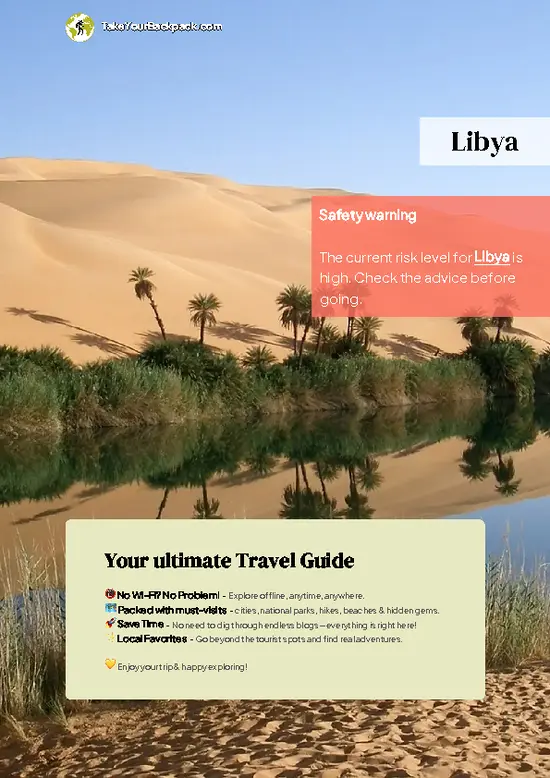
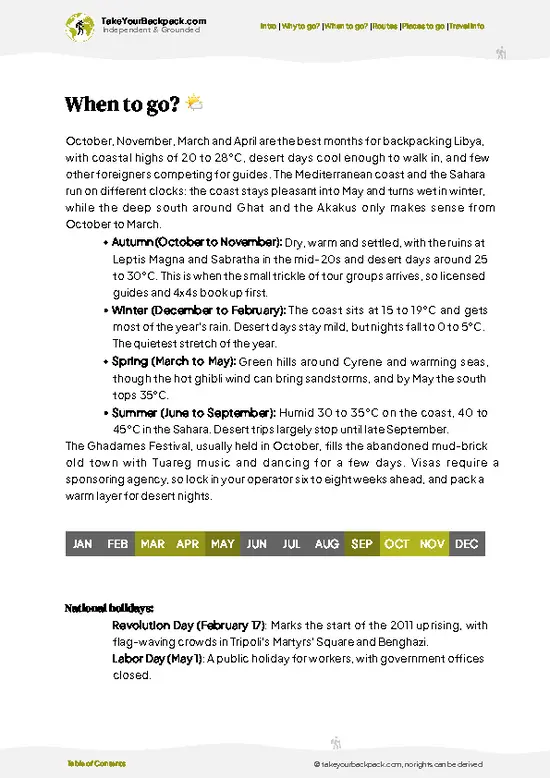
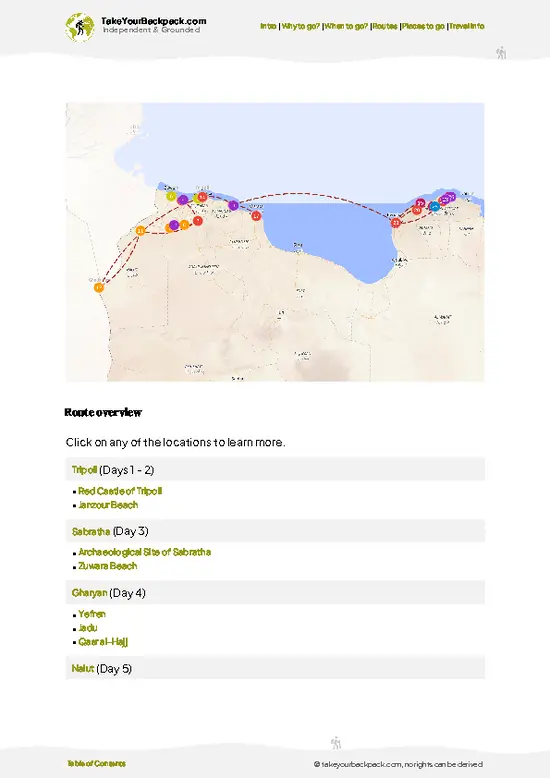
- Sanctuary of Apollo: The oldest religious heart of the city, set beside the sacred spring. The temple foundations and terraces show where Cyrene began, and the view toward the sea explains why settlers chose the spot.
- Temple of Zeus: One of the largest Greek temples of its era, with huge fallen columns and a platform you can climb for views across the hills. It was rebuilt after damage in antiquity, and the sheer size is what stays with you.
- Fountain of Apollo: The spring, channeled through rock-cut tunnels, that supplied the city for centuries. Walking the damp passages gives a sense of how engineered the water supply was.
- Roman Baths: A large bathing complex with vaulted chambers and sections of mosaic floor. It shows how thoroughly the Romans reshaped the Greek city after taking control.
- Agora
- Sanctuary of Apollo: The oldest religious heart of the city, set beside the sacred spring. The temple foundations and terraces show where Cyrene began, and the view toward the sea explains why settlers chose the spot.
- Temple of Zeus: One of the largest Greek temples of its era, with huge fallen columns and a platform you can climb for views across the hills. It was rebuilt after damage in antiquity, and the sheer size is what stays with you.
- Fountain of Apollo: The spring, channeled through rock-cut tunnels, that supplied the city for centuries. Walking the damp passages gives a sense of how engineered the water supply was.
- Roman Baths: A large bathing complex with vaulted chambers and sections of mosaic floor. It shows how thoroughly the Romans reshaped the Greek city after taking control.
- Agora and Forum area: The central public space, lined with the remains of monuments, shrines and civic buildings. It is the best place to read the layers of Greek and Roman Cyrene at once.
- Theatre and Odeon: A Greek theatre later adapted by the Romans, cut into the hillside with seating that still curves in clear rows. The setting looks over the slope toward the Mediterranean.
- Necropolis: One of the largest burial grounds of the ancient world, with thousands of rock-cut tombs and carved sarcophagi along the road toward the coast. It is quiet, atmospheric and rarely visited, so you may be alone among the tombs.
- House of Jason Magnus: A Roman-era residence and sanctuary with mosaics and a small courtyard. It gives a more intimate scale after the big temples.
Spotted a mistake or missing something? Contact us.

 Best Backpacking
.jpg) Hi, I’m Johan (Netherlands 🇳🇱), the creator of TakeYourBackpack. Over the past 3 decades, I’ve backpacked through 90+ countries across six continents, gaining extensive experience with independent travel, long-term trips, and overland routes.
Hi, I’m Johan (Netherlands 🇳🇱), the creator of TakeYourBackpack. Over the past 3 decades, I’ve backpacked through 90+ countries across six continents, gaining extensive experience with independent travel, long-term trips, and overland routes.