×

Libya🇱🇾 | landmarksArchaeological Site of Leptis MagnaRoman amphitheater, monumental arches, mosaic floors, coastal setting | things to do and best time to go

Explore Archaeological Site of CyreneExplore Archaeological Site of Sabratha

Backpacking in Archaeological Site of Leptis Magna
UNESCO World Heritage site
🏆 Top pickunique site ranked #1
By Johan Kruseman 🇳🇱 | Updated September 3, 2026

Everyone’s seen the photos: endless Roman columns, sun-bleached marble, not a soul in sight—Leptis Magna, the “lost city” that Instagram swears is yours alone. Here’s the truth: you don’t come here for a perfect selfie or to tick off another world wonder. You come for the raw, cinematic scale of a city that once rivaled Rome, now left to the Libyan sun and the Mediterranean wind. Leptis Magna sits on the coast east of Tripoli, and getting here isn’t easy—Libya’s logistics are famously tricky, and this isn’t a place for casual tourism. But that’s the trade-off: no crowds, no tourist circus, just you and the ghosts of emperors. The cost? Not cheap, between permits and guides, but the payoff is a site that feels almost post-apocalyptic in its grandeur. The vibe is eerie, epic, and deeply human—history that hasn’t been sanitized for mass consumption. If you want ruins that still feel wild, this is the real deal.

Discover everything you want to know in the 📖 Libya Travel Guide.
Safety warning

The current risk level for Libya is high. Check the advice before going.


Get your Libya guide
55 ranked highlights, routes & tips, works offline (231 pages)
Loading the map 🌍
CLICK TO FILTER
cities
towns
landmarks
national parks
hikes
beaches
attractions
festivals
regions
SHOW COUNTRY’S BESTSHOW ALL

✨ Why go?
Ranked #1 unique site in Libya
Why Archaeological Site of Leptis Magna should be on your travel list

The Archaeological Site of Leptis Magna in Libya isn’t just another dusty ruin; it’s a time capsule that transports you back to the Roman Empire’s glory days. Sure, it’s not the easiest place to get to, but that’s part of its charm. The crowds? Minimal. You won’t be elbowing tourists for a selfie here. Instead, you’ll find yourself wandering through massive stone structures that feel untouched by time.

The cost is a steal. Entry fees are low, and the experience is priceless. Imagine standing in the Basilica, gazing up at intricate carvings, or strolling along the Colonnaded Street, where history whispers in the wind. This isn’t just sightseeing; it’s a deep dive into a civilization that shaped the world.

Leptis fits perfectly into a broader route through Libya. Pair it with a visit to Tripoliread more 👉
The Archaeological Site of Leptis Magna in Libya isn’t just another dusty ruin; it’s a time capsule that transports you back to the Roman Empire’s glory days. Sure, it’s not the easiest place to get to, but that’s part of its charm. The crowds? Minimal. You won’t be elbowing tourists for a selfie here. Instead, you’ll find yourself wandering through massive stone structures that feel untouched by time.

The cost is a steal. Entry fees are low, and the experience is priceless. Imagine standing in the Basilica, gazing up at intricate carvings, or strolling along the Colonnaded Street, where history whispers in the wind. This isn’t just sightseeing; it’s a deep dive into a civilization that shaped the world.

Leptis fits perfectly into a broader route through Libya. Pair it with a visit to Tripoli or the Mediterranean coast for a well-rounded adventure. The effort-to-reward ratio is off the charts. You’ll leave with stories that go beyond Instagram likes, feeling like you’ve uncovered a piece of history that few have experienced.
Want to include Archaeological Site of Leptis Magna in your Libya route?
Create a personalized Libya itinerary that includes Archaeological Site of Leptis Magna and the places that fit your trip — based on your travel style, budget, and available time. Get your route in seconds.

Generate my trip

💡 HighlightsThe experiences that define the visit

  1. Severan Forum and colonnades — Built and lavishly rebuilt under Septimius Severus (a local-born emperor), this huge marble-faced forum is the city’s showpiece: massive columns, wide plazas and imperial inscriptions that scream “this town mattered” in the Roman world.
  2. Severan Arch and imperial monuments — A cluster of triumphal arches, statues and decorative reliefs celebrating Septimius Severus’s dynasty. They’re a rare, personal Roman legacy you can walk around — and they explain why Leptis was so heavily funded and ornamented.
  3. Theatre — A beautifully preserved semicircular Roman theatre with a stage building and seating carved into the coastal plain. It still reads like a place people gathered to be entertained, with the sea on the horizon adding dramatic atmosphere.
  4. Amphitheatre
read more 👉
  1. Severan Forum and colonnades — Built and lavishly rebuilt under Septimius Severus (a local-born emperor), this huge marble-faced forum is the city’s showpiece: massive columns, wide plazas and imperial inscriptions that scream “this town mattered” in the Roman world.
  2. Severan Arch and imperial monuments — A cluster of triumphal arches, statues and decorative reliefs celebrating Septimius Severus’s dynasty. They’re a rare, personal Roman legacy you can walk around — and they explain why Leptis was so heavily funded and ornamented.
  3. Theatre — A beautifully preserved semicircular Roman theatre with a stage building and seating carved into the coastal plain. It still reads like a place people gathered to be entertained, with the sea on the horizon adding dramatic atmosphere.
  4. Amphitheatre — A large, well-preserved arena where gladiatorial games and public spectacles once happened. Its scale and intact stonework give a good sense of how these events dominated civic life.
  5. Hadrianic Baths — A vast bathing complex with surviving rooms, vaults and remnants of decorative marble and mosaic. The layout and engineering (hypocausts, hot and cold rooms) show how luxurious Roman public life could be here.
  6. Macellum (market) and commercial quarter — The market halls, arcades and service streets reveal the gritty, everyday side of Leptis: trade, food shops, and the bustle that kept a Mediterranean port city alive.
  7. Harbour, quays and coastal ruins — Massive sea walls, quays and ruined warehouses along the shore highlight Leptis’s role as a trading hub. The blend of stone ruins against the Mediterranean makes for striking photos and a real sense of place.
  8. Private houses and mosaics — Scattered domestic complexes with mosaic floors and household layouts give intimate glimpses into wealth, taste and daily life — the small artistic details that humanize the ruins.
Spotted a mistake or missing something? Contact us.
🌤️ When to go?Choosing the right time of year


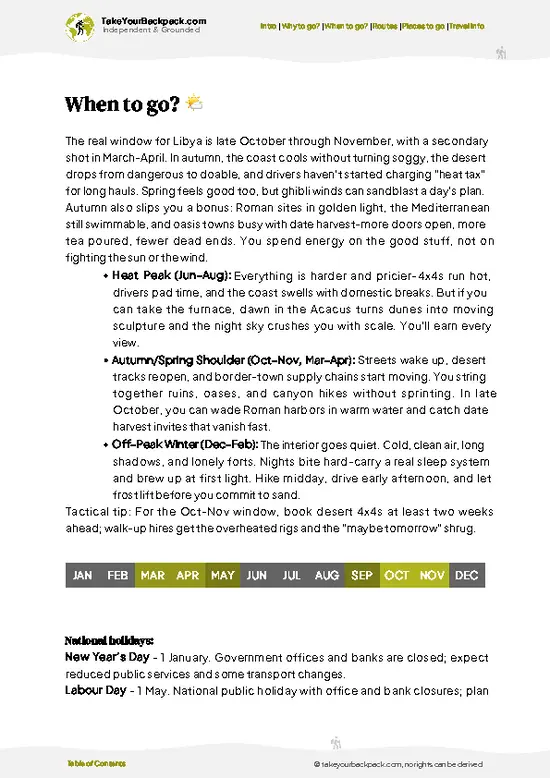
  • Weather: The best window is from late October to early April. Libya’s summer is brutal—think 40-45°C (104-113°F)—which turns exploring ancient ruins into a sweat-drenched slog. Winters are mild, hovering around 15-20°C (59-68°F), perfect for long walks without overheating.

  • Temperature: Daytime highs in the cooler months stay comfortable, but nights can dip to 10°C (50°F), so pack layers. Avoid the scorching summer months unless you’re a desert heat masochist.

  • Daylight Hours: Winter days are shorter, roughly 10 hours of light, which means starting early to maximize your visit. Spring and fall offer a sweet spot with 11-12 hours, enough time to soak in the site without rushing.

  • Crowds: Leptis Magna isn’t exactly overrun, but the few tourists who do come mostly arrive in the cooler months.
read more 👉

  • Weather: The best window is from late October to early April. Libya’s summer is brutal—think 40-45°C (104-113°F)—which turns exploring ancient ruins into a sweat-drenched slog. Winters are mild, hovering around 15-20°C (59-68°F), perfect for long walks without overheating.

  • Temperature: Daytime highs in the cooler months stay comfortable, but nights can dip to 10°C (50°F), so pack layers. Avoid the scorching summer months unless you’re a desert heat masochist.

  • Daylight Hours: Winter days are shorter, roughly 10 hours of light, which means starting early to maximize your visit. Spring and fall offer a sweet spot with 11-12 hours, enough time to soak in the site without rushing.

  • Crowds: Leptis Magna isn’t exactly overrun, but the few tourists who do come mostly arrive in the cooler months. Summer sees almost zero visitors, but that’s because it’s nearly impossible to enjoy the site in the heat.

  • Seasonal Activities: There’s no flashy festival tied to the site, but local markets and coastal towns nearby buzz more in spring and fall. This adds a layer of cultural texture to your trip beyond the ruins.

  • Price Fluctuations: Expect modest price hikes during the cooler months when travel is feasible. Off-season (summer) might offer cheaper flights but factor in the cost of dealing with extreme heat and limited services.


Pro-tip: Aim for late autumn or early spring to dodge the heat and crowds, and bring a hat and plenty of water—Leptis Magna’s magic is in the ruins, not the comfort.


source: climatestotravel.comJANJanuary: excellent for travelingFEBFebruary: excellent for travelingMARMarch: excellent for travelingAPRApril: highly recommended for travelingMAYMay: fair for travelingJUNJune: below average for travelingJULJuly: below average for travelingAUGAugust: below average for travelingSEPSeptember: fair for travelingOCTOctober: highly recommended for travelingNOVNovember: excellent for travelingDECDecember: excellent for traveling
libya-unique-site-archaeological-site-of-leptis-magna
© Google |

✈️ The backpacker research shortcutLibya Travel Guide

An offline-friendly backpacking guide with optimized travel routes, ranked highlights, transport advice, and the best areas to stay.
example page 0 from our offline Travel Guide for Libya
example page 1 from our offline Travel Guide for Libya
example page 2 from our offline Travel Guide for Libya
example page 3 from our offline Travel Guide for Libya
example page 4 from our offline Travel Guide for Libya
example page 5 from our offline Travel Guide for Libya
example page 6 from our offline Travel Guide for Libya
example page 7 from our offline Travel Guide for Libya
The digital guide (231 pages) contains:
55 highlights, ranked by travel appeal
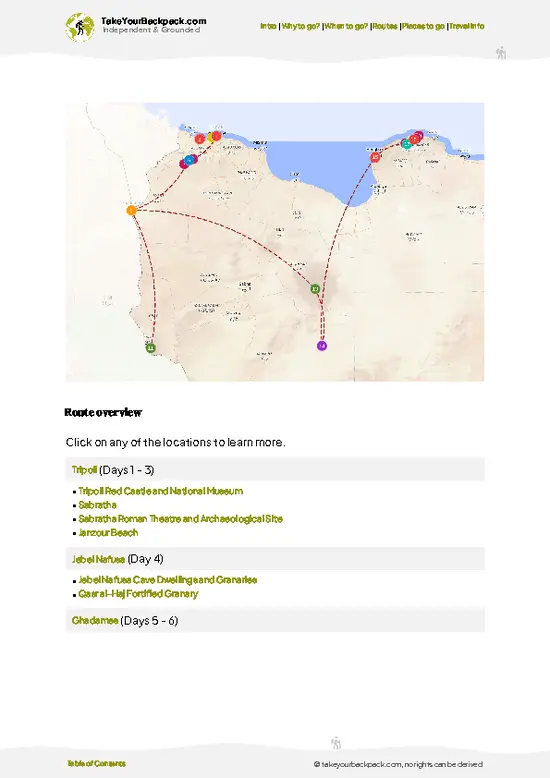
Optimized 5, 10 & 15-day travel routes
Cities, national parks, landmarks, beaches
How to get around
Offline-friendly for travel without Wi-Fi
👉 Click to see all 30+ guide features

📅 Plan smarter in minutes, not weeks
Month by month travel advice
Festivals & national holidays
Budget expectations

🗺️ Go to the right places, skip the overrated ones
Honest pros & cons of destinations
Top hikes, parks & viewpoints
Lesser-known places most travelers miss
Clear “worth it vs skip it” guidance

🛏️ Travel smoothly without rookie mistakes
Best areas to stay
Transport systems explained simply
Common scams & safety advice
SIM cards, money & practical tips

🌍 Understand the country, not just visit it
Culture & traditions
52 Essential phrases & customs
Festivals worth planning around
Traveler-friendly historical context
Insights that make places more meaningful

📱 Built for real travel conditions
Fully downloadable PDF
Works completely offline
Optimized for phone use
Useful in remote areas & buses
Everything in one place
Save weeks of stressful planning
Get instant access to your full guide. 30‑day money-back guarantee.
+ Add another guide for just US$7.80

By proceeding you agree to our terms.
Sent to your inbox immediately after payment • 100% Secure Checkout
Best Backpacking Travel Advisor 2025 tourism awardBest Backpacking
Travel Advisor
2025
What others say about Take Your Backpack Guides:
⭐⭐⭐⭐⭐
Fantastic, amazing amount of information!
⭐⭐⭐⭐⭐
My goodness this is amazing, it's what I've been looking for hats off too you!
⭐⭐⭐⭐⭐
I think this is absolutely BRILLIANT
⭐⭐⭐⭐
Very complete and informative. It's still missing places, but I gotta to commend you
⭐⭐⭐⭐⭐
This is truly amazing, thank you, can't wait to explore it with my kids!
⭐⭐⭐⭐⭐
Awesome resource, thank you!
⭐⭐⭐⭐⭐
This is amazing! Can't wait to explore the ones I haven't seen
⭐⭐⭐⭐
I love this! Well done, great idea.
⭐⭐⭐⭐⭐
Thanks for taking the time to make this gem!
⭐⭐⭐⭐⭐
This might be the best website I've ever seen.
⭐⭐⭐⭐⭐
Congratulations, and thank you so much for your work; it's incredibly valuable.
⭐⭐⭐⭐
In all seriousness I think you did a great job pointing out the important spots
⭐⭐⭐⭐⭐
10/10 very good
⭐⭐⭐⭐⭐
As someone who's only just starting to visit regularly this is awesome, thank you.
⭐⭐⭐⭐
Thank you very much! I'm going to visit my dad, it's going to be very useful!
⭐⭐⭐⭐⭐
This is really cool! We'll be travelling for the first time and this definitely come in handy.
⭐⭐⭐⭐⭐
You are now our minister of culture, congratulations 👨‍💼
⭐⭐⭐⭐⭐
Just wanted to tell you that this is a pearl! Going to follow your recommendations.
⭐⭐⭐⭐⭐
This is so cool. I'll definitely be using the resource for my travels soon.
⭐⭐⭐⭐⭐
This is very impressive! Good work.
⭐⭐⭐⭐⭐
This is an amazing and informative site. Very well done!

🛏️ Where to stay?Best areas to stay in Libya

Staying near the Archaeological Site of Leptis Magna is about more than just proximity; it’s about immersing yourself in the local vibe while keeping your budget intact.

First off, consider the town of Sabratha, just a short drive away. It’s not just a base; it’s a lively spot where you can mingle with locals and fellow travelers. The atmosphere is relaxed, and you’ll find plenty of affordable eateries serving up hearty Libyan dishes. Plus, the beach isn’t far, giving you a chance to unwind after a day of exploring ancient ruins.

Then there’s Tripoli, the capital, which offers a broader range … read more 👉
Staying near the Archaeological Site of Leptis Magna is about more than just proximity; it’s about immersing yourself in the local vibe while keeping your budget intact.

First off, consider the town of Sabratha, just a short drive away. It’s not just a base; it’s a lively spot where you can mingle with locals and fellow travelers. The atmosphere is relaxed, and you’ll find plenty of affordable eateries serving up hearty Libyan dishes. Plus, the beach isn’t far, giving you a chance to unwind after a day of exploring ancient ruins.

Then there’s Tripoli, the capital, which offers a broader range of accommodations. While it’s a bit further from Leptis Magna, the social scene is unbeatable. You’ll find backpacker-friendly hostels where you can swap stories over mint tea. The bustling markets and vibrant street life provide a rich backdrop to your stay. Just be prepared for the crowds; they can be intense, especially around popular sites.

Safety is generally good, but always stay aware of your surroundings. Stick to well-lit areas at night and keep your belongings secure. The real magic lies in the connections you make and the stories you gather along the way. Embrace the chaos, and you’ll find that the journey is just as rewarding as the destination.

👛 Costs (as of 3 September 2026)How expensive it really is

Visiting the Archaeological Site of Leptis Magna in Libya is a journey into history, but it’s essential to know what you’re getting into financially.
  • Entrance Fee: Expect to pay around €10 to €15. This fee grants you access to one of the best-preserved Roman ruins in the world. It’s a small price for a massive piece of history.
  • Guided Tours: If you want a deeper understanding, guided tours range from €20 to €50. These tours can enhance your experience, offering insights that you might miss on your own.
  • Transportation: Getting to Leptis Magna can be tricky. A taxi from Tripoli will cost you about €50 to €70 one way. Public transport is cheaper but less reliable. Factor in time and comfort when making your choice.
  • Food and Drink: There are limited options nearby. Budget around €5 to €15 for a meal.
read more 👉
Visiting the Archaeological Site of Leptis Magna in Libya is a journey into history, but it’s essential to know what you’re getting into financially.
  • Entrance Fee: Expect to pay around €10 to €15. This fee grants you access to one of the best-preserved Roman ruins in the world. It’s a small price for a massive piece of history.
  • Guided Tours: If you want a deeper understanding, guided tours range from €20 to €50. These tours can enhance your experience, offering insights that you might miss on your own.
  • Transportation: Getting to Leptis Magna can be tricky. A taxi from Tripoli will cost you about €50 to €70 one way. Public transport is cheaper but less reliable. Factor in time and comfort when making your choice.
  • Food and Drink: There are limited options nearby. Budget around €5 to €15 for a meal. Bring snacks and water to save money and ensure you’re fueled for exploring.
  • Accommodation: If you plan to stay overnight, expect to pay between €30 and €100 for a hotel in nearby cities. Prices vary based on comfort and location, so choose wisely.

Understanding these costs will help you prepare for a visit that’s both enriching and manageable. Leptis Magna is worth every cent, but being financially savvy will enhance your experience.
⚠️ Prices can change and everyone travels differently, so take this as a rough guide. Hope it helps you plan your adventure!

FAQTraveler FAQ

Leptis Magna is a large ancient Roman city located on the coast of Libya, known for its well-preserved ruins including a theater, basilica, and marketplace. It was a prominent city in the Roman Empire and is now a UNESCO World Heritage site.
Visiting Leptis Magna typically requires at least half a day to explore the main ruins thoroughly, with 4 to 6 hours recommended to see key structures and take photos. Longer visits of a full day allow for a more relaxed pace and deeper exploration.
Leptis Magna is about 130 kilometers east of Tripoli, Libya's capital. The site is accessible by car or taxi from Tripoli, with a drive time of around 2 hours on paved roads.
⚠️ Things can change over time, so always validate details locally before you go.

Other Libyan landmarks near Archaeological Site of Leptis Magna

Explore more nearby:


💡 Not sure where to go next?
Create a personalized itinerary for Libya including Archaeological Site of Leptis Magna and the places that fit your trip.

Generate my itinerary

👉 Discover all landmarks

Or checkout all Libya has to offer (think cities, towns, villages, national parks, hikes, beaches, festivals)
Country photo of Libya

We 💚 feedbackParting advice and final tips

Leptis Magna is a time capsule, but don’t expect solitude. The crowds can be overwhelming, especially during peak season. Still, the moment you step into the amphitheater, the sheer scale hits you. It’s a surprise that makes the chaos worth it. Look for the intricate mosaics tucked away in the corners; they tell stories that guidebooks miss. Just be ready for the heat—bring water and a hat. This place isn’t just history; it’s a visceral connection to the past that’ll stick with you.

✍️ Help improve this page!
The information on this page is based on in-depth research, insights shared by experienced travelers, and feedback from the local travel community in Libya. While every effort is made to keep the information accurate and current, conditions can change — so if you spot anything incorrect or outdated, please get in touch.


🙋‍♂️ Give feedback

👋 Meet the founderWho’s Behind Take Your Backpack?

Johan, backpacker and founder of TakeYourBackpackHi, I’m Johan (Netherlands 🇳🇱), the creator of TakeYourBackpack. Over the past decade, I’ve backpacked through 80+ countries across six continents, gaining extensive experience with independent travel, long-term trips, and overland routes.

This site is built on a combination of firsthand travel experience and carefully curated insights from other backpackers. Many guides are based on places I’ve personally visited, while others bring together tips, observations, and practical advice shared by trusted travelers I’ve met along the way.

The goal is to provide realistic, experience-driven guidance — not generic itineraries — so you can explore destinations with better context, clearer expectations, and more confidence.

Get full Libya guide •
Instant download • 55 highlights • Full Offline guide