×

Libya🇱🇾 | townsNaluthilltop granaries, Berber architecture, mountain plateau | things to do and best time to go

Explore Umm al-Ma’azExplore Murzuq

Backpacking in Nalut
🌟 Highlighttown ranked #5
By Johan Kruseman 🇳🇱 | Updated June 20, 2026

Nalut isn’t the sun-bleached ghost town you might expect from a quick Google search—it’s a living Berber stronghold where the scent of baking barley bread drifts through stone alleys, and the old granary fortress still hums with quiet local life. Perched on the edge of the Nafusa Mountains in western Libya, Nalut is both a lookout and a crossroads: you feel the wind off the desert, but you’re only a few hours from the Tunisian border. For backpackers, Nalut is less a destination for nightlife or hostels (don’t count on either) and more a base for slow, sensory exploration—think sunrise over the ksar, or a day trip to mountain villages where time moves at a different speed. It’s walkable, but you’ll need a ride for anything beyond town. Compared to busier Ghadames, Nalut is quieter, cheaper, and more raw—less polished, but more real. Safety is generally good, but you’ll stand out; expect curiosity, not crowds.

Discover everything you want to know in the 📖 Libya Travel Guide.
Safety warning

The current risk level for Libya is high. Check the advice before going.


Get your Libya guide
61 ranked highlights, routes & tips, works offline (261 pages)
Loading the map 🌍
CLICK TO FILTER
cities
towns
landmarks
national parks
hikes
beaches
attractions
festivals
regions
SHOW COUNTRY’S BESTSHOW ALL

✨ Why go?
Ranked #5 town in Libya
What makes it a must-see town

Backpackers flock to Nalut not just for its charm but for its strategic position along the Libyan hiking route. This town serves as a gateway to the Jebel Nafusa mountains, where trails weave through ancient Berber villages and stunning landscapes. The local guesthouses offer a cozy, authentic experience, often run by friendly families eager to share their culture. You’ll find home-cooked meals that burst with flavor, a far cry from the usual tourist fare.

Strolling through Nalut’s walkable streets, you’ll soak in the atmosphere—children playing, locals chatting over tea, and the scent of spices wafting from open kitchens. It’s a place where you can easily linger for a few days, especially if you’re a slow traveler or a solo adventurer looking to connect with others. The vibe is relaxed, … read more 👉
Backpackers flock to Nalut not just for its charm but for its strategic position along the Libyan hiking route. This town serves as a gateway to the Jebel Nafusa mountains, where trails weave through ancient Berber villages and stunning landscapes. The local guesthouses offer a cozy, authentic experience, often run by friendly families eager to share their culture. You’ll find home-cooked meals that burst with flavor, a far cry from the usual tourist fare.

Strolling through Nalut’s walkable streets, you’ll soak in the atmosphere—children playing, locals chatting over tea, and the scent of spices wafting from open kitchens. It’s a place where you can easily linger for a few days, especially if you’re a slow traveler or a solo adventurer looking to connect with others. The vibe is relaxed, making it perfect for small groups or those seeking a quiet retreat after a day of exploration.

While nightlife isn’t the draw here, the social atmosphere is warm and inviting, allowing for meaningful conversations and shared stories. Nalut isn’t just a stop; it’s a chance to immerse yourself in the heart of Libya.
Want to include Nalut in your Libya route?
Create a personalized Libya itinerary that includes Nalut and the places that fit your trip — based on your travel style, budget, and available time. Get your route in seconds.

Generate my trip

💡 HighlightsWhat this place is best known for

  • Qal’at Nalut (the hilltop fortress) — The weathered stone citadel that watches the town; climb up for raw history, close-up masonry, and sweeping views over the Nafusa ridges.
  • Nalut Old Town (the medina) — Labyrinth of low stone houses, narrow lanes and courtyards where daily life still follows old rhythms; great for wandering and photographing ordinary Berber architecture.
  • Nalut Municipal/Heritage Museum — Small, local displays of traditional tools, costumes and archaeological finds that put the area’s Berber past into context; useful stop before exploring the town.
  • The weekly souk (local market) — A genuine working market where villagers trade produce, rugs, silver and household goods; best place to meet locals and shop for authentic crafts.
  • Traditional granary clusters (ksour/ghurfas)
read more 👉
  • Qal’at Nalut (the hilltop fortress) — The weathered stone citadel that watches the town; climb up for raw history, close-up masonry, and sweeping views over the Nafusa ridges.
  • Nalut Old Town (the medina) — Labyrinth of low stone houses, narrow lanes and courtyards where daily life still follows old rhythms; great for wandering and photographing ordinary Berber architecture.
  • Nalut Municipal/Heritage Museum — Small, local displays of traditional tools, costumes and archaeological finds that put the area’s Berber past into context; useful stop before exploring the town.
  • The weekly souk (local market) — A genuine working market where villagers trade produce, rugs, silver and household goods; best place to meet locals and shop for authentic crafts.
  • Traditional granary clusters (ksour/ghurfas) — Communal stone granaries and storage rooms tucked into the old quarter; interesting for their communal architecture and insight into pre-modern food security.
  • Local weaving and craft workshops — Small ateliers run by families or co-ops where you can see carpet-weaving, embroidery and leatherwork being made and buy directly from makers.
  • Old mosques and zawiyas — Modest religious lodges and neighborhood mosques that reveal local Sufi traditions and regional architectural details not found in bigger cities.
  • Hilltop cemetery and lookout spots — Quiet burial terraces on the town’s edges that offer perspective on local funerary customs and some of the best sunset views over Nalut.
  • Traditional bakeries and food stalls — Tandoor-style bread ovens, simple tearooms and family stalls serving local flatbreads, olives and cheese; a real taste of daily Nalut life.
  • Community cultural spaces and language hubs — Informal centers where elders, musicians and youth keep Berber language, music and festivals alive; you may catch a storytelling session or traditional song.
A few excellent day trips from Nalut: the ancient oasis town of Ghadames (UNESCO medina), nearby Jebel Nafusa villages such as Yefren and Kikla, and the surrounding Nafusa Mountain scenery and small Berber settlements.
Spotted a mistake or missing something? Contact us.

🏘️ NeighborhoodsWhere things are and how it's laid out

Nalut offers a unique blend of history and culture, making it a captivating stop for backpackers. Here’s how to navigate its neighborhoods for the best experience.

Old Town
This area is the heart of Nalut, where ancient architecture meets vibrant local life. The narrow streets are perfect for wandering, with the scent of spices wafting from market stalls. It’s budget-friendly, with plenty of affordable eateries. The nightlife is low-key, ideal for those who prefer a quiet evening after a day of exploration. Short stays work well here, as you can easily access key sites on foot.

Al-Manshiyah
A bit more modern, Al-Manshiyah offers a lively atmosphere with cafes and shops. It’s walkable, but you might want to use local transport for longer distances. Prices are slightly higher here, reflecting … read more 👉
Nalut offers a unique blend of history and culture, making it a captivating stop for backpackers. Here’s how to navigate its neighborhoods for the best experience.

Old Town
This area is the heart of Nalut, where ancient architecture meets vibrant local life. The narrow streets are perfect for wandering, with the scent of spices wafting from market stalls. It’s budget-friendly, with plenty of affordable eateries. The nightlife is low-key, ideal for those who prefer a quiet evening after a day of exploration. Short stays work well here, as you can easily access key sites on foot.

Al-Manshiyah
A bit more modern, Al-Manshiyah offers a lively atmosphere with cafes and shops. It’s walkable, but you might want to use local transport for longer distances. Prices are slightly higher here, reflecting the more contemporary vibe. This area is great for longer stays, especially if you enjoy a mix of local culture and modern conveniences. The evenings can be bustling, with locals gathering in the squares.

Al-Mahjoub
This quieter neighborhood is perfect for those seeking a peaceful retreat. The streets are lined with olive trees, and the air is filled with their earthy scent. It’s less touristy, making it a budget-friendly option. While nightlife is minimal, the tranquility is a welcome escape. Ideal for longer stays, you can immerse yourself in the local rhythm and enjoy the slower pace.

Each area in Nalut has its own character, allowing you to tailor your experience to your preferences.

⌛️ 1 dayWhat you can realistically do in a day

Nalut, Libya, is a town steeped in history, where the ochre-hued buildings of the old medina rise against the backdrop of the rugged mountains. The air carries a hint of spices and the warmth of the sun, inviting you to explore its rich Berber culture. A day here is a tapestry of ancient architecture, local flavors, and genuine interactions.

Start your morning at the bustling market in the heart of the medina. The vibrant stalls overflow with fresh produce, aromatic herbs, and handmade crafts. Engage with the vendors; their stories are as rich as the goods they sell. Grab a traditional breakfast of fresh bread, olives, and a drizzle of local olive oil. The crunch of the bread paired with the earthy olives sets the tone for your day.

After fueling up, make your way to the iconic Nalut Granaries. … read more 👉
Nalut, Libya, is a town steeped in history, where the ochre-hued buildings of the old medina rise against the backdrop of the rugged mountains. The air carries a hint of spices and the warmth of the sun, inviting you to explore its rich Berber culture. A day here is a tapestry of ancient architecture, local flavors, and genuine interactions.

Start your morning at the bustling market in the heart of the medina. The vibrant stalls overflow with fresh produce, aromatic herbs, and handmade crafts. Engage with the vendors; their stories are as rich as the goods they sell. Grab a traditional breakfast of fresh bread, olives, and a drizzle of local olive oil. The crunch of the bread paired with the earthy olives sets the tone for your day.

After fueling up, make your way to the iconic Nalut Granaries. These ancient structures, carved into the mountainside, are a testament to the ingenuity of the Berber people. The cool, shaded interiors provide a welcome respite from the sun. As you wander through the narrow passages, the scent of earth and stone envelops you, connecting you to centuries of history.

In the afternoon, head to the lesser-known neighborhood of Tazirbu. Here, you’ll find a quieter side of Nalut, where locals go about their daily lives. Visit a family-run café and sip on mint tea while watching the world go by. The laughter of children playing nearby and the distant sound of a traditional lute create a serene atmosphere.

As the sun begins to set, make your way to the hilltop overlooking the town. The golden light casts long shadows, illuminating the landscape in a breathtaking display. This is the perfect spot to reflect on your day, savoring the blend of history and culture that defines Nalut.

Finish your evening with a simple meal at a local eatery, where the flavors of tagine and fresh vegetables will linger in your memory long after you leave. Each bite is a reminder of the warmth and hospitality that make this town truly special.
Turn your Nalut visit into an Libya adventure
Build a complete Libya route with Nalut, hidden gems, must-see destinations, and realistic travel times included.

Generate my trip

🌤️ When to go?Seasonal considerations and timing


  • Weather: Nalut sits in a semi-arid zone, so summers scorch with highs often hitting 38-42°C (100-108°F). Winters are mild, around 10-15°C (50-59°F), making late autumn to early spring the sweet spot for comfort without the oven effect.

  • Temperature: Daytime warmth in spring and fall hovers between 20-25°C (68-77°F), perfect for hiking and exploring without overheating. Nights can dip to 5-10°C (41-50°F), so pack layers to stay cozy.

  • Daylight Hours: Spring and fall offer balanced daylight—about 11-12 hours—enough for long treks and village visits without rushing or burning daylight candles too early.

  • Crowds: Nalut is off the beaten path, but local festivals in spring can draw regional visitors. Visiting just before or after these events means quieter streets and more authentic interactions.
read more 👉

  • Weather: Nalut sits in a semi-arid zone, so summers scorch with highs often hitting 38-42°C (100-108°F). Winters are mild, around 10-15°C (50-59°F), making late autumn to early spring the sweet spot for comfort without the oven effect.

  • Temperature: Daytime warmth in spring and fall hovers between 20-25°C (68-77°F), perfect for hiking and exploring without overheating. Nights can dip to 5-10°C (41-50°F), so pack layers to stay cozy.

  • Daylight Hours: Spring and fall offer balanced daylight—about 11-12 hours—enough for long treks and village visits without rushing or burning daylight candles too early.

  • Crowds: Nalut is off the beaten path, but local festivals in spring can draw regional visitors. Visiting just before or after these events means quieter streets and more authentic interactions.

  • Seasonal Activities: Spring brings wildflowers and active markets, while fall offers harvest time for olives and dates—both prime for immersive cultural experiences.

  • Price Fluctuations: Tourist infrastructure is minimal, so prices stay steady year-round, but local accommodations may charge a premium during festival periods or holidays.


Pro-tip: Aim for March to May or late September to November to catch Nalut’s mild weather, vibrant local life, and avoid the summer scorch that turns the town into a slow oven.


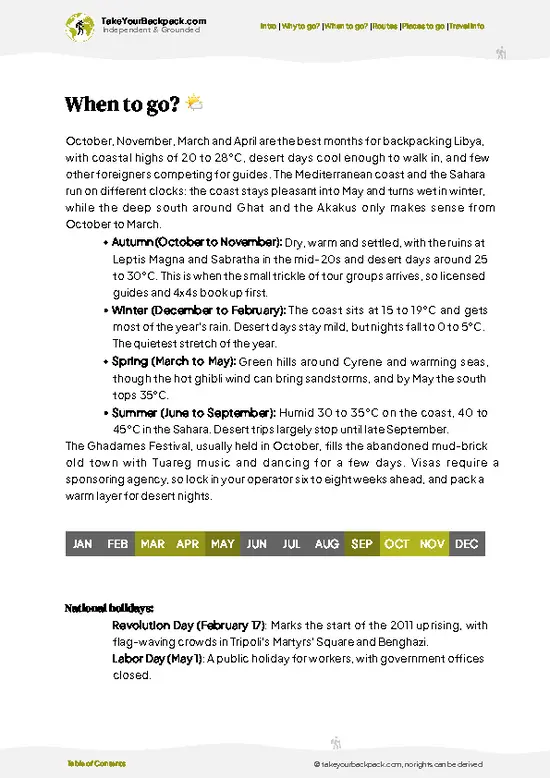
source: climatestotravel.comJANJanuary: highly recommended for travelingFEBFebruary: highly recommended for travelingMARMarch: excellent for travelingAPRApril: excellent for travelingMAYMay: excellent for travelingJUNJune: fair for travelingJULJuly: below average for travelingAUGAugust: below average for travelingSEPSeptember: highly recommended for travelingOCTOctober: excellent for travelingNOVNovember: excellent for travelingDECDecember: good for traveling
libya-city-nalut v1
© Google |

✈️ The backpacker research shortcutLibya Travel Guide

An offline-friendly backpacking guide with optimized travel routes, ranked highlights, transport advice, and the best areas to stay.
example page 0 from our offline Travel Guide for Libya
example page 1 from our offline Travel Guide for Libya
example page 2 from our offline Travel Guide for Libya
example page 3 from our offline Travel Guide for Libya
example page 4 from our offline Travel Guide for Libya
example page 5 from our offline Travel Guide for Libya
example page 6 from our offline Travel Guide for Libya
example page 7 from our offline Travel Guide for Libya
The digital guide (261 pages) contains:
61 highlights, ranked by travel appeal
Optimized 5, 10 & 15-day travel routes
Cities, national parks, landmarks, beaches
How to get around
Offline-friendly for travel without Wi-Fi
👉 Click to see all 30+ guide features

📅 Plan smarter in minutes, not weeks
Month by month travel advice
Festivals & national holidays
Budget expectations

🗺️ Go to the right places, skip the overrated ones
Honest pros & cons of destinations
Top hikes, parks & viewpoints
Lesser-known places most travelers miss
Clear “worth it vs skip it” guidance

🛏️ Travel smoothly without rookie mistakes
Best areas to stay
Transport systems explained simply
Common scams & safety advice
SIM cards, money & practical tips

🌍 Understand the country, not just visit it
Culture & traditions
52 Essential phrases & customs
Festivals worth planning around
Traveler-friendly historical context
Insights that make places more meaningful

📱 Built for real travel conditions
Fully downloadable PDF
Works completely offline
Optimized for phone use
Useful in remote areas & buses
Everything in one place
Save weeks of stressful planning
Get instant access to your full guide. 30‑day money-back guarantee.


By proceeding you agree to our terms.
Sent to your inbox immediately after payment • 100% Secure Checkout
Best Backpacking Travel Advisor 2025 tourism awardBest Backpacking
Travel Advisor
2025
What others say about Take Your Backpack Guides:
⭐⭐⭐⭐⭐
Fantastic, amazing amount of information!
⭐⭐⭐⭐⭐
My goodness this is amazing, it's what I've been looking for hats off too you!
⭐⭐⭐⭐⭐
I think this is absolutely BRILLIANT
⭐⭐⭐⭐
Very complete and informative. It's still missing places, but I gotta to commend you
⭐⭐⭐⭐⭐
This is truly amazing, thank you, can't wait to explore it with my kids!
⭐⭐⭐⭐⭐
Awesome resource, thank you!
⭐⭐⭐⭐⭐
This is amazing! Can't wait to explore the ones I haven't seen
⭐⭐⭐⭐
I love this! Well done, great idea.
⭐⭐⭐⭐⭐
Thanks for taking the time to make this gem!
⭐⭐⭐⭐⭐
This might be the best website I've ever seen.
⭐⭐⭐⭐⭐
Congratulations, and thank you so much for your work; it's incredibly valuable.
⭐⭐⭐⭐
In all seriousness I think you did a great job pointing out the important spots
⭐⭐⭐⭐⭐
10/10 very good
⭐⭐⭐⭐⭐
As someone who's only just starting to visit regularly this is awesome, thank you.
⭐⭐⭐⭐
Thank you very much! I'm going to visit my dad, it's going to be very useful!
⭐⭐⭐⭐⭐
This is really cool! We'll be travelling for the first time and this definitely come in handy.
⭐⭐⭐⭐⭐
You are now our minister of culture, congratulations 👨‍💼
⭐⭐⭐⭐⭐
Just wanted to tell you that this is a pearl! Going to follow your recommendations.
⭐⭐⭐⭐⭐
This is so cool. I'll definitely be using the resource for my travels soon.
⭐⭐⭐⭐⭐
This is very impressive! Good work.
⭐⭐⭐⭐⭐
This is an amazing and informative site. Very well done!

🛏️ Where to stay?Best areas and accommodation options

Nalut’s heart for backpackers pulses strongest near the old town’s edges, where the stone streets hum with local life and the scent of fresh bread drifts from small bakeries. This area is your best bet—not just for safety, but for soaking in the authentic rhythm of daily life. It’s where you’ll find the few budget guesthouses and informal hostels that cater to solo travelers and those who prefer a simple, no-frills base. The vibe here is quietly social; locals are curious but respectful, and fellow travelers tend to gather in small, easygoing clusters around shared meals or tea.

Avoid the newer, … read more 👉
Nalut’s heart for backpackers pulses strongest near the old town’s edges, where the stone streets hum with local life and the scent of fresh bread drifts from small bakeries. This area is your best bet—not just for safety, but for soaking in the authentic rhythm of daily life. It’s where you’ll find the few budget guesthouses and informal hostels that cater to solo travelers and those who prefer a simple, no-frills base. The vibe here is quietly social; locals are curious but respectful, and fellow travelers tend to gather in small, easygoing clusters around shared meals or tea.

Avoid the newer, sprawling parts of town where the atmosphere feels more detached and less welcoming to outsiders. Those areas lack the intimate, human scale that makes Nalut special. Staying near the old town means you’re steps away from the market’s lively barter, the call to prayer echoing off sandstone walls, and the chance to watch the light shift dramatically as the sun dips behind the nearby hills. It’s this sensory immersion that turns a stay from just a stopover into a meaningful chapter of your journey.

🚌 Getting aroundHow to get around Nalut

Nalut moves at its own pace—less a strict timetable, more a rhythm you catch by tuning in. The sun slants low over ochre stone walls, casting long shadows that stretch like lazy fingers across the cracked streets. Here, time doesn’t rush; it drifts in the scent of dry earth and the distant call of a muezzin. You won’t find a clock dictating your steps, but rather a flow shaped by the market’s pulse, the chatter spilling from cafés, and the occasional rumble of a passing truck. This is a place where intuition trumps schedules, and knowing when to move is as much about reading the light and the locals as it is about any official timetable.


  • Walking: Nalut’s compact size makes walking the most natural way to get around. The streets are uneven but manageable, with the scent of wild thyme and
read more 👉
Nalut moves at its own pace—less a strict timetable, more a rhythm you catch by tuning in. The sun slants low over ochre stone walls, casting long shadows that stretch like lazy fingers across the cracked streets. Here, time doesn’t rush; it drifts in the scent of dry earth and the distant call of a muezzin. You won’t find a clock dictating your steps, but rather a flow shaped by the market’s pulse, the chatter spilling from cafés, and the occasional rumble of a passing truck. This is a place where intuition trumps schedules, and knowing when to move is as much about reading the light and the locals as it is about any official timetable.


  • Walking: Nalut’s compact size makes walking the most natural way to get around. The streets are uneven but manageable, with the scent of wild thyme and dust in the air. Walking lets you absorb the town’s textures and rhythms—perfect for budget travelers who want to feel the pulse of daily life without spending a dime.


  • Shared Minibuses: These are the backbone of local transit, running roughly from dawn until dusk. Expect to pay a few Libyan dinars for rides to nearby villages or the outskirts of town. They’re not the most comfortable—think cramped seats and open windows letting in dust—but they’re fast and frequent enough to keep you moving without breaking the bank.


  • Local Taxis: Taxis don’t run on meters here; negotiate a fare before you hop in. They’re a bit pricier than minibuses but offer door-to-door convenience, especially if you’re carrying gear or traveling after dark. Drivers often wait near the market or main square, and fares should be agreed upon upfront to avoid surprises.


  • Bicycle Rentals: Not widespread but available through a few guesthouses, renting a bike is a quiet, flexible way to explore the outskirts and nearby olive groves. The terrain is hilly, so be ready for some sweat, but the reward is a breeze on your face and a chance to escape the town’s dusty center.


  • Intercity Buses: For budget travelers planning to leave Nalut, buses to larger cities like Ghadames or Tripoli depart early morning. They’re slow but affordable, with tickets bought at the station. Arrive early to secure a seat, as these buses fill up quickly, especially during market days or holidays.

👛 Costs (as of 30 March 2026)Travel costs and budget guide for Nalut

Backpacking in Nalut, Libya, means stepping into a place where the pace slows and the desert air carries a dry, earthy scent that sticks to your skin. It’s not a bustling tourist hub, so costs stay modest, but the infrastructure is basic, which shapes your spending.
  • Dorm Accommodation: Options are limited and simple, often guesthouses or small inns rather than formal hostels. Expect to pay around €10-15 per night. These places offer basic beds, sometimes shared bathrooms, and a chance to connect with locals or fellow travelers in a low-key setting.
  • Meals: Eating out leans heavily on local fare—think hearty stews, flatbreads, and fresh olives. Street food or small eateries will cost about €3-6 per meal. Cooking your own food is rare due to limited grocery options, so budget for three meals
read more 👉
Backpacking in Nalut, Libya, means stepping into a place where the pace slows and the desert air carries a dry, earthy scent that sticks to your skin. It’s not a bustling tourist hub, so costs stay modest, but the infrastructure is basic, which shapes your spending.
  • Dorm Accommodation: Options are limited and simple, often guesthouses or small inns rather than formal hostels. Expect to pay around €10-15 per night. These places offer basic beds, sometimes shared bathrooms, and a chance to connect with locals or fellow travelers in a low-key setting.
  • Meals: Eating out leans heavily on local fare—think hearty stews, flatbreads, and fresh olives. Street food or small eateries will cost about €3-6 per meal. Cooking your own food is rare due to limited grocery options, so budget for three meals a day at these prices.
  • Local Transport: Nalut is small, so walking covers most ground. For longer trips, shared taxis or minibuses run around €1-2 per ride. Renting a car is an option but pricey and complicated, so stick to local transport for budget and authenticity.
  • Basic Activities/Entry Fees: The town’s charm lies in wandering its ancient medina and nearby ksars (fortified villages). Entry fees are minimal or nonexistent, usually under €2. Guided tours might cost more but are rare and often arranged locally, so budget around €5 if you want a deeper dive.
  • Miscellaneous Expenses: This covers water, snacks, occasional internet access, or small souvenirs. Expect to spend about €2-4 daily. Keep cash handy, as card payments are rare and ATMs scarce.

Altogether, you’re looking at roughly €20-30 per day to cover the essentials in Nalut. It’s a modest sum for a place that rewards patience and curiosity with a raw, unpolished glimpse into Libya’s desert heritage.
⚠️ Prices can change and everyone travels differently, so take this as a rough guide. Hope it helps you plan your adventure!

🚌 Day tripsEasy escapes and nearby places

Nalut is a fantastic base for exploring the rugged beauty and rich history of Libya. The town itself buzzes with life, from the scent of spices wafting through the market to the sound of laughter echoing off ancient stone walls. Here are some day trips that will elevate your experience.

1. The Ancient Berber Villages
Just a short drive from Nalut, the ancient Berber villages of the Jebel Nafusa are a must-see. The winding roads lead you through stunning landscapes dotted with olive groves and terraced fields. Spend the day wandering the narrow alleys of these villages, where you can chat with locals and sample traditional bread fresh from the oven. The trip takes about an hour, and you can do it for under $10 if you share a taxi. Spring is ideal, with wildflowers painting the hillsides. … read more 👉
Nalut is a fantastic base for exploring the rugged beauty and rich history of Libya. The town itself buzzes with life, from the scent of spices wafting through the market to the sound of laughter echoing off ancient stone walls. Here are some day trips that will elevate your experience.

1. The Ancient Berber Villages
Just a short drive from Nalut, the ancient Berber villages of the Jebel Nafusa are a must-see. The winding roads lead you through stunning landscapes dotted with olive groves and terraced fields. Spend the day wandering the narrow alleys of these villages, where you can chat with locals and sample traditional bread fresh from the oven. The trip takes about an hour, and you can do it for under $10 if you share a taxi. Spring is ideal, with wildflowers painting the hillsides. A common mistake? Not bringing enough water; the sun can be relentless.


2. The Roman Ruins of Sabratha
About two hours from Nalut, Sabratha is home to some of the best-preserved Roman ruins in North Africa. The amphitheater, with its crumbling columns and sweeping sea views, is a highlight. You’ll feel the weight of history as you walk through the ancient streets. Entry is around $5, and the journey is worth every penny. Aim for early morning to beat the heat and crowds. Many first-timers underestimate the time needed to explore; plan for at least three hours.


3. The Majestic Ghadames Oasis
Roughly a two-hour drive will take you to Ghadames, a UNESCO World Heritage site known for its unique architecture and vibrant culture. The town’s mud-brick buildings and shaded passageways provide a fascinating glimpse into traditional desert life. You can grab a local meal for about $8, making it a budget-friendly adventure. Visit in the cooler months, as summer can be sweltering. A common pitfall? Not exploring the upper levels of the town for the best views.


4. The Stunning Akakus Mountains
For the adventurous, the Akakus Mountains offer breathtaking landscapes and ancient rock art. It’s about a three-hour drive, but the journey is part of the thrill, with dramatic scenery unfolding around every bend. Guided tours can cost around $30, but the experience of hiking among the petroglyphs is priceless. Late fall or early spring is best for comfortable hiking temperatures. Many backpackers miss the chance to hire a local guide; their insights can enrich your experience immensely.


Each of these trips offers a unique slice of Libyan culture and history, making your stay in Nalut not just a stopover, but a gateway to unforgettable experiences.
Want to know what more Libya offers?
The Libya Travel Guide describes 61 highlights, from cities to national parks, from beaches to hikes

Get the Travel Guide -

🛡️ SafetyStaying Safe: What Travelers Should Know

Nalut, with its ancient architecture and vibrant local life, is generally safe for backpackers. However, staying aware of your surroundings can enhance your experience. The bustling market areas are lively but can attract pickpockets. Keep your valuables close and avoid flashy displays of wealth.

If you’re traveling solo, especially at night, stick to well-lit areas and main streets. The town has a friendly atmosphere, but it’s wise to trust your instincts. Engaging with locals can be rewarding, but be cautious of overly eager guides who may offer services that come with hidden costs.

Common annoyances include occasional language barriers and the odd vendor who might try to upsell you. A polite but firm “no, thank you” usually does the trick. Embrace the quirks of local life; they add … read more 👉
Nalut, with its ancient architecture and vibrant local life, is generally safe for backpackers. However, staying aware of your surroundings can enhance your experience. The bustling market areas are lively but can attract pickpockets. Keep your valuables close and avoid flashy displays of wealth.

If you’re traveling solo, especially at night, stick to well-lit areas and main streets. The town has a friendly atmosphere, but it’s wise to trust your instincts. Engaging with locals can be rewarding, but be cautious of overly eager guides who may offer services that come with hidden costs.

Common annoyances include occasional language barriers and the odd vendor who might try to upsell you. A polite but firm “no, thank you” usually does the trick. Embrace the quirks of local life; they add character to your journey. By staying alert and grounded, you’ll navigate Nalut smoothly, soaking in its rich culture without unnecessary stress.

Other Libyan towns near Nalut

Explore more nearby:

  • Jadu—limestone escarpment, Amazigh language, remote setting| 99 km away
  • Yefren—mountain terraces, Amazigh villages, spring water| 149 km away
  • Mizdah—crossroads town, rocky outcrops, livestock markets| 196 km away

💡 Not sure where to go next?
Create a personalized itinerary for Libya including Nalut and the places that fit your trip.

Generate my itinerary

👉 Discover all towns

Or checkout all Libya has to offer (think cities, towns, villages, national parks, hikes, beaches, festivals)
Country photo of Libya

We 💚 feedbackFinal thoughts on visiting Nalut

Nalut has a vibe that’s both ancient and alive. The labyrinthine streets of the old town whisper stories, and the scent of fresh mint tea fills the air. You’ll be surprised by the warmth of the locals; they’re genuinely curious about your journey. Just a heads-up: the roads can be rough, so take your time getting there. Embrace the bumps; they lead to unforgettable moments. Trust me, the view from the top of the cliffs is worth every jolt.

✍️ Help improve this page!
The information on this page is based on in-depth research, insights shared by experienced travelers, and feedback from the local travel community in Libya. While every effort is made to keep the information accurate and current, conditions can change — so if you spot anything incorrect or outdated, please get in touch.


🙋‍♂️ Give feedback

👋 Meet the founderWho’s Behind Take Your Backpack?

Johan, backpacker and founder of TakeYourBackpackHi, I’m Johan (Netherlands 🇳🇱), the creator of TakeYourBackpack. Over the past decade, I’ve backpacked through 80+ countries across six continents, gaining extensive experience with independent travel, long-term trips, and overland routes.

This site is built on a combination of firsthand travel experience and carefully curated insights from other backpackers. Many guides are based on places I’ve personally visited, while others bring together tips, observations, and practical advice shared by trusted travelers I’ve met along the way.

The goal is to provide realistic, experience-driven guidance — not generic itineraries — so you can explore destinations with better context, clearer expectations, and more confidence.

Get full Libya guide •
Instant download • 61 highlights • Full Offline guide