v2.webp)
The Building Itself: I.M. Pei’s Architectural Playground
Let’s get real: most people come for the art, but the first thing that’ll hit you is the building. Designed by I.M. Pei—yes, the Louvre Pyramid guy—Mudam is a geometric fever dream of glass, pale stone, and sharp lines. It’s not just a backdrop; it’s a full-on participant in the experience. Light ricochets off surfaces, corners open into unexpected vistas, and the whole place feels like a spaceship landed on the old Fort Thüngen ruins. If you’re the type who gets bored in white-cube galleries, this place will keep your senses on high alert.
Site-Specific Installations: Art That Fights the Walls
Forget paintings hung in a row. Mudam’s best moments are the installations that sprawl, dangle, or erupt from the architecture itself. Artists … read more 👉
Let’s get real: most people come for the art, but the first thing that’ll hit you is the building. Designed by I.M. Pei—yes, the Louvre Pyramid guy—Mudam is a geometric fever dream of glass, pale stone, and sharp lines. It’s not just a backdrop; it’s a full-on participant in the experience. Light ricochets off surfaces, corners open into unexpected vistas, and the whole place feels like a spaceship landed on the old Fort Thüngen ruins. If you’re the type who gets bored in white-cube galleries, this place will keep your senses on high alert.
Site-Specific Installations: Art That Fights the Walls
Forget paintings hung in a row. Mudam’s best moments are the installations that sprawl, dangle, or erupt from the architecture itself. Artists … read more 👉
The Building Itself: I.M. Pei’s Architectural Playground
Let’s get real: most people come for the art, but the first thing that’ll hit you is the building. Designed by I.M. Pei—yes, the Louvre Pyramid guy—Mudam is a geometric fever dream of glass, pale stone, and sharp lines. It’s not just a backdrop; it’s a full-on participant in the experience. Light ricochets off surfaces, corners open into unexpected vistas, and the whole place feels like a spaceship landed on the old Fort Thüngen ruins. If you’re the type who gets bored in white-cube galleries, this place will keep your senses on high alert.
Site-Specific Installations: Art That Fights the Walls
Forget paintings hung in a row. Mudam’s best moments are the installations that sprawl, dangle, or erupt from the architecture itself. Artists are invited to treat the museum as a collaborator, not just a container. You might find a forest of neon tubes slicing through a stairwell, or a sound piece that only makes sense if you stand in a certain shaft of sunlight. The art here isn’t afraid to get weird, and that’s the point.
The Grand Hall: Where Scale Gets Personal
The Grand Hall is Mudam’s answer to the cathedral nave—soaring, echoing, and always changing. This is where the museum flexes its muscles with large-scale commissions and rotating installations. One month it’s a giant inflatable sculpture you can walk through; another, it’s a labyrinth of mirrors. Even if you don’t “get” contemporary art, you’ll feel something here—maybe awe, maybe confusion, but definitely not boredom. This is my personal favorite: the sheer audacity of the space and the art it hosts is worth the price of admission alone.
The Café: Art for Your Taste Buds
Most museum cafés are afterthoughts. Not here. Mudam’s café is a glass-walled perch with panoramic views over the city and the park below. The food is actually good—think local ingredients, not limp sandwiches—and the vibe is more “creative hub” than “tourist pit stop.” It’s the rare spot where you can eavesdrop on artists, students, and business types all at once. If you need a break from the art, this is where you recalibrate.
The Park and Fort Thüngen: Old Bones, New Energy
Step outside and you’re in a hybrid of manicured parkland and the rugged remains of Fort Thüngen. The contrast between Pei’s modernist lines and the fortress’s chunky stonework is jarring in the best way. You can wander the ramparts, catch your breath, and realize you’re standing at the crossroads of centuries. It’s not just a backdrop for selfies; it’s a reminder that art, history, and landscape can actually get along.
Let’s get real: most people come for the art, but the first thing that’ll hit you is the building. Designed by I.M. Pei—yes, the Louvre Pyramid guy—Mudam is a geometric fever dream of glass, pale stone, and sharp lines. It’s not just a backdrop; it’s a full-on participant in the experience. Light ricochets off surfaces, corners open into unexpected vistas, and the whole place feels like a spaceship landed on the old Fort Thüngen ruins. If you’re the type who gets bored in white-cube galleries, this place will keep your senses on high alert.
Site-Specific Installations: Art That Fights the Walls
Forget paintings hung in a row. Mudam’s best moments are the installations that sprawl, dangle, or erupt from the architecture itself. Artists are invited to treat the museum as a collaborator, not just a container. You might find a forest of neon tubes slicing through a stairwell, or a sound piece that only makes sense if you stand in a certain shaft of sunlight. The art here isn’t afraid to get weird, and that’s the point.
The Grand Hall: Where Scale Gets Personal
The Grand Hall is Mudam’s answer to the cathedral nave—soaring, echoing, and always changing. This is where the museum flexes its muscles with large-scale commissions and rotating installations. One month it’s a giant inflatable sculpture you can walk through; another, it’s a labyrinth of mirrors. Even if you don’t “get” contemporary art, you’ll feel something here—maybe awe, maybe confusion, but definitely not boredom. This is my personal favorite: the sheer audacity of the space and the art it hosts is worth the price of admission alone.
The Café: Art for Your Taste Buds
Most museum cafés are afterthoughts. Not here. Mudam’s café is a glass-walled perch with panoramic views over the city and the park below. The food is actually good—think local ingredients, not limp sandwiches—and the vibe is more “creative hub” than “tourist pit stop.” It’s the rare spot where you can eavesdrop on artists, students, and business types all at once. If you need a break from the art, this is where you recalibrate.
The Park and Fort Thüngen: Old Bones, New Energy
Step outside and you’re in a hybrid of manicured parkland and the rugged remains of Fort Thüngen. The contrast between Pei’s modernist lines and the fortress’s chunky stonework is jarring in the best way. You can wander the ramparts, catch your breath, and realize you’re standing at the crossroads of centuries. It’s not just a backdrop for selfies; it’s a reminder that art, history, and landscape can actually get along.
Spotted a mistake or missing something? Contact us.
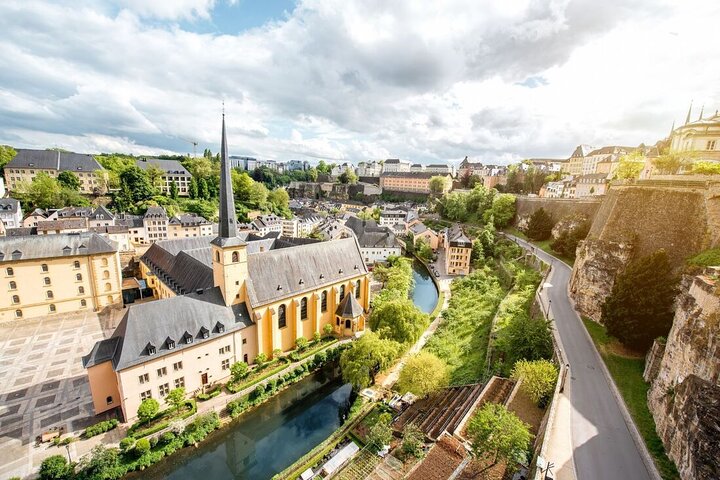
Luxembourg city walking and wine tasting tour

Tip-Based Luxembourg Walking Tour in English

Luxembourg City Cultural Walking Tour with sweet delight

The Best of Luxembourg City Guided E-bike Tour

Luxembourg city walking tour

Luxembourg 1-day private guided country tour

Luxembourg: Nature & Castle Day Trip

Private Tour of Luxembourg City and the Countryside

Romantic Quest in Luxembourg: Self-Guided Love Story Walk


 Best Backpacking
.jpg) Hi, I’m Johan (Netherlands 🇳🇱), the creator of TakeYourBackpack. Over the past decade, I’ve backpacked through 80+ countries across six continents, gaining extensive experience with independent travel, long-term trips, and overland routes.
Hi, I’m Johan (Netherlands 🇳🇱), the creator of TakeYourBackpack. Over the past decade, I’ve backpacked through 80+ countries across six continents, gaining extensive experience with independent travel, long-term trips, and overland routes.