
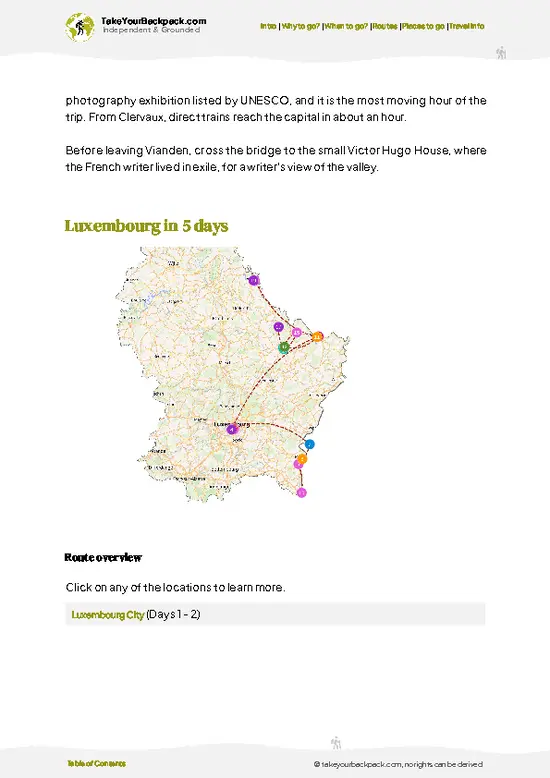
- Musée Européen Schengen (European Museum) — The obvious must-see: a compact museum focused on the story of the Schengen Agreement, border-free Europe and local history. Exhibits are small but well laid out, perfect for getting the politics and human angle without standing in a bureaucracy-full museum for hours.
- Dreiländereck (Three-Country Point) — The exact place where Luxembourg, France and Germany meet on the Moselle. You can literally stand with a foot in two countries, read the panels about border changes, and watch boats slide past. Great for photos and a quick history hit.
- Schengen Agreement Monument — A memorial and information panels that mark the spot connected to the signing of the Schengen Agreement. It’s modest, not flashy, but visiting gives the actual context — the landscape,
- Musée Européen Schengen (European Museum) — The obvious must-see: a compact museum focused on the story of the Schengen Agreement, border-free Europe and local history. Exhibits are small but well laid out, perfect for getting the politics and human angle without standing in a bureaucracy-full museum for hours.
- Dreiländereck (Three-Country Point) — The exact place where Luxembourg, France and Germany meet on the Moselle. You can literally stand with a foot in two countries, read the panels about border changes, and watch boats slide past. Great for photos and a quick history hit.
- Schengen Agreement Monument — A memorial and information panels that mark the spot connected to the signing of the Schengen Agreement. It’s modest, not flashy, but visiting gives the actual context — the landscape, the river — that made the agreement memorable.
- Moselle riverfront promenade & marina — The riverside here is relaxed: moored boats, benches, and cafés in season. Stroll, sit with a local wine, or catch a short Moselle cruise from the small port. It’s the best way to soak up the river valley atmosphere.
- Old customs house area — Even if the original customs functions are gone, the building and nearby signage tell the story of how borders used to operate here. It’s a tangible counterpoint to the Schengen idea and makes for a quiet, reflective stop.
- Riverside cycle and walking path along the Moselle — Flat, scenic and easy: this stretch of the Moselle cycle route is perfect for a few hours’ ride or a long walk. Vineyards and villages are visible across the river, and the surface is bike-friendly for rental cycles.
- Border-stone walk — Scattered in and around town are old border stones and markers; following them is a low-effort, interesting way to see how borders were literally painted on the landscape. It’s a little treasure-hunt and historically satisfying.
- Schengen tourist information & interpretation panels — Small but useful: the tourist point and attached panels give practical maps, background on the Agreement, and tips for walking routes and wineries nearby. Helpful if you want to turn a short visit into a mini-plan.
- Village parish church (Schengen) — A modest local church that reflects everyday life in this border town. It’s not about grand architecture; it’s about the feel of a small community that lived with shifting borders for generations.
- Riverside cafés, seasonal wine stands and local tasting spots — Schengen’s riverfront and village streets host small cafés and, in season, local wine kiosks. It’s an easy place to try Moselle wines without the full winery visit — relaxed, local, and very visitable on foot.
Spotted a mistake or missing something? Contact us.

Tip-Based Luxembourg Walking Tour in English

Luxembourg City: Walking Tour with a Multilingual Guide

The Best of Luxembourg City Guided E-bike Tour

Private Tour of Luxembourg City and the Countryside

Luxembourg: Nature & Castle Day Trip

Romantic Quest in Luxembourg: Self-Guided Love Story Walk

3-hour Food Tour : Uncover the Tastes of Luxembourg

Discover Luxembourg’s most Photogenic Spots with a Local

City Train in the old town of Luxembourg


 Best Backpacking
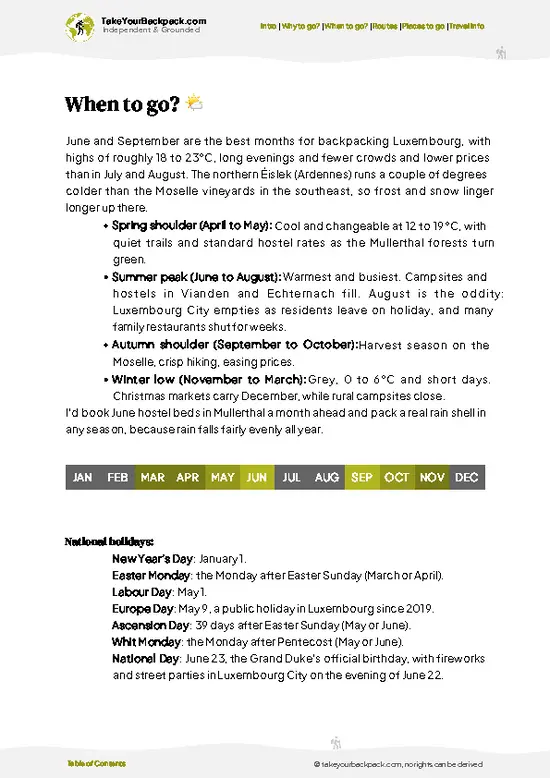
 Hi, I’m Johan (Netherlands 🇳🇱), the creator of TakeYourBackpack. Over the past 3 decades, I’ve backpacked through 90+ countries across six continents, gaining extensive experience with independent travel, long-term trips, and overland routes.