×

Madagascar🇲🇬 | national parksAndasibe-Mantadia National Parkmossy rainforest, indri calls, fern-lined trails, misty mornings | things to do and best time to go

Explore Kirindy Forest TrailExplore Ankarafantsika National Park

Backpacking in Andasibe-Mantadia
🏆 Top picknational park ranked #1
By Johan Kruseman 🇳🇱 | Updated June 28, 2026

Your boots sink into the mossy hush, and somewhere above, a black-and-white indri lets out a call that rattles your ribs—part siren, part warning. This is Andasibe-Mantadia National Park, tucked in Madagascar’s eastern rainforest belt, a few hours’ drive from Antananarivo. For backpackers, it’s a rare place where you can actually hear the forest breathe, but you’ll pay for that privilege—literally and figuratively. The entrance fee is steep by Madagascar standards, and you’re required to hire a local guide (worth it for spotting lemurs, but not for your wallet). Trails range from gentle strolls to sweat-soaked climbs, but don’t expect solitude; day-trippers from the capital and tour groups crowd the main paths, especially in Analamazaotra Reserve. Camping is possible but basic, and budget beds fill up fast in the nearby village. Compared to Ranomafana’s steeper terrain or the wild remoteness of Marojejy, Andasibe is more accessible, less wild, but undeniably alive—if you can tune out the camera clicks.

Discover everything you want to know in the 📖 Madagascar Travel Guide.
Loading the map 🌍
CLICK TO FILTER
cities
towns
villages
landmarks
national parks
hikes
beaches
attractions
festivals
regions
SHOW COUNTRY’S BESTSHOW ALL

✨ Why go?
Ranked #1 national park in Madagascar
What makes it a must-see national park

Andasibe-Mantadia National Park is a top choice for backpackers in Madagascar, and for good reason. First off, the independent exploration here is unmatched. You can wander the trails at your own pace, soaking in the sights and sounds of the unique wildlife, including the famous indri lemurs.

Budget-conscious travelers will appreciate the camping and hostel options nearby. These accommodations keep costs low, allowing you to stretch your budget for experiences that matter.

The trail variety is another draw. Whether you’re looking for a leisurely stroll or a more challenging hike, there’s something for everyone. This flexibility makes it easy to tailor your adventure to your energy levels and interests.

For those who prefer to go solo, Andasibe-Mantadia is well-suited for self-guided travelers. … read more 👉
Andasibe-Mantadia National Park is a top choice for backpackers in Madagascar, and for good reason. First off, the independent exploration here is unmatched. You can wander the trails at your own pace, soaking in the sights and sounds of the unique wildlife, including the famous indri lemurs.

Budget-conscious travelers will appreciate the camping and hostel options nearby. These accommodations keep costs low, allowing you to stretch your budget for experiences that matter.

The trail variety is another draw. Whether you’re looking for a leisurely stroll or a more challenging hike, there’s something for everyone. This flexibility makes it easy to tailor your adventure to your energy levels and interests.

For those who prefer to go solo, Andasibe-Mantadia is well-suited for self-guided travelers. The trails are clearly marked, and the park is accessible without the need for guided tours. This independence not only saves money but also allows for a more personal connection with the stunning environment. Just be sure to bring enough water and snacks to keep your energy up while you explore!
Want to include Andasibe-Mantadia National Park in your Madagascar route?
Create a personalized Madagascar itinerary that includes Andasibe-Mantadia National Park and the places that fit your trip — based on your travel style, budget, and available time. Get your route in seconds.

Generate my trip

💡 HighlightsTop highlights of Andasibe-Mantadia

  • Indri indri encounters (Analamazaotra) — The Indri is the world’s largest living lemur and you’ll hear its eerie, whale-like song echo through the valley at dawn. Seeing family groups perched in the canopy is unforgettable; guides know the best early-morning spots. (Personal favorite — nothing beats that first chorus.)
  • Analamazaotra’s short trails and boardwalks — Easy, well-marked routes that are great for quick wildlife viewing: high lemur density, active birdlife, and lots of tree-top action without a full-day hike. Perfect if you want solid sightings without getting soaked or lost.
  • Mantadia’s primary rainforest and long hikes — Wilder, steeper and quieter than Analamazaotra, Mantadia offers old-growth forest, mossy buttress roots, shady streams and secluded waterfalls. Hikers can waste
read more 👉
  • Indri indri encounters (Analamazaotra) — The Indri is the world’s largest living lemur and you’ll hear its eerie, whale-like song echo through the valley at dawn. Seeing family groups perched in the canopy is unforgettable; guides know the best early-morning spots. (Personal favorite — nothing beats that first chorus.)
  • Analamazaotra’s short trails and boardwalks — Easy, well-marked routes that are great for quick wildlife viewing: high lemur density, active birdlife, and lots of tree-top action without a full-day hike. Perfect if you want solid sightings without getting soaked or lost.
  • Mantadia’s primary rainforest and long hikes — Wilder, steeper and quieter than Analamazaotra, Mantadia offers old-growth forest, mossy buttress roots, shady streams and secluded waterfalls. Hikers can waste hours here watching rare birds and elusive mammals where fewer tourists go.
  • Night walks for nocturnal species — Guided night sorties reveal mouse lemurs, leaf-tailed geckos, chameleons and a chorus of endemic frogs; the forest becomes a different, twitchy world after dark. A headlamp and a patient guide make tiny, weird creatures come alive.
  • Birdwatching — eastern rainforest endemics — The park is a hotspot for species you won’t see elsewhere: couas, vangas, paradise flycatchers and more, plus hummingbirds and sunbirds flitting around flowering trees. Bring binocs and expect long, rewarding stakeouts.
  • Orchids, palms and the plant life — Andasibe-Mantadia bursts with epiphytic orchids, bizarre ferns and endemic palms; the forest is a botany playground. If you like textures and colors, the understory is as interesting as the animals.
  • Mitsinjo Community Reserve & reforestation projects (nearby) — Community-run trails, active restoration work and great night walks—plus a real chance to support local conservation. It’s less formal than the national park and often produces close-up sightings of frogs, chameleons and tame lemurs.
Spotted a mistake or missing something? Contact us.

Things to do near Andasibe-Mantadia National Park

Ratings based on Tripadvisor reviews. When you book through this link, you support our work at no extra cost to you.

🌤️ When to go?Seasonal considerations and timing


  • Topic: Weather – The dry season from April to October is your best bet. Rainfall drops significantly, making trails less slippery and wildlife spotting easier. The wet season (November to March) brings heavy rains that can flood paths and limit access.

  • Topic: Temperature – Expect mild temperatures year-round, but the dry months hover around 15-25°C (59-77°F). The wet season can feel warmer and more humid, pushing temps up to 28°C (82°F), which can sap your energy on hikes.

  • Topic: Daylight Hours – Daylight is fairly consistent, roughly 11 to 12 hours daily. The dry season edges toward slightly longer days, giving you more time to explore without rushing.

  • Topic: Crowds – Peak tourist flow aligns with the dry season, especially July and August. If you want fewer people, aim for shoulder
read more 👉

  • Topic: Weather – The dry season from April to October is your best bet. Rainfall drops significantly, making trails less slippery and wildlife spotting easier. The wet season (November to March) brings heavy rains that can flood paths and limit access.

  • Topic: Temperature – Expect mild temperatures year-round, but the dry months hover around 15-25°C (59-77°F). The wet season can feel warmer and more humid, pushing temps up to 28°C (82°F), which can sap your energy on hikes.

  • Topic: Daylight Hours – Daylight is fairly consistent, roughly 11 to 12 hours daily. The dry season edges toward slightly longer days, giving you more time to explore without rushing.

  • Topic: Crowds – Peak tourist flow aligns with the dry season, especially July and August. If you want fewer people, aim for shoulder months like April or September, when the park is quieter but still accessible.

  • Topic: Seasonal Activities – Dry months are prime for spotting the Indri lemurs and other wildlife, as animals are more active and visible. The wet season sees fewer sightings and more challenging trail conditions.

  • Topic: Price Fluctuations – Accommodation and tour prices spike during the dry season’s peak months. Booking in shoulder seasons can save you a decent chunk without sacrificing much on experience quality.


Pro-tip: Plan your visit for late April or early September to dodge crowds and rain, keeping your energy and budget intact for the moments that truly count.


source: climatestotravel.comJANJanuary: fair for travelingFEBFebruary: fair for travelingMARMarch: fair for travelingAPRApril: highly recommended for travelingMAYMay: excellent for travelingJUNJune: excellent for travelingJULJuly: highly recommended for travelingAUGAugust: highly recommended for travelingSEPSeptember: highly recommended for travelingOCTOctober: excellent for travelingNOVNovember: fair for travelingDECDecember: fair for traveling
when-to-go

✈️ The backpacker research shortcutMadagascar Travel Guide

An offline-friendly backpacking guide with optimized travel routes, ranked highlights, transport advice, and the best areas to stay.
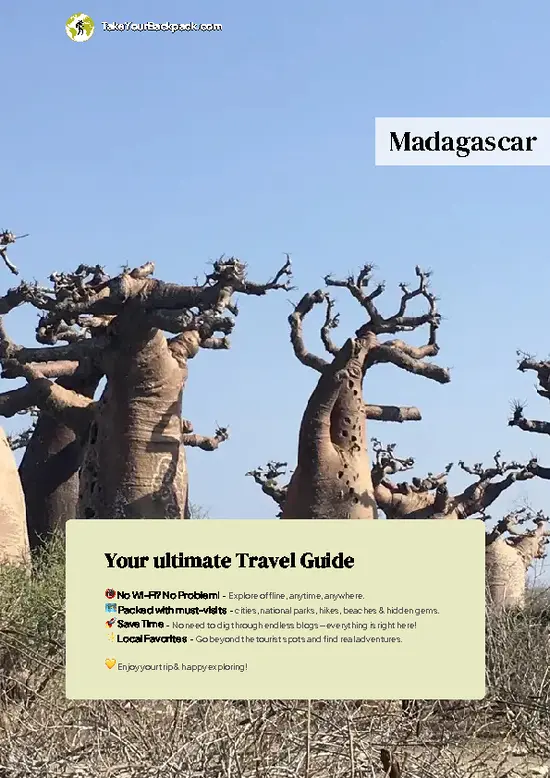
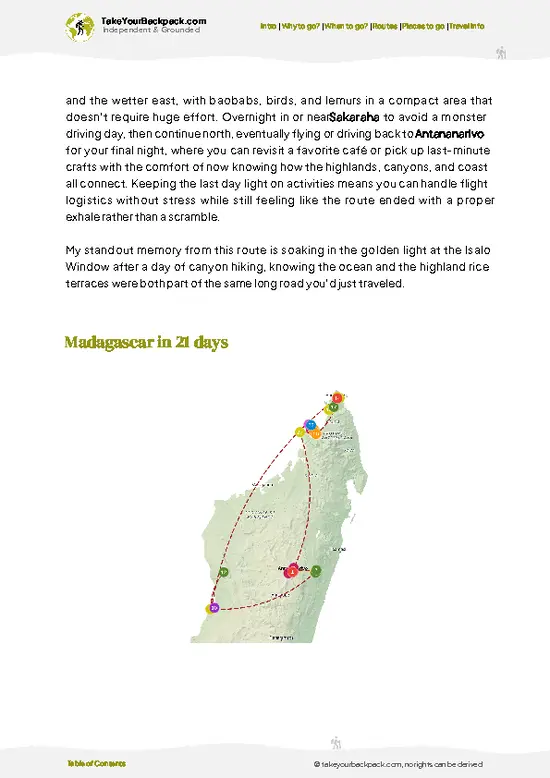
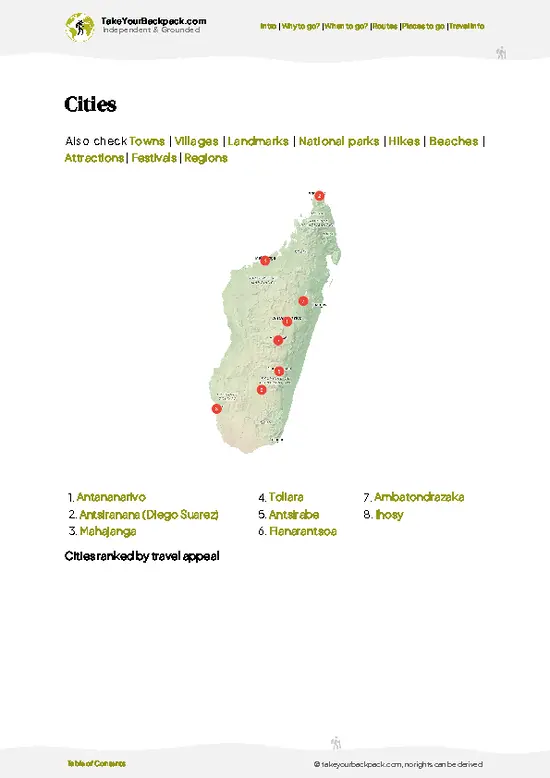
example page 0 from our offline Travel Guide for Madagascar
example page 1 from our offline Travel Guide for Madagascar
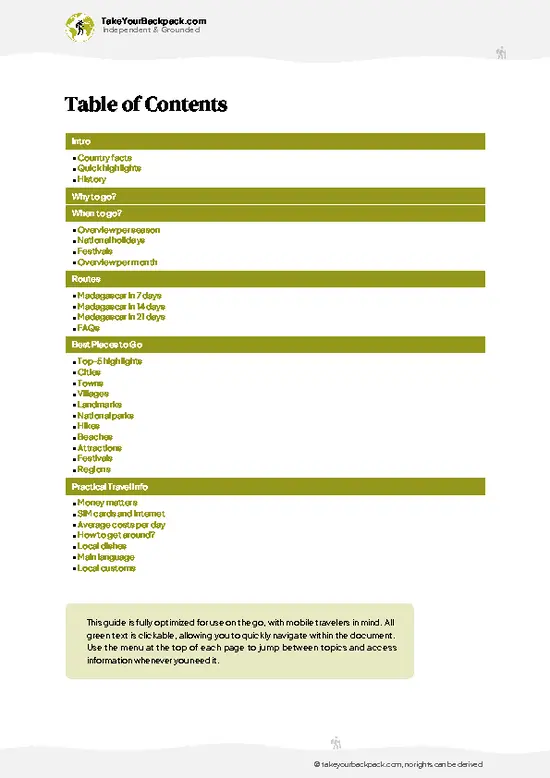
example page 2 from our offline Travel Guide for Madagascar
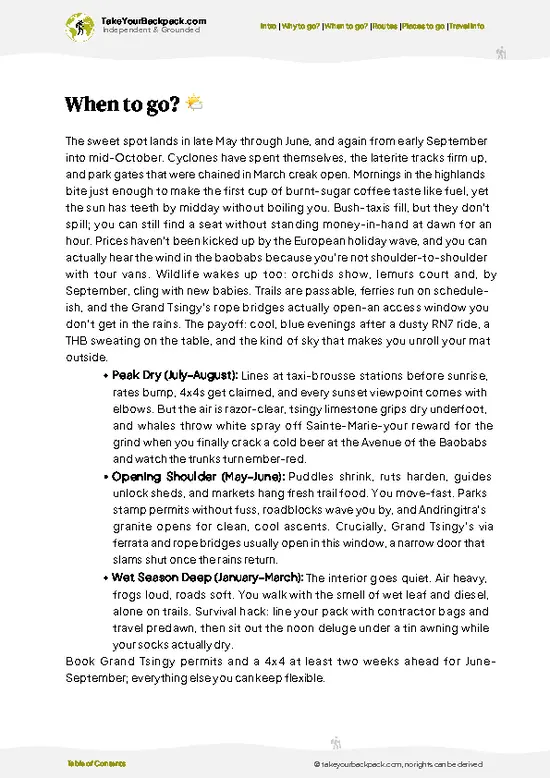
example page 3 from our offline Travel Guide for Madagascar
example page 4 from our offline Travel Guide for Madagascar
example page 5 from our offline Travel Guide for Madagascar
example page 6 from our offline Travel Guide for Madagascar
example page 7 from our offline Travel Guide for Madagascar
The digital guide (418 pages) contains:
110 highlights, ranked by travel appeal
Optimized 7, 14 & 21-day travel routes
Cities, national parks, landmarks, beaches
How to get around
Offline-friendly for travel without Wi-Fi
👉 Click to see all 30+ guide features

📅 Plan smarter in minutes, not weeks
Month by month travel advice
Festivals & national holidays
Budget expectations

🗺️ Go to the right places, skip the overrated ones
Honest pros & cons of destinations
Top hikes, parks & viewpoints
Lesser-known places most travelers miss
Clear “worth it vs skip it” guidance

🛏️ Travel smoothly without rookie mistakes
Best areas to stay
Transport systems explained simply
Common scams & safety advice
SIM cards, money & practical tips

🌍 Understand the country, not just visit it
Culture & traditions
52 Essential phrases & customs
Festivals worth planning around
Traveler-friendly historical context
Insights that make places more meaningful

📱 Built for real travel conditions
Fully downloadable PDF
Works completely offline
Optimized for phone use
Useful in remote areas & buses
Everything in one place
Save weeks of stressful planning
Get instant access to your full guide. 30‑day money-back guarantee.


By proceeding you agree to our terms.
Sent to your inbox immediately after payment • 100% Secure Checkout
Best Backpacking Travel Advisor 2025 tourism awardBest Backpacking
Travel Advisor
2025
What others say about Take Your Backpack Guides:
⭐⭐⭐⭐⭐
Fantastic, amazing amount of information!
⭐⭐⭐⭐⭐
My goodness this is amazing, it's what I've been looking for hats off too you!
⭐⭐⭐⭐⭐
I think this is absolutely BRILLIANT
⭐⭐⭐⭐
Very complete and informative. It's still missing places, but I gotta to commend you
⭐⭐⭐⭐⭐
This is truly amazing, thank you, can't wait to explore it with my kids!
⭐⭐⭐⭐⭐
Awesome resource, thank you!
⭐⭐⭐⭐⭐
This is amazing! Can't wait to explore the ones I haven't seen
⭐⭐⭐⭐
I love this! Well done, great idea.
⭐⭐⭐⭐⭐
Thanks for taking the time to make this gem!
⭐⭐⭐⭐⭐
This might be the best website I've ever seen.
⭐⭐⭐⭐⭐
Congratulations, and thank you so much for your work; it's incredibly valuable.
⭐⭐⭐⭐
In all seriousness I think you did a great job pointing out the important spots
⭐⭐⭐⭐⭐
10/10 very good
⭐⭐⭐⭐⭐
As someone who's only just starting to visit regularly this is awesome, thank you.
⭐⭐⭐⭐
Thank you very much! I'm going to visit my dad, it's going to be very useful!
⭐⭐⭐⭐⭐
This is really cool! We'll be travelling for the first time and this definitely come in handy.
⭐⭐⭐⭐⭐
You are now our minister of culture, congratulations 👨‍💼
⭐⭐⭐⭐⭐
Just wanted to tell you that this is a pearl! Going to follow your recommendations.
⭐⭐⭐⭐⭐
This is so cool. I'll definitely be using the resource for my travels soon.
⭐⭐⭐⭐⭐
This is very impressive! Good work.
⭐⭐⭐⭐⭐
This is an amazing and informative site. Very well done!

🛏️ Where to stay?Where staying makes the most sense

For backpackers heading to Andasibe-Mantadia National Park, the options for lodging are varied, but a few stand out for their accessibility and value.

Inside the park, you won’t find traditional hotels, but there are basic bungalows and campsites that offer a close-to-nature experience. The Andasibe Hotel is a solid choice, providing comfortable rooms and easy access to the park entrance. It’s not luxurious, but it’s clean and has a friendly vibe.

If you prefer a bit more local flavor, check out Feon’ny Ala, a budget-friendly option with simple accommodations and a restaurant serving local … read more 👉
For backpackers heading to Andasibe-Mantadia National Park, the options for lodging are varied, but a few stand out for their accessibility and value.

Inside the park, you won’t find traditional hotels, but there are basic bungalows and campsites that offer a close-to-nature experience. The Andasibe Hotel is a solid choice, providing comfortable rooms and easy access to the park entrance. It’s not luxurious, but it’s clean and has a friendly vibe.

If you prefer a bit more local flavor, check out Feon’ny Ala, a budget-friendly option with simple accommodations and a restaurant serving local dishes. It’s a great spot to meet fellow travelers and share stories over a meal.

For a more vibrant atmosphere, consider staying in the nearby town of Andasibe. Here, you’ll find a range of guesthouses and lodges, like Mitsinjo, which is known for its eco-friendly practices and community involvement.

Be aware that prices can vary significantly based on the season, so booking in advance can save you some headaches. Also, factor in transportation costs to and from the park, as they can add up quickly. Prioritize your energy and budget for the experiences that truly matter—like guided night walks to spot lemurs.

👛 Costs (as of 3 October 2025)Typical daily expenses

Visiting Andasibe-Mantadia National Park in Madagascar can be a rewarding experience, but it’s essential to be aware of the costs involved to avoid surprises.

Entry fees for the park typically range from €10 to €15 (about $11 to $16). This fee grants you access to the park’s stunning biodiversity and well-maintained trails. If you want a guided tour, which is highly recommended for a richer experience, expect to pay an additional €15 to €30 ($16 to $33) for a half-day guide. Full-day guides can cost between €30 and €50 ($33 to $55), depending on the length and complexity of the hike.

Accommodation options vary widely. Budget travelers can find basic lodgings starting at around €10 to €20 ($11 to $22) per night. Mid-range hotels typically charge between €30 and €70 ($33 to $77) per night, … read more 👉
Visiting Andasibe-Mantadia National Park in Madagascar can be a rewarding experience, but it’s essential to be aware of the costs involved to avoid surprises.

Entry fees for the park typically range from €10 to €15 (about $11 to $16). This fee grants you access to the park’s stunning biodiversity and well-maintained trails. If you want a guided tour, which is highly recommended for a richer experience, expect to pay an additional €15 to €30 ($16 to $33) for a half-day guide. Full-day guides can cost between €30 and €50 ($33 to $55), depending on the length and complexity of the hike.

Accommodation options vary widely. Budget travelers can find basic lodgings starting at around €10 to €20 ($11 to $22) per night. Mid-range hotels typically charge between €30 and €70 ($33 to $77) per night, while more upscale options can go from €80 to €150 ($88 to $165) or more.

Food is generally affordable. Street food and local eateries offer meals for about €3 to €7 ($3.30 to $7.70). Dining in a mid-range restaurant will set you back around €10 to €20 ($11 to $22) per meal.

Transportation costs should also be factored in. If you’re traveling from Antananarivo, expect to pay around €3 to €5 ($3.30 to $5.50) for a taxi-brousse (shared taxi) one way. Private transfers can be significantly more, ranging from €50 to €100 ($55 to $110).

Keep in mind that cash is king in Madagascar. Many places do not accept credit cards, so having enough local currency on hand is crucial.

Being aware of these costs will help you budget effectively and focus your energy on enjoying the park’s unique wildlife and lush landscapes.


source: madagascar-tourisme.com
⚠️ Prices can change and everyone travels differently, so take this as a rough guide. Hope it helps you plan your adventure!

🥾 TrailsExploring Andasibe-Mantadia: trails, terrain, and views

Andasibe-Mantadia National Park is a gem for hikers and wildlife enthusiasts alike. The park is a lush paradise filled with dense rainforest, cascading waterfalls, and the haunting calls of the indri lemurs. The terrain varies from flat, easy paths to more challenging, steep trails, so there’s something for everyone. Expect to see vibrant orchids, towering trees, and perhaps even some chameleons if you’re lucky.

One of the standout trails is Analamazaotra Special Reserve Trail. Here are the details:
  • Length: 4 km
  • Estimated Duration: 2-3 hours
  • Difficulty Level: Easy
  • Key Features: Home to the indri
read more 👉
Andasibe-Mantadia National Park is a gem for hikers and wildlife enthusiasts alike. The park is a lush paradise filled with dense rainforest, cascading waterfalls, and the haunting calls of the indri lemurs. The terrain varies from flat, easy paths to more challenging, steep trails, so there’s something for everyone. Expect to see vibrant orchids, towering trees, and perhaps even some chameleons if you’re lucky.

One of the standout trails is Analamazaotra Special Reserve Trail. Here are the details:
  • Length: 4 km
  • Estimated Duration: 2-3 hours
  • Difficulty Level: Easy
  • Key Features: Home to the indri lemur, lush greenery, and diverse birdlife
  • Terrain: Mostly flat with some muddy sections

For a more adventurous hike, check out Mantadia National Park Loop:
  • Length: 8 km
  • Estimated Duration: 4-5 hours
  • Difficulty Level: Moderate
  • Key Features: Stunning waterfalls, rich biodiversity, and fewer crowds
  • Terrain: Steep and rocky in parts, with some slippery areas

Getting to the park is pretty straightforward. You can hop on a taxi-brousse from Antananarivo, which takes about 3-4 hours. Just be prepared for a bumpy ride! As for crowds, it can get busy, especially during peak season, but there are plenty of trails to escape the masses. The entrance fee is quite reasonable, usually around $10, which goes towards conservation efforts. Just remember to bring cash, as card payments might not be an option.
⚠️ Hiking info can sometimes be outdated or inaccurate. Before you hit the trail, check the latest conditions with locals. If you do spot anything that's off, I'd love to hear from you, so I can update it for fellow travelers.

🛡️ SafetySafety Tips and Common Scams in Andasibe-Mantadia

Andasibe-Mantadia National Park is generally accessible, but a few realities can shape your experience. The weather can shift quickly; expect rain, especially from December to March. A good rain jacket and quick-drying gear are essential.

The terrain varies. Some trails are steep and muddy, which can make footing tricky. Trekking poles can help maintain balance, especially on the more challenging paths. Navigation is straightforward, but a local guide can enhance your experience and keep you on track.

Wildlife encounters are a highlight, particularly with lemurs. Keep your distance; they’re wild animals, not pets. Respect their space to ensure both your safety and theirs.

Prepare for humidity and pack light. Overpacking can drain your energy. Early starts are best to avoid the heat and … read more 👉
Andasibe-Mantadia National Park is generally accessible, but a few realities can shape your experience. The weather can shift quickly; expect rain, especially from December to March. A good rain jacket and quick-drying gear are essential.

The terrain varies. Some trails are steep and muddy, which can make footing tricky. Trekking poles can help maintain balance, especially on the more challenging paths. Navigation is straightforward, but a local guide can enhance your experience and keep you on track.

Wildlife encounters are a highlight, particularly with lemurs. Keep your distance; they’re wild animals, not pets. Respect their space to ensure both your safety and theirs.

Prepare for humidity and pack light. Overpacking can drain your energy. Early starts are best to avoid the heat and enjoy the wildlife activity. With these considerations in mind, you can focus on the beauty of the park without unnecessary stress.

Other Malagasy national parks near Andasibe-Mantadia

Explore more nearby:


💡 Not sure where to go next?
Create a personalized itinerary for Madagascar including Andasibe-Mantadia and the places that fit your trip.

Generate my itinerary

👉 Discover all national parks

Or checkout all Madagascar has to offer (think cities, towns, villages, national parks, hikes, beaches, festivals)
Country photo of Madagascar

We 💚 feedbackKey takeaways before you go

Andasibe-Mantadia National Park is a treasure trove of biodiversity. The chance to see the indri lemurs in their natural habitat is worth every ounce of effort. But be prepared: the humidity can be relentless, and trails can get muddy. Pack your patience and sturdy shoes. Embrace the sweat; it’s part of the adventure. Focus on those magical moments with the wildlife, and you’ll find the effort pays off in spades.

✈️ When did I visit Madagascar?
Madagascar I went backpacking in October 2019. With a friend I rented a 4WD and drove around the southern part of Madagascar.

✍️ Help improve this page!
The information on this page is based on my own backpacking experience in Madagascar, supplemented with up-to-date research and feedback from other travelers. Travel details can change, so if you notice anything outdated or incomplete, feel free to let me know.


🙋‍♂️ Give feedback

👋 Meet the founderWho’s Behind Take Your Backpack?

Johan, backpacker and founder of TakeYourBackpackHi, I’m Johan (Netherlands 🇳🇱), the creator of TakeYourBackpack. Over the past decade, I’ve backpacked through 80+ countries across six continents, gaining extensive experience with independent travel, long-term trips, and overland routes.

This site is built on a combination of firsthand travel experience and carefully curated insights from other backpackers. Many guides are based on places I’ve personally visited, while others bring together tips, observations, and practical advice shared by trusted travelers I’ve met along the way.

The goal is to provide realistic, experience-driven guidance — not generic itineraries — so you can explore destinations with better context, clearer expectations, and more confidence.

Get full Madagascar guide •
Instant download • 110 highlights • Full Offline guide