×

Madagascar🇲🇬 | best national parksExplore the 10 Best national parks in Madagascar

Madagascar’s national parks are a tapestry of biodiversity and rugged landscapes, each offering a unique lens into the island’s rich ecology. Defined by their distinct ecosystems, these parks range from the dense rainforests of Andasibe-Mantadia to the arid sprawl of Isalo. The seasonal nuances play a crucial role; visiting during the dry season (May to October) often means easier trails and clearer wildlife sightings, while the wet season can transform the scenery but complicate access.

Choosing the right park shapes your backpacking experience significantly. For instance, if you’re after adventure, Tsingy de Bemaraha’s limestone pinnacles demand physical effort but reward you with breathtaking views. Conversely, the more accessible parks like Ranomafana offer a gentler pace, ideal for cultural immersion. Each park’s vibe, safety considerations, and travel logistics vary, making it essential to align your choice with your budget and desired level of exploration.

By Johan Kruseman 🇳🇱 | Updated September 4, 2026
Explore the best hikes in Madagascar

Why go?Key Factors That Shape the Experience

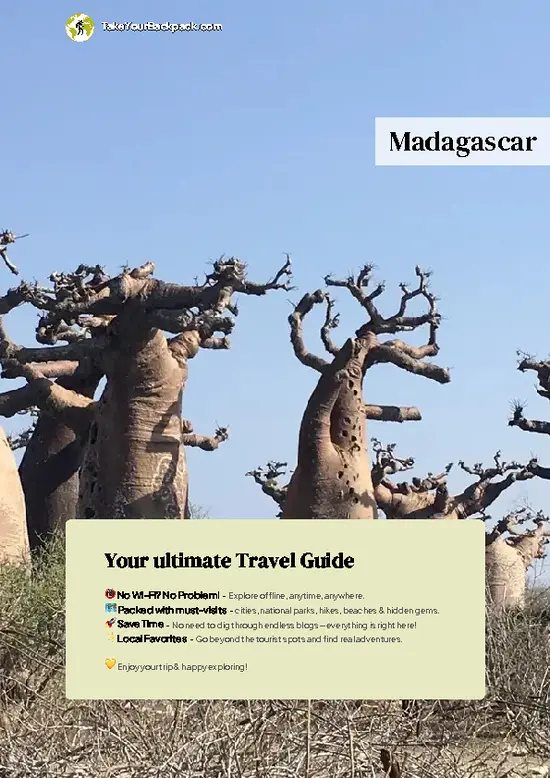
Madagascar’s national parks are a unique tapestry of biodiversity and landscapes, setting them apart from parks in other countries. The island’s isolation has fostered an astonishing array of flora and fauna, with about 90% of its wildlife found nowhere else on Earth. This includes the iconic lemurs, chameleons, and baobab trees, each contributing to a rich ecological narrative that feels like stepping into a living museum.

However, accessing these parks often involves navigating challenging infrastructure. Many roads are unpaved, and travel can be slow, which may deter some visitors. Yet, this very challenge can lead to deeper exploration. The longer travel times often reward adventurers with a more intimate connection to the land and its people. The cultural richness of Madagascar enhances … read more 👉
Madagascar’s national parks are a unique tapestry of biodiversity and landscapes, setting them apart from parks in other countries. The island’s isolation has fostered an astonishing array of flora and fauna, with about 90% of its wildlife found nowhere else on Earth. This includes the iconic lemurs, chameleons, and baobab trees, each contributing to a rich ecological narrative that feels like stepping into a living museum.

However, accessing these parks often involves navigating challenging infrastructure. Many roads are unpaved, and travel can be slow, which may deter some visitors. Yet, this very challenge can lead to deeper exploration. The longer travel times often reward adventurers with a more intimate connection to the land and its people. The cultural richness of Madagascar enhances the experience; local communities often share their knowledge of the environment, adding layers of understanding to the natural beauty.

The climate also plays a significant role. Madagascar experiences distinct wet and dry seasons, influencing wildlife visibility and trail conditions. The dry season offers clearer paths and better chances to spot animals, while the wet season transforms the landscape into a lush paradise, albeit with muddy trails and potential flooding.

Travelers must weigh the trade-offs of accessibility versus immersion. While some parks are easier to reach, they may lack the raw, untouched quality found in more remote areas. Those willing to invest time and effort will find themselves rewarded with breathtaking vistas and a sense of solitude that is increasingly rare in our world.

In summary, Madagascar’s national parks are not just destinations; they are gateways to understanding a unique ecosystem shaped by isolation and resilience. The journey may be demanding, but the payoff—a profound connection to nature and culture—is undeniably worth it.
Our Approach to Ranking
The list of best national parks in Madagascar is created based on landscapes, wildlife, adventure opportunities, facilities, and overall experience. If you feel a national park is missing in this list, please let us know.

When to go?Optimal Periods for Travel

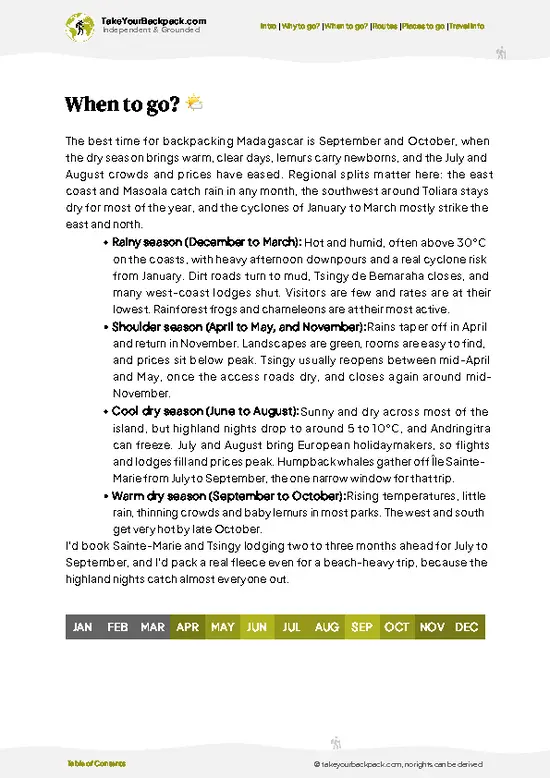
Madagascar’s national parks offer a unique experience shaped by the island’s distinct seasons. The best time to visit generally falls between the dry months, from May to October. During this period, wildlife visibility is at its peak. Animals are more active, and the trails are less muddy, making exploration easier. Temperatures are milder, especially in the highlands, where cool evenings contrast with warm days.

Rainfall is a significant factor. The wet season, from November to April, brings heavy rains that can make trails slippery and challenging. Wildlife is still present, but spotting them can be more difficult as they seek shelter. The lush landscape during this time is undeniably beautiful, but the trade-off is often a more strenuous trek through muddy paths.

Shoulder seasons—the … read more 👉
Madagascar’s national parks offer a unique experience shaped by the island’s distinct seasons. The best time to visit generally falls between the dry months, from May to October. During this period, wildlife visibility is at its peak. Animals are more active, and the trails are less muddy, making exploration easier. Temperatures are milder, especially in the highlands, where cool evenings contrast with warm days.

Rainfall is a significant factor. The wet season, from November to April, brings heavy rains that can make trails slippery and challenging. Wildlife is still present, but spotting them can be more difficult as they seek shelter. The lush landscape during this time is undeniably beautiful, but the trade-off is often a more strenuous trek through muddy paths.

Shoulder seasons—the months just before and after the peak—can be a mixed bag. Visiting in late April or early November may offer a balance of decent weather and fewer crowds. However, expect some rain and less predictable wildlife sightings. Costs may also be lower during these times, making it a more budget-friendly option.

Peak periods coincide with school holidays and major festivals, leading to crowded trails and higher prices. While the scenery is often at its most vibrant, the experience can feel less intimate.

Travelers should weigh the benefits of optimal wildlife viewing against the potential for crowded conditions. Understanding these seasonal patterns will help in planning a trip that aligns with personal preferences for adventure and comfort.

national park hoppingPlanning Your Route Efficiently

General Routing Logic

Madagascar’s national parks are best tackled in clusters. Start in the east with Andasibe-Mantadia, known for its lush rainforests and iconic lemurs. From there, head south to Ranomafana, where the humid air is thick with the scent of wet earth and the calls of wildlife echo through the trees. This route allows for a natural progression through diverse ecosystems, maximizing wildlife sightings and minimizing travel fatigue.

Typical Time Needed

Plan for at least two to three days in each park. This pacing allows for ample exploration without feeling rushed. In Andasibe, the trails can be tackled in half-day segments, while Ranomafana’s more extensive network of paths may require longer treks. Factor in travel time between parks, which can be significant due to road … read more 👉

General Routing Logic

Madagascar’s national parks are best tackled in clusters. Start in the east with Andasibe-Mantadia, known for its lush rainforests and iconic lemurs. From there, head south to Ranomafana, where the humid air is thick with the scent of wet earth and the calls of wildlife echo through the trees. This route allows for a natural progression through diverse ecosystems, maximizing wildlife sightings and minimizing travel fatigue.

Typical Time Needed

Plan for at least two to three days in each park. This pacing allows for ample exploration without feeling rushed. In Andasibe, the trails can be tackled in half-day segments, while Ranomafana’s more extensive network of paths may require longer treks. Factor in travel time between parks, which can be significant due to road conditions. Expect at least a full day for each transfer, especially when heading to the more remote parks like Isalo or Tsingy de Bemaraha.

Common Planning Mistakes

One common pitfall is underestimating travel times. The roads can be rough, and distances deceptive. Prioritize flexibility in your itinerary to accommodate delays or spontaneous detours. Another mistake is trying to cram too many parks into a short timeframe, sacrificing depth of experience for breadth.

Trade-offs and Constraints

Balancing speed and depth is crucial. A faster pace may lead to more parks but can dilute the experience. Conversely, spending longer in fewer parks allows for deeper immersion but may limit the variety of landscapes encountered. Budget considerations also come into play; remote parks often have higher accommodation costs. Ultimately, the effort invested in planning will yield rich rewards, from breathtaking vistas to the thrill of encountering Madagascar’s unique wildlife.

The ListThe Best national parks of Madagascar

1 Andasibe-Mantadia National Park

mossy rainforest, indri calls, fern-lined trails, misty mornings

Listen for the haunting song of indri lemurs as you walk through dense, dew-soaked forest alive with rare orchids and chameleons.

2 Ranomafana National Park

steep rainforest hills, hot springs, bamboo thickets, nocturnal lemurs

Climb misty slopes in search of elusive golden bamboo lemurs and soak in natural hot springs after a day’s trek.

3 Isalo National Park

sandstone canyons, natural pools, windswept plateaus, bizarre rock formations

Hike through sculpted gorges and swim in cool, clear pools surrounded by towering cliffs and sun-bleached savanna.

madagascar-national-park-isalo-national-park
© Google |

4 Tsingy de Bemaraha National Park

limestone pinnacles, hanging bridges, razor-sharp karst, deep gorges

Traverse narrow walkways above jagged stone forests and peer into canyons where rare birds and lemurs find refuge.

Madagascar - Tsingy de Bemaraha National Park

5 Masoala National Park

lowland rainforest, coastal mangroves, endemic wildlife, remote beaches

Venture into thick jungle where rare species hide, then emerge onto wild beaches lapped by the Indian Ocean’s waves.

6 Amber Mountain National Park

volcanic massif, crater lakes, waterfalls, cool montane forest

Follow mossy paths past waterfalls and ferns in a cool, highland forest alive with chameleons and endemic birds.

7 Ankarafantsika National Park

dry deciduous forest, lakeside birdlife, baobab stands, sandy tracks

Spot endangered birds and lemurs among sunlit woodlands, then watch crocodiles bask on the shores of a tranquil crater lake.

madagascar-national-park-ankarafantsika-national-park
© Google |

8 Berenty Reserve

spiny forest, ring-tailed lemurs, gallery woodland, red soil

Walk beneath thorny canopies where troops of lemurs cross open ground and sifakas leap between ancient tamarind trees.

madagascar-national-park-berenty-reserve v1
© Google |

9 Lokobe National Park

humid forest, black lemurs, ylang-ylang groves, island setting

Paddle to a forested peninsula where lemurs call from the treetops and fragrant plants scent the air along shaded trails.

madagascar-national-park-lokobe-national-park v1
© Google |

10 Marojejy National Park

cloud forest, rugged peaks, rare amphibians, moss-draped trees

Ascend steep, slippery paths through dripping forest to reach panoramic viewpoints and encounter wildlife found nowhere else.

madagascar-national-park-marojejy-national-park v1
© Google |

11 Kirindy Mitea National Park

dry forest, giant jumping rats, coastal dunes, seasonal lakes

Search for nocturnal mammals in dry woodlands, then cross shifting dunes to reach hidden lakes teeming with waterbirds.

12 Nosy Hara National Park

island karst, turquoise lagoons, dwarf chameleons, coral reefs

Kayak between limestone islets, snorkel clear waters, and search for tiny chameleons in pockets of coastal forest.

13 Sahamalaza-Iles Radama National Park

mangrove-fringed bays, blue-eyed black lemurs, coral reefs, islets

Snorkel vibrant reefs and explore mangrove channels, then trek inland to spot rare lemurs in fragmented coastal forest.

14 Baie de Baly National Park

coastal savanna, mangrove swamps, ploughshare tortoise, tidal flats

Walk through open grasslands and tidal wetlands, keeping watch for critically endangered tortoises and migratory waterfowl.

15 Zombitse-Vohibasia National Park

transitional forest, baobab groves, endemic birds, dry woodland

Wander through a unique blend of forest types, home to rare birds and ancient baobabs standing sentinel over sandy trails.

16 Analamazaotra Special Reserve

dense undergrowth, indri families, mossy branches, frog diversity

Move quietly along narrow trails to glimpse indri families and spot colorful frogs among thick, tangled vegetation.

17 Andohahela National Park

transitional climate, spiny thicket, humid rainforest, granite outcrops

Experience dramatic shifts from lush rainforest to arid spiny forest as you cross rugged terrain shaped by ancient geology.

18 Mananara Nord National Park

lowland rainforest, river islands, vanilla plantations, marine reserve

Combine forest walks with river crossings and discover a protected marine area where sea turtles nest on quiet beaches.

19 Namoroka National Park

limestone labyrinth, caves, dry forest, tsingy formations

Navigate a maze of eroded limestone and hidden caves, then emerge into dry forest alive with lemurs and birds.

20 Midongy du Sud National Park

montane rainforest, high-altitude plateaus, endemic orchids, misty ridges

Traverse high ridges and cloud-wrapped forests where rare orchids bloom and few travelers venture beyond the main trails.

21 Vohimana Reserve

regenerating forest, medicinal plants, butterfly diversity, community projects

Join local guides to explore recovering forest, learn about traditional plant uses, and spot butterflies along shaded paths.

22 Marolambo National Park

remote rainforest, river valleys, rare palms, steep escarpments

Trek deep into isolated forest, crossing rivers and climbing escarpments to find rare plants and little-seen wildlife.

23 Kalambatritra Reserve

remote highlands, dense rainforest, rare lemurs, granite boulders

Venture into little-visited highland forest, crossing streams and boulder fields to search for elusive lemur species.

24 Tsaratanana Strict Nature Reserve

highest peak, montane forest, alpine meadows, endemic reptiles

Climb toward Madagascar’s highest summit through shifting forest zones, encountering rare reptiles and sweeping mountain views.

Think you know Madagascar?

Prove you’re a true local — uncover 14 lesser-known national parks in Madagascar that locals tend to keep to themselves.
Loading the map 🌍

Expert viewInsights from Locals and Experts

Terrain
Madagascar’s national parks are a patchwork of ecosystems, each with its own character. You’ll find everything from dense rainforests to arid spiny forests, each demanding a different kind of exploration. The trails can be rugged and steep, especially in places like Andringitra, where the ascent rewards you with sweeping views of the highlands. Expect to navigate rocky paths, often slick with moisture after a rain. The air is thick with the scent of damp earth and lush foliage, a reminder that you’re in a unique biosphere.

In contrast, parks like Isalo offer a different challenge. Here, the terrain shifts to sandstone formations and canyons, where the sun beats down mercilessly. The heat can be oppressive, but the sight of the sun setting over the rock formations is worth every … read more 👉
Terrain
Madagascar’s national parks are a patchwork of ecosystems, each with its own character. You’ll find everything from dense rainforests to arid spiny forests, each demanding a different kind of exploration. The trails can be rugged and steep, especially in places like Andringitra, where the ascent rewards you with sweeping views of the highlands. Expect to navigate rocky paths, often slick with moisture after a rain. The air is thick with the scent of damp earth and lush foliage, a reminder that you’re in a unique biosphere.

In contrast, parks like Isalo offer a different challenge. Here, the terrain shifts to sandstone formations and canyons, where the sun beats down mercilessly. The heat can be oppressive, but the sight of the sun setting over the rock formations is worth every drop of sweat. Each park has its own rhythm, and understanding these nuances can help you choose where to invest your time.

Park Infrastructure
Infrastructure varies widely across Madagascar’s parks. Some, like Andasibe-Mantadia, are relatively accessible, with well-marked trails and decent facilities. You might find basic lodges and local guides ready to help you navigate the wildlife-rich areas. However, don’t expect luxury. The accommodations are often simple, but they immerse you in the local culture.

On the flip side, parks like Tsingy de Bemaraha are remote and require more effort to reach. The roads can be rough, and you might spend hours bumping along unpaved paths. But this effort pays off when you finally step into the otherworldly limestone formations. The trade-off here is clear: more time and effort for a truly unique experience. Be prepared for limited amenities and a more rugged experience, but also for the thrill of being in a place that feels untouched.

Wildlife Activity
Wildlife is the heartbeat of Madagascar’s national parks. Each park offers a different glimpse into the island’s unique biodiversity. In Andasibe-Mantadia, the calls of the indri lemurs echo through the trees, a haunting sound that lingers in your memory. Early mornings are the best time to catch sight of these creatures as they leap through the canopy.

In contrast, the dry forests of Ankarafantsika are home to a different set of species. Here, you’ll find the vibrant colors of chameleons and the rustle of nocturnal lemurs. The wildlife experience is often dictated by the time of year, so plan accordingly. The trade-off is between the variety of species you can see and the effort required to reach them. Some parks are more accessible but may offer fewer unique sightings, while others require more commitment but reward you with rare encounters.

Time Management
When planning your itinerary, consider how many parks you want to visit. A realistic approach is to focus on two to three parks, allowing for deeper exploration rather than a rushed experience. Each park deserves time to soak in its atmosphere and wildlife.

Traveling between parks can be time-consuming. The roads are often in poor condition, and distances can be deceptive. You might think you can hop from one park to another in a day, but the reality is that you’ll need to factor in travel time, which can eat into your exploration hours. Prioritize parks based on your interests—if you’re drawn to lemurs, Andasibe is a must, while those seeking dramatic landscapes might lean towards Isalo.

Safety & Cultural Considerations
Safety is paramount in Madagascar, especially in remote areas. Always travel with a guide, particularly in less populated parks. Not only does this enhance your experience, but it also ensures you’re aware of any local customs or potential hazards.

Cultural sensitivity is crucial. Madagascar is rich in traditions, and understanding local customs can enhance your experience. Engage with local communities respectfully, whether you’re sharing a meal or learning about their way of life. This connection adds depth to your journey and fosters a sense of shared experience.

Final Thoughts
Madagascar’s national parks are a testament to the island’s unique ecology and culture. The grit of the trails and the raw beauty of the landscapes make every effort worthwhile. By choosing your parks wisely and embracing the challenges, you’ll find that the rewards—whether it’s a breathtaking view or a close encounter with wildlife—are well worth the journey.

✈️ The backpacker research shortcutMadagascar Travel Guide

An offline-friendly backpacking guide with optimized travel routes, ranked highlights, transport advice, and the best areas to stay.
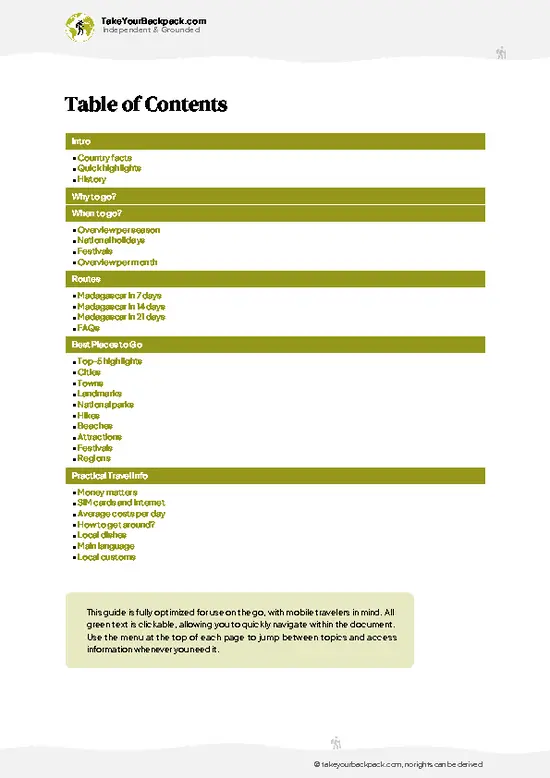
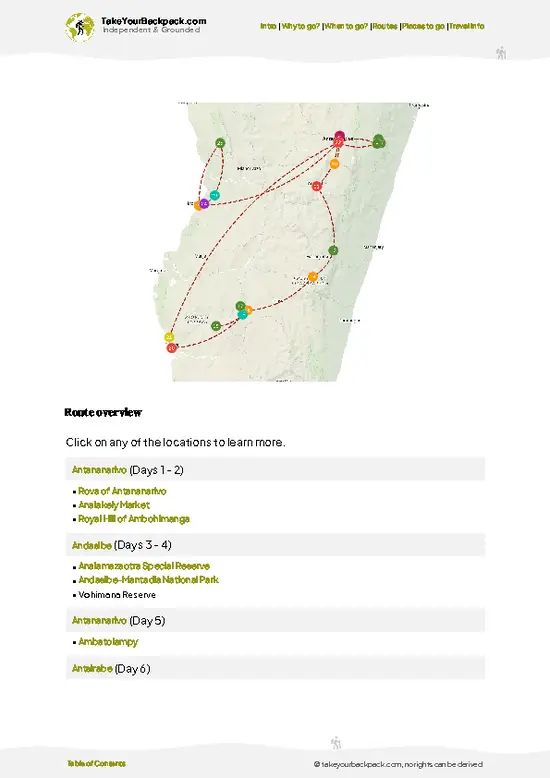
example page 0 from our offline Travel Guide for Madagascar
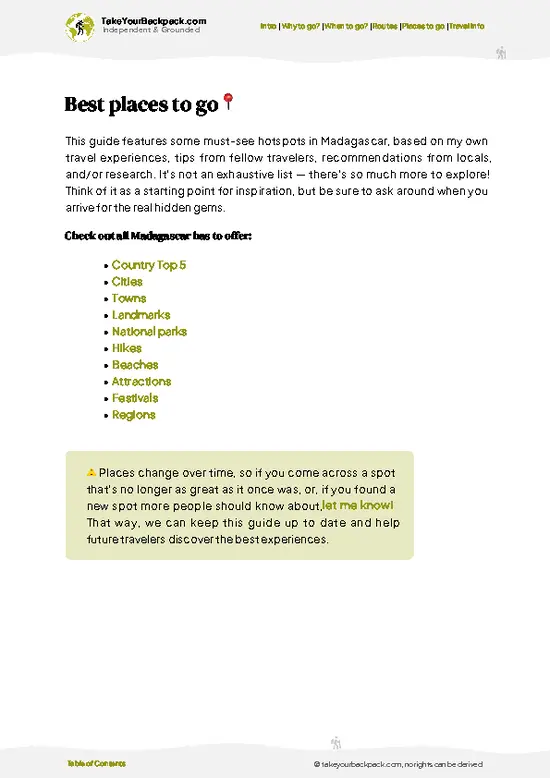
example page 1 from our offline Travel Guide for Madagascar
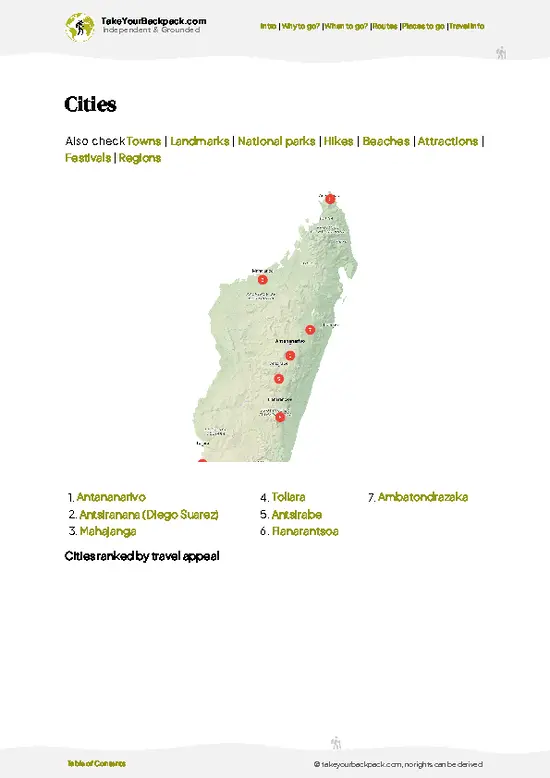
example page 2 from our offline Travel Guide for Madagascar
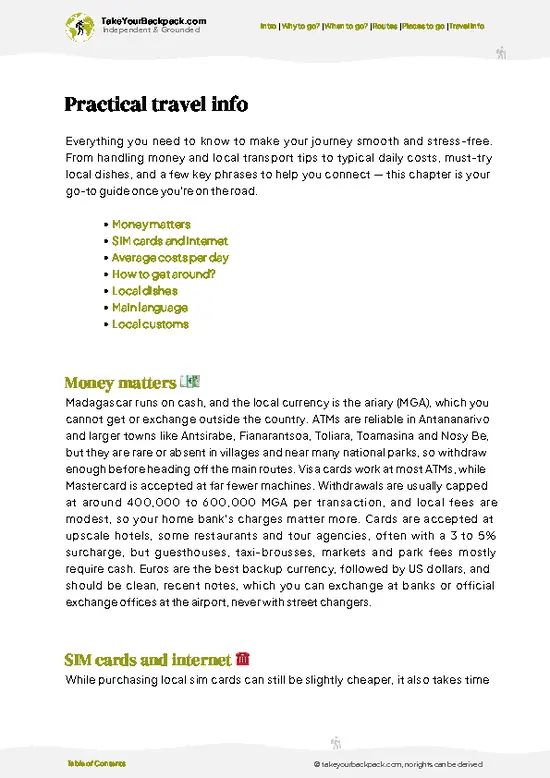
example page 3 from our offline Travel Guide for Madagascar
example page 4 from our offline Travel Guide for Madagascar
example page 5 from our offline Travel Guide for Madagascar
example page 6 from our offline Travel Guide for Madagascar
example page 7 from our offline Travel Guide for Madagascar
The digital guide (418 pages) contains:
110 highlights, ranked by travel appeal
Optimized 7, 14 & 21-day travel routes
Cities, national parks, landmarks, beaches
How to get around
Offline-friendly for travel without Wi-Fi
👉 Click to see all 30+ guide features

📅 Plan smarter in minutes, not weeks
Month by month travel advice
Festivals & national holidays
Budget expectations

🗺️ Go to the right places, skip the overrated ones
Honest pros & cons of destinations
Top hikes, parks & viewpoints
Lesser-known places most travelers miss
Clear “worth it vs skip it” guidance

🛏️ Travel smoothly without rookie mistakes
Best areas to stay
Transport systems explained simply
Common scams & safety advice
SIM cards, money & practical tips

🌍 Understand the country, not just visit it
Culture & traditions
52 Essential phrases & customs
Festivals worth planning around
Traveler-friendly historical context
Insights that make places more meaningful

📱 Built for real travel conditions
Fully downloadable PDF
Works completely offline
Optimized for phone use
Useful in remote areas & buses
Everything in one place
Save weeks of stressful planning
Get instant access to your full guide. 30‑day money-back guarantee.
+ Add another guide for just US$7.80

By proceeding you agree to our terms.
Sent to your inbox immediately after payment • 100% Secure Checkout
Best Backpacking Travel Advisor 2025 tourism awardBest Backpacking
Travel Advisor
2025
What others say about Take Your Backpack Guides:
⭐⭐⭐⭐⭐
Fantastic, amazing amount of information!
⭐⭐⭐⭐⭐
My goodness this is amazing, it's what I've been looking for hats off too you!
⭐⭐⭐⭐⭐
I think this is absolutely BRILLIANT
⭐⭐⭐⭐
Very complete and informative. It's still missing places, but I gotta to commend you
⭐⭐⭐⭐⭐
This is truly amazing, thank you, can't wait to explore it with my kids!
⭐⭐⭐⭐⭐
Awesome resource, thank you!
⭐⭐⭐⭐⭐
This is amazing! Can't wait to explore the ones I haven't seen
⭐⭐⭐⭐
I love this! Well done, great idea.
⭐⭐⭐⭐⭐
Thanks for taking the time to make this gem!
⭐⭐⭐⭐⭐
This might be the best website I've ever seen.
⭐⭐⭐⭐⭐
Congratulations, and thank you so much for your work; it's incredibly valuable.
⭐⭐⭐⭐
In all seriousness I think you did a great job pointing out the important spots
⭐⭐⭐⭐⭐
10/10 very good
⭐⭐⭐⭐⭐
As someone who's only just starting to visit regularly this is awesome, thank you.
⭐⭐⭐⭐
Thank you very much! I'm going to visit my dad, it's going to be very useful!
⭐⭐⭐⭐⭐
This is really cool! We'll be travelling for the first time and this definitely come in handy.
⭐⭐⭐⭐⭐
You are now our minister of culture, congratulations 👨‍💼
⭐⭐⭐⭐⭐
Just wanted to tell you that this is a pearl! Going to follow your recommendations.
⭐⭐⭐⭐⭐
This is so cool. I'll definitely be using the resource for my travels soon.
⭐⭐⭐⭐⭐
This is very impressive! Good work.
⭐⭐⭐⭐⭐
This is an amazing and informative site. Very well done!

🛏️ Where to stay?Top Areas to Stay

Yes — Madagascar has hostels and budget guesthouses concentrated in main hubs: Antananarivo (neighborhoods like Isoraka and Analakely), Nosy Be (Hell‑Ville/Andilana), Île Sainte‑Marie, Morondava, Toliara and park towns such as Andasibe.
In Antananarivo you get transport links, markets and nightlife but mixed safety and noisy streets so keep valuables and avoid walking alone after dark; Nosy Be offers the best beach infrastructure and boat access but higher prices and crowded high season.
Île Sainte‑Marie is quiet and ideal for whale season with limited services and infrequent transport; Morondava gives direct access to the baobabs with rustic low‑cost stays and few amenities; Toliara suits … read more 👉
Yes — Madagascar has hostels and budget guesthouses concentrated in main hubs: Antananarivo (neighborhoods like Isoraka and Analakely), Nosy Be (Hell‑Ville/Andilana), Île Sainte‑Marie, Morondava, Toliara and park towns such as Andasibe.
In Antananarivo you get transport links, markets and nightlife but mixed safety and noisy streets so keep valuables and avoid walking alone after dark; Nosy Be offers the best beach infrastructure and boat access but higher prices and crowded high season.
Île Sainte‑Marie is quiet and ideal for whale season with limited services and infrequent transport; Morondava gives direct access to the baobabs with rustic low‑cost stays and few amenities; Toliara suits southwest routes and diving but has patchy security and fewer hostels; Andasibe is the practical pick for park access and wildlife‑focused budget bungalows with very limited nightlife.

If you enjoy meeting fellow travelers, consider choosing hostels with high ratings for atmosphere. On the other hand, if you prefer having your own space, a hotel might be a better option.

MadagascarDiscover the Country

👋 Meet the founderWho’s Behind Take Your Backpack?

Johan, backpacker and founder of TakeYourBackpackHi, I’m Johan (Netherlands 🇳🇱), the creator of TakeYourBackpack. Over the past decade, I’ve backpacked through 80+ countries across six continents, gaining extensive experience with independent travel, long-term trips, and overland routes.

This site is built on a combination of firsthand travel experience and carefully curated insights from other backpackers. Many guides are based on places I’ve personally visited, while others bring together tips, observations, and practical advice shared by trusted travelers I’ve met along the way.

The goal is to provide realistic, experience-driven guidance — not generic itineraries — so you can explore destinations with better context, clearer expectations, and more confidence.

Get full Madagascar guide •
Instant download • 110 highlights • Full Offline guide