×

Madagascar🇲🇬 | beachesCap Sainte Mariesouthernmost point, fossil dunes, whale migration | things to do and best time to go

Explore Cap DiegoExplore Evatraha

Backpacking in Cap Sainte Marie
👍 Recommendedbeach ranked #17
By Johan Kruseman 🇳🇱 | Updated September 3, 2026

Here’s the trick nobody tells you: Cap Sainte Marie’s wind means you’ll never have to fight for a patch of shade—your sarong will flap like a flag, but you’ll have the place to yourself. Tucked at Madagascar’s southernmost tip, this beach is raw, remote, and feels like the edge of the world. The sand is clean, the crowds are mythical (as in, nonexistent), and the water is more for staring at than swimming—currents here are not for the casual dipper. No surf scene, no coral gardens, just wild coastline and a couple of shacks selling rice and beans if you’re lucky. Compared to Ifaty or Anakao, Cap Sainte Marie is the anti-resort: less comfort, more character. If you want easy, go north. If you want to brag about surviving the real south, this is your spot.

Discover everything you want to know in the 📖 Madagascar Travel Guide.
Loading the map 🌍
CLICK TO FILTER
cities
towns
villages
landmarks
national parks
hikes
beaches
attractions
festivals
regions
SHOW COUNTRY’S BESTSHOW ALL

✨ Why go?
Ranked #17 beach in Madagascar
What makes this beach worth visiting

Cap Sainte Marie beach is a backpacker’s haven in Madagascar, and for good reason. The laid-back atmosphere invites you to kick off your shoes and let the world slow down. It’s affordable, so you can splurge on that second coconut without guilt. The social scene is vibrant, with fellow travelers swapping stories over a sunset. Plus, it’s not just about swimming; this beach serves as a connector along the coastal route, a perfect pause to recharge before diving into the next adventure. Embrace the grind; sometimes, the best gold is found in the moments between.
Want to include Cap Sainte Marie in your Madagascar route?
Create a personalized Madagascar itinerary that includes Cap Sainte Marie and the places that fit your trip — based on your travel style, budget, and available time. Get your route in seconds.

Generate my trip

💡 HighlightsMust-see experiences and standout moments

  1. Stand at Madagascar’s southernmost tip — That small, lonely promontory is literally the island’s last word before the ocean. The light in the early morning is unreal, the wind strips away crowds (there aren’t any), and it’s one of those places where the map suddenly feels very real. Tip: go at sunrise for the best photos and quiet—no extra admission, just grit and a short walk.
  2. Hike the Cap Sainte Marie Special Reserve — This isn’t a manicured coastal park; it’s spiny forest and scrub you won’t find elsewhere, with weird succulents, thicket-adapted birds and a landscape that reads like southern Madagascar in a nutshell. Local guides know the secret micro-habitats and help you spot endemic plants and shore birds—cheap, educational, and you’re directly supporting people who protect the place.
read more 👉
  1. Stand at Madagascar’s southernmost tip — That small, lonely promontory is literally the island’s last word before the ocean. The light in the early morning is unreal, the wind strips away crowds (there aren’t any), and it’s one of those places where the map suddenly feels very real. Tip: go at sunrise for the best photos and quiet—no extra admission, just grit and a short walk.
  2. Hike the Cap Sainte Marie Special Reserve — This isn’t a manicured coastal park; it’s spiny forest and scrub you won’t find elsewhere, with weird succulents, thicket-adapted birds and a landscape that reads like southern Madagascar in a nutshell. Local guides know the secret micro-habitats and help you spot endemic plants and shore birds—cheap, educational, and you’re directly supporting people who protect the place. (Personal favorite: the weird, otherworldly plants and the total solitude you get on these trails.)
  3. Explore the wind-sculpted dunes and red cliffs — The contrast between white sand, red earth and blue sea here is dramatic and a photographer’s dream; the dunes form strange ridges and the cliffs drop to rough surf. It’s great for short, adventurous walks (watch your footing) and for catching the long shadows late-afternoon; also an easy spot to sit with a cheap snack and just watch the ocean churn.
  4. Low-cost pirogue trips and shoreline fishing with locals — Rather than a packaged tour, hop on a small pirogue with local fishers for a cheap, authentic glance at coastal livelihoods—casts, nets, and the odd lesson in reading waves. Trips are informal, flexible and give you front-row seats to the coast’s marine life (and the chance to bring back a share of the day’s catch). Night variant: some locals head out pre-dawn or at dusk for specific catches—ask politely and join if invited.
  5. Sea turtle tracks and night nesting walks (seasonal) — The beaches are remote enough that turtles still use them; during nesting season you can sometimes see fresh tracks or take a guided night walk to quietly observe nesting activity. It’s a strict, respectful experience with guides enforcing distance—no big commercial lighting, just the hush of the beach and a slow-moving giant. If you go off-season, tide pools and washed-up marine life still make for interesting tide-line foraging/exploration in daylight.
Spotted a mistake or missing something? Contact us.
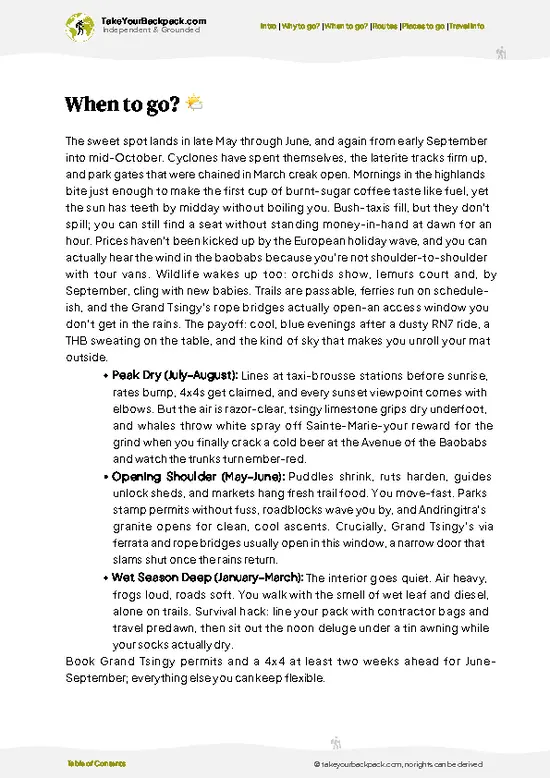
🌤️ When to go?Weather, crowds, and seasonal trade-offs


  • Weather: The dry season from May to October is your best bet—less rain means fewer mudslides and more beach time. The wet season (November to April) brings heavy rains and cyclones, turning your beach day into a soggy mess.

  • Temperature: Expect a comfy 20-25°C (68-77°F) during the dry months. The wet season heats up to 27-30°C (81-86°F), but humidity spikes, making it feel like a sauna with sand.

  • Daylight Hours: Roughly 11 to 12 hours of daylight year-round, so you won’t be racing the sun too much. Just remember, sunsets here are worth lingering for.

  • Crowds: This beach is off the beaten path, so crowds are minimal even in peak season. You’ll mostly be sharing the sand with locals and the occasional curious lemur.

  • Seasonal Activities: Dry season is prime for snorkeling and hiking
read more 👉

  • Weather: The dry season from May to October is your best bet—less rain means fewer mudslides and more beach time. The wet season (November to April) brings heavy rains and cyclones, turning your beach day into a soggy mess.

  • Temperature: Expect a comfy 20-25°C (68-77°F) during the dry months. The wet season heats up to 27-30°C (81-86°F), but humidity spikes, making it feel like a sauna with sand.

  • Daylight Hours: Roughly 11 to 12 hours of daylight year-round, so you won’t be racing the sun too much. Just remember, sunsets here are worth lingering for.

  • Crowds: This beach is off the beaten path, so crowds are minimal even in peak season. You’ll mostly be sharing the sand with locals and the occasional curious lemur.

  • Seasonal Activities: Dry season is prime for snorkeling and hiking nearby trails. Wet season limits outdoor fun but boosts lush greenery if you’re into soggy jungle vibes.

  • Price Fluctuations: Prices for accommodation and transport spike slightly in the dry season, but it’s worth paying for reliable weather. Wet season deals exist but come with the risk of canceled plans.


Pro-tip: Aim for late May or early October—weather’s sweet, crowds are low, and you dodge the tourist rush and cyclone drama.


source: climatestotravel.comJANJanuary: below average for travelingFEBFebruary: below average for travelingMARMarch: below average for travelingAPRApril: fair for travelingMAYMay: highly recommended for travelingJUNJune: excellent for travelingJULJuly: excellent for travelingAUGAugust: excellent for travelingSEPSeptember: excellent for travelingOCTOctober: highly recommended for travelingNOVNovember: fair for travelingDECDecember: below average for traveling
when-to-go

✈️ The backpacker research shortcutMadagascar Travel Guide

An offline-friendly backpacking guide with optimized travel routes, ranked highlights, transport advice, and the best areas to stay.
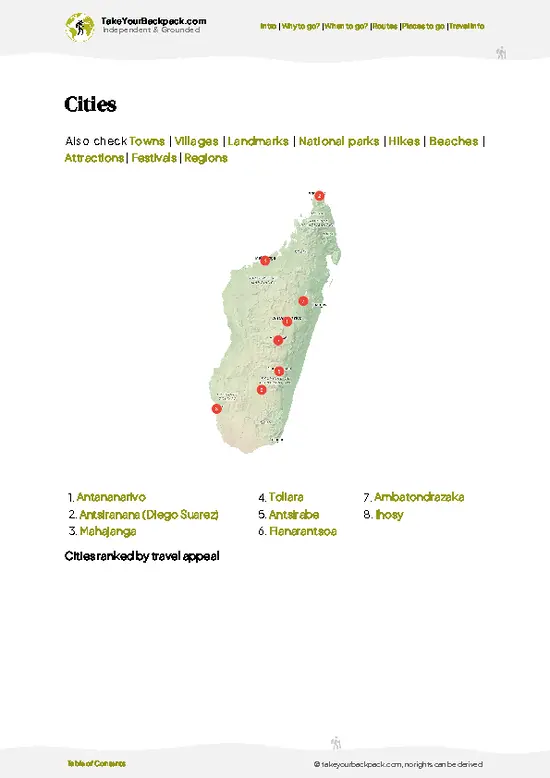
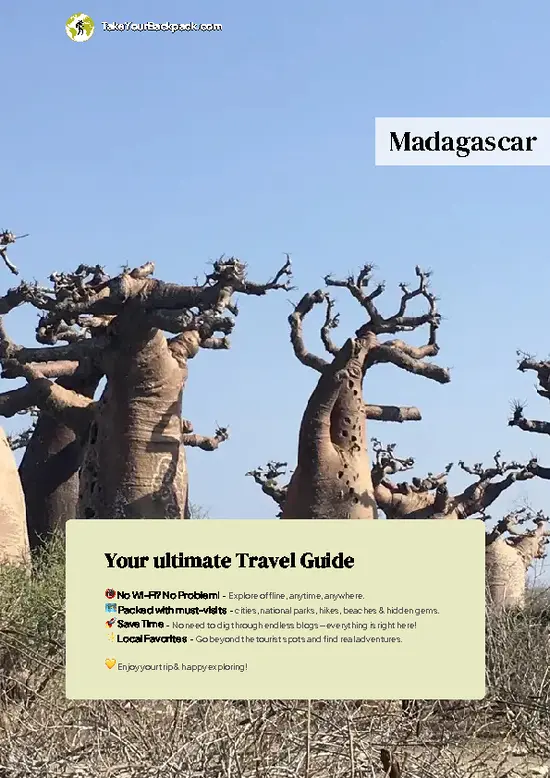
example page 0 from our offline Travel Guide for Madagascar
example page 1 from our offline Travel Guide for Madagascar
example page 2 from our offline Travel Guide for Madagascar
example page 3 from our offline Travel Guide for Madagascar
example page 4 from our offline Travel Guide for Madagascar
example page 5 from our offline Travel Guide for Madagascar
example page 6 from our offline Travel Guide for Madagascar
example page 7 from our offline Travel Guide for Madagascar
The digital guide (418 pages) contains:
110 highlights, ranked by travel appeal
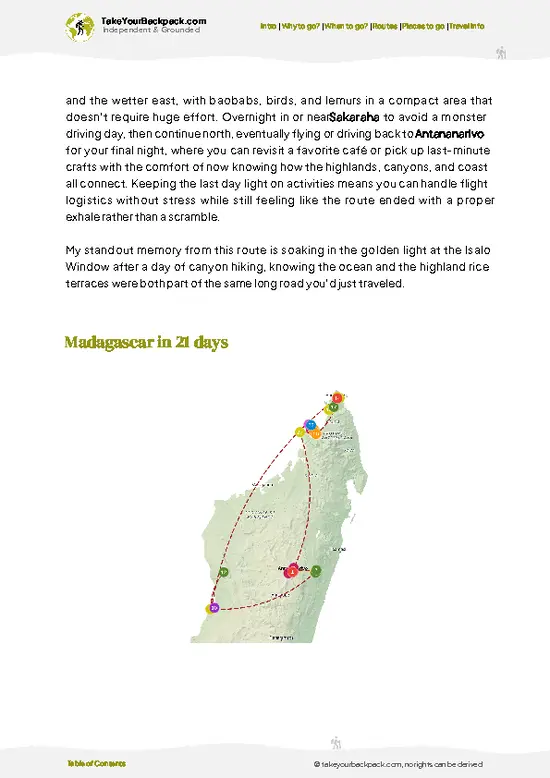
Optimized 7, 14 & 21-day travel routes
Cities, national parks, landmarks, beaches
How to get around
Offline-friendly for travel without Wi-Fi
👉 Click to see all 30+ guide features

📅 Plan smarter in minutes, not weeks
Month by month travel advice
Festivals & national holidays
Budget expectations

🗺️ Go to the right places, skip the overrated ones
Honest pros & cons of destinations
Top hikes, parks & viewpoints
Lesser-known places most travelers miss
Clear “worth it vs skip it” guidance

🛏️ Travel smoothly without rookie mistakes
Best areas to stay
Transport systems explained simply
Common scams & safety advice
SIM cards, money & practical tips

🌍 Understand the country, not just visit it
Culture & traditions
52 Essential phrases & customs
Festivals worth planning around
Traveler-friendly historical context
Insights that make places more meaningful

📱 Built for real travel conditions
Fully downloadable PDF
Works completely offline
Optimized for phone use
Useful in remote areas & buses
Everything in one place
Save weeks of stressful planning
Get instant access to your full guide. 30‑day money-back guarantee.
+ Add another guide for just US$7.80

By proceeding you agree to our terms.
Sent to your inbox immediately after payment • 100% Secure Checkout
Best Backpacking Travel Advisor 2025 tourism awardBest Backpacking
Travel Advisor
2025
What others say about Take Your Backpack Guides:
⭐⭐⭐⭐⭐
Fantastic, amazing amount of information!
⭐⭐⭐⭐⭐
My goodness this is amazing, it's what I've been looking for hats off too you!
⭐⭐⭐⭐⭐
I think this is absolutely BRILLIANT
⭐⭐⭐⭐
Very complete and informative. It's still missing places, but I gotta to commend you
⭐⭐⭐⭐⭐
This is truly amazing, thank you, can't wait to explore it with my kids!
⭐⭐⭐⭐⭐
Awesome resource, thank you!
⭐⭐⭐⭐⭐
This is amazing! Can't wait to explore the ones I haven't seen
⭐⭐⭐⭐
I love this! Well done, great idea.
⭐⭐⭐⭐⭐
Thanks for taking the time to make this gem!
⭐⭐⭐⭐⭐
This might be the best website I've ever seen.
⭐⭐⭐⭐⭐
Congratulations, and thank you so much for your work; it's incredibly valuable.
⭐⭐⭐⭐
In all seriousness I think you did a great job pointing out the important spots
⭐⭐⭐⭐⭐
10/10 very good
⭐⭐⭐⭐⭐
As someone who's only just starting to visit regularly this is awesome, thank you.
⭐⭐⭐⭐
Thank you very much! I'm going to visit my dad, it's going to be very useful!
⭐⭐⭐⭐⭐
This is really cool! We'll be travelling for the first time and this definitely come in handy.
⭐⭐⭐⭐⭐
You are now our minister of culture, congratulations 👨‍💼
⭐⭐⭐⭐⭐
Just wanted to tell you that this is a pearl! Going to follow your recommendations.
⭐⭐⭐⭐⭐
This is so cool. I'll definitely be using the resource for my travels soon.
⭐⭐⭐⭐⭐
This is very impressive! Good work.
⭐⭐⭐⭐⭐
This is an amazing and informative site. Very well done!

🛏️ Where to stay?Where staying makes the most sense

Cap Sainte Marie beach is a slice of paradise, but finding the right spot to crash can feel like a treasure hunt. Aim for the areas around the beach where budget travelers congregate. Look for local guesthouses or bungalows that offer a laid-back vibe and a chance to swap stories over a cold drink.

The social scene thrives here, with fellow backpackers eager to share tips or plan the next adventure. Safety is generally solid, but stick to well-lit paths after dark. Embrace the quirks of local life—like the occasional goat wandering through your yard—and you’ll find the grind of travel becomes part of the charm.

🛡️ SafetySafety Tips and Common Scams in Cap Sainte Marie

Cap Sainte Marie beach is a laid-back paradise, but it’s not without its quirks. The currents can be playful, so keep an eye on the waves—especially if you’re not a strong swimmer. Locals know the best spots, often swimming where the water feels just right.

Watch for jellyfish; they’re not the cuddly sea creatures you’d hope for. Sun exposure can be intense, so slather on that sunscreen and take breaks under the shade. Theft isn’t rampant, but keep your valuables close. Enjoy the beach, but stay aware—it’s all part of the adventure!

FAQFrequently asked questions about Cap Sainte Marie

You get to Cap Sainte Marie beach by traveling to the southernmost point of Madagascar, near the town of Toliara. The beach is accessible via a 40 km drive from Toliara, typically by 4x4 or organized tour, as the roads can be rough. It is advisable to arrange transport in advance due to limited public options.
Cap Sainte Marie beach is not ideal for swimming or surfing due to strong currents and rough seas. However, snorkeling can be done in some sheltered spots nearby, especially during the dry season from May to October when waters are clearer. Always check local conditions before entering the water.
Yes, Cap Sainte Marie beach is free to visit. There may be a small fee if you enter the nearby Cap Sainte Marie Nature Reserve, usually around 10,000 Ariary (about 3 USD), but access to the beach itself does not require payment.
⚠️ Things can change over time, so always validate details locally before you go.

Other Malagasy beaches near Cap Sainte Marie

Explore more nearby:

  • Lavanono—surf point, remote village, arid hills| 27 km away
  • Faux Cap—windswept cliffs, remote fishing, arid landscape| 196 km away
  • Evatraha—canal crossing, forested hills, isolated beach| 207 km away

💡 Not sure where to go next?
Create a personalized itinerary for Madagascar including Cap Sainte Marie and the places that fit your trip.

Generate my itinerary

👉 Discover all beaches

Or checkout all Madagascar has to offer (think cities, towns, villages, national parks, hikes, beaches, festivals)
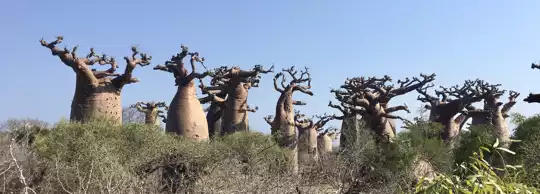
Country photo of Madagascar

We 💚 feedbackSumming up the experience

Cap Sainte Marie beach is a slice of paradise where the sand feels like powdered sugar and the sunsets are pure magic. But let’s be real: getting there is a trek, and the roads can be a comedy of errors. Worth it? Absolutely. Just pack your patience.

✈️ When did I visit Madagascar?
Madagascar I went backpacking in October 2019. With a friend I rented a 4WD and drove around the southern part of Madagascar.

✍️ Help improve this page!
The information on this page is based on my own backpacking experience in Madagascar, supplemented with up-to-date research and feedback from other travelers. Travel details can change, so if you notice anything outdated or incomplete, feel free to let me know.


🙋‍♂️ Give feedback

👋 Meet the founderWho’s Behind Take Your Backpack?

Johan, backpacker and founder of TakeYourBackpackHi, I’m Johan (Netherlands 🇳🇱), the creator of TakeYourBackpack. Over the past decade, I’ve backpacked through 80+ countries across six continents, gaining extensive experience with independent travel, long-term trips, and overland routes.

This site is built on a combination of firsthand travel experience and carefully curated insights from other backpackers. Many guides are based on places I’ve personally visited, while others bring together tips, observations, and practical advice shared by trusted travelers I’ve met along the way.

The goal is to provide realistic, experience-driven guidance — not generic itineraries — so you can explore destinations with better context, clearer expectations, and more confidence.

Get full Madagascar guide •
Instant download • 110 highlights • Full Offline guide