×

Malawi🇲🇼 | townsChitiparemote highlands, tri-border area, local markets, ethnic diversity | things to do and best time to go

Explore PhalombeExplore Chilumba

Backpacking in Chitipa
👍 Recommendedtown ranked #8
By Johan Kruseman 🇳🇱 | Updated June 8, 2026

A decade ago, Chitipa was the Malawi you’d only reach if you’d already run out of roads—dusty, remote, and so far north it felt like a rumor. Today, it’s still a frontier town, but the edges are softer: you’ll find a few guesthouses with running water, a market that hums with cross-border trade, and a handful of colonial-era buildings that survived the years. Chitipa sits at Malawi’s northern tip, wedged between Zambia and Tanzania, and it’s a crossroads more than a destination. Backpackers come for the bragging rights, the wild landscapes, and the chance to see a slice of Malawi untouched by mass tourism. Don’t expect nightlife or hostels; expect friendly stares, low prices, and a sense of being far from the tourist trail. It’s safe, but basic—more raw than Mzuzu, less cosmopolitan than Karonga, and perfect if you want to feel like you’ve truly left the map.

Discover everything you want to know in the 📖 Malawi Travel Guide.


Get your Malawi guide
87 ranked highlights, routes & tips, works offline (355 pages)
Loading the map 🌍
CLICK TO FILTER
cities
towns
villages
landmarks
national parks
hikes
beaches
attractions
festivals
regions
SHOW COUNTRY’S BESTSHOW ALL

✨ Why go?
Ranked #8 town in Malawi
Why Chitipa should be on your travel list

Chitipa is a strategic stop for backpackers navigating Malawi. It offers a solid basecamp for day trips, making it easy to explore the surrounding beauty without the hassle of constant packing. The hostels here are budget-friendly and often buzzing with fellow travelers, creating a communal vibe that’s perfect for sharing tips and stories.

You’ll find affordable food options that reflect local flavors, fueling your adventures without draining your wallet. The city is walkable, allowing you to soak in the atmosphere at your own pace. While nightlife isn’t wild, there are cozy spots to unwind after a day of exploration. Plus, Chitipa serves as a convenient jumping-off point for onward travel, connecting you to other destinations seamlessly. If you’re looking for a place that balances comfort and adventure, Chitipa fits the bill.
Want to include Chitipa in your Malawi route?
Create a personalized Malawi itinerary that includes Chitipa and the places that fit your trip — based on your travel style, budget, and available time. Get your route in seconds.

Generate my trip

💡 HighlightsMust-see experiences and standout moments

  • Chitipa Central Market — The town’s beating heart: a chaotic, colorful market where farmers from surrounding hills sell maize, beans, green vegetables, peanuts and fresh fish brought down from nearby lakes. Great for people-watching, cheap local food, buying fresh produce for a trek, and seeing the real trade patterns that run this border-town economy.
  • Main Trading Street and Cross-Border Market Area — The stretch of shops and informal stalls along the main road that links Chitipa to the Tanzania and Zambia borders. Visiting here gives a firsthand feel for cross-border commerce, barter culture, traditional dress, and the small wholesale businesses that supply the region; it’s where you’ll see long-distance traders, language mix, and everyday life in action.
  • Town Viewpoint / Local Hill
read more 👉
  • Chitipa Central Market — The town’s beating heart: a chaotic, colorful market where farmers from surrounding hills sell maize, beans, green vegetables, peanuts and fresh fish brought down from nearby lakes. Great for people-watching, cheap local food, buying fresh produce for a trek, and seeing the real trade patterns that run this border-town economy.
  • Main Trading Street and Cross-Border Market Area — The stretch of shops and informal stalls along the main road that links Chitipa to the Tanzania and Zambia borders. Visiting here gives a firsthand feel for cross-border commerce, barter culture, traditional dress, and the small wholesale businesses that supply the region; it’s where you’ll see long-distance traders, language mix, and everyday life in action.
  • Town Viewpoint / Local Hill Overlook — A short walk uphill from the central area gives you a panoramic view over Chitipa’s patchwork fields, ridges and the surrounding borderlands. The overlook is worth the climb at golden hour for landscape photos, to orient yourself geographically, and to watch village life spread out below.
A few real, visitable highlights just outside Chitipa that make perfect day trips are Misuku Hills Forest Reserve (excellent short hikes and birding), Nyika National Park (plateau scenery and wildlife), and the Lake Malawi shore and Karonga area for beaches and lake-side culture.
Spotted a mistake or missing something? Contact us.
🏘️ NeighborhoodsUnderstanding the local layout

Chitipa, Malawi, offers a unique blend of local culture and accessibility for backpackers. Here’s how the neighborhoods stack up:

Chitipa Town Center: This is the heartbeat of the city. It’s bustling, with markets and shops lining the streets. Affordable accommodations are plentiful, making it ideal for budget travelers. Walkability is high, but expect some noise. Great for short stays, you’ll find local eateries and a lively atmosphere.

Chitipa Hill: A quieter escape with stunning views. This area is perfect for those seeking a peaceful retreat after a day of exploration. Accommodations here can be a bit pricier, but the tranquility is worth it. It’s less walkable, so be prepared for some uphill treks. Best for longer stays where you can soak in the scenery.

Malawi Lake Shore: Just a short … read more 👉
Chitipa, Malawi, offers a unique blend of local culture and accessibility for backpackers. Here’s how the neighborhoods stack up:

Chitipa Town Center: This is the heartbeat of the city. It’s bustling, with markets and shops lining the streets. Affordable accommodations are plentiful, making it ideal for budget travelers. Walkability is high, but expect some noise. Great for short stays, you’ll find local eateries and a lively atmosphere.

Chitipa Hill: A quieter escape with stunning views. This area is perfect for those seeking a peaceful retreat after a day of exploration. Accommodations here can be a bit pricier, but the tranquility is worth it. It’s less walkable, so be prepared for some uphill treks. Best for longer stays where you can soak in the scenery.

Malawi Lake Shore: Just a short ride from town, this area offers a laid-back vibe with lakeside activities. It’s a bit more touristy, with higher prices, but the sunset views are spectacular. Ideal for both short and longer stays, you can enjoy a mix of nightlife and relaxation, depending on where you choose to settle.

⌛️ 1 dayHow to make the most of one day

Chitipa, Malawi, is a vibrant hub where local culture thrives amidst stunning landscapes. Nestled near Lake Malawi, it’s a place where you can experience authentic Malawian life without the tourist crowds.

Start your day at the bustling Chitipa Market. The aroma of fresh produce fills the air as vendors showcase colorful fruits and vegetables. Grab a local breakfast of nsima and beans from a street stall. It’s hearty and will fuel your adventures ahead.

After breakfast, take a stroll to the nearby Chitipa Hill. The panoramic views of the surrounding countryside are breathtaking. This spot isn’t on every tourist’s radar, but it offers a glimpse into daily life as you might encounter locals tending to their fields.

In the afternoon, head to the Chitipa Cultural Center. Here, you can engage … read more 👉
Chitipa, Malawi, is a vibrant hub where local culture thrives amidst stunning landscapes. Nestled near Lake Malawi, it’s a place where you can experience authentic Malawian life without the tourist crowds.

Start your day at the bustling Chitipa Market. The aroma of fresh produce fills the air as vendors showcase colorful fruits and vegetables. Grab a local breakfast of nsima and beans from a street stall. It’s hearty and will fuel your adventures ahead.

After breakfast, take a stroll to the nearby Chitipa Hill. The panoramic views of the surrounding countryside are breathtaking. This spot isn’t on every tourist’s radar, but it offers a glimpse into daily life as you might encounter locals tending to their fields.

In the afternoon, head to the Chitipa Cultural Center. Here, you can engage with artisans creating traditional crafts. It’s a chance to learn about local customs and perhaps pick up a unique souvenir.

As evening approaches, make your way to the shores of Lake Malawi. The sunset casts a golden hue over the water, creating a perfect backdrop for reflection. Enjoy a simple dinner at a lakeside eatery, where you can savor fresh fish caught that day.

Chitipa may not be the most famous destination, but its charm lies in the connections you make and the experiences you share. Embrace the rhythm of the city, and you’ll leave with memories that linger long after you’ve gone.
Turn your Chitipa visit into an Malawi adventure
Build a complete Malawi route with Chitipa, hidden gems, must-see destinations, and realistic travel times included.

Generate my trip

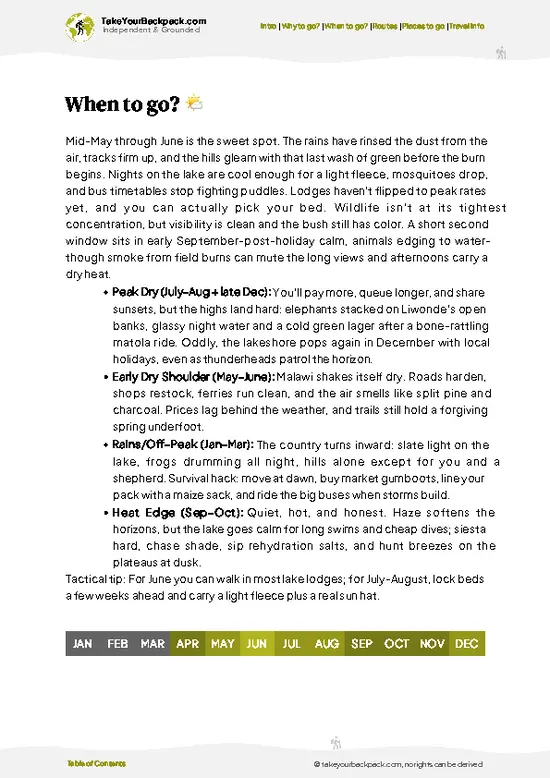
🌤️ When to go?Choosing the right time of year


  • Topic: Weather – Chitipa’s dry season from May to October offers clear skies and minimal rain, ideal for trekking and outdoor activities. The wet season, November to April, brings heavy rains that can turn trails muddy and unpredictable.

  • Topic: Temperature – Expect daytime highs around 22-26°C (72-79°F) during the dry season, with cooler nights dropping to 10-14°C (50-57°F). The wet season is warmer and more humid, with highs reaching 28-30°C (82-86°F), which can sap your energy on the trail.

  • Topic: Daylight Hours – Daylight remains fairly consistent year-round, roughly 11 to 12 hours, giving you plenty of time for exploration regardless of season.

  • Topic: Crowds – Chitipa is off the beaten path, so crowds are minimal year-round. However, the dry season sees a slight uptick in visitors,
read more 👉

  • Topic: Weather – Chitipa’s dry season from May to October offers clear skies and minimal rain, ideal for trekking and outdoor activities. The wet season, November to April, brings heavy rains that can turn trails muddy and unpredictable.

  • Topic: Temperature – Expect daytime highs around 22-26°C (72-79°F) during the dry season, with cooler nights dropping to 10-14°C (50-57°F). The wet season is warmer and more humid, with highs reaching 28-30°C (82-86°F), which can sap your energy on the trail.

  • Topic: Daylight Hours – Daylight remains fairly consistent year-round, roughly 11 to 12 hours, giving you plenty of time for exploration regardless of season.

  • Topic: Crowds – Chitipa is off the beaten path, so crowds are minimal year-round. However, the dry season sees a slight uptick in visitors, mostly local tourists and regional hikers.

  • Topic: Seasonal Activities – Dry months are perfect for hiking and wildlife spotting. The wet season brings lush landscapes but limits accessibility and outdoor options.

  • Topic: Price Fluctuations – Accommodation and transport costs dip during the wet season due to lower demand, but you trade that saving for tougher travel conditions.


Pro-tip: Aim for the shoulder months of May or October to balance pleasant weather, fewer crowds, and moderate prices—maximizing your comfort without breaking the bank.


source: climatestotravel.comJANJanuary: fair for travelingFEBFebruary: fair for travelingMARMarch: fair for travelingAPRApril: fair for travelingMAYMay: highly recommended for travelingJUNJune: excellent for travelingJULJuly: excellent for travelingAUGAugust: excellent for travelingSEPSeptember: excellent for travelingOCTOctober: highly recommended for travelingNOVNovember: fair for travelingDECDecember: fair for traveling
when-to-go

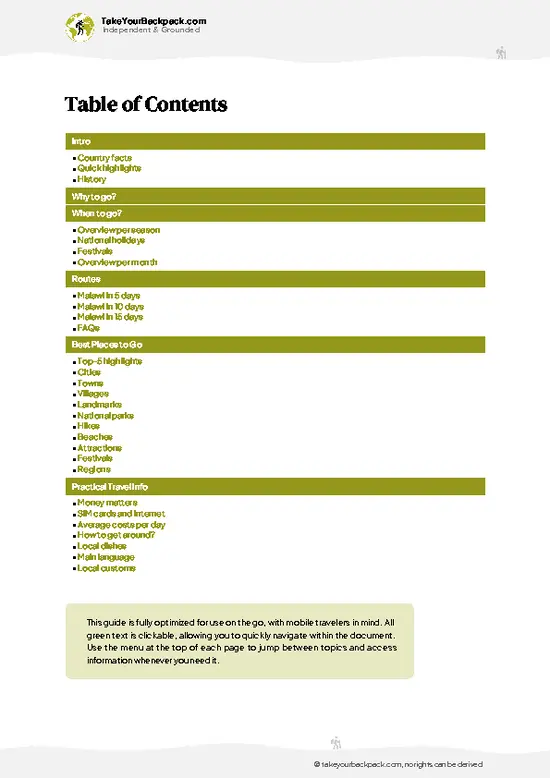
✈️ The backpacker research shortcutMalawi Travel Guide

An offline-friendly backpacking guide with optimized travel routes, ranked highlights, transport advice, and the best areas to stay.
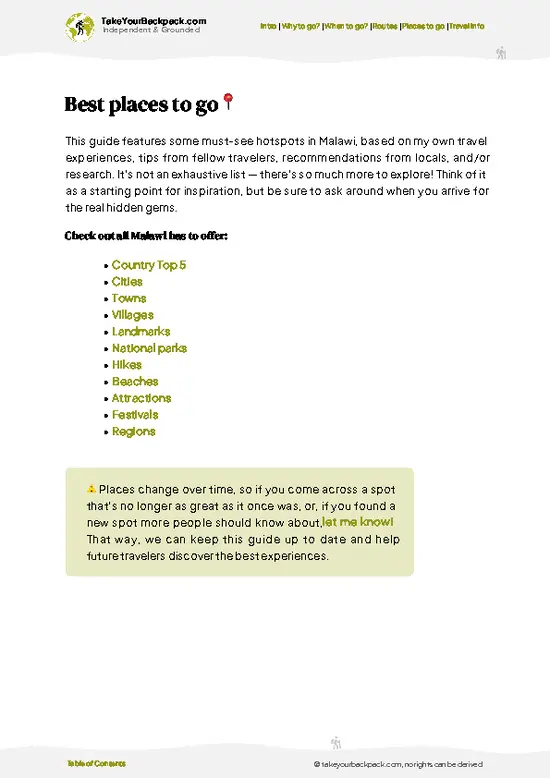
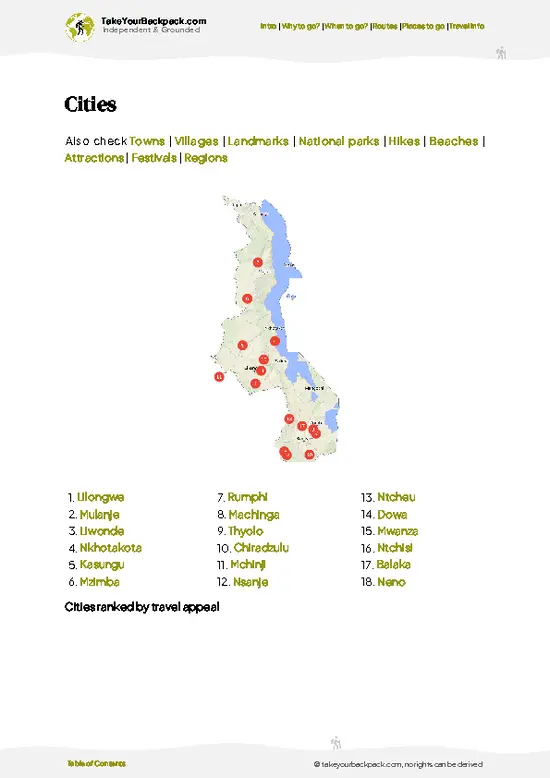
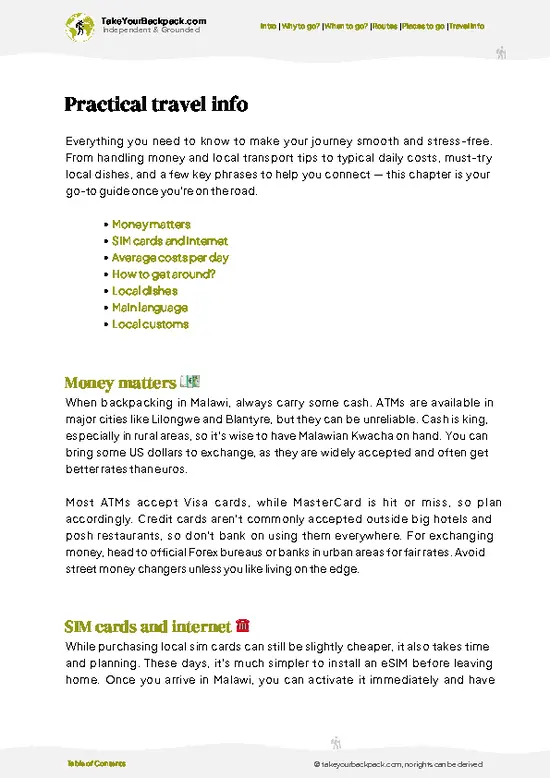
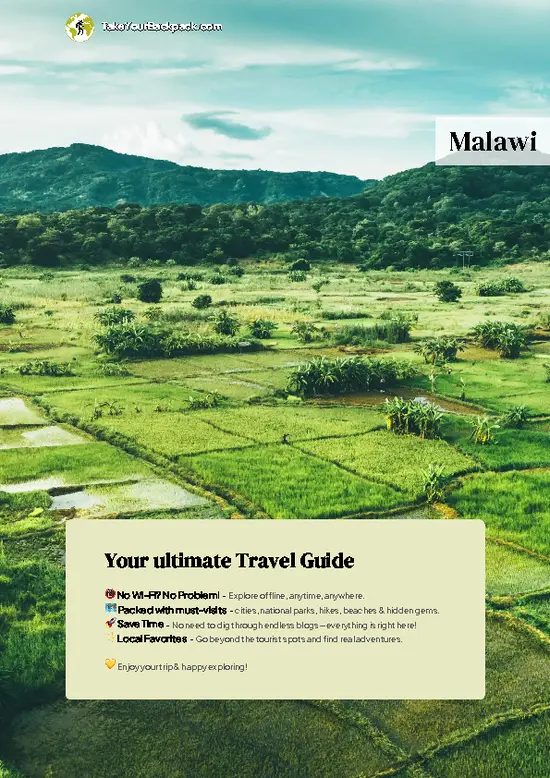
example page 0 from our offline Travel Guide for Malawi
example page 1 from our offline Travel Guide for Malawi
example page 2 from our offline Travel Guide for Malawi
example page 3 from our offline Travel Guide for Malawi
example page 4 from our offline Travel Guide for Malawi
example page 5 from our offline Travel Guide for Malawi
example page 6 from our offline Travel Guide for Malawi
example page 7 from our offline Travel Guide for Malawi
The digital guide (355 pages) contains:
87 highlights, ranked by travel appeal
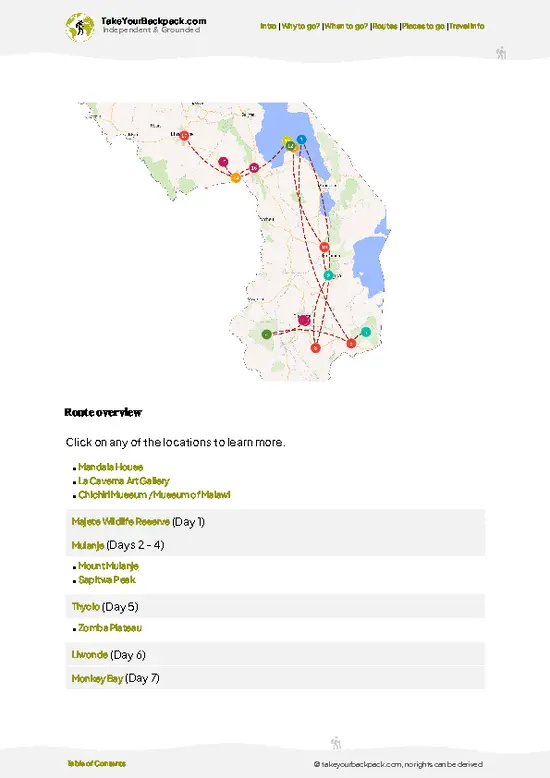
Optimized 5, 10 & 15-day travel routes
Cities, national parks, landmarks, beaches
How to get around
Offline-friendly for travel without Wi-Fi
👉 Click to see all 30+ guide features

📅 Plan smarter in minutes, not weeks
Month by month travel advice
Festivals & national holidays
Budget expectations

🗺️ Go to the right places, skip the overrated ones
Honest pros & cons of destinations
Top hikes, parks & viewpoints
Lesser-known places most travelers miss
Clear “worth it vs skip it” guidance

🛏️ Travel smoothly without rookie mistakes
Best areas to stay
Transport systems explained simply
Common scams & safety advice
SIM cards, money & practical tips

🌍 Understand the country, not just visit it
Culture & traditions
52 Essential phrases & customs
Festivals worth planning around
Traveler-friendly historical context
Insights that make places more meaningful

📱 Built for real travel conditions
Fully downloadable PDF
Works completely offline
Optimized for phone use
Useful in remote areas & buses
Everything in one place
Save weeks of stressful planning
Get instant access to your full guide. 30‑day money-back guarantee.


By proceeding you agree to our terms.
Sent to your inbox immediately after payment • 100% Secure Checkout
Best Backpacking Travel Advisor 2025 tourism awardBest Backpacking
Travel Advisor
2025
What others say about Take Your Backpack Guides:
⭐⭐⭐⭐⭐
Fantastic, amazing amount of information!
⭐⭐⭐⭐⭐
My goodness this is amazing, it's what I've been looking for hats off too you!
⭐⭐⭐⭐⭐
I think this is absolutely BRILLIANT
⭐⭐⭐⭐
Very complete and informative. It's still missing places, but I gotta to commend you
⭐⭐⭐⭐⭐
This is truly amazing, thank you, can't wait to explore it with my kids!
⭐⭐⭐⭐⭐
Awesome resource, thank you!
⭐⭐⭐⭐⭐
This is amazing! Can't wait to explore the ones I haven't seen
⭐⭐⭐⭐
I love this! Well done, great idea.
⭐⭐⭐⭐⭐
Thanks for taking the time to make this gem!
⭐⭐⭐⭐⭐
This might be the best website I've ever seen.
⭐⭐⭐⭐⭐
Congratulations, and thank you so much for your work; it's incredibly valuable.
⭐⭐⭐⭐
In all seriousness I think you did a great job pointing out the important spots
⭐⭐⭐⭐⭐
10/10 very good
⭐⭐⭐⭐⭐
As someone who's only just starting to visit regularly this is awesome, thank you.
⭐⭐⭐⭐
Thank you very much! I'm going to visit my dad, it's going to be very useful!
⭐⭐⭐⭐⭐
This is really cool! We'll be travelling for the first time and this definitely come in handy.
⭐⭐⭐⭐⭐
You are now our minister of culture, congratulations 👨‍💼
⭐⭐⭐⭐⭐
Just wanted to tell you that this is a pearl! Going to follow your recommendations.
⭐⭐⭐⭐⭐
This is so cool. I'll definitely be using the resource for my travels soon.
⭐⭐⭐⭐⭐
This is very impressive! Good work.
⭐⭐⭐⭐⭐
This is an amazing and informative site. Very well done!

🛏️ Where to stay?Choosing the right base

In Chitipa, the backpacker sweet spot is the town center and its immediate surroundings. This area strikes a balance between safety and social energy, making it the natural hub for budget travelers and solo adventurers. Staying here means you’re within walking distance of local markets, eateries, and transport links, which cuts down on time and transport costs—key when every kwacha counts. The vibe is low-key but lively enough to meet fellow travelers without the forced social scenes you find in bigger cities.

Hostel options cluster around this core, offering basic but clean accommodations that … read more 👉
In Chitipa, the backpacker sweet spot is the town center and its immediate surroundings. This area strikes a balance between safety and social energy, making it the natural hub for budget travelers and solo adventurers. Staying here means you’re within walking distance of local markets, eateries, and transport links, which cuts down on time and transport costs—key when every kwacha counts. The vibe is low-key but lively enough to meet fellow travelers without the forced social scenes you find in bigger cities.

Hostel options cluster around this core, offering basic but clean accommodations that prioritize communal spaces over luxury. This setup encourages interaction, perfect for swapping stories or planning your next move. Compared to the outskirts or more residential neighborhoods, the center feels more secure and connected, reducing the risk of isolation or unnecessary taxi fares. You’re trading a bit of quiet for convenience and camaraderie, but that’s the trade-off that turns a simple stay into a memorable chapter of your trip.

🚌 Getting aroundHow to get around Chitipa

Chitipa moves at its own rhythm—less a clockwork machine and more a pulse you learn to read. It’s not about catching a bus at the exact minute or expecting a train to run like clockwork. Instead, it’s a dance of patience and intuition, where schedules blur and the real flow is shaped by the people who live here. You’ll find that time bends around the city’s needs, not the other way around. Understanding this is your first win: you’re not fighting the system, you’re playing it smart.


  • Walking: The ultimate budget option and the best way to absorb Chitipa’s character. Streets are compact and walkable, but be ready for uneven paths and occasional steep stretches. No cost, full control over your pace, and the chance to discover unexpected corners.


  • Local Minibuses (Matatus): These are the
read more 👉
Chitipa moves at its own rhythm—less a clockwork machine and more a pulse you learn to read. It’s not about catching a bus at the exact minute or expecting a train to run like clockwork. Instead, it’s a dance of patience and intuition, where schedules blur and the real flow is shaped by the people who live here. You’ll find that time bends around the city’s needs, not the other way around. Understanding this is your first win: you’re not fighting the system, you’re playing it smart.


  • Walking: The ultimate budget option and the best way to absorb Chitipa’s character. Streets are compact and walkable, but be ready for uneven paths and occasional steep stretches. No cost, full control over your pace, and the chance to discover unexpected corners.


  • Local Minibuses (Matatus): These are the city’s lifeblood for short to medium distances. They run roughly from 6 AM to 7 PM, with fares around 200-500 MWK depending on distance. Expect crowded, lively rides with frequent stops. Speed varies—rush hour can slow you down—but they’re unbeatable for budget and immersion.


  • Shared Taxis: A step up in comfort and speed, shared taxis fill in gaps where minibuses don’t reach. They operate on a semi-flexible schedule, often leaving once full, typically between 7 AM and 6 PM. Prices hover around 1,000-1,500 MWK. Faster and less cramped, but you sacrifice some spontaneity and pay a bit more.


  • Bicycle Rentals: For those who want to cover more ground without breaking the bank or relying on public transport, renting a bike is a smart move. Costs are about 3,000-5,000 MWK per day. It’s faster than walking, gives you freedom, and adds a layer of physical effort—perfect if you want to control your own schedule but don’t mind a workout.


  • Intercity Buses: If you’re planning to leave Chitipa or travel longer distances, these buses run less frequently—usually early morning departures around 6-8 AM and late afternoon around 4-6 PM. Tickets cost 3,000-5,000 MWK. They’re slower than shared taxis but more comfortable and reliable for longer hauls.


In Chitipa, every choice is a trade-off between time, money, and comfort. Walking costs nothing but demands time and energy. Minibuses save cash but test your patience and personal space. Shared taxis speed things up at a price. Bikes give you freedom with a physical price tag. And intercity buses balance comfort and cost for longer trips. Knowing these trade-offs lets you tailor your journey to exactly how you want to experience the city—whether that’s squeezing every kwacha or cruising with ease.

👛 Costs (as of 28 February 2026)How expensive it really is

Backpacking in Chitipa, Malawi, offers a straightforward cost structure that lets you balance your budget against your comfort and time priorities with clarity.
  • Dorm Accommodation (High Season): Expect to pay around $8 to $12 per night. High season sees a slight bump due to demand, but options remain basic and functional.
  • Dorm Accommodation (Off-Season): Prices drop to about $5 to $8 per night. Fewer travelers mean better deals, though amenities stay modest.
  • Meals: Local eateries serve filling meals for $2 to $4 each. Sticking to street food or small local restaurants keeps costs low without sacrificing flavor or authenticity.
  • Local Transport: Minibus taxis and shared rides typically cost between $0.30 and $1 per trip within the city. It’s cheap but expect crowded conditions and irregular
read more 👉
Backpacking in Chitipa, Malawi, offers a straightforward cost structure that lets you balance your budget against your comfort and time priorities with clarity.
  • Dorm Accommodation (High Season): Expect to pay around $8 to $12 per night. High season sees a slight bump due to demand, but options remain basic and functional.
  • Dorm Accommodation (Off-Season): Prices drop to about $5 to $8 per night. Fewer travelers mean better deals, though amenities stay modest.
  • Meals: Local eateries serve filling meals for $2 to $4 each. Sticking to street food or small local restaurants keeps costs low without sacrificing flavor or authenticity.
  • Local Transport: Minibus taxis and shared rides typically cost between $0.30 and $1 per trip within the city. It’s cheap but expect crowded conditions and irregular schedules.
  • City Transport Pass: There is no formal city transport pass in Chitipa. Budget for individual fares or occasional private hires if you want more comfort or speed.
  • Basic Activities/Entry Fees: Most local attractions and natural sites charge minimal fees, generally $1 to $3. This keeps your exploration budget-friendly while supporting local conservation.
  • Miscellaneous Expenses: Budget around $1 to $3 daily for essentials like bottled water, snacks, or small tips. These add up but remain manageable.

In total, a realistic daily budget for backpacking in Chitipa ranges from about $10 on a shoestring to $20 if you lean toward more comfort or convenience. This clear trade-off map lets you decide where to save and where to spend, turning your trip into a strategic win.


source: malawitourism.com
⚠️ Prices can change and everyone travels differently, so take this as a rough guide. Hope it helps you plan your adventure!

🚌 Day tripsEasy escapes and nearby places

Chitipa, Malawi, is a backpacker’s dream base for day trips, offering a mix of culture, nature, and adventure without breaking the bank.

Nyika National Park
Just a two-hour drive from Chitipa, Nyika National Park is a sprawling highland paradise. The park is famous for its rolling grasslands, unique flora, and diverse wildlife, including antelope and rare birds. You can hike or bike through the trails, soaking in the breathtaking views. Bring a packed lunch to enjoy at one of the scenic spots. Expect to spend around $10 for transport and park fees. The dry season from May to October is ideal for wildlife spotting. A common mistake is underestimating the weather; it can get chilly, so pack layers.
👉 Explore Nyika National Park

Lake Malawi
A quick 30-minute ride will land you at the … read more 👉
Chitipa, Malawi, is a backpacker’s dream base for day trips, offering a mix of culture, nature, and adventure without breaking the bank.

Nyika National Park
Just a two-hour drive from Chitipa, Nyika National Park is a sprawling highland paradise. The park is famous for its rolling grasslands, unique flora, and diverse wildlife, including antelope and rare birds. You can hike or bike through the trails, soaking in the breathtaking views. Bring a packed lunch to enjoy at one of the scenic spots. Expect to spend around $10 for transport and park fees. The dry season from May to October is ideal for wildlife spotting. A common mistake is underestimating the weather; it can get chilly, so pack layers.
👉 Explore Nyika National Park

Lake Malawi
A quick 30-minute ride will land you at the shores of Lake Malawi, where you can swim, snorkel, or simply relax on the beach. The vibrant local culture is palpable, with fishermen bringing in their catch and vendors selling fresh produce. You can rent snorkeling gear for about $5 and grab a meal for around $3. The best time to visit is during the dry season, when the water is calm and clear. Many first-timers miss out on the local fish dishes—don’t skip trying the chambo!


Chitipa Market
Stay local and explore the Chitipa Market, just a short walk from the city center. This bustling hub is where you can experience daily Malawian life. Sample street food, haggle for crafts, and soak in the vibrant atmosphere. It’s free to wander, but bring about $5 for snacks and small purchases. Mornings are best for a lively experience. A common mistake is rushing through; take your time to chat with locals and learn about their crafts.


Kande Beach
A bit further afield, Kande Beach is about a two-hour drive but worth every minute. This laid-back spot offers stunning sunsets and a chance to unwind. You can camp, swim, or join in on beach volleyball games with locals. Expect to spend around $15 for transport and a meal. The best time to go is during the dry season, when the beach is less crowded. First-timers often forget sunscreen; don’t be that person!
Want to know what more Malawi offers?
The Malawi Travel Guide describes 87 highlights, from cities to national parks, from beaches to hikes

Get the Travel Guide -

🍲 FoodLocal Cuisine & Drinks

In Chitipa, local cuisine is a vibrant tapestry of flavors that tells the story of its people. You can’t miss trying nsima, a staple made from maize flour, often served with sides like sukuma wiki (collard greens) or nyama (grilled meat). The texture is comforting, and the taste is a canvas for the rich sauces that accompany it.

Street food stalls are where the magic happens. The sizzle of grilled fish and the aroma of fried snacks fill the air, inviting you to dive in. Markets buzz with energy, and you’ll find locals enjoying chibuku, a traditional beer made from fermented maize. It’s a communal drink, often shared among friends, embodying the spirit of togetherness.

Etiquette is simple: eat with your right hand and don’t rush. Meals are a time to connect, so savor each bite and soak in … read more 👉
In Chitipa, local cuisine is a vibrant tapestry of flavors that tells the story of its people. You can’t miss trying nsima, a staple made from maize flour, often served with sides like sukuma wiki (collard greens) or nyama (grilled meat). The texture is comforting, and the taste is a canvas for the rich sauces that accompany it.

Street food stalls are where the magic happens. The sizzle of grilled fish and the aroma of fried snacks fill the air, inviting you to dive in. Markets buzz with energy, and you’ll find locals enjoying chibuku, a traditional beer made from fermented maize. It’s a communal drink, often shared among friends, embodying the spirit of togetherness.

Etiquette is simple: eat with your right hand and don’t rush. Meals are a time to connect, so savor each bite and soak in the lively atmosphere. In Chitipa, food is more than sustenance; it’s a celebration of culture.

🛡️ SafetyTraveler Safety Guide

Chitipa is generally safe, but staying aware is key. Stick to well-lit areas at night, especially if you’re solo. The market can be bustling, and while most vendors are friendly, keep an eye on your belongings.

Watch out for the occasional “helpful” local who might offer unsolicited guidance, expecting a tip in return. It’s best to politely decline and rely on your own map or app.

Transportation can be a bit chaotic; always confirm prices before hopping into a taxi or shared minibus. Carry yourself confidently, and don’t flash valuables. With a little mindfulness, you’ll navigate Chitipa smoothly and enjoy its unique vibe.

Other Malawian towns near Chitipa

Explore more nearby:

  • Karonga—Lakeshore highway, fossil museum, border crossing, hot climate| 77 km away
  • Chilumba—Lake Malawi port, ferry terminal, fishing boats, lakeshore market| 134 km away
  • Ekwendeni—Mission hospital, roadside stalls, tobacco farms, rural crossroads| 196 km away

💡 Not sure where to go next?
Create a personalized itinerary for Malawi including Chitipa and the places that fit your trip.

Generate my itinerary

👉 Discover all towns

Or checkout all Malawi has to offer (think cities, towns, villages, national parks, hikes, beaches, festivals)
Country photo of Malawi

We 💚 feedbackKey takeaways before you go

Chitipa has a laid-back vibe that feels like a secret world. The best surprise? The warmth of the locals; they’ll invite you into their lives with open arms. Just a heads-up: transport can be tricky, so plan ahead. Embrace the slow pace, and you’ll find the real Malawi waiting for you. It’s worth every moment.

✍️ Help improve this page!
The information on this page is based on in-depth research, insights shared by experienced travelers, and feedback from the local travel community in Malawi. While every effort is made to keep the information accurate and current, conditions can change — so if you spot anything incorrect or outdated, please get in touch.


🙋‍♂️ Give feedback

👋 Meet the founderWho’s Behind Take Your Backpack?

Johan, backpacker and founder of TakeYourBackpackHi, I’m Johan (Netherlands 🇳🇱), the creator of TakeYourBackpack. Over the past decade, I’ve backpacked through 80+ countries across six continents, gaining extensive experience with independent travel, long-term trips, and overland routes.

This site is built on a combination of firsthand travel experience and carefully curated insights from other backpackers. Many guides are based on places I’ve personally visited, while others bring together tips, observations, and practical advice shared by trusted travelers I’ve met along the way.

The goal is to provide realistic, experience-driven guidance — not generic itineraries — so you can explore destinations with better context, clearer expectations, and more confidence.

Get full Malawi guide •
Instant download • 87 highlights • Full Offline guide