×

Malawi🇲🇼 | townsPhalombePhalombe Plain, rural hospital, maize fields, Mulanje views | things to do and best time to go

Explore Monkey BayExplore Chitipa

Backpacking in Phalombe
👀 For curious travelerstown ranked #16
By Johan Kruseman 🇳🇱 | Updated June 9, 2026

You’re standing in Phalombe just after sunrise, the air still cool, the scent of woodsmoke and maize porridge drifting from roadside stalls. Phalombe sits in southern Malawi, pressed up against the Mulanje Massif’s dramatic foothills. This isn’t a town for nightlife or urban buzz—it’s a practical, unhurried base for hikers eyeing Sapitwa Peak or anyone tracing the quieter, rural routes east of Blantyre. The pace is slow, the main road dusty, and most travelers pass through rather than linger. Buses are infrequent but reliable; you’ll walk most places, and the few guesthouses are simple but cheap. Compared to Mulanje town, Phalombe is less social and more local—expect curious stares, not backpacker banter. Safety is typical for rural Malawi: watch your valuables, but the vibe is relaxed.

Discover everything you want to know in the 📖 Malawi Travel Guide.


Get your Malawi guide
87 ranked highlights, routes & tips, works offline (355 pages)
Loading the map 🌍
CLICK TO FILTER
cities
towns
villages
landmarks
national parks
hikes
beaches
attractions
festivals
regions
SHOW COUNTRY’S BESTSHOW ALL

✨ Why go?
Ranked #16 town in Malawi
Why visitors keep coming back

Phalombe is a strategic stop for backpackers weaving through Malawi. It’s a gateway to stunning hikes in the nearby Mulanje Massif, where the air is crisp and the views are breathtaking. The town’s walkable streets make it easy to explore local markets, where the scent of fresh produce mingles with the chatter of friendly vendors. You’ll find a handful of small-scale hostels and guesthouses that foster a social atmosphere, perfect for solo travelers or small groups looking to connect. While some pass through quickly, many linger for a few days, soaking in the laid-back vibe and indulging in local food experiences. It’s not a party hub, but for those seeking authenticity and a chance to recharge before the next adventure, Phalombe hits the mark.
Want to include Phalombe in your Malawi route?
Create a personalized Malawi itinerary that includes Phalombe and the places that fit your trip — based on your travel style, budget, and available time. Get your route in seconds.

Generate my trip

💡 HighlightsWhat this place is best known for

  • Phalombe Central Market — The heart of the town: fresh fruit, vegetables, fish and charcoal stalls, perfect for people-watching, tasting local snacks, and seeing how trade really runs here.
  • Main Trading Centre / Bus Terminus — More than a transport hub: where long-distance minibuses, traders and storytellers cross paths. Great place to feel the town’s rhythm and sort out onward travel.
  • Local Craft Stalls on the Main Road — Small benches and shady corners selling beadwork, basic wood carvings and tailor-made clothes; not museum pieces but honest local craft and chat with makers.
  • Phalombe Catholic Parish (the town’s main church) — Central to town life: visit for architecture, quiet reflection, or (better) a Sunday service to hear strong congregational singing and meet locals.
  • Presbyterian
read more 👉
  • Phalombe Central Market — The heart of the town: fresh fruit, vegetables, fish and charcoal stalls, perfect for people-watching, tasting local snacks, and seeing how trade really runs here.
  • Main Trading Centre / Bus Terminus — More than a transport hub: where long-distance minibuses, traders and storytellers cross paths. Great place to feel the town’s rhythm and sort out onward travel.
  • Local Craft Stalls on the Main Road — Small benches and shady corners selling beadwork, basic wood carvings and tailor-made clothes; not museum pieces but honest local craft and chat with makers.
  • Phalombe Catholic Parish (the town’s main church) — Central to town life: visit for architecture, quiet reflection, or (better) a Sunday service to hear strong congregational singing and meet locals.
  • Presbyterian / CCAP Church — Another community anchor; services are lively and visiting one gives a different look at local faith life and social networks in Phalombe.
  • Traditional Authority (TA) Boma / Chief’s Compound — Where customary matters are settled. If you arrange a respectful visit through a local guide, you’ll get stories, local history, and insight into customary governance.
  • Early-morning Produce Yards — Distinct from the central market: the wholesale areas where farmers bring bananas, tomatoes and maize. Arrive at dawn for the hectic bargaining and great photo ops.
  • Town Ridge Viewpoint — A short walk up from the centre gives wide views across the Phalombe Plain toward Mulanje. Best around sunrise or late afternoon light for landscapes and perspective on the region.
  • Community Eateries and Guesthouses (local “hotels”) — Simple places run by families; eating here (nsima and relish) and staying overnight is the single-best way to experience daily life and meet people.
  • Market Day & Festival Gatherings — Time your visit to a weekly market day or a church festival and you’ll see the town at its most social: traders, traditional dress, music and extended family networks in action.
A few easy day trips from Phalombe: the Mulanje Massif (hikes and viewpoints), the Likhubula Falls on Mulanje’s slopes, and the nearby tea estates around Mulanje/Thyolo.
Spotted a mistake or missing something? Contact us.
🏘️ NeighborhoodsNeighborhood guide to Phalombe

Phalombe is a vibrant hub in Malawi, offering a mix of local culture and stunning landscapes. Here’s how to navigate its neighborhoods for a smoother experience.

Phalombe Town Center: This is the heartbeat of the area. Bustling markets fill the streets with the scent of fresh produce and spices. It’s walkable, with plenty of budget-friendly accommodations. Nightlife is low-key, perfect for those who prefer a quiet evening after a day of exploring. Ideal for short stays, as you can easily access transport to nearby attractions.

Chitakale: A bit quieter, Chitakale offers a more laid-back vibe. It’s a short walk from the town center, making it easy to dip into the action when you want. Here, you’ll find cozy guesthouses and local eateries. This area is great for longer stays, allowing you to … read more 👉
Phalombe is a vibrant hub in Malawi, offering a mix of local culture and stunning landscapes. Here’s how to navigate its neighborhoods for a smoother experience.

Phalombe Town Center: This is the heartbeat of the area. Bustling markets fill the streets with the scent of fresh produce and spices. It’s walkable, with plenty of budget-friendly accommodations. Nightlife is low-key, perfect for those who prefer a quiet evening after a day of exploring. Ideal for short stays, as you can easily access transport to nearby attractions.

Chitakale: A bit quieter, Chitakale offers a more laid-back vibe. It’s a short walk from the town center, making it easy to dip into the action when you want. Here, you’ll find cozy guesthouses and local eateries. This area is great for longer stays, allowing you to soak in the local rhythm without the hustle.

Matandika: Known for its lush surroundings, Matandika is a nature lover’s paradise. It’s less walkable, so having a bike or arranging transport is key. The atmosphere is serene, making it perfect for those seeking peace. This area suits longer stays, especially if you want to explore the nearby hills and trails.

⌛️ 1 dayWhat you can realistically do in a day

Phalombe, Malawi, is a vibrant tapestry of life, where the scent of fresh nsima wafts through the air and the laughter of children echoes in the streets. This town, often overlooked by travelers, offers a genuine glimpse into Malawian culture, making it a rewarding stop.

Start your morning at the bustling Phalombe Market. The early light dances off colorful stalls, where vendors sell everything from ripe mangoes to handcrafted baskets. Engage with locals; their warmth is contagious. Grab a quick breakfast of mandasi (Malawian doughnuts) and a cup of chai from a nearby stall. The sweet, spicy aroma will kickstart your day.

In the afternoon, head to the nearby Mulanje Mountain, just a short drive away. The mountain’s towering peaks create a stunning backdrop. Take a guided hike through lush … read more 👉
Phalombe, Malawi, is a vibrant tapestry of life, where the scent of fresh nsima wafts through the air and the laughter of children echoes in the streets. This town, often overlooked by travelers, offers a genuine glimpse into Malawian culture, making it a rewarding stop.

Start your morning at the bustling Phalombe Market. The early light dances off colorful stalls, where vendors sell everything from ripe mangoes to handcrafted baskets. Engage with locals; their warmth is contagious. Grab a quick breakfast of mandasi (Malawian doughnuts) and a cup of chai from a nearby stall. The sweet, spicy aroma will kickstart your day.

In the afternoon, head to the nearby Mulanje Mountain, just a short drive away. The mountain’s towering peaks create a stunning backdrop. Take a guided hike through lush trails, where the air is crisp and filled with the scent of pine. This isn’t just a workout; it’s a chance to connect with nature and locals who often share stories of the mountain’s significance.

As evening approaches, return to Phalombe and stroll through the quiet streets of the Chitakale neighborhood. Here, you’ll find the local community gathering, sharing stories and laughter. Stop by a small eatery for dinner—try the grilled fish, seasoned to perfection. The flavors will linger, a delicious end to your day.

Phalombe may not be on every tourist’s radar, but its heart beats strong, offering experiences that resonate long after you leave.
Turn your Phalombe visit into an Malawi adventure
Build a complete Malawi route with Phalombe, hidden gems, must-see destinations, and realistic travel times included.

Generate my trip

🌤️ When to go?Choosing the right time of year


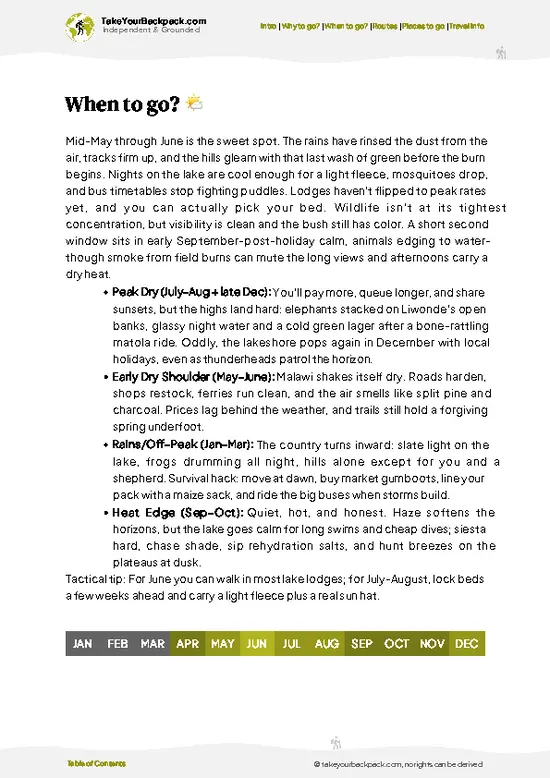
  • Topic: Weather – Phalombe’s dry season from May to October offers clear skies and minimal rain, making trails less slippery and the air crisp. The wet season (November to April) brings heavy rains that can turn paths to mud and swell rivers, complicating travel.

  • Topic: Temperature – Daytime highs hover around 22-28°C (72-82°F) in the dry months, perfect for hiking without overheating. Nights can dip to 10°C (50°F), so pack layers. The wet season is warmer but muggy, with highs up to 30°C (86°F).

  • Topic: Daylight Hours – Expect roughly 11 to 12 hours of daylight year-round, but the dry season’s clearer skies mean more usable daylight for exploring without early fog or rain interruptions.

  • Topic: Crowds – Phalombe sees fewer tourists overall, but the dry season attracts more local visitors
read more 👉

  • Topic: Weather – Phalombe’s dry season from May to October offers clear skies and minimal rain, making trails less slippery and the air crisp. The wet season (November to April) brings heavy rains that can turn paths to mud and swell rivers, complicating travel.

  • Topic: Temperature – Daytime highs hover around 22-28°C (72-82°F) in the dry months, perfect for hiking without overheating. Nights can dip to 10°C (50°F), so pack layers. The wet season is warmer but muggy, with highs up to 30°C (86°F).

  • Topic: Daylight Hours – Expect roughly 11 to 12 hours of daylight year-round, but the dry season’s clearer skies mean more usable daylight for exploring without early fog or rain interruptions.

  • Topic: Crowds – Phalombe sees fewer tourists overall, but the dry season attracts more local visitors and regional travelers, especially around festivals, so plan accordingly if you want solitude.

  • Topic: Seasonal Activities – Dry months are prime for trekking and wildlife spotting; wet months bring lush greenery and bird migrations but limit access to some trails.

  • Topic: Price Fluctuations – Accommodation and transport costs rise slightly in the dry season due to demand, but the improved conditions justify the splurge for a smoother experience.


Pro-tip: Aim for late dry season (August-September) when the air is fresh, trails firm, and the landscape starts to bloom—this balance makes every step feel earned.


source: climatestotravel.comJANJanuary: fair for travelingFEBFebruary: fair for travelingMARMarch: fair for travelingAPRApril: fair for travelingMAYMay: highly recommended for travelingJUNJune: excellent for travelingJULJuly: excellent for travelingAUGAugust: excellent for travelingSEPSeptember: excellent for travelingOCTOctober: highly recommended for travelingNOVNovember: fair for travelingDECDecember: fair for traveling
when-to-go

✈️ The backpacker research shortcutMalawi Travel Guide

An offline-friendly backpacking guide with optimized travel routes, ranked highlights, transport advice, and the best areas to stay.
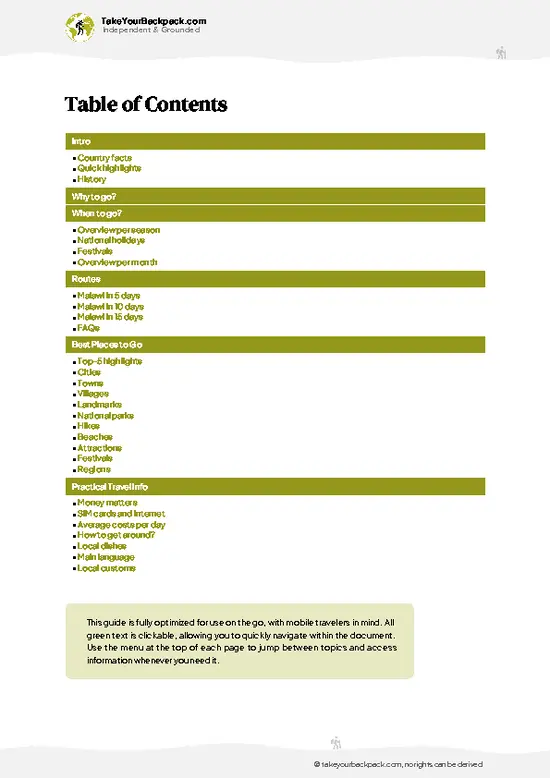
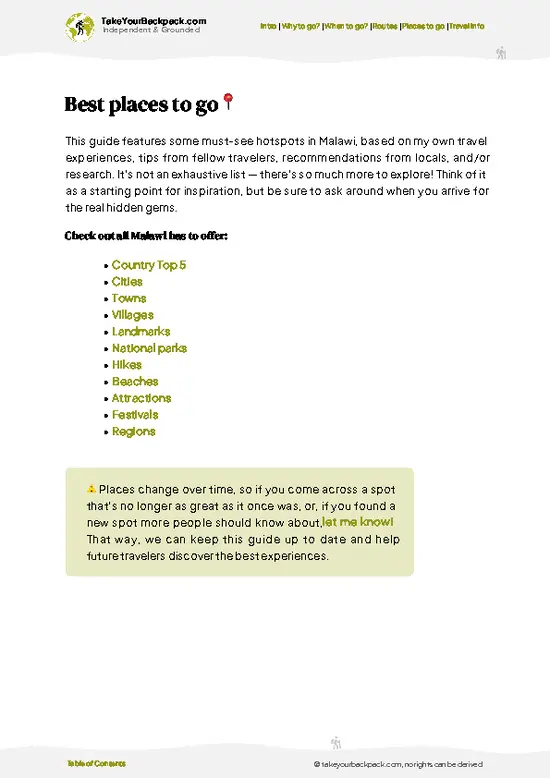
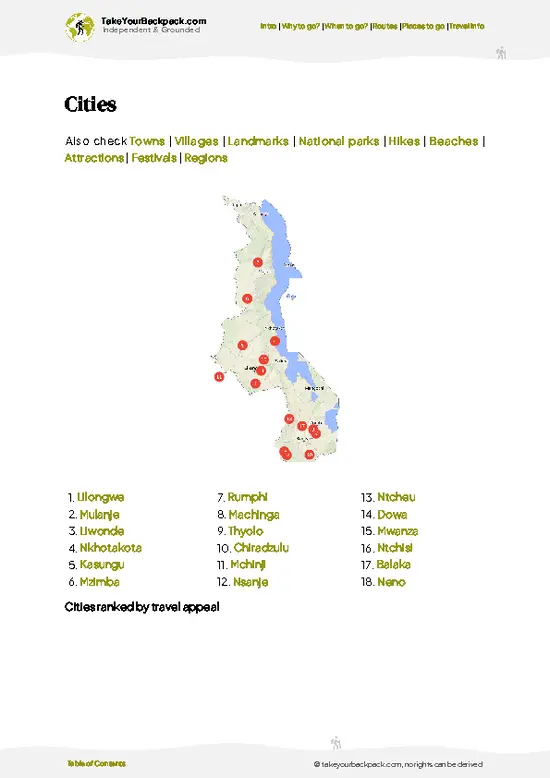
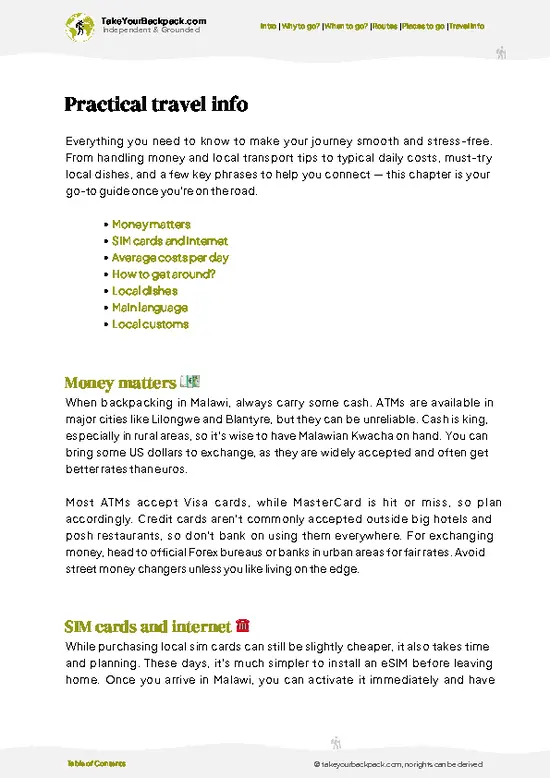
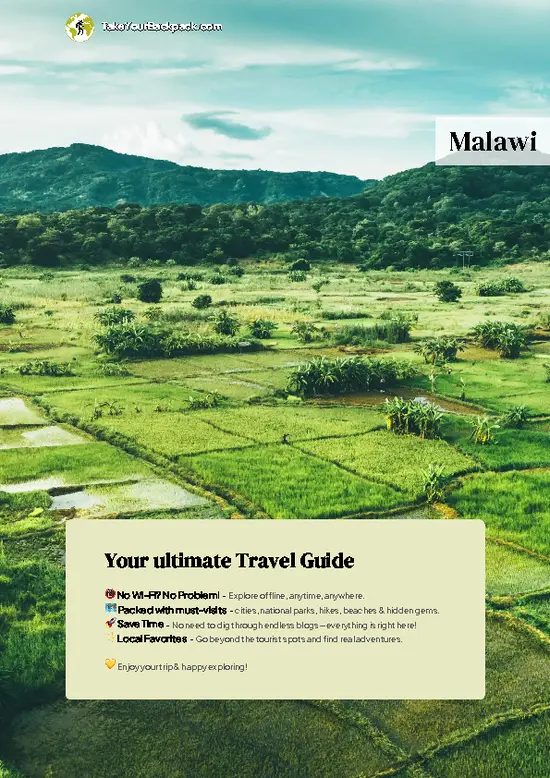
example page 0 from our offline Travel Guide for Malawi
example page 1 from our offline Travel Guide for Malawi
example page 2 from our offline Travel Guide for Malawi
example page 3 from our offline Travel Guide for Malawi
example page 4 from our offline Travel Guide for Malawi
example page 5 from our offline Travel Guide for Malawi
example page 6 from our offline Travel Guide for Malawi
example page 7 from our offline Travel Guide for Malawi
The digital guide (355 pages) contains:
87 highlights, ranked by travel appeal
Optimized 5, 10 & 15-day travel routes
Cities, national parks, landmarks, beaches
How to get around
Offline-friendly for travel without Wi-Fi
👉 Click to see all 30+ guide features

📅 Plan smarter in minutes, not weeks
Month by month travel advice
Festivals & national holidays
Budget expectations

🗺️ Go to the right places, skip the overrated ones
Honest pros & cons of destinations
Top hikes, parks & viewpoints
Lesser-known places most travelers miss
Clear “worth it vs skip it” guidance

🛏️ Travel smoothly without rookie mistakes
Best areas to stay
Transport systems explained simply
Common scams & safety advice
SIM cards, money & practical tips

🌍 Understand the country, not just visit it
Culture & traditions
52 Essential phrases & customs
Festivals worth planning around
Traveler-friendly historical context
Insights that make places more meaningful

📱 Built for real travel conditions
Fully downloadable PDF
Works completely offline
Optimized for phone use
Useful in remote areas & buses
Everything in one place
Save weeks of stressful planning
Get instant access to your full guide. 30‑day money-back guarantee.


By proceeding you agree to our terms.
Sent to your inbox immediately after payment • 100% Secure Checkout
Best Backpacking Travel Advisor 2025 tourism awardBest Backpacking
Travel Advisor
2025
What others say about Take Your Backpack Guides:
⭐⭐⭐⭐⭐
Fantastic, amazing amount of information!
⭐⭐⭐⭐⭐
My goodness this is amazing, it's what I've been looking for hats off too you!
⭐⭐⭐⭐⭐
I think this is absolutely BRILLIANT
⭐⭐⭐⭐
Very complete and informative. It's still missing places, but I gotta to commend you
⭐⭐⭐⭐⭐
This is truly amazing, thank you, can't wait to explore it with my kids!
⭐⭐⭐⭐⭐
Awesome resource, thank you!
⭐⭐⭐⭐⭐
This is amazing! Can't wait to explore the ones I haven't seen
⭐⭐⭐⭐
I love this! Well done, great idea.
⭐⭐⭐⭐⭐
Thanks for taking the time to make this gem!
⭐⭐⭐⭐⭐
This might be the best website I've ever seen.
⭐⭐⭐⭐⭐
Congratulations, and thank you so much for your work; it's incredibly valuable.
⭐⭐⭐⭐
In all seriousness I think you did a great job pointing out the important spots
⭐⭐⭐⭐⭐
10/10 very good
⭐⭐⭐⭐⭐
As someone who's only just starting to visit regularly this is awesome, thank you.
⭐⭐⭐⭐
Thank you very much! I'm going to visit my dad, it's going to be very useful!
⭐⭐⭐⭐⭐
This is really cool! We'll be travelling for the first time and this definitely come in handy.
⭐⭐⭐⭐⭐
You are now our minister of culture, congratulations 👨‍💼
⭐⭐⭐⭐⭐
Just wanted to tell you that this is a pearl! Going to follow your recommendations.
⭐⭐⭐⭐⭐
This is so cool. I'll definitely be using the resource for my travels soon.
⭐⭐⭐⭐⭐
This is very impressive! Good work.
⭐⭐⭐⭐⭐
This is an amazing and informative site. Very well done!

🛏️ Where to stay?Where staying makes the most sense

Phalombe’s heart for backpackers pulses strongest around the town center, where the streets hum with daily market chatter and the scent of fresh maize wafts through the air. This area is your best bet—safe enough to wander after dusk, with enough local buzz to keep you engaged without feeling overwhelmed. It’s where budget travelers cluster, drawn by simple guesthouses and a handful of hostels that foster easy connections over shared meals and stories. Compared to the quieter, more residential outskirts, the center offers a social pulse that’s crucial when you’re solo and craving human energy. … read more 👉
Phalombe’s heart for backpackers pulses strongest around the town center, where the streets hum with daily market chatter and the scent of fresh maize wafts through the air. This area is your best bet—safe enough to wander after dusk, with enough local buzz to keep you engaged without feeling overwhelmed. It’s where budget travelers cluster, drawn by simple guesthouses and a handful of hostels that foster easy connections over shared meals and stories. Compared to the quieter, more residential outskirts, the center offers a social pulse that’s crucial when you’re solo and craving human energy. The vibe here is unpolished but genuine—dusty roads, open-air stalls, and the occasional stray dog weaving through the crowd. Staying here means you’re plugged into the town’s rhythm, not just passing through it.

🚌 Getting aroundHow to get from A to B

Phalombe moves at its own rhythm—less a clock-driven town and more a place where the sun’s position and the chatter of locals set the pace. The air carries a mix of earth and wood smoke, and the streets hum with the shuffle of feet and the occasional honk of a minibus weaving through dust and market stalls. Here, schedules are loose suggestions, and the best way to get around is to blend into the flow, ready to adapt. The payoff is a raw, unfiltered experience where every corner reveals something genuine, but you’ll need patience and a bit of street savvy to navigate the transit scene without frustration.


  • Walking: The heart of Phalombe is compact enough to explore on foot, especially the market area and local eateries. Walking costs nothing, lets you soak in the scents of fresh maize and
read more 👉
Phalombe moves at its own rhythm—less a clock-driven town and more a place where the sun’s position and the chatter of locals set the pace. The air carries a mix of earth and wood smoke, and the streets hum with the shuffle of feet and the occasional honk of a minibus weaving through dust and market stalls. Here, schedules are loose suggestions, and the best way to get around is to blend into the flow, ready to adapt. The payoff is a raw, unfiltered experience where every corner reveals something genuine, but you’ll need patience and a bit of street savvy to navigate the transit scene without frustration.


  • Walking: The heart of Phalombe is compact enough to explore on foot, especially the market area and local eateries. Walking costs nothing, lets you soak in the scents of fresh maize and charcoal fires, and reveals the town’s textures up close.

  • Local Minibuses (Buses): These are the backbone of transit here, running roughly from 6:30 AM to 6 PM. Fares hover around 100-200 MWK, and while they’re often crowded and bumpy, they’re the fastest way to reach nearby villages or the busier hubs like Mulanje.

  • Bicycle Taxis (Zebras): For short hops within town, zebras are a nimble choice. Expect to pay about 200-300 MWK per ride. They dart through narrow lanes and avoid traffic jams but hold on tight—the ride is lively and not for the faint-hearted.

  • Shared Taxis: These operate less on a fixed schedule and more on filling seats. They’re pricier (around 500-700 MWK) but offer a smoother, quicker ride to farther destinations like Blantyre, leaving once full or at midday.

👛 Costs (as of 27 February 2026)Travel costs and budget guide for Phalombe

Backpacking in Phalombe, Malawi, offers a raw, grounded experience where your money stretches further than in more tourist-heavy spots, but the trade-off is simplicity and local pace.
  • Dorm Accommodation: Expect to pay around $5 to $10 per night for a bed in a basic guesthouse or hostel dorm. These places are modest—think mosquito nets, shared bathrooms, and a fan or two rather than air conditioning. The light in these rooms is often soft and filtered through mosquito netting, setting a calm, unhurried tone for your stay.
  • Meals: Local eateries serve up hearty, filling meals for $2 to $5. Staples include nsima (a maize-based dish), beans, and fresh vegetables. Street food is even cheaper, but keep an eye on hygiene. The aroma of simmering spices and fresh produce fills the air, grounding you
read more 👉
Backpacking in Phalombe, Malawi, offers a raw, grounded experience where your money stretches further than in more tourist-heavy spots, but the trade-off is simplicity and local pace.
  • Dorm Accommodation: Expect to pay around $5 to $10 per night for a bed in a basic guesthouse or hostel dorm. These places are modest—think mosquito nets, shared bathrooms, and a fan or two rather than air conditioning. The light in these rooms is often soft and filtered through mosquito netting, setting a calm, unhurried tone for your stay.
  • Meals: Local eateries serve up hearty, filling meals for $2 to $5. Staples include nsima (a maize-based dish), beans, and fresh vegetables. Street food is even cheaper, but keep an eye on hygiene. The aroma of simmering spices and fresh produce fills the air, grounding you in the local rhythm.
  • Local Transport: Minibus taxis and shared rides are the norm, costing about $0.50 to $1 per trip within town or nearby villages. The rides are often bumpy, with the scent of dust and diesel mixing in the air, but they’re the most authentic way to move around and connect with locals.
  • Basic Activities/Entry Fees: Phalombe isn’t packed with tourist attractions, so entry fees are minimal or nonexistent. Visiting local markets or cultural sites might cost $1 to $3 if there’s a small fee. The real draw is the atmosphere—vibrant chatter, colorful fabrics, and the tactile feel of handcrafted goods.
  • Miscellaneous Expenses: Budget around $1 to $3 for essentials like bottled water, snacks, or a SIM card top-up. These small purchases keep you comfortable and connected without breaking the bank.

All told, you’re looking at roughly $10 to $22 per day to cover the essentials in Phalombe. This budget keeps you grounded in the local pace and flavor, letting you experience the town’s straightforward charm without unnecessary frills.


source: malawitourism.com
⚠️ Prices can change and everyone travels differently, so take this as a rough guide. Hope it helps you plan your adventure!

🚌 Day tripsEasy escapes and nearby places

Phalombe is a backpacker’s dream base, offering easy access to stunning landscapes and rich culture. Here are some day trips that will elevate your experience.

Mount Mulanje Trek
This trek is a must for anyone craving breathtaking views and a good workout. The journey to the base takes about an hour by minibus, costing around $1. You can tackle various trails, but the hike to Likhubula Falls is a favorite. The scent of pine and the sound of rushing water make every step worthwhile. Aim for the dry season (May to October) for the best conditions. A common mistake? Underestimating the weather; pack layers, as it can get chilly at higher altitudes.
👉 Explore Mount Mulanje

Thyolo Tea Estates
Just a short ride from Phalombe, these lush tea plantations are a sensory delight. The vibrant … read more 👉
Phalombe is a backpacker’s dream base, offering easy access to stunning landscapes and rich culture. Here are some day trips that will elevate your experience.

Mount Mulanje Trek
This trek is a must for anyone craving breathtaking views and a good workout. The journey to the base takes about an hour by minibus, costing around $1. You can tackle various trails, but the hike to Likhubula Falls is a favorite. The scent of pine and the sound of rushing water make every step worthwhile. Aim for the dry season (May to October) for the best conditions. A common mistake? Underestimating the weather; pack layers, as it can get chilly at higher altitudes.
👉 Explore Mount Mulanje

Thyolo Tea Estates
Just a short ride from Phalombe, these lush tea plantations are a sensory delight. The vibrant green fields stretch endlessly, and the air is filled with the earthy aroma of tea leaves. A minibus ride will set you back about $2 and take around 30 minutes. Spend your day wandering through the estates, learning about tea production, and sipping fresh brews. The best time to visit is during the harvest season (April to August). Many first-timers miss the chance to chat with local workers; their stories add depth to the experience.


Lake Chilwa
A trip to Lake Chilwa is like stepping into a postcard. It’s about an hour’s journey by minibus, costing roughly $3. The lake is a haven for birdwatchers and fishermen alike. Bring your binoculars and enjoy the vibrant colors of the local birdlife. The best time to visit is during the dry season when the water levels are low, revealing stunning landscapes. A common oversight is not bringing enough water; it can get hot, and you’ll want to stay hydrated while exploring.


Phalombe Market
Dive into local life at the bustling Phalombe Market, just a short walk from your base. Here, the vibrant colors of fruits and vegetables pop against the earthy tones of the stalls. It’s a great place to sample local snacks and pick up handmade crafts. The market is open daily, but visiting on a Saturday offers the most lively atmosphere. A common mistake is sticking to the main paths; wander deeper to discover hidden treasures and chat with locals.
Want to know what more Malawi offers?
The Malawi Travel Guide describes 87 highlights, from cities to national parks, from beaches to hikes

Get the Travel Guide -

🛡️ SafetyTraveler Safety Guide

Phalombe is generally safe, but staying aware enhances your experience. Stick to well-lit areas after dark, especially if you’re solo. The local vibe is friendly, but it’s wise to keep your belongings close in crowded markets.

Watch for the occasional overzealous vendor; a firm but polite “no” usually does the trick. If someone offers unsolicited help, be cautious—it might come with a price tag.

Embrace the local culture, but trust your instincts. If something feels off, it probably is. Carry yourself confidently, smile, and engage with locals; they appreciate genuine interest. This approach not only keeps you safe but enriches your journey through this vibrant town.

Other Malawian towns near Phalombe

Explore more nearby:

  • Luchenza—Tea estates, railway stop, market center, Mulanje foothills| 46 km away
  • Zomba—plateau views, colonial relics, university campus, botanical gardens| 55 km away
  • Lunzu—Bustling market, minibus hub, Blantyre outskirts, trading center| 70 km away

💡 Not sure where to go next?
Create a personalized itinerary for Malawi including Phalombe and the places that fit your trip.

Generate my itinerary

👉 Discover all towns

Or checkout all Malawi has to offer (think cities, towns, villages, national parks, hikes, beaches, festivals)
Country photo of Malawi

We 💚 feedbackKey takeaways before you go

Phalombe has a raw, unfiltered vibe that pulls you in. The best surprise? The warmth of the locals; they’ll share stories over a cup of chai that linger long after you leave. Just a heads-up: the roads can be rough, so don’t rush. Embrace the journey; it’s part of the charm. You’ll find beauty in the struggle.

✍️ Help improve this page!
The information on this page is based on in-depth research, insights shared by experienced travelers, and feedback from the local travel community in Malawi. While every effort is made to keep the information accurate and current, conditions can change — so if you spot anything incorrect or outdated, please get in touch.


🙋‍♂️ Give feedback

👋 Meet the founderWho’s Behind Take Your Backpack?

Johan, backpacker and founder of TakeYourBackpackHi, I’m Johan (Netherlands 🇳🇱), the creator of TakeYourBackpack. Over the past decade, I’ve backpacked through 80+ countries across six continents, gaining extensive experience with independent travel, long-term trips, and overland routes.

This site is built on a combination of firsthand travel experience and carefully curated insights from other backpackers. Many guides are based on places I’ve personally visited, while others bring together tips, observations, and practical advice shared by trusted travelers I’ve met along the way.

The goal is to provide realistic, experience-driven guidance — not generic itineraries — so you can explore destinations with better context, clearer expectations, and more confidence.

Get full Malawi guide •
Instant download • 87 highlights • Full Offline guide