×

Malawi🇲🇼 | villagesGolomotiEscarpment descent, junction market, lakeshore canoe landing, dried usipa | things to do and best time to go

Explore Kachere KastleExplore Lake Malawi Museum

Backpacking in Golomoti
🏆 Top pickvillage ranked #1
By Johan Kruseman 🇳🇱 | Updated October 22, 2026

Golomoti is a useful place to break the lakeshore road, because buses and minibuses stop at the junction and you can step off with no booking and no fuss. It sits in the center of Malawi, in Dedza District, where the escarpment road drops down to the lake plain along the M5. The air changes as you descend: dry hill breeze gives way to heat that smells of woodsmoke, dried fish and warm dust. There is no backpacker scene, so expect few other travelers. Eat at the market stalls, where nsima and fried chambo are cooked to order, because restaurants are almost nonexistent. Cash is king and the nearest reliable ATMs are in larger towns, so withdraw before you arrive. Evenings are dark and early, with generators coughing and radios playing, so bring a headlamp and book a bed before dusk. Trucks grind through the junction all day, and after dark the loudest sound is frogs.

Discover everything you want to know in the 📖 Malawi Travel Guide.


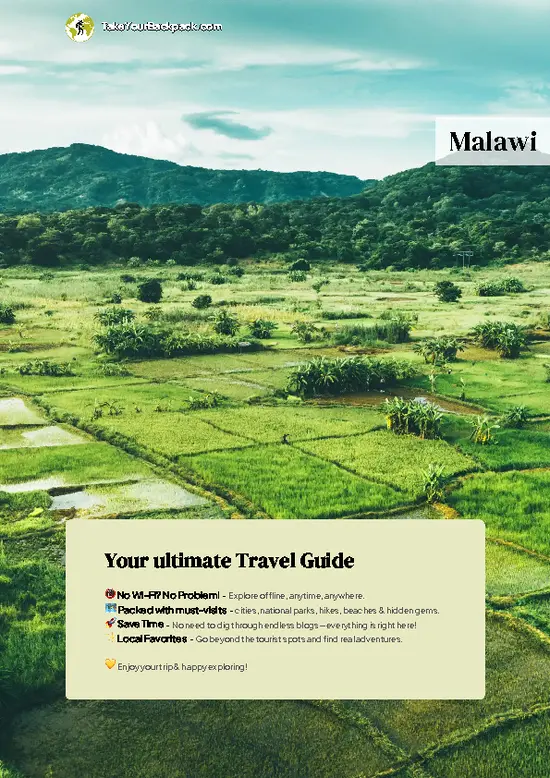
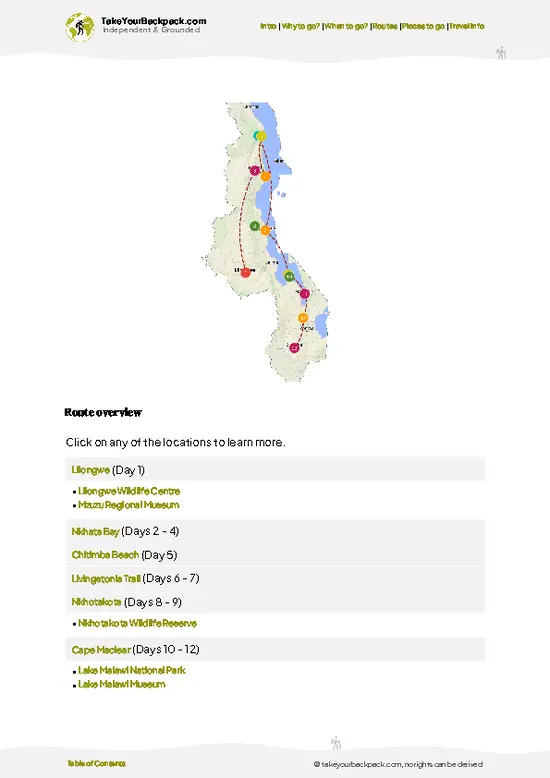
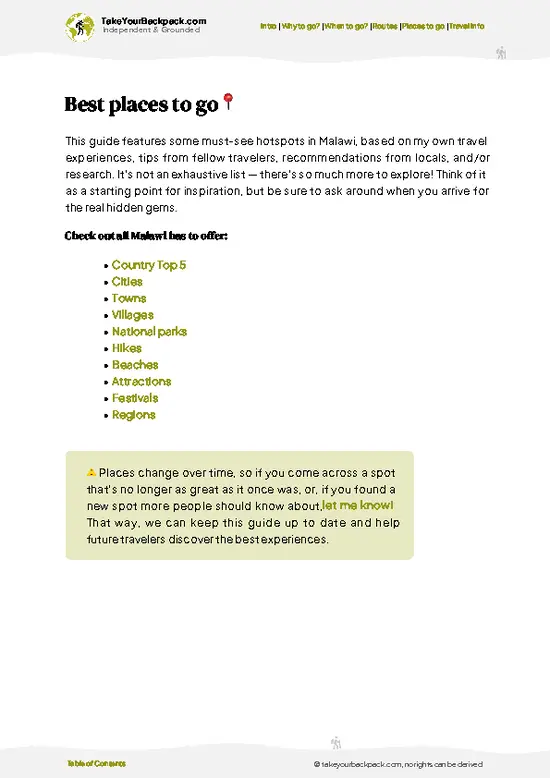
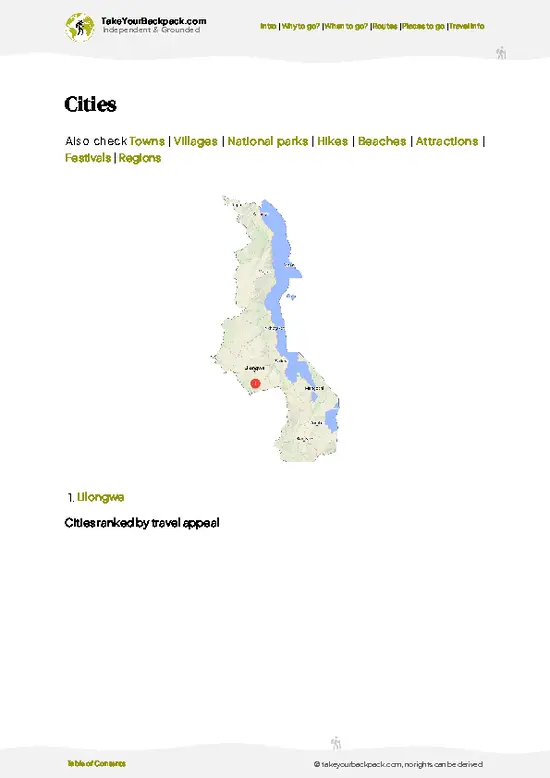
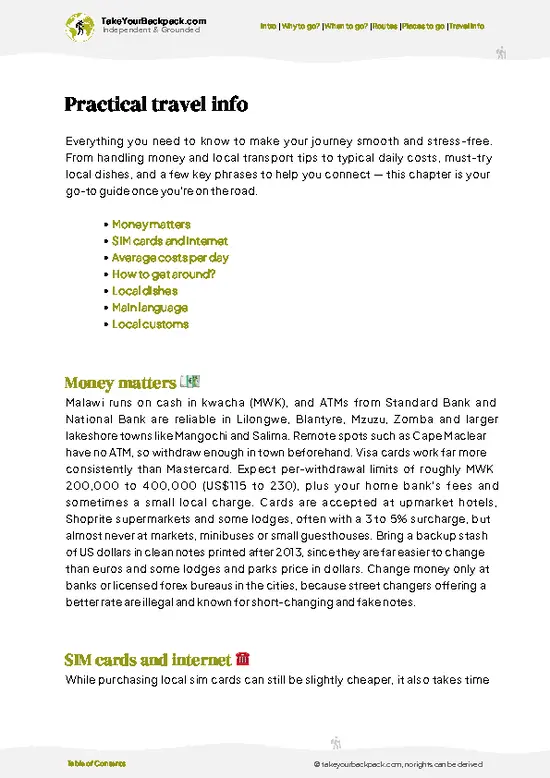
example page 0 from our offline Travel Guide for Malawi
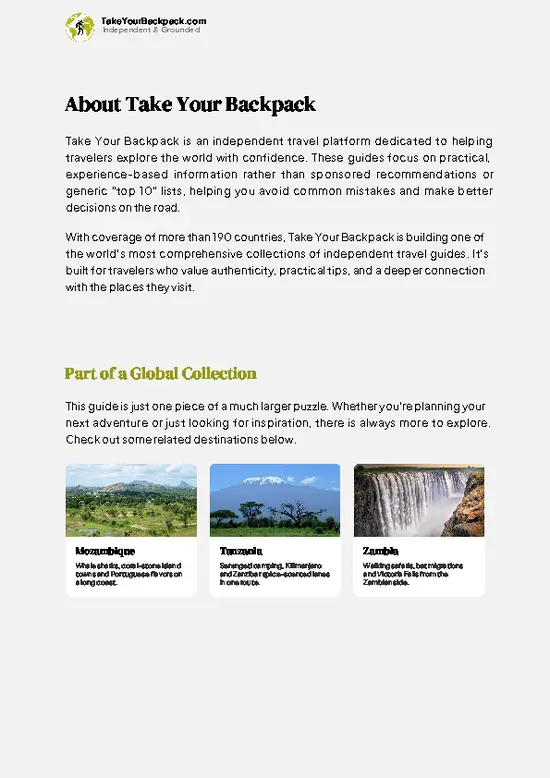
example page 1 from our offline Travel Guide for Malawi
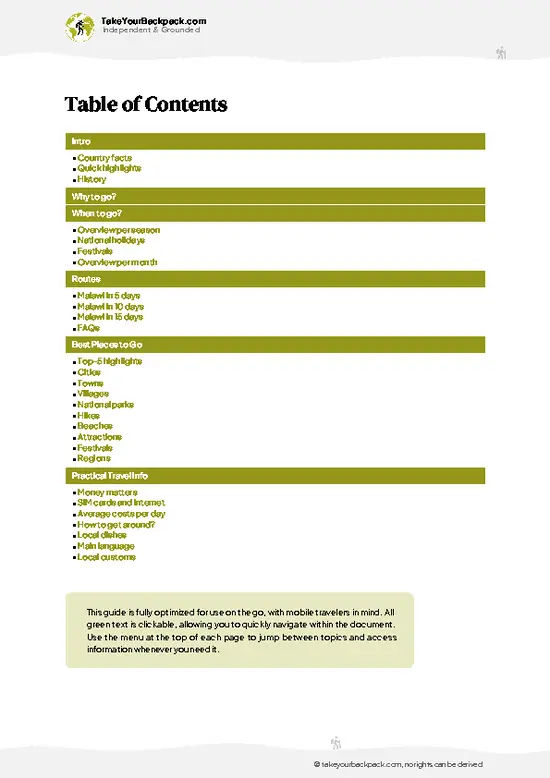
example page 2 from our offline Travel Guide for Malawi
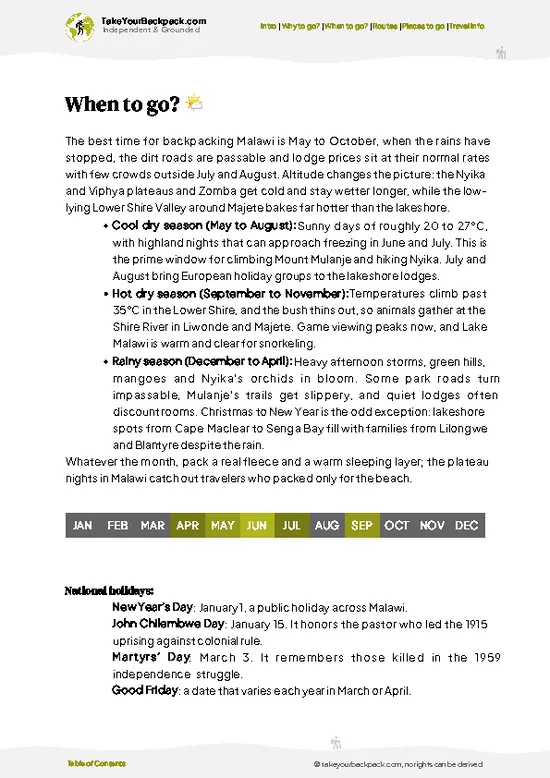
example page 3 from our offline Travel Guide for Malawi
example page 4 from our offline Travel Guide for Malawi
example page 5 from our offline Travel Guide for Malawi
example page 6 from our offline Travel Guide for Malawi
example page 7 from our offline Travel Guide for Malawi
Loading the map 🌍
CLICK TO FILTER
cities
towns
villages
national parks
hikes
beaches
attractions
festivals
regions
SHOW COUNTRY’S BESTSHOW ALL

✨ Why go?
Ranked #1 village in Malawi
Why Golomoti should be on your travel list

Golomoti suits the slow traveler who wants a night of real Malawi between the highlands and the lake resorts. Most people pass through on the way from Dedza toward Senga Bay or Monkey Bay, and that is exactly the appeal: nobody here is selling you anything. You get a working junction market where farmers from the hills trade with fishing families, and a lakeshore that is used for work rather than posed for. The descent from the plateau is the other draw, as the road drops through the Golomoti escarpment in long bends with wide views over the lake plain. A big solar plant now sits beside the road, a reminder that the town is wired into the national grid in a way few villages are. One night is plenty for most people. Lingerers tend to be cyclists, overlanders and travelers who like to watch … read more 👉
Golomoti suits the slow traveler who wants a night of real Malawi between the highlands and the lake resorts. Most people pass through on the way from Dedza toward Senga Bay or Monkey Bay, and that is exactly the appeal: nobody here is selling you anything. You get a working junction market where farmers from the hills trade with fishing families, and a lakeshore that is used for work rather than posed for. The descent from the plateau is the other draw, as the road drops through the Golomoti escarpment in long bends with wide views over the lake plain. A big solar plant now sits beside the road, a reminder that the town is wired into the national grid in a way few villages are. One night is plenty for most people. Lingerers tend to be cyclists, overlanders and travelers who like to watch daily life without a schedule. If you need hostels, bars and other backpackers, continue to the lake resorts instead.

💡 HighlightsTop highlights of Golomoti

  1. The Golomoti escarpment viewpoints. The road down from the Dedza highlands is what the place is known for, and the pullouts on the bends show the lake plain flattening toward the water. Come in the morning, when haze is thin and trucks are fewer. It is free and takes 30 to 60 minutes if you walk a short stretch and stop for photos. Keep well off the road edge, because heavy vehicles use the bends all day.
  2. Golomoti market. Stalls around the junction sell tomatoes, cassava, dried usipa and kapenta, secondhand clothes and phone credit. Go before midday, when produce is freshest and cooked food is hot. Entry is free, a plate of nsima with fish or beans costs about US$1 to 2, and an hour is enough. Greet people before you point a camera and ask first.
  3. The Golomoti lakeshore landing. Dugout canoes
… read more 👉
  1. The Golomoti escarpment viewpoints. The road down from the Dedza highlands is what the place is known for, and the pullouts on the bends show the lake plain flattening toward the water. Come in the morning, when haze is thin and trucks are fewer. It is free and takes 30 to 60 minutes if you walk a short stretch and stop for photos. Keep well off the road edge, because heavy vehicles use the bends all day.
  2. Golomoti market. Stalls around the junction sell tomatoes, cassava, dried usipa and kapenta, secondhand clothes and phone credit. Go before midday, when produce is freshest and cooked food is hot. Entry is free, a plate of nsima with fish or beans costs about US$1 to 2, and an hour is enough. Greet people before you point a camera and ask first.
  3. The Golomoti lakeshore landing. Dugout canoes and fishing crews work the water here, hauling nets and sorting catch on the sand. Early morning is the busiest and the coolest time. Watching is free, a short paddle with a local fisherman may cost about US$2 to 5 if you can agree on it, and 1 to 2 hours is a good visit. Swim only where locals do, and ask about hippos and crocodiles before you enter the water.
Golomoti makes a good base for day trips to Dedza Pottery, Mua Mission with its Kungoni cultural center, and the beaches at Senga Bay and Cape Maclear. The escarpment viewpoints and the market pair well on a single morning, with the descent first and a plate of fish at the stalls afterward.
Spotted a mistake or missing something? Contact us.

Things to do near Golomoti

Ratings based on Tripadvisor reviews. When you book through this link, you support our work at no extra cost to you.

🌤️ When to go?Best time to visit Golomoti

  • Cool Dry Season (May to August): Golomoti is at its most comfortable now, with days of 24 to 28°C (75 to 82°F) and nights of 12 to 16°C (54 to 61°F). Roads are firm, daylight runs about 11 to 12 hours, and walking the escarpment tracks is pleasant. Lake-side guesthouses charge their highest rates around July.
  • Hot Season (September to early November): Expect 30 to 36°C (86 to 97°F) and dust haze. Midday is for shade, and early starts matter. Crowds thin out and prices ease.
  • Rainy Season (mid-November to April): Humid, 26 to 32°C (79 to 90°F), with afternoon downpours that can turn dirt side roads to mud. Days stretch to about 13 hours, the hills turn green, and bargains are easiest to find.
  • Shoulder Months (April to May): Rains fade, the countryside is lush, and the heat has broken. Few travelers
… read more 👉
  • Cool Dry Season (May to August): Golomoti is at its most comfortable now, with days of 24 to 28°C (75 to 82°F) and nights of 12 to 16°C (54 to 61°F). Roads are firm, daylight runs about 11 to 12 hours, and walking the escarpment tracks is pleasant. Lake-side guesthouses charge their highest rates around July.
  • Hot Season (September to early November): Expect 30 to 36°C (86 to 97°F) and dust haze. Midday is for shade, and early starts matter. Crowds thin out and prices ease.
  • Rainy Season (mid-November to April): Humid, 26 to 32°C (79 to 90°F), with afternoon downpours that can turn dirt side roads to mud. Days stretch to about 13 hours, the hills turn green, and bargains are easiest to find.
  • Shoulder Months (April to May): Rains fade, the countryside is lush, and the heat has broken. Few travelers come.
Aim for late May or June, when the roads have dried but the lake season rush has not yet started.


source: climatestotravel.comJANJanuary: fair for travelingFEBFebruary: fair for travelingMARMarch: fair for travelingAPRApril: good for travelingMAYMay: excellent for travelingJUNJune: excellent for travelingJULJuly: highly recommended for travelingAUGAugust: highly recommended for travelingSEPSeptember: highly recommended for travelingOCTOctober: good for travelingNOVNovember: fair for travelingDECDecember: fair for traveling
when-to-go

✈️ The backpacker research shortcutMalawi Travel Guide

An offline-friendly backpacking guide with optimized travel routes, ranked highlights, transport advice, and the best areas to stay.
example page 0 from our offline Travel Guide for Malawi
example page 1 from our offline Travel Guide for Malawi
example page 2 from our offline Travel Guide for Malawi
example page 3 from our offline Travel Guide for Malawi
example page 4 from our offline Travel Guide for Malawi
example page 5 from our offline Travel Guide for Malawi
example page 6 from our offline Travel Guide for Malawi
example page 7 from our offline Travel Guide for Malawi
The digital guide (263 pages) contains:
✅ 65 highlights, ranked by travel appeal
✅ Optimized 5, 10 & 15-day travel routes
✅ Cities, national parks, landmarks, beaches
✅ How to get around
✅ Offline-friendly for travel without Wi-Fi
👉 Click to see all 30+ guide features

📅 Plan smarter in minutes, not weeks
✅ Month by month travel advice
✅ Festivals & national holidays
✅ Budget expectations

🗺️ Go to the right places, skip the overrated ones
✅ Honest pros & cons of destinations
✅ Top hikes, parks & viewpoints
✅ Lesser-known places most travelers miss
✅ Clear “worth it vs skip it” guidance

🛏️ Travel smoothly without rookie mistakes
✅ Best areas to stay
✅ Transport systems explained simply
✅ Common scams & safety advice
✅ SIM cards, money & practical tips

🌍 Understand the country, not just visit it
✅ Culture & traditions
✅ 52 Essential phrases & customs
✅ Festivals worth planning around
✅ Traveler-friendly historical context
✅ Insights that make places more meaningful

📱 Built for real travel conditions
✅ Fully downloadable PDF
✅ Works completely offline
✅ Optimized for phone use
✅ Useful in remote areas & buses
✅ Everything in one place
Stop searching, start planning
Get instant access to your full guide. 30‑day money-back guarantee.
+ Add another guide for just

By proceeding you agree to our terms.
Sent to your inbox immediately after payment • 100% Secure Checkout
Best Backpacking Travel Advisor 2025 tourism awardBest Backpacking
Travel Advisor
2025
What others say about Take Your Backpack Guides:
⭐⭐⭐⭐⭐
Fantastic, amazing amount of information!
⭐⭐⭐⭐⭐
My goodness this is amazing, it's what I've been looking for hats off too you!
⭐⭐⭐⭐⭐
I think this is absolutely BRILLIANT
⭐⭐⭐⭐
Very complete and informative. It's still missing places, but I gotta to commend you
⭐⭐⭐⭐⭐
This is truly amazing, thank you, can't wait to explore it with my kids!
⭐⭐⭐⭐⭐
Awesome resource, thank you!
⭐⭐⭐⭐⭐
This is amazing! Can't wait to explore the ones I haven't seen
⭐⭐⭐⭐
I love this! Well done, great idea.
⭐⭐⭐⭐⭐
Thanks for taking the time to make this gem!
⭐⭐⭐⭐⭐
This might be the best website I've ever seen.
⭐⭐⭐⭐⭐
Congratulations, and thank you so much for your work; it's incredibly valuable.
⭐⭐⭐⭐
In all seriousness I think you did a great job pointing out the important spots
⭐⭐⭐⭐⭐
10/10 very good
⭐⭐⭐⭐⭐
As someone who's only just starting to visit regularly this is awesome, thank you.
⭐⭐⭐⭐
Thank you very much! I'm going to visit my dad, it's going to be very useful!
⭐⭐⭐⭐⭐
This is really cool! We'll be travelling for the first time and this definitely come in handy.
⭐⭐⭐⭐⭐
You are now our minister of culture, congratulations 👨‍💼
⭐⭐⭐⭐⭐
Just wanted to tell you that this is a pearl! Going to follow your recommendations.
⭐⭐⭐⭐⭐
This is so cool. I'll definitely be using the resource for my travels soon.
⭐⭐⭐⭐⭐
This is very impressive! Good work.
⭐⭐⭐⭐⭐
This is an amazing and informative site. Very well done!

🛏️ Where to stay?Where staying makes the most sense

Golomoti has only a handful of basic guesthouses near the main road, so most backpackers pair a simple room here with a lakeshore or hill stay nearby.
Inside Golomoti, expect plain rooms with a fan, a net and shared or basic private bathrooms for about US$8 to 20 a night. Cash is the norm, and electricity can cut out, so carry a headlamp. Meals are usually nsima with relish or chicken at small local eateries, often for US$1 to 3.
Dedza, roughly an hour up the escarpment, offers cooler nights and a few more choices, including lodges near the pottery, for roughly US$15 to 40 a room. It is a good option … read more 👉
Golomoti has only a handful of basic guesthouses near the main road, so most backpackers pair a simple room here with a lakeshore or hill stay nearby.
Inside Golomoti, expect plain rooms with a fan, a net and shared or basic private bathrooms for about US$8 to 20 a night. Cash is the norm, and electricity can cut out, so carry a headlamp. Meals are usually nsima with relish or chicken at small local eateries, often for US$1 to 3.
Dedza, roughly an hour up the escarpment, offers cooler nights and a few more choices, including lodges near the pottery, for roughly US$15 to 40 a room. It is a good option if you want a blanket at night rather than a fan.
Along the lake, Senga Bay has the widest range, from dorm beds around US$6 to 12 to private chalets at US$30 to 60, and a backpacker crowd that shares boat trips and bar tabs. Mua Mission also offers simple, inexpensive rooms.
Book ahead for July and August, and during school holidays. Outside those periods you can usually walk in and bargain, particularly for stays of two or more nights.

🚌 Day tripsExploring the surroundings

Golomoti sits on the M5 lake road at the foot of the Dedza escarpment, so minibuses and pickups can get you to several rewarding places within a morning, though connections thin out after mid-afternoon.Dedza Pottery and Dedza Mountain: Climb the escarpment to Dedza for glazed ceramics, a decent café, and cool air with views back over the plain. The ride takes roughly 1 to 1.5 hours each way by minibus, about US$2 to 4 each way. Go in the dry months when the hill is clear, and start early, since returning transport becomes scarce toward dusk.
👉 Explore DedzaChongoni Rock Art Area: This UNESCO site holds painted shelters by Chewa and earlier hunter-gatherer communities on forested granite hills near Dedza. Budget about US$10 to 20 for transport and a local guide, plus 3 to 4 hours on site. First-timers … read more 👉
Golomoti sits on the M5 lake road at the foot of the Dedza escarpment, so minibuses and pickups can get you to several rewarding places within a morning, though connections thin out after mid-afternoon.Dedza Pottery and Dedza Mountain: Climb the escarpment to Dedza for glazed ceramics, a decent café, and cool air with views back over the plain. The ride takes roughly 1 to 1.5 hours each way by minibus, about US$2 to 4 each way. Go in the dry months when the hill is clear, and start early, since returning transport becomes scarce toward dusk.
👉 Explore DedzaChongoni Rock Art Area: This UNESCO site holds painted shelters by Chewa and earlier hunter-gatherer communities on forested granite hills near Dedza. Budget about US$10 to 20 for transport and a local guide, plus 3 to 4 hours on site. First-timers often arrive without a guide and cannot find the paintings, so arrange one at the entrance. Dry-season trails are easier.
👉 Explore Chongoni Rock Art AreaMua Mission: The Catholic mission near Ntakataka runs a museum of Chewa, Ngoni and Yao culture, with masks and carvings from the Gule Wamkulu tradition, and a workshop shop. Count on about 1 hour each way and US$5 to 10 in transport and entry. People often turn up on Sundays when the museum is quiet, so aim for a weekday morning.
Senga Bay: The nearest real beach scene is Senga Bay, with swimming, kayaking and cold beer at sunset. It takes about 1.5 to 2 hours each way by minibus through Salima, and a round trip with a swim costs roughly US$8 to 15. It makes a long day, so leave Golomoti by 7 am to keep time on the sand. April to October is the most pleasant period.
👉 Explore Senga Bay

FAQFrequently asked questions about Golomoti

Golomoti lies on the M5 lake road and is reached by minibus from Lilongwe in about 2.5 to 3 hours, usually with a change at Dedza or Salima. Expect to pay roughly US$4 to 8 in total. From Blantyre, plan a full day of 5 to 6 hours with a change in Balaka or Ntcheu, for around US$8 to 12. Services thin out by mid-afternoon, so leave early.
Golomoti is worth a short stop if you want a working Malawian town with few other travelers, but it has little to see itself. Its value is as a launch point for Dedza Pottery, Chongoni rock art and the lakeshore at Senga Bay, each within about 1 to 2 hours. Allow one night, two at most, and plan on spending US$15 to 30 a day. If you only have a week in Malawi, put your time into the lake and Dedza instead.
Golomoti works as a day trip only from places within about 3 hours, such as Lilongwe, Dedza or Senga Bay, and even then a late start will leave you pressed for time. A return minibus from Lilongwe costs about US$8 to 16, and you will spend roughly 6 hours in transit. Services drop sharply after mid-afternoon, so staying overnight in a basic guesthouse for US$8 to 20 is the safer plan. Visiting Golomoti for a few hours en route to the lake or the hills is far easier than making it the destination of a day out.
⚠️ Things can change over time, so always validate details locally before you go.

Where to go next

Golomoti isn’t the only highlight in Malawi. Explore all what Malawi has to offer.
Country photo of Malawi

We 💚 feedbackIs it worth it?

Golomoti is best in the early morning, when the lake plain is cool, the canoes are coming in and the market is still stocking its tables. I would arrive the afternoon before, sleep early and walk the shore at first light. Bring small notes for the stalls, because nobody has change for big bills.

✍️ Help improve this page!
The information on this page is based on in-depth research, insights shared by experienced travelers, and feedback from the local travel community in Malawi. While every effort is made to keep the information accurate and current, conditions can change — so if you spot anything incorrect or outdated, please get in touch.


🙋‍♂️ Give feedback

👋 Meet the founderWho’s Behind Take Your Backpack?

Johan, backpacker and founder of TakeYourBackpackHi, I’m Johan (Netherlands 🇳🇱), the creator of TakeYourBackpack. Over the past 3 decades, I’ve backpacked through 90+ countries across six continents, gaining extensive experience with independent travel, long-term trips, and overland routes.

This site is built on a combination of firsthand travel experience and carefully curated insights from other backpackers. Many guides are based on places I’ve personally visited, while others bring together tips, observations, and practical advice shared by trusted travelers I’ve met along the way.

The goal is to provide realistic, experience-driven guidance — not generic itineraries — so you can explore destinations with better context, clearer expectations, and more confidence.