×

Malawi🇲🇼 | attractionsLake Malawi Museumaquatic biodiversity, fishing traditions, lakeshore location | things to do and best time to go

Explore GolomotiExplore Kungoni Centre of Culture and Art

Backpacking in Lake Malawi Museum
🏆 Top pickattraction ranked #3
By Johan Kruseman 🇳🇱 | Updated May 13, 2026

A battered wooden canoe, older than your grandfather, sits in the middle of the room. You run your fingers along its sun-bleached edge, feeling the grooves where hands once hauled in nets. The air smells faintly of dust and lake water. Somewhere, a school group giggles at a display of ancient fishing hooks—real tools, not replicas, still sharp with the memory of survival.

Lake Malawi Museum is tucked in Mangochi, a sun-baked town at the southern tip of Lake Malawi. Here’s the straight talk: this isn’t the place for Instagram glory shots or adrenaline highs. The museum is small, sometimes stuffy, and you’ll share it with a handful of curious locals or the odd school group, not hordes of tourists. Entry is cheap, and so is the presentation—think hand-lettered signs and faded photos. But if you want to understand the soul of the lake—how it shaped Malawi’s history, culture, and daily life—this is where you get the real story, not the brochure version. Compared to the lake’s beaches or Liwonde’s wildlife, the museum is quieter, humbler, but it’s the only place where the lake’s human heartbeat is laid bare.

Discover everything you want to know in the 📖 Malawi Travel Guide.
Loading the map 🌍
CLICK TO FILTER
city
town
village
unique site
national park
hike
beach
attraction
festival
region
SHOW COUNTRY’S BESTSHOW ALL

✨ Why go?
Ranked #3 attraction in Malawi
Why visitors keep coming back

The Lake Malawi Museum isn’t some flashy, Instagrammable hotspot where you snap a quick selfie and move on. It’s a place that demands your attention because it’s the heartbeat of Malawi’s story. Yes, it’s often overlooked in favor of the lake’s beaches or wildlife safaris, but that’s exactly why it’s a must-stop. This museum is the real deal—offering a deep dive into Malawi’s cultural roots and historical layers that you won’t get anywhere else. You’ll find artifacts that trace the country’s journey from ancient times through colonial struggles to modern independence, all laid out with a raw honesty that doesn’t sugarcoat the past.

Backpackers who make time here aren’t just ticking a box; they’re hitting a major milestone on the Malawi route. It’s a moment to pause and understand the people … read more 👉
The Lake Malawi Museum isn’t some flashy, Instagrammable hotspot where you snap a quick selfie and move on. It’s a place that demands your attention because it’s the heartbeat of Malawi’s story. Yes, it’s often overlooked in favor of the lake’s beaches or wildlife safaris, but that’s exactly why it’s a must-stop. This museum is the real deal—offering a deep dive into Malawi’s cultural roots and historical layers that you won’t get anywhere else. You’ll find artifacts that trace the country’s journey from ancient times through colonial struggles to modern independence, all laid out with a raw honesty that doesn’t sugarcoat the past.

Backpackers who make time here aren’t just ticking a box; they’re hitting a major milestone on the Malawi route. It’s a moment to pause and understand the people behind the landscapes you’re exploring. The effort-to-reward ratio is high because the museum is compact but packed with stories that add serious depth to your trip. It’s not about adrenaline, but about grounding yourself in the authentic narrative of Malawi. Skip it, and you miss the context that turns a beautiful lake into a living, breathing chapter of African history.
Get the complete Travel Guide for Malawi
Everything organized for offline planning — routes, highlights, costs & tips

See what’s inside 👉

Get the Travel Guide -

💡 HighlightsKey sights and experiences for travelers

The Original Livingstone Canoe
Forget the glass cases and velvet ropes—here’s a battered, sun-bleached canoe that actually ferried explorers across Lake Malawi. This isn’t a replica or a sanitized artifact. You can see the scars from decades of use, the hand-carved paddle marks, and the patched hull. It’s a direct line to the era when the lake was a wild frontier, not a backdrop for filtered selfies. If you want to feel the grit of real exploration, this is your touchstone.


Malawi Cichlid Aquarium
Lake Malawi is the planet’s cichlid capital, and the museum’s tanks are a riot of color and attitude. These aren’t your average pet-store fish. Some are found nowhere else on earth, and their personalities are as bold as their patterns. Watch them stake out territories, flash their fins, and even … read more 👉
The Original Livingstone Canoe
Forget the glass cases and velvet ropes—here’s a battered, sun-bleached canoe that actually ferried explorers across Lake Malawi. This isn’t a replica or a sanitized artifact. You can see the scars from decades of use, the hand-carved paddle marks, and the patched hull. It’s a direct line to the era when the lake was a wild frontier, not a backdrop for filtered selfies. If you want to feel the grit of real exploration, this is your touchstone.


Malawi Cichlid Aquarium
Lake Malawi is the planet’s cichlid capital, and the museum’s tanks are a riot of color and attitude. These aren’t your average pet-store fish. Some are found nowhere else on earth, and their personalities are as bold as their patterns. Watch them stake out territories, flash their fins, and even rearrange the gravel. It’s a living, breathing reminder that the lake’s true magic is underwater—and that biodiversity here is not just a buzzword, but a daily drama.


Traditional Fishing Gear Exhibit
This isn’t a dusty display of “how things used to be.” The nets, traps, and hand-carved paddles here are still in use by local fishers today. You’ll see the ingenuity that lets people thrive on the lake’s shifting moods—like reed-woven fish traps designed for specific species, or dugout canoes shaped for speed and stealth. It’s a crash course in practical survival, not nostalgia.


Chewa Mask Collection
The museum’s collection of Chewa masks isn’t just for show. These are the real deal—used in Gule Wamkulu ceremonies that blend dance, storytelling, and a dash of the supernatural. Each mask has a backstory, often tied to local legends or social commentary. Some are playful, others downright eerie. If you want to understand the lake’s cultural heartbeat, start here.


Historic Photographs of the Lake’s First Steamboats
Before Instagram, there were paddle steamers chugging across Lake Malawi, hauling everything from missionaries to mail. The museum’s photo archive is a time machine: sepia-toned shots of the first steamers, the crews who ran them, and the lakeshore settlements that grew up in their wake. It’s a reminder that the lake has always been a crossroads—of commerce, culture, and ambition.


Interactive Map of Lake Malawi’s Shipwrecks
Shipwrecks aren’t just for ocean divers. Lake Malawi has its own underwater graveyard, and the museum’s interactive map lets you trace the stories of sunken ferries, cargo boats, and even wartime wrecks. Each site comes with tales of storms, sabotage, or plain bad luck. It’s a side of the lake you won’t see from the shore, and it’s proof that adventure—and misadventure—are part of the DNA here.
Spotted a mistake or missing something? Contact us.

Things to do near Lake Malawi Museum

Ratings based on Tripadvisor reviews. When you book through this link, you support our work at no extra cost to you.

🌤️ When to go?When to go for the best experience


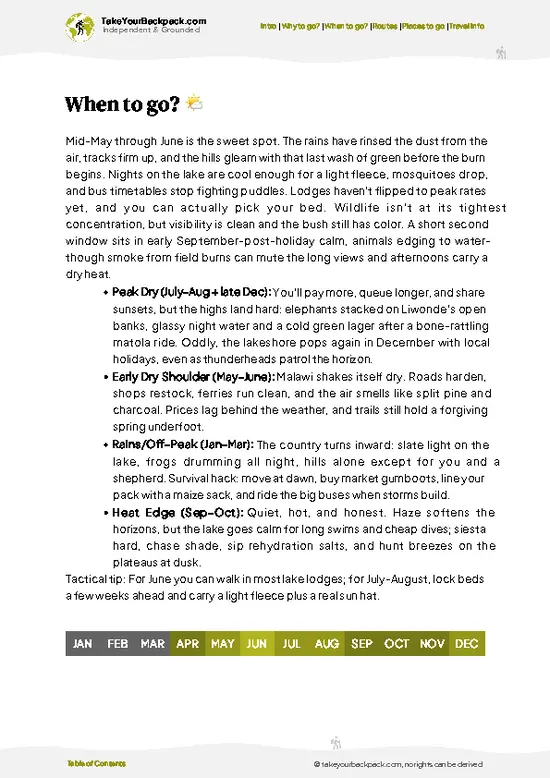
  • Weather: The best time to visit Lake Malawi Museum is during the dry season from May to October. Expect clear skies and minimal rain, which means fewer interruptions to your exploration. The wet season, November to April, brings heavy rains that can make travel tricky and dampen your museum experience.

  • Temperature: From May to October, temperatures hover between 15°C and 25°C (59°F to 77°F), perfect for wandering without overheating. The wet season heats up to 25°C–30°C (77°F–86°F), which can feel sticky and uncomfortable indoors.

  • Daylight Hours: Daylight is fairly consistent year-round, roughly 11 to 12 hours daily. However, the dry season offers clearer mornings and evenings, making it easier to plan your visit around museum hours and nearby activities.

  • Crowds: Tourist numbers peak
read more 👉

  • Weather: The best time to visit Lake Malawi Museum is during the dry season from May to October. Expect clear skies and minimal rain, which means fewer interruptions to your exploration. The wet season, November to April, brings heavy rains that can make travel tricky and dampen your museum experience.

  • Temperature: From May to October, temperatures hover between 15°C and 25°C (59°F to 77°F), perfect for wandering without overheating. The wet season heats up to 25°C–30°C (77°F–86°F), which can feel sticky and uncomfortable indoors.

  • Daylight Hours: Daylight is fairly consistent year-round, roughly 11 to 12 hours daily. However, the dry season offers clearer mornings and evenings, making it easier to plan your visit around museum hours and nearby activities.

  • Crowds: Tourist numbers peak in July and August, coinciding with the dry season and local holidays. Visiting in May, June, or September means fewer crowds, letting you soak in exhibits without elbowing through groups.

  • Seasonal Activities: Dry months align with cultural festivals and fishing seasons around Lake Malawi, adding layers to your visit. The museum often hosts special exhibits or events during these times, enriching your experience beyond static displays.

  • Price Fluctuations: Entry fees and local accommodation prices tend to rise during peak dry season months, especially July and August. Traveling just outside these months can save you money without sacrificing weather or experience quality.


Pro-tip: Aim for late May or early September to dodge crowds and high prices while enjoying near-perfect weather and a lively cultural scene around the museum.


source: climatestotravel.comJANJanuary: fair for travelingFEBFebruary: fair for travelingMARMarch: fair for travelingAPRApril: fair for travelingMAYMay: highly recommended for travelingJUNJune: highly recommended for travelingJULJuly: good for travelingAUGAugust: good for travelingSEPSeptember: highly recommended for travelingOCTOctober: highly recommended for travelingNOVNovember: fair for travelingDECDecember: fair for traveling
when-to-go

✈️ The backpacker research shortcutMalawi Travel Guide

An offline-friendly backpacking guide with optimized travel routes, ranked highlights, transport advice, and the best areas to stay.
example page 0 from our offline Travel Guide for Malawiexample page 1 from our offline Travel Guide for Malawiexample page 2 from our offline Travel Guide for Malawiexample page 3 from our offline Travel Guide for Malawiexample page 4 from our offline Travel Guide for Malawiexample page 5 from our offline Travel Guide for Malawiexample page 6 from our offline Travel Guide for Malawiexample page 7 from our offline Travel Guide for Malawi
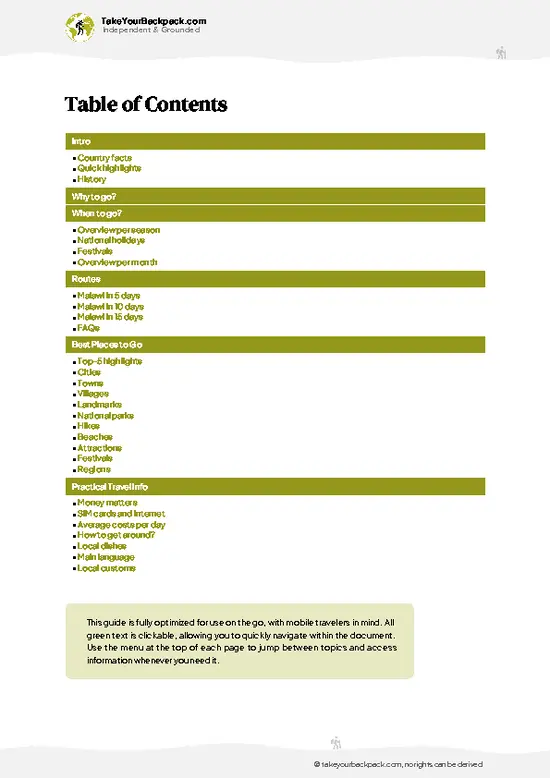
The digital guide (355 pages) contains:
87 highlights, ranked by travel appeal
Optimized 5, 10 & 15-day travel routes
Cities, national parks, beaches, historical sites, ...
How to get around
Offline-friendly for travel without Wi-Fi
👉 Click to see all 30+ guide features

📅 Plan smarter in minutes, not weeks
Month by month travel advice
Festivals & national holidays
Budget expectations

🗺️ Go to the right places, skip the overrated ones
Honest pros & cons of destinations
Top hikes, parks & viewpoints
Lesser-known places most travelers miss
Clear “worth it vs skip it” guidance

🛏️ Travel smoothly without rookie mistakes
Best areas to stay
Transport systems explained simply
Common scams & safety advice
SIM cards, money & practical tips

🌍 Understand the country, not just visit it
Culture & traditions
52 Essential phrases & customs
Festivals worth planning around
Traveler-friendly historical context
Insights that make places more meaningful

📱 Built for real travel conditions
Fully downloadable PDF
Works completely offline
Optimized for phone use
Useful in remote areas & buses
Everything in one place
Save weeks of stressful planning
Get instant access to the full guide directly. 30-day money-back guarantee.


Sent to your inbox immediately after payment • 100% Secure Checkout
Best Backpacking Travel Advisor 2025 tourism awardBest Backpacking
Travel Advisor
2025
What others say about Take Your Backpack Guides:
⭐⭐⭐⭐⭐
Fantastic, amazing amount of information!
⭐⭐⭐⭐⭐
My goodness this is amazing, it's what I've been looking for hats off too you!
⭐⭐⭐⭐⭐
I think this is absolutely BRILLIANT
⭐⭐⭐⭐
Very complete and informative. It's still missing places, but I gotta to commend you
⭐⭐⭐⭐⭐
This is truly amazing, thank you, can't wait to explore it with my kids!
⭐⭐⭐⭐⭐
Awesome resource, thank you!
⭐⭐⭐⭐⭐
This is amazing! Can't wait to explore the ones I haven't seen
⭐⭐⭐⭐
I love this! Well done, great idea.
⭐⭐⭐⭐⭐
Thanks for taking the time to make this gem!
⭐⭐⭐⭐⭐
This might be the best website I've ever seen.
⭐⭐⭐⭐⭐
Congratulations, and thank you so much for your work; it's incredibly valuable.
⭐⭐⭐⭐
In all seriousness I think you did a great job pointing out the important spots
⭐⭐⭐⭐⭐
10/10 very good
⭐⭐⭐⭐⭐
As someone who's only just starting to visit regularly this is awesome, thank you.
⭐⭐⭐⭐
Thank you very much! I'm going to visit my dad, it's going to be very useful!
⭐⭐⭐⭐⭐
This is really cool! We'll be travelling for the first time and this definitely come in handy.
⭐⭐⭐⭐⭐
You are now our minister of culture, congratulations 👨‍💼
⭐⭐⭐⭐⭐
Just wanted to tell you that this is a pearl! Going to follow your recommendations.
⭐⭐⭐⭐⭐
This is so cool. I'll definitely be using the resource for my travels soon.
⭐⭐⭐⭐⭐
This is very impressive! Good work.
⭐⭐⭐⭐⭐
This is an amazing and informative site. Very well done!

🛏️ Where to stay?Choosing the right base

If you’re backpacking near the Lake Malawi Museum, the real deal isn’t just about proximity—it’s about plugging into the pulse of the city without getting swallowed by tourist traps or sketchy spots. The best areas to crash are those that balance safety, social vibes, and budget-friendly options, all within a reasonable stroll to the museum.

First off, the city center around the museum is your go-to. It’s not a glitzy tourist zone, so don’t expect polished luxury or Instagram-perfect cafes on every corner. Instead, you’ll find a gritty, authentic urban mix where locals live, work, and hang out. … read more 👉
If you’re backpacking near the Lake Malawi Museum, the real deal isn’t just about proximity—it’s about plugging into the pulse of the city without getting swallowed by tourist traps or sketchy spots. The best areas to crash are those that balance safety, social vibes, and budget-friendly options, all within a reasonable stroll to the museum.

First off, the city center around the museum is your go-to. It’s not a glitzy tourist zone, so don’t expect polished luxury or Instagram-perfect cafes on every corner. Instead, you’ll find a gritty, authentic urban mix where locals live, work, and hang out. This means you get to experience the real heartbeat of Malawi’s cultural scene, with street food stalls, small markets, and friendly faces that make solo travel less lonely. The streets here are generally safe during the day, but like any city, keep your wits about you after dark.

Another solid choice is the nearby residential neighborhoods that border the city center. These areas offer quieter nights and a chance to mingle with locals away from the tourist buzz. You’ll find guesthouses and small lodges that cater to budget travelers, often with communal spaces where you can swap stories with other backpackers. It’s the kind of place where you might end up invited to a local dinner or a spontaneous music session—experiences no guidebook can sell.

Forget the flashy resorts by the lake; they’re expensive and isolate you from the city’s real character. Staying close to the museum means you’re not just ticking off a sight—you’re stepping into the daily rhythm of Malawi’s people, which is where the real magic happens.

👛 Costs (as of 17 February 2026)Travel costs and budget guide for Lake Malawi Museum

The Lake Malawi Museum in Mangochi charges an entrance fee of approximately €5 to €10 per person. Additional costs may include transportation to and from the museum, with local taxis or minibuses typically charging around €1 to €3 for short trips. Local meals can be found for €5 to €10, while dining at more tourist-oriented restaurants may cost €15 to €25.

source: malawitourism.com
⚠️ Prices can change and everyone travels differently, so take this as a rough guide. Hope it helps you plan your adventure!

Other Malawian attractions near Lake Malawi Museum

Explore more nearby:


👉 Discover all attractions

Or checkout all Malawi has to offer (think cities, towns, villages, national parks, hikes, beaches, festivals)
Country photo of Malawi

We 💚 feedbackKey takeaways before you go

The Lake Malawi Museum isn’t going to wow you with crowds or flashy exhibits—it’s quiet, a bit rough around the edges, and honestly, a little underfunded. But that’s exactly why it feels real. The best part? The way it captures local stories and the lake’s natural history without the usual tourist gloss. If you’re expecting polished displays, you’ll be disappointed. But if you want a genuine glimpse into Malawi’s heart, this place quietly delivers. Just go with an open mind and a curious spirit.

✍️ Help improve this page!
The information on this page is based on in-depth research, insights shared by experienced travelers, and feedback from the local travel community in Malawi. While every effort is made to keep the information accurate and current, conditions can change — so if you spot anything incorrect or outdated, please get in touch.


🙋‍♂️ Give feedback

👋 Meet the founderWho’s Behind Take Your Backpack?

Johan, backpacker and founder of TakeYourBackpackHi, I’m Johan (Netherlands 🇳🇱), the creator of TakeYourBackpack. Over the past decade, I’ve backpacked through 80+ countries across six continents, gaining extensive experience with independent travel, long-term trips, and overland routes.

This site is built on a combination of firsthand travel experience and carefully curated insights from other backpackers. Many guides are based on places I’ve personally visited, while others bring together tips, observations, and practical advice shared by trusted travelers I’ve met along the way.

The goal is to provide realistic, experience-driven guidance — not generic itineraries — so you can explore destinations with better context, clearer expectations, and more confidence.

Get full Malawi guide •
Instant download • 87 highlights • Full Offline guide