×

Malawi🇲🇼 | attractionsKaronga Museum and Cultural Centredinosaur fossils, human origins, lakeshore exhibits | things to do and best time to go

Explore Mzuzu Regional MuseumExplore Nkhata Bay Cultural Museum

Backpacking in Karonga Museum and Cultural Centre
🌟 Highlightattraction ranked #5
By Johan Kruseman 🇳🇱 | Updated April 26, 2026

A child’s gasp echoes off the cool stone as you round the corner—there it is, the Malawisaurus skeleton, jaws agape, ribcage arching overhead like a relic from a fever dream. The air smells faintly of dust and lake wind, and somewhere, a guide’s voice drifts through the gallery, half in English, half in Chitumbuka, weaving stories of ancient bones and colonial scars.

Karonga Museum and Cultural Centre sits in Malawi’s far north, a stone’s throw from the Tanzanian border and the shimmering edge of Lake Malawi. Here’s the straight talk: you won’t find crowds jostling for selfies or overpriced cappuccinos. The museum is small, honest, and a little rough around the edges—think more community pride than polished spectacle. But if you’re chasing the real pulse of Malawi’s history, from dinosaur fossils to the slave trade, this place delivers a gut-punch of context you won’t get in Lilongwe or Blantyre. Entry is cheap, the vibe is quietly intense, and the stories—especially if you catch a passionate local guide—are worth more than any Instagram filter.

Discover everything you want to know in the 📖 Malawi Travel Guide.
Loading the map 🌍
CLICK TO FILTER
city
town
village
unique site
national park
hike
beach
attraction
festival
region
SHOW COUNTRY’S BESTSHOW ALL

✨ Why go?
Ranked #5 attraction in Malawi
The unique appeal for travelers

Karonga Museum and Cultural Centre isn’t some glossy, overhyped tourist trap plastered all over Instagram. It’s the kind of place that demands your attention because it’s packed with real, raw history that shapes Malawi’s identity. Sure, it’s not a flashy monument or a wild adventure spot, but this museum is a milestone for anyone serious about understanding the country beyond the surface.

Why do backpackers make time for it? Because it’s a deep dive into the cultural heartbeat of the Karonga region and Malawi’s northern frontier. The exhibits don’t just skim the surface—they lay out the story of ancient civilizations, colonial struggles, and the rich traditions that still pulse through local communities. You’ll find artifacts that connect you to the past in a way no guidebook can replicate. … read more 👉
Karonga Museum and Cultural Centre isn’t some glossy, overhyped tourist trap plastered all over Instagram. It’s the kind of place that demands your attention because it’s packed with real, raw history that shapes Malawi’s identity. Sure, it’s not a flashy monument or a wild adventure spot, but this museum is a milestone for anyone serious about understanding the country beyond the surface.

Why do backpackers make time for it? Because it’s a deep dive into the cultural heartbeat of the Karonga region and Malawi’s northern frontier. The exhibits don’t just skim the surface—they lay out the story of ancient civilizations, colonial struggles, and the rich traditions that still pulse through local communities. You’ll find artifacts that connect you to the past in a way no guidebook can replicate.

Plus, it’s a rare spot where history meets humanity—the museum is run by locals who bring stories to life, not just display dusty relics. For backpackers trekking the northern circuit, it’s a logical and rewarding stop that adds context to the landscapes and people you’ll encounter next. The effort-to-reward ratio here is high: a few hours inside this unpretentious centre will deepen your journey far beyond the usual sightseeing checklist.
Get the complete Travel Guide for Malawi
Everything organized for offline planning — routes, highlights, costs & tips

See what’s inside 👉

Get the Travel Guide -

💡 HighlightsEssential experiences to have while visiting Karonga Museum and Cultural Centre

Malema Dinosaur Skeleton
Let’s cut through the hype: you’re not coming to Karonga for a dusty room of random bones. You’re coming for Malema, the 150-million-year-old Malawisaurus. This isn’t some generic T. rex knockoff. Malema is a locally excavated, full-scale sauropod skeleton that dominates the main hall. It’s the kind of fossil that makes you feel small—in the best way. There’s no velvet rope. You can get close enough to count the vertebrae and imagine this beast lumbering across what is now rural Malawi. Forget the Instagram filters; the real magic is the sense of scale and time that hits you when you stand beneath its ribcage.


Human Evolution Gallery
Skip the travel-brochure fluff about “the cradle of mankind.” Here, you get the hard evidence: stone tools, fossilized hominid remains, … read more 👉
Malema Dinosaur Skeleton
Let’s cut through the hype: you’re not coming to Karonga for a dusty room of random bones. You’re coming for Malema, the 150-million-year-old Malawisaurus. This isn’t some generic T. rex knockoff. Malema is a locally excavated, full-scale sauropod skeleton that dominates the main hall. It’s the kind of fossil that makes you feel small—in the best way. There’s no velvet rope. You can get close enough to count the vertebrae and imagine this beast lumbering across what is now rural Malawi. Forget the Instagram filters; the real magic is the sense of scale and time that hits you when you stand beneath its ribcage.


Human Evolution Gallery
Skip the travel-brochure fluff about “the cradle of mankind.” Here, you get the hard evidence: stone tools, fossilized hominid remains, and a timeline that puts Malawi right in the thick of the human story. The displays are blunt and unsentimental—no cartoonish dioramas, just the facts and the artifacts. If you want to see how East Africa fits into the global puzzle of human evolution, this is the room where it clicks. You’ll walk out with a new respect for the region’s scientific heft.


Lake Malawi Rift Valley Exhibit
This isn’t just a geology lesson. The Rift Valley display is a crash course in why Malawi looks the way it does—and why it matters. The museum doesn’t sugarcoat the seismic drama: tectonic plates, ancient lakes, and the raw forces that shaped the land. You’ll see real rock samples, interactive maps, and a narrative that ties the landscape to the people who live here. It’s the kind of exhibit that makes you want to get outside and see the rift for yourself.


Ethnographic Collection
Here’s where the Instagrammers get it wrong. The real soul of Karonga isn’t just in the fossils—it’s in the everyday objects: musical instruments, fishing gear, ceremonial masks, and tools that tell the story of the local Tumbuka and Ngonde peoples. These aren’t sanitized, gift-shop replicas. Many pieces are still used in local ceremonies. The display is refreshingly honest about colonial history, migration, and cultural change. If you want to understand Malawi beyond the safari clichés, linger here.


Oral History Listening Stations
This is where the museum gets personal. Plug in and listen to elders recounting myths, migration tales, and memories of the lake. No glossy production values—just raw, unfiltered voices. It’s a rare chance to hear living history, not just read about it. The stories are sometimes funny, sometimes heartbreaking, always real. If you want to connect with Malawi on a human level, don’t skip this corner.
Spotted a mistake or missing something? Contact us.
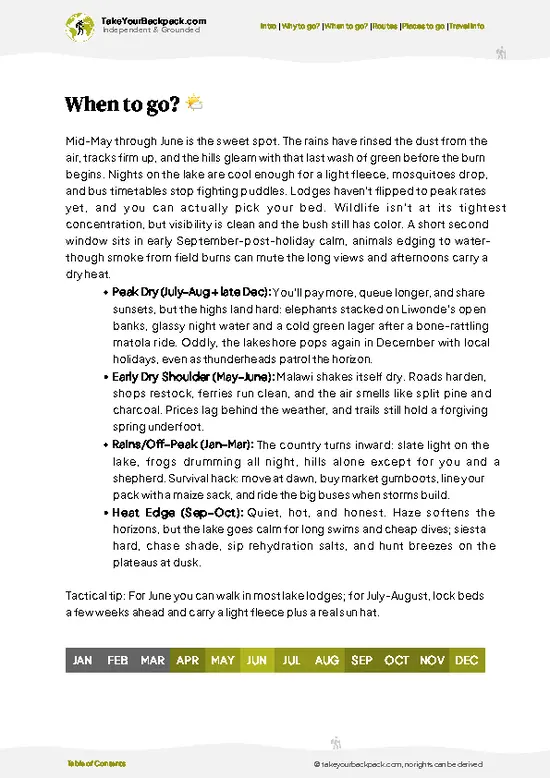
🌤️ When to go?When to go for the best experience


  • Weather: The dry season from May to October is your best bet. Expect clear skies and minimal rain, which means no mud battles or soggy gear. The wet season, November to April, brings heavy rains that can make roads to Karonga slippery and unreliable.

  • Temperature: From May to October, temperatures hover between 15°C to 25°C (59°F to 77°F), comfortable for exploring without overheating. The wet season cranks up the humidity and temps can hit 30°C (86°F) or more, making trekking less pleasant.

  • Daylight Hours: Daylight is pretty consistent year-round, roughly 11 to 12 hours. But during the dry season, clearer skies mean you get more usable daylight for museum visits and cultural tours without the threat of afternoon downpours.

  • Crowds: Karonga Museum isn’t a tourist magnet, but the dry
read more 👉

  • Weather: The dry season from May to October is your best bet. Expect clear skies and minimal rain, which means no mud battles or soggy gear. The wet season, November to April, brings heavy rains that can make roads to Karonga slippery and unreliable.

  • Temperature: From May to October, temperatures hover between 15°C to 25°C (59°F to 77°F), comfortable for exploring without overheating. The wet season cranks up the humidity and temps can hit 30°C (86°F) or more, making trekking less pleasant.

  • Daylight Hours: Daylight is pretty consistent year-round, roughly 11 to 12 hours. But during the dry season, clearer skies mean you get more usable daylight for museum visits and cultural tours without the threat of afternoon downpours.

  • Crowds: Karonga Museum isn’t a tourist magnet, but the dry season sees a modest uptick in visitors. Still, expect a quiet, authentic experience without the Instagram mob.

  • Seasonal Activities: The dry months coincide with local cultural festivals and traditional ceremonies, offering a rare chance to witness authentic Malawian heritage beyond the museum walls.

  • Price Fluctuations: Entry fees and local guides’ rates remain stable year-round, but accommodation prices near Karonga can spike slightly during the dry season when more travelers arrive.


Pro-tip: Aim for June to September to dodge rain, enjoy cooler temps, and catch cultural events without the hassle of crowds or inflated prices.


source: climatestotravel.comJANJanuary: fair for travelingFEBFebruary: fair for travelingMARMarch: fair for travelingAPRApril: fair for travelingMAYMay: highly recommended for travelingJUNJune: excellent for travelingJULJuly: excellent for travelingAUGAugust: excellent for travelingSEPSeptember: excellent for travelingOCTOctober: highly recommended for travelingNOVNovember: fair for travelingDECDecember: fair for traveling
when-to-go

✈️ The backpacker research shortcutMalawi Travel Guide

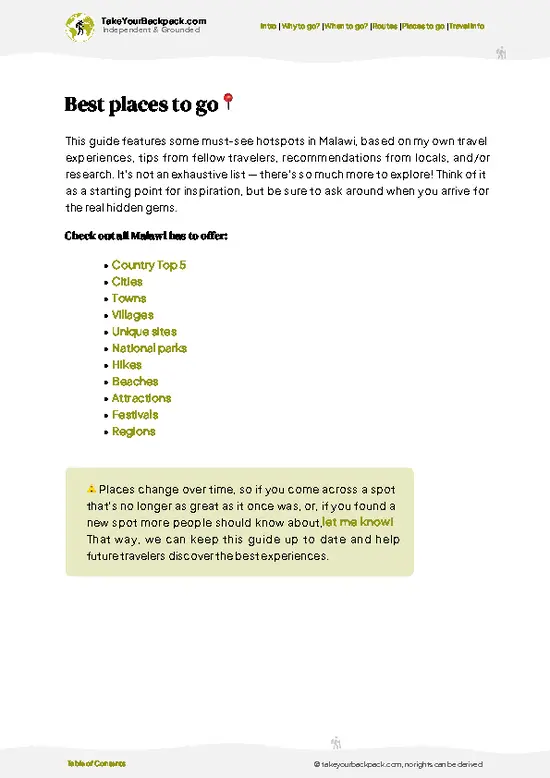
An offline-friendly backpacking guide with optimized travel routes, ranked highlights, transport advice, and the best areas to stay.
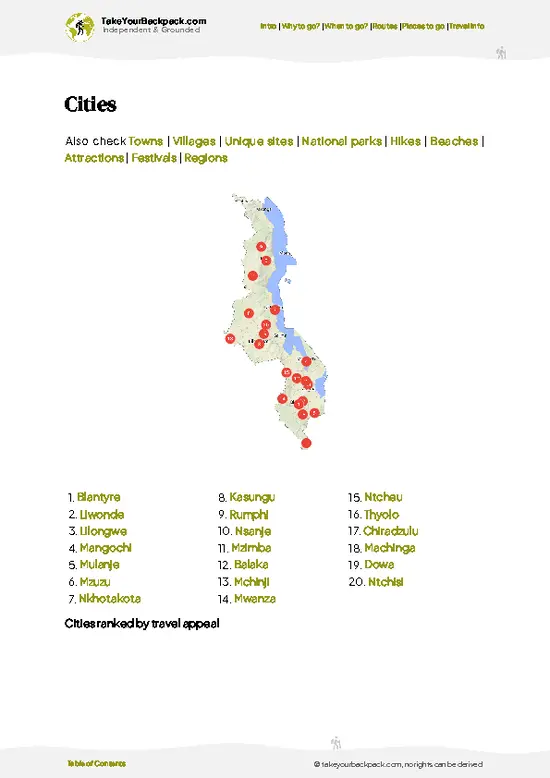
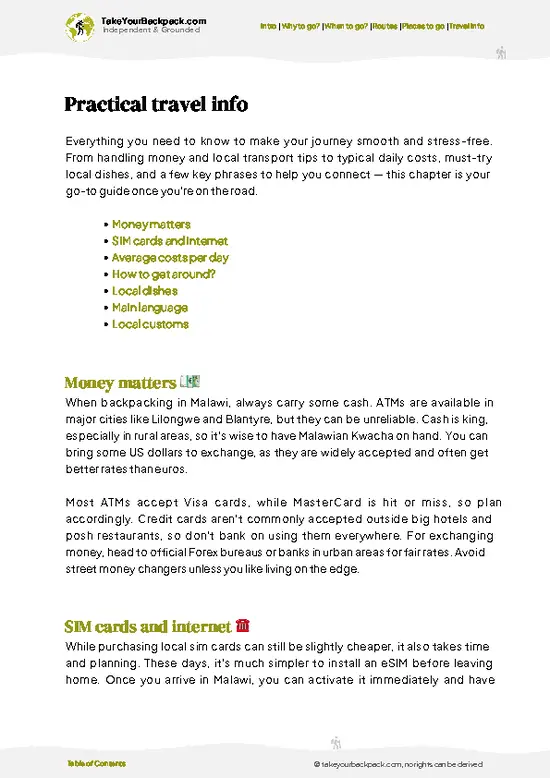
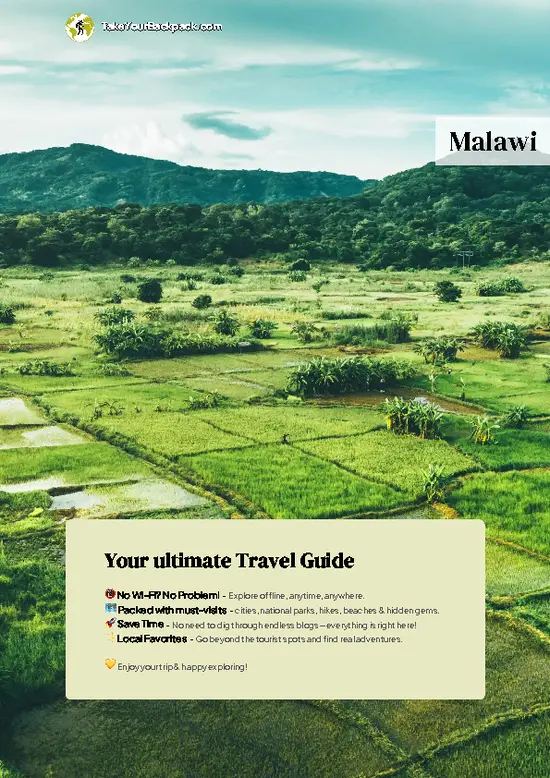
example page 0 from our offline Travel Guide for Malawiexample page 1 from our offline Travel Guide for Malawiexample page 2 from our offline Travel Guide for Malawiexample page 3 from our offline Travel Guide for Malawiexample page 4 from our offline Travel Guide for Malawiexample page 5 from our offline Travel Guide for Malawiexample page 6 from our offline Travel Guide for Malawiexample page 7 from our offline Travel Guide for Malawi
The digital guide (355 pages) contains:
87 highlights, ranked by travel appeal
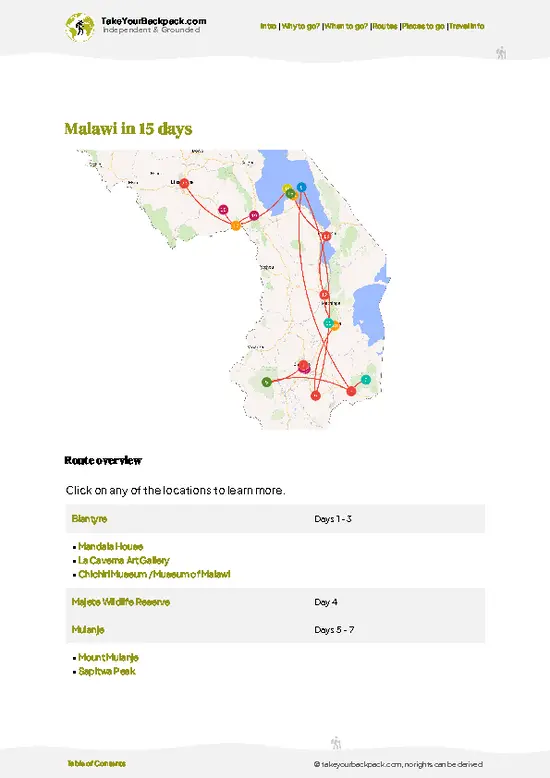
Optimized 5, 10 & 15-day travel routes
Cities, national parks, beaches, historical sites, ...
How to get around
Offline-friendly for travel without Wi-Fi
👉 Click to see all 30+ guide features

📅 Plan smarter in minutes, not weeks
Month by month travel advice
Festivals & national holidays
Budget expectations

🗺️ Go to the right places, skip the overrated ones
Honest pros & cons of destinations
Top hikes, parks & viewpoints
Lesser-known places most travelers miss
Clear “worth it vs skip it” guidance

🛏️ Travel smoothly without rookie mistakes
Best areas to stay
Transport systems explained simply
Common scams & safety advice
SIM cards, money & practical tips

🌍 Understand the country, not just visit it
Culture & traditions
52 Essential phrases & customs
Festivals worth planning around
Traveler-friendly historical context
Insights that make places more meaningful

📱 Built for real travel conditions
Fully downloadable PDF
Works completely offline
Optimized for phone use
Useful in remote areas & buses
Everything in one place
Save weeks of stressful planning
Get instant access to the full guide directly. 30-day money-back guarantee.


Sent to your inbox immediately after payment • 100% Secure Checkout
Best Backpacking Travel Advisor 2025 tourism awardBest Backpacking
Travel Advisor
2025
What others say about Take Your Backpack Guides:
⭐⭐⭐⭐⭐
Fantastic, amazing amount of information!
⭐⭐⭐⭐⭐
My goodness this is amazing, it's what I've been looking for hats off too you!
⭐⭐⭐⭐⭐
I think this is absolutely BRILLIANT
⭐⭐⭐⭐
Very complete and informative. It's still missing places, but I gotta to commend you
⭐⭐⭐⭐⭐
This is truly amazing, thank you, can't wait to explore it with my kids!
⭐⭐⭐⭐⭐
Awesome resource, thank you!
⭐⭐⭐⭐⭐
This is amazing! Can't wait to explore the ones I haven't seen
⭐⭐⭐⭐
I love this! Well done, great idea.
⭐⭐⭐⭐⭐
Thanks for taking the time to make this gem!
⭐⭐⭐⭐⭐
This might be the best website I've ever seen.
⭐⭐⭐⭐⭐
Congratulations, and thank you so much for your work; it's incredibly valuable.
⭐⭐⭐⭐
In all seriousness I think you did a great job pointing out the important spots
⭐⭐⭐⭐⭐
10/10 very good
⭐⭐⭐⭐⭐
As someone who's only just starting to visit regularly this is awesome, thank you.
⭐⭐⭐⭐
Thank you very much! I'm going to visit my dad, it's going to be very useful!
⭐⭐⭐⭐⭐
This is really cool! We'll be travelling for the first time and this definitely come in handy.
⭐⭐⭐⭐⭐
You are now our minister of culture, congratulations 👨‍💼
⭐⭐⭐⭐⭐
Just wanted to tell you that this is a pearl! Going to follow your recommendations.
⭐⭐⭐⭐⭐
This is so cool. I'll definitely be using the resource for my travels soon.
⭐⭐⭐⭐⭐
This is very impressive! Good work.
⭐⭐⭐⭐⭐
This is an amazing and informative site. Very well done!

🛏️ Where to stay?How to pick the right area

Karonga Museum and Cultural Centre sits in a part of Malawi that’s not exactly overrun with tourists, but don’t let that fool you into thinking it’s a quiet backwater. The reality? It’s a spot where the crowds are manageable, but the infrastructure for backpackers is still finding its feet. You won’t stumble into a buzzing backpacker hub like you might in more famous East African cities. Instead, your best bet is to base yourself in the town of Karonga itself, where the vibe is low-key but friendly, and the locals are genuinely welcoming.

Staying close to the museum means you’re within easy walking … read more 👉
Karonga Museum and Cultural Centre sits in a part of Malawi that’s not exactly overrun with tourists, but don’t let that fool you into thinking it’s a quiet backwater. The reality? It’s a spot where the crowds are manageable, but the infrastructure for backpackers is still finding its feet. You won’t stumble into a buzzing backpacker hub like you might in more famous East African cities. Instead, your best bet is to base yourself in the town of Karonga itself, where the vibe is low-key but friendly, and the locals are genuinely welcoming.

Staying close to the museum means you’re within easy walking distance of the main attraction, which is a huge plus if you want to avoid the hassle and cost of taxis. The town center is where you’ll find the safest and most social spots for budget travelers. It’s not flashy, but it’s real. You’ll meet other backpackers in small guesthouses or local eateries where the conversation flows easily over a plate of nsima and fish. The streets here feel secure enough for solo travelers, especially if you stick to daylight hours and the main roads.

If you want to stretch your legs beyond the museum, the lakeshore is a short ride away and offers a different kind of chill—quiet beaches, fishing villages, and a slower pace that’s perfect for recharging. It’s not about luxury here; it’s about authenticity, connection, and the kind of cultural immersion that’s hard to fake. So, skip the hype and lean into the unvarnished charm of Karonga town. That’s where the real magic happens.

👛 Costs (as of 1 February 2026)Typical daily expenses

As of the most recent estimates, the entrance fee for international tourists to the Karonga Museum and Cultural Centre is approximately €1.25. Additional costs may include guided tours or other services, which can vary.

source: warmheartofmalawi.org
⚠️ Prices can change and everyone travels differently, so take this as a rough guide. Hope it helps you plan your adventure!

Other Malawian attractions near Karonga Museum and Cultural Centre

Explore more nearby:


👉 Discover all attractions

Or checkout all Malawi has to offer (think cities, towns, villages, national parks, hikes, beaches, festivals)
Country photo of Malawi

We 💚 feedbackWhat to keep in mind

Karonga Museum isn’t your flashy, polished tourist trap. It’s a bit rough around the edges, and yes, it can feel quiet—sometimes too quiet. But that’s exactly where its charm lies. The real magic is in the raw stories of Malawi’s past, told through artifacts that don’t just sit behind glass but almost whisper their history if you lean in close. If you’re after crowds or Instagram moments, look elsewhere. But if you want to connect with a slice of African heritage that’s honest, unvarnished, and deeply human, this place quietly delivers.

✍️ Help improve this page!
The information on this page is based on in-depth research, insights shared by experienced travelers, and feedback from the local travel community in Malawi. While every effort is made to keep the information accurate and current, conditions can change — so if you spot anything incorrect or outdated, please get in touch.


🙋‍♂️ Give feedback

👋 Meet the founderWho’s Behind Take Your Backpack?

Johan, backpacker and founder of TakeYourBackpackHi, I’m Johan (Netherlands 🇳🇱), the creator of TakeYourBackpack. Over the past decade, I’ve backpacked through 80+ countries across six continents, gaining extensive experience with independent travel, long-term trips, and overland routes.

This site is built on a combination of firsthand travel experience and carefully curated insights from other backpackers. Many guides are based on places I’ve personally visited, while others bring together tips, observations, and practical advice shared by trusted travelers I’ve met along the way.

The goal is to provide realistic, experience-driven guidance — not generic itineraries — so you can explore destinations with better context, clearer expectations, and more confidence.

Get full Malawi guide •
Instant download • 87 highlights • Full Offline guide