
×

Malawi🇲🇼 | attractionsChifunda Cultural Village Experiencetraditional homesteads, hands-on crafts, local cuisine | things to do and best time to go

Explore Chongoni Rock Art Area Interpretive SitesExplore Jacaranda Cultural Centre and School for Orphans

Backpacking in Chifunda Cultural Village Experience
By Johan Kruseman 🇳🇱 | Updated April 24, 2026

Here’s what nobody tells you until you’re standing there, barefoot in the dust: at Chifunda Cultural Village Experience, you’re not just watching a performance—you’re living inside it. That’s the practical edge. You get to sleep in real thatched huts, eat nsima with your hands, and wake up to the sound of actual village life, not a curated show for tourists. Chifunda sits in the far north of Malawi, tucked near the Luangwa River, a solid detour from the usual Lake Malawi circuit. Here’s the straight talk: if you’re chasing Wi-Fi and cappuccinos, keep moving. But if you want to swap stories with elders by firelight and learn how to pound maize or track wildlife with locals, this is the jackpot. It’s raw, sometimes awkward, and refreshingly unpolished. Crowds? Forget it—most nights, you’ll be the only outsider. Costs are low, but the real price is stepping out of your comfort zone. Compared to the tourist-thronged lake beaches or safari lodges, Chifunda is the real Malawi—messy, generous, and unforgettable for all the right reasons.

Discover everything you want to know in the 📖 Malawi Travel Guide.
Loading the map 🌍
CLICK TO FILTER
city
town
village
unique site
national park
hike
beach
attraction
festival
region
SHOW COUNTRY’S BESTSHOW ALL

✨ Why go?
Ranked #99 attraction in Malawi
Why visitors keep coming back

The Chifunda Cultural Village Experience in Malawi isn’t some polished, Instagram-ready postcard. It’s raw, real, and yes, it can get crowded during peak times—because it’s *that* iconic. Backpackers don’t just stop here for a quick photo op; they come for the deep dive into Malawi’s living history. This isn’t a museum behind glass; it’s a vibrant, breathing community where traditions are practiced daily. You’ll witness authentic dances, crafts, and rituals that have survived colonialism and modernization. The effort-to-reward ratio here is off the charts: you invest time and a bit of patience, and you walk away with stories that no guidebook can capture.

Chifunda is a major milestone on Malawi’s cultural route, a place where you can feel the pulse of the nation’s soul. It’s not just about … read more 👉
The Chifunda Cultural Village Experience in Malawi isn’t some polished, Instagram-ready postcard. It’s raw, real, and yes, it can get crowded during peak times—because it’s *that* iconic. Backpackers don’t just stop here for a quick photo op; they come for the deep dive into Malawi’s living history. This isn’t a museum behind glass; it’s a vibrant, breathing community where traditions are practiced daily. You’ll witness authentic dances, crafts, and rituals that have survived colonialism and modernization. The effort-to-reward ratio here is off the charts: you invest time and a bit of patience, and you walk away with stories that no guidebook can capture.

Chifunda is a major milestone on Malawi’s cultural route, a place where you can feel the pulse of the nation’s soul. It’s not just about ticking off a famous spot; it’s about connecting with people whose heritage shapes the country’s identity. The cost might seem steep compared to other local experiences, but the value lies in the genuine exchange—something that’s increasingly rare in tourist-heavy spots. If you want to understand Malawi beyond the surface, this is where you start.
Get the complete Travel Guide for Malawi
Everything organized for offline planning — routes, highlights, costs & tips

See what’s inside 👉

Get the Travel Guide -

💡 HighlightsPlaces and moments you shouldn't skip

1. Real Village Immersion—Not a Stage Show
Forget the sanitized, tourist-friendly “cultural villages” you’ll find in brochures. Chifunda is the real deal: a living, breathing Kunda community where people actually live, farm, and raise families. You’re not watching actors in costume; you’re stepping into the daily rhythm of rural Malawi. You’ll see kids chasing chickens, elders weaving baskets, and the slow, deliberate pace of village life. There’s no velvet rope between you and the experience—just a respectful invitation to witness and participate. The authenticity is unfiltered, sometimes messy, and always more interesting than any Instagram highlight reel.


2. Drum and Dance Evenings—Raw, Relentless Energy
If you’ve only seen African dance on YouTube, you’re in for a shock. When the sun drops, … read more 👉
1. Real Village Immersion—Not a Stage Show
Forget the sanitized, tourist-friendly “cultural villages” you’ll find in brochures. Chifunda is the real deal: a living, breathing Kunda community where people actually live, farm, and raise families. You’re not watching actors in costume; you’re stepping into the daily rhythm of rural Malawi. You’ll see kids chasing chickens, elders weaving baskets, and the slow, deliberate pace of village life. There’s no velvet rope between you and the experience—just a respectful invitation to witness and participate. The authenticity is unfiltered, sometimes messy, and always more interesting than any Instagram highlight reel.


2. Drum and Dance Evenings—Raw, Relentless Energy
If you’ve only seen African dance on YouTube, you’re in for a shock. When the sun drops, the village’s drum circle kicks off with a force that rattles your ribcage. This isn’t a rehearsed performance for outsiders; it’s a communal release, with villagers of all ages joining in. The energy is contagious—kids, elders, and visitors are all fair game for the dance circle. The stamina and athleticism on display are humbling. You’ll sweat just watching, and if you’re brave (or foolish) enough to join, you’ll earn instant respect and a story worth telling.


3. Traditional Food Preparation—Hands-On, Not Just a Tasting
You’re not getting a buffet line of “local cuisine” here. Instead, you’ll be invited to help pound maize, stir nsima over a wood fire, or roast groundnuts with the women of the village. There’s no shortcut to the flavors—everything is slow, smoky, and made from scratch. The process is half the experience, and you’ll leave with a new appreciation for the labor behind every meal. If you’re lucky, you’ll get to try local brews or wild honey, but don’t expect a curated tasting menu. This is food as survival and celebration.


4. Storytelling by the Fire—History Without the Filter
When the stars come out, the elders gather to share stories—some ancient, some recent, all delivered with wit and gravity. These aren’t sanitized parables for tourists; you’ll hear about real struggles, local legends, and the village’s relationship with the Luangwa River and the wildlife that shapes daily life. The stories are unscripted, sometimes dark, often hilarious, and always revealing. This is where you’ll get the kind of context no guidebook can offer.


5. Guided Walks—Tracking, Not Just Trekking
Chifunda sits on the edge of the North Luangwa wilderness, and the guides here aren’t just reciting animal facts—they’re teaching you how to read the bush. You’ll learn to spot spoor, identify medicinal plants, and understand how the community coexists with elephants and hippos. It’s not a sanitized safari; it’s a crash course in survival and respect for the land. If you want to know what “wild” really means, this is where you find out.
Spotted a mistake or missing something? Contact us.

Things to do near Chifunda Cultural Village Experience

Ratings based on Tripadvisor reviews. When you book through this link, you support our work at no extra cost to you.

🌤️ When to go?Best time to visit Chifunda Cultural Village Experience


  • Weather: The best time to visit Chifunda Cultural Village is during Malawi’s dry season, from May to October. Expect clear skies and minimal rain, which means less mud and more comfortable trekking. Avoid the wet season (November to April) when heavy rains can turn paths into slippery messes and disrupt village activities.

  • Temperature: Dry season days hover around 20-25°C (68-77°F), perfect for exploring without overheating. Nights can dip to 10-15°C (50-59°F), so pack a light jacket. The wet season is warmer but muggy, often hitting 27-30°C (81-86°F), which can sap your energy fast.

  • Daylight Hours: Daylight is fairly consistent year-round, roughly 11-12 hours. However, during the dry season, clearer skies mean you get more usable daylight for village tours and hikes without the threat of
read more 👉

  • Weather: The best time to visit Chifunda Cultural Village is during Malawi’s dry season, from May to October. Expect clear skies and minimal rain, which means less mud and more comfortable trekking. Avoid the wet season (November to April) when heavy rains can turn paths into slippery messes and disrupt village activities.

  • Temperature: Dry season days hover around 20-25°C (68-77°F), perfect for exploring without overheating. Nights can dip to 10-15°C (50-59°F), so pack a light jacket. The wet season is warmer but muggy, often hitting 27-30°C (81-86°F), which can sap your energy fast.

  • Daylight Hours: Daylight is fairly consistent year-round, roughly 11-12 hours. However, during the dry season, clearer skies mean you get more usable daylight for village tours and hikes without the threat of sudden afternoon storms.

  • Crowds: This isn’t a tourist magnet, but the dry season sees a modest uptick in visitors. If you want a quieter, more intimate experience, aim for shoulder months like May or September when the weather’s good but the crowds haven’t peaked.

  • Seasonal Activities: The dry season is when cultural events and traditional ceremonies are most active, offering a genuine window into local life. The wet season often sidelines these activities, making your visit less immersive.

  • Price Fluctuations: Expect slightly higher prices during the dry season due to demand, especially in July and August. The wet season offers better deals but at the cost of a less reliable experience and fewer cultural events.


Pro-tip: Visit in late May or early September to balance good weather, fewer crowds, and authentic cultural moments without the premium price tag.


source: climatestotravel.comJANJanuary: below average for travelingFEBFebruary: below average for travelingMARMarch: below average for travelingAPRApril: fair for travelingMAYMay: highly recommended for travelingJUNJune: excellent for travelingJULJuly: excellent for travelingAUGAugust: excellent for travelingSEPSeptember: highly recommended for travelingOCTOctober: excellent for travelingNOVNovember: fair for travelingDECDecember: below average for traveling
when-to-go

✈️ The backpacker research shortcutMalawi Travel Guide

An offline-friendly backpacking guide with optimized travel routes, ranked highlights, transport advice, and the best areas to stay.
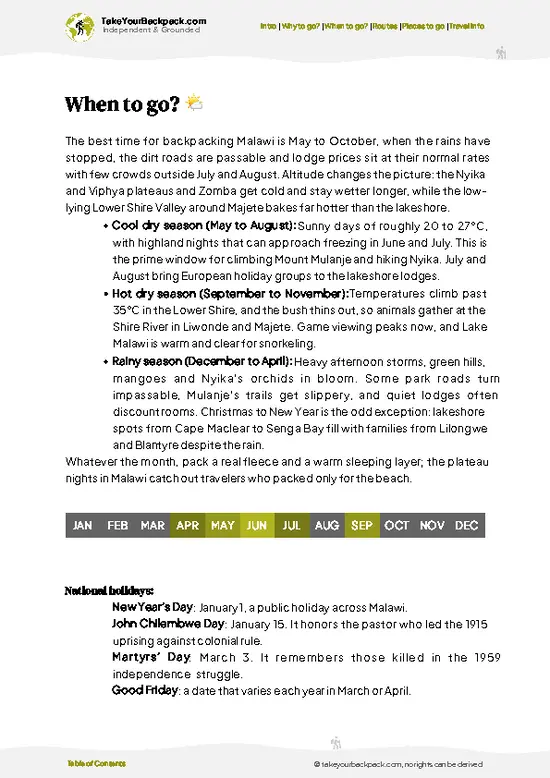
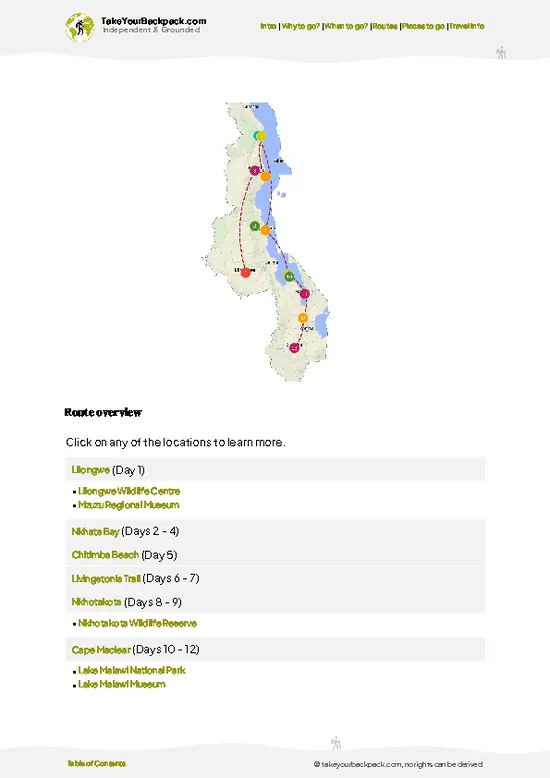
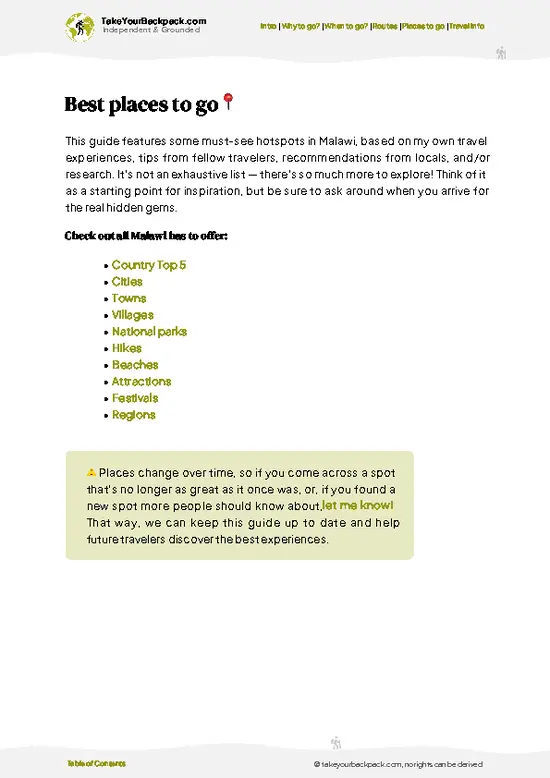
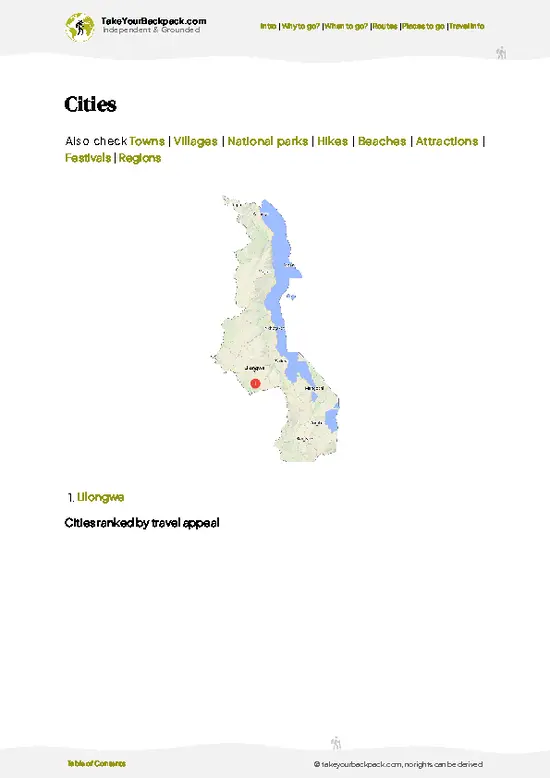
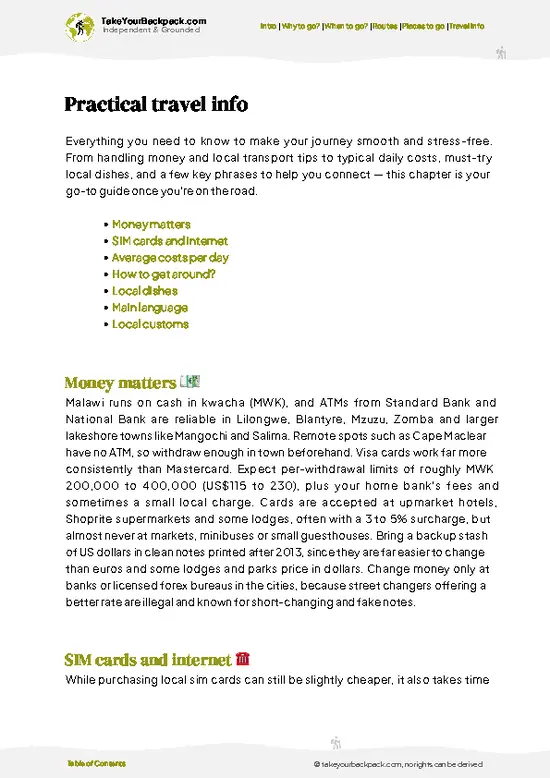
example page 0 from our offline Travel Guide for Malawiexample page 1 from our offline Travel Guide for Malawiexample page 2 from our offline Travel Guide for Malawiexample page 3 from our offline Travel Guide for Malawiexample page 4 from our offline Travel Guide for Malawiexample page 5 from our offline Travel Guide for Malawiexample page 6 from our offline Travel Guide for Malawiexample page 7 from our offline Travel Guide for Malawi
The digital guide (355 pages) contains:
87 highlights, ranked by travel appeal
Optimized 5, 10 & 15-day travel routes
Cities, national parks, beaches, historical sites, ...
How to get around
Offline-friendly for travel without Wi-Fi
👉 Click to see all 30+ guide features

📅 Plan smarter in minutes, not weeks
Month by month travel advice
Festivals & national holidays
Budget expectations

🗺️ Go to the right places, skip the overrated ones
Honest pros & cons of destinations
Top hikes, parks & viewpoints
Lesser-known places most travelers miss
Clear “worth it vs skip it” guidance

🛏️ Travel smoothly without rookie mistakes
Best areas to stay
Transport systems explained simply
Common scams & safety advice
SIM cards, money & practical tips

🌍 Understand the country, not just visit it
Culture & traditions
52 Essential phrases & customs
Festivals worth planning around
Traveler-friendly historical context
Insights that make places more meaningful

📱 Built for real travel conditions
Fully downloadable PDF
Works completely offline
Optimized for phone use
Useful in remote areas & buses
Everything in one place
Save weeks of stressful planning
Get instant access to the full guide directly. 30-day money-back guarantee.


Sent to your inbox immediately after payment • 100% Secure Checkout
Best Backpacking Travel Advisor 2025 tourism awardBest Backpacking
Travel Advisor
2025
What others say about Take Your Backpack Guides:
⭐⭐⭐⭐⭐
Fantastic, amazing amount of information!
⭐⭐⭐⭐⭐
My goodness this is amazing, it's what I've been looking for hats off too you!
⭐⭐⭐⭐⭐
I think this is absolutely BRILLIANT
⭐⭐⭐⭐
Very complete and informative. It's still missing places, but I gotta to commend you
⭐⭐⭐⭐⭐
This is truly amazing, thank you, can't wait to explore it with my kids!
⭐⭐⭐⭐⭐
Awesome resource, thank you!
⭐⭐⭐⭐⭐
This is amazing! Can't wait to explore the ones I haven't seen
⭐⭐⭐⭐
I love this! Well done, great idea.
⭐⭐⭐⭐⭐
Thanks for taking the time to make this gem!
⭐⭐⭐⭐⭐
This might be the best website I've ever seen.
⭐⭐⭐⭐⭐
Congratulations, and thank you so much for your work; it's incredibly valuable.
⭐⭐⭐⭐
In all seriousness I think you did a great job pointing out the important spots
⭐⭐⭐⭐⭐
10/10 very good
⭐⭐⭐⭐⭐
As someone who's only just starting to visit regularly this is awesome, thank you.
⭐⭐⭐⭐
Thank you very much! I'm going to visit my dad, it's going to be very useful!
⭐⭐⭐⭐⭐
This is really cool! We'll be travelling for the first time and this definitely come in handy.
⭐⭐⭐⭐⭐
You are now our minister of culture, congratulations 👨‍💼
⭐⭐⭐⭐⭐
Just wanted to tell you that this is a pearl! Going to follow your recommendations.
⭐⭐⭐⭐⭐
This is so cool. I'll definitely be using the resource for my travels soon.
⭐⭐⭐⭐⭐
This is very impressive! Good work.
⭐⭐⭐⭐⭐
This is an amazing and informative site. Very well done!

🛏️ Where to stay?Choosing the right base

If you’re heading to the Chifunda Cultural Village Experience in Malawi, brace yourself for a reality check: this isn’t a polished tourist trap with endless amenities. It’s raw, real, and deeply rooted in local life. That means the best places to stay aren’t flashy lodges but neighborhoods where you can actually connect with the culture and people.

Focus your search around the town of Nkhata Bay. This area is the backpacker hub for a reason. It’s safe enough to wander after dark, and the vibe is social without being overwhelming. You’ll find guesthouses and small lodges that cater to budget travelers … read more 👉
If you’re heading to the Chifunda Cultural Village Experience in Malawi, brace yourself for a reality check: this isn’t a polished tourist trap with endless amenities. It’s raw, real, and deeply rooted in local life. That means the best places to stay aren’t flashy lodges but neighborhoods where you can actually connect with the culture and people.

Focus your search around the town of Nkhata Bay. This area is the backpacker hub for a reason. It’s safe enough to wander after dark, and the vibe is social without being overwhelming. You’ll find guesthouses and small lodges that cater to budget travelers and solo adventurers who want to swap stories over a fire or share a meal with locals. The energy here is genuine—no forced smiles or staged experiences.

Staying close to the lakeshore in Nkhata Bay puts you within easy reach of the village experience and offers a chance to cool off in Lake Malawi after a day of cultural immersion. It’s also where you’ll find the most reliable transport options to and from the village, which can be tricky if you’re off the beaten path.

Skip the isolated resorts. They’re expensive, sterile, and cut you off from the heartbeat of the place. Instead, choose the neighborhoods where locals live and backpackers gather. That’s where the real magic of Chifunda happens—through conversations, shared meals, and the kind of connection no Instagram post can capture.

👛 Costs (as of 30 January 2026)Typical daily expenses

The Chitimba Cultural Homestay in Malawi offers an all-inclusive experience at US$100 per person per night, covering accommodation, all meals, and cultural activities. Children under 14 years are half-price. Additionally, 25% of the cost supports community development projects. ([responsiblevacation.com](https://www.responsiblevacation.com/accommodation/34613/chitimba-cultural-homestay-malawi?utm_source=openai))
⚠️ Prices can change and everyone travels differently, so take this as a rough guide. Hope it helps you plan your adventure!

Other Malawian attractions near Chifunda Cultural Village Experience

Explore more nearby:


👉 Discover all attractions

Or checkout all Malawi has to offer (think cities, towns, villages, national parks, hikes, beaches, festivals)
Country photo of Malawi

We 💚 feedbackSumming up the experience

The Chifunda Cultural Village isn’t a polished theme park—it’s raw, real, and sometimes a bit chaotic. Expect some crowds, especially midday, but don’t let that scare you off. The real magic happens when you slow down and listen: the elders’ stories, the rhythms of traditional songs, the way the children’s laughter fills the air. It’s not about perfect Instagram shots; it’s about feeling connected to a living culture that’s proud, resilient, and surprisingly warm. Go with an open heart, and you’ll leave richer than you came.

✍️ Help improve this page!
The information on this page is based on in-depth research, insights shared by experienced travelers, and feedback from the local travel community in Malawi. While every effort is made to keep the information accurate and current, conditions can change — so if you spot anything incorrect or outdated, please get in touch.


🙋‍♂️ Give feedback

👋 Meet the founderWho’s Behind Take Your Backpack?

Johan, backpacker and founder of TakeYourBackpackHi, I’m Johan (Netherlands 🇳🇱), the creator of TakeYourBackpack. Over the past decade, I’ve backpacked through 80+ countries across six continents, gaining extensive experience with independent travel, long-term trips, and overland routes.

This site is built on a combination of firsthand travel experience and carefully curated insights from other backpackers. Many guides are based on places I’ve personally visited, while others bring together tips, observations, and practical advice shared by trusted travelers I’ve met along the way.

The goal is to provide realistic, experience-driven guidance — not generic itineraries — so you can explore destinations with better context, clearer expectations, and more confidence.

Get full Malawi guide •
Instant download • 87 highlights • Full Offline guide