×

Malawi🇲🇼 | best attractionsBest 12 attractions in Malawi

Attractions in Malawi are mostly outdoors, low-key and close to the ground. The lake is the center of gravity: 580 km of sand, fishing dugouts and woodsmoke, with beach lodges and dorms from US$8 to 40. The highlands of the north and south are cooler, smell of pine and wet earth, and need slow minibus rides on rutted roads. The national parks are small, quiet and pricier, with few other vehicles. Backpacking here means independent travel by shared minibus, bargaining with bike-taxi riders, and accepting dust, delays and warm greetings. Crowds are rare almost everywhere, and you pay for that in effort.

By Johan Kruseman 🇳🇱 | Updated October 19, 2026
Explore the best festivals in Malawi

Why go?Understanding Their Importance

Malawi is a narrow, landlocked country built around one enormous rift valley lake, and that geography shapes everything a traveler does here. Roughly a fifth of the country is water, so the shoreline, with its warm shallows, evening fish smoke and the click of paddles, becomes the default meeting place for locals and visitors alike. Above it, the escarpments and plateaus climb to over 3,000 meters, so you can swap 30°C lakeside heat for cool mist in a day.

The country is also one of the poorest in the world, and that is visible in the infrastructure. Main roads between the big towns are paved, but side roads turn to red mud in the rains, fuel shortages and power cuts happen, and minibuses leave only when full. Tourism is small and mostly community-scaled, so you meet villagers, guides and … read more 👉
Malawi is a narrow, landlocked country built around one enormous rift valley lake, and that geography shapes everything a traveler does here. Roughly a fifth of the country is water, so the shoreline, with its warm shallows, evening fish smoke and the click of paddles, becomes the default meeting place for locals and visitors alike. Above it, the escarpments and plateaus climb to over 3,000 meters, so you can swap 30°C lakeside heat for cool mist in a day.

The country is also one of the poorest in the world, and that is visible in the infrastructure. Main roads between the big towns are paved, but side roads turn to red mud in the rains, fuel shortages and power cuts happen, and minibuses leave only when full. Tourism is small and mostly community-scaled, so you meet villagers, guides and lodge owners rather than tour groups. Prices are low by regional standards, though park fees are quoted in US dollars.

Know before you choose it: Malawi suits travelers who value people and slow pace over polish. Expect patience, cash (ATMs fail), and conversations in Chichewa greetings that open every door.
Evaluating the Top Choices
The list of best attractions in Malawi is created based on cultural significance or entertainment value. If you feel a attraction is missing in this list, please let us know.

When to go?Optimal Periods for Travel

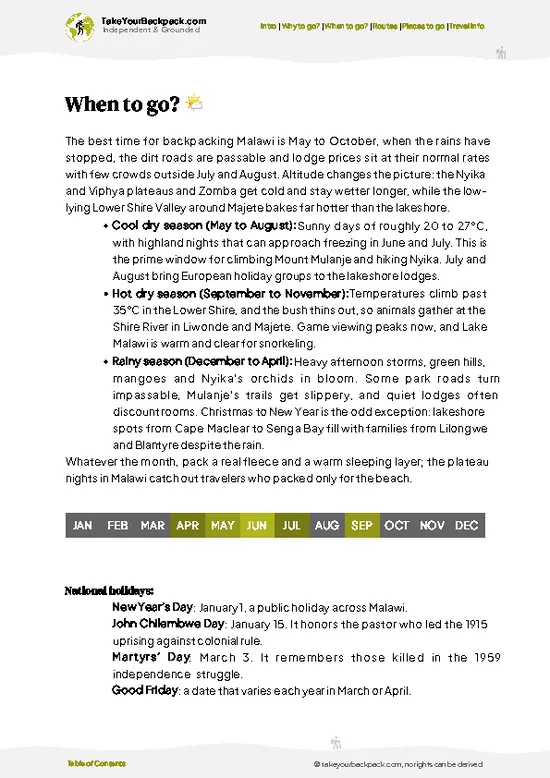
Best months and weather: The best months are May to October, when the dry season gives clear skies, dusty golden light and almost no rain, and wildlife gathers at the remaining water. Daytime temperatures sit around 22 to 28°C in most places, with cool nights of 8 to 14°C on the highlands, where a fleece is needed.

Shoulder and wet seasons: September to November is the hot shoulder stretch. The lakeshore and the Shire valley reach 32 to 38°C, humidity builds, and the air smells of smoke from burning fields. November to April is the rainy season, with 700 to 1,600 mm of rain depending on the region. The northern lakeshore and Nyika plateau are the wettest, and dirt roads can become impassable, with mud clinging to everything. Mosquitoes and malaria risk peak then. On the upside, the hills … read more 👉
Best months and weather: The best months are May to October, when the dry season gives clear skies, dusty golden light and almost no rain, and wildlife gathers at the remaining water. Daytime temperatures sit around 22 to 28°C in most places, with cool nights of 8 to 14°C on the highlands, where a fleece is needed.

Shoulder and wet seasons: September to November is the hot shoulder stretch. The lakeshore and the Shire valley reach 32 to 38°C, humidity builds, and the air smells of smoke from burning fields. November to April is the rainy season, with 700 to 1,600 mm of rain depending on the region. The northern lakeshore and Nyika plateau are the wettest, and dirt roads can become impassable, with mud clinging to everything. Mosquitoes and malaria risk peak then. On the upside, the hills turn green and prices dip.

Crowds and prices: Peak pressure comes in July and August and around December and Easter holidays, when Malawian and expat families fill lakeshore lodges. Rooms can rise 20 to 40 percent, so book ahead. Outside these windows, rates are negotiable and beaches are almost empty. The southern lake is warmest for swimming from September to April, while the highlands are best between May and October for clear views.

attraction hoppingOptimizing Your Multi-Stop Itinerary

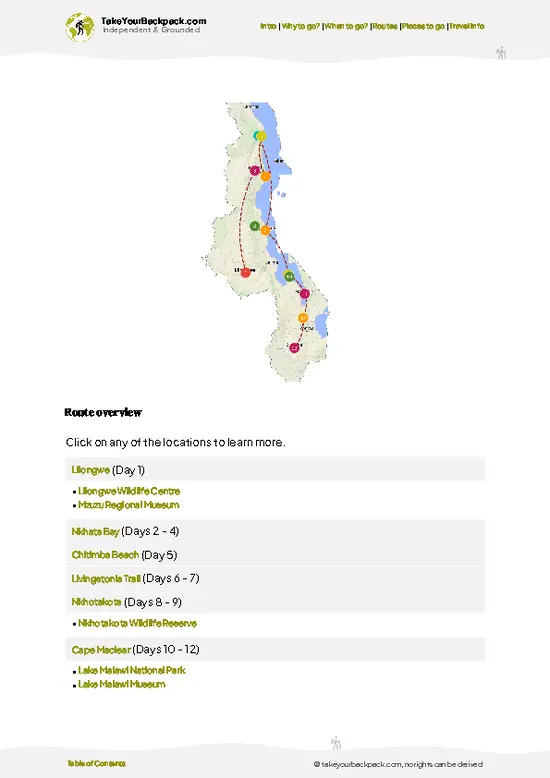
How many days to plan: A trip combining several attractions in Malawi needs 10 to 16 days, because distances look short on a map but take hours on crowded minibuses. The country is long and thin, so the logical shape is a line running along the lake.

Direction and regions: Start in Lilongwe or Blantyre, where the international flights and main bus connections are, and move north or south along the lake in one direction rather than doubling back. The central lakeshore and southern lake cluster well together, and the northern lakeshore and highlands form a second group. Lilongwe to the lake takes about 2 to 3 hours, Lilongwe to Mzuzu 5 to 6 hours, and Blantyre to Lilongwe 4 to 5 hours by bus. Allow 2 to 4 nights at lake stops to settle into the rhythm of heat, water and evening cooking smells, … read more 👉
How many days to plan: A trip combining several attractions in Malawi needs 10 to 16 days, because distances look short on a map but take hours on crowded minibuses. The country is long and thin, so the logical shape is a line running along the lake.

Direction and regions: Start in Lilongwe or Blantyre, where the international flights and main bus connections are, and move north or south along the lake in one direction rather than doubling back. The central lakeshore and southern lake cluster well together, and the northern lakeshore and highlands form a second group. Lilongwe to the lake takes about 2 to 3 hours, Lilongwe to Mzuzu 5 to 6 hours, and Blantyre to Lilongwe 4 to 5 hours by bus. Allow 2 to 4 nights at lake stops to settle into the rhythm of heat, water and evening cooking smells, and 2 to 3 nights for highland or park stops.

Planning mistakes: The first mistake is packing in one stop per day. Minibuses wait until full, breakdowns happen, and a 150 km hop can eat 4 hours. The second is trying to cover every region in a week, which leaves you mostly on the road. Pick two regions and go deeper. The third is ignoring the rains: in the wet season, remote roads close, so build in buffer days or choose paved routes. Carry cash for transport and leave early, since the afternoon heat makes everything slower.

The ListTop attractions of Malawi

1 Chongoni Rock Art Area

ancient rock paintings, UNESCO site, forested hills

Walk among granite outcrops to view centuries-old rock art, gaining context from interpretive panels set in a natural woodland landscape.

malawi-attraction-chongoni-rock-art-area
© Google |

2 Lake Malawi Museum

aquatic biodiversity, fishing traditions, lakeshore location

View displays on endemic fish species and explore the cultural significance of Lake Malawi for communities living along its shores.

malawi-attraction-lake-malawi-museum
© Google |

3 Lilongwe Wildlife Centre

animal rescue, environmental education, nature trails

Walk shaded paths while learning about wildlife rehabilitation and conservation efforts through interactive exhibits and guided talks.

4 Kungoni Centre of Culture and Art

woodcarving workshops, mask collection, cultural performances

Join guided tours to observe skilled artisans at work and learn about the symbolism behind masks and traditional dances.

5 Museum of Malawi

national history, archaeological finds, cultural artifacts

Trace Malawi’s development from early settlements to the present by viewing objects and displays spanning centuries of cultural change.

malawi-attraction-museum-of-malawi
© Google |

6 Cultural & Museum Centre Karonga

dinosaur fossils, human origins, lakeshore exhibits

Examine prehistoric fossils and displays on early human life, set near Lake Malawi’s northern edge in a purpose-built facility.

malawi-attraction-cultural-museum-centre-karonga
© Google |

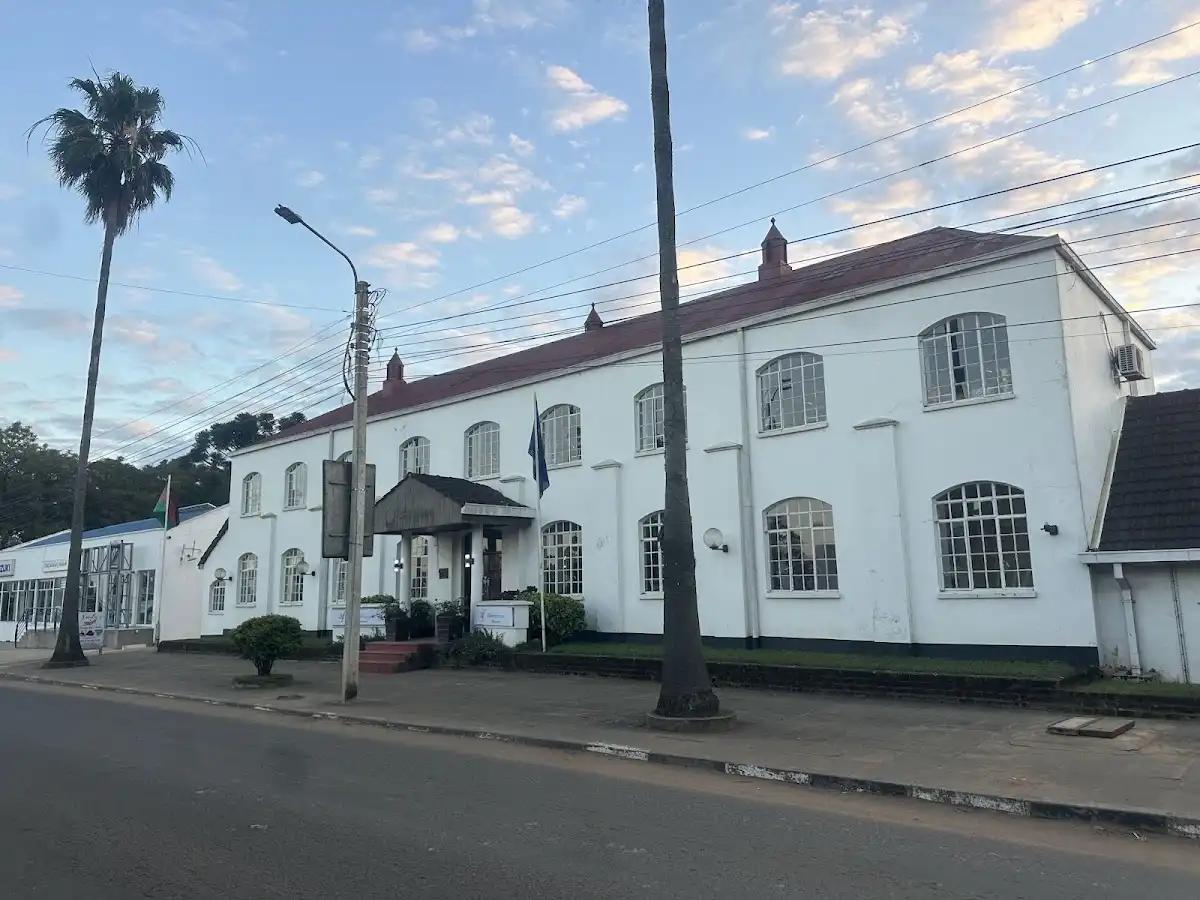
7 Mandala House

colonial architecture, historic library, garden café

Relax in Malawi’s oldest building, browse a collection of rare books, and enjoy refreshments in a tranquil garden setting.

malawi-attraction-mandala-house
© Google |

9 Mzuzu Regional Museum

northern cultures, ethnographic displays, regional crafts

Survey artifacts and textiles that illustrate the diversity of northern Malawi’s communities, with a focus on local craftsmanship.

10 Jacaranda School for Orphans

arts education, community workshops, student performances

Support local youth by attending creative showcases and engaging with art projects that reflect the aspirations of young Malawians.

malawi-attraction-jacaranda-school-for-orphans
© Google |

11 Blantyre Cultural Centre

performance hall, local art displays, urban gathering space

Attend live events and exhibitions that highlight contemporary Malawian creativity in a central venue frequented by residents and visitors alike.

12 Nkhoma Mission

missionary architecture, hillside views, medical legacy

Tour a functioning mission complex, admire early 20th-century church buildings, and understand the site’s ongoing healthcare role.

Loading the map 🌍

Expert viewInsights from Locals and Experts

How many attractions to visit: Plan on four to six attractions over two weeks. Roads are slow, minibuses leave when full, and the pleasure here comes from staying long enough to learn names, share a plate of nsima and watch the lake change color at dusk. Fewer stops also keeps transfer costs and fatigue down.

Prioritizing by style: If you travel on a tight budget, lean on lake and community-run experiences: swimming, snorkeling, village walks and hill hikes cost little and put you among people. If you want wildlife, accept that national parks cost more, since entry plus a guided drive or walk adds up, and give them one or two stops, not more. If you prefer hiking, spend time on the highlands, where cool air smells of pine and wet grass and the views run for kilometers. Mix one of each for … read more 👉
How many attractions to visit: Plan on four to six attractions over two weeks. Roads are slow, minibuses leave when full, and the pleasure here comes from staying long enough to learn names, share a plate of nsima and watch the lake change color at dusk. Fewer stops also keeps transfer costs and fatigue down.

Prioritizing by style: If you travel on a tight budget, lean on lake and community-run experiences: swimming, snorkeling, village walks and hill hikes cost little and put you among people. If you want wildlife, accept that national parks cost more, since entry plus a guided drive or walk adds up, and give them one or two stops, not more. If you prefer hiking, spend time on the highlands, where cool air smells of pine and wet grass and the views run for kilometers. Mix one of each for the best balance.

What it costs: Budget US$25 to 45 a day on a backpacker setup: dorm or basic room US$8 to 20, meals US$4 to 10, minibus fares US$2 to 10 per leg. Park entry runs roughly US$15 to 30 per person per day, plus vehicle fees, and guided walks or drives add US$20 to 60 or more. Community guides for hikes usually charge US$5 to 20. Boat trips and snorkel hire run US$10 to 40. Carry small kwacha notes, since cards and ATMs are unreliable outside the cities. Fuel shortages can raise taxi prices, so agree fares first.

Safety and culture: Malaria is a real risk, so take prophylaxis, a net and repellent. Lake swimming carries a bilharzia risk in some shallows, so ask lodge staff where locals avoid. Keep valuables out of sight in towns and avoid walking alone after dark. Greet people before asking anything: a handshake and “Muli bwanji” changes the whole exchange. Dress modestly in villages, ask before photographing people, and use a local guide for hill walks and community visits. The payoff is warm invitations and a trip that feels personal rather than staged.

✈️ The backpacker research shortcutMalawi Travel Guide

An offline-friendly backpacking guide with optimized travel routes, ranked highlights, transport advice, and the best areas to stay.
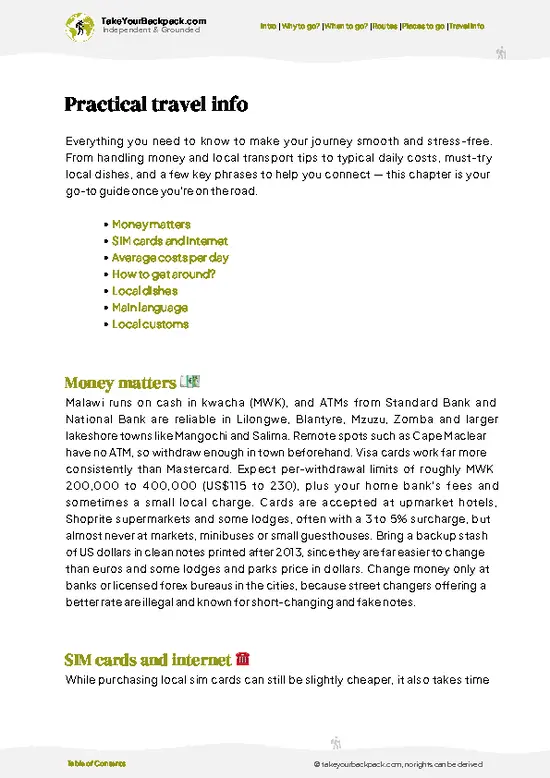
example page 0 from our offline Travel Guide for Malawi
example page 1 from our offline Travel Guide for Malawi
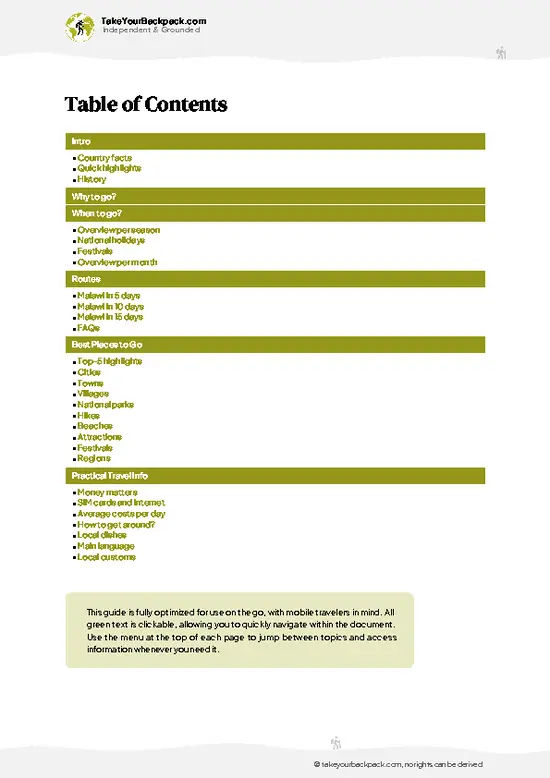
example page 2 from our offline Travel Guide for Malawi
example page 3 from our offline Travel Guide for Malawi
example page 4 from our offline Travel Guide for Malawi
example page 5 from our offline Travel Guide for Malawi
example page 6 from our offline Travel Guide for Malawi
example page 7 from our offline Travel Guide for Malawi
The digital guide (263 pages) contains:
✅ 65 highlights, ranked by travel appeal
✅ Optimized 5, 10 & 15-day travel routes
✅ Cities, national parks, landmarks, beaches
✅ How to get around
✅ Offline-friendly for travel without Wi-Fi
👉 Click to see all 30+ guide features

📅 Plan smarter in minutes, not weeks
✅ Month by month travel advice
✅ Festivals & national holidays
✅ Budget expectations

🗺️ Go to the right places, skip the overrated ones
✅ Honest pros & cons of destinations
✅ Top hikes, parks & viewpoints
✅ Lesser-known places most travelers miss
✅ Clear “worth it vs skip it” guidance

🛏️ Travel smoothly without rookie mistakes
✅ Best areas to stay
✅ Transport systems explained simply
✅ Common scams & safety advice
✅ SIM cards, money & practical tips

🌍 Understand the country, not just visit it
✅ Culture & traditions
✅ 52 Essential phrases & customs
✅ Festivals worth planning around
✅ Traveler-friendly historical context
✅ Insights that make places more meaningful

📱 Built for real travel conditions
✅ Fully downloadable PDF
✅ Works completely offline
✅ Optimized for phone use
✅ Useful in remote areas & buses
✅ Everything in one place
Stop searching, start planning
Get instant access to your full guide. 30‑day money-back guarantee.
+ Add another guide for just

By proceeding you agree to our terms.
Sent to your inbox immediately after payment • 100% Secure Checkout
Best Backpacking Travel Advisor 2025 tourism awardBest Backpacking
Travel Advisor
2025
What others say about Take Your Backpack Guides:
⭐⭐⭐⭐⭐
Fantastic, amazing amount of information!
⭐⭐⭐⭐⭐
My goodness this is amazing, it's what I've been looking for hats off too you!
⭐⭐⭐⭐⭐
I think this is absolutely BRILLIANT
⭐⭐⭐⭐
Very complete and informative. It's still missing places, but I gotta to commend you
⭐⭐⭐⭐⭐
This is truly amazing, thank you, can't wait to explore it with my kids!
⭐⭐⭐⭐⭐
Awesome resource, thank you!
⭐⭐⭐⭐⭐
This is amazing! Can't wait to explore the ones I haven't seen
⭐⭐⭐⭐
I love this! Well done, great idea.
⭐⭐⭐⭐⭐
Thanks for taking the time to make this gem!
⭐⭐⭐⭐⭐
This might be the best website I've ever seen.
⭐⭐⭐⭐⭐
Congratulations, and thank you so much for your work; it's incredibly valuable.
⭐⭐⭐⭐
In all seriousness I think you did a great job pointing out the important spots
⭐⭐⭐⭐⭐
10/10 very good
⭐⭐⭐⭐⭐
As someone who's only just starting to visit regularly this is awesome, thank you.
⭐⭐⭐⭐
Thank you very much! I'm going to visit my dad, it's going to be very useful!
⭐⭐⭐⭐⭐
This is really cool! We'll be travelling for the first time and this definitely come in handy.
⭐⭐⭐⭐⭐
You are now our minister of culture, congratulations 👨‍💼
⭐⭐⭐⭐⭐
Just wanted to tell you that this is a pearl! Going to follow your recommendations.
⭐⭐⭐⭐⭐
This is so cool. I'll definitely be using the resource for my travels soon.
⭐⭐⭐⭐⭐
This is very impressive! Good work.
⭐⭐⭐⭐⭐
This is an amazing and informative site. Very well done!

🛏️ Where to stay?Top Areas to Stay

Malawi has a solid spread of hostels, backpacker lodges and lakeside campsites, with dorm beds typically around US$10 to 20 a night (paid in Malawian kwacha or US dollars). In Lilongwe, Area 3 in the Old Town is the easiest base, with walkable cafés, ATMs and the main minibus depot nearby, while Area 10 is greener, quieter and safer after dark but needs taxis to get anywhere. Along the lake, Nkhata Bay and Cape Maclear (Chembe village) have the most lodges and the liveliest bar scene, though both empty out in the rainy season, and Blantyre’s Sunnyside and Mandala areas suit a calm overnight stop near the city’s colonial sights rather than a party.

If you enjoy meeting fellow travelers, consider … read more 👉
Malawi has a solid spread of hostels, backpacker lodges and lakeside campsites, with dorm beds typically around US$10 to 20 a night (paid in Malawian kwacha or US dollars). In Lilongwe, Area 3 in the Old Town is the easiest base, with walkable cafés, ATMs and the main minibus depot nearby, while Area 10 is greener, quieter and safer after dark but needs taxis to get anywhere. Along the lake, Nkhata Bay and Cape Maclear (Chembe village) have the most lodges and the liveliest bar scene, though both empty out in the rainy season, and Blantyre’s Sunnyside and Mandala areas suit a calm overnight stop near the city’s colonial sights rather than a party.

If you enjoy meeting fellow travelers, consider choosing hostels with high ratings for atmosphere. On the other hand, if you prefer having your own space, a hotel might be a better option.

MalawiDiscover the Country

👋 Meet the founderWho’s Behind Take Your Backpack?

Johan, backpacker and founder of TakeYourBackpackHi, I’m Johan (Netherlands 🇳🇱), the creator of TakeYourBackpack. Over the past 3 decades, I’ve backpacked through 90+ countries across six continents, gaining extensive experience with independent travel, long-term trips, and overland routes.

This site is built on a combination of firsthand travel experience and carefully curated insights from other backpackers. Many guides are based on places I’ve personally visited, while others bring together tips, observations, and practical advice shared by trusted travelers I’ve met along the way.

The goal is to provide realistic, experience-driven guidance — not generic itineraries — so you can explore destinations with better context, clearer expectations, and more confidence.