×

Malawi🇲🇼 | townsMonkey BayIlala ferry jetty, canoe landing, Maleri Island, southern lake port | things to do and best time to go

Explore MulanjeExplore Phalombe

Backpacking in Monkey Bay
🏆 Top picktown ranked #2
By Johan Kruseman 🇳🇱 | Updated October 22, 2026

Fishing canoes pull onto the sand beside the Ilala ferry jetty at Monkey Bay, and by mid-morning the whole shoreline smells of drying chambo and diesel. The town sits at the southern end of Lake Malawi, at the base of the Nankumba Peninsula in Malawi’s south. It is a working port, so expect dust, minibus horns and little polish. The trade-off is real life with almost no touts. Most travelers pass through on the way to the peninsula’s beach villages, because Monkey Bay has few beds and a quiet evening scene. Meeting other backpackers happens at the market and on the minibus. Pay in kwacha, since lodges rarely take cards and the cash machines are unreliable, so withdraw in a bigger town first. A first day could mean a market wander, a swim, then a late ride onward.

Discover everything you want to know in the 📖 Malawi Travel Guide.


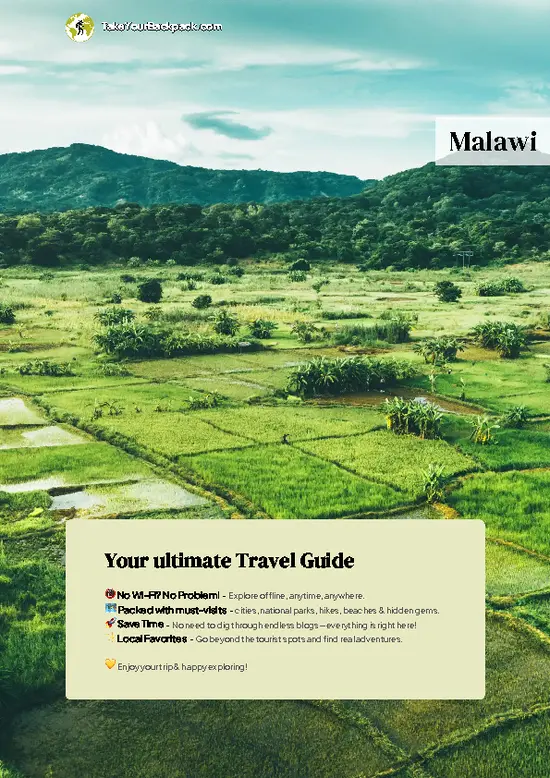
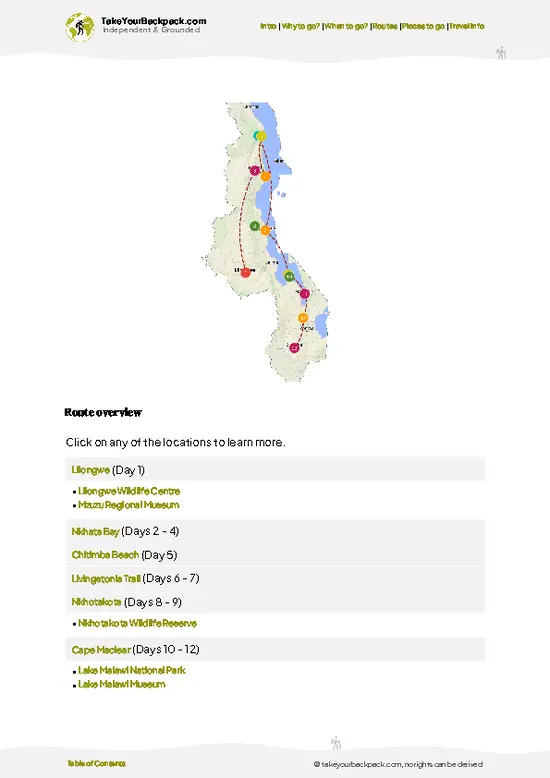
example page 0 from our offline Travel Guide for Malawi
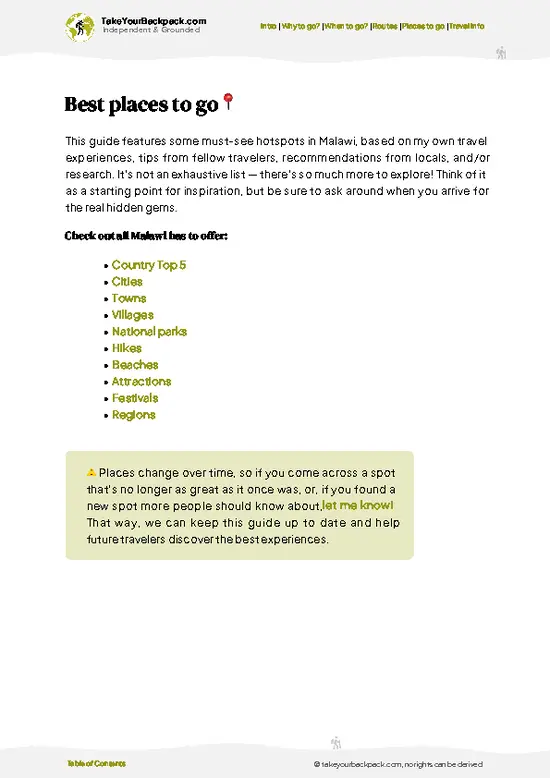
example page 1 from our offline Travel Guide for Malawi
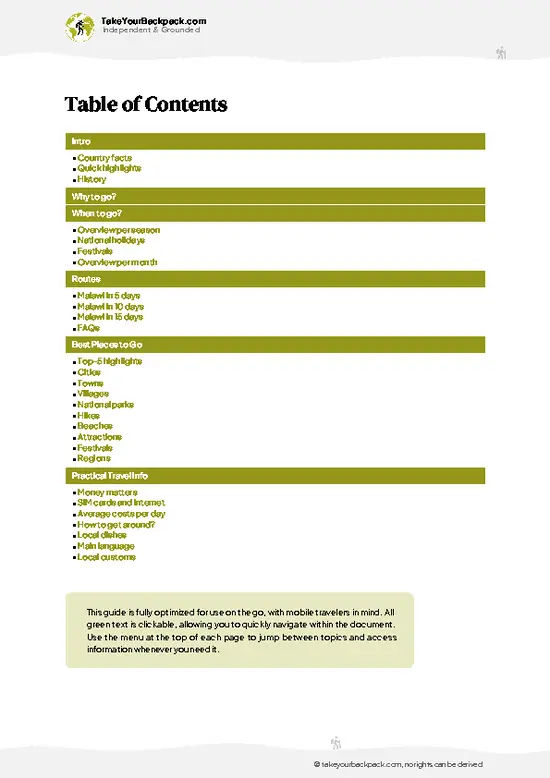
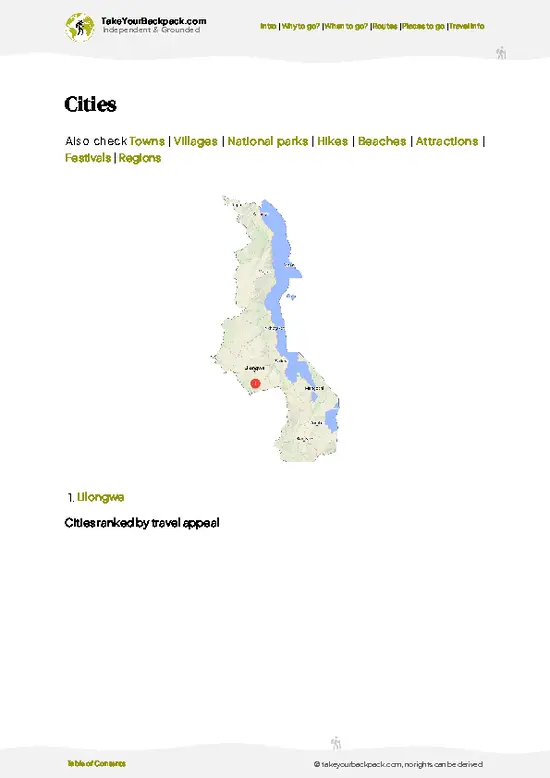
example page 2 from our offline Travel Guide for Malawi
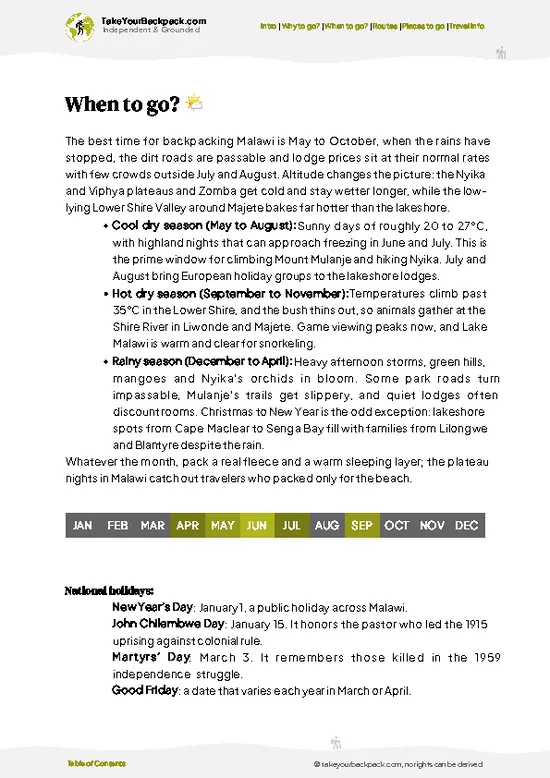
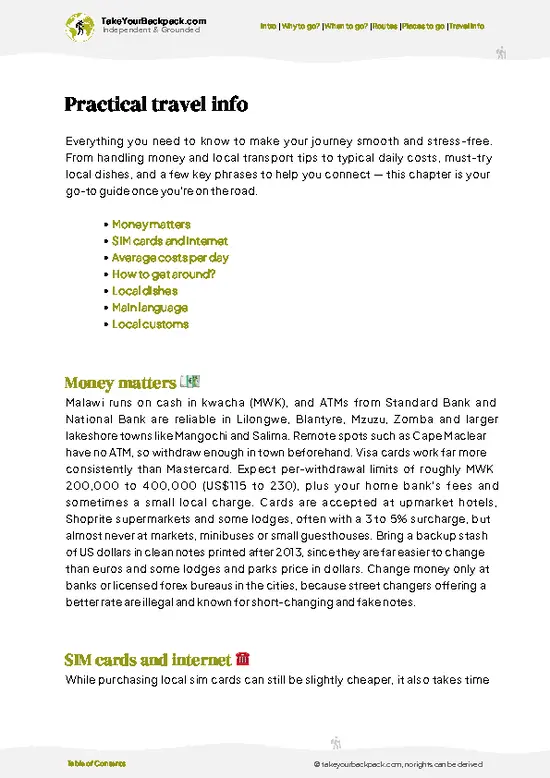
example page 3 from our offline Travel Guide for Malawi
example page 4 from our offline Travel Guide for Malawi
example page 5 from our offline Travel Guide for Malawi
example page 6 from our offline Travel Guide for Malawi
example page 7 from our offline Travel Guide for Malawi
Loading the map 🌍
CLICK TO FILTER
cities
towns
villages
national parks
hikes
beaches
attractions
festivals
regions
SHOW COUNTRY’S BESTSHOW ALL

✨ Why go?
Ranked #2 town in Malawi
What makes this town worth visiting

Monkey Bay earns its place on a route as the working gateway to the southern lake, not as a resort. It is where the lake ferry docks, where the road meets the peninsula, and where you can buy supplies at a real market before heading to quieter shores. Most travelers stay one night, two at most. The pace suits slow travelers and solo backpackers who like watching how a lake port actually runs: canoes landing at dawn, cargo hauled to the Ilala ferry jetty, women grilling fish by the roadside. It is also a useful base for hikers and snorkelers aiming at the Lake Malawi National Park islands, since boat operators and lodges around the bay arrange trips. Nightlife is small, a few bars with warm beer and music from a speaker. If you want hostel dorms and organized socializing, push on. If you want … read more 👉
Monkey Bay earns its place on a route as the working gateway to the southern lake, not as a resort. It is where the lake ferry docks, where the road meets the peninsula, and where you can buy supplies at a real market before heading to quieter shores. Most travelers stay one night, two at most. The pace suits slow travelers and solo backpackers who like watching how a lake port actually runs: canoes landing at dawn, cargo hauled to the Ilala ferry jetty, women grilling fish by the roadside. It is also a useful base for hikers and snorkelers aiming at the Lake Malawi National Park islands, since boat operators and lodges around the bay arrange trips. Nightlife is small, a few bars with warm beer and music from a speaker. If you want hostel dorms and organized socializing, push on. If you want a grounded, unhurried look at lakeside Malawi, give it an evening.

💡 HighlightsMust-see experiences and standout moments

  1. Ilala ferry jetty and harbor: The best-known spot in town is the lake port where the Ilala passenger ferry calls on its long lake route. Watch cargo, bicycles and passengers move across the pier. Late afternoon is the liveliest, when boats and traders gather. Free to stand nearby, allow 45 minutes to 1 hour; a ticket costs extra only if you sail.
  2. Fishing canoe landing: At first light the dugouts return with the night’s catch, and buyers bargain on the sand over small silver fish. Go between about 6 and 8 am. Free, 1 hour, and ask before photographing people.
  3. Monkey Bay market: A busy open market with piles of tomatoes, dried fish, bananas, secondhand clothing and phone credit sellers. Morning is best for choice. Cheap snacks run US$0.50 to 2, and you need 1 hour.
  4. Lakeshore beach and swimming
… read more 👉
  1. Ilala ferry jetty and harbor: The best-known spot in town is the lake port where the Ilala passenger ferry calls on its long lake route. Watch cargo, bicycles and passengers move across the pier. Late afternoon is the liveliest, when boats and traders gather. Free to stand nearby, allow 45 minutes to 1 hour; a ticket costs extra only if you sail.
  2. Fishing canoe landing: At first light the dugouts return with the night’s catch, and buyers bargain on the sand over small silver fish. Go between about 6 and 8 am. Free, 1 hour, and ask before photographing people.
  3. Monkey Bay market: A busy open market with piles of tomatoes, dried fish, bananas, secondhand clothing and phone credit sellers. Morning is best for choice. Cheap snacks run US$0.50 to 2, and you need 1 hour.
  4. Lakeshore beach and swimming spots: Quiet sandy stretches near the bay where you can swim and watch fish eagles over the water. Late afternoon is pleasant. Free to use, 1 to 2 hours, though water safety depends on local advice about bilharzia and currents.
  5. Maleri Island boat trip: Local boat operators run short trips from the bay to the rocky island, where colorful cichlids can be seen when snorkeling. Mornings give calmer water. Expect roughly US$20 to 40 per boat depending on group size, with 3 to 4 hours including snorkeling.
Monkey Bay makes a good launch point for day trips to Cape Maclear, the islands of Lake Malawi National Park such as Thumbi West and Mumbo, and the beaches of the Nankumba Peninsula. For a first visit, the dawn canoe landing shows the town at its most alive.
Spotted a mistake or missing something? Contact us.

🏘️ NeighborhoodsNeighborhood guide to Monkey Bay

Monkey Bay sprawls along the southern arm of Lake Malawi, and its pieces sit a few kilometers apart, so knowing which is which saves you wasted rides.
  • Town center and market: This is where the minibuses unload, so it is loud, dusty and smells of diesel, fried dough and drying fish. Prices are lowest here because the market serves locals, so buy bananas, tomatoes and bread here and carry them with you. Everything is walkable in 15 minutes, but go before midday when the sun turns the red dirt harsh.
  • Port area: The Chilembwe ferry docks here, and the waterfront has a steady clatter of cargo, whistles and men hauling sacks. Schedules slip, so arrive early and sit in the shade rather than trust the posted time.
  • Mufasa and the lakeshore: A short ride south, the beach strip is quiet, with clear water,
… read more 👉
Monkey Bay sprawls along the southern arm of Lake Malawi, and its pieces sit a few kilometers apart, so knowing which is which saves you wasted rides.
  • Town center and market: This is where the minibuses unload, so it is loud, dusty and smells of diesel, fried dough and drying fish. Prices are lowest here because the market serves locals, so buy bananas, tomatoes and bread here and carry them with you. Everything is walkable in 15 minutes, but go before midday when the sun turns the red dirt harsh.
  • Port area: The Chilembwe ferry docks here, and the waterfront has a steady clatter of cargo, whistles and men hauling sacks. Schedules slip, so arrive early and sit in the shade rather than trust the posted time.
  • Mufasa and the lakeshore: A short ride south, the beach strip is quiet, with clear water, rocky shallows and fish eagles calling at dusk. Swimming is pleasant, but the lake is shallow and warm near shore, so ask locals about currents and avoid wading in reeds. It is too spread out to walk comfortably, so take a motorbike taxi.
  • Cape Maclear road: The tar road runs south toward Cape Maclear, lined with baobabs and small roadside stalls selling grilled chambo. Evenings here are dark and calm, with crickets and drums from distant villages. Catch rides before dusk, since transport thins out after dark.

⌛️ 1 day1-day itinerary for Monkey Bay

7:00 AM: Monkey Bay Beach
Start at the sand near the harbor, where the lake is flat and cool and fishermen are hauling in nets and sorting small silver fish into basins. Walk the shoreline for twenty minutes, then buy a mandazi from a vendor before the sun gets heavy.

8:30 AM: Monkey Bay Harbor and Ferry Jetty
Walk along the waterfront to the jetty. The Ilala ferry docks here on its scheduled runs, and even on quiet days you can watch cargo boats, dugout canoes and traders loading sacks. Keep your camera low and ask before photographing people.

10:00 AM: Monkey Bay Market
Head up into town to the main market. Sellers stack tomatoes, dried fish, cassava and bright chitenje cloth on wooden tables, and the smell of smoked fish carries across the aisles. Pick up fruit and water for later. Bargain … read more 👉
7:00 AM: Monkey Bay Beach
Start at the sand near the harbor, where the lake is flat and cool and fishermen are hauling in nets and sorting small silver fish into basins. Walk the shoreline for twenty minutes, then buy a mandazi from a vendor before the sun gets heavy.

8:30 AM: Monkey Bay Harbor and Ferry Jetty
Walk along the waterfront to the jetty. The Ilala ferry docks here on its scheduled runs, and even on quiet days you can watch cargo boats, dugout canoes and traders loading sacks. Keep your camera low and ask before photographing people.

10:00 AM: Monkey Bay Market
Head up into town to the main market. Sellers stack tomatoes, dried fish, cassava and bright chitenje cloth on wooden tables, and the smell of smoked fish carries across the aisles. Pick up fruit and water for later. Bargain lightly and with a smile.

12:00 PM: Lunch at a Local Eatery
Sit down at a simple spot near the market for chambo with nsima and greens. Fish here comes out of the lake that morning. Eat slowly, because the midday heat makes anything else feel like a chore.

2:00 PM: Fishing Villages Along the Shore
This is the part most people skip. Follow the lakeshore road or hire a bicycle taxi toward the small fishing communities just outside town. You will see boats being mended, nets drying on racks and kids swimming off rocky points. Greet people first and ask permission before wandering through. Allow two hours.

4:30 PM: Lake Malawi National Park Viewpoint
Arrange a short ride toward the edge of the park near Cape Maclear road. Climb a rocky rise for a wide look over the lake, with islands floating on the water and cichlids flashing in the shallows if you stop at a clear cove.

6:00 PM: Sundowner on the Shore
Return to the waterfront for a cold drink at a lakeside bar. The sky goes orange and violet over the water, frogs and crickets start up, and the day settles into a slow evening. Finish with grilled fish and an early night.

🌤️ When to go?Choosing the right time of year

  • Cool dry season (May to August): Days reach 24 to 28°C (75 to 82°F) and nights drop to 14 to 17°C (57 to 63°F). Dust is low, the lake is calm and snorkeling visibility is good. Daylight lasts about 11 hours.
  • Hot season (September to November): Temperatures climb to 30 to 35°C (86 to 95°F) with dry heat, and the water is at its warmest. Crowds thin out and prices soften at lodges.
  • Rainy season (December to April): Expect 27 to 32°C (81 to 90°F), humid air and afternoon downpours that can flood dirt tracks. The lake turns murkier, though birdlife and green hills peak, and rooms are cheapest.
  • School holidays and Christmas: Malawian families and expats fill beach lodges, so rates rise and rooms go quickly.
Book ahead for July and August, or aim for early May when the rains have ended and the shore is still quiet.

source: climatestotravel.comJANJanuary: fair for travelingFEBFebruary: fair for travelingMARMarch: fair for travelingAPRApril: good for travelingMAYMay: excellent for travelingJUNJune: excellent for travelingJULJuly: highly recommended for travelingAUGAugust: highly recommended for travelingSEPSeptember: excellent for travelingOCTOctober: highly recommended for travelingNOVNovember: fair for travelingDECDecember: fair for traveling
when-to-go

✈️ The backpacker research shortcutMalawi Travel Guide

An offline-friendly backpacking guide with optimized travel routes, ranked highlights, transport advice, and the best areas to stay.
example page 0 from our offline Travel Guide for Malawi
example page 1 from our offline Travel Guide for Malawi
example page 2 from our offline Travel Guide for Malawi
example page 3 from our offline Travel Guide for Malawi
example page 4 from our offline Travel Guide for Malawi
example page 5 from our offline Travel Guide for Malawi
example page 6 from our offline Travel Guide for Malawi
example page 7 from our offline Travel Guide for Malawi
The digital guide (263 pages) contains:
✅ 65 highlights, ranked by travel appeal
✅ Optimized 5, 10 & 15-day travel routes
✅ Cities, national parks, landmarks, beaches
✅ How to get around
✅ Offline-friendly for travel without Wi-Fi
👉 Click to see all 30+ guide features

📅 Plan smarter in minutes, not weeks
✅ Month by month travel advice
✅ Festivals & national holidays
✅ Budget expectations

🗺️ Go to the right places, skip the overrated ones
✅ Honest pros & cons of destinations
✅ Top hikes, parks & viewpoints
✅ Lesser-known places most travelers miss
✅ Clear “worth it vs skip it” guidance

🛏️ Travel smoothly without rookie mistakes
✅ Best areas to stay
✅ Transport systems explained simply
✅ Common scams & safety advice
✅ SIM cards, money & practical tips

🌍 Understand the country, not just visit it
✅ Culture & traditions
✅ 52 Essential phrases & customs
✅ Festivals worth planning around
✅ Traveler-friendly historical context
✅ Insights that make places more meaningful

📱 Built for real travel conditions
✅ Fully downloadable PDF
✅ Works completely offline
✅ Optimized for phone use
✅ Useful in remote areas & buses
✅ Everything in one place
Stop searching, start planning
Get instant access to your full guide. 30‑day money-back guarantee.
+ Add another guide for just

By proceeding you agree to our terms.
Sent to your inbox immediately after payment • 100% Secure Checkout
Best Backpacking Travel Advisor 2025 tourism awardBest Backpacking
Travel Advisor
2025
What others say about Take Your Backpack Guides:
⭐⭐⭐⭐⭐
Fantastic, amazing amount of information!
⭐⭐⭐⭐⭐
My goodness this is amazing, it's what I've been looking for hats off too you!
⭐⭐⭐⭐⭐
I think this is absolutely BRILLIANT
⭐⭐⭐⭐
Very complete and informative. It's still missing places, but I gotta to commend you
⭐⭐⭐⭐⭐
This is truly amazing, thank you, can't wait to explore it with my kids!
⭐⭐⭐⭐⭐
Awesome resource, thank you!
⭐⭐⭐⭐⭐
This is amazing! Can't wait to explore the ones I haven't seen
⭐⭐⭐⭐
I love this! Well done, great idea.
⭐⭐⭐⭐⭐
Thanks for taking the time to make this gem!
⭐⭐⭐⭐⭐
This might be the best website I've ever seen.
⭐⭐⭐⭐⭐
Congratulations, and thank you so much for your work; it's incredibly valuable.
⭐⭐⭐⭐
In all seriousness I think you did a great job pointing out the important spots
⭐⭐⭐⭐⭐
10/10 very good
⭐⭐⭐⭐⭐
As someone who's only just starting to visit regularly this is awesome, thank you.
⭐⭐⭐⭐
Thank you very much! I'm going to visit my dad, it's going to be very useful!
⭐⭐⭐⭐⭐
This is really cool! We'll be travelling for the first time and this definitely come in handy.
⭐⭐⭐⭐⭐
You are now our minister of culture, congratulations 👨‍💼
⭐⭐⭐⭐⭐
Just wanted to tell you that this is a pearl! Going to follow your recommendations.
⭐⭐⭐⭐⭐
This is so cool. I'll definitely be using the resource for my travels soon.
⭐⭐⭐⭐⭐
This is very impressive! Good work.
⭐⭐⭐⭐⭐
This is an amazing and informative site. Very well done!

🛏️ Where to stay?Choosing the right base

The lakeshore strip toward Mufasa and Cape Maclear is the best bet for a budget bed, with a few small guesthouses and basic dorms. Rooms and beds run about US$8 to 20, and mornings start with water lapping the shore rather than traffic noise. Nights are very quiet, so it suits travelers who want rest, not a party scene. The drawback is distance. Transport is limited after dark, so arrive before late afternoon and arrange rides in advance.

Staying in Monkey Bay town itself is the cheaper and more practical option if you are catching an early minibus or the ferry. Simple guesthouses cost around … read more 👉
The lakeshore strip toward Mufasa and Cape Maclear is the best bet for a budget bed, with a few small guesthouses and basic dorms. Rooms and beds run about US$8 to 20, and mornings start with water lapping the shore rather than traffic noise. Nights are very quiet, so it suits travelers who want rest, not a party scene. The drawback is distance. Transport is limited after dark, so arrive before late afternoon and arrange rides in advance.

Staying in Monkey Bay town itself is the cheaper and more practical option if you are catching an early minibus or the ferry. Simple guesthouses cost around US$6 to 15 a night, and you are within walking distance of the market, bus stop and port. Expect generator noise, early roosters and some power cuts, so bring earplugs and a headlamp. Security is fine within the center, but walk with a torch after dark because streets are unlit and uneven.

For most backpackers, I would sleep on the lakeshore if you plan to swim, snorkel or kayak, and use the town only for a night before travel connections. Beds fill during school holidays and July and August, so message ahead.

🚌 Getting aroundMoving around without the hassle

Monkey Bay’s center is small enough to cross on foot in about 15 minutes, but walking stops making sense once you head to the lakeshore beaches or the Cape Maclear road, where distances stretch and the midday sun is fierce. Minibuses are cheap but leave only when full, which means waiting. Plan around that and carry water.
  • Walking: Free and best for the market, bus stop and port. Go early or late, because red dust and heat make midday strolls tiring, and the paths are uneven.
  • Minibus: The backbone of regional travel, with rides to nearby villages from US$0.50 to 2 and to Mangochi from US$3 to 5 (roughly 1.5 to 2 hours). They are cramped and often loaded with sacks and chickens, but the engine noise and chatter are part of the day. Most run from early morning until mid-afternoon, so travel in
… read more 👉
Monkey Bay’s center is small enough to cross on foot in about 15 minutes, but walking stops making sense once you head to the lakeshore beaches or the Cape Maclear road, where distances stretch and the midday sun is fierce. Minibuses are cheap but leave only when full, which means waiting. Plan around that and carry water.
  • Walking: Free and best for the market, bus stop and port. Go early or late, because red dust and heat make midday strolls tiring, and the paths are uneven.
  • Minibus: The backbone of regional travel, with rides to nearby villages from US$0.50 to 2 and to Mangochi from US$3 to 5 (roughly 1.5 to 2 hours). They are cramped and often loaded with sacks and chickens, but the engine noise and chatter are part of the day. Most run from early morning until mid-afternoon, so travel in the morning, because few leave after 4 pm.
  • Bicycle taxi and motorbike taxi (kabaza): Short hops cost US$0.50 to 2. Drivers wait at the market and port. Agree the price first, since there are no meters, and ask for a slower pace on sandy stretches.
  • Private taxi or lodge transfer: Expect US$10 to 25 for rides to the lakeshore lodges or Cape Maclear. This is the practical choice after dark or with a heavy pack, as public vehicles are scarce. Splitting a ride with other travelers brings the cost down.
  • Ferry: The Chilembwe ferry runs from the port up the lake to places like Nkhata Bay, with fares of roughly US$15 to 40 depending on class. It runs about weekly and often leaves late, so check the day locally and bring snacks, a hat and patience.

👛 Costs (as of 22 October 2026)How expensive it really is

Monkey Bay costs about US$29 to 62 a day for a backpacker, with most of that going to a bed and fresh fish meals.
CategoryBudget RangeLocal Reality
Dorm accommodationUS$8 to 15Basic dorm beds or simple guesthouse rooms. Lakeshore lodges cost more in high season.
MealsUS$6 to 14Nsima with beans or grilled chambo from local stalls for US$2 to 4. Lodge dinners cost more.
Local transportUS$2 to 8Minibuses and motorbike taxis cover short hops. Longer taxi rides cost more.
Basic activities/entry feesUS$10 to 20Snorkeling trips, park fees and village walks add up fast.
Miscellaneous expensesUS$3 to 5Water, mobile data and snacks. ATMs are limited, so carry cash.
Total Daily BudgetUS$29 to 62Use the higher end in peak months.
Buy fruit and bread at the market and share boat trips with other travelers to split the price.
⚠️ Prices can change and everyone travels differently, so take this as a rough guide. Hope it helps you plan your adventure!

🚌 Day tripsWhere to go beyond the main area

Monkey Bay works well as a base for short outings, because the lake, villages and national park are all within a morning ride, though public transport is thin after mid-afternoon.
Cape Maclear and Lake Malawi National Park: Cape Maclear lies about 20 to 30 km south and takes 45 minutes to an hour by minibus or taxi. The park shelters rocky islands with colorful cichlids, and a boat and snorkeling trip costs US$15 to 35 plus a park fee of roughly US$10 to 20. The calmest months are May to August. First-timers often book at the beach at the last minute, so compare prices with a few operators first.
👉 Explore Cape Maclear
Mumbo and Domwe Island day paddles: Boat trips from the lakeshore reach nearby islands where you can swim, see fish eagles and walk rocky trails. Budget US$30 to 60 for a shared … read more 👉
Monkey Bay works well as a base for short outings, because the lake, villages and national park are all within a morning ride, though public transport is thin after mid-afternoon.
Cape Maclear and Lake Malawi National Park: Cape Maclear lies about 20 to 30 km south and takes 45 minutes to an hour by minibus or taxi. The park shelters rocky islands with colorful cichlids, and a boat and snorkeling trip costs US$15 to 35 plus a park fee of roughly US$10 to 20. The calmest months are May to August. First-timers often book at the beach at the last minute, so compare prices with a few operators first.
👉 Explore Cape Maclear
Mumbo and Domwe Island day paddles: Boat trips from the lakeshore reach nearby islands where you can swim, see fish eagles and walk rocky trails. Budget US$30 to 60 for a shared boat. Go early before afternoon winds whip up waves, and bring your own water, since there are no shops.

Mangochi: Mangochi is a lively market town about 1.5 to 2 hours by minibus, with fares of US$3 to 5 each way. It is useful for banks, ATMs and supplies, and the lakeside fish market runs best in the morning. Many travelers leave late and miss the last return minibus, so head back by 3 pm.

Mvuu Cultural and village visits: Local community guides can walk you through fishing villages near the bay, with a baobab grove and boat building. A half day costs about US$10 to 20 with a guide. Go in dry months, and ask before taking photos of people.

🛡️ SafetySafety Tips and Common Scams in Monkey Bay

Monkey Bay is a quiet, relaxed place where most problems are petty. Keep your phone and camera out of sight at the market and port, where crowds make pickpocketing possible, and carry only the cash you need for the day. Streets are unlit at night and the ground is rough, so walk with a torch or take a motorbike taxi after dark, and avoid empty stretches of beach on your own. Solo travelers, including women, generally have no trouble, though persistent offers to be your guide or sell souvenirs are common. A firm, friendly no works. Agree prices for taxis and boat trips before you start, and use a registered operator for lake activities with life jackets. Swim only where locals do, and do not wade through reeds. Lock your room, and do not leave valuables on the beach.

FAQCommon questions from travelers

Monkey Bay is worth a short visit mainly as a gateway to the southern lake rather than a destination of its own. The market and ferry port are interesting for a few hours, but the best experiences are nearby, like snorkeling around Cape Maclear (about 45 minutes to 1 hour away) and quiet beaches at Mufasa. Most travelers spend one to three nights before moving on.
Two to three days is enough for Monkey Bay and its surroundings. Use one day for the market, port and lakeshore, and another for a boat or snorkeling trip to the islands, which costs roughly US$15 to 60. Add a third day if you want to include Cape Maclear or relax on the beach.
Monkey Bay can be done as a day trip from Mangochi, which is about 1.5 to 2 hours by minibus for US$3 to 5, though the transport home gets scarce after mid-afternoon. A day trip is enough for the market and a swim, but you will miss the best sunsets and snorkeling hours. Overnighting in a lakeshore guesthouse for US$8 to 20 gives you a far better visit.
⚠️ Things can change over time, so always validate details locally before you go.

Other Malawian towns near Monkey Bay

Explore more nearby:

  • Chipoka—Sandy shallows, usipa landing, old rail terminus, shoreline sunsets| 45 km away
  • Salima—Railway terminus, fish-stall lunches, craft sellers, lowland heat| 60 km away
  • Namwera—Yao quarter, foot-pedal tailors, rocky hill views, back-road baobabs| 68 km away

💡 Not sure where to go next?
Create a personalized itinerary for Malawi including Monkey Bay and the places that fit your trip.

Generate my itinerary

👉 Discover all towns

Or checkout all Malawi has to offer (think cities, towns, villages, national parks, hikes, beaches, festivals)
Country photo of Malawi

We 💚 feedbackKey takeaways before you go

Give Monkey Bay one night, two if the Ilala is due or you want an island trip arranged. It is a place to see the lake at work, not to linger for beds and bars. Bring small notes, buy supplies in the market, and be at the shore at dawn.

✍️ Help improve this page!
The information on this page is based on in-depth research, insights shared by experienced travelers, and feedback from the local travel community in Malawi. While every effort is made to keep the information accurate and current, conditions can change — so if you spot anything incorrect or outdated, please get in touch.


🙋‍♂️ Give feedback

👋 Meet the founderWho’s Behind Take Your Backpack?

Johan, backpacker and founder of TakeYourBackpackHi, I’m Johan (Netherlands 🇳🇱), the creator of TakeYourBackpack. Over the past 3 decades, I’ve backpacked through 90+ countries across six continents, gaining extensive experience with independent travel, long-term trips, and overland routes.

This site is built on a combination of firsthand travel experience and carefully curated insights from other backpackers. Many guides are based on places I’ve personally visited, while others bring together tips, observations, and practical advice shared by trusted travelers I’ve met along the way.

The goal is to provide realistic, experience-driven guidance — not generic itineraries — so you can explore destinations with better context, clearer expectations, and more confidence.