×

Malaysia🇲🇾 | attractionsIslamic Arts Museum MalaysiaDomed galleries, Quranic manuscripts, decorative ceramics | things to do and best time to go

Explore Batu Caves Temple ComplexExplore Perdana Botanical Gardens & KL Bird Park

Backpacking in Islamic Arts Museum Malaysia
🌟 Highlightattraction ranked #6
By Johan Kruseman 🇳🇱 | Updated May 18, 2026

Here’s what nobody tells you until it’s too late: the Islamic Arts Museum Malaysia is air-conditioned, blissfully quiet, and open on Mondays—when half of Kuala Lumpur’s other museums are shuttered and the city’s humidity is at full throttle. You’ll find it just south of the Lake Gardens, a short walk from the National Mosque, tucked into the cultural core of Kuala Lumpur. Forget the Instagram feeds of empty marble halls; yes, you’ll dodge a few school groups, but the crowds are nothing compared to Batu Caves or Petronas Towers. The wow-factor here is cerebral: 12 galleries of intricate calligraphy, Ottoman armor, and Persian carpets that’ll make you rethink what “Islamic art” even means. Entry isn’t dirt-cheap, but you get hours of world-class curation for less than a KL rooftop cocktail. If you crave depth over dazzle, this place delivers.

Discover everything you want to know in the 📖 Malaysia Travel Guide.
Loading the map 🌍
CLICK TO FILTER
cities
towns
villages
landmarks
national parks
hikes
beaches
attractions
festivals
regions
SHOW COUNTRY’S BESTSHOW ALL

✨ Why go?
Ranked #6 attraction in Malaysia
The unique appeal for travelers

The Islamic Arts Museum Malaysia isn’t just another pretty building to snap for your feed—it’s a heavyweight in Southeast Asia’s cultural ring. Sure, it draws crowds, especially on weekends, and the entry fee isn’t dirt cheap by local standards. But here’s the kicker: this place packs a punch with its unmatched collection of Islamic artifacts, from intricate calligraphy to centuries-old textiles that tell stories you won’t find in guidebooks. It’s a deep dive into Islamic history and art that challenges the usual tourist checklist. For backpackers threading through Malaysia, it’s a milestone—a spot where you pause, absorb, and connect with a culture that’s shaped the region profoundly. The museum’s layout and exhibits demand time and attention, but the payoff is a richer understanding of Malaysia’s … read more 👉
The Islamic Arts Museum Malaysia isn’t just another pretty building to snap for your feed—it’s a heavyweight in Southeast Asia’s cultural ring. Sure, it draws crowds, especially on weekends, and the entry fee isn’t dirt cheap by local standards. But here’s the kicker: this place packs a punch with its unmatched collection of Islamic artifacts, from intricate calligraphy to centuries-old textiles that tell stories you won’t find in guidebooks. It’s a deep dive into Islamic history and art that challenges the usual tourist checklist. For backpackers threading through Malaysia, it’s a milestone—a spot where you pause, absorb, and connect with a culture that’s shaped the region profoundly. The museum’s layout and exhibits demand time and attention, but the payoff is a richer understanding of Malaysia’s identity beyond the surface. If you’re after more than just a photo op, this is where the real magic happens—no filters needed.
Want to include Islamic Arts Museum Malaysia in your Malaysia route?
Create a personalized Malaysia itinerary that includes Islamic Arts Museum Malaysia and the places that fit your trip — based on your travel style, budget, and available time. Get your route in seconds.

Generate my trip

💡 HighlightsDon't-miss highlights and experiences

The Dome Gallery
Forget the Instagram-perfect symmetry shots—this is where you actually feel the scale and ambition of Islamic architecture. The soaring domes aren’t just pretty; they’re a crash course in geometry, engineering, and the kind of artistry that makes you want to look up and just breathe for a minute. The light play here is real, and it’s not just for show. You’ll see how centuries-old design tricks still work their magic on your senses.

The Qur’an and Manuscripts Gallery
This is not your average “old books behind glass” situation. The manuscripts here are jaw-dropping in their detail—think gold leaf, lapis lazuli, and calligraphy so precise it’ll make your handwriting look like chicken scratch. The range is wild: from tiny, palm-sized Qur’ans to massive tomes that once anchored … read more 👉
The Dome Gallery
Forget the Instagram-perfect symmetry shots—this is where you actually feel the scale and ambition of Islamic architecture. The soaring domes aren’t just pretty; they’re a crash course in geometry, engineering, and the kind of artistry that makes you want to look up and just breathe for a minute. The light play here is real, and it’s not just for show. You’ll see how centuries-old design tricks still work their magic on your senses.

The Qur’an and Manuscripts Gallery
This is not your average “old books behind glass” situation. The manuscripts here are jaw-dropping in their detail—think gold leaf, lapis lazuli, and calligraphy so precise it’ll make your handwriting look like chicken scratch. The range is wild: from tiny, palm-sized Qur’ans to massive tomes that once anchored royal libraries. You get a direct line to the minds and hands of artists from Morocco to China, all in one room.

The Islamic Architecture Gallery
Scale models of the world’s most iconic mosques and palaces, built with obsessive accuracy. You’ll spot the Taj Mahal, the Great Mosque of Samarra, and more, all shrunk down to a size where you can actually see the details you’d miss in person. It’s like a world tour for your eyeballs, minus the jet lag and crowds. If you geek out on design, this is your playground.

The Jewelry and Arms Gallery
This is where the museum drops the “serious scholar” act and just dazzles. Swords with hilts encrusted in rubies, daggers that look like they belong in a fantasy epic, and jewelry that would bankrupt a small nation. It’s a reminder that art and power have always been tangled up together. The craftsmanship is so over-the-top, you’ll start to question if modern luxury even knows what it’s doing.

The Textile Gallery
Personal favorite. Here’s where you see the soul of Islamic art in motion. Robes, carpets, and prayer rugs that are centuries old but still pulse with color and pattern. The textures beg for a “do not touch” sign, and for good reason. These aren’t just museum pieces—they’re survivors of time, trade, and ritual. You’ll leave with a new respect for the hands that wove history into every thread.
Spotted a mistake or missing something? Contact us.

Things to do around Islamic Arts Museum Malaysia

Ratings based on Tripadvisor reviews. When you book through this link, you support our work at no extra cost to you.

🌤️ When to go?Weather, crowds, and seasonal trade-offs


  • Topic: Weather and Temperature – Malaysia is hot and humid year-round, with temperatures hovering between 27°C and 33°C (81°F to 91°F). The Islamic Arts Museum Malaysia is indoors, so the heat outside matters less, but expect sticky air from March to October, the wetter months.

  • Topic: Daylight Hours – Daylight stays steady around 12 hours daily throughout the year, so timing your visit won’t hinge on sunlight. The museum’s indoor setting means you can visit any time during opening hours without worrying about fading light.

  • Topic: Crowds – Peak tourist season runs from June to August and December, when Malaysia’s drier months attract more visitors. Expect bigger crowds and longer waits during these times, especially on weekends and holidays.

  • Topic: Seasonal Activities – The museum
read more 👉

  • Topic: Weather and Temperature – Malaysia is hot and humid year-round, with temperatures hovering between 27°C and 33°C (81°F to 91°F). The Islamic Arts Museum Malaysia is indoors, so the heat outside matters less, but expect sticky air from March to October, the wetter months.

  • Topic: Daylight Hours – Daylight stays steady around 12 hours daily throughout the year, so timing your visit won’t hinge on sunlight. The museum’s indoor setting means you can visit any time during opening hours without worrying about fading light.

  • Topic: Crowds – Peak tourist season runs from June to August and December, when Malaysia’s drier months attract more visitors. Expect bigger crowds and longer waits during these times, especially on weekends and holidays.

  • Topic: Seasonal Activities – The museum occasionally hosts special exhibitions and cultural events, often aligned with Islamic festivals like Ramadan (dates vary yearly). Visiting during these can add depth but also bring more visitors.

  • Topic: Price Fluctuations – Entry fees remain stable year-round, but accommodation and flights spike during peak seasons (June-August, December). Budget travelers will find better deals from January to May and September to November.


Pro-tip: Visit on weekday mornings outside peak holiday periods to dodge crowds and soak in the museum’s quiet, contemplative vibe without sweating the heat or the prices.


source: climatestotravel.comJANJanuary: highly recommended for travelingFEBFebruary: highly recommended for travelingMARMarch: good for travelingAPRApril: good for travelingMAYMay: highly recommended for travelingJUNJune: fair for travelingJULJuly: fair for travelingAUGAugust: fair for travelingSEPSeptember: highly recommended for travelingOCTOctober: highly recommended for travelingNOVNovember: highly recommended for travelingDECDecember: fair for traveling
when-to-go

✈️ The backpacker research shortcutMalaysia Travel Guide

An offline-friendly backpacking guide with optimized travel routes, ranked highlights, transport advice, and the best areas to stay.
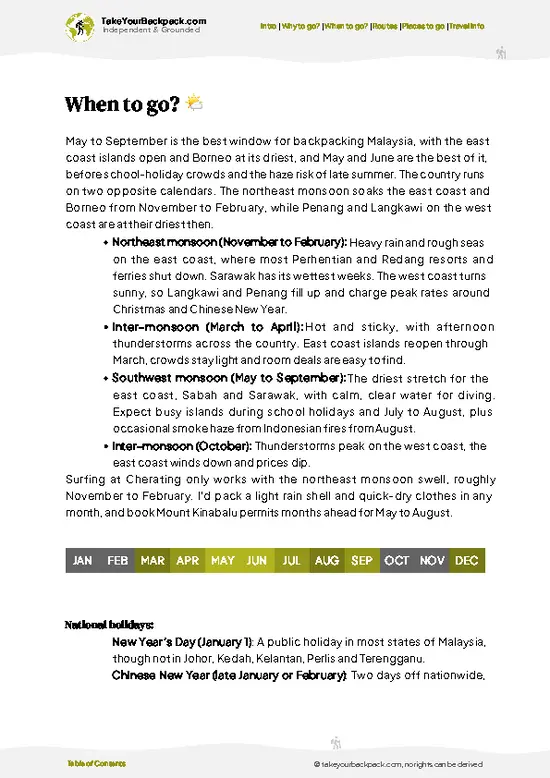
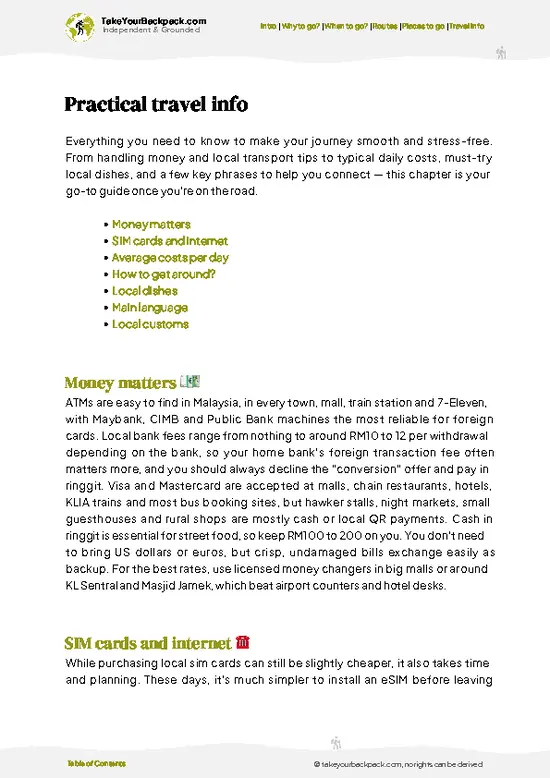
example page 0 from our offline Travel Guide for Malaysia
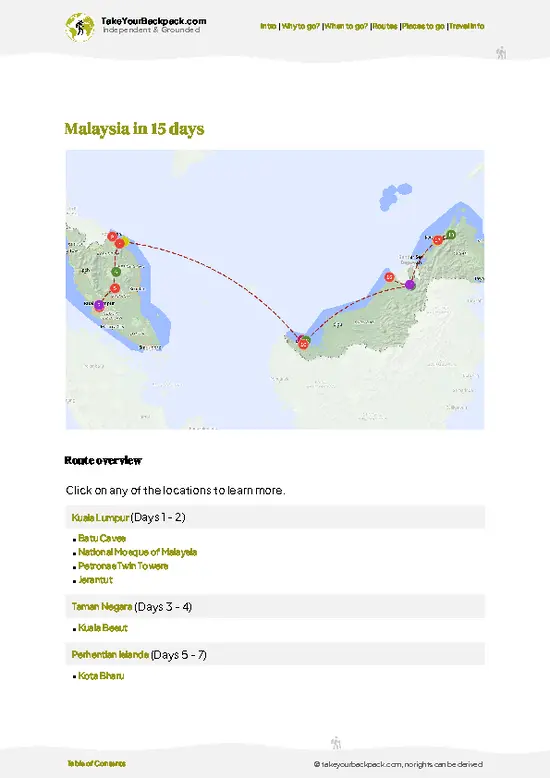
example page 1 from our offline Travel Guide for Malaysia
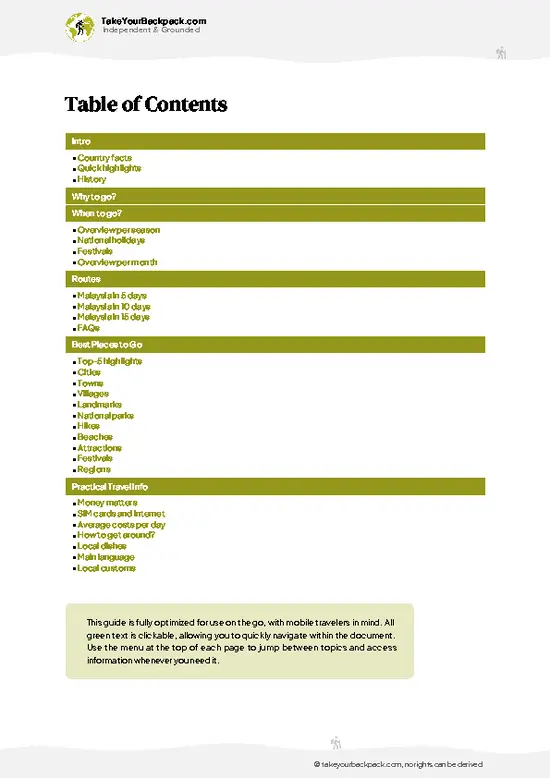
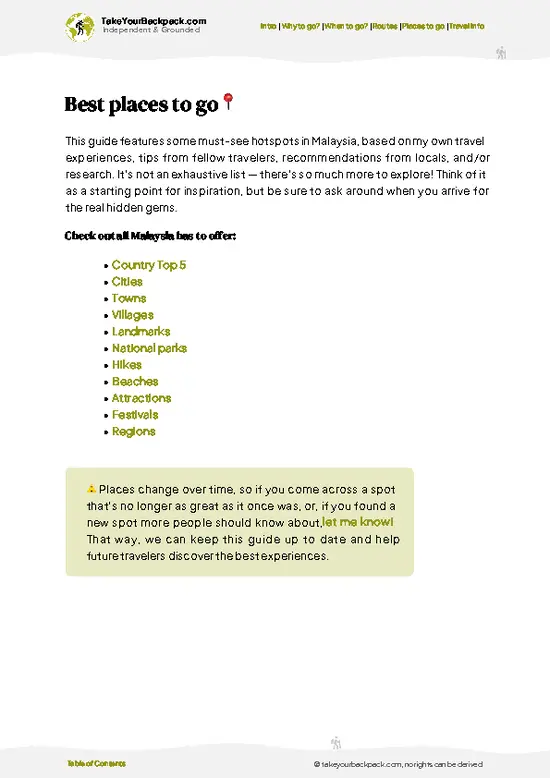
example page 2 from our offline Travel Guide for Malaysia
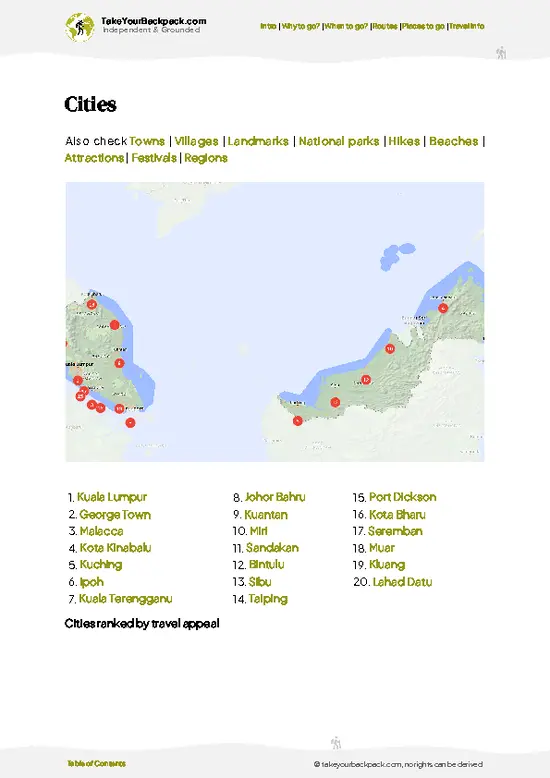
example page 3 from our offline Travel Guide for Malaysia
example page 4 from our offline Travel Guide for Malaysia
example page 5 from our offline Travel Guide for Malaysia
example page 6 from our offline Travel Guide for Malaysia
example page 7 from our offline Travel Guide for Malaysia
The digital guide (407 pages) contains:
107 highlights, ranked by travel appeal
Optimized 5, 10 & 15-day travel routes
Cities, national parks, landmarks, beaches
How to get around
Offline-friendly for travel without Wi-Fi
👉 Click to see all 30+ guide features

📅 Plan smarter in minutes, not weeks
Month by month travel advice
Festivals & national holidays
Budget expectations

🗺️ Go to the right places, skip the overrated ones
Honest pros & cons of destinations
Top hikes, parks & viewpoints
Lesser-known places most travelers miss
Clear “worth it vs skip it” guidance

🛏️ Travel smoothly without rookie mistakes
Best areas to stay
Transport systems explained simply
Common scams & safety advice
SIM cards, money & practical tips

🌍 Understand the country, not just visit it
Culture & traditions
52 Essential phrases & customs
Festivals worth planning around
Traveler-friendly historical context
Insights that make places more meaningful

📱 Built for real travel conditions
Fully downloadable PDF
Works completely offline
Optimized for phone use
Useful in remote areas & buses
Everything in one place
Save weeks of stressful planning
Get instant access to your full guide. 30‑day money-back guarantee.


By proceeding you agree to our terms.
Sent to your inbox immediately after payment • 100% Secure Checkout
Best Backpacking Travel Advisor 2025 tourism awardBest Backpacking
Travel Advisor
2025
What others say about Take Your Backpack Guides:
⭐⭐⭐⭐⭐
Fantastic, amazing amount of information!
⭐⭐⭐⭐⭐
My goodness this is amazing, it's what I've been looking for hats off too you!
⭐⭐⭐⭐⭐
I think this is absolutely BRILLIANT
⭐⭐⭐⭐
Very complete and informative. It's still missing places, but I gotta to commend you
⭐⭐⭐⭐⭐
This is truly amazing, thank you, can't wait to explore it with my kids!
⭐⭐⭐⭐⭐
Awesome resource, thank you!
⭐⭐⭐⭐⭐
This is amazing! Can't wait to explore the ones I haven't seen
⭐⭐⭐⭐
I love this! Well done, great idea.
⭐⭐⭐⭐⭐
Thanks for taking the time to make this gem!
⭐⭐⭐⭐⭐
This might be the best website I've ever seen.
⭐⭐⭐⭐⭐
Congratulations, and thank you so much for your work; it's incredibly valuable.
⭐⭐⭐⭐
In all seriousness I think you did a great job pointing out the important spots
⭐⭐⭐⭐⭐
10/10 very good
⭐⭐⭐⭐⭐
As someone who's only just starting to visit regularly this is awesome, thank you.
⭐⭐⭐⭐
Thank you very much! I'm going to visit my dad, it's going to be very useful!
⭐⭐⭐⭐⭐
This is really cool! We'll be travelling for the first time and this definitely come in handy.
⭐⭐⭐⭐⭐
You are now our minister of culture, congratulations 👨‍💼
⭐⭐⭐⭐⭐
Just wanted to tell you that this is a pearl! Going to follow your recommendations.
⭐⭐⭐⭐⭐
This is so cool. I'll definitely be using the resource for my travels soon.
⭐⭐⭐⭐⭐
This is very impressive! Good work.
⭐⭐⭐⭐⭐
This is an amazing and informative site. Very well done!

🛏️ Where to stay?Best areas to stay in Malaysia

If you’re backpacking to see the Islamic Arts Museum Malaysia, brace yourself: the area around the museum isn’t exactly a backpacker’s party zone. It’s calm, safe, and a bit polished—think more cultural pilgrimage than wild hostel nights. The real trick is to stay in neighborhoods that balance easy access with a vibe that keeps you connected to other travelers without feeling like you’re in a tourist bubble.

Look toward the Brickfields area, often called Kuala Lumpur’s Little India. It’s a lively, colorful district with affordable guesthouses and a buzzing street food scene that won’t drain your … read more 👉
If you’re backpacking to see the Islamic Arts Museum Malaysia, brace yourself: the area around the museum isn’t exactly a backpacker’s party zone. It’s calm, safe, and a bit polished—think more cultural pilgrimage than wild hostel nights. The real trick is to stay in neighborhoods that balance easy access with a vibe that keeps you connected to other travelers without feeling like you’re in a tourist bubble.

Look toward the Brickfields area, often called Kuala Lumpur’s Little India. It’s a lively, colorful district with affordable guesthouses and a buzzing street food scene that won’t drain your wallet. It’s a social hub where you can swap stories with fellow backpackers over roti canai and teh tarik. Plus, it’s just a short train ride from the museum, so you’re never far from the art without being stuck in the museum’s quiet shadow.

Alternatively, Bangsar offers a more upscale but still backpacker-friendly scene with plenty of cafés and bars where solo travelers can mingle. It’s safe and well-connected, giving you a taste of local life beyond the museum’s polished walls. Both spots offer the real pulse of Kuala Lumpur, not just the postcard-perfect museum experience.

👛 Costs (as of 20 April 2025)What things cost and how to budget

As of the most recent estimates, the admission fee for the Islamic Arts Museum Malaysia is RM20.00 for adults, RM10.00 for students and Malaysian senior citizens, and free for children under 6 years old. Additional costs may include purchases from the museum shop, dining at the on-site restaurant, or participation in special exhibitions or events.
⚠️ Prices can change and everyone travels differently, so take this as a rough guide. Hope it helps you plan your adventure!

Other Malaysian attractions near Islamic Arts Museum Malaysia

Explore more nearby:


💡 Not sure where to go next?
Create a personalized itinerary for Malaysia including Islamic Arts Museum Malaysia and the places that fit your trip.

Generate my itinerary

👉 Discover all attractions

Or checkout all Malaysia has to offer (think cities, towns, villages, national parks, hikes, beaches, festivals)
Country photo of Malaysia

We 💚 feedbackKey takeaways before you go

The Islamic Arts Museum Malaysia isn’t some quiet sanctuary—expect crowds, especially on weekends, and entrance fees that might make you blink twice if you’re used to free museums. But here’s the kicker: the collection’s depth and craftsmanship hit you in a way no Instagram post can capture. The intricate calligraphy and centuries-old artifacts pull you into a story of culture and faith that’s both humbling and electrifying. Worth the hustle.

✈️ When did I visit Malaysia?
As part of my 1.5 year travel around the world trip, I visited Malaysia in January 2016.

✍️ Help improve this page!
The information on this page is based on my own backpacking experience in Malaysia, supplemented with up-to-date research and feedback from other travelers. Travel details can change, so if you notice anything outdated or incomplete, feel free to let me know.


🙋‍♂️ Give feedback

👋 Meet the founderWho’s Behind Take Your Backpack?

Johan, backpacker and founder of TakeYourBackpackHi, I’m Johan (Netherlands 🇳🇱), the creator of TakeYourBackpack. Over the past decade, I’ve backpacked through 80+ countries across six continents, gaining extensive experience with independent travel, long-term trips, and overland routes.

This site is built on a combination of firsthand travel experience and carefully curated insights from other backpackers. Many guides are based on places I’ve personally visited, while others bring together tips, observations, and practical advice shared by trusted travelers I’ve met along the way.

The goal is to provide realistic, experience-driven guidance — not generic itineraries — so you can explore destinations with better context, clearer expectations, and more confidence.

Get full Malaysia guide •
Instant download • 107 highlights • Full Offline guide