×

Mali🇲🇱 | festivalsFestival au DésertEssakane dunes, Tuareg desert blues, camel parades, rug seating | things to do and best time to go

Explore Festival International de la Percussion de BamakoExplore Festival de Ségou

Backpacking in au Désert
🏆 Top pickfestival ranked #1
By Johan Kruseman 🇳🇱 | Updated October 22, 2026

Festival au Désert is best known for three days of Tuareg and Saharan music played on a stage among the dunes of Essakane, with no barriers and no VIP tiers. It sits in the north of Mali, west of Timbuktu, and draws Tuareg families, touring musicians, culture-minded travelers and a small number of international backpackers. Expect desert blues, Tamasheq poetry and drums, with camel parades by day. Plan carefully. The festival has not been held at Essakane since 2012 and has run as touring and exile editions elsewhere, so confirm the current location with the organizers before paying for anything. An all-inclusive package from an agency avoids the worst cost trap, because tents, 4x4 transfers and fuel are pricey to arrange piecemeal. Leave buffer days, since sand tracks and breakdowns eat schedules. Carry cash, because cards are useless out here. The main stage faces a long dune crest where spectators sit on rugs and sip sweet green tea between sets.

Discover everything you want to know in the 📖 Mali Travel Guide.
Safety warning

The current risk level for Mali is high. Check the advice before going.


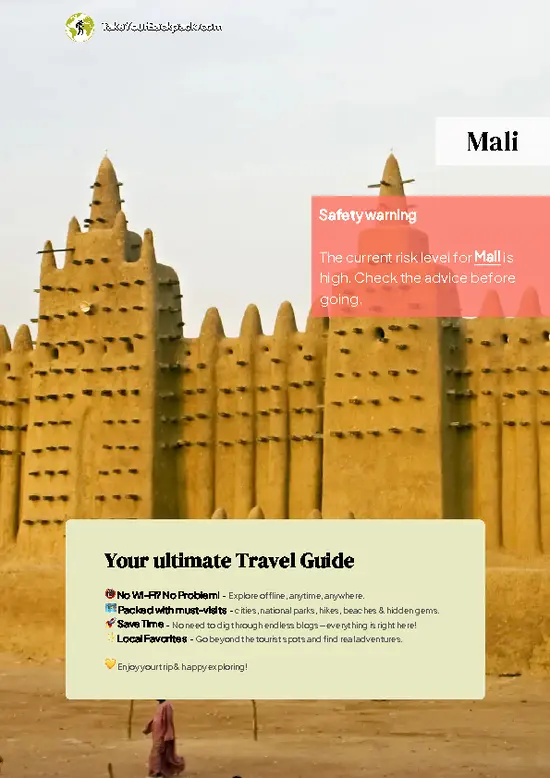
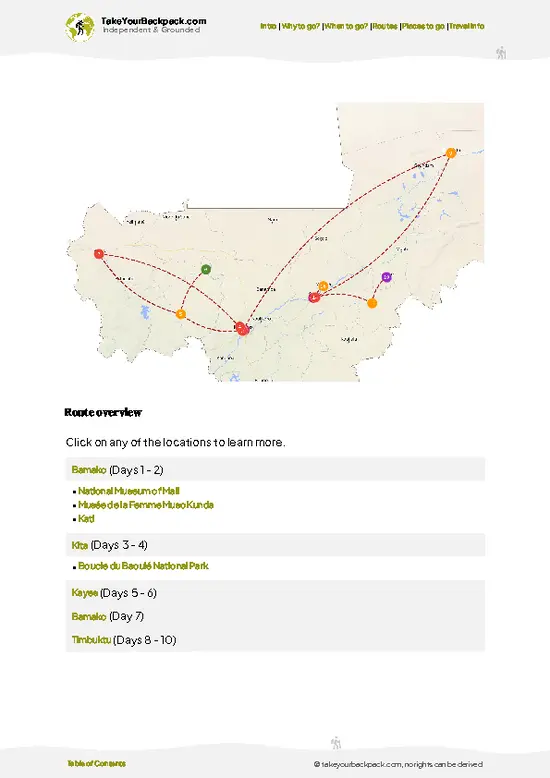
example page 0 from our offline Travel Guide for Mali
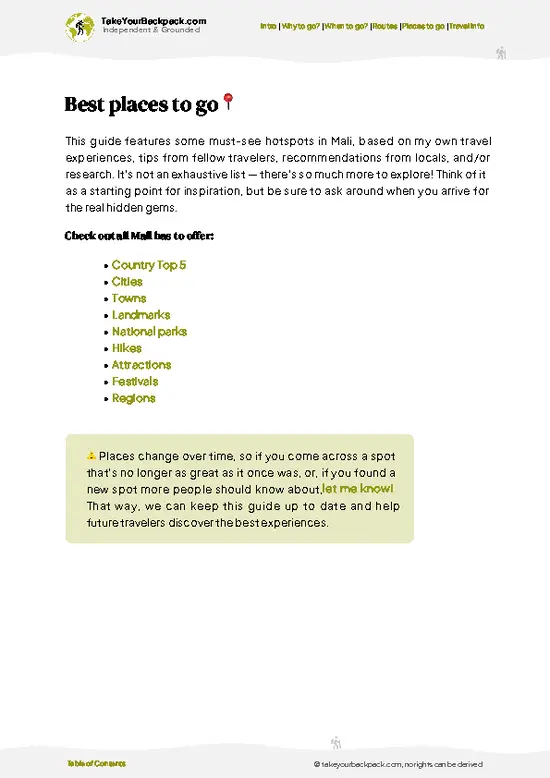
example page 1 from our offline Travel Guide for Mali
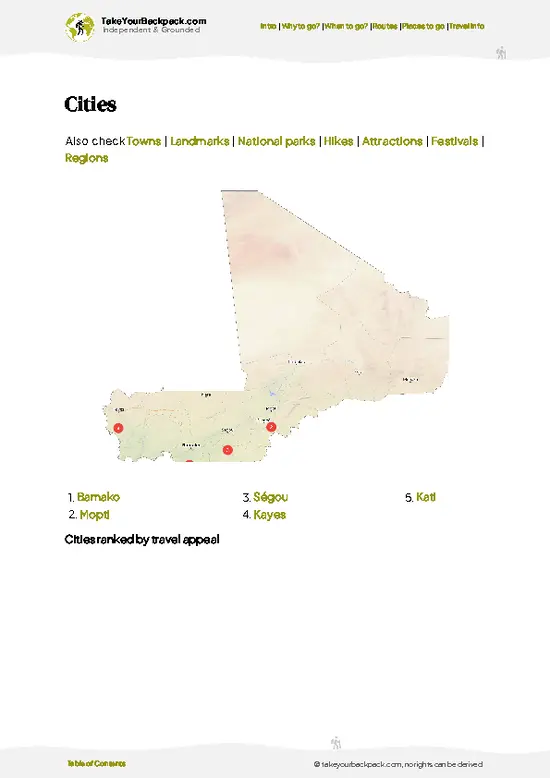
example page 2 from our offline Travel Guide for Mali
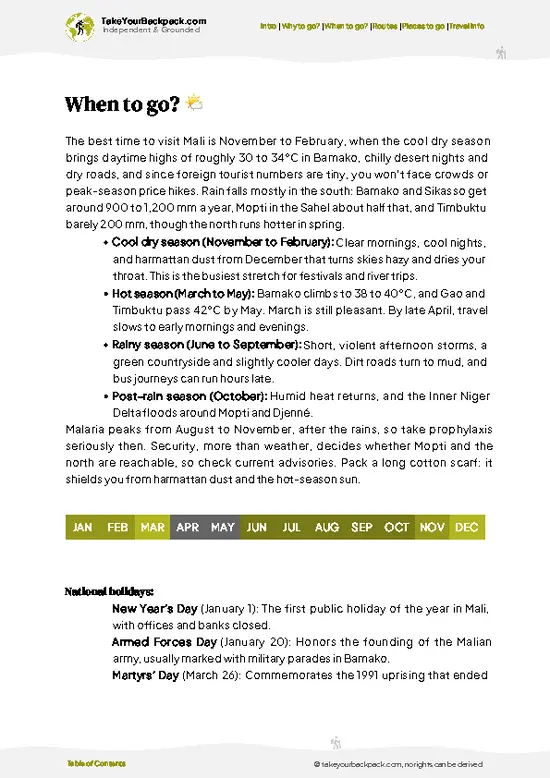
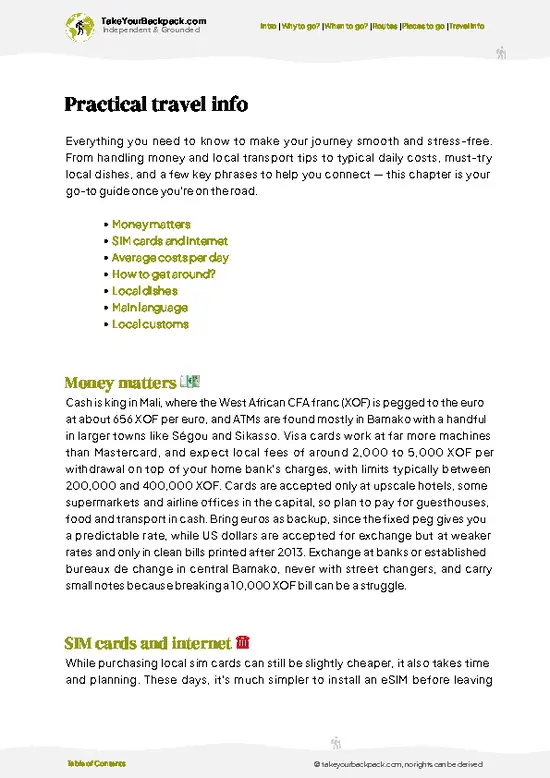
example page 3 from our offline Travel Guide for Mali
example page 4 from our offline Travel Guide for Mali
example page 5 from our offline Travel Guide for Mali
example page 6 from our offline Travel Guide for Mali
example page 7 from our offline Travel Guide for Mali
Loading the map 🌍
CLICK TO FILTER
cities
towns
landmarks
national parks
hikes
attractions
festivals
regions
SHOW COUNTRY’S BESTSHOW ALL

✨ Why go?
Ranked #1 festival in Mali
What makes this festival worth celebrating

Festival au Désert pulls travelers into a route because nothing else in West Africa puts Tuareg musicians, nomad families and outsiders on the same patch of sand for three days. The setting at Essakane is the draw: you sleep in a tent or a borrowed Tuareg shelter, wake to camel bells, and walk to the stage across the dunes. That closeness makes a temporary community fast. By the second evening you are sharing tea, three small glasses of it, with neighbors whose names you have learned.

The festival also works as an anchor for a longer trip along the Niger. Many people link it to Timbuktu and the river towns, using the dates to organize an otherwise loose overland route. Compared with European festivals of similar scale, the cost per day for what you get is low, and almost all of it reaches local … read more 👉
Festival au Désert pulls travelers into a route because nothing else in West Africa puts Tuareg musicians, nomad families and outsiders on the same patch of sand for three days. The setting at Essakane is the draw: you sleep in a tent or a borrowed Tuareg shelter, wake to camel bells, and walk to the stage across the dunes. That closeness makes a temporary community fast. By the second evening you are sharing tea, three small glasses of it, with neighbors whose names you have learned.

The festival also works as an anchor for a longer trip along the Niger. Many people link it to Timbuktu and the river towns, using the dates to organize an otherwise loose overland route. Compared with European festivals of similar scale, the cost per day for what you get is low, and almost all of it reaches local guides, drivers and artisans. Performers include Tuareg bands who rarely tour abroad, so you hear them at home, in their own language, with an audience that knows every word.

💡 HighlightsPlaces and moments you shouldn't skip

  1. The Essakane dune stage. This is the festival’s signature scene: a modest stage set between golden dunes, with the audience seated on rugs and mats rather than packed behind steel fences. Sound carries oddly well across the sand, and the whole field feels like a village gathering.
  2. Tuareg desert blues sets. Electric guitars, call-and-response vocals and hypnotic rhythms define the music here. Groups from the Sahara play sets that run late, and the best nights stretch past midnight under a sky with no light pollution.
  3. Camel and horse parades. Tuareg riders in indigo robes and veils parade and race across the dunes in the daytime. Watch from the dune crests for the best angle, and keep a respectful distance from the animals.
  4. Tea ceremonies in the camp. Three rounds of sweet green tea, poured from
… read more 👉
  1. The Essakane dune stage. This is the festival’s signature scene: a modest stage set between golden dunes, with the audience seated on rugs and mats rather than packed behind steel fences. Sound carries oddly well across the sand, and the whole field feels like a village gathering.
  2. Tuareg desert blues sets. Electric guitars, call-and-response vocals and hypnotic rhythms define the music here. Groups from the Sahara play sets that run late, and the best nights stretch past midnight under a sky with no light pollution.
  3. Camel and horse parades. Tuareg riders in indigo robes and veils parade and race across the dunes in the daytime. Watch from the dune crests for the best angle, and keep a respectful distance from the animals.
  4. Tea ceremonies in the camp. Three rounds of sweet green tea, poured from height and brewed over charcoal, are a ritual rather than a drink. Accept an invitation to a tent, sit cross-legged, and let the conversation run for the full three glasses.
  5. The Forum and craft stalls. Between concerts, Tuareg artisans sell silver jewelry, leather goods and woven mats, while the festival’s forum hosts talks on nomad culture, development and peace. Bargain gently, buy directly from makers, and you get both a souvenir and a better understanding of the music.
Festival au Désert is best started with the dune stage on the first evening, because seeing the full crowd settle onto the sand sets the pace and the etiquette for everything that follows.
Spotted a mistake or missing something? Contact us.

Things to do near Festival au Désert

Ratings based on Tripadvisor reviews. When you book through this link, you support our work at no extra cost to you.

🌤️ When to go?When is the celebration of Festival au Désert?

Festival au Désert is traditionally held over three days in January, with dates that follow the calendar of the organizers, at Essakane in the dunes about 65 km northwest of Timbuktu.
  • Best day: The opening day brings the first Tuareg camel parades and the sound checks. The middle night usually has the longest concerts, so arrive for that one.
  • Weather: Days reach 28 to 32°C (82 to 90°F). Nights in the dunes fall to 10 to 14°C (50 to 57°F), and rain is almost unheard of. Bring a warm layer, a cheche scarf against blowing sand, sunglasses and a sleeping bag.
  • Booking: Arrange transport, a tent spot and your pass two to three months ahead. Prices for transfers and camp places can rise 30 to 50 percent in festival week.
  • Crowds and roads: Leave Timbuktu the day before opening so you avoid the convoy
… read more 👉
Festival au Désert is traditionally held over three days in January, with dates that follow the calendar of the organizers, at Essakane in the dunes about 65 km northwest of Timbuktu.
  • Best day: The opening day brings the first Tuareg camel parades and the sound checks. The middle night usually has the longest concerts, so arrive for that one.
  • Weather: Days reach 28 to 32°C (82 to 90°F). Nights in the dunes fall to 10 to 14°C (50 to 57°F), and rain is almost unheard of. Bring a warm layer, a cheche scarf against blowing sand, sunglasses and a sleeping bag.
  • Booking: Arrange transport, a tent spot and your pass two to three months ahead. Prices for transfers and camp places can rise 30 to 50 percent in festival week.
  • Crowds and roads: Leave Timbuktu the day before opening so you avoid the convoy of 4x4s. Depart on the final morning, because the sand tracks clog after the last concert.
Check the current security situation in the Timbuktu region with your embassy before committing to any dates.


source: climatestotravel.comJANJanuary: excellent for travelingFEBFebruary: not recommended for travelingMARMarch: not recommended for travelingAPRApril: not recommended for travelingMAYMay: not recommended for travelingJUNJune: not recommended for travelingJULJuly: not recommended for travelingAUGAugust: not recommended for travelingSEPSeptember: not recommended for travelingOCTOctober: not recommended for travelingNOVNovember: not recommended for travelingDECDecember: not recommended for traveling

✈️ The backpacker research shortcutMali Travel Guide

An offline-friendly backpacking guide with optimized travel routes, ranked highlights, transport advice, and the best areas to stay.
example page 0 from our offline Travel Guide for Mali
example page 1 from our offline Travel Guide for Mali
example page 2 from our offline Travel Guide for Mali
example page 3 from our offline Travel Guide for Mali
example page 4 from our offline Travel Guide for Mali
example page 5 from our offline Travel Guide for Mali
example page 6 from our offline Travel Guide for Mali
example page 7 from our offline Travel Guide for Mali
The digital guide (266 pages) contains:
✅ 61 highlights, ranked by travel appeal
✅ Optimized 5, 10 & 15-day travel routes
✅ Cities, national parks, landmarks, beaches
✅ How to get around
✅ Offline-friendly for travel without Wi-Fi
👉 Click to see all 30+ guide features

📅 Plan smarter in minutes, not weeks
✅ Month by month travel advice
✅ Festivals & national holidays
✅ Budget expectations

🗺️ Go to the right places, skip the overrated ones
✅ Honest pros & cons of destinations
✅ Top hikes, parks & viewpoints
✅ Lesser-known places most travelers miss
✅ Clear “worth it vs skip it” guidance

🛏️ Travel smoothly without rookie mistakes
✅ Best areas to stay
✅ Transport systems explained simply
✅ Common scams & safety advice
✅ SIM cards, money & practical tips

🌍 Understand the country, not just visit it
✅ Culture & traditions
✅ 52 Essential phrases & customs
✅ Festivals worth planning around
✅ Traveler-friendly historical context
✅ Insights that make places more meaningful

📱 Built for real travel conditions
✅ Fully downloadable PDF
✅ Works completely offline
✅ Optimized for phone use
✅ Useful in remote areas & buses
✅ Everything in one place
Stop searching, start planning
Get instant access to your full guide. 30‑day money-back guarantee.
+ Add another guide for just

By proceeding you agree to our terms.
Sent to your inbox immediately after payment • 100% Secure Checkout
Best Backpacking Travel Advisor 2025 tourism awardBest Backpacking
Travel Advisor
2025
What others say about Take Your Backpack Guides:
⭐⭐⭐⭐⭐
Fantastic, amazing amount of information!
⭐⭐⭐⭐⭐
My goodness this is amazing, it's what I've been looking for hats off too you!
⭐⭐⭐⭐⭐
I think this is absolutely BRILLIANT
⭐⭐⭐⭐
Very complete and informative. It's still missing places, but I gotta to commend you
⭐⭐⭐⭐⭐
This is truly amazing, thank you, can't wait to explore it with my kids!
⭐⭐⭐⭐⭐
Awesome resource, thank you!
⭐⭐⭐⭐⭐
This is amazing! Can't wait to explore the ones I haven't seen
⭐⭐⭐⭐
I love this! Well done, great idea.
⭐⭐⭐⭐⭐
Thanks for taking the time to make this gem!
⭐⭐⭐⭐⭐
This might be the best website I've ever seen.
⭐⭐⭐⭐⭐
Congratulations, and thank you so much for your work; it's incredibly valuable.
⭐⭐⭐⭐
In all seriousness I think you did a great job pointing out the important spots
⭐⭐⭐⭐⭐
10/10 very good
⭐⭐⭐⭐⭐
As someone who's only just starting to visit regularly this is awesome, thank you.
⭐⭐⭐⭐
Thank you very much! I'm going to visit my dad, it's going to be very useful!
⭐⭐⭐⭐⭐
This is really cool! We'll be travelling for the first time and this definitely come in handy.
⭐⭐⭐⭐⭐
You are now our minister of culture, congratulations 👨‍💼
⭐⭐⭐⭐⭐
Just wanted to tell you that this is a pearl! Going to follow your recommendations.
⭐⭐⭐⭐⭐
This is so cool. I'll definitely be using the resource for my travels soon.
⭐⭐⭐⭐⭐
This is very impressive! Good work.
⭐⭐⭐⭐⭐
This is an amazing and informative site. Very well done!

🛏️ Where to stay?How to pick the right area

The best base for backpackers is the festival campground at Essakane itself, with Timbuktu as the fallback for anyone who wants a real bed.
Essakane festival camp is where the social energy is. Travelers pitch tents or rent a simple Tuareg-style tent among the dunes, and you share fires, tea and late-night drumming with strangers within minutes. It is also the safest option in practice, since you stay inside the organized perimeter with the festival crew and guides nearby. Expect cold nights and shared, basic washing facilities.
Central Timbuktu works if you want rooftop sleeping or a courtyard … read more 👉
The best base for backpackers is the festival campground at Essakane itself, with Timbuktu as the fallback for anyone who wants a real bed.
Essakane festival camp is where the social energy is. Travelers pitch tents or rent a simple Tuareg-style tent among the dunes, and you share fires, tea and late-night drumming with strangers within minutes. It is also the safest option in practice, since you stay inside the organized perimeter with the festival crew and guides nearby. Expect cold nights and shared, basic washing facilities.
Central Timbuktu works if you want rooftop sleeping or a courtyard room with a proper shower. The area around Sankore and the old mosques is walkable and has the most guesthouses, and you meet other travelers over breakfast who are heading out to the dunes the same day. Rooms are modest, often with fan only, so book early in January. Rooms in Timbuktu cost roughly €10 to 30 a night, and shared tent places at Essakane run about €10 to 25.
Solo travelers do best joining a group transfer rather than going independently, because convoys leave from Timbuktu and ride together. Stay in Timbuktu the night before and the night after, so you arrive rested and have a safe base when the crowds disperse.

👛 Costs (as of 22 October 2026)Typical daily expenses

Festival au Désert costs roughly €48 to 100 per person per day for an independent traveler, not counting flights to Mali.
CategoryBudget RangeLocal Reality
Festival tickets€15 to 30 per dayA three-day pass is roughly €45 to 90, with camping access sometimes sold separately.
Accommodation€10 to 25 per nightA tent spot or shared Tuareg tent at Essakane is the budget choice. Timbuktu guesthouse rooms cost €10 to 30 before and after.
Local transport€10 to 20 per dayShared 4x4 transfers from Timbuktu to Essakane cost about €15 to 35 each way, split across the festival days. Sand tracks mean no regular buses.
Food & drinks€8 to 15 per dayGrilled meat plates cost €3 to 7, tea a few cents and bottled water €1 to 2. Paying in cash is the rule.
Miscellaneous expenses€5 to 10 per dayScarves, local crafts,
… read more 👉
Festival au Désert costs roughly €48 to 100 per person per day for an independent traveler, not counting flights to Mali.
CategoryBudget RangeLocal Reality
Festival tickets€15 to 30 per dayA three-day pass is roughly €45 to 90, with camping access sometimes sold separately.
Accommodation€10 to 25 per nightA tent spot or shared Tuareg tent at Essakane is the budget choice. Timbuktu guesthouse rooms cost €10 to 30 before and after.
Local transport€10 to 20 per dayShared 4x4 transfers from Timbuktu to Essakane cost about €15 to 35 each way, split across the festival days. Sand tracks mean no regular buses.
Food & drinks€8 to 15 per dayGrilled meat plates cost €3 to 7, tea a few cents and bottled water €1 to 2. Paying in cash is the rule.
Miscellaneous expenses€5 to 10 per dayScarves, local crafts, a camel ride and tips for guides and drivers add up. A sleeping bag rental or a purchased scarf is a smart extra.
Total Daily Budget€48 to 100Costs rise in January when transport and tent spots sell out.
⚠️ Prices can change and everyone travels differently, so take this as a rough guide. Hope it helps you plan your adventure!

🍲 FoodWhat to Eat & Drink

Food at Festival au Désert is simple, cooked over charcoal and shared, and it tastes better with sand in the air than it has any right to.
Around the camp you find small Tuareg tent kitchens and local women's stalls serving grilled mutton, rice with peanut or tomato sauce, millet porridge and fresh flatbread baked in the embers. The thing to try is méchoui-style roast goat or lamb pulled off the fire in chunks, usually eaten with your hands from a shared platter. A plate costs about €3 to 7.
Drinks center on Tuareg tea. Three rounds are poured from a small pot, first strong and bitter, then sweeter, then sweetest, and refusing the second glass is rude. Say yes, sit down and watch it being poured from a height to make foam. Bottled water, soft drinks and ginger or bissap juice are sold from cool … read more 👉
Food at Festival au Désert is simple, cooked over charcoal and shared, and it tastes better with sand in the air than it has any right to.
Around the camp you find small Tuareg tent kitchens and local women's stalls serving grilled mutton, rice with peanut or tomato sauce, millet porridge and fresh flatbread baked in the embers. The thing to try is méchoui-style roast goat or lamb pulled off the fire in chunks, usually eaten with your hands from a shared platter. A plate costs about €3 to 7.
Drinks center on Tuareg tea. Three rounds are poured from a small pot, first strong and bitter, then sweeter, then sweetest, and refusing the second glass is rude. Say yes, sit down and watch it being poured from a height to make foam. Bottled water, soft drinks and ginger or bissap juice are sold from cool boxes, and alcohol is scarce, so do not count on beer.
Cash in small notes is the only way to pay, and nobody will break a large bill at midnight. Bring your own water bottle and purification tablets, since supplies run low by day three. Portions are generous and meant for groups, so team up with neighbors and split a dish. Lines are loose, and stalls fill quickly right after concerts end.

FAQTraveler FAQ

Festival au Désert is traditionally held over three days in January, in the dunes at Essakane about 65 km northwest of Timbuktu. Exact dates move each year with the organizers' calendar, and the festival has been held irregularly since 2012. Most travelers reach Essakane by 4x4 convoy from Timbuktu in around two hours.
Festival au Désert costs roughly €48 to 100 per person per day all-in, with a three-day pass around €45 to 90. A tent spot at Essakane adds about €10 to 25 a night, and shared 4x4 transfers from Timbuktu run €15 to 35 each way. Food at stalls is €3 to 7 a plate, and everything is paid in cash.
Yes, for Festival au Désert you should arrange your pass and transport in advance, ideally two to three months before January. Passes are mostly sold through the organizers and local tour operators, and shared 4x4 seats from Timbuktu to Essakane fill up in festival week. Camp places in the dunes are limited, so book those at the same time to avoid paying 30 to 50 percent more.
⚠️ Things can change over time, so always validate details locally before you go.

Other Malian festivals near au Désert

Explore more nearby:


💡 Not sure where to go next?
Create a personalized itinerary for Mali including au Désert and the places that fit your trip.

Generate my itinerary

👉 Discover all festivals

Or checkout all Mali has to offer (think cities, towns, villages, national parks, hikes, beaches, festivals)
Country photo of Mali

We 💚 feedbackFinal thoughts on celebrating the au Désert

Festival au Désert suits patient, curious travelers who care more about music in an extraordinary setting than comfort or schedules. If you want polished facilities and fixed timetables, skip it. I would bring a thick scarf for dust, a warm layer for cold nights, and a notebook for the names of the bands you will want to find later. Book through an established agency and arrive early.

✍️ Help improve this page!
The information on this page is based on in-depth research, insights shared by experienced travelers, and feedback from the local travel community in Mali. While every effort is made to keep the information accurate and current, conditions can change — so if you spot anything incorrect or outdated, please get in touch.


🙋‍♂️ Give feedback

👋 Meet the founderWho’s Behind Take Your Backpack?

Johan, backpacker and founder of TakeYourBackpackHi, I’m Johan (Netherlands 🇳🇱), the creator of TakeYourBackpack. Over the past 3 decades, I’ve backpacked through 90+ countries across six continents, gaining extensive experience with independent travel, long-term trips, and overland routes.

This site is built on a combination of firsthand travel experience and carefully curated insights from other backpackers. Many guides are based on places I’ve personally visited, while others bring together tips, observations, and practical advice shared by trusted travelers I’ve met along the way.

The goal is to provide realistic, experience-driven guidance — not generic itineraries — so you can explore destinations with better context, clearer expectations, and more confidence.