×

Mali🇲🇱 | best festivalsTop-Rated 10 festivals in Mali

Festivals in Mali are a vibrant expression of its rich cultural tapestry, showcasing the country’s diverse traditions and communal spirit. From the Festival in the Desert in Timbuktu to the Bamako Jazz Festival, each event offers a unique glimpse into local life, shaped by regional customs and seasonal rhythms. Choosing the right festival can dramatically alter your backpacking experience—impacting everything from the vibe and crowds to your budget and safety. Some festivals attract large crowds, while others provide intimate settings for deeper cultural immersion. Timing is crucial; plan your visit around these events to maximize your adventure and truly connect with Mali’s heart and soul.

By Johan Kruseman 🇳🇱 | Updated September 4, 2026
Explore the best regions in Mali

Why go?Why Travelers Love These Spots

Festivals in Mali are a vibrant expression of the country’s rich cultural heritage and historical significance. Unlike many other nations, Mali’s festivals are deeply rooted in its traditions, showcasing the diverse ethnic groups that inhabit the region. Events like the Festival in the Desert or the Festival of Masks are not just celebrations; they are living histories, where music, dance, and art converge to tell stories of resilience and community.

Mali’s geographic diversity plays a crucial role in its festival scene. From the Sahara’s vastness to the Niger River’s banks, the landscapes provide unique backdrops that enhance the experience. However, the climatic conditions can be a double-edged sword. The dry season, while ideal for outdoor festivities, can also bring sweltering heat, making … read more 👉
Festivals in Mali are a vibrant expression of the country’s rich cultural heritage and historical significance. Unlike many other nations, Mali’s festivals are deeply rooted in its traditions, showcasing the diverse ethnic groups that inhabit the region. Events like the Festival in the Desert or the Festival of Masks are not just celebrations; they are living histories, where music, dance, and art converge to tell stories of resilience and community.

Mali’s geographic diversity plays a crucial role in its festival scene. From the Sahara’s vastness to the Niger River’s banks, the landscapes provide unique backdrops that enhance the experience. However, the climatic conditions can be a double-edged sword. The dry season, while ideal for outdoor festivities, can also bring sweltering heat, making hydration and sun protection essential.

Travelers must also consider logistical challenges. Accessing remote festival sites may require significant travel time, which can detract from the overall experience. Crowds can swell during peak events, leading to a less intimate atmosphere. Yet, this is often a trade-off for witnessing the authenticity of Mali’s cultural expressions. Understanding these dynamics is key to maximizing both energy and budget, ensuring that the moments that truly matter are not overshadowed by logistical hurdles.
How the List Was Created
The list of best festivals in Mali is created based on energy, traditions, crowd experience, activities, and overall excitement. If you feel a festival is missing in this list, please let us know.

When to go?Best Time to Visit Mali for festivals

Seasonality plays a crucial role in Mali’s festival landscape. The dry season, from November to March, is prime time for festivals. The weather is cooler and more comfortable, making it easier to enjoy the vibrant celebrations. This period attracts larger crowds, which can amplify the energy but also lead to higher costs for accommodations and travel.

April to June marks the transition into the hot season. Festivals still occur, but the sweltering heat can deter some visitors. Expect fewer crowds, which may enhance the authenticity of the experience. However, the trade-off is that some events may be less lively, and the atmosphere can feel subdued.

July to October is the rainy season. Many festivals are either canceled or significantly scaled back during this time. While the landscape becomes … read more 👉
Seasonality plays a crucial role in Mali’s festival landscape. The dry season, from November to March, is prime time for festivals. The weather is cooler and more comfortable, making it easier to enjoy the vibrant celebrations. This period attracts larger crowds, which can amplify the energy but also lead to higher costs for accommodations and travel.

April to June marks the transition into the hot season. Festivals still occur, but the sweltering heat can deter some visitors. Expect fewer crowds, which may enhance the authenticity of the experience. However, the trade-off is that some events may be less lively, and the atmosphere can feel subdued.

July to October is the rainy season. Many festivals are either canceled or significantly scaled back during this time. While the landscape becomes lush and beautiful, the heavy rains can disrupt travel plans and limit accessibility. This period is best avoided for festival-goers seeking the full experience.

Shoulder seasons, particularly late October and early November, can offer a sweet spot. The weather begins to cool, and while festivals may not be at their peak, the reduced crowds and lower costs can provide a more intimate experience. Balancing the desire for vibrant celebrations with the realities of crowd dynamics and weather is essential for planning a successful trip.

festival hoppingHow to Combine festivals Into One Trip

To efficiently combine multiple festivals across Mali, start by clustering events regionally. Focus on the southern region first, where the majority of festivals occur, then work your way north. This approach minimizes travel time and maximizes festival exposure.

Consider the timing of each festival. Some events, like the Festival au Désert in Timbuktu, require careful planning due to their specific dates. Aim for a sequence that allows for a few days at each festival, ideally three to four days, to soak in the atmosphere without feeling rushed.

Travel logistics are crucial. Domestic flights can save time but may stretch budgets. Buses are cheaper but can be slow. Factor in travel time between festivals; a long bus ride can sap energy, so balance your itinerary with shorter travel segments read more 👉
To efficiently combine multiple festivals across Mali, start by clustering events regionally. Focus on the southern region first, where the majority of festivals occur, then work your way north. This approach minimizes travel time and maximizes festival exposure.

Consider the timing of each festival. Some events, like the Festival au Désert in Timbuktu, require careful planning due to their specific dates. Aim for a sequence that allows for a few days at each festival, ideally three to four days, to soak in the atmosphere without feeling rushed.

Travel logistics are crucial. Domestic flights can save time but may stretch budgets. Buses are cheaper but can be slow. Factor in travel time between festivals; a long bus ride can sap energy, so balance your itinerary with shorter travel segments when possible.

Common mistakes include over-scheduling and underestimating the time needed to transition between events. Prioritize quality experiences over quantity. If a festival feels too crowded or overwhelming, allow flexibility to skip or linger as needed.

Lastly, be aware of trade-offs. Speed can compromise depth of experience, while comfort may come at a higher cost. Plan strategically to ensure that each festival adds value to your journey, preserving both energy and budget for the moments that truly matter.

The ListTop festivals of Mali

1 Festival au Désert

Sahara dunes, Tuareg tents, nomadic music

Join travelers and locals in the desert for nights of music, cultural exchange, and the unique atmosphere of a remote Saharan gathering.

2 Festival sur le Niger

floating stages, live music, artisan markets

Watch concerts on the river, browse crafts, and meet artists during this multi-day event that transforms Ségou’s waterfront.

3 Festival de Ségou

riverbank venues, contemporary art, Malian cuisine

Attend performances and exhibitions along the Niger, where artists, musicians, and chefs showcase Ségou’s creative energy and regional flavors.

4 Festival de la Culture Dogon

cliffside villages, Dogon rituals, wooden sculptures

Immerse yourself in Dogon heritage through ceremonies, masked dances, and art, set against the dramatic Bandiagara Escarpment.

5 Festival des Masques et Marionnettes de Markala

masked dances, puppet theater, riverside processions

Witness traditional performances where masks and puppets animate local stories, drawing crowds to Markala’s lively riverbanks.

6 Festival de la Musique de Tombouctou

Saharan blues, historic mosques, open-air concerts

Hear musicians from across Mali perform in Timbuktu, blending desert sounds with the city’s centuries-old musical heritage.

7 Festival de la Danse Traditionnelle de Sikasso

regional troupes, open-air arenas, costume parades

Watch Sikasso’s dance troupes perform in colorful attire, with energetic routines that highlight the area’s diverse traditions.

8 Festival International de la Percussion de Bamako

drumming circles, open-air stages, percussion workshops

Experience Bamako’s pulse as musicians gather for rhythmic performances, hands-on sessions, and a citywide celebration of percussion traditions.

9 Festival de la Mode et du Design de Bamako

runway shows, local designers, textile innovation

See Bamako’s fashion scene come alive with new collections, creative collaborations, and a focus on West African design talent.

10 Festival de l’Artisanat de Bamako

craft stalls, handmade jewelry, textile displays

Browse Bamako’s largest gathering of artisans, where travelers can meet makers, learn techniques, and purchase unique crafts.

Loading the map 🌍

Expert viewInsights from Locals and Experts

Energy & Timing
Mali’s festival scene is a vibrant pulse of culture, but timing is everything. The best months to dive into this world are from October to March. This is when the weather is cooler and more manageable, allowing you to enjoy the festivities without melting into a puddle. Festivals like the Festival au Désert or the Festival of the Niger draw crowds, so expect a lively atmosphere. However, this also means you’ll need to navigate larger crowds. If you’re not a fan of bustling environments, consider attending smaller, local celebrations that might not be as widely advertised but offer a more intimate experience.

Cultural Context
Mali is rich in traditions, and each festival reflects its unique cultural tapestry. The Festival au Désert, for instance, showcases Tuareg music and … read more 👉
Energy & Timing
Mali’s festival scene is a vibrant pulse of culture, but timing is everything. The best months to dive into this world are from October to March. This is when the weather is cooler and more manageable, allowing you to enjoy the festivities without melting into a puddle. Festivals like the Festival au Désert or the Festival of the Niger draw crowds, so expect a lively atmosphere. However, this also means you’ll need to navigate larger crowds. If you’re not a fan of bustling environments, consider attending smaller, local celebrations that might not be as widely advertised but offer a more intimate experience.

Cultural Context
Mali is rich in traditions, and each festival reflects its unique cultural tapestry. The Festival au Désert, for instance, showcases Tuareg music and art, while the Festival of the Niger highlights the region’s river culture. Understanding the cultural significance of these events can enhance your experience. Engage with locals, listen to their stories, and respect their customs. This isn’t just a party; it’s a celebration of identity. However, be prepared for varying levels of infrastructure. Some festivals are well-organized, while others may lack basic amenities. Know what you’re signing up for.

Crowd Management
When it comes to crowds, strategy is key. Aim for mid-week events if possible; weekends can be chaotic. Arrive early to secure a good spot, especially for performances. If you’re not keen on the hustle, consider attending during the off-peak hours. This can give you a chance to soak in the atmosphere without feeling overwhelmed. Remember, the energy of the crowd can be exhilarating, but it can also drain your stamina if you’re not careful.

Budget & Comfort
Festivals can range from free to moderately priced. While some events may charge an entry fee, others rely on donations or local support. Factor in additional costs for food, transportation, and accommodations. If you’re on a tight budget, look for local eateries instead of festival food stalls, which can be overpriced. Comfort is also a consideration. Bring your own water and snacks to avoid overpriced options at the venue. If you’re camping or staying in local accommodations, ensure they meet your comfort level. Some places may lack basic amenities, so do your homework.

Planning & Prioritizing
I recommend aiming for two to three festivals during your trip. This allows you to immerse yourself without feeling rushed. Prioritize based on your interests—music, art, or cultural heritage. Research the festival dates well in advance, as they can shift slightly from year to year. Also, consider local holidays that might affect travel plans. Transportation can be a challenge, so plan your routes carefully.

Safety & Cultural Considerations
Safety is paramount. Stay informed about local conditions and heed travel advisories. While many festivals are safe, it’s wise to keep your belongings secure and be aware of your surroundings. Dress modestly to respect local customs, especially in rural areas. Engaging with locals can enrich your experience, but always approach with respect and openness.

Mali’s festivals are a gateway to understanding its soul. With the right planning and mindset, you can navigate the complexities and truly appreciate the beauty of this vibrant culture.

✈️ The backpacker research shortcutMali Travel Guide

An offline-friendly backpacking guide with optimized travel routes, ranked highlights, transport advice, and the best areas to stay.
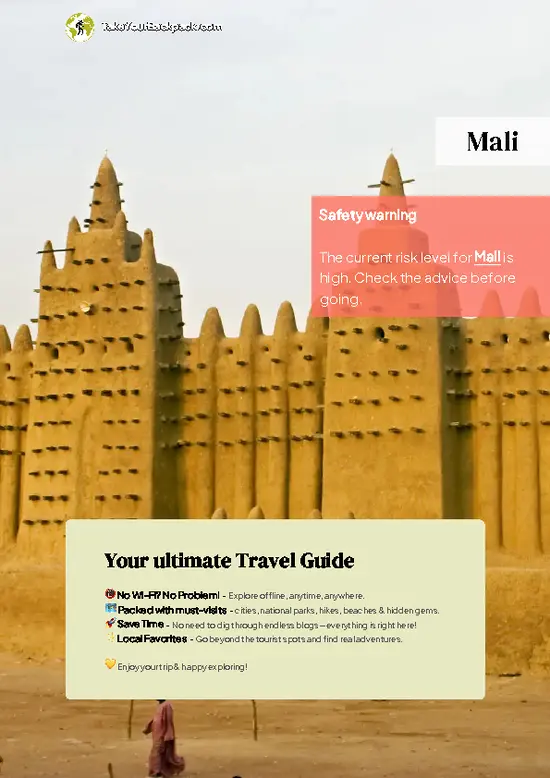
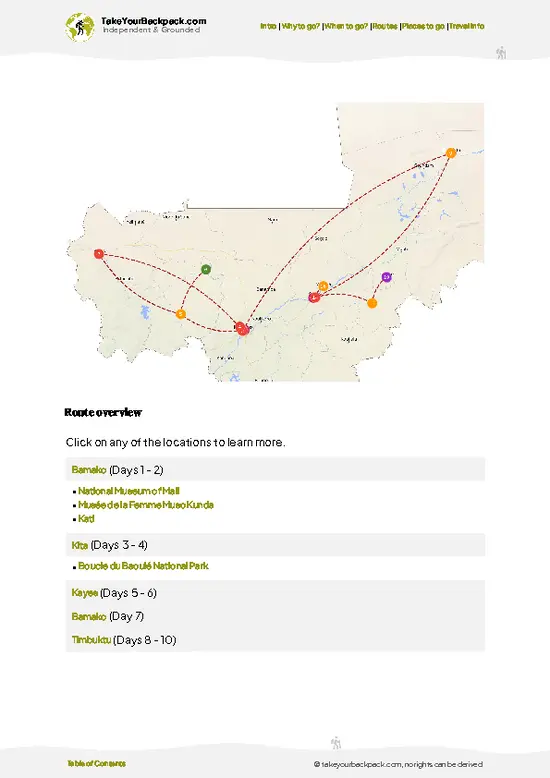
example page 0 from our offline Travel Guide for Mali
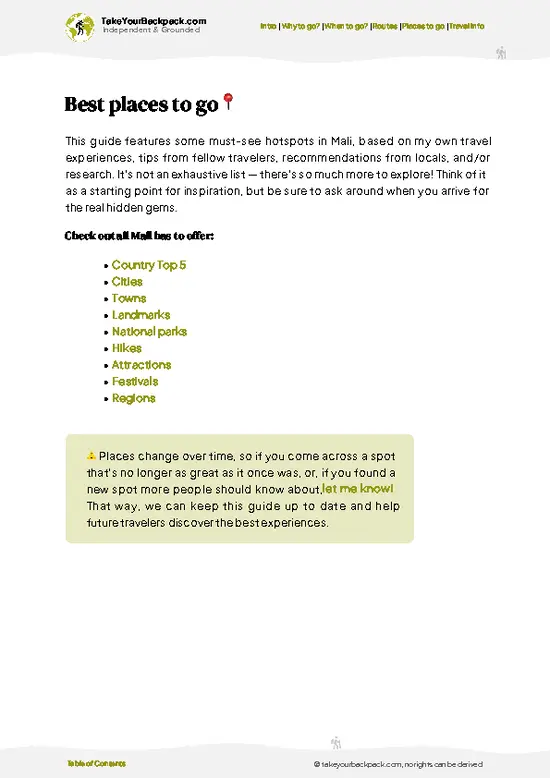
example page 1 from our offline Travel Guide for Mali
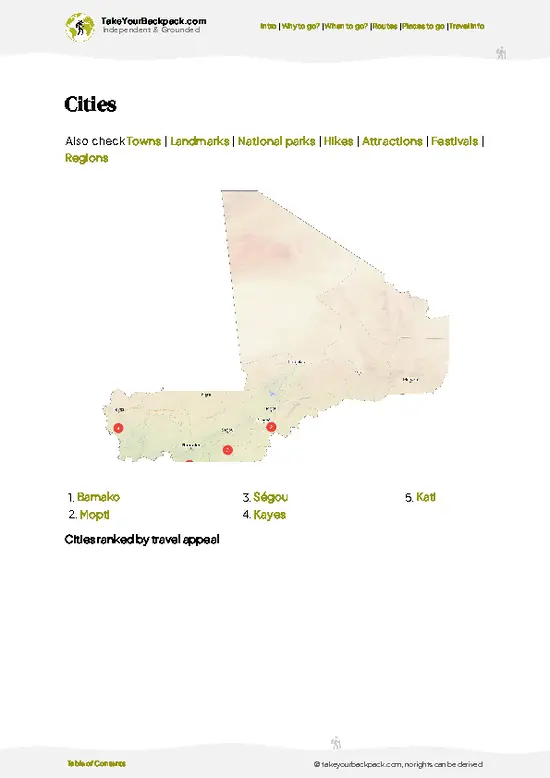
example page 2 from our offline Travel Guide for Mali
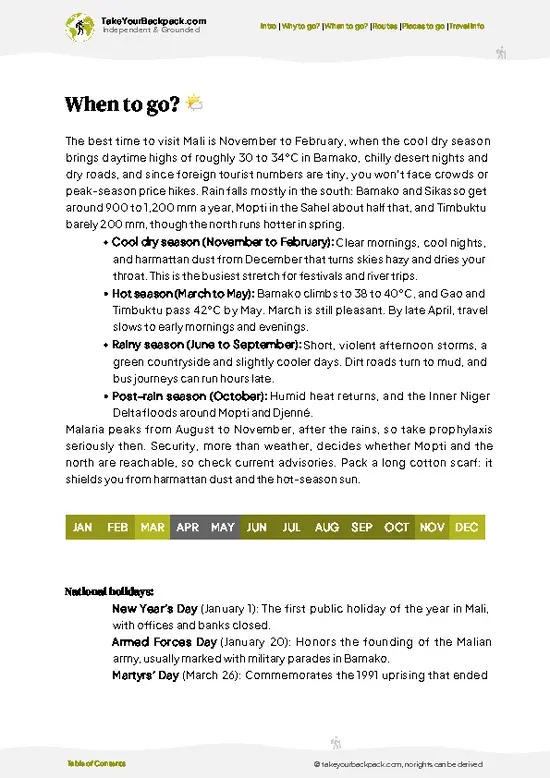
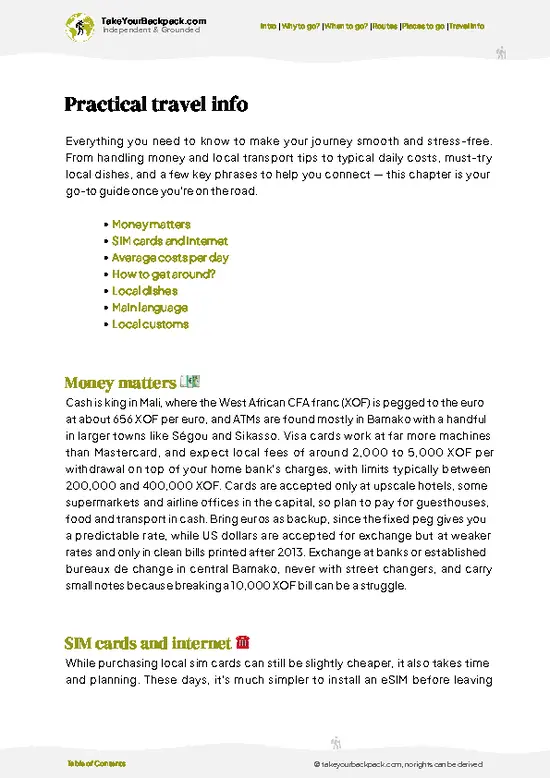
example page 3 from our offline Travel Guide for Mali
example page 4 from our offline Travel Guide for Mali
example page 5 from our offline Travel Guide for Mali
example page 6 from our offline Travel Guide for Mali
example page 7 from our offline Travel Guide for Mali
The digital guide (299 pages) contains:
72 highlights, ranked by travel appeal
Optimized 5, 10 & 15-day travel routes
Cities, national parks, landmarks, beaches
How to get around
Offline-friendly for travel without Wi-Fi
👉 Click to see all 30+ guide features

📅 Plan smarter in minutes, not weeks
Month by month travel advice
Festivals & national holidays
Budget expectations

🗺️ Go to the right places, skip the overrated ones
Honest pros & cons of destinations
Top hikes, parks & viewpoints
Lesser-known places most travelers miss
Clear “worth it vs skip it” guidance

🛏️ Travel smoothly without rookie mistakes
Best areas to stay
Transport systems explained simply
Common scams & safety advice
SIM cards, money & practical tips

🌍 Understand the country, not just visit it
Culture & traditions
52 Essential phrases & customs
Festivals worth planning around
Traveler-friendly historical context
Insights that make places more meaningful

📱 Built for real travel conditions
Fully downloadable PDF
Works completely offline
Optimized for phone use
Useful in remote areas & buses
Everything in one place
Save weeks of stressful planning
Get instant access to your full guide. 30‑day money-back guarantee.
+ Add another guide for just US$7.80

By proceeding you agree to our terms.
Sent to your inbox immediately after payment • 100% Secure Checkout
Best Backpacking Travel Advisor 2025 tourism awardBest Backpacking
Travel Advisor
2025
What others say about Take Your Backpack Guides:
⭐⭐⭐⭐⭐
Fantastic, amazing amount of information!
⭐⭐⭐⭐⭐
My goodness this is amazing, it's what I've been looking for hats off too you!
⭐⭐⭐⭐⭐
I think this is absolutely BRILLIANT
⭐⭐⭐⭐
Very complete and informative. It's still missing places, but I gotta to commend you
⭐⭐⭐⭐⭐
This is truly amazing, thank you, can't wait to explore it with my kids!
⭐⭐⭐⭐⭐
Awesome resource, thank you!
⭐⭐⭐⭐⭐
This is amazing! Can't wait to explore the ones I haven't seen
⭐⭐⭐⭐
I love this! Well done, great idea.
⭐⭐⭐⭐⭐
Thanks for taking the time to make this gem!
⭐⭐⭐⭐⭐
This might be the best website I've ever seen.
⭐⭐⭐⭐⭐
Congratulations, and thank you so much for your work; it's incredibly valuable.
⭐⭐⭐⭐
In all seriousness I think you did a great job pointing out the important spots
⭐⭐⭐⭐⭐
10/10 very good
⭐⭐⭐⭐⭐
As someone who's only just starting to visit regularly this is awesome, thank you.
⭐⭐⭐⭐
Thank you very much! I'm going to visit my dad, it's going to be very useful!
⭐⭐⭐⭐⭐
This is really cool! We'll be travelling for the first time and this definitely come in handy.
⭐⭐⭐⭐⭐
You are now our minister of culture, congratulations 👨‍💼
⭐⭐⭐⭐⭐
Just wanted to tell you that this is a pearl! Going to follow your recommendations.
⭐⭐⭐⭐⭐
This is so cool. I'll definitely be using the resource for my travels soon.
⭐⭐⭐⭐⭐
This is very impressive! Good work.
⭐⭐⭐⭐⭐
This is an amazing and informative site. Very well done!

🛏️ Where to stay?Best Places to Stay in Mali

Yes — there are hostels and budget guesthouses in Mali, concentrated in the capital and southern river towns rather than in the unstable northern regions.
In Bamako the best choice is around Hippodrome, ACI 2000 and Badalabougou: Hippodrome gives the most nightlife and tourist services, ACI 2000 is central and relatively quiet, and Badalabougou is cheaper but closer to busy roads and markets.
Outside the capital, look for simple guesthouses in river towns like Mopti and Ségou (good for markets and river access but basic facilities); Timbuktu has very limited, often seasonal options and significant security constraints, so prioritize safety and contingency plans.

If you enjoy meeting fellow … read more 👉
Yes — there are hostels and budget guesthouses in Mali, concentrated in the capital and southern river towns rather than in the unstable northern regions.
In Bamako the best choice is around Hippodrome, ACI 2000 and Badalabougou: Hippodrome gives the most nightlife and tourist services, ACI 2000 is central and relatively quiet, and Badalabougou is cheaper but closer to busy roads and markets.
Outside the capital, look for simple guesthouses in river towns like Mopti and Ségou (good for markets and river access but basic facilities); Timbuktu has very limited, often seasonal options and significant security constraints, so prioritize safety and contingency plans.

If you enjoy meeting fellow travelers, consider choosing hostels with high ratings for atmosphere. On the other hand, if you prefer having your own space, a hotel might be a better option.

MaliExplore Mali

👋 Meet the founderWho’s Behind Take Your Backpack?

Johan, backpacker and founder of TakeYourBackpackHi, I’m Johan (Netherlands 🇳🇱), the creator of TakeYourBackpack. Over the past decade, I’ve backpacked through 80+ countries across six continents, gaining extensive experience with independent travel, long-term trips, and overland routes.

This site is built on a combination of firsthand travel experience and carefully curated insights from other backpackers. Many guides are based on places I’ve personally visited, while others bring together tips, observations, and practical advice shared by trusted travelers I’ve met along the way.

The goal is to provide realistic, experience-driven guidance — not generic itineraries — so you can explore destinations with better context, clearer expectations, and more confidence.

Get full Mali guide •
Instant download • 72 highlights • Full Offline guide