×

Mali🇲🇱 | citiesMoptiriver confluence, mud-brick mosques, fishing boats, bustling port | things to do and best time to go

Explore KoutialaExplore Segou

Backpacking in Mopti
🏆 Top pickcity ranked #2
By Johan Kruseman 🇳🇱 | Updated June 18, 2026

You land in Mopti with one big decision: do you shell out for a private pinasse (riverboat) to drift the Niger at your own pace, or squeeze onto a public boat with locals and goats, saving cash but sacrificing elbow room and control? This is the Mopti equation in miniature—every choice here is a trade between time, money, and comfort, and the stakes feel real. Mopti sits at the confluence of the Niger and Bani rivers, smack in the heart of Mali, and it’s long been a crossroads for traders, storytellers, and the curious. For backpackers, Mopti is a paradox: the Grand Mosque’s mud-brick grandeur and the bustling port are genuinely worth seeing, but the city’s rough edges—persistent hustlers, patchy infrastructure, and a security situation that can shift with the wind—demand street smarts. It’s cheaper than Bamako, less touristy than Djenné, and the river life is pure West African theater, but don’t expect a backpacker social scene or easy nights out. Mopti rewards the traveler who’s alert, adaptable, and hungry for the real deal.

Discover everything you want to know in the 📖 Mali Travel Guide.
Safety warning

The current risk level for Mali is high. Check the advice before going.


Get your Mali guide
76 ranked highlights, routes & tips, works offline (321 pages)
Loading the map 🌍
CLICK TO FILTER
cities
towns
landmarks
national parks
hikes
attractions
festivals
regions
SHOW COUNTRY’S BESTSHOW ALL

✨ Why go?
Ranked #2 city in Mali
The unique appeal for travelers

Mopti is a strategic basecamp for backpackers exploring Mali. It’s not just about the highlights; it’s the value it offers for your time and money. The city is a hub for day trips to nearby attractions, making it easy to dive into the rich culture and landscapes of the region without the hassle of constant packing and unpacking.

Accommodations range from budget-friendly hostels to cozy guesthouses, ensuring you can find a spot that fits your comfort level without breaking the bank. The food scene is a delightful mix of local flavors and international options, so you can fuel up for your adventures without feeling like you’re sacrificing quality.

Mopti is also walkable, allowing you to soak in the vibrant street life and interact with locals. As the sun sets, the nightlife offers a laid-back … read more 👉
Mopti is a strategic basecamp for backpackers exploring Mali. It’s not just about the highlights; it’s the value it offers for your time and money. The city is a hub for day trips to nearby attractions, making it easy to dive into the rich culture and landscapes of the region without the hassle of constant packing and unpacking.

Accommodations range from budget-friendly hostels to cozy guesthouses, ensuring you can find a spot that fits your comfort level without breaking the bank. The food scene is a delightful mix of local flavors and international options, so you can fuel up for your adventures without feeling like you’re sacrificing quality.

Mopti is also walkable, allowing you to soak in the vibrant street life and interact with locals. As the sun sets, the nightlife offers a laid-back vibe, perfect for unwinding after a day of exploration. Plus, its position makes onward travel to other destinations straightforward, keeping your journey fluid.

For those seeking a blend of cultural immersion and practical logistics, Mopti is more than a stop; it’s a smart choice in your backpacking route.
Want to include Mopti in your Mali route?
Create a personalized Mali itinerary that includes Mopti and the places that fit your trip — based on your travel style, budget, and available time. Get your route in seconds.

Generate my trip

💡 HighlightsDon't-miss highlights and experiences

  1. Great Mosque of Mopti (Grande Mosquée) — The iconic mud-brick mosque with tall, buttressed minarets; it’s a striking example of Sudano-Sahelian architecture and a focal point of daily life (best to admire from outside and watch local worship rhythms).
  2. Mopti River Port & Pirogue Row — The working heart of the town where colorful pirogues pile up, traders load goods, and boatmen shout fares. It’s noisy, photogenic, and the easiest place to organize river travel.
  3. Fish Market on the Quay (Marché aux Poissons) — An honest, smelly, fascinating slice of local economy: auctions, smoking racks, and Bozo fishermen selling the day’s catch. Great for photos and for trying local smoked fish dishes.
  4. Grand Market (Marché central) — A bustling labyrinth of stalls selling textiles, spices, pottery, and
read more 👉
  1. Great Mosque of Mopti (Grande Mosquée) — The iconic mud-brick mosque with tall, buttressed minarets; it’s a striking example of Sudano-Sahelian architecture and a focal point of daily life (best to admire from outside and watch local worship rhythms).
  2. Mopti River Port & Pirogue Row — The working heart of the town where colorful pirogues pile up, traders load goods, and boatmen shout fares. It’s noisy, photogenic, and the easiest place to organize river travel.
  3. Fish Market on the Quay (Marché aux Poissons) — An honest, smelly, fascinating slice of local economy: auctions, smoking racks, and Bozo fishermen selling the day’s catch. Great for photos and for trying local smoked fish dishes.
  4. Grand Market (Marché central) — A bustling labyrinth of stalls selling textiles, spices, pottery, and everyday gear. Not a tourist boutique — a real market where haggling, colors, and smells give you the clearest sense of Mopti life.
  5. Old Town (La Médina) and Adobe Alleys — Walkable, low-rise neighborhoods of mud houses, narrow alleys and small street shrines. No single monument, but wandering here rewards you with daily scenes that feel genuinely Mopti.
  6. Bozo Boatyards and Boatbuilders — Watch craftsmen carve and repair pirogues by the water’s edge. It’s hands-on traditional woodworking and a window into the boat culture that literally runs the town.
  7. Niger-Bani Confluence Viewpoint — A short riverside stroll gives you a view where two big rivers meet — the currents, the ferries, and the light at dusk make it an ideal spot for a slow sit and good photos.
  8. Sandbar Beaches and Riverfront Swimming Spots — Seasonal sandbanks and small beaches on the Niger where locals bathe, kids play, and you can cool off after a hot day. Low-cost, local vibe — bring a towel and respect local sensibilities.
  9. Local Music Cafés and Street Griots — Mopti has lively little cafés and informal squares where griots and musicians play. Evenings are when musicians test new songs — jump in, listen, tip, and you’ll walk away with memories rather than souvenirs.
  10. Artisan Quarter & Woodcarvers’ Workshops — Near the market you’ll find woodcarvers, leatherworkers and small craft stalls. Not museum pieces, but real artisans working commissions — good for seeing how souvenirs are made and for buying directly.
A few great day trips from Mopti: the mud-brick Great Mosque of Djenné, the Bandiagara Escarpment and Dogon villages, and the Komoguel/Inner Niger Delta islands and reserve.
Spotted a mistake or missing something? Contact us.
🏘️ NeighborhoodsNeighborhood guide to Mopti

Mopti is a vibrant hub where the Niger River meets the Bani, offering a unique blend of cultures and experiences. Each neighborhood has its own character, making it essential to choose wisely based on your priorities.

Centre Ville: This is the heart of Mopti. Bustling markets and street vendors create an energetic vibe. It’s walkable, with plenty of affordable guesthouses. Nightlife is lively, with local music spilling into the streets. Perfect for short stays, but the noise might wear on you if you linger too long.

Port de Mopti: A quieter area, ideal for those wanting to escape the hustle. You’ll find charming riverside views and a more relaxed pace. Accommodations here are slightly pricier, but the tranquility is worth it. Great for longer stays, especially if you enjoy watching boats … read more 👉
Mopti is a vibrant hub where the Niger River meets the Bani, offering a unique blend of cultures and experiences. Each neighborhood has its own character, making it essential to choose wisely based on your priorities.

Centre Ville: This is the heart of Mopti. Bustling markets and street vendors create an energetic vibe. It’s walkable, with plenty of affordable guesthouses. Nightlife is lively, with local music spilling into the streets. Perfect for short stays, but the noise might wear on you if you linger too long.

Port de Mopti: A quieter area, ideal for those wanting to escape the hustle. You’ll find charming riverside views and a more relaxed pace. Accommodations here are slightly pricier, but the tranquility is worth it. Great for longer stays, especially if you enjoy watching boats come and go.

Bamako Road: This area is a bit more suburban, with a mix of local life and expat presence. It’s less walkable, but public transport is accessible. Costs vary, with some hidden budget-friendly spots. Nightlife is subdued, making it suitable for those who prefer a quieter evening.

Djenné District: A bit further out, this area is famous for its mud-brick architecture. It’s a cultural hotspot, but transport can be tricky. If you’re keen on history and architecture, it’s worth the trek. Ideal for longer stays to soak in the local culture, but be prepared for a slower pace.

Choose your neighborhood wisely, and you’ll unlock the best of what Mopti has to offer.

⌛️ 1 daySeeing the highlights in 24 hours

Mopti, often called the ”Venice of Mali,” is a vibrant hub where the Niger and Bani rivers converge. This city pulses with life, showcasing a blend of cultures, bustling markets, and stunning architecture. You’ll find a rich tapestry of traditions, from the colorful boats on the river to the lively sounds of traders in the streets.

Start your day in the lively neighborhood of the Grand Marché. The early morning is perfect for wandering through the market, where you can sample fresh bread and local pastries. The aroma of spices fills the air, and the vibrant colors of fruits and textiles are a feast for the eyes. Engage with local vendors; they often have stories to share that add depth to your experience.

After soaking in the market’s energy, head towards the iconic Mosque of Mopti, a … read more 👉
Mopti, often called the ”Venice of Mali,” is a vibrant hub where the Niger and Bani rivers converge. This city pulses with life, showcasing a blend of cultures, bustling markets, and stunning architecture. You’ll find a rich tapestry of traditions, from the colorful boats on the river to the lively sounds of traders in the streets.

Start your day in the lively neighborhood of the Grand Marché. The early morning is perfect for wandering through the market, where you can sample fresh bread and local pastries. The aroma of spices fills the air, and the vibrant colors of fruits and textiles are a feast for the eyes. Engage with local vendors; they often have stories to share that add depth to your experience.

After soaking in the market’s energy, head towards the iconic Mosque of Mopti, a striking structure made of mud and wood. Take a moment to appreciate its unique architecture and the peaceful atmosphere surrounding it. From there, stroll along the riverbanks. The views are serene, and you might catch fishermen casting their nets or women washing clothes, offering a glimpse into daily life.

As afternoon rolls in, make your way to the nearby neighborhood of Togu Na, where you can visit the traditional meeting place. This spot is often overlooked by tourists, but it’s a fantastic way to understand local governance and community life. Grab lunch at a nearby eatery, perhaps trying some jollof rice or grilled fish, which are local favorites.

As the sun begins to set, return to the river for a boat ride. This is the perfect way to unwind and watch the day fade away, with the sky painted in hues of orange and pink. End your day at a local café, sipping on sweet mint tea while reflecting on the vibrant experiences you’ve had. In just one day, Mopti offers a rich blend of culture, community, and connection that will linger long after you leave.
Turn your Mopti visit into an Mali adventure
Build a complete Mali route with Mopti, hidden gems, must-see destinations, and realistic travel times included.

Generate my trip

🌤️ When to go?Choosing the right time of year


  • Weather: Mopti’s climate is hot and semi-arid. The dry season from November to February offers clear skies and minimal rain, making it the most reliable window for backpackers. The rainy season, from June to September, brings heavy downpours that can disrupt travel plans and muddy roads.

  • Temperature: During the dry season, daytime highs hover around 30-35°C (86-95°F), with cooler nights dropping to 15-20°C (59-68°F). The wet season spikes temperatures and humidity, often pushing daytime highs above 38°C (100°F), which can sap your energy fast.

  • Daylight Hours: Mopti enjoys roughly 11 to 12 hours of daylight year-round, with minor variation. This consistency means you can plan your daily treks and market visits without worrying about early sunsets cutting your exploration short.

  • Crowds:
read more 👉

  • Weather: Mopti’s climate is hot and semi-arid. The dry season from November to February offers clear skies and minimal rain, making it the most reliable window for backpackers. The rainy season, from June to September, brings heavy downpours that can disrupt travel plans and muddy roads.

  • Temperature: During the dry season, daytime highs hover around 30-35°C (86-95°F), with cooler nights dropping to 15-20°C (59-68°F). The wet season spikes temperatures and humidity, often pushing daytime highs above 38°C (100°F), which can sap your energy fast.

  • Daylight Hours: Mopti enjoys roughly 11 to 12 hours of daylight year-round, with minor variation. This consistency means you can plan your daily treks and market visits without worrying about early sunsets cutting your exploration short.

  • Crowds: Tourist traffic peaks in the dry season, especially around December and January, when international visitors flock to the region. This means more competition for accommodations but also a livelier atmosphere and better access to guided tours.

  • Seasonal Activities: The dry months coincide with cultural festivals and river navigation on the Niger, offering authentic local experiences. The wet season limits river travel and outdoor events, reducing your options for immersive activities.

  • Price Fluctuations: Expect higher prices for lodging and tours during the dry season’s peak months due to demand. The wet season sees a drop in prices but at the cost of comfort and accessibility.


Pro-tip: Aim for late November or early February to balance pleasant weather, manageable crowds, and better prices—maximizing your value without sacrificing comfort or experience.


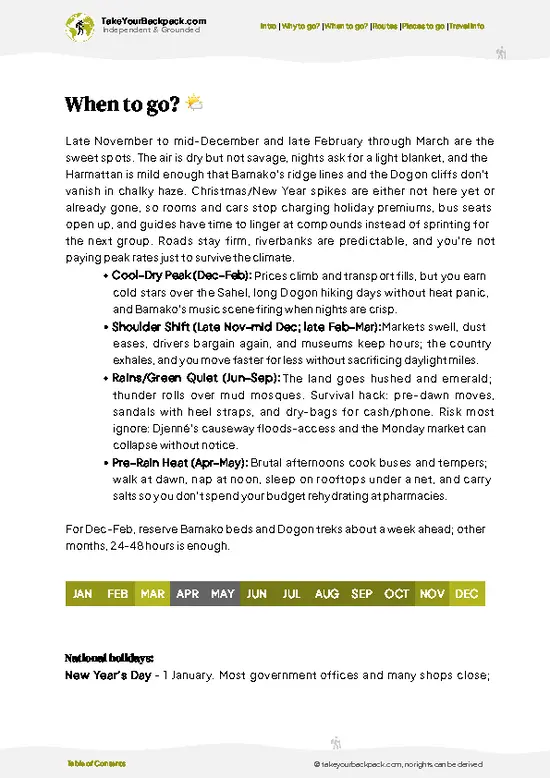
source: climatestotravel.comJANJanuary: excellent for travelingFEBFebruary: highly recommended for travelingMARMarch: good for travelingAPRApril: fair for travelingMAYMay: fair for travelingJUNJune: below average for travelingJULJuly: below average for travelingAUGAugust: below average for travelingSEPSeptember: fair for travelingOCTOctober: good for travelingNOVNovember: highly recommended for travelingDECDecember: excellent for traveling
when-to-go

✈️ The backpacker research shortcutMali Travel Guide

An offline-friendly backpacking guide with optimized travel routes, ranked highlights, transport advice, and the best areas to stay.
example page 0 from our offline Travel Guide for Mali
example page 1 from our offline Travel Guide for Mali
example page 2 from our offline Travel Guide for Mali
example page 3 from our offline Travel Guide for Mali
example page 4 from our offline Travel Guide for Mali
example page 5 from our offline Travel Guide for Mali
example page 6 from our offline Travel Guide for Mali
example page 7 from our offline Travel Guide for Mali
The digital guide (321 pages) contains:
76 highlights, ranked by travel appeal
Optimized 5, 10 & 15-day travel routes
Cities, national parks, landmarks, beaches
How to get around
Offline-friendly for travel without Wi-Fi
👉 Click to see all 30+ guide features

📅 Plan smarter in minutes, not weeks
Month by month travel advice
Festivals & national holidays
Budget expectations

🗺️ Go to the right places, skip the overrated ones
Honest pros & cons of destinations
Top hikes, parks & viewpoints
Lesser-known places most travelers miss
Clear “worth it vs skip it” guidance

🛏️ Travel smoothly without rookie mistakes
Best areas to stay
Transport systems explained simply
Common scams & safety advice
SIM cards, money & practical tips

🌍 Understand the country, not just visit it
Culture & traditions
52 Essential phrases & customs
Festivals worth planning around
Traveler-friendly historical context
Insights that make places more meaningful

📱 Built for real travel conditions
Fully downloadable PDF
Works completely offline
Optimized for phone use
Useful in remote areas & buses
Everything in one place
Save weeks of stressful planning
Get instant access to your full guide. 30‑day money-back guarantee.


By proceeding you agree to our terms.
Sent to your inbox immediately after payment • 100% Secure Checkout
Best Backpacking Travel Advisor 2025 tourism awardBest Backpacking
Travel Advisor
2025
What others say about Take Your Backpack Guides:
⭐⭐⭐⭐⭐
Fantastic, amazing amount of information!
⭐⭐⭐⭐⭐
My goodness this is amazing, it's what I've been looking for hats off too you!
⭐⭐⭐⭐⭐
I think this is absolutely BRILLIANT
⭐⭐⭐⭐
Very complete and informative. It's still missing places, but I gotta to commend you
⭐⭐⭐⭐⭐
This is truly amazing, thank you, can't wait to explore it with my kids!
⭐⭐⭐⭐⭐
Awesome resource, thank you!
⭐⭐⭐⭐⭐
This is amazing! Can't wait to explore the ones I haven't seen
⭐⭐⭐⭐
I love this! Well done, great idea.
⭐⭐⭐⭐⭐
Thanks for taking the time to make this gem!
⭐⭐⭐⭐⭐
This might be the best website I've ever seen.
⭐⭐⭐⭐⭐
Congratulations, and thank you so much for your work; it's incredibly valuable.
⭐⭐⭐⭐
In all seriousness I think you did a great job pointing out the important spots
⭐⭐⭐⭐⭐
10/10 very good
⭐⭐⭐⭐⭐
As someone who's only just starting to visit regularly this is awesome, thank you.
⭐⭐⭐⭐
Thank you very much! I'm going to visit my dad, it's going to be very useful!
⭐⭐⭐⭐⭐
This is really cool! We'll be travelling for the first time and this definitely come in handy.
⭐⭐⭐⭐⭐
You are now our minister of culture, congratulations 👨‍💼
⭐⭐⭐⭐⭐
Just wanted to tell you that this is a pearl! Going to follow your recommendations.
⭐⭐⭐⭐⭐
This is so cool. I'll definitely be using the resource for my travels soon.
⭐⭐⭐⭐⭐
This is very impressive! Good work.
⭐⭐⭐⭐⭐
This is an amazing and informative site. Very well done!

🛏️ Where to stay?Best areas to stay in Mali

In Mopti, the real backpacker action centers around the town’s riverfront district, especially near the port and the bustling market area. This zone is your sweet spot if you want to balance safety, social buzz, and budget-friendly options. It’s where you’ll find the most guesthouses and hostels geared toward solo travelers and budget adventurers. The vibe here is lively without tipping into chaos—locals and travelers mingle over street food and the occasional impromptu music session.

Compared to the quieter residential neighborhoods, which can feel isolated and less welcoming to outsiders, … read more 👉
In Mopti, the real backpacker action centers around the town’s riverfront district, especially near the port and the bustling market area. This zone is your sweet spot if you want to balance safety, social buzz, and budget-friendly options. It’s where you’ll find the most guesthouses and hostels geared toward solo travelers and budget adventurers. The vibe here is lively without tipping into chaos—locals and travelers mingle over street food and the occasional impromptu music session.

Compared to the quieter residential neighborhoods, which can feel isolated and less welcoming to outsiders, the riverfront area offers a natural social hub. It’s easier to strike up conversations, join group excursions, or just soak in the daily rhythm of Mopti life. Plus, the proximity to the Niger River means you’re never far from transport options or scenic spots, which adds value without extra cost.

Stepping away from this core, you’ll find fewer budget accommodations and less of that communal energy. The trade-off is often more comfort or quiet, but at the expense of connection and convenience. For backpackers, especially those traveling solo or on a tight budget, the riverfront district is the strategic choice—safe enough to relax, vibrant enough to engage, and affordable enough to keep your trip moving forward without compromise.

🚌 Getting aroundTransportation options and practical tips

Mopti moves at a rhythm that’s part pulse, part drift. It’s not a city where you can set your watch and expect the world to follow. Instead, it’s a place where schedules are more like guidelines, and the real flow comes from reading the crowd, the sun, and the river’s mood. Time here bends around market chatter and boat horns, not digital clocks. If you want to master Mopti’s transit game, you need to think less about rigid timetables and more about spotting the right moment to jump in—whether that’s a shared taxi filling up or a pirogue pushing off the dock. Your choices boil down to a trade-off triangle: how much time you’re willing to lose, how much money you want to spend, and how much comfort you can live without. Here’s the breakdown.


  • Walking: The cheapest and most flexible way to
read more 👉
Mopti moves at a rhythm that’s part pulse, part drift. It’s not a city where you can set your watch and expect the world to follow. Instead, it’s a place where schedules are more like guidelines, and the real flow comes from reading the crowd, the sun, and the river’s mood. Time here bends around market chatter and boat horns, not digital clocks. If you want to master Mopti’s transit game, you need to think less about rigid timetables and more about spotting the right moment to jump in—whether that’s a shared taxi filling up or a pirogue pushing off the dock. Your choices boil down to a trade-off triangle: how much time you’re willing to lose, how much money you want to spend, and how much comfort you can live without. Here’s the breakdown.


  • Walking: The cheapest and most flexible way to get around Mopti’s compact center. No schedule, no cost, just your own pace. Perfect for soaking in the street life and markets, but expect heat and dust to slow you down. Plan on 15-30 minutes to cross the main town areas.


  • Shared Taxis: These are the workhorses of Mopti’s transit. They run from early morning until late evening, roughly 6 a.m. to 9 p.m., but don’t expect a strict timetable. You hop in when the taxi fills up, which can mean waiting 5 to 20 minutes. Cost is low—around 200-500 CFA francs per ride—but comfort is minimal: expect crowded seats and a bumpy ride on uneven roads. Speed depends on traffic and stops, but generally faster than walking.


  • Motorcycle Taxis (Zémidjans): The fastest way through Mopti’s narrow streets and traffic jams. Available from dawn to dusk, these cost about 300-700 CFA francs per short trip. They’re quick and nimble but offer zero protection from dust, heat, or rain. Great if you’re in a hurry and traveling light, but not ideal for bulky backpacks or bad weather.


  • Pirogues (River Boats): The iconic Mopti transit mode, especially if you’re crossing the Niger River or heading to nearby villages. Departure times are flexible, often leaving when enough passengers gather, usually mid-morning or early afternoon. Prices vary widely depending on distance and negotiation skills, but expect to pay more than land transport. The ride is slow and can be uncomfortable without shade or seating, but it’s an experience that’s hard to replicate elsewhere.


  • Private Taxis: More expensive and less common for budget travelers, but available if you want direct, on-demand service. Prices start around 3,000 CFA francs and up, with no fixed schedule. Comfort is better than shared taxis, but you’re paying for convenience, not speed—traffic and road conditions still apply.


Understanding Mopti’s transit is about embracing its unpredictability. You trade strict timing for local color, cheap fares for occasional discomfort, and speed for immersion. The savvy traveler picks their battles: walk when you want to absorb the city’s pulse, grab a zémidjan if you’re racing the sun, or settle into a pirogue for a slow, scenic escape. Each choice is a move on the board, and knowing the trade-offs means you’re not just getting from A to B—you’re playing the game on your terms.

👛 Costs (as of 5 April 2026)Money, prices, and spending tips

Backpacking in Mopti, Mali, demands a clear-eyed view of what your money buys in this lively, practical hub. Here’s the breakdown to help you play the budget game smartly:
  • Dorm Accommodation (High Season): Expect to pay around €8-€12 per night. High season means a bit more demand, so prices edge up, but the options remain basic—think simple beds in shared rooms with minimal frills.
  • Dorm Accommodation (Off-Season): Dropping to about €5-€8 per night, off-season rates reflect fewer travelers and more bargaining power. The quality stays consistent, but you might find a quieter vibe and more personal space.
  • Meals: Street food and local eateries dominate here, with meals typically costing €1.50-€3.50. You’re looking at hearty, filling dishes—rice, fish, or local stews—that keep you fueled without
read more 👉
Backpacking in Mopti, Mali, demands a clear-eyed view of what your money buys in this lively, practical hub. Here’s the breakdown to help you play the budget game smartly:
  • Dorm Accommodation (High Season): Expect to pay around €8-€12 per night. High season means a bit more demand, so prices edge up, but the options remain basic—think simple beds in shared rooms with minimal frills.
  • Dorm Accommodation (Off-Season): Dropping to about €5-€8 per night, off-season rates reflect fewer travelers and more bargaining power. The quality stays consistent, but you might find a quieter vibe and more personal space.
  • Meals: Street food and local eateries dominate here, with meals typically costing €1.50-€3.50. You’re looking at hearty, filling dishes—rice, fish, or local stews—that keep you fueled without draining your wallet.
  • Local Transport: Mopti’s local transport, mainly shared taxis or pirogues for river crossings, runs about €0.50-€1 per trip. It’s cheap but expect basic conditions and a bit of a wait.
  • City Transport Pass: Mopti doesn’t have a formal city transport pass system. Budget for individual rides instead, which keeps your spending flexible but requires a bit more planning if you’re hopping around.
  • Basic Activities/Entry Fees: Cultural sites and markets usually charge minimal fees, around €1-€3. These are low-cost windows into Mopti’s rich heritage, perfect for stretching your budget while enriching your experience.
  • Miscellaneous Expenses: This covers essentials like bottled water, snacks, or small tips, generally €1-€2 daily. It’s the buffer zone for those little extras that keep your trip smooth.

Total daily costs for a backpacker in Mopti hover between €10 and €22, depending on season and personal choices. This range lets you balance comfort and thrift, ensuring your money goes toward experiences that matter rather than unnecessary splurges.
⚠️ Prices can change and everyone travels differently, so take this as a rough guide. Hope it helps you plan your adventure!

🚌 Day tripsEasy escapes and nearby places

Mopti, Mali, is a fantastic launchpad for day trips that dive deep into the region’s rich culture and stunning landscapes. Here’s how to maximize your time, money, and comfort while exploring.

Lake Bandiagara
Just a short 30-minute drive from Mopti, Lake Bandiagara offers a serene escape. You can rent a canoe and glide across the water, soaking in the views of the cliffs that rise dramatically from the shore. The area is also home to traditional fishing villages where you can interact with locals and learn about their way of life. Expect to spend around $10 for transportation and another $5 for canoe rental. The best time to visit is during the dry season, from November to February, when the weather is cooler. A common mistake is underestimating the sun; bring plenty of water and sunscreen. … read more 👉
Mopti, Mali, is a fantastic launchpad for day trips that dive deep into the region’s rich culture and stunning landscapes. Here’s how to maximize your time, money, and comfort while exploring.

Lake Bandiagara
Just a short 30-minute drive from Mopti, Lake Bandiagara offers a serene escape. You can rent a canoe and glide across the water, soaking in the views of the cliffs that rise dramatically from the shore. The area is also home to traditional fishing villages where you can interact with locals and learn about their way of life. Expect to spend around $10 for transportation and another $5 for canoe rental. The best time to visit is during the dry season, from November to February, when the weather is cooler. A common mistake is underestimating the sun; bring plenty of water and sunscreen.


Djenné
A 90-minute bus ride from Mopti, Djenné is famous for its mud-brick architecture, particularly the Great Mosque, a UNESCO World Heritage site. The town comes alive on Mondays with its vibrant market, where you can find everything from spices to handmade crafts. The bus fare is about $3, and you can easily spend another $5 on snacks and souvenirs. Visit in the early morning to beat the heat and enjoy the bustling atmosphere. First-timers often miss the chance to explore the narrow alleys; take your time wandering.


Bandiagara Escarpment
For a more adventurous day, head to the Bandiagara Escarpment, roughly two hours from Mopti. This dramatic landscape is perfect for hiking and offers breathtaking views. You can explore ancient cliff dwellings and rock art, immersing yourself in the history of the Dogon people. The trip will cost around $15 for transport and $10 for a local guide, which is highly recommended. The dry season is ideal for hiking, but avoid the hottest hours of the day. Many first-timers overlook the importance of a guide; they can enhance your experience with local stories and insights.
👉 Explore Bandiagara Escarpment

Sankore
Just an hour away, Sankore is a small village known for its traditional pottery. You can watch artisans at work and even try your hand at making your own piece. The round trip will set you back about $8 for transport, and you might spend another $5 on a unique souvenir. Visit in the late afternoon for the best light and a chance to chat with the potters. A common mistake is rushing through; take your time to appreciate the craft and the community.


Tombouctou
While technically a bit of a stretch for a day trip, Tombouctou is about three hours from Mopti. This legendary city is steeped in history and offers a glimpse into Mali’s past as a center of trade and scholarship. The bus fare is around $10, and you can expect to spend another $5 on local snacks. The best time to visit is during the cooler months, from November to February. Many first-timers underestimate the travel time; plan your day carefully to make the most of your visit.
Want to know what more Mali offers?
The Mali Travel Guide describes 76 highlights, from cities to national parks, from beaches to hikes

Get the Travel Guide -

🍲 FoodLocal Flavors for Backpackers

In Mopti, the culinary scene is a vibrant tapestry of flavors that beckons you to dive in. Start with jollof rice, a staple that’s a party on your plate, often served with grilled fish or chicken. The smoky, spicy notes will dance on your palate, making every bite a celebration. Don’t miss out on to, a thick porridge made from millet or corn, typically paired with a rich sauce. It’s comfort food that locals swear by.

Street food is where the magic happens. Stroll through bustling markets and let the aroma of bissap—a refreshing hibiscus drink—draw you in. Vendors serve it chilled, often sweetened with sugar and a hint of mint. You’ll find sambusa, crispy pastries filled with spiced meat or vegetables, being fried right before your eyes. Grab a few and enjoy them on the go; they’re perfect … read more 👉
In Mopti, the culinary scene is a vibrant tapestry of flavors that beckons you to dive in. Start with jollof rice, a staple that’s a party on your plate, often served with grilled fish or chicken. The smoky, spicy notes will dance on your palate, making every bite a celebration. Don’t miss out on to, a thick porridge made from millet or corn, typically paired with a rich sauce. It’s comfort food that locals swear by.

Street food is where the magic happens. Stroll through bustling markets and let the aroma of bissap—a refreshing hibiscus drink—draw you in. Vendors serve it chilled, often sweetened with sugar and a hint of mint. You’ll find sambusa, crispy pastries filled with spiced meat or vegetables, being fried right before your eyes. Grab a few and enjoy them on the go; they’re perfect for a quick snack while exploring.

Eating customs here are communal. Meals are often shared, so don’t be surprised if you’re invited to join a table. Use your right hand for eating—it’s a sign of respect. Embrace the local pace; meals can be leisurely, a chance to connect and savor every moment. In Mopti, food isn’t just sustenance; it’s a doorway into the heart of the culture.

🛡️ SafetyTraveler Safety Guide

Mopti, Mali, is generally safe for backpackers, but a few situational awareness tips can enhance your experience. The bustling market areas, particularly around the central mosque, are vibrant but can attract pickpockets. Keep your valuables close and consider using a money belt.

If you’re traveling solo, be mindful of your surroundings, especially at night. Stick to well-lit areas and avoid wandering too far from the main streets after dark. The local community is friendly, but it’s wise to maintain a confident demeanor; looking lost can draw unwanted attention.

Scams are rare, but some vendors may inflate prices for tourists. Always negotiate prices upfront, whether for a taxi or a souvenir. A polite but firm approach usually works wonders.

Everyday annoyances include persistent street … read more 👉
Mopti, Mali, is generally safe for backpackers, but a few situational awareness tips can enhance your experience. The bustling market areas, particularly around the central mosque, are vibrant but can attract pickpockets. Keep your valuables close and consider using a money belt.

If you’re traveling solo, be mindful of your surroundings, especially at night. Stick to well-lit areas and avoid wandering too far from the main streets after dark. The local community is friendly, but it’s wise to maintain a confident demeanor; looking lost can draw unwanted attention.

Scams are rare, but some vendors may inflate prices for tourists. Always negotiate prices upfront, whether for a taxi or a souvenir. A polite but firm approach usually works wonders.

Everyday annoyances include persistent street hawkers. A simple “no, thank you” often suffices. Embrace the local rhythm, and you’ll find that most interactions are genuine and enriching.

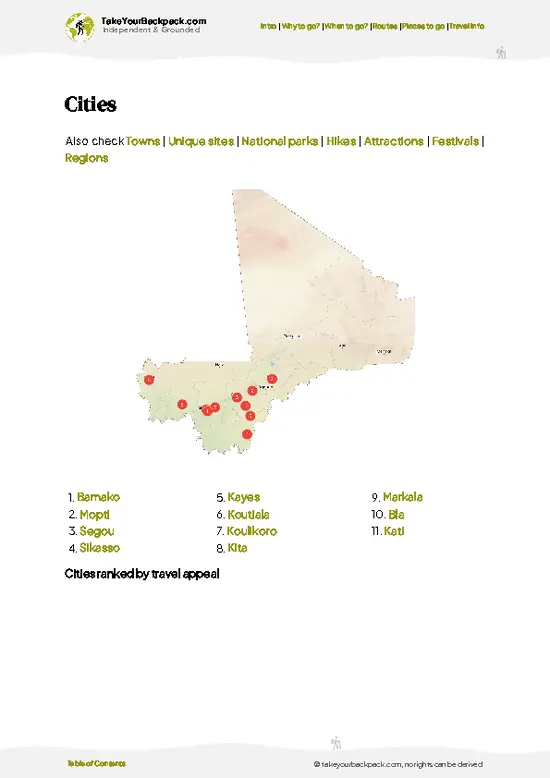
Other Malian cities near Mopti

Explore more nearby:

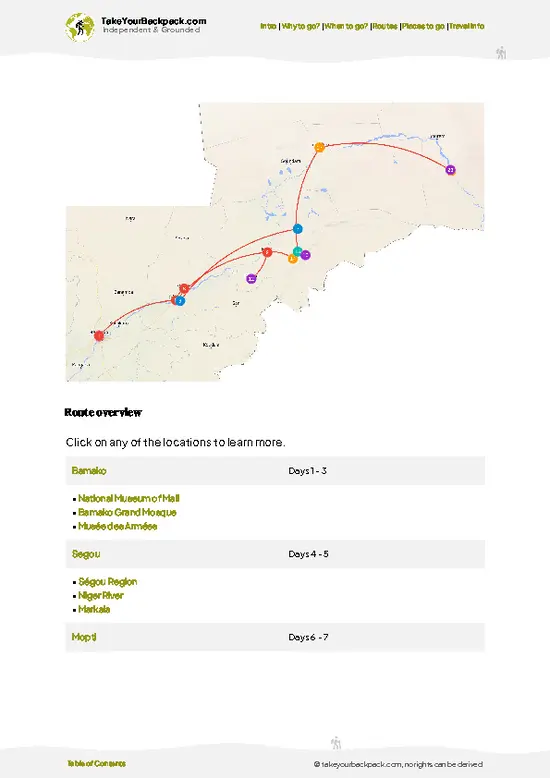
  • Markala—River barrage, hydro infrastructure, fishing community| 221 km away
  • Bla—Transport junction, bus hub, roadside stalls| 240 km away
  • Segou—colonial boulevards, pottery workshops, Niger River banks, music festivals| 252 km away

💡 Not sure where to go next?
Create a personalized itinerary for Mali including Mopti and the places that fit your trip.

Generate my itinerary

👉 Discover all cities

Or checkout all Mali has to offer (think cities, towns, villages, national parks, hikes, beaches, festivals)
Country photo of Mali

We 💚 feedbackIs it worth it?

Mopti has a pulse that’s hard to ignore. The bustling market is a sensory overload—spices, laughter, and the occasional goat weaving through the crowd. Don’t miss the sunrise over the Niger River; it’s a moment that feels like a secret shared just with you. But be ready for the heat; it can be relentless. Hydrate, and embrace the slower pace. It’s all part of the charm. Trust me, the connections you make here will linger long after you leave.

✍️ Help improve this page!
The information on this page is based on in-depth research, insights shared by experienced travelers, and feedback from the local travel community in Mali. While every effort is made to keep the information accurate and current, conditions can change — so if you spot anything incorrect or outdated, please get in touch.


🙋‍♂️ Give feedback

👋 Meet the founderWho’s Behind Take Your Backpack?

Johan, backpacker and founder of TakeYourBackpackHi, I’m Johan (Netherlands 🇳🇱), the creator of TakeYourBackpack. Over the past decade, I’ve backpacked through 80+ countries across six continents, gaining extensive experience with independent travel, long-term trips, and overland routes.

This site is built on a combination of firsthand travel experience and carefully curated insights from other backpackers. Many guides are based on places I’ve personally visited, while others bring together tips, observations, and practical advice shared by trusted travelers I’ve met along the way.

The goal is to provide realistic, experience-driven guidance — not generic itineraries — so you can explore destinations with better context, clearer expectations, and more confidence.

Get full Mali guide •
Instant download • 76 highlights • Full Offline guide