×

Mali🇲🇱 | best citiesTop-Rated 9 cities in Mali

Mali’s cities pulse with a rich cultural tapestry, each offering a unique flavor for the backpacker or independent traveler. From the bustling streets of Bamako, the capital, to the historical charm of Timbuktu, the differences are stark. Major hubs like Bamako provide vibrant nightlife and extensive transport connections, while smaller centers like Segou offer a more laid-back vibe and deeper cultural immersion. Seasonal nuances affect everything from safety to budget; the dry season is ideal for exploration, but the rainy season can complicate travel plans. Choosing the right city impacts your experience profoundly—think vibe, accessibility, and local interactions.

By Johan Kruseman 🇳🇱 | Updated September 4, 2026
Explore the best towns in Mali

Why go?Why Travelers Love These Spots

Mali’s cities are a microcosm of cultural diversity and historical depth, shaped by centuries of trade, migration, and conquest. Unlike many countries, Mali’s urban centers serve as living museums, showcasing the intertwined legacies of various ethnic groups, from the Tuareg to the Bambara. This rich tapestry is not just for show; it influences daily life, cuisine, and even local governance.

However, the geographic layout of Mali presents unique challenges. The vast distances between cities can lead to significant travel times, which may dilute the depth of exploration. While you might be tempted to hop from one urban hub to another, doing so can mean sacrificing the immersive experiences that come from spending time in a single place.

Mali’s climatic conditions also play a role. The intense … read more 👉
Mali’s cities are a microcosm of cultural diversity and historical depth, shaped by centuries of trade, migration, and conquest. Unlike many countries, Mali’s urban centers serve as living museums, showcasing the intertwined legacies of various ethnic groups, from the Tuareg to the Bambara. This rich tapestry is not just for show; it influences daily life, cuisine, and even local governance.

However, the geographic layout of Mali presents unique challenges. The vast distances between cities can lead to significant travel times, which may dilute the depth of exploration. While you might be tempted to hop from one urban hub to another, doing so can mean sacrificing the immersive experiences that come from spending time in a single place.

Mali’s climatic conditions also play a role. The intense heat during certain months can limit outdoor activities, making it crucial to plan visits around the cooler seasons.

Infrastructurally, while major cities have some transport networks, they often lack the efficiency found in more developed nations. This can lead to unexpected delays and costs, impacting your overall experience. Understanding these constraints is essential for maximizing your energy and budget, allowing you to focus on the moments that truly matter in this culturally rich landscape.
Evaluating the Top Choices
The list of best cities in Mali is created based on culture, vibe, attractions, transport ease, and local charm. If you feel a city is missing in this list, please let us know.

When to go?Best Time to Visit Mali for cities

Seasonality in Mali significantly impacts the experience of visiting its cities. The country has a distinct dry season and a wet season, with temperatures soaring during the dry months. From November to February, the weather is cooler and more pleasant, making it the prime time for travel. Expect crowds during this peak season, especially around major cultural events.

March to May brings rising temperatures, often exceeding 100°F. This period sees fewer tourists, which can mean lower accommodation costs. However, the heat can be intense, and outdoor activities may become exhausting.

June to October marks the rainy season. While the landscape transforms and becomes lush, heavy rains can disrupt travel plans. Cities may feel quieter, but this is also when local festivals occur, offering … read more 👉
Seasonality in Mali significantly impacts the experience of visiting its cities. The country has a distinct dry season and a wet season, with temperatures soaring during the dry months. From November to February, the weather is cooler and more pleasant, making it the prime time for travel. Expect crowds during this peak season, especially around major cultural events.

March to May brings rising temperatures, often exceeding 100°F. This period sees fewer tourists, which can mean lower accommodation costs. However, the heat can be intense, and outdoor activities may become exhausting.

June to October marks the rainy season. While the landscape transforms and becomes lush, heavy rains can disrupt travel plans. Cities may feel quieter, but this is also when local festivals occur, offering a unique cultural immersion.

Travelers should weigh the benefits of experiencing vibrant festivals against the potential for uncomfortable weather. The shoulder seasons—just before and after the peak—can provide a balanced experience, with moderate crowds and reasonable prices. However, be prepared for unpredictable weather and limited services. Understanding these seasonal rhythms is crucial for maximizing both budget and energy during a visit to Mali.

city hoppingHow to Combine cities Into One Trip

Transport Networks and Routing Logic

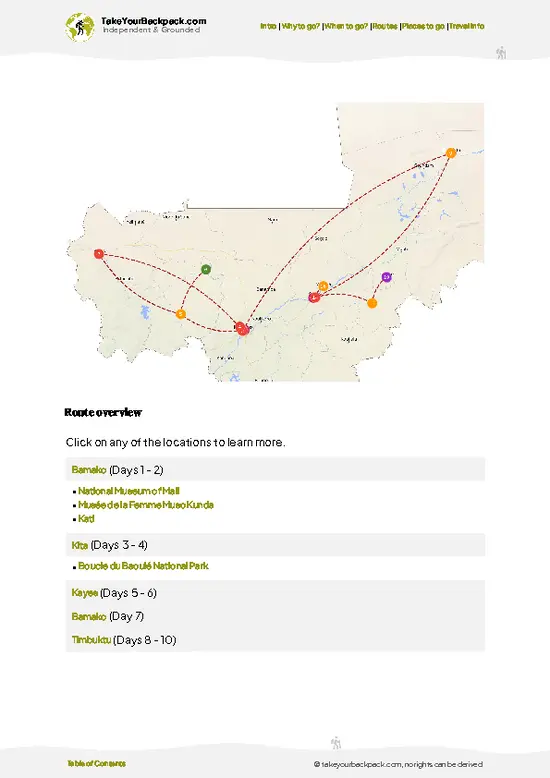
Efficiently combining cities in Mali hinges on understanding regional clusters. Start in Bamako, the capital, which serves as a central hub. From there, you can branch out to cities like Segou and Mopti. These are relatively close and can be tackled in a few days.

Timing and Pacing

Allocate at least two days for each city to soak in the culture and avoid the rush. Rushing through will only lead to missed experiences. If you’re keen on visiting Timbuktu, plan for a longer stay; it’s a trek from Bamako and deserves attention.

Common Planning Mistakes

Many travelers underestimate travel times and overestimate what they can see in a short period. The roads can be unpredictable, and public transport schedules are not always reliable. Avoid cramming too many … read more 👉

Transport Networks and Routing Logic

Efficiently combining cities in Mali hinges on understanding regional clusters. Start in Bamako, the capital, which serves as a central hub. From there, you can branch out to cities like Segou and Mopti. These are relatively close and can be tackled in a few days.

Timing and Pacing

Allocate at least two days for each city to soak in the culture and avoid the rush. Rushing through will only lead to missed experiences. If you’re keen on visiting Timbuktu, plan for a longer stay; it’s a trek from Bamako and deserves attention.

Common Planning Mistakes

Many travelers underestimate travel times and overestimate what they can see in a short period. The roads can be unpredictable, and public transport schedules are not always reliable. Avoid cramming too many stops into a tight schedule; it often leads to burnout and disappointment.

Trade-offs and Constraints

Speed versus depth is a constant battle. If budget allows, consider private transport for comfort and flexibility. This can save time and enhance the experience. However, public transport offers a more authentic glimpse into daily life. Weigh these options carefully to maximize your adventure without exhausting your energy or finances.

The ListTop cities of Mali

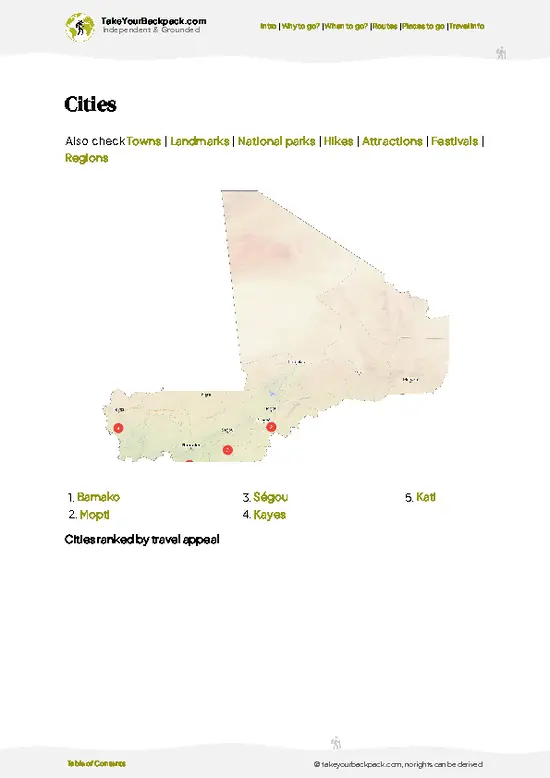
1 Bamako

urban sprawl, music venues, street art, Niger River bridges

Navigate a sprawling capital alive with music, creative energy, and the constant movement of people crossing the river’s many bridges.

2 Mopti

river confluence, mud-brick mosques, fishing boats, bustling port

Board a pinasse at the river’s fork, explore mud architecture, and witness the daily flow of goods and people at the port.

3 Segou

colonial boulevards, pottery workshops, Niger River banks, music festivals

Stroll tree-lined streets, visit riverside studios, and experience a city where art, music, and river life intersect year-round.

4 Kayes

red cliffs, Senegal River, colonial-era railway, arid landscapes

Experience a city where the river carves through dry terrain, railway heritage lingers, and dramatic cliffs frame daily life.

5 Koulikoro

river port, boatyards, cotton warehouses, riverside markets

Watch riverboats load at dawn, wander among cotton bales, and see how trade shapes the rhythms of this working port town.

6 Kita

Railway junction, music heritage, mango orchards

Discover a town where music festivals, train tracks, and seasonal mango harvests create a unique rhythm for visitors.

7 Bla

Transport junction, bus hub, roadside stalls

Stop at a key crossroads where travelers change buses, rest, and refuel at roadside stalls before continuing their journey.

8 Kati

Military base, commuter town, Bamako outskirts

Stay in a town closely linked to Bamako, with a strong military presence and a daily flow of commuters.

9 Markala

River barrage, hydro infrastructure, fishing community

Observe daily life shaped by the river’s flow, with a major barrage supporting both fishing livelihoods and regional water management.

Loading the map 🌍

Expert viewInsights from Locals and Experts

Transport Hubs
Mali’s transport infrastructure is a mixed bag. Major cities have bus stations that can feel chaotic, but they’re your lifeline. Expect to navigate a blend of shared taxis and long-distance buses. The roads can be rough, so plan for delays. If you’re in a hurry, consider flying between key cities, but be prepared for limited schedules and potential cancellations. The trade-off? You save time but might miss the vibrant roadside scenes that tell the real story of Mali.

Urban Pacing
Mali’s cities pulse with energy, but they each have their own rhythm. Some are bustling and fast-paced, while others invite you to slow down and soak in the atmosphere. If you try to cram too many cities into a short trip, you’ll end up exhausted and overwhelmed. Instead, aim for three to four cities. … read more 👉
Transport Hubs
Mali’s transport infrastructure is a mixed bag. Major cities have bus stations that can feel chaotic, but they’re your lifeline. Expect to navigate a blend of shared taxis and long-distance buses. The roads can be rough, so plan for delays. If you’re in a hurry, consider flying between key cities, but be prepared for limited schedules and potential cancellations. The trade-off? You save time but might miss the vibrant roadside scenes that tell the real story of Mali.

Urban Pacing
Mali’s cities pulse with energy, but they each have their own rhythm. Some are bustling and fast-paced, while others invite you to slow down and soak in the atmosphere. If you try to cram too many cities into a short trip, you’ll end up exhausted and overwhelmed. Instead, aim for three to four cities. This allows you to dive deeper into local life, savor the food, and engage with the culture. You’ll find that the connections you make in a single city can be more rewarding than a whirlwind tour.

Local Costs
Budgeting in Mali requires a keen eye. While some experiences are incredibly affordable, others can sneak up on you. Street food is cheap and delicious, but dining in restaurants can vary widely in price. Local transport is generally budget-friendly, but if you opt for private taxis, costs can escalate quickly. Factor in a buffer for unexpected expenses, especially if you’re planning to explore markets or participate in local events. The trade-off here is simple: stick to a budget for daily expenses, and you’ll have more to splurge on unique experiences that truly enrich your journey.

Exploring Quickly vs. Deeper Immersion
The temptation to see as much as possible can be strong, but rushing through cities often leads to missed opportunities. Each city has its own character, shaped by history and culture. If you’re only passing through, you might catch a glimpse but miss the essence. Prioritize quality over quantity. Spend a few days in each city to really connect with the locals and understand their way of life. This deeper immersion will yield richer stories and experiences, making your trip more meaningful.

Safety & Cultural Considerations
Safety is a crucial factor in Mali. While many areas are welcoming, some regions have travel advisories. Stay informed and respect local customs. Dress modestly and be aware of cultural sensitivities. Engaging with locals can enhance your experience, but always approach interactions with respect and openness. The trade-off here is balancing your adventurous spirit with caution. Being aware of your surroundings and understanding local norms will keep you safe and enrich your experience.

Planning & Prioritizing Cities
When planning your itinerary, consider the time of year and local events. Some cities come alive during festivals, while others may be quieter. Research local happenings to align your visit with vibrant cultural experiences. Prioritize cities based on your interests—whether it’s history, music, or art. This will help you create a more cohesive travel experience. Remember, it’s not just about the number of cities you visit; it’s about the stories you bring back.

Mali is a land of contrasts, and how you navigate it will shape your journey. Embrace the chaos, savor the moments, and let the rhythm of the cities guide you.

✈️ The backpacker research shortcutMali Travel Guide

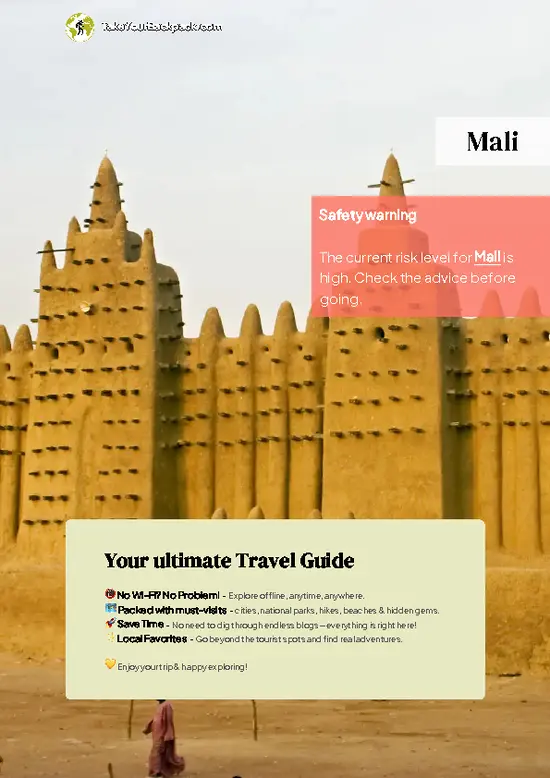
An offline-friendly backpacking guide with optimized travel routes, ranked highlights, transport advice, and the best areas to stay.
example page 0 from our offline Travel Guide for Mali
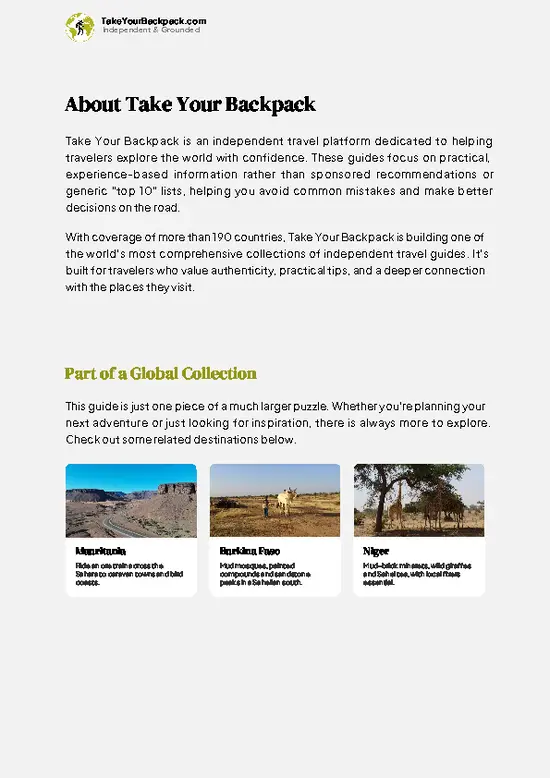
example page 1 from our offline Travel Guide for Mali
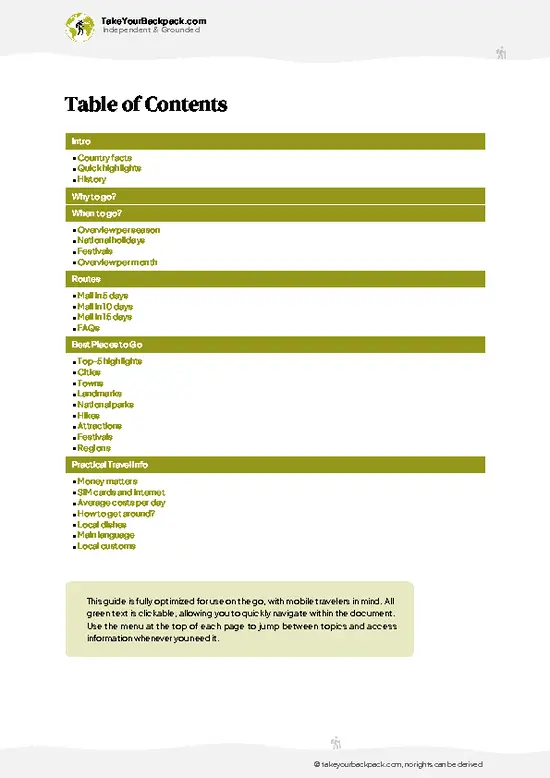
example page 2 from our offline Travel Guide for Mali
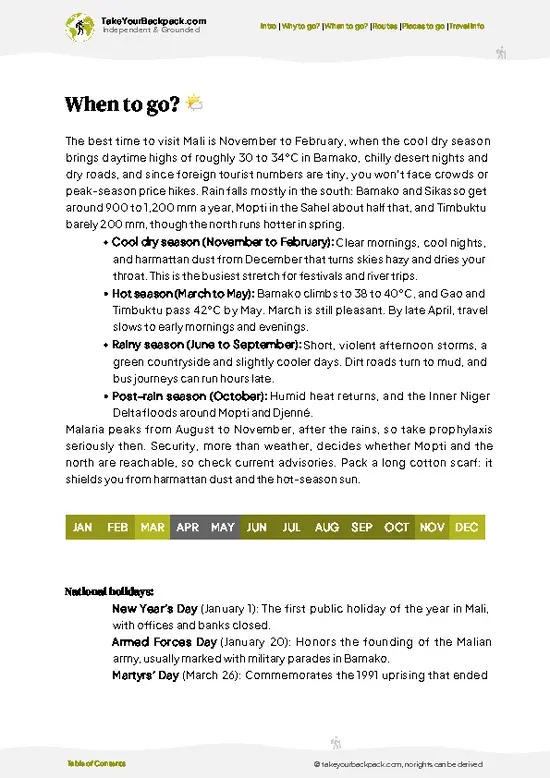
example page 3 from our offline Travel Guide for Mali
example page 4 from our offline Travel Guide for Mali
example page 5 from our offline Travel Guide for Mali
example page 6 from our offline Travel Guide for Mali
example page 7 from our offline Travel Guide for Mali
The digital guide (299 pages) contains:
72 highlights, ranked by travel appeal
Optimized 5, 10 & 15-day travel routes
Cities, national parks, landmarks, beaches
How to get around
Offline-friendly for travel without Wi-Fi
👉 Click to see all 30+ guide features

📅 Plan smarter in minutes, not weeks
Month by month travel advice
Festivals & national holidays
Budget expectations

🗺️ Go to the right places, skip the overrated ones
Honest pros & cons of destinations
Top hikes, parks & viewpoints
Lesser-known places most travelers miss
Clear “worth it vs skip it” guidance

🛏️ Travel smoothly without rookie mistakes
Best areas to stay
Transport systems explained simply
Common scams & safety advice
SIM cards, money & practical tips

🌍 Understand the country, not just visit it
Culture & traditions
52 Essential phrases & customs
Festivals worth planning around
Traveler-friendly historical context
Insights that make places more meaningful

📱 Built for real travel conditions
Fully downloadable PDF
Works completely offline
Optimized for phone use
Useful in remote areas & buses
Everything in one place
Save weeks of stressful planning
Get instant access to your full guide. 30‑day money-back guarantee.
+ Add another guide for just US$7.80

By proceeding you agree to our terms.
Sent to your inbox immediately after payment • 100% Secure Checkout
Best Backpacking Travel Advisor 2025 tourism awardBest Backpacking
Travel Advisor
2025
What others say about Take Your Backpack Guides:
⭐⭐⭐⭐⭐
Fantastic, amazing amount of information!
⭐⭐⭐⭐⭐
My goodness this is amazing, it's what I've been looking for hats off too you!
⭐⭐⭐⭐⭐
I think this is absolutely BRILLIANT
⭐⭐⭐⭐
Very complete and informative. It's still missing places, but I gotta to commend you
⭐⭐⭐⭐⭐
This is truly amazing, thank you, can't wait to explore it with my kids!
⭐⭐⭐⭐⭐
Awesome resource, thank you!
⭐⭐⭐⭐⭐
This is amazing! Can't wait to explore the ones I haven't seen
⭐⭐⭐⭐
I love this! Well done, great idea.
⭐⭐⭐⭐⭐
Thanks for taking the time to make this gem!
⭐⭐⭐⭐⭐
This might be the best website I've ever seen.
⭐⭐⭐⭐⭐
Congratulations, and thank you so much for your work; it's incredibly valuable.
⭐⭐⭐⭐
In all seriousness I think you did a great job pointing out the important spots
⭐⭐⭐⭐⭐
10/10 very good
⭐⭐⭐⭐⭐
As someone who's only just starting to visit regularly this is awesome, thank you.
⭐⭐⭐⭐
Thank you very much! I'm going to visit my dad, it's going to be very useful!
⭐⭐⭐⭐⭐
This is really cool! We'll be travelling for the first time and this definitely come in handy.
⭐⭐⭐⭐⭐
You are now our minister of culture, congratulations 👨‍💼
⭐⭐⭐⭐⭐
Just wanted to tell you that this is a pearl! Going to follow your recommendations.
⭐⭐⭐⭐⭐
This is so cool. I'll definitely be using the resource for my travels soon.
⭐⭐⭐⭐⭐
This is very impressive! Good work.
⭐⭐⭐⭐⭐
This is an amazing and informative site. Very well done!

🛏️ Where to stay?Where to Stay in Mali

Yes — there are hostels and budget guesthouses in Mali, concentrated in the capital and southern river towns rather than in the unstable northern regions.
In Bamako the best choice is around Hippodrome, ACI 2000 and Badalabougou: Hippodrome gives the most nightlife and tourist services, ACI 2000 is central and relatively quiet, and Badalabougou is cheaper but closer to busy roads and markets.
Outside the capital, look for simple guesthouses in river towns like Mopti and Ségou (good for markets and river access but basic facilities); Timbuktu has very limited, often seasonal options and significant security constraints, so prioritize safety and contingency plans.

If you enjoy meeting fellow … read more 👉
Yes — there are hostels and budget guesthouses in Mali, concentrated in the capital and southern river towns rather than in the unstable northern regions.
In Bamako the best choice is around Hippodrome, ACI 2000 and Badalabougou: Hippodrome gives the most nightlife and tourist services, ACI 2000 is central and relatively quiet, and Badalabougou is cheaper but closer to busy roads and markets.
Outside the capital, look for simple guesthouses in river towns like Mopti and Ségou (good for markets and river access but basic facilities); Timbuktu has very limited, often seasonal options and significant security constraints, so prioritize safety and contingency plans.

If you enjoy meeting fellow travelers, consider choosing hostels with high ratings for atmosphere. On the other hand, if you prefer having your own space, a hotel might be a better option.

MaliMore of Mali

👋 Meet the founderWho’s Behind Take Your Backpack?

Johan, backpacker and founder of TakeYourBackpackHi, I’m Johan (Netherlands 🇳🇱), the creator of TakeYourBackpack. Over the past decade, I’ve backpacked through 80+ countries across six continents, gaining extensive experience with independent travel, long-term trips, and overland routes.

This site is built on a combination of firsthand travel experience and carefully curated insights from other backpackers. Many guides are based on places I’ve personally visited, while others bring together tips, observations, and practical advice shared by trusted travelers I’ve met along the way.

The goal is to provide realistic, experience-driven guidance — not generic itineraries — so you can explore destinations with better context, clearer expectations, and more confidence.

Get full Mali guide •
Instant download • 72 highlights • Full Offline guide