×

Mali🇲🇱 | regionsNiger Riverbustling river ports, seasonal floodplains, fishing communities, pirogue journeys | things to do and best time to go

Explore Cliff of Bandiagara (Land of the Dogons)Explore Sikasso Region

Backpacking in Niger River
🌟 Highlightregion ranked #2
By Johan Kruseman 🇳🇱 | Updated June 6, 2026

A decade or two ago, the Niger River in Mali was the kind of place you’d hear about in hushed tones from the wild-eyed traveler at the hostel bar—the riverboats were ramshackle, the towns along the banks felt like secret outposts, and you could drift for days without seeing another foreigner. Fast-forward to today: the river is still the backbone of Mali, winding through the heart of the country from Guinea to the edge of the Sahara, but the experience has shifted. You’ll find the Niger slicing through Bamako’s chaos, gliding past the mud mosques of Djenné, and looping north toward Timbuktu. For backpackers, it’s a region of raw, sun-baked beauty and real adventure, but don’t expect easy logistics—transport is slow, boats are unpredictable, and comfort is what you make of it. Costs are low, the vibe is earthy and unpolished, and the authenticity is off the charts compared to the more touristed Dogon Country. If you want polished, look elsewhere; if you want stories, the Niger delivers.

Discover everything you want to know in the 📖 Mali Travel Guide.
Safety warning

The current risk level for Mali is high. Check the advice before going.


Get your Mali guide
76 ranked highlights, routes & tips, works offline (321 pages)
Loading the map 🌍
CLICK TO FILTER
cities
towns
landmarks
national parks
hikes
attractions
festivals
regions
SHOW COUNTRY’S BESTSHOW ALL

✨ Why go?
Ranked #2 region in Mali
Why visitors keep coming back

Backpackers flock to the Niger River in Mali for a blend of landscapes and experiences that keep the adventure fresh without the hassle of constant relocation. Picture this: you can drift along the river, soaking in the lush banks and vibrant local life, then hop off for a quick visit to a nearby village. It’s all about that transport flexibility—you can choose to paddle, take a boat, or even ride a bike along the riverbanks.

This region offers a unique chance to mix nature and culture seamlessly. Spend a morning watching fishermen cast their nets, then dive into the rich history of Timbuktu in the afternoon. The slow travel vibe here is key; it allows you to truly absorb the surroundings. You’re not just ticking off boxes; you’re living the experience.

Plus, the variety is staggering. … read more 👉
Backpackers flock to the Niger River in Mali for a blend of landscapes and experiences that keep the adventure fresh without the hassle of constant relocation. Picture this: you can drift along the river, soaking in the lush banks and vibrant local life, then hop off for a quick visit to a nearby village. It’s all about that transport flexibility—you can choose to paddle, take a boat, or even ride a bike along the riverbanks.

This region offers a unique chance to mix nature and culture seamlessly. Spend a morning watching fishermen cast their nets, then dive into the rich history of Timbuktu in the afternoon. The slow travel vibe here is key; it allows you to truly absorb the surroundings. You’re not just ticking off boxes; you’re living the experience.

Plus, the variety is staggering. From the bustling markets to the serene sunsets over the water, every moment feels like a new chapter. So, if you’re looking for high-value experiences that don’t break the bank or your spirit, the Niger River is where it’s at.
Want to include Niger River in your Mali route?
Create a personalized Mali itinerary that includes Niger River and the places that fit your trip — based on your travel style, budget, and available time. Get your route in seconds.

Generate my trip

💡 HighlightsWhat this place is best known for

  • Mopti riverfront and pirogue scene — The working port where the Niger meets the Bani: colourful pirogues, Bozo fishermen hauling nets, a hectic fish market and easy launches for day trips into the Inner Delta. It’s the region’s social crossroads — more everyday local life than polished sightseeing, and the best place to watch river commerce up close.
  • Lake Débo (Lac Débo) — A huge seasonal lake in the Inner Niger Delta that fills and empties with the flood cycle, creating marshes, sandbars and fishing camps. Boat trips here are unlike any other river safari: migrating birds by the thousands, fishermen moving with the flood, and river islands where people live off water rice and fish.
  • Djenné old town and the Great Mosque — Mud-brick architecture at its most dramatic: the mosque’s annual
read more 👉
  • Mopti riverfront and pirogue scene — The working port where the Niger meets the Bani: colourful pirogues, Bozo fishermen hauling nets, a hectic fish market and easy launches for day trips into the Inner Delta. It’s the region’s social crossroads — more everyday local life than polished sightseeing, and the best place to watch river commerce up close.
  • Lake Débo (Lac Débo) — A huge seasonal lake in the Inner Niger Delta that fills and empties with the flood cycle, creating marshes, sandbars and fishing camps. Boat trips here are unlike any other river safari: migrating birds by the thousands, fishermen moving with the flood, and river islands where people live off water rice and fish.
  • Djenné old town and the Great Mosque — Mud-brick architecture at its most dramatic: the mosque’s annual replastering, artisan workshops, and a lively market make Djenné feel alive rather than just a monument. The town’s combination of living vernacular architecture and potters, blacksmiths and traders is uniquely tied to the Niger’s flood rhythms.
  • Ségou riverside and pottery quarter — A laid-back riverside town with a distinct craft scene (potters and dyers), colonial-era houses and regular riverbank life. Come for slow walks along the quay, meet local artists, and time it for the Festival sur le Niger if you want music and dance that are rooted in the river communities.
  • Markala weir and irrigation canals (hidden gem) — A surprising bit of engineering on the Niger near Ségou: the colonial-era weir that diverts water into irrigation channels and small villages that grew alongside it. It’s not flashy, but you’ll see how the river is turned into rice paddies and local transport — very tangible evidence of the Niger shaping livelihoods.
  • Komoguel reserve and riverine birding (hidden gem) — Small protected wetlands just downstream of Mopti where pelicans, herons and rarer migrants gather; hippos are sometimes visible too. It’s an easy boat hop from town and gives a proper nature fix without the crowds of bigger reserves.
  • Niafunké and the Ali Farka Touré legacy (hidden gem) — A sleepy riverside town in the Timbuktu region made famous by Ali Farka Touré: visit his house/museum, listen to local musicians and watch rice fields folded into riverine life. It’s a quiet cultural hit — music, farming and the Niger all rolled into one place few first-time visitors find.
  • Timbuktu’s river edge and manuscript quarter — Beyond the desert myth: the city’s historic mosques and manuscript collections sit on the southern edge of the Niger’s reach and tell the story of trans-Saharan and river trade routes. Note: Timbuktu is historically unique, but check current travel advisories and local conditions before planning a visit.
  • Macina/Inner Delta villages and transhumance watching — In the floodplain around Macina you can witness the seasonal ballet of fishermen, rice planters and Peul cattle herders moving with the waters. These are lived-in river landscapes — great for immersive homestays, market visits and seeing how river cycles structure daily life.
  • Bamako’s Niger quays and river neighborhoods — The capital’s stretches along the Niger are lively, with markets, small boat traffic and neighborhood life that feels immediately connected to the river. Walk the quays, hop on a short pirogue ride, or find riverside cafés where the city’s river identity is on full display.
Spotted a mistake or missing something? Contact us.
⌛️ 5 daysSeeing the highlights in 5 days

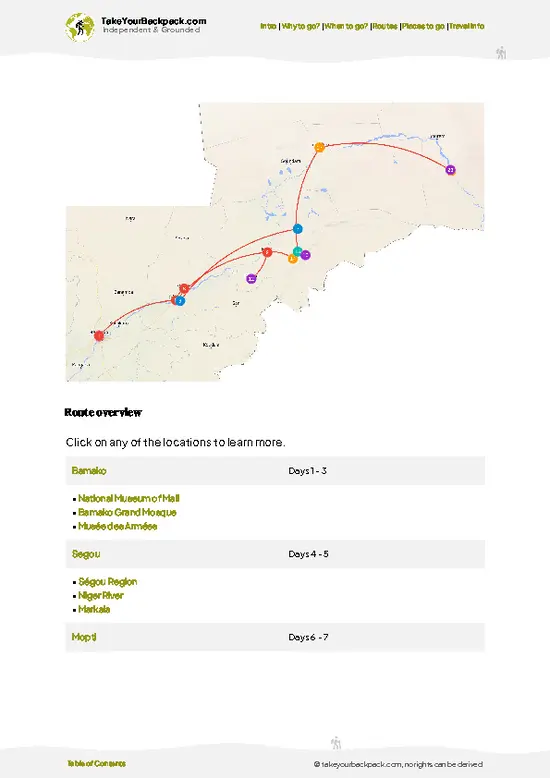
Day 1: Bamako
Bamako is your launchpad. The capital buzzes with life, and you’ll want to soak in the energy. Spend the day exploring the markets, especially the Marché de Medina, where the scents of spices and the sounds of haggling create a sensory overload. Grab a local meal—try the jollof rice. The transport system here is a mix of taxis and buses, but for now, just walk. This city is about acclimatizing and getting your bearings.

Day 2: Segou
Catch a bus to Segou, a journey of about 4 hours. This is where the Niger River starts to reveal its charm. Segou’s riverside is perfect for a sunset stroll. The pace slows down here, and you can visit the old colonial buildings. The bus ride is a chance to meet locals and hear stories that make the journey richer.

Day 3: Mopti
From Segou, … read more 👉
Day 1: Bamako
Bamako is your launchpad. The capital buzzes with life, and you’ll want to soak in the energy. Spend the day exploring the markets, especially the Marché de Medina, where the scents of spices and the sounds of haggling create a sensory overload. Grab a local meal—try the jollof rice. The transport system here is a mix of taxis and buses, but for now, just walk. This city is about acclimatizing and getting your bearings.

Day 2: Segou
Catch a bus to Segou, a journey of about 4 hours. This is where the Niger River starts to reveal its charm. Segou’s riverside is perfect for a sunset stroll. The pace slows down here, and you can visit the old colonial buildings. The bus ride is a chance to meet locals and hear stories that make the journey richer.

Day 3: Mopti
From Segou, take a shared taxi to Mopti, which will take around 3 hours. Mopti is the “Venice of Mali,” where the river and canals intertwine. Here, you can hop on a pirogue (traditional boat) and explore the waterways. This is where you’ll feel the pulse of the river. The transport options are limited, so embrace the slower pace.

Day 4: Djenné
A day trip to Djenné is a must. It’s about an hour from Mopti, and the iconic mud mosque is a sight to behold. The market here is vibrant, and you can find unique crafts. This detour is worth every minute. The bus system is reliable, but be prepared for a wait.

Day 5: Return to Bamako
Head back to Bamako for your final day. The journey will take about 8 hours, so leave early. Use this time to reflect on your trip. The transport system can be a hassle, but it’s part of the experience.

The must-do day? Day 3 in Mopti. The river, the culture, and the boat ride encapsulate the essence of Mali. It’s where you’ll feel the heart of the Niger River.
Turn your Niger River visit into an Mali adventure
Build a complete Mali route with Niger River, hidden gems, must-see destinations, and realistic travel times included.

Generate my trip

🌤️ When to go?Choosing the right time of year


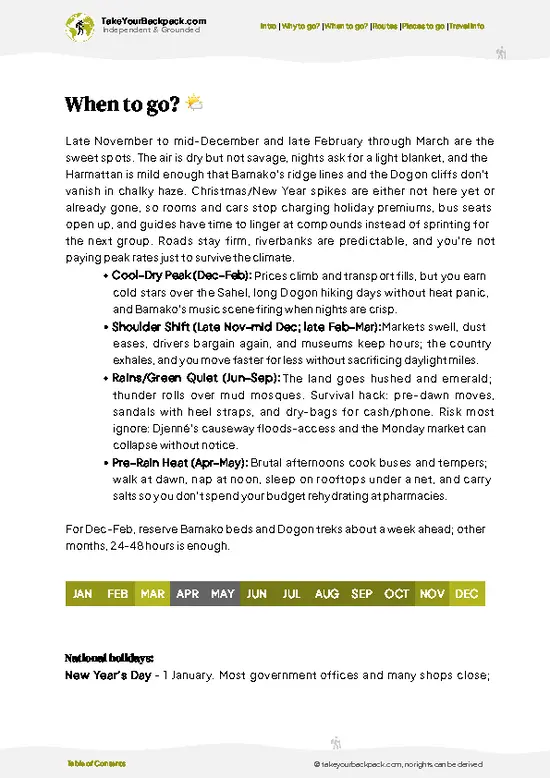
  • Topic: Weather – The dry season from November to February is your golden window. Expect minimal rain, which means the riverbanks are accessible and the trails aren’t a muddy mess. The wet season (June to September) floods the area, making travel tricky and some villages unreachable.

  • Topic: Temperature – During the dry season, daytime highs hover around 28-32°C (82-90°F), pleasantly warm without frying you. Nights can dip to 15°C (59°F), so pack a light jacket. The wet season cranks up humidity and daytime temps can spike above 35°C (95°F), turning trekking into a sweat fest.

  • Topic: Daylight Hours – Mali enjoys roughly 11 to 12 hours of daylight year-round, but the dry season’s clear skies mean you get more usable daylight for exploring without the threat of sudden downpours.

  • Topic:
read more 👉

  • Topic: Weather – The dry season from November to February is your golden window. Expect minimal rain, which means the riverbanks are accessible and the trails aren’t a muddy mess. The wet season (June to September) floods the area, making travel tricky and some villages unreachable.

  • Topic: Temperature – During the dry season, daytime highs hover around 28-32°C (82-90°F), pleasantly warm without frying you. Nights can dip to 15°C (59°F), so pack a light jacket. The wet season cranks up humidity and daytime temps can spike above 35°C (95°F), turning trekking into a sweat fest.

  • Topic: Daylight Hours – Mali enjoys roughly 11 to 12 hours of daylight year-round, but the dry season’s clear skies mean you get more usable daylight for exploring without the threat of sudden downpours.

  • Topic: Crowds – The dry season draws more tourists, but Mali’s remote stretches along the Niger River keep crowds manageable. The wet season sees a sharp drop in visitors, so if solitude is your vibe, that’s your trade-off.

  • Topic: Seasonal Activities – November to February is prime for cultural festivals and boat trips on the Niger, offering authentic local encounters. The wet season’s swollen river is dramatic but limits access to many activities.

  • Topic: Price Fluctuations – Expect higher prices during the dry season, especially around December holidays. The wet season offers bargains but at the cost of comfort and accessibility.


Pro-tip: Arrive just as the rains end in November—prices are still low, the landscape is lush, and you beat the peak crowds while enjoying near-perfect weather.


source: climatestotravel.comJANJanuary: excellent for travelingFEBFebruary: excellent for travelingMARMarch: highly recommended for travelingAPRApril: good for travelingMAYMay: fair for travelingJUNJune: below average for travelingJULJuly: below average for travelingAUGAugust: below average for travelingSEPSeptember: below average for travelingOCTOctober: fair for travelingNOVNovember: excellent for travelingDECDecember: highly recommended for traveling
mali-region-niger-river
© Google |

✈️ The backpacker research shortcutMali Travel Guide

An offline-friendly backpacking guide with optimized travel routes, ranked highlights, transport advice, and the best areas to stay.
example page 0 from our offline Travel Guide for Mali
example page 1 from our offline Travel Guide for Mali
example page 2 from our offline Travel Guide for Mali
example page 3 from our offline Travel Guide for Mali
example page 4 from our offline Travel Guide for Mali
example page 5 from our offline Travel Guide for Mali
example page 6 from our offline Travel Guide for Mali
example page 7 from our offline Travel Guide for Mali
The digital guide (321 pages) contains:
76 highlights, ranked by travel appeal
Optimized 5, 10 & 15-day travel routes
Cities, national parks, landmarks, beaches
How to get around
Offline-friendly for travel without Wi-Fi
👉 Click to see all 30+ guide features

📅 Plan smarter in minutes, not weeks
Month by month travel advice
Festivals & national holidays
Budget expectations

🗺️ Go to the right places, skip the overrated ones
Honest pros & cons of destinations
Top hikes, parks & viewpoints
Lesser-known places most travelers miss
Clear “worth it vs skip it” guidance

🛏️ Travel smoothly without rookie mistakes
Best areas to stay
Transport systems explained simply
Common scams & safety advice
SIM cards, money & practical tips

🌍 Understand the country, not just visit it
Culture & traditions
52 Essential phrases & customs
Festivals worth planning around
Traveler-friendly historical context
Insights that make places more meaningful

📱 Built for real travel conditions
Fully downloadable PDF
Works completely offline
Optimized for phone use
Useful in remote areas & buses
Everything in one place
Save weeks of stressful planning
Get instant access to your full guide. 30‑day money-back guarantee.


By proceeding you agree to our terms.
Sent to your inbox immediately after payment • 100% Secure Checkout
Best Backpacking Travel Advisor 2025 tourism awardBest Backpacking
Travel Advisor
2025
What others say about Take Your Backpack Guides:
⭐⭐⭐⭐⭐
Fantastic, amazing amount of information!
⭐⭐⭐⭐⭐
My goodness this is amazing, it's what I've been looking for hats off too you!
⭐⭐⭐⭐⭐
I think this is absolutely BRILLIANT
⭐⭐⭐⭐
Very complete and informative. It's still missing places, but I gotta to commend you
⭐⭐⭐⭐⭐
This is truly amazing, thank you, can't wait to explore it with my kids!
⭐⭐⭐⭐⭐
Awesome resource, thank you!
⭐⭐⭐⭐⭐
This is amazing! Can't wait to explore the ones I haven't seen
⭐⭐⭐⭐
I love this! Well done, great idea.
⭐⭐⭐⭐⭐
Thanks for taking the time to make this gem!
⭐⭐⭐⭐⭐
This might be the best website I've ever seen.
⭐⭐⭐⭐⭐
Congratulations, and thank you so much for your work; it's incredibly valuable.
⭐⭐⭐⭐
In all seriousness I think you did a great job pointing out the important spots
⭐⭐⭐⭐⭐
10/10 very good
⭐⭐⭐⭐⭐
As someone who's only just starting to visit regularly this is awesome, thank you.
⭐⭐⭐⭐
Thank you very much! I'm going to visit my dad, it's going to be very useful!
⭐⭐⭐⭐⭐
This is really cool! We'll be travelling for the first time and this definitely come in handy.
⭐⭐⭐⭐⭐
You are now our minister of culture, congratulations 👨‍💼
⭐⭐⭐⭐⭐
Just wanted to tell you that this is a pearl! Going to follow your recommendations.
⭐⭐⭐⭐⭐
This is so cool. I'll definitely be using the resource for my travels soon.
⭐⭐⭐⭐⭐
This is very impressive! Good work.
⭐⭐⭐⭐⭐
This is an amazing and informative site. Very well done!

🛏️ Where to stay?Best areas to stay in Mali

When you’re navigating the Niger River region in Mali, you want to land in spots that balance safety, social vibes, and budget-friendliness. Here’s the insider scoop on where to set up camp.

Start in Mopti, the bustling hub of the river. It’s a melting pot of cultures, and you’ll find plenty of fellow travelers. The waterfront is alive with activity, especially at sunset. Grab a seat at a local eatery, and you’ll find yourself swapping stories with backpackers and locals alike.

Next, head to Djenné, famous for its mud mosque. This town is a UNESCO World Heritage site, and while it’s a bit quieter, … read more 👉
When you’re navigating the Niger River region in Mali, you want to land in spots that balance safety, social vibes, and budget-friendliness. Here’s the insider scoop on where to set up camp.

Start in Mopti, the bustling hub of the river. It’s a melting pot of cultures, and you’ll find plenty of fellow travelers. The waterfront is alive with activity, especially at sunset. Grab a seat at a local eatery, and you’ll find yourself swapping stories with backpackers and locals alike.

Next, head to Djenné, famous for its mud mosque. This town is a UNESCO World Heritage site, and while it’s a bit quieter, the charm is undeniable. The market days are a social highlight, and you’ll feel the warmth of the community.

Don’t skip Ségou either. It’s less touristy but offers a genuine experience. The riverside is perfect for chilling out, and you can catch traditional music performances.

Each of these spots offers a unique flavor of Mali, and you’ll find that the connections you make here are worth every moment spent. Choose wisely between time, money, and comfort, and you’ll walk away with stories that last a lifetime.

🚌 Getting aroundHow to get from A to B

The Niger River flows through Mali like a lifeline, weaving together communities with a rhythm that’s both chaotic and beautifully organic. Here, schedules are more like suggestions; the river and its people operate on a blend of intuition and necessity. You’ll find yourself caught in the ebb and flow of life, where a boat might leave when it’s full, or a bush taxi might wait for just one more passenger. This isn’t a place for rigid itineraries; it’s a dance with the unexpected. Embrace it. The journey is as rich as the destination.


  • Boats: The traditional pirogues are your best bet for navigating the river. They typically run from sunrise until sunset, costing around 1,500 to 3,000 CFA depending on the distance. Expect a leisurely pace, but the views of riverside villages and wildlife are
read more 👉
The Niger River flows through Mali like a lifeline, weaving together communities with a rhythm that’s both chaotic and beautifully organic. Here, schedules are more like suggestions; the river and its people operate on a blend of intuition and necessity. You’ll find yourself caught in the ebb and flow of life, where a boat might leave when it’s full, or a bush taxi might wait for just one more passenger. This isn’t a place for rigid itineraries; it’s a dance with the unexpected. Embrace it. The journey is as rich as the destination.


  • Boats: The traditional pirogues are your best bet for navigating the river. They typically run from sunrise until sunset, costing around 1,500 to 3,000 CFA depending on the distance. Expect a leisurely pace, but the views of riverside villages and wildlife are worth every minute.


  • Bush Taxis: These shared vehicles are the backbone of overland travel in Mali. They usually leave when full, which can mean a wait of anywhere from 30 minutes to a couple of hours. Prices range from 2,000 to 5,000 CFA for short to medium distances. Comfort varies, but you’ll meet locals and fellow travelers, making it a lively experience.


  • Motorbike Taxis: For a quick hop around town or to nearby attractions, motorbike taxis are a thrilling option. Fares are negotiable, typically around 500 to 1,500 CFA for short rides. Just hold on tight and enjoy the breeze; it’s a fast way to get a taste of the local hustle.


  • Private Car Hire: If you’re looking for comfort and flexibility, consider hiring a car. Prices can start around 20,000 CFA per day, but you’ll have the freedom to explore at your own pace. Just be prepared for the occasional bump in the road—literally.


For a smooth experience, always ask locals about the best times to travel and any potential delays. They know the rhythm of the river and the roads better than any guidebook. Timing your departures with local advice can save you hours and ensure you catch the best of what the Niger River has to offer.

🍲 FoodLocal Cuisine & Drinks

In the heart of Mali, along the Niger River, food is more than sustenance; it’s a vibrant tapestry of flavors and community. Dive into jollof rice, a spicy, tomato-infused dish that’s a staple at any gathering. Pair it with fufu, a starchy side made from cassava or yam, perfect for scooping up rich sauces. Don’t miss tiguadege na, a peanut stew that’s creamy and comforting, often served with fish or chicken.

For a true local experience, hit the markets. The air is thick with the scent of grilled meats and spices. Street vendors serve up bofl—grilled fish seasoned with local herbs. Grab a plate and enjoy it while mingling with locals. Cafés along the riverbank offer a laid-back vibe; sip on bissap, a refreshing hibiscus drink, or gingembre, a spicy ginger brew that packs a punch.

Dining here … read more 👉
In the heart of Mali, along the Niger River, food is more than sustenance; it’s a vibrant tapestry of flavors and community. Dive into jollof rice, a spicy, tomato-infused dish that’s a staple at any gathering. Pair it with fufu, a starchy side made from cassava or yam, perfect for scooping up rich sauces. Don’t miss tiguadege na, a peanut stew that’s creamy and comforting, often served with fish or chicken.

For a true local experience, hit the markets. The air is thick with the scent of grilled meats and spices. Street vendors serve up bofl—grilled fish seasoned with local herbs. Grab a plate and enjoy it while mingling with locals. Cafés along the riverbank offer a laid-back vibe; sip on bissap, a refreshing hibiscus drink, or gingembre, a spicy ginger brew that packs a punch.

Dining here is communal. Expect to share dishes, and don’t be surprised if you’re invited to join a meal. It’s customary to eat with your right hand, so embrace the messiness. This isn’t just food; it’s a way to connect, to share stories, and to feel the pulse of Mali.

Other Malian regions near Niger River

Explore more nearby:

  • Cliff of Bandiagara (Land of the Dogons)—sandstone escarpment, Dogon villages, ancient granaries, masked dances| 78 km away
  • Ségou Region—colonial-era buildings, pottery workshops, wide boulevards, annual music festival| 337 km away
  • Sikasso Region—lush farmlands, kola nut markets, forested hills, traditional mud compounds| 635 km away

💡 Not sure where to go next?
Create a personalized itinerary for Mali including Niger River and the places that fit your trip.

Generate my itinerary

👉 Discover all regions

Or checkout all Mali has to offer (think cities, towns, villages, national parks, hikes, beaches, festivals)
Country photo of Mali

We 💚 feedbackIs it worth it?

The Niger River in Mali is a wild ride. Picture this: you’re drifting along, the sun setting, and the world feels like it’s just you and the water. The best surprise? The local fishermen’s stories—they’ll reel you in faster than their nets. But here’s the scoop: don’t underestimate the heat. Hydrate like it’s your job, especially if you’re out exploring villages. Embrace the chaos, but keep your wits about you. This isn’t just a trip; it’s a dive into life itself.

✍️ Help improve this page!
The information on this page is based on in-depth research, insights shared by experienced travelers, and feedback from the local travel community in Mali. While every effort is made to keep the information accurate and current, conditions can change — so if you spot anything incorrect or outdated, please get in touch.


🙋‍♂️ Give feedback

👋 Meet the founderWho’s Behind Take Your Backpack?

Johan, backpacker and founder of TakeYourBackpackHi, I’m Johan (Netherlands 🇳🇱), the creator of TakeYourBackpack. Over the past decade, I’ve backpacked through 80+ countries across six continents, gaining extensive experience with independent travel, long-term trips, and overland routes.

This site is built on a combination of firsthand travel experience and carefully curated insights from other backpackers. Many guides are based on places I’ve personally visited, while others bring together tips, observations, and practical advice shared by trusted travelers I’ve met along the way.

The goal is to provide realistic, experience-driven guidance — not generic itineraries — so you can explore destinations with better context, clearer expectations, and more confidence.

Get full Mali guide •
Instant download • 76 highlights • Full Offline guide