×

Marshall Islands🇲🇭 | national parksJaluit Atoll National Historical ParkJapanese ruins, traditional villages, lagoon scenery | things to do and best time to go

Explore Bikini Atoll National Historical ParkExplore Mili Atoll National Historical Park

Backpacking in Jaluit Atoll National Historical Park
🌟 Highlightnational park ranked #2
By Johan Kruseman 🇳🇱 | Updated September 4, 2026

Most people only realize after they leave that Jaluit’s real advantage is how much time and headspace you get back by not chasing a long checklist; there are fewer “must‑dos,” so you can actually sit with the place instead of sprinting through it. Jaluit Atoll National Historical Park sits in the southern Marshalls, on Jaluit Atoll southwest of Majuro, scattered across low coral islets and lagoon. For backpackers, it’s quiet, historically loaded, and logistically annoying in equal measure. You get WWII relics, lagoon views, village life, and short, flat walks rather than serious hiking. Wildlife is mostly seabirds, reef life, and what you spot around the shore, not big terrestrial fauna. Access is expensive and irregular, with no classic gate, ticket booth, or crowds, and accommodation leans toward basic guesthouses or arranged stays, not drop‑in camping. Compared with easier spots like Majuro’s conservation areas or Arno, Jaluit feels more demanding, more local, and less instantly rewarding unless you value context over comfort.

Discover everything you want to know in the 📖 Marshall Islands Travel Guide.
Loading the map 🌍
CLICK TO FILTER
towns
villages
landmarks
national parks
hikes
beaches
attractions
festivals
regions
SHOW COUNTRY’S BESTSHOW ALL

✨ Why go?
Ranked #2 national park in Marshall Islands
What sets this place apart

Jaluit Atoll National Historical Park in the Marshall Islands attracts backpackers for several compelling reasons. First, independent exploration is a major draw. The park’s layout allows you to wander at your own pace, soaking in the rich history and stunning landscapes without the constraints of guided tours.

For those on a budget, camping options and nearby hostels provide affordable accommodations. This means you can stretch your funds further, leaving more for experiences that matter. The park offers a variety of trails, from easy walks to more challenging routes, catering to different skill levels and interests.

Self-guided travelers thrive here; the well-marked paths and informative signage make navigation straightforward. You can dive deep into the local culture and history without … read more 👉
Jaluit Atoll National Historical Park in the Marshall Islands attracts backpackers for several compelling reasons. First, independent exploration is a major draw. The park’s layout allows you to wander at your own pace, soaking in the rich history and stunning landscapes without the constraints of guided tours.

For those on a budget, camping options and nearby hostels provide affordable accommodations. This means you can stretch your funds further, leaving more for experiences that matter. The park offers a variety of trails, from easy walks to more challenging routes, catering to different skill levels and interests.

Self-guided travelers thrive here; the well-marked paths and informative signage make navigation straightforward. You can dive deep into the local culture and history without feeling rushed. Just be mindful of the weather—the tropical climate can be unpredictable. Bring adequate gear for rain and sun.

Ultimately, Jaluit Atoll is about embracing the journey on your terms, making it a perfect spot for those who value freedom and authenticity in their travels.
Want to include Jaluit Atoll National Historical Park in your Marshall Islands route?
Create a personalized Marshall Islands itinerary that includes Jaluit Atoll National Historical Park and the places that fit your trip — based on your travel style, budget, and available time. Get your route in seconds.

Generate my trip

💡 HighlightsPlaces and moments you shouldn't skip

  • WWII relics and sunken wrecks — Jaluit was a major Japanese administrative and military center in WWII; rusting concrete ruins, bunkers on the islets and submerged ships/aircraft in the lagoon give the place a haunting, tangible history. Great for snorkelers/divers and history buffs (ask locals about access and safety around wrecks).
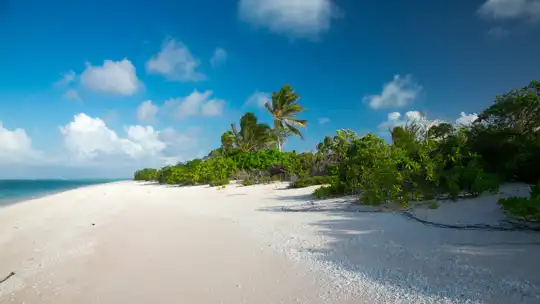
  • Vast Jaluit lagoon and motu shorelines — the color of the lagoon and the long, palm-lined motu (tiny islets) are what postcards are made of. Walk the shore at sunrise or sunset for dramatic light and wide-open Pacific views.
  • Coral reefs and snorkeling/diving — healthy reef drops and coral gardens ring the atoll; expect bright reef fish, wrasses, rays and often sea turtles if you get out on the reef crest or in the pass. Visibility can be excellent on calm
read more 👉
  • WWII relics and sunken wrecks — Jaluit was a major Japanese administrative and military center in WWII; rusting concrete ruins, bunkers on the islets and submerged ships/aircraft in the lagoon give the place a haunting, tangible history. Great for snorkelers/divers and history buffs (ask locals about access and safety around wrecks).
  • Vast Jaluit lagoon and motu shorelines — the color of the lagoon and the long, palm-lined motu (tiny islets) are what postcards are made of. Walk the shore at sunrise or sunset for dramatic light and wide-open Pacific views.
  • Coral reefs and snorkeling/diving — healthy reef drops and coral gardens ring the atoll; expect bright reef fish, wrasses, rays and often sea turtles if you get out on the reef crest or in the pass. Visibility can be excellent on calm days.
  • Traditional Marshallese village life (Jabor) — the main village offers a real look at everyday Marshallese culture: canoe building, weaving, local food and small crafts. It’s low-key, friendly, and a good place to learn about navigation traditions and community life.
  • Seabird and shorebird spots — uninhabited motu and reef edges host noddies, terns and other seabirds, plus migratory shorebirds. Bring binoculars — bird activity is best in early morning and late afternoon.
  • Mangrove channels and coastal ecology — the mangrove stands along some lagoon edges are nurseries for fish and crustaceans and make calm, nature-rich paddles. They’re quiet, buggy at times, but great for spotting juvenile fish and fiddler crabs.
  • Exposed reef flats and tidepooling — at low tide the reef flats reveal colorful shells, starfish, small anemones and other tidal creatures. It’s perfect for short exploratory walks (watch the tides, and don’t take live animals).
Spotted a mistake or missing something? Contact us.
🌤️ When to go?Best time to explore Jaluit Atoll National Historical Park


  • Weather: The dry season from December to April is your best bet. Expect less rain and calmer seas, which means easier navigation and more reliable hiking conditions. The wet season, May to November, brings heavy rains and tropical storms that can shut down access and dampen your plans—literally.

  • Temperature: Temperatures hover between 27°C and 31°C (80°F to 88°F) year-round. It’s warm but not scorching, so pack light, breathable clothing. Humidity spikes during the wet season, making it feel hotter and stickier.

  • Daylight Hours: Daylight stays fairly consistent, around 12 hours daily. Sunrise is roughly 6 AM, sunset near 6 PM, giving you a solid window for exploration without early darkness cutting your day short.

  • Crowds: Visitor numbers are low year-round, but the dry season sees
read more 👉

  • Weather: The dry season from December to April is your best bet. Expect less rain and calmer seas, which means easier navigation and more reliable hiking conditions. The wet season, May to November, brings heavy rains and tropical storms that can shut down access and dampen your plans—literally.

  • Temperature: Temperatures hover between 27°C and 31°C (80°F to 88°F) year-round. It’s warm but not scorching, so pack light, breathable clothing. Humidity spikes during the wet season, making it feel hotter and stickier.

  • Daylight Hours: Daylight stays fairly consistent, around 12 hours daily. Sunrise is roughly 6 AM, sunset near 6 PM, giving you a solid window for exploration without early darkness cutting your day short.

  • Crowds: Visitor numbers are low year-round, but the dry season sees a slight uptick. Don’t expect crowds, but plan ahead for limited accommodations and transport options, especially during holiday periods.

  • Seasonal Activities: Dry months are ideal for snorkeling, diving, and cultural tours. Wet season limits water clarity and outdoor activities, so save your energy for the dry season when the atoll’s marine life and historical sites are fully accessible.

  • Price Fluctuations: Prices for lodging and transport can rise 20-30% during the dry season’s peak months. Booking early is crucial to avoid last-minute surges, especially since options are limited and remote.


Pro-tip: Aim for late January to March—weather is stable, crowds minimal, and you’ll dodge the peak price spikes that hit around December holidays.


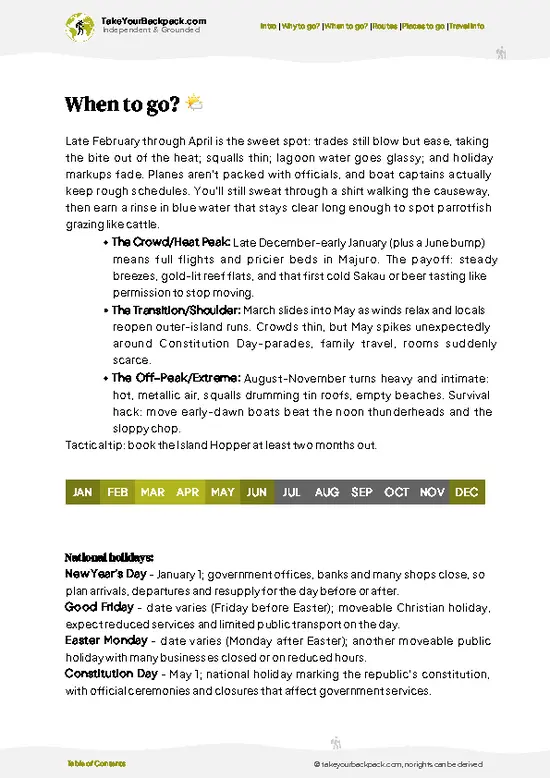
source: climatestotravel.comJANJanuary: excellent for travelingFEBFebruary: excellent for travelingMARMarch: excellent for travelingAPRApril: highly recommended for travelingMAYMay: fair for travelingJUNJune: fair for travelingJULJuly: below average for travelingAUGAugust: below average for travelingSEPSeptember: below average for travelingOCTOctober: fair for travelingNOVNovember: fair for travelingDECDecember: highly recommended for traveling
when-to-go

✈️ The backpacker research shortcutMarshall Islands Travel Guide

An offline-friendly backpacking guide with optimized travel routes, ranked highlights, transport advice, and the best areas to stay.
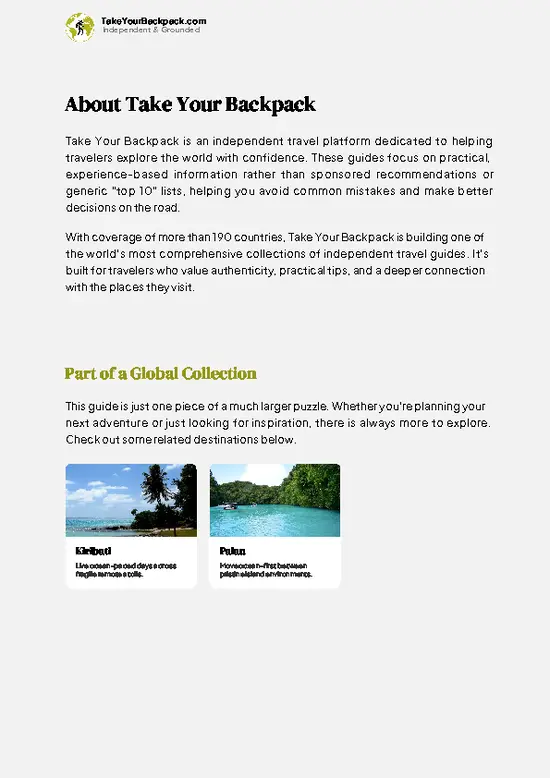
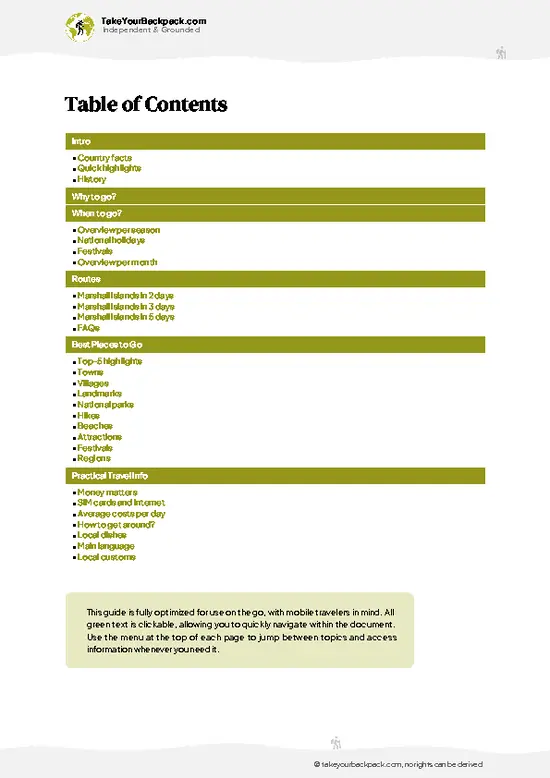
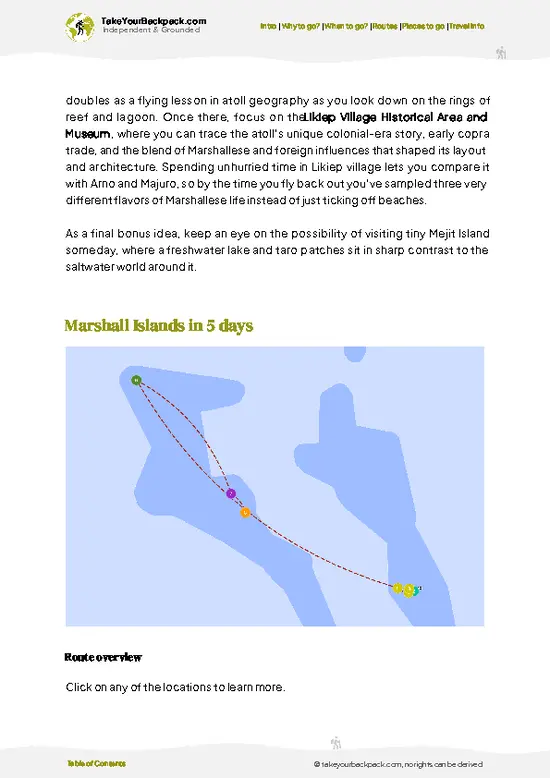
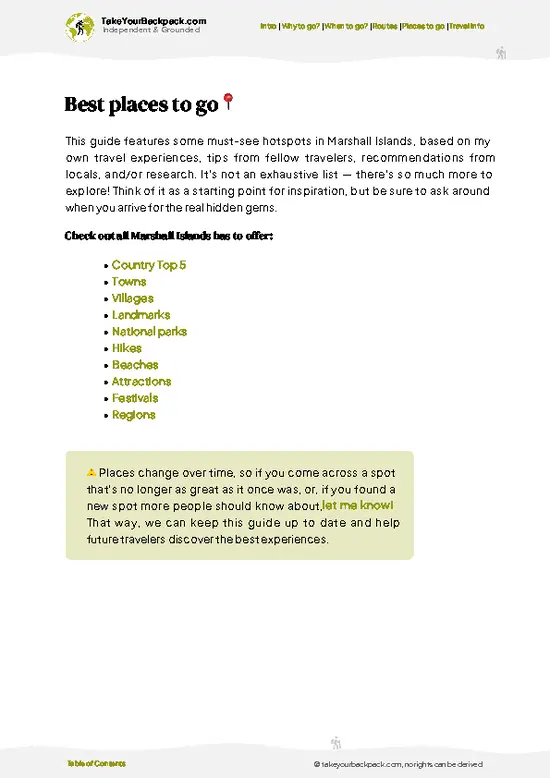
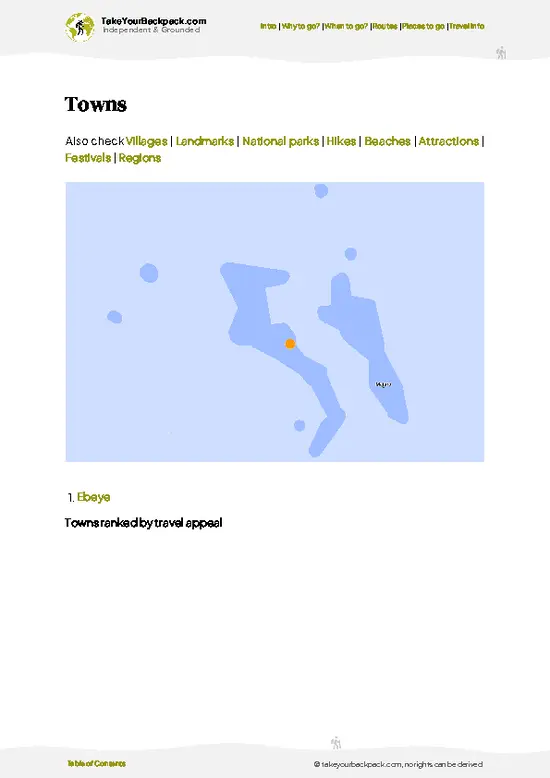
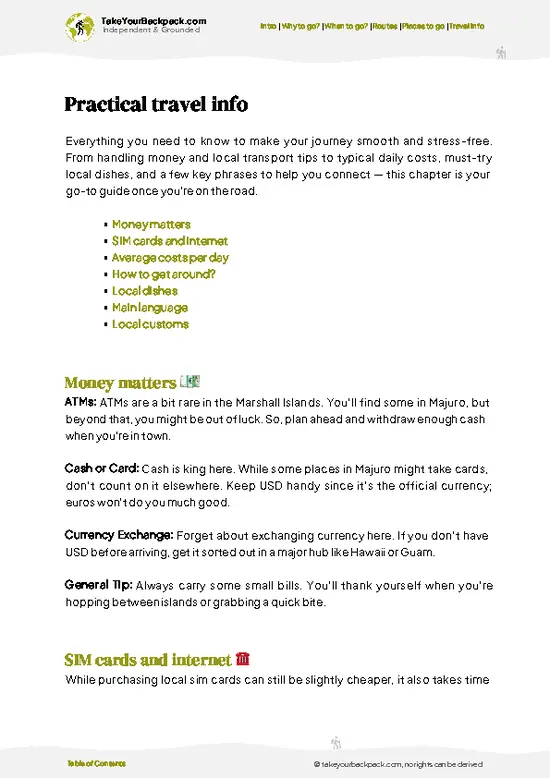
example page 0 from our offline Travel Guide for Marshall Islands
example page 1 from our offline Travel Guide for Marshall Islands
example page 2 from our offline Travel Guide for Marshall Islands
example page 3 from our offline Travel Guide for Marshall Islands
example page 4 from our offline Travel Guide for Marshall Islands
example page 5 from our offline Travel Guide for Marshall Islands
example page 6 from our offline Travel Guide for Marshall Islands
example page 7 from our offline Travel Guide for Marshall Islands
The digital guide (137 pages) contains:
31 highlights, ranked by travel appeal
Optimized 2, 3 & 5-day travel routes
Cities, national parks, landmarks, beaches
How to get around
Offline-friendly for travel without Wi-Fi
👉 Click to see all 30+ guide features

📅 Plan smarter in minutes, not weeks
Month by month travel advice
Festivals & national holidays
Budget expectations

🗺️ Go to the right places, skip the overrated ones
Honest pros & cons of destinations
Top hikes, parks & viewpoints
Lesser-known places most travelers miss
Clear “worth it vs skip it” guidance

🛏️ Travel smoothly without rookie mistakes
Best areas to stay
Transport systems explained simply
Common scams & safety advice
SIM cards, money & practical tips

🌍 Understand the country, not just visit it
Culture & traditions
52 Essential phrases & customs
Festivals worth planning around
Traveler-friendly historical context
Insights that make places more meaningful

📱 Built for real travel conditions
Fully downloadable PDF
Works completely offline
Optimized for phone use
Useful in remote areas & buses
Everything in one place
Save weeks of stressful planning
Get instant access to your full guide. 30‑day money-back guarantee.
+ Add another guide for just US$7.80

By proceeding you agree to our terms.
Sent to your inbox immediately after payment • 100% Secure Checkout
Best Backpacking Travel Advisor 2025 tourism awardBest Backpacking
Travel Advisor
2025
What others say about Take Your Backpack Guides:
⭐⭐⭐⭐⭐
Fantastic, amazing amount of information!
⭐⭐⭐⭐⭐
My goodness this is amazing, it's what I've been looking for hats off too you!
⭐⭐⭐⭐⭐
I think this is absolutely BRILLIANT
⭐⭐⭐⭐
Very complete and informative. It's still missing places, but I gotta to commend you
⭐⭐⭐⭐⭐
This is truly amazing, thank you, can't wait to explore it with my kids!
⭐⭐⭐⭐⭐
Awesome resource, thank you!
⭐⭐⭐⭐⭐
This is amazing! Can't wait to explore the ones I haven't seen
⭐⭐⭐⭐
I love this! Well done, great idea.
⭐⭐⭐⭐⭐
Thanks for taking the time to make this gem!
⭐⭐⭐⭐⭐
This might be the best website I've ever seen.
⭐⭐⭐⭐⭐
Congratulations, and thank you so much for your work; it's incredibly valuable.
⭐⭐⭐⭐
In all seriousness I think you did a great job pointing out the important spots
⭐⭐⭐⭐⭐
10/10 very good
⭐⭐⭐⭐⭐
As someone who's only just starting to visit regularly this is awesome, thank you.
⭐⭐⭐⭐
Thank you very much! I'm going to visit my dad, it's going to be very useful!
⭐⭐⭐⭐⭐
This is really cool! We'll be travelling for the first time and this definitely come in handy.
⭐⭐⭐⭐⭐
You are now our minister of culture, congratulations 👨‍💼
⭐⭐⭐⭐⭐
Just wanted to tell you that this is a pearl! Going to follow your recommendations.
⭐⭐⭐⭐⭐
This is so cool. I'll definitely be using the resource for my travels soon.
⭐⭐⭐⭐⭐
This is very impressive! Good work.
⭐⭐⭐⭐⭐
This is an amazing and informative site. Very well done!

🛏️ Where to stay?Choosing the right base

Jaluit Atoll National Historical Park is a remote paradise, but finding a place to stay can be tricky. There are no accommodations directly within the park itself, so you’ll need to look at nearby options.

The main hub is Jaluit Village, where you’ll find a few guesthouses. These are basic but offer a chance to connect with locals. The Jaluit Hotel is one of the better options, providing simple rooms and a communal atmosphere. Expect limited amenities, but the charm lies in the experience.

If you’re looking for a more immersive stay, consider homestays. They can be arranged through local contacts … read more 👉
Jaluit Atoll National Historical Park is a remote paradise, but finding a place to stay can be tricky. There are no accommodations directly within the park itself, so you’ll need to look at nearby options.

The main hub is Jaluit Village, where you’ll find a few guesthouses. These are basic but offer a chance to connect with locals. The Jaluit Hotel is one of the better options, providing simple rooms and a communal atmosphere. Expect limited amenities, but the charm lies in the experience.

If you’re looking for a more immersive stay, consider homestays. They can be arranged through local contacts and provide a unique glimpse into daily life on the atoll. Just be prepared for a lack of modern conveniences; this is about embracing the local culture.

Transportation can be a challenge, so plan ahead. Boats are the primary means of getting around, and schedules can be unpredictable. Factor in extra time for travel to avoid stress.

Budget wisely. Costs can add up quickly, especially if you’re relying on boat transport. Prioritize your spending on experiences that matter, like guided tours of the historical sites or snorkeling trips. This way, you’ll preserve your energy and budget for the moments that truly count.

👛 Costs (as of 4 September 2026)What things cost and how to budget

Visiting Jaluit Atoll National Historical Park in the Marshall Islands requires some careful budgeting. The costs can vary widely based on your travel style and choices.

Entry fees for the park itself are generally minimal, often around $10 to $20 USD. However, getting to Jaluit Atoll can be the real expense. Flights to the Marshall Islands can range from $800 to $1,500 USD, depending on your departure point and the time of year.

Once you arrive, accommodations can be limited. Expect to pay between $50 to $100 USD per night for basic lodging. Local guesthouses may offer a more budget-friendly option, but amenities can be sparse.

Food costs are also something to consider. Meals at local eateries might run you about $5 to $15 USD, while dining at more established restaurants could push … read more 👉
Visiting Jaluit Atoll National Historical Park in the Marshall Islands requires some careful budgeting. The costs can vary widely based on your travel style and choices.

Entry fees for the park itself are generally minimal, often around $10 to $20 USD. However, getting to Jaluit Atoll can be the real expense. Flights to the Marshall Islands can range from $800 to $1,500 USD, depending on your departure point and the time of year.

Once you arrive, accommodations can be limited. Expect to pay between $50 to $100 USD per night for basic lodging. Local guesthouses may offer a more budget-friendly option, but amenities can be sparse.

Food costs are also something to consider. Meals at local eateries might run you about $5 to $15 USD, while dining at more established restaurants could push that to $20 USD or more.

Transportation within the atoll can be tricky. Boat rentals or guided tours can range from $50 to $200 USD, depending on the duration and distance.

Plan for additional costs like gear rentals if you’re diving or snorkeling, which can add another $30 to $100 USD to your budget.

In summary, while the park itself is affordable, the journey and logistics can add up quickly. Prioritize your spending on experiences that matter, and keep an eye on those hidden costs.


source: visitmarshallislands.com
⚠️ Prices can change and everyone travels differently, so take this as a rough guide. Hope it helps you plan your adventure!

🥾 TrailsTrail guide for Jaluit Atoll National Historical Park national park

Jaluit Atoll National Historical Park is more about soaking in the unique culture and history than traditional hiking, but there are definitely some opportunities to explore. The terrain is mostly flat with sandy paths and lush vegetation, making it pretty easy to navigate. You’ll find yourself surrounded by stunning turquoise waters and vibrant coral reefs, perfect for some impromptu snorkeling between strolls. Wildlife is abundant, with seabirds nesting in the trees and the occasional glimpse of marine life if you venture into the water.

There aren’t designated trails like you’d find in bigger … read more 👉
Jaluit Atoll National Historical Park is more about soaking in the unique culture and history than traditional hiking, but there are definitely some opportunities to explore. The terrain is mostly flat with sandy paths and lush vegetation, making it pretty easy to navigate. You’ll find yourself surrounded by stunning turquoise waters and vibrant coral reefs, perfect for some impromptu snorkeling between strolls. Wildlife is abundant, with seabirds nesting in the trees and the occasional glimpse of marine life if you venture into the water.

There aren’t designated trails like you’d find in bigger national parks, but wandering around the atoll can be a delightful experience. Just be mindful of the heat and stay hydrated.

If you’re looking to get there, public transport isn’t really an option since it’s remote. Most visitors arrive via boat or small plane from Majuro, the capital. It’s not usually crowded, so you can enjoy the tranquility, but it’s a good idea to check local schedules for any potential influx of visitors. Entrance fees are generally minimal or non-existent, making it a budget-friendly spot to explore. Just be sure to respect the local customs and environment while you’re there!
⚠️ Hiking info can sometimes be outdated or inaccurate. Before you hit the trail, check the latest conditions with locals. If you do spot anything that's off, I'd love to hear from you, so I can update it for fellow travelers.

🛡️ SafetySafety Tips and Common Scams in Jaluit Atoll National Historical Park

Jaluit Atoll National Historical Park offers a relatively straightforward experience for backpackers, but a few realities can help you navigate it smoothly. Weather can shift quickly, so be prepared for sudden rain or wind. Lightweight, waterproof gear is a must; it’ll keep you comfortable and dry.

The terrain is mostly flat, but some trails can be overgrown or less defined. Good footwear is essential for maintaining grip and stability. Navigation is generally easy, but a reliable map or GPS can save you from unnecessary detours.

Wildlife encounters are rare, but if you spot a sea turtle or a bird, observe from a distance. Respect their space; this is their home, after all.

Timing your hikes is crucial. Early mornings or late afternoons are cooler and less humid. Stay hydrated, pace yourself, … read more 👉
Jaluit Atoll National Historical Park offers a relatively straightforward experience for backpackers, but a few realities can help you navigate it smoothly. Weather can shift quickly, so be prepared for sudden rain or wind. Lightweight, waterproof gear is a must; it’ll keep you comfortable and dry.

The terrain is mostly flat, but some trails can be overgrown or less defined. Good footwear is essential for maintaining grip and stability. Navigation is generally easy, but a reliable map or GPS can save you from unnecessary detours.

Wildlife encounters are rare, but if you spot a sea turtle or a bird, observe from a distance. Respect their space; this is their home, after all.

Timing your hikes is crucial. Early mornings or late afternoons are cooler and less humid. Stay hydrated, pace yourself, and enjoy the serene beauty without rushing. With these tips, you’ll preserve your energy and budget for the moments that truly matter.

FAQCommon questions from travelers

2 to 3 days are sufficient to explore Jaluit Atoll National Historical Park thoroughly, allowing time for historical sites and snorkeling activities.
No, you cannot visit Jaluit Atoll National Historical Park without some form of local transport, as the atoll is spread out and public transport options are very limited.
Yes, a permit is required to visit Jaluit Atoll National Historical Park, typically arranged through local authorities or tour operators, with fees varying but generally around 20 to 30 USD.
⚠️ Things can change over time, so always validate details locally before you go.

Other Marshallese national parks near Jaluit Atoll National Historical Park

Explore more nearby:


💡 Not sure where to go next?
Create a personalized itinerary for Marshall Islands including Jaluit Atoll National Historical Park and the places that fit your trip.

Generate my itinerary

👉 Discover all national parks

Or checkout all Marshall Islands has to offer (think cities, towns, villages, national parks, hikes, beaches, festivals)
Country photo of Marshall Islands

We 💚 feedbackSumming up the experience

Jaluit Atoll is a quiet paradise, but don’t expect a bustling tourist scene. The vibe is laid-back, perfect for those seeking solitude. The best surprise? The local stories shared by the elders—each one a window into the atoll’s rich history. Just a heads-up: logistics can be tricky. Flights are limited, and accommodations are basic. Plan ahead to avoid frustration. Embrace the simplicity; it’s part of the charm. You’ll leave with a deeper appreciation for this slice of the Pacific.

✍️ Help improve this page!
The information on this page is based on in-depth research, insights shared by experienced travelers, and feedback from the local travel community in Marshall Islands. While every effort is made to keep the information accurate and current, conditions can change — so if you spot anything incorrect or outdated, please get in touch.


🙋‍♂️ Give feedback

👋 Meet the founderWho’s Behind Take Your Backpack?

Johan, backpacker and founder of TakeYourBackpackHi, I’m Johan (Netherlands 🇳🇱), the creator of TakeYourBackpack. Over the past decade, I’ve backpacked through 80+ countries across six continents, gaining extensive experience with independent travel, long-term trips, and overland routes.

This site is built on a combination of firsthand travel experience and carefully curated insights from other backpackers. Many guides are based on places I’ve personally visited, while others bring together tips, observations, and practical advice shared by trusted travelers I’ve met along the way.

The goal is to provide realistic, experience-driven guidance — not generic itineraries — so you can explore destinations with better context, clearer expectations, and more confidence.

Get full country guide •
Instant download • 31 highlights • Full Offline guide