×

Marshall Islands🇲🇭 | festivalsMarshall Islands Canoe FestivalSailing outriggers, hand-lashed hulls, pandanus weaving, lagoon shore | things to do and best time to go

Explore Kwajalein DayExplore Nitijela Day

Backpacking in Marshall Islands Canoe
By Johan Kruseman 🇳🇱 | Updated October 15, 2026

The canoes at the center of this festival descend from Marshallese designs that early European visitors described as among the fastest and most refined sailing craft in the Pacific, and some are still built by hand with breadfruit wood and coconut-fiber lashing. The Marshall Islands Canoe Festival takes place on Majuro, the atoll that holds Marshall Islands’s capital, with the lagoon as its arena. Expect outrigger sailing canoes heeling over in trade-wind light, the creak of rope and the smell of salt, wet wood and coconut oil, plus mats, weaving and island food laid out on the shore. The crowd is mostly local families, canoe builders and a handful of curious travelers, so the mood is warm and unhurried rather than commercial. Heat, glare and patchy shade are part of the deal. You will like it most if you love boats, craft and conversation with people who built what you are watching. If you want stages, camping and nightlife, you won’t.

Discover everything you want to know in the 📖 Marshall Islands Travel Guide.


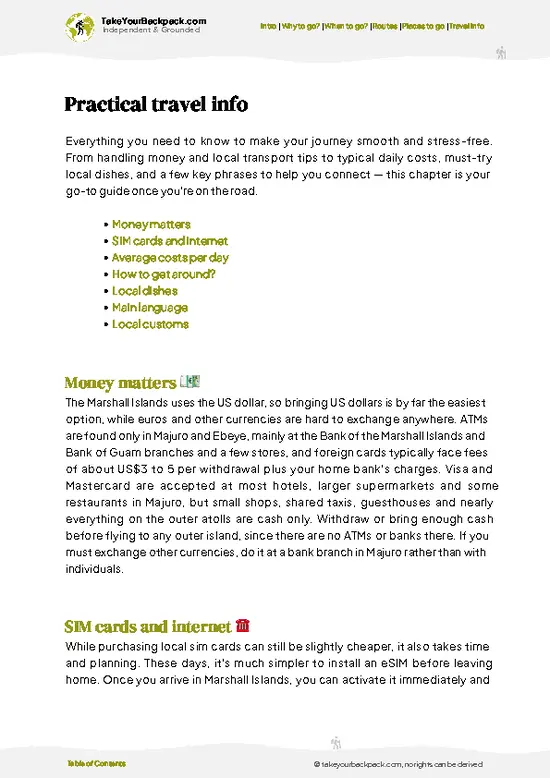
example page 0 from our offline Travel Guide for Marshall Islands
example page 1 from our offline Travel Guide for Marshall Islands
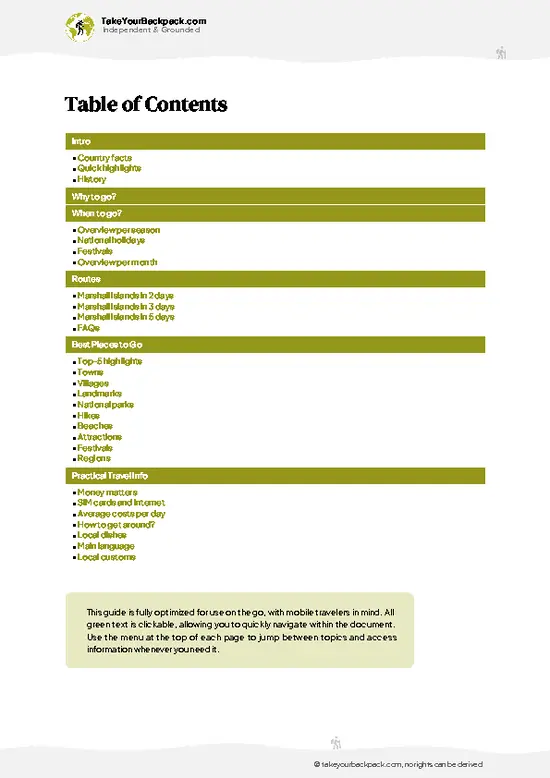
example page 2 from our offline Travel Guide for Marshall Islands
example page 3 from our offline Travel Guide for Marshall Islands
example page 4 from our offline Travel Guide for Marshall Islands
example page 5 from our offline Travel Guide for Marshall Islands
example page 6 from our offline Travel Guide for Marshall Islands
example page 7 from our offline Travel Guide for Marshall Islands
Loading the map 🌍
CLICK TO FILTER
towns
villages
landmarks
national parks
hikes
beaches
attractions
festivals
regions
SHOW COUNTRY’S BESTSHOW ALL

✨ Why go?
Ranked #99 festival in Marshall Islands
Reasons people choose to celebrate the here

Backpackers plan around this event because the Marshall Islands rarely offers a single day when the culture is out in the open. Majuro is a long, narrow strip of land where daily life can feel closed off to a short-stay visitor. During the festival, the lagoon becomes a shared stage and sailing canoes built to Marshallese designs are the reason everyone is there. That gives you an easy opening to talk with builders, paddlers and elders about how a hull is shaped, how a sail is trimmed and why navigation mattered so much on atolls with no landmarks.

The second pull is access. This is not a ticketed spectacle with barriers, so you can stand close, ask questions and often see the craft being prepared. If you link it with the work of Waan Aelõñ in Majel, the Majuro canoe program that keeps these … read more 👉
Backpackers plan around this event because the Marshall Islands rarely offers a single day when the culture is out in the open. Majuro is a long, narrow strip of land where daily life can feel closed off to a short-stay visitor. During the festival, the lagoon becomes a shared stage and sailing canoes built to Marshallese designs are the reason everyone is there. That gives you an easy opening to talk with builders, paddlers and elders about how a hull is shaped, how a sail is trimmed and why navigation mattered so much on atolls with no landmarks.

The second pull is access. This is not a ticketed spectacle with barriers, so you can stand close, ask questions and often see the craft being prepared. If you link it with the work of Waan Aelõñ in Majel, the Majuro canoe program that keeps these skills alive, the event stops being a one-off and starts making sense as part of a living tradition. It also fits well into a Pacific route, since Majuro is a natural pause between longer island hops, and the festival gives that pause a purpose.

💡 HighlightsKey sights and experiences for travelers

  1. Sailing canoes on Majuro lagoon: The main event is the sight of Marshallese outrigger canoes under sail, leaning hard against the wind with crew shifting weight along the platform. The lagoon is wide and sheltered, so you can watch from the shore as the sails cross the turquoise water. Go to the water’s edge in the late morning when the breeze is strongest.
  2. Waan Aelõñ in Majel canoe program: This Majuro organization teaches canoe building and sailing to young Marshallese, and it is the backbone of the tradition on the atoll. Seeing hulls, lashings and sails up close shows how much skill goes into each craft. Builders are usually happy to explain the parts if you ask politely and keep out of the way.
  3. Alele Museum: Majuro’s national museum, library and archives gives context that the festival
… read more 👉
  1. Sailing canoes on Majuro lagoon: The main event is the sight of Marshallese outrigger canoes under sail, leaning hard against the wind with crew shifting weight along the platform. The lagoon is wide and sheltered, so you can watch from the shore as the sails cross the turquoise water. Go to the water’s edge in the late morning when the breeze is strongest.
  2. Waan Aelõñ in Majel canoe program: This Majuro organization teaches canoe building and sailing to young Marshallese, and it is the backbone of the tradition on the atoll. Seeing hulls, lashings and sails up close shows how much skill goes into each craft. Builders are usually happy to explain the parts if you ask politely and keep out of the way.
  3. Alele Museum: Majuro’s national museum, library and archives gives context that the festival itself does not. Its displays on Marshallese history, traditional life and navigation help you understand why canoes matter so deeply here. It is a small place, so a short visit is enough, and it works well as a cool, quiet break from the midday sun.
  4. Marshallese handicrafts and weaving: Around festival time, local makers show woven pandanus items and other handmade goods, including the fine mats and baskets the islands are known for. Buying directly from the weaver is the best way to take something home, and the patterns and fibers are far more interesting up close than in a photo. Bring small bills for easy purchases.
  5. Laura Beach: At the western end of Majuro, Laura Beach is the atoll’s best-known stretch of sand, with coconut palms, shallow water and a relaxed local crowd. It is the natural place to unwind after the festival, and the sunset light on the lagoon is soft and golden. Swim where locals do and watch for currents near the reef edge.
The canoe viewing in the morning and Laura Beach in the late afternoon fit together neatly in a single day.
Spotted a mistake or missing something? Contact us.

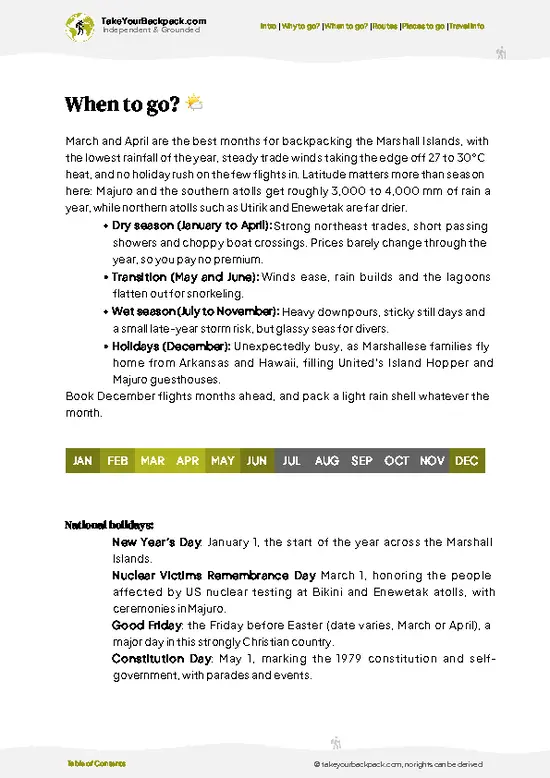
🌤️ When to go?When is the celebration of Marshall Islands Canoe Festival?

The Marshall Islands Canoe Festival is held on Majuro atoll, where canoe races on the lagoon cluster around Constitution Day (May 1), with recent races held in mid to late April.
  • Best day: Go for the day with the canoe races on the lagoon, when traditional sailing canoes (walap and tipnol) line up and crowds gather along the shore.
  • Weather: Expect 27 to 31°C (81 to 88°F), strong trade winds, sun glare and short, sudden showers. Bring a hat, reef-safe sunscreen, a light rain shell and sandals you can wet.
  • Booking: Majuro has few rooms, so reserve a bed and your flight 2 to 3 months ahead. Rates can rise 10 to 25 percent around the event, and flights are limited to a few per week.
  • Crowds: The single road along the atoll is slow at race start and finish. Arrive early, and leave before the final-day
… read more 👉
The Marshall Islands Canoe Festival is held on Majuro atoll, where canoe races on the lagoon cluster around Constitution Day (May 1), with recent races held in mid to late April.
  • Best day: Go for the day with the canoe races on the lagoon, when traditional sailing canoes (walap and tipnol) line up and crowds gather along the shore.
  • Weather: Expect 27 to 31°C (81 to 88°F), strong trade winds, sun glare and short, sudden showers. Bring a hat, reef-safe sunscreen, a light rain shell and sandals you can wet.
  • Booking: Majuro has few rooms, so reserve a bed and your flight 2 to 3 months ahead. Rates can rise 10 to 25 percent around the event, and flights are limited to a few per week.
  • Crowds: The single road along the atoll is slow at race start and finish. Arrive early, and leave before the final-day rush for taxis.
Arrive a day before the first race so you can scout the shoreline and talk to canoe builders.


source: climatestotravel.comJANJanuary: excellent for travelingFEBFebruary: not recommended for travelingMARMarch: not recommended for travelingAPRApril: not recommended for travelingMAYMay: not recommended for travelingJUNJune: not recommended for travelingJULJuly: not recommended for travelingAUGAugust: not recommended for travelingSEPSeptember: not recommended for travelingOCTOctober: not recommended for travelingNOVNovember: not recommended for travelingDECDecember: not recommended for traveling

✈️ The backpacker research shortcutMarshall Islands Travel Guide

An offline-friendly backpacking guide with optimized travel routes, ranked highlights, transport advice, and the best areas to stay.
example page 0 from our offline Travel Guide for Marshall Islands
example page 1 from our offline Travel Guide for Marshall Islands
example page 2 from our offline Travel Guide for Marshall Islands
example page 3 from our offline Travel Guide for Marshall Islands
example page 4 from our offline Travel Guide for Marshall Islands
example page 5 from our offline Travel Guide for Marshall Islands
example page 6 from our offline Travel Guide for Marshall Islands
example page 7 from our offline Travel Guide for Marshall Islands
The digital guide (125 pages) contains:
✅ 27 highlights, ranked by travel appeal
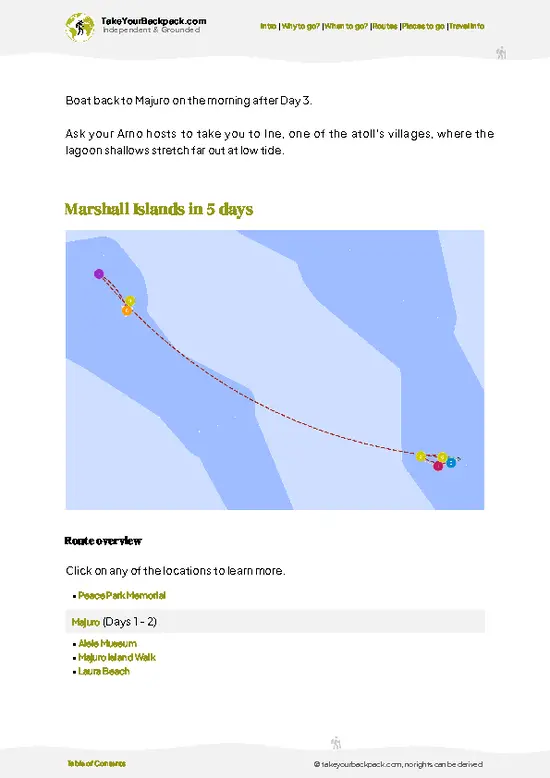
✅ Optimized 2, 3 & 5-day travel routes
✅ Cities, national parks, landmarks, beaches
✅ How to get around
✅ Offline-friendly for travel without Wi-Fi
👉 Click to see all 30+ guide features

📅 Plan smarter in minutes, not weeks
✅ Month by month travel advice
✅ Festivals & national holidays
✅ Budget expectations

🗺️ Go to the right places, skip the overrated ones
✅ Honest pros & cons of destinations
✅ Top hikes, parks & viewpoints
✅ Lesser-known places most travelers miss
✅ Clear “worth it vs skip it” guidance

🛏️ Travel smoothly without rookie mistakes
✅ Best areas to stay
✅ Transport systems explained simply
✅ Common scams & safety advice
✅ SIM cards, money & practical tips

🌍 Understand the country, not just visit it
✅ Culture & traditions
✅ 52 Essential phrases & customs
✅ Festivals worth planning around
✅ Traveler-friendly historical context
✅ Insights that make places more meaningful

📱 Built for real travel conditions
✅ Fully downloadable PDF
✅ Works completely offline
✅ Optimized for phone use
✅ Useful in remote areas & buses
✅ Everything in one place
Stop searching, start planning
Get instant access to your full guide. 30‑day money-back guarantee.
+ Add another guide for just

By proceeding you agree to our terms.
Sent to your inbox immediately after payment • 100% Secure Checkout
Best Backpacking Travel Advisor 2025 tourism awardBest Backpacking
Travel Advisor
2025
What others say about Take Your Backpack Guides:
⭐⭐⭐⭐⭐
Fantastic, amazing amount of information!
⭐⭐⭐⭐⭐
My goodness this is amazing, it's what I've been looking for hats off too you!
⭐⭐⭐⭐⭐
I think this is absolutely BRILLIANT
⭐⭐⭐⭐
Very complete and informative. It's still missing places, but I gotta to commend you
⭐⭐⭐⭐⭐
This is truly amazing, thank you, can't wait to explore it with my kids!
⭐⭐⭐⭐⭐
Awesome resource, thank you!
⭐⭐⭐⭐⭐
This is amazing! Can't wait to explore the ones I haven't seen
⭐⭐⭐⭐
I love this! Well done, great idea.
⭐⭐⭐⭐⭐
Thanks for taking the time to make this gem!
⭐⭐⭐⭐⭐
This might be the best website I've ever seen.
⭐⭐⭐⭐⭐
Congratulations, and thank you so much for your work; it's incredibly valuable.
⭐⭐⭐⭐
In all seriousness I think you did a great job pointing out the important spots
⭐⭐⭐⭐⭐
10/10 very good
⭐⭐⭐⭐⭐
As someone who's only just starting to visit regularly this is awesome, thank you.
⭐⭐⭐⭐
Thank you very much! I'm going to visit my dad, it's going to be very useful!
⭐⭐⭐⭐⭐
This is really cool! We'll be travelling for the first time and this definitely come in handy.
⭐⭐⭐⭐⭐
You are now our minister of culture, congratulations 👨‍💼
⭐⭐⭐⭐⭐
Just wanted to tell you that this is a pearl! Going to follow your recommendations.
⭐⭐⭐⭐⭐
This is so cool. I'll definitely be using the resource for my travels soon.
⭐⭐⭐⭐⭐
This is very impressive! Good work.
⭐⭐⭐⭐⭐
This is an amazing and informative site. Very well done!

🛏️ Where to stay?How to pick the right area

Stay in the Delap-Uliga-Djarrit (DUD) area of Majuro, the atoll’s central hub, because it puts you within a short taxi ride or a walk of most events and the places where travelers cluster. Accommodation is limited across the whole country, so the choice is really about location. The DUD area has the shops, the money exchange options, the cafes and the evening food stalls, and you can meet other visitors, volunteers and researchers there. Taxis are shared and cheap, run along the single main road, and are the easiest way to reach the lagoon shore from here. Safety is generally good, but walk in … read more 👉
Stay in the Delap-Uliga-Djarrit (DUD) area of Majuro, the atoll’s central hub, because it puts you within a short taxi ride or a walk of most events and the places where travelers cluster. Accommodation is limited across the whole country, so the choice is really about location. The DUD area has the shops, the money exchange options, the cafes and the evening food stalls, and you can meet other visitors, volunteers and researchers there. Taxis are shared and cheap, run along the single main road, and are the easiest way to reach the lagoon shore from here. Safety is generally good, but walk in groups after dark and avoid the unlit stretches of the road. If you want a quieter base, the Laura end of the atoll has beaches and village life, though you will depend on taxis and need to plan returns well before dark. Rairok, the area around the airport, suits early flights. Homestays and guesthouses arranged through local contacts are a good way to meet families who build and race canoes, and they are often the most social option for solo travelers. Book early, as event weeks fill the limited rooms quickly.

👛 Costs (as of 15 October 2026)What things cost and how to budget

Plan on about US$110 to 220 a day to attend the Marshall Islands Canoe Festival, mostly because beds and imported food on Majuro are pricey.
CategoryBudget RangeLocal Reality
Festival ticketsUS$0 to 10Shoreline viewing is usually free, with small fees for some organized events or cultural sessions.
AccommodationUS$80 to 150Limited rooms on Majuro, and rates rise in event weeks. A simple guesthouse is the low end.
Local transportUS$2 to 10Shared taxis charge about US$1 to 2 per ride along the main road, with a private hire costing more.
Food & drinksUS$20 to 45Festival stalls and local cafes are cheaper than restaurants. Imported goods drive up grocery prices.
Miscellaneous expensesUS$8 to 15Sunscreen, water, handicrafts and small tips or donations.
Total Daily BudgetUS$110 to 220Per person, per day, in high season.
⚠️ Prices can change and everyone travels differently, so take this as a rough guide. Hope it helps you plan your adventure!

🍲 FoodEating & Drinking in Marshall Islands Canoe

Food at the festival is local and simple, built around what the lagoon and the palms provide. Expect stalls with grilled and fried reef fish, breadfruit roasted or boiled, and pandanus sweets. Rice, tinned meat and sweet doughnuts often sit beside the local dishes, and that is part of everyday Marshallese eating today.
Try breadfruit with coconut cream and fresh tuna or mahi-mahi if it is on offer. Coconut water, drunk straight from the nut, is the best drink in the midday heat, and you will find it for a dollar or two. Pandanus preserves and coconut candy make good snacks for the shoreline.
Bring cash in US dollars, since the Marshall Islands uses the US currency and stalls rarely take cards. Small bills help. Portions are large and often shared among family groups, so do not be surprised if … read more 👉
Food at the festival is local and simple, built around what the lagoon and the palms provide. Expect stalls with grilled and fried reef fish, breadfruit roasted or boiled, and pandanus sweets. Rice, tinned meat and sweet doughnuts often sit beside the local dishes, and that is part of everyday Marshallese eating today.
Try breadfruit with coconut cream and fresh tuna or mahi-mahi if it is on offer. Coconut water, drunk straight from the nut, is the best drink in the midday heat, and you will find it for a dollar or two. Pandanus preserves and coconut candy make good snacks for the shoreline.
Bring cash in US dollars, since the Marshall Islands uses the US currency and stalls rarely take cards. Small bills help. Portions are large and often shared among family groups, so do not be surprised if someone offers you a plate. Accept it, and thank them. Lines are loose and informal, and the food tends to sell out in the afternoon, so eat before the final races. Alcohol is sold in town but is best kept off the festival grounds and away from the family crowds. Carry your own water bottle, as drinking water is limited.

FAQFrequently asked questions about Marshall Islands Canoe

The Marshall Islands Canoe Festival takes place on Majuro atoll over a few days, usually in April and early May, around Constitution Day (May 1). Exact dates shift from year to year, so confirm them with local tourism contacts a few months before you book. Races take place on the lagoon near Majuro’s main road, close to the Delap-Uliga-Djarrit area.
Attending costs little for the event itself, since viewing from the shore is usually free, though some organized sessions may charge US$0 to 10. The main expense is getting there and staying, with a daily budget of about US$110 to 220 including a guesthouse at US$80 to 150. Shared taxis cost roughly US$1 to 2 a ride.
Most shoreline viewing needs no ticket, so you can usually just turn up. What you do need in advance is a flight and a bed, as Majuro has few rooms and limited weekly flights, so book 2 to 3 months ahead. Any paid workshop or cultural session can be arranged on arrival or through your host.
⚠️ Things can change over time, so always validate details locally before you go.

Other Marshallese festivals near Marshall Islands Canoe

Explore more nearby:

  • Nitijela Day—Parliament grounds, blessings, drum performances, roadside food stalls| 4 km away
  • Kwajalein Day—Ebeye parade, harmonized songs, lagoon canoe races, shared fish feast| 443 km away
  • Constitution Day—Delap Park, choir harmonies, outrigger sails, street-level crowds

💡 Not sure where to go next?
Create a personalized itinerary for Marshall Islands including Marshall Islands Canoe and the places that fit your trip.

Generate my itinerary

👉 Discover all festivals

Or checkout all Marshall Islands has to offer (think cities, towns, villages, national parks, hikes, beaches, festivals)
Country photo of Marshall Islands

We 💚 feedbackParting advice and final tips

This festival suits curious travelers who enjoy watching craft and seamanship more than they need a program or a headline act. I would arrive early, bring a hat, reef-safe sunscreen and a refillable water bottle, and spend time talking to the builders rather than just photographing the sails. Skip it if you want polish and big crowds. Come for the lagoon, the wood, the rope and the people who know them.

✍️ Help improve this page!
The information on this page is based on in-depth research, insights shared by experienced travelers, and feedback from the local travel community in Marshall Islands. While every effort is made to keep the information accurate and current, conditions can change — so if you spot anything incorrect or outdated, please get in touch.


🙋‍♂️ Give feedback

👋 Meet the founderWho’s Behind Take Your Backpack?

Johan, backpacker and founder of TakeYourBackpackHi, I’m Johan (Netherlands 🇳🇱), the creator of TakeYourBackpack. Over the past 3 decades, I’ve backpacked through 90+ countries across six continents, gaining extensive experience with independent travel, long-term trips, and overland routes.

This site is built on a combination of firsthand travel experience and carefully curated insights from other backpackers. Many guides are based on places I’ve personally visited, while others bring together tips, observations, and practical advice shared by trusted travelers I’ve met along the way.

The goal is to provide realistic, experience-driven guidance — not generic itineraries — so you can explore destinations with better context, clearer expectations, and more confidence.