×

Marshall Islands🇲🇭 | best festivalsYour Guide to the 3 Best festivals in Marshall Islands

Festivals in the Marshall Islands happen on coral strips barely two meters above the lagoon, where the sound is slap-bass ukulele, pandanus mats rustling and outrigger sails snapping in trade wind. Expect community celebrations rather than ticketed events. Majuro offers flights, guesthouses and crowds of locals. The outer atolls offer intimacy, heat and scarce beds, which suits independent travelers willing to improvise.

By Johan Kruseman 🇳🇱 | Updated October 23, 2026
Explore the best regions in Marshall Islands

Why go?Why These festival Stand Out

The Marshall Islands suit festivals because life here is organized around clan, church and canoe. Roughly 29 atolls and five islands scatter across about 1.9 million square kilometers of ocean, so a gathering means people sailing or flying in with mats, pandanus-leaf baskets and pots of breadfruit and fish. You hear Marshallese harmonies before you see the crowd, and smell coconut oil and woodsmoke in the heat.

Know the limits before you choose. Infrastructure is thin: few hotels outside Majuro and Ebeye, and flights on Air Marshall Islands run only a few times a week to many atolls, and they get delayed. Dress is modest (women cover knees and shoulders), Sundays are quiet and church-centered, and alcohol rules vary by atoll. Visitors are an unusual sight, so you are treated as a guest rather than a customer.
Why These Made the Cut
The list of best festivals in Marshall Islands is created based on energy, traditions, crowd experience, activities, and overall excitement. If you feel a festival is missing in this list, please let us know.

When to go?Optimal Periods for Travel

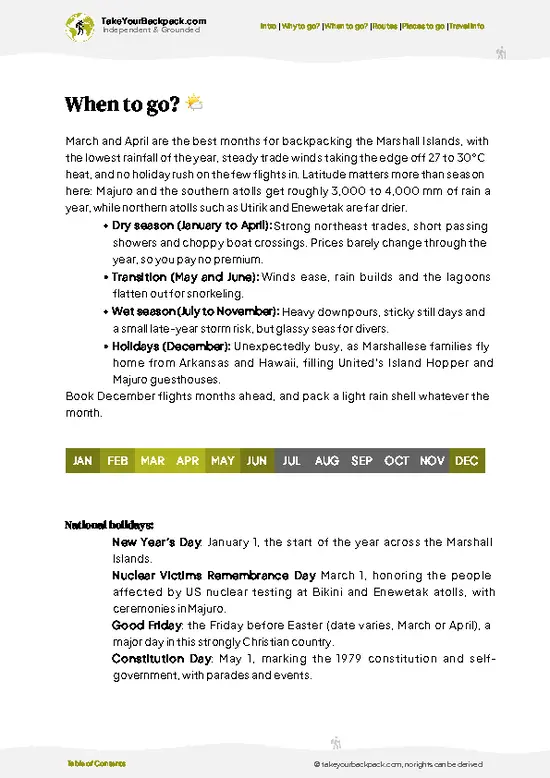
Best months: December to April is the best window for festivals in the Marshall Islands, because the dry season brings steady northeast trade winds, little rain and sea breezes that keep the heat tolerable. Temperatures sit around 27 to 31°C year-round, with humidity that leaves your shirt damp by midmorning.
Shoulder and wet season: May to November is the wet season. Rain falls in sudden warm downpours, the lagoon turns glassy and flat, and annual rainfall runs around 3,000 to 4,000 mm in the south (Majuro) and far less in the drier northern atolls. Flights are more often delayed, and boat trips get rougher. October and November bring some of the heaviest rain.
Prices and crowds: The Marshall Islands have no real tourist high season. Prices barely move, but rooms fill around national holidays … read more 👉
Best months: December to April is the best window for festivals in the Marshall Islands, because the dry season brings steady northeast trade winds, little rain and sea breezes that keep the heat tolerable. Temperatures sit around 27 to 31°C year-round, with humidity that leaves your shirt damp by midmorning.
Shoulder and wet season: May to November is the wet season. Rain falls in sudden warm downpours, the lagoon turns glassy and flat, and annual rainfall runs around 3,000 to 4,000 mm in the south (Majuro) and far less in the drier northern atolls. Flights are more often delayed, and boat trips get rougher. October and November bring some of the heaviest rain.
Prices and crowds: The Marshall Islands have no real tourist high season. Prices barely move, but rooms fill around national holidays and the Christmas period, when families fly home, so book Majuro guesthouses weeks ahead.

festival hoppingOptimizing Your Multi-Stop Itinerary

How long to allow: A trip combining several festivals in the Marshall Islands needs 10 to 14 days, mostly because inter-atoll flights are infrequent and cannot be rushed. Majuro is the hub, with Kwajalein and Ebeye about 450 km northwest, and most outer atolls reached only by Air Marshall Islands turboprops or occasional field-trip ships.
Direction and pacing: Work outward from Majuro and return to it, since nearly every route runs through the capital. Allow 2 to 4 days per stop, with flights of roughly 1 to 2 hours between atolls and a night or two in Majuro to reconnect. The Majuro to Ebeye hop takes about 1 hour.
Mistakes to avoid: The common errors are tight connections and flights booked back to back. Weekly schedules shift, and sun-baked airstrips offer little shelter when a plane is late. … read more 👉
How long to allow: A trip combining several festivals in the Marshall Islands needs 10 to 14 days, mostly because inter-atoll flights are infrequent and cannot be rushed. Majuro is the hub, with Kwajalein and Ebeye about 450 km northwest, and most outer atolls reached only by Air Marshall Islands turboprops or occasional field-trip ships.
Direction and pacing: Work outward from Majuro and return to it, since nearly every route runs through the capital. Allow 2 to 4 days per stop, with flights of roughly 1 to 2 hours between atolls and a night or two in Majuro to reconnect. The Majuro to Ebeye hop takes about 1 hour.
Mistakes to avoid: The common errors are tight connections and flights booked back to back. Weekly schedules shift, and sun-baked airstrips offer little shelter when a plane is late. Add 2 buffer days at the end, confirm return seats on arrival, and keep cash on hand since outer islands rarely have card machines.

The ListHighly Recommended festivals of Marshall Islands

1 Kwajalein Day

Ebeye parade, harmonized songs, lagoon canoe races, shared fish feast

Line the single road for floats and school groups, then follow the crowds to the waterfront for singing, dancing, sailing canoes and a communal meal.

2 Constitution Day

Delap Park, choir harmonies, outrigger sails, street-level crowds

Walk the lagoon side of Delap to hear church choirs and dance groups, then watch triangular canoe sails lean across Majuro Lagoon.

3 Christmas

Church hymns, family feasts, Delap-Uliga-Djarrit, quiet holiday

Join long Christmas services of layered choral singing, then share breadfruit and fish with local families and cool off at Laura Beach.

Loading the map 🌍

Expert viewWhat You Should Know

How many to attend: I advise two or three festivals in the Marshall Islands, no more. Flights run only a few days a week, so every extra stop costs you days of waiting under a tin roof with a fan that rarely cools you. Fewer stops mean you stay long enough to be handed a plate, a woven flower crown and a seat on the mat.
Which kind to prioritize: Choose by travel style. Capital-based celebrations suit first-timers: easy flights, guesthouses, a fast pace and plenty of Marshallese music in the open air. Outer-atoll gatherings suit experienced travelers who can sleep in a family home, bathe from a rainwater tank and wait out a delayed plane. You get the most intimate welcome, and the most unpredictable logistics.
What it costs: Budget US$60 to 110 a day. Majuro guesthouses and hotels run about … read more 👉
How many to attend: I advise two or three festivals in the Marshall Islands, no more. Flights run only a few days a week, so every extra stop costs you days of waiting under a tin roof with a fan that rarely cools you. Fewer stops mean you stay long enough to be handed a plate, a woven flower crown and a seat on the mat.
Which kind to prioritize: Choose by travel style. Capital-based celebrations suit first-timers: easy flights, guesthouses, a fast pace and plenty of Marshallese music in the open air. Outer-atoll gatherings suit experienced travelers who can sleep in a family home, bathe from a rainwater tank and wait out a delayed plane. You get the most intimate welcome, and the most unpredictable logistics.
What it costs: Budget US$60 to 110 a day. Majuro guesthouses and hotels run about US$70 to 150 a night, with simple rooms at the lower end. Meals cost US$8 to 20 in local restaurants. Festival entry is usually free, but a gift or donation of US$5 to 20 is appreciated. Inter-atoll flights typically cost US$150 to 400 return, and a boat charter or guide for a day runs roughly US$80 to 200. Carry small US dollar bills, the national currency, since cash is the only option on outer atolls.
Safety and etiquette: Ask before photographing people, dances or ceremonies, and expect a clear answer. Cover shoulders and knees, remove shoes at doors and keep voices low on Sundays. Alcohol can raise tensions at evening gatherings, so leave early if the mood shifts. Lagoon currents near passes are strong, so skip swimming there. Drink only bottled or boiled water, since rainwater tanks vary in quality. Bring a hat, reef-safe sunscreen and a headlamp, as power fails often and nights are dark.

✈️ The backpacker research shortcutMarshall Islands Travel Guide

An offline-friendly backpacking guide with optimized travel routes, ranked highlights, transport advice, and the best areas to stay.
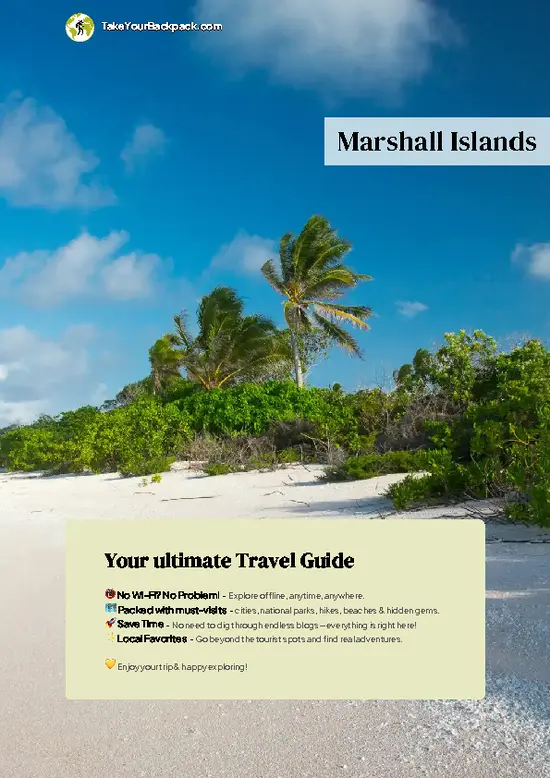
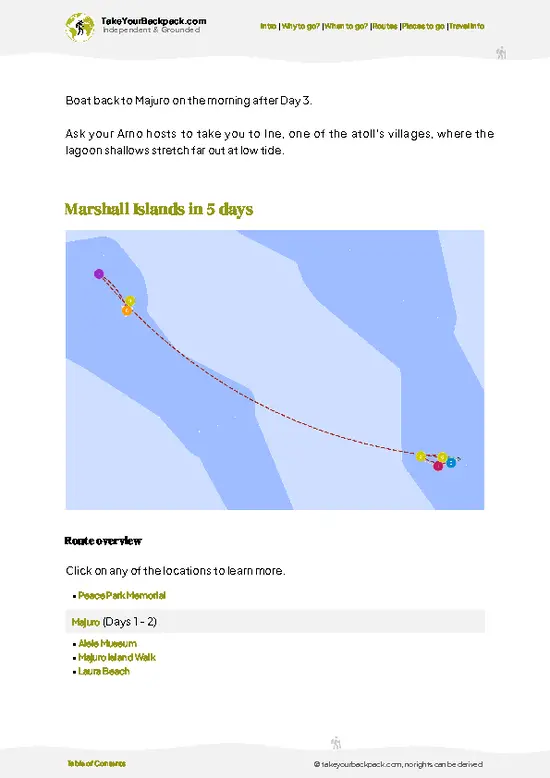
example page 0 from our offline Travel Guide for Marshall Islands
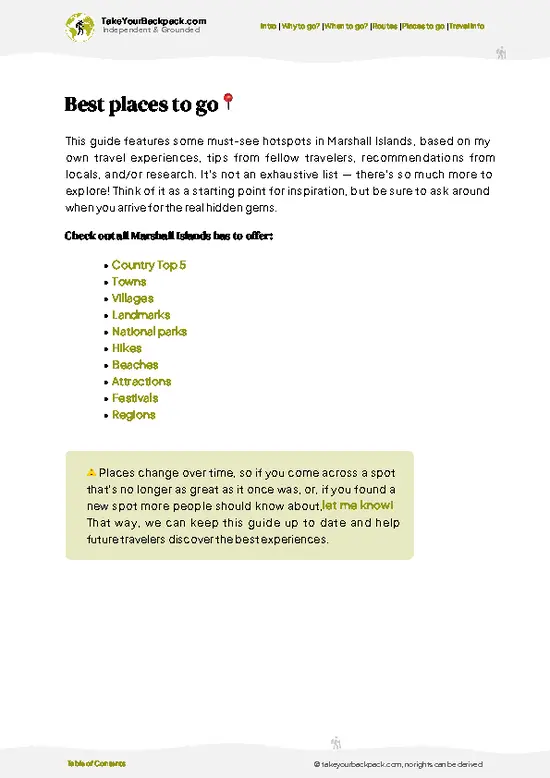
example page 1 from our offline Travel Guide for Marshall Islands
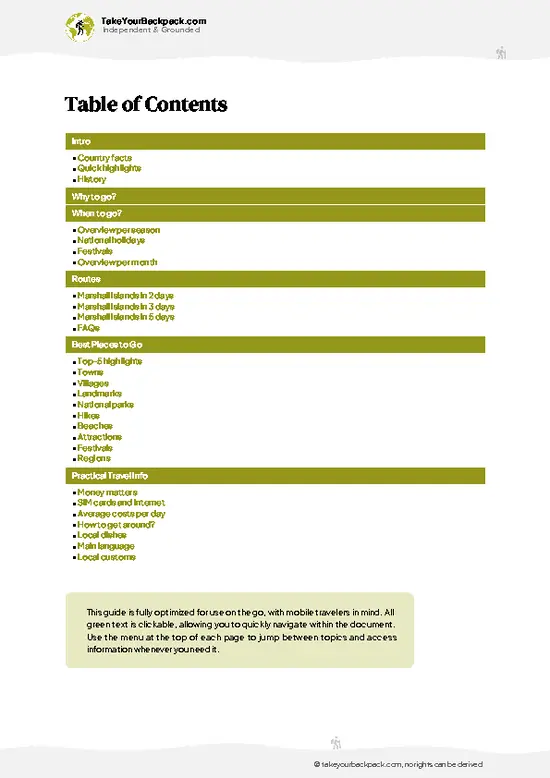
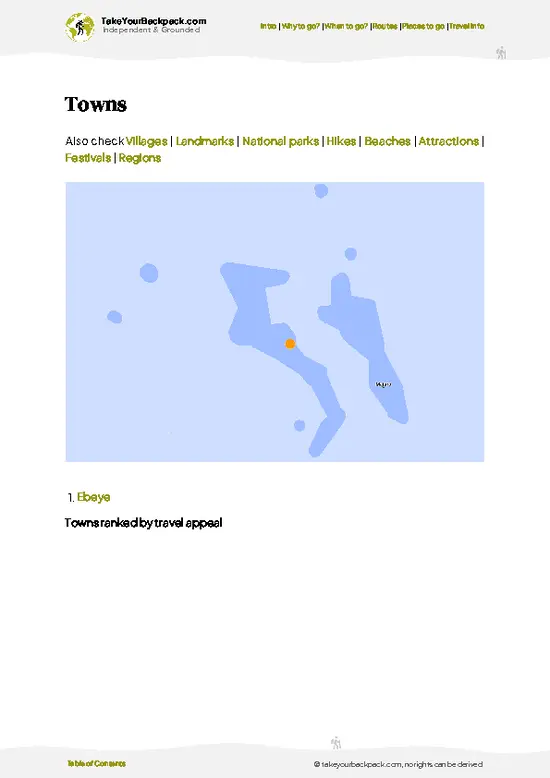
example page 2 from our offline Travel Guide for Marshall Islands
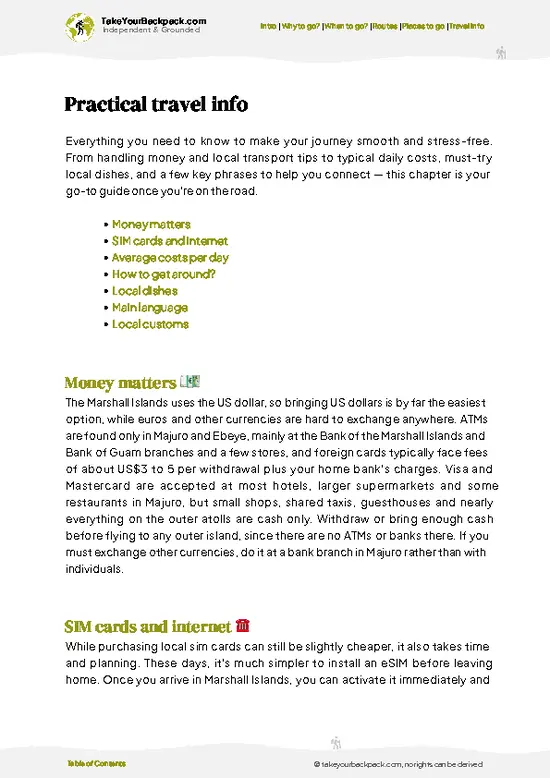
example page 3 from our offline Travel Guide for Marshall Islands
example page 4 from our offline Travel Guide for Marshall Islands
example page 5 from our offline Travel Guide for Marshall Islands
example page 6 from our offline Travel Guide for Marshall Islands
example page 7 from our offline Travel Guide for Marshall Islands
The digital guide (125 pages) contains:
✅ 27 highlights, ranked by travel appeal
✅ Optimized 2, 3 & 5-day travel routes
✅ Cities, national parks, landmarks, beaches
✅ How to get around
✅ Offline-friendly for travel without Wi-Fi
👉 Click to see all 30+ guide features

📅 Plan smarter in minutes, not weeks
✅ Month by month travel advice
✅ Festivals & national holidays
✅ Budget expectations

🗺️ Go to the right places, skip the overrated ones
✅ Honest pros & cons of destinations
✅ Top hikes, parks & viewpoints
✅ Lesser-known places most travelers miss
✅ Clear “worth it vs skip it” guidance

🛏️ Travel smoothly without rookie mistakes
✅ Best areas to stay
✅ Transport systems explained simply
✅ Common scams & safety advice
✅ SIM cards, money & practical tips

🌍 Understand the country, not just visit it
✅ Culture & traditions
✅ 52 Essential phrases & customs
✅ Festivals worth planning around
✅ Traveler-friendly historical context
✅ Insights that make places more meaningful

📱 Built for real travel conditions
✅ Fully downloadable PDF
✅ Works completely offline
✅ Optimized for phone use
✅ Useful in remote areas & buses
✅ Everything in one place
Stop searching, start planning
Get instant access to your full guide. 30‑day money-back guarantee.
+ Add another guide for just

By proceeding you agree to our terms.
Sent to your inbox immediately after payment • 100% Secure Checkout
Best Backpacking Travel Advisor 2025 tourism awardBest Backpacking
Travel Advisor
2025
What others say about Take Your Backpack Guides:
⭐⭐⭐⭐⭐
Fantastic, amazing amount of information!
⭐⭐⭐⭐⭐
My goodness this is amazing, it's what I've been looking for hats off too you!
⭐⭐⭐⭐⭐
I think this is absolutely BRILLIANT
⭐⭐⭐⭐
Very complete and informative. It's still missing places, but I gotta to commend you
⭐⭐⭐⭐⭐
This is truly amazing, thank you, can't wait to explore it with my kids!
⭐⭐⭐⭐⭐
Awesome resource, thank you!
⭐⭐⭐⭐⭐
This is amazing! Can't wait to explore the ones I haven't seen
⭐⭐⭐⭐
I love this! Well done, great idea.
⭐⭐⭐⭐⭐
Thanks for taking the time to make this gem!
⭐⭐⭐⭐⭐
This might be the best website I've ever seen.
⭐⭐⭐⭐⭐
Congratulations, and thank you so much for your work; it's incredibly valuable.
⭐⭐⭐⭐
In all seriousness I think you did a great job pointing out the important spots
⭐⭐⭐⭐⭐
10/10 very good
⭐⭐⭐⭐⭐
As someone who's only just starting to visit regularly this is awesome, thank you.
⭐⭐⭐⭐
Thank you very much! I'm going to visit my dad, it's going to be very useful!
⭐⭐⭐⭐⭐
This is really cool! We'll be travelling for the first time and this definitely come in handy.
⭐⭐⭐⭐⭐
You are now our minister of culture, congratulations 👨‍💼
⭐⭐⭐⭐⭐
Just wanted to tell you that this is a pearl! Going to follow your recommendations.
⭐⭐⭐⭐⭐
This is so cool. I'll definitely be using the resource for my travels soon.
⭐⭐⭐⭐⭐
This is very impressive! Good work.
⭐⭐⭐⭐⭐
This is an amazing and informative site. Very well done!

🛏️ Where to stay?Where to Base Yourself

There are no true hostels in the Marshall Islands, so budget accommodation means simple guesthouses and basic motel rooms, usually around US$80 to 150 a night, with very few beds below that. Most options sit in the Delap, Uliga and Djarrit strip of Majuro, where you are within walking distance or a short shared taxi ride of shops, restaurants, the few bars and the government offices, though traffic noise along the single main road can be constant. For quiet beach evenings, Laura at the western tip of the atoll has a handful of guesthouse-style stays, but it is roughly an hour from town by road with almost no nightlife, while Ebeye on Kwajalein has a few plain rooms that are crowded, cramped … read more 👉
There are no true hostels in the Marshall Islands, so budget accommodation means simple guesthouses and basic motel rooms, usually around US$80 to 150 a night, with very few beds below that. Most options sit in the Delap, Uliga and Djarrit strip of Majuro, where you are within walking distance or a short shared taxi ride of shops, restaurants, the few bars and the government offices, though traffic noise along the single main road can be constant. For quiet beach evenings, Laura at the western tip of the atoll has a handful of guesthouse-style stays, but it is roughly an hour from town by road with almost no nightlife, while Ebeye on Kwajalein has a few plain rooms that are crowded, cramped and mainly practical for onward travel.

If you enjoy meeting fellow travelers, consider choosing hostels with high ratings for atmosphere. On the other hand, if you prefer having your own space, a hotel might be a better option.

Marshall IslandsExpand Your Journey

👋 Meet the founderWho’s Behind Take Your Backpack?

Johan, backpacker and founder of TakeYourBackpackHi, I’m Johan (Netherlands 🇳🇱), the creator of TakeYourBackpack. Over the past 3 decades, I’ve backpacked through 90+ countries across six continents, gaining extensive experience with independent travel, long-term trips, and overland routes.

This site is built on a combination of firsthand travel experience and carefully curated insights from other backpackers. Many guides are based on places I’ve personally visited, while others bring together tips, observations, and practical advice shared by trusted travelers I’ve met along the way.

The goal is to provide realistic, experience-driven guidance — not generic itineraries — so you can explore destinations with better context, clearer expectations, and more confidence.