×

Martinique🇲🇶 | attractionsDistillerie Saint JamesSteam locomotives, copper stills, rum museum, harvest-season aromas | things to do and best time to go

Explore Distillerie J.MExplore Train des Plantations

Backpacking in Distillerie Saint James
🌟 Highlightattraction ranked #3
By Johan Kruseman 🇳🇱 | Updated October 22, 2026

The first thing that hits you is the smell: warm, fermenting cane juice drifting out of the sheds before you even park. Distillerie Saint James sits in Sainte-Marie, on the Atlantic side in the north of Martinique, about 40 minutes by road from Fort-de-France. The tour is short and the museum is small, but the old steam machinery, the railway engines parked outside and a tasting that pours properly make it worth the time. Skip the gift shop crush at midday. Arrive near opening, when the tasting counter is quiet and the staff will chat about the aged rums. The grounds are easy to reach by car, and entry is modest. Across the island in Le François, Habitation Clément is a leafy estate with gardens and modern art, a place to wander. Saint James is the working, industrial one: iron, steam and barrels rather than lawns.

Discover everything you want to know in the 📖 Martinique Travel Guide.


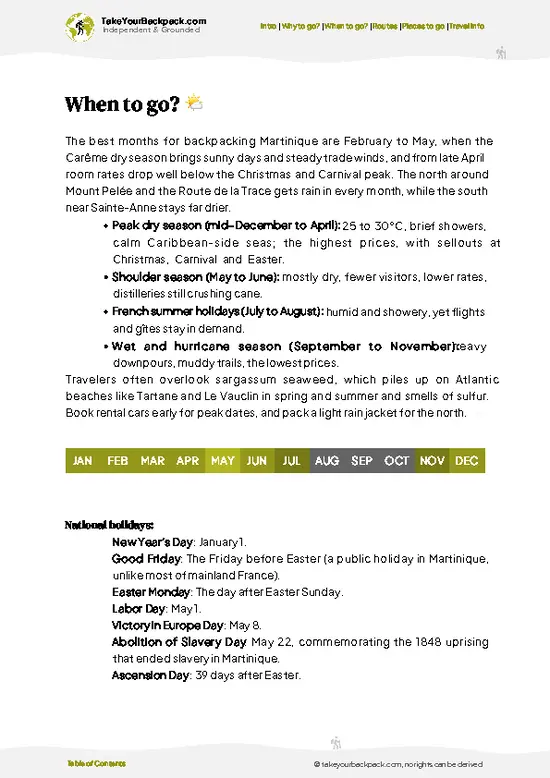
example page 0 from our offline Travel Guide for Martinique
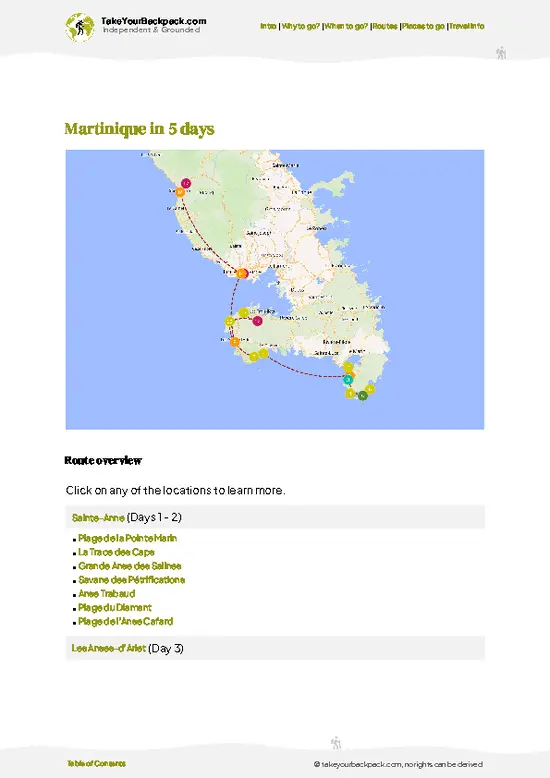
example page 1 from our offline Travel Guide for Martinique
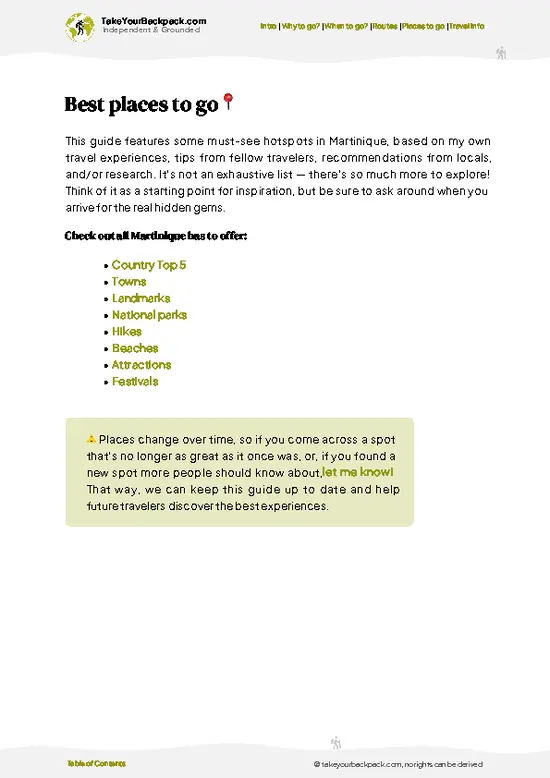
example page 2 from our offline Travel Guide for Martinique
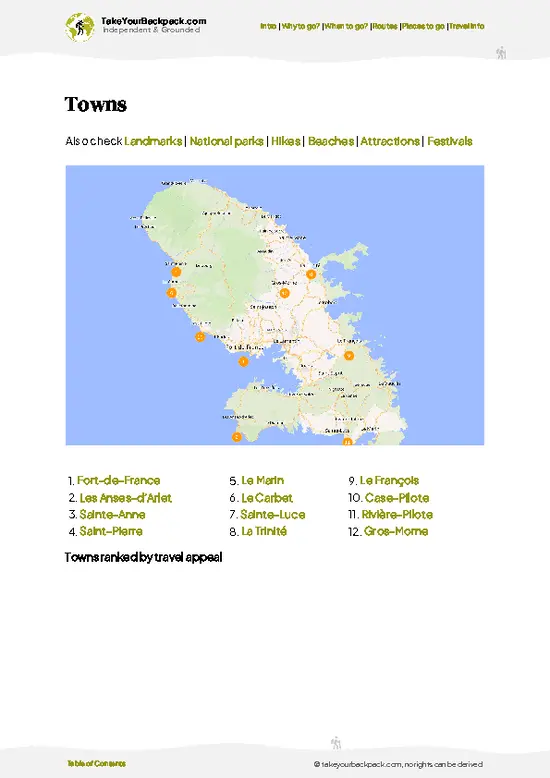
example page 3 from our offline Travel Guide for Martinique
example page 4 from our offline Travel Guide for Martinique
example page 5 from our offline Travel Guide for Martinique
example page 6 from our offline Travel Guide for Martinique
example page 7 from our offline Travel Guide for Martinique
Loading the map 🌍
CLICK TO FILTER
towns
landmarks
national parks
hikes
beaches
attractions
festivals
SHOW COUNTRY’S BESTSHOW ALL

✨ Why go?
Ranked #3 attraction in Martinique
What sets this place apart

Distillerie Saint James is where you learn why Martinique’s rhum agricole tastes nothing like the molasses rum in a supermarket bottle. It is pressed from fresh cane juice, and the AOC Martinique designation protects the style. Seeing the process makes the sip in your glass make sense, and for a rum lover this is the clearest lesson on the island.
The second reason is the setting. The distillery has run since the 1760s, and the steam locomotives and old cane railway parked on the grounds show how heavy cane once moved across the northeast. You do not need to know anything about spirits to enjoy a rusty engine the size of a delivery truck.
It also fits a northern route well. Sainte-Marie sits between the Atlantic coast towns and the road toward Mount Pelée, so the tasting of aged vieux rums makes … read more 👉
Distillerie Saint James is where you learn why Martinique’s rhum agricole tastes nothing like the molasses rum in a supermarket bottle. It is pressed from fresh cane juice, and the AOC Martinique designation protects the style. Seeing the process makes the sip in your glass make sense, and for a rum lover this is the clearest lesson on the island.
The second reason is the setting. The distillery has run since the 1760s, and the steam locomotives and old cane railway parked on the grounds show how heavy cane once moved across the northeast. You do not need to know anything about spirits to enjoy a rusty engine the size of a delivery truck.
It also fits a northern route well. Sainte-Marie sits between the Atlantic coast towns and the road toward Mount Pelée, so the tasting of aged vieux rums makes a natural midday break before more driving. It is a place to learn something and still be back on the road within two hours.

💡 HighlightsDon't-miss highlights and experiences

  1. The Saint James Museum: Old stills, copper tools, bottle displays and vintage posters trace the story of the house and its famous labels. Small, but a good primer before tasting.
  2. The Distillery Tour: Walk past the cane mill and the fermentation and distillation areas. During harvest season you smell the crushed cane and hot juice, and see the column stills working.
  3. The Rum Tasting: The best part for most visitors. You sample white rum, amber and aged vieux, and the contrast between sharp, grassy white and smooth oak-rounded vieux shows what agricole means.
  4. The Steam Locomotive Collection: Several old engines and cane wagons stand outside. They once carried harvested cane to the mill, and they photograph well against the green hills.
  5. The Aging Cellars: Barrels rest in warm, sweet-smelling storage
… read more 👉
  1. The Saint James Museum: Old stills, copper tools, bottle displays and vintage posters trace the story of the house and its famous labels. Small, but a good primer before tasting.
  2. The Distillery Tour: Walk past the cane mill and the fermentation and distillation areas. During harvest season you smell the crushed cane and hot juice, and see the column stills working.
  3. The Rum Tasting: The best part for most visitors. You sample white rum, amber and aged vieux, and the contrast between sharp, grassy white and smooth oak-rounded vieux shows what agricole means.
  4. The Steam Locomotive Collection: Several old engines and cane wagons stand outside. They once carried harvested cane to the mill, and they photograph well against the green hills.
  5. The Aging Cellars: Barrels rest in warm, sweet-smelling storage rooms. You see the casks that turn clear spirit into amber rum, and smell the evaporating alcohol in the air.
  6. The Distillery Shop: Bottles here include vintage releases and limited editions that are harder to find elsewhere. A good place to buy a gift, as long as you can carry it home.
  7. The Cane Fields and Grounds: Short strolls around the property show the sugar cane growing in the surrounding valley and give a sense of the working landscape.
Allow about two hours for all of it, a bit longer if you linger over the tasting.
Spotted a mistake or missing something? Contact us.

Things to do near Distillerie Saint James

Ratings based on Tripadvisor reviews. When you book through this link, you support our work at no extra cost to you.

🌤️ When to go?Seasonal considerations and timing

  • Harvest and Distilling Season (February to June): Distillerie Saint James runs its cane mill and stills during the grinding campaign, so you can smell fermenting cane juice on a tour. Days sit at 24 to 31°C (75 to 88°F), dry and sunny, with roughly 11 to 12 hours of daylight.
  • Rainy and Hurricane Season (July to November): Expect 25 to 32°C (77 to 90°F), heavy showers, humidity and peak hurricane risk from August to October. Crowds thin and some flights and rentals get cheaper, but the distillery train museum area gets muddy.
  • Peak Holidays (mid-December to April): Cruise ships and French holidaymakers fill the Sainte-Marie area, and accommodation prices climb 20 to 40 percent. Mornings are quietest.
  • Daily Timing: Arrive at opening, before tour buses roll in around late morning.
Book your visit … read more 👉
  • Harvest and Distilling Season (February to June): Distillerie Saint James runs its cane mill and stills during the grinding campaign, so you can smell fermenting cane juice on a tour. Days sit at 24 to 31°C (75 to 88°F), dry and sunny, with roughly 11 to 12 hours of daylight.
  • Rainy and Hurricane Season (July to November): Expect 25 to 32°C (77 to 90°F), heavy showers, humidity and peak hurricane risk from August to October. Crowds thin and some flights and rentals get cheaper, but the distillery train museum area gets muddy.
  • Peak Holidays (mid-December to April): Cruise ships and French holidaymakers fill the Sainte-Marie area, and accommodation prices climb 20 to 40 percent. Mornings are quietest.
  • Daily Timing: Arrive at opening, before tour buses roll in around late morning.
Book your visit for a weekday morning in February to May for the best mix of working machinery, dry weather and calm.


source: climatestotravel.comJANJanuary: excellent for travelingFEBFebruary: highly recommended for travelingMARMarch: excellent for travelingAPRApril: highly recommended for travelingMAYMay: fair for travelingJUNJune: fair for travelingJULJuly: fair for travelingAUGAugust: fair for travelingSEPSeptember: below average for travelingOCTOctober: fair for travelingNOVNovember: highly recommended for travelingDECDecember: excellent for traveling
martinique-attraction-distillerie-saint-james
© Google |

✈️ The backpacker research shortcutMartinique Travel Guide

An offline-friendly backpacking guide with optimized travel routes, ranked highlights, transport advice, and the best areas to stay.
example page 0 from our offline Travel Guide for Martinique
example page 1 from our offline Travel Guide for Martinique
example page 2 from our offline Travel Guide for Martinique
example page 3 from our offline Travel Guide for Martinique
example page 4 from our offline Travel Guide for Martinique
example page 5 from our offline Travel Guide for Martinique
example page 6 from our offline Travel Guide for Martinique
example page 7 from our offline Travel Guide for Martinique
The digital guide (180 pages) contains:
✅ 43 highlights, ranked by travel appeal
✅ Optimized 2, 3 & 5-day travel routes
✅ Cities, national parks, landmarks, beaches
✅ How to get around
✅ Offline-friendly for travel without Wi-Fi
👉 Click to see all 30+ guide features

📅 Plan smarter in minutes, not weeks
✅ Month by month travel advice
✅ Festivals & national holidays
✅ Budget expectations

🗺️ Go to the right places, skip the overrated ones
✅ Honest pros & cons of destinations
✅ Top hikes, parks & viewpoints
✅ Lesser-known places most travelers miss
✅ Clear “worth it vs skip it” guidance

🛏️ Travel smoothly without rookie mistakes
✅ Best areas to stay
✅ Transport systems explained simply
✅ Common scams & safety advice
✅ SIM cards, money & practical tips

🌍 Understand the country, not just visit it
✅ Culture & traditions
✅ 52 Essential phrases & customs
✅ Festivals worth planning around
✅ Traveler-friendly historical context
✅ Insights that make places more meaningful

📱 Built for real travel conditions
✅ Fully downloadable PDF
✅ Works completely offline
✅ Optimized for phone use
✅ Useful in remote areas & buses
✅ Everything in one place
Stop searching, start planning
Get instant access to your full guide. 30‑day money-back guarantee.
+ Add another guide for just

By proceeding you agree to our terms.
Sent to your inbox immediately after payment • 100% Secure Checkout
Best Backpacking Travel Advisor 2025 tourism awardBest Backpacking
Travel Advisor
2025
What others say about Take Your Backpack Guides:
⭐⭐⭐⭐⭐
Fantastic, amazing amount of information!
⭐⭐⭐⭐⭐
My goodness this is amazing, it's what I've been looking for hats off too you!
⭐⭐⭐⭐⭐
I think this is absolutely BRILLIANT
⭐⭐⭐⭐
Very complete and informative. It's still missing places, but I gotta to commend you
⭐⭐⭐⭐⭐
This is truly amazing, thank you, can't wait to explore it with my kids!
⭐⭐⭐⭐⭐
Awesome resource, thank you!
⭐⭐⭐⭐⭐
This is amazing! Can't wait to explore the ones I haven't seen
⭐⭐⭐⭐
I love this! Well done, great idea.
⭐⭐⭐⭐⭐
Thanks for taking the time to make this gem!
⭐⭐⭐⭐⭐
This might be the best website I've ever seen.
⭐⭐⭐⭐⭐
Congratulations, and thank you so much for your work; it's incredibly valuable.
⭐⭐⭐⭐
In all seriousness I think you did a great job pointing out the important spots
⭐⭐⭐⭐⭐
10/10 very good
⭐⭐⭐⭐⭐
As someone who's only just starting to visit regularly this is awesome, thank you.
⭐⭐⭐⭐
Thank you very much! I'm going to visit my dad, it's going to be very useful!
⭐⭐⭐⭐⭐
This is really cool! We'll be travelling for the first time and this definitely come in handy.
⭐⭐⭐⭐⭐
You are now our minister of culture, congratulations 👨‍💼
⭐⭐⭐⭐⭐
Just wanted to tell you that this is a pearl! Going to follow your recommendations.
⭐⭐⭐⭐⭐
This is so cool. I'll definitely be using the resource for my travels soon.
⭐⭐⭐⭐⭐
This is very impressive! Good work.
⭐⭐⭐⭐⭐
This is an amazing and informative site. Very well done!

🛏️ Where to stay?Choosing the right base

Sainte-Marie itself is the closest base, but the real backpacker bases are Le Marigot and Trinité on the Atlantic coast, with Fort-de-France as the social hub. Sainte-Marie is a small, quiet town with a few guesthouses and gîtes, ideal if you want to walk to the distillery and the Banana Museum area. It is very safe, though evenings are sleepy and eating options close early.

Trinité, about 15 minutes by road toward the Caravelle peninsula, has more bakeries, grocery stores and local buses, and suits those with a rental car or who enjoy a slower pace. Le Marigot, on the northern route, gives you … read more 👉
Sainte-Marie itself is the closest base, but the real backpacker bases are Le Marigot and Trinité on the Atlantic coast, with Fort-de-France as the social hub. Sainte-Marie is a small, quiet town with a few guesthouses and gîtes, ideal if you want to walk to the distillery and the Banana Museum area. It is very safe, though evenings are sleepy and eating options close early.

Trinité, about 15 minutes by road toward the Caravelle peninsula, has more bakeries, grocery stores and local buses, and suits those with a rental car or who enjoy a slower pace. Le Marigot, on the northern route, gives you cheaper family-run rooms and access to the Route de la Trace and Mont Pelée hikes.

Fort-de-France is where you find hostel-style dorms, other solo travelers and nightlife, plus the main bus and shared taxi hub. The trade-off is a 45 to 60 minute trip to the distillery. Stay there if you want company and plan to rent a car or share a ride with other travelers. Gîtes and Airbnb rooms in the countryside fill quickly in winter, so reserve early.

👛 Costs (as of 22 October 2026)How expensive it really is

Distillerie Saint James costs roughly €62 to 95 a day for a backpacker visiting by rental car or shared ride, with the tour itself being a small share of that. Most of the cost is getting there and eating. Travelers pay in euros.
CategoryBudget RangeLocal Reality
Distillery entry€0 to 8Visiting the grounds, museum and tasting room is often free or low cost; guided options cost a little more.
Tasting and bottles€5 to 25Aged rhum agricole bottles run from about €20 to over €60 for older vintages.
Transport€10 to 40Rental cars from about €35 a day; public buses and shared taxis are cheaper but infrequent to Sainte-Marie.
Accommodation (high season)€25 to 45Dorm beds in Fort-de-France or a simple room in a gîte; prices are higher from December to April.
Food€12 to 22Bakery lunch, creole plate of the
… read more 👉
Distillerie Saint James costs roughly €62 to 95 a day for a backpacker visiting by rental car or shared ride, with the tour itself being a small share of that. Most of the cost is getting there and eating. Travelers pay in euros.
CategoryBudget RangeLocal Reality
Distillery entry€0 to 8Visiting the grounds, museum and tasting room is often free or low cost; guided options cost a little more.
Tasting and bottles€5 to 25Aged rhum agricole bottles run from about €20 to over €60 for older vintages.
Transport€10 to 40Rental cars from about €35 a day; public buses and shared taxis are cheaper but infrequent to Sainte-Marie.
Accommodation (high season)€25 to 45Dorm beds in Fort-de-France or a simple room in a gîte; prices are higher from December to April.
Food€12 to 22Bakery lunch, creole plate of the day at a roadside snack or restaurant.
Total Daily Budget€62 to 95Per person, per day, in high season.
⚠️ Prices can change and everyone travels differently, so take this as a rough guide. Hope it helps you plan your adventure!

FAQCommon questions from travelers

Plan on 1.5 to 2.5 hours at Distillerie Saint James. A guided tour and tasting take about an hour, and the small train museum and grounds add another 30 to 45 minutes. If you add the nearby Banana Museum or Sainte-Marie town, allow half a day.
Distillerie Saint James is worth a visit for the working rhum agricole production, the old sugar and rum railway exhibits and a tasting of aged bottles. Entry to the grounds and shop is typically free or costs under €8, with guided options costing a little more. Bottles from about €20 are the main spend, and the tasting alone makes the stop reasonable.
Distillerie Saint James lies in Sainte-Marie on the Atlantic coast, roughly 40 km (25 miles) and 50 to 60 minutes by car north of Fort-de-France. A rental car from about €35 a day is the easiest option. Buses and shared taxis run toward Sainte-Marie from Fort-de-France, but the service is infrequent, so plan for a taxi or hitching the last stretch.
⚠️ Things can change over time, so always validate details locally before you go.

Other Martinican attractions near Distillerie Saint James

Explore more nearby:

  • Train des Plantations—Narrated narrow-gauge loop, banana bags, cane fields, windward coast| 0 km away
  • Distillerie J.M—AOC agricole rum, Macouba slopes, vieux cellar, limited vintages| 17 km away
  • Distillerie Depaz—Volcanic ash cane, Creole mansion, Pelée backdrop, aging chai| 18 km away

💡 Not sure where to go next?
Create a personalized itinerary for Martinique including Distillerie Saint James and the places that fit your trip.

Generate my itinerary

👉 Discover all attractions

Or checkout all Martinique has to offer (think cities, towns, villages, national parks, hikes, beaches, festivals)
Country photo of Martinique

We 💚 feedbackWhat to keep in mind

Distillerie Saint James pairs well with Habitation Clément for a full rum day, then a drive up toward Mount Pelée and the northern coast. I would visit Saint James first, when the tasting is quiet, and bring a bag for bottles so you are not buying a box you cannot carry. Designate a driver.

✍️ Help improve this page!
The information on this page is based on in-depth research, insights shared by experienced travelers, and feedback from the local travel community in Martinique. While every effort is made to keep the information accurate and current, conditions can change — so if you spot anything incorrect or outdated, please get in touch.


🙋‍♂️ Give feedback

👋 Meet the founderWho’s Behind Take Your Backpack?

Johan, backpacker and founder of TakeYourBackpackHi, I’m Johan (Netherlands 🇳🇱), the creator of TakeYourBackpack. Over the past 3 decades, I’ve backpacked through 90+ countries across six continents, gaining extensive experience with independent travel, long-term trips, and overland routes.

This site is built on a combination of firsthand travel experience and carefully curated insights from other backpackers. Many guides are based on places I’ve personally visited, while others bring together tips, observations, and practical advice shared by trusted travelers I’ve met along the way.

The goal is to provide realistic, experience-driven guidance — not generic itineraries — so you can explore destinations with better context, clearer expectations, and more confidence.