×

Martinique🇲🇶 | attractionsMusée d’Histoire et d’Ethnographie de Fort-de-Francecolonial mansion, Creole artifacts, period furnishings | things to do and best time to go

Explore Fort Saint-LouisExplore JM distillery

Backpacking in Musée d’Histoire et d’Ethnographie de Fort-de-France
👌 Worth visitingattraction ranked #6
By Johan Kruseman 🇳🇱 | Updated April 6, 2026

A ceiling fan stirs the humid air as you lean in, nose-to-glass, squinting at a faded plantation ledger inked in looping script. The room smells faintly of old wood polish and paper. Outside, the traffic of Fort-de-France hums, but in here, time feels sticky and slow.

The Musée d’Histoire et d’Ethnographie sits just off the city’s main drag, tucked inside a 19th-century Creole mansion in the heart of Martinique’s capital. Here’s the straight talk: you won’t find crowds jostling for selfies or blockbuster exhibits with audio guides in six languages. The entry fee is pocket change compared to the island’s headline-grabbing rum tours or botanical gardens. But this place isn’t about spectacle—it’s about context. You get raw, unvarnished stories: slavery, colonialism, creole identity, all packed into rooms that feel more like someone’s home than a museum. It’s not adrenaline, it’s introspection. If you want a break from the Instagram parade and a real shot of Martinique’s soul, this is where you get it—quiet, unfiltered, and absolutely worth the hour.

Discover everything you want to know in the 📖 Martinique Travel Guide.
Loading the map 🌍
CLICK TO FILTER
town
unique site
national park
hike
beach
attraction
festival
region
SHOW COUNTRY’S BESTSHOW ALL

✨ Why go?
Ranked #6 attraction in Martinique
Why Musée d’Histoire et d’Ethnographie de Fort-de-France should be on your travel list

The Musée d’Histoire et d’Ethnographie de Fort-de-France isn’t your typical tourist checkbox. Sure, it’s not a flashy, Instagram-ready hotspot swarming with selfie sticks, but that’s exactly why backpackers carve out time here. This museum is a deep dive into Martinique’s raw, complex identity—far beyond the postcard beaches. It’s where you confront the island’s layered history: colonialism, slavery, and the vibrant Creole culture that emerged from that struggle. The exhibits don’t sugarcoat; they challenge you to understand the scars and resilience that shape Martinique today.

For backpackers grinding through the island’s country routes, this museum is a crucial milestone. It’s a mental reset, grounding you in context before you hit the natural wonders or street markets. The effort-to-reward … read more 👉
The Musée d’Histoire et d’Ethnographie de Fort-de-France isn’t your typical tourist checkbox. Sure, it’s not a flashy, Instagram-ready hotspot swarming with selfie sticks, but that’s exactly why backpackers carve out time here. This museum is a deep dive into Martinique’s raw, complex identity—far beyond the postcard beaches. It’s where you confront the island’s layered history: colonialism, slavery, and the vibrant Creole culture that emerged from that struggle. The exhibits don’t sugarcoat; they challenge you to understand the scars and resilience that shape Martinique today.

For backpackers grinding through the island’s country routes, this museum is a crucial milestone. It’s a mental reset, grounding you in context before you hit the natural wonders or street markets. The effort-to-reward ratio is high because the museum’s compact size means you get a concentrated dose of history and ethnography without wasting hours. Plus, the entry cost is modest—no tourist trap pricing here—making it accessible for those who want substance over spectacle.

If you want to move beyond surface-level travel and actually grasp what makes Martinique tick, this museum is non-negotiable. It’s the kind of place that sticks with you long after you’ve left.
Get the complete Travel Guide for Martinique
Everything organized for offline planning — routes, highlights, costs & tips

See what’s inside 👉

Get the Travel Guide -

💡 HighlightsWhat this place is best known for

The Creole Room
This isn’t your average “old stuff in glass cases” situation. The Creole Room is a time capsule of Martinican daily life, packed with objects that actually tell stories—handmade furniture, battered kitchen tools, and the kind of embroidered linens your grandmother would guard with her life. You get a tactile sense of how people lived, worked, and celebrated here, long before Instagram made Creole chic. It’s not sanitized nostalgia; it’s real, sometimes rough, and all the more fascinating for it.


Colonial-Era Documents and Maps
If you want to understand Martinique beyond the tourist-brochure gloss, this is where you start. The museum’s collection of colonial documents and maps is a crash course in the island’s tangled history—slavery, sugar, and the relentless push-pull between … read more 👉
The Creole Room
This isn’t your average “old stuff in glass cases” situation. The Creole Room is a time capsule of Martinican daily life, packed with objects that actually tell stories—handmade furniture, battered kitchen tools, and the kind of embroidered linens your grandmother would guard with her life. You get a tactile sense of how people lived, worked, and celebrated here, long before Instagram made Creole chic. It’s not sanitized nostalgia; it’s real, sometimes rough, and all the more fascinating for it.


Colonial-Era Documents and Maps
If you want to understand Martinique beyond the tourist-brochure gloss, this is where you start. The museum’s collection of colonial documents and maps is a crash course in the island’s tangled history—slavery, sugar, and the relentless push-pull between cultures. You’ll see original decrees, hand-drawn maps, and brittle papers that survived hurricanes and revolutions. It’s not pretty, but it’s powerful. The rawness of these artifacts gives you a front-row seat to the forces that shaped the Caribbean.


Traditional Costumes and Textiles
Forget the costume parties and staged “cultural nights” at resorts. Here, you get up close with the real deal: madras fabrics, headscarves folded with mathematical precision, and dresses that blend African, European, and Indian influences. The museum doesn’t just show you the clothes—it explains the codes, the social signals, and the pride stitched into every seam. If you want to understand Martinique’s soul, start with its textiles.


Permanent Ethnographic Exhibition
This is the museum’s backbone. It’s a dense, sometimes chaotic, but always absorbing walk through Martinique’s cultural DNA. Expect everything from musical instruments to religious artifacts, carnival masks to agricultural tools. The curation isn’t flashy, but it’s honest. You’ll leave with a sense of how diverse—and sometimes contradictory—Martinican identity really is. It’s not about “exotic” trinkets; it’s about the messy, beautiful reality of a place that’s always been more complex than its postcard image.


The Building Itself
Don’t skip the architecture. The museum is housed in a 19th-century Creole mansion that’s as much a relic as anything inside. The creaking wooden floors, wrought-iron balconies, and high-ceilinged rooms ooze character. It’s a rare survivor of Fort-de-France’s colonial past, and wandering its halls gives you a sense of what the city looked and felt like before concrete and cruise ships took over. The building is a living exhibit—weathered, dignified, and impossible to fake.
Spotted a mistake or missing something? Contact us.

Things to do around Musée d’Histoire et d’Ethnographie de Fort-de-France

Ratings based on Tripadvisor reviews. When you book through this link, you support our work at no extra cost to you.

🌤️ When to go?When to go for the best experience


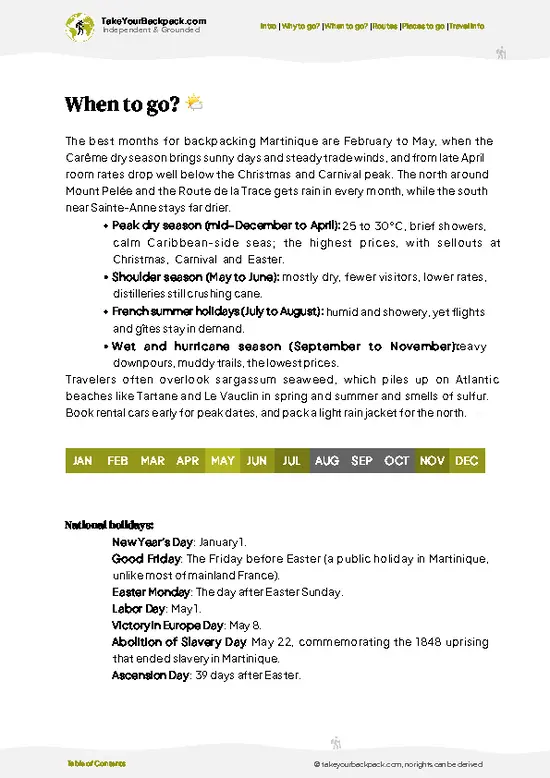
  • Weather: Martinique’s tropical climate means it’s hot and humid most of the year. The dry season from December to April offers more comfortable conditions with less rain, while May to November is wetter and can be muggy, sometimes interrupted by brief, intense showers.

  • Temperature: Expect highs around 28-31°C (82-88°F) year-round. Nights cool down to a mild 22-24°C (72-75°F), but the dry season feels less oppressive, making museum visits more pleasant without the sticky sweat factor.

  • Daylight Hours: Daylight is fairly consistent, roughly 11 to 12 hours daily. From December to February, days are slightly shorter, but the museum’s indoor setting means daylight isn’t a dealbreaker.

  • Crowds: Peak tourist season aligns with the dry months, especially December through March. The museum can
read more 👉

  • Weather: Martinique’s tropical climate means it’s hot and humid most of the year. The dry season from December to April offers more comfortable conditions with less rain, while May to November is wetter and can be muggy, sometimes interrupted by brief, intense showers.

  • Temperature: Expect highs around 28-31°C (82-88°F) year-round. Nights cool down to a mild 22-24°C (72-75°F), but the dry season feels less oppressive, making museum visits more pleasant without the sticky sweat factor.

  • Daylight Hours: Daylight is fairly consistent, roughly 11 to 12 hours daily. From December to February, days are slightly shorter, but the museum’s indoor setting means daylight isn’t a dealbreaker.

  • Crowds: Peak tourist season aligns with the dry months, especially December through March. The museum can get busy with cruise ship visitors during these months, so early mornings or late afternoons are your best bet to avoid the crush.

  • Seasonal Activities: Cultural events like Martinique’s Carnival in February bring vibrant energy to Fort-de-France but also spike local crowds and prices. Visiting outside these festivities offers a quieter, more reflective museum experience.

  • Price Fluctuations: Entrance fees remain stable year-round, but accommodation and flights spike in the dry season and during Carnival. Budget travelers will find better deals from May to November, though weather trade-offs apply.


Pro-tip: Aim for late April or early May—just after the dry season but before the heavy rains—when the museum is less crowded, the air is still manageable, and prices start to dip.


source: climatestotravel.comJANJanuary: highly recommended for travelingFEBFebruary: good for travelingMARMarch: highly recommended for travelingAPRApril: highly recommended for travelingMAYMay: highly recommended for travelingJUNJune: good for travelingJULJuly: good for travelingAUGAugust: good for travelingSEPSeptember: fair for travelingOCTOctober: fair for travelingNOVNovember: good for travelingDECDecember: highly recommended for traveling
martinique-attraction-musee-dhistoire-et-dethnographie-de-fort-de-france
© Google |

✈️ The backpacker research shortcutMartinique Travel Guide

An offline-friendly backpacking guide with optimized travel routes, ranked highlights, transport advice, and the best areas to stay.
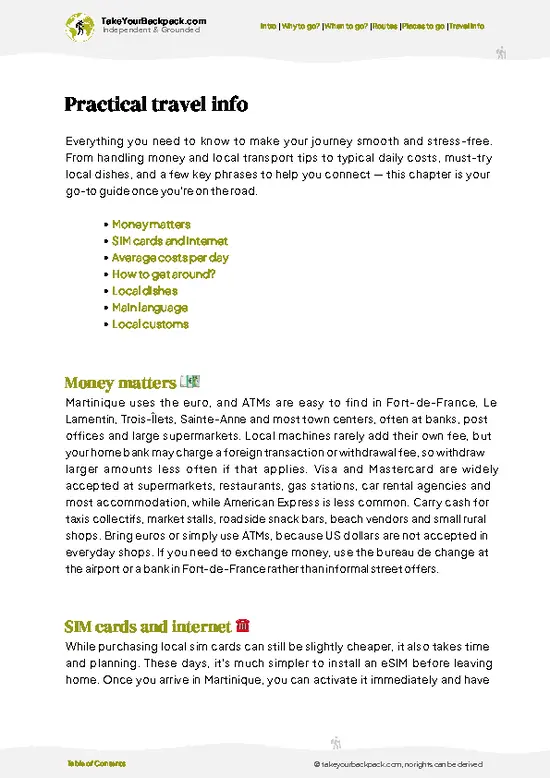
example page 0 from our offline Travel Guide for Martiniqueexample page 1 from our offline Travel Guide for Martiniqueexample page 2 from our offline Travel Guide for Martiniqueexample page 3 from our offline Travel Guide for Martiniqueexample page 4 from our offline Travel Guide for Martiniqueexample page 5 from our offline Travel Guide for Martiniqueexample page 6 from our offline Travel Guide for Martiniqueexample page 7 from our offline Travel Guide for Martinique
The digital guide (206 pages) contains:
50 highlights, ranked by travel appeal
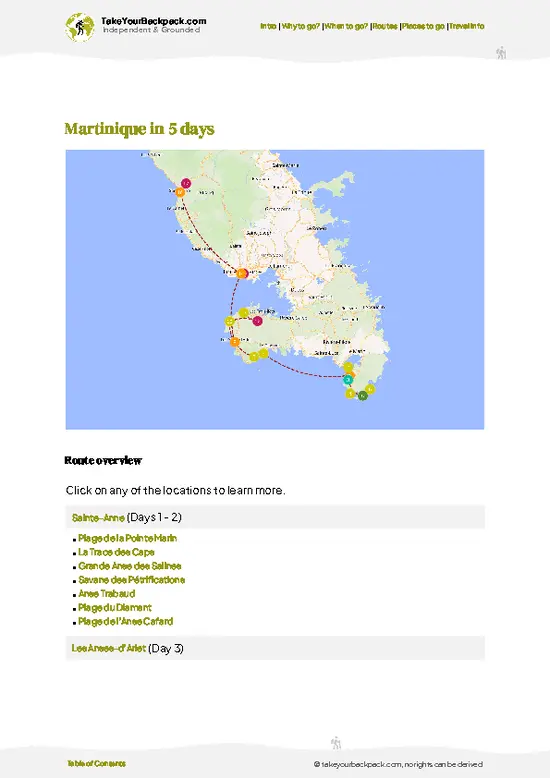
Optimized 2, 3 & 5-day travel routes
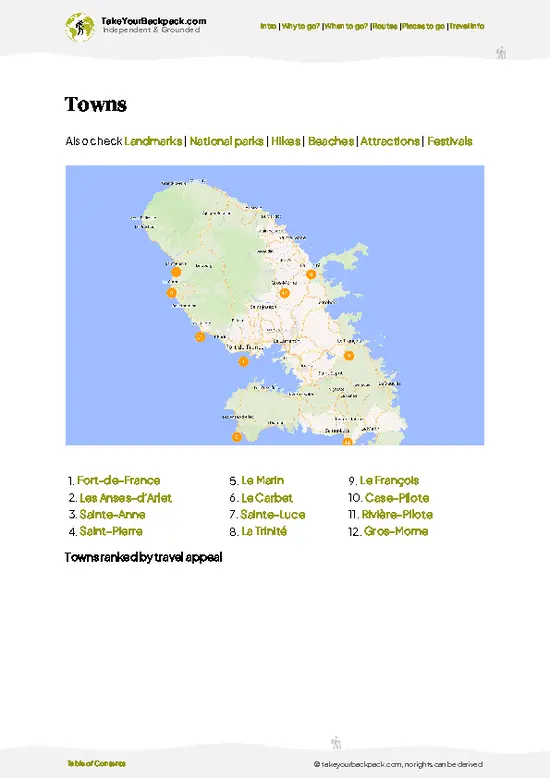
Cities, national parks, beaches, historical sites, ...
How to get around
Offline-friendly for travel without Wi-Fi
👉 Click to see all 30+ guide features

📅 Plan smarter in minutes, not weeks
Month by month travel advice
Festivals & national holidays
Budget expectations

🗺️ Go to the right places, skip the overrated ones
Honest pros & cons of destinations
Top hikes, parks & viewpoints
Lesser-known places most travelers miss
Clear “worth it vs skip it” guidance

🛏️ Travel smoothly without rookie mistakes
Best areas to stay
Transport systems explained simply
Common scams & safety advice
SIM cards, money & practical tips

🌍 Understand the country, not just visit it
Culture & traditions
52 Essential phrases & customs
Festivals worth planning around
Traveler-friendly historical context
Insights that make places more meaningful

📱 Built for real travel conditions
Fully downloadable PDF
Works completely offline
Optimized for phone use
Useful in remote areas & buses
Everything in one place
Save weeks of stressful planning
Get instant access to the full guide directly. 30-day money-back guarantee.


Sent to your inbox immediately after payment • 100% Secure Checkout
Best Backpacking Travel Advisor 2025 tourism awardBest Backpacking
Travel Advisor
2025
What others say about Take Your Backpack Guides:
⭐⭐⭐⭐⭐
Fantastic, amazing amount of information!
⭐⭐⭐⭐⭐
My goodness this is amazing, it's what I've been looking for hats off too you!
⭐⭐⭐⭐⭐
I think this is absolutely BRILLIANT
⭐⭐⭐⭐
Very complete and informative. It's still missing places, but I gotta to commend you
⭐⭐⭐⭐⭐
This is truly amazing, thank you, can't wait to explore it with my kids!
⭐⭐⭐⭐⭐
Awesome resource, thank you!
⭐⭐⭐⭐⭐
This is amazing! Can't wait to explore the ones I haven't seen
⭐⭐⭐⭐
I love this! Well done, great idea.
⭐⭐⭐⭐⭐
Thanks for taking the time to make this gem!
⭐⭐⭐⭐⭐
This might be the best website I've ever seen.
⭐⭐⭐⭐⭐
Congratulations, and thank you so much for your work; it's incredibly valuable.
⭐⭐⭐⭐
In all seriousness I think you did a great job pointing out the important spots
⭐⭐⭐⭐⭐
10/10 very good
⭐⭐⭐⭐⭐
As someone who's only just starting to visit regularly this is awesome, thank you.
⭐⭐⭐⭐
Thank you very much! I'm going to visit my dad, it's going to be very useful!
⭐⭐⭐⭐⭐
This is really cool! We'll be travelling for the first time and this definitely come in handy.
⭐⭐⭐⭐⭐
You are now our minister of culture, congratulations 👨‍💼
⭐⭐⭐⭐⭐
Just wanted to tell you that this is a pearl! Going to follow your recommendations.
⭐⭐⭐⭐⭐
This is so cool. I'll definitely be using the resource for my travels soon.
⭐⭐⭐⭐⭐
This is very impressive! Good work.
⭐⭐⭐⭐⭐
This is an amazing and informative site. Very well done!

🛏️ Where to stay?How to pick the right area

If you’re aiming to soak in the Musée d’Histoire et d’Ethnographie de Fort-de-France without selling your soul to overpriced tourist traps, your best bet is to camp out in the heart of Fort-de-France itself. This city center isn’t just a convenient launchpad; it’s where the pulse of local life beats strongest. You’ll find a mix of safe, lively neighborhoods that attract budget travelers and solo backpackers who want to dive into authentic Martinican culture without the fluff.

Forget the glossy postcards—this area can get busy, especially during peak hours, but that’s part of its charm. The streets … read more 👉
If you’re aiming to soak in the Musée d’Histoire et d’Ethnographie de Fort-de-France without selling your soul to overpriced tourist traps, your best bet is to camp out in the heart of Fort-de-France itself. This city center isn’t just a convenient launchpad; it’s where the pulse of local life beats strongest. You’ll find a mix of safe, lively neighborhoods that attract budget travelers and solo backpackers who want to dive into authentic Martinican culture without the fluff.

Forget the glossy postcards—this area can get busy, especially during peak hours, but that’s part of its charm. The streets buzz with street vendors, local markets, and cafés where you can eavesdrop on Creole conversations while sipping a strong coffee. It’s social without being staged, and you’ll meet other travelers who are here for the real deal, not just a quick selfie.

Safety-wise, stick to well-lit streets around the city center and the nearby waterfront. These spots are popular for a reason: they balance accessibility with a genuine vibe. You won’t find the polished luxury of resort zones, but you will find affordable guesthouses and shared accommodations where the community feel is strong. This is where you trade tourist gloss for gritty, lived-in authenticity—and that’s the real magic of Fort-de-France.

👛 Costs (as of 15 January 2026)Money, prices, and spending tips

⚠️ Prices can change and everyone travels differently, so take this as a rough guide. Hope it helps you plan your adventure!

Other Martinican attractions near Musée d’Histoire et d’Ethnographie de Fort-de-France

Explore more nearby:

  • Fort Saint-Louis—seaside fortress, naval architecture, panoramic ramparts| 1 km away
  • Musée de la Pagerie—birthplace of Empress Josephine, sugar estate ruins, 18th-century relics| 9 km away
  • the plantation train—open-air carriages, sugarcane fields, heritage railway| 9 km away

👉 Discover all attractions

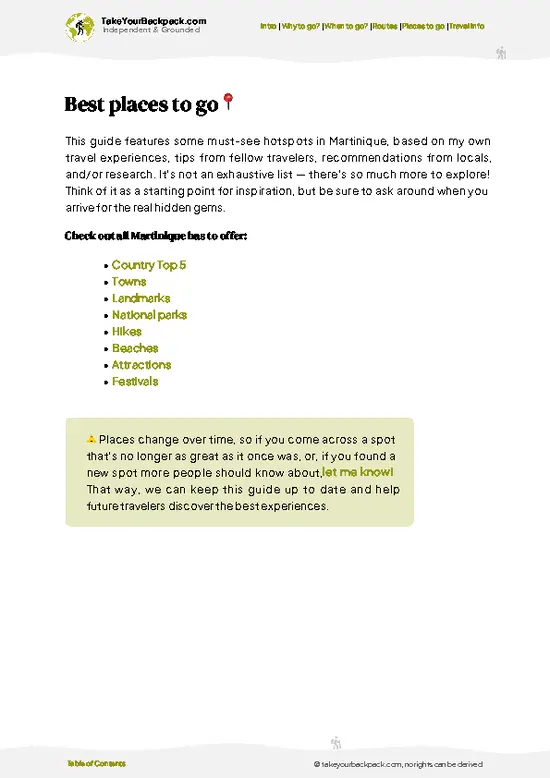
Or checkout all Martinique has to offer (think cities, towns, villages, national parks, hikes, beaches, festivals)
Country photo of Martinique
film
0
0
0a
Fort Saint-Louis
film
1
1
1a
Distillerie Depaz
film
2
2
2a
JM distillery
film
3
3
3a
Saint James distillery
film
4
4
4a
Musée de la Pagerie
film
5
5
5a
the plantation train

We 💚 feedbackWhat to keep in mind

The Musée d’Histoire et d’Ethnographie de Fort-de-France isn’t going to wow you with crowds or flashy displays. It’s quiet, almost overlooked, which is exactly why it’s worth your time. The real magic is in the way it captures Martinique’s complex history—not just the colonial story, but the everyday lives, struggles, and resilience of its people. Don’t expect glossy exhibits; expect raw, honest artifacts that make you pause and rethink what you thought you knew about the Caribbean. If you want a break from the usual tourist hustle, this is your spot.

✍️ Help improve this page!
The information on this page is based on in-depth research, insights shared by experienced travelers, and feedback from the local travel community in Martinique. While every effort is made to keep the information accurate and current, conditions can change — so if you spot anything incorrect or outdated, please get in touch.


🙋‍♂️ Give feedback

👋 Meet the founderWho’s Behind Take Your Backpack?

Johan, backpacker and founder of TakeYourBackpackHi, I’m Johan (Netherlands 🇳🇱), the creator of TakeYourBackpack. Over the past decade, I’ve backpacked through 80+ countries across six continents, gaining extensive experience with independent travel, long-term trips, and overland routes.

This site is built on a combination of firsthand travel experience and carefully curated insights from other backpackers. Many guides are based on places I’ve personally visited, while others bring together tips, observations, and practical advice shared by trusted travelers I’ve met along the way.

The goal is to provide realistic, experience-driven guidance — not generic itineraries — so you can explore destinations with better context, clearer expectations, and more confidence.

Get full Martinique guide •
Instant download • 50 highlights • Full Offline guide