×

Mauritania🇲🇷 | landmarksKsar of Aoujeftadobe dwellings, fortified granaries, desert plateau | things to do and best time to go

Explore BassiknouExplore Ksar of Ouadane

Backpacking in Ksar of Aoujeft
👀 For curious travelersunique site ranked #5
By Johan Kruseman 🇳🇱 | Updated September 4, 2026

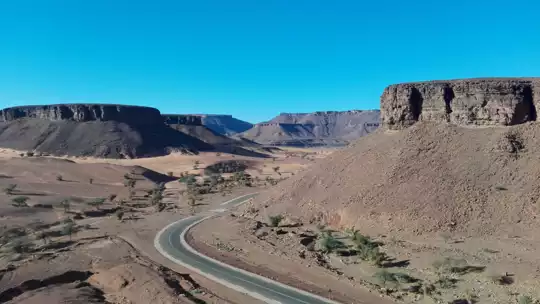
Forget the fantasy of a perfectly preserved, tourist-ready desert citadel—Ksar of Aoujeft is not some Mauritanian Machu Picchu waiting for your drone shot. It’s a half-crumbling, sand-swallowed relic in the Adrar region, northwest Mauritania, where the Sahara’s silence is broken only by wind and the occasional goat. Here’s the real deal: you’ll probably have the place to yourself, because most travelers skip it for Chinguetti or Ouadane. That means no crowds, no ticket booths, and no Instagram queues—just you, the ancient stone walls, and the ghosts of a caravan past. Getting here is a mission: rough roads, minimal signage, and you’ll need a 4x4 or a stubborn streak. There’s no curated photo op, but the raw, sun-bleached textures and the sense of isolation are the real magic. It’s not cheap or easy, but if you want Mauritania unfiltered, this is it.

Discover everything you want to know in the 📖 Mauritania Travel Guide.
Safety warning

The current risk level for Mauritania is high. Check the advice before going.


Get your Mauritania guide
59 ranked highlights, routes & tips, works offline (258 pages)
Loading the map 🌍
CLICK TO FILTER
cities
towns
villages
landmarks
national parks
hikes
beaches
attractions
festivals
regions
SHOW COUNTRY’S BESTSHOW ALL

✨ Why go?
Ranked #5 unique site in Mauritania
Why Ksar of Aoujeft should be on your travel list

The Ksar of Aoujeft isn’t just another dusty stop on your Mauritania itinerary; it’s a living testament to centuries of culture and resilience. Sure, it’s not the easiest place to reach, but that’s part of its charm. The journey through the Sahara is a wild ride, and when you finally arrive, the reward is palpable.

You’ll find ancient granaries and mud-brick architecture that tell stories of a time when trade routes thrived. Unlike the crowded tourist traps, here you can wander freely, soaking in the authenticity without the selfie sticks and tour buses.

Costs? Minimal. A few bucks for a local guide, and you’re set. This site fits perfectly into a broader route through the Adrar region, making it a natural stop while exploring other stunning landscapes and historical sites.

The Ksar … read more 👉
The Ksar of Aoujeft isn’t just another dusty stop on your Mauritania itinerary; it’s a living testament to centuries of culture and resilience. Sure, it’s not the easiest place to reach, but that’s part of its charm. The journey through the Sahara is a wild ride, and when you finally arrive, the reward is palpable.

You’ll find ancient granaries and mud-brick architecture that tell stories of a time when trade routes thrived. Unlike the crowded tourist traps, here you can wander freely, soaking in the authenticity without the selfie sticks and tour buses.

Costs? Minimal. A few bucks for a local guide, and you’re set. This site fits perfectly into a broader route through the Adrar region, making it a natural stop while exploring other stunning landscapes and historical sites.

The Ksar is a reminder that the real magic lies in the journey and the connections you make along the way. Don’t skip it; embrace the grit and glory of this unique landmark.
Want to include Ksar of Aoujeft in your Mauritania route?
Create a personalized Mauritania itinerary that includes Ksar of Aoujeft and the places that fit your trip — based on your travel style, budget, and available time. Get your route in seconds.

Generate my trip

💡 HighlightsWhat this place is best known for

  • Mud-brick architecture and courtyard houses — Walk the crumbling streets and you’ll see the classic earthen construction: thick rammed-earth walls, compact houses and storerooms that show how people insulated themselves from Saharan heat. It’s a hands-on lesson in traditional building techniques that still look elegant even in ruin.
  • Fortified walls and watchtowers — The ksar’s defensive traces are a reminder this wasn’t just a village but a place built to be defended. Climb what’s safe to climb for a feel of the strategic thinking that once mattered here and some sturdy photo angles.
  • Narrow alleys and shadowed passageways — Those tight lanes are atmospheric: shafts of light, cool pockets of shade and surprising compositional moments for photos. Move slowly; these alleys tell more about
read more 👉
  • Mud-brick architecture and courtyard houses — Walk the crumbling streets and you’ll see the classic earthen construction: thick rammed-earth walls, compact houses and storerooms that show how people insulated themselves from Saharan heat. It’s a hands-on lesson in traditional building techniques that still look elegant even in ruin.
  • Fortified walls and watchtowers — The ksar’s defensive traces are a reminder this wasn’t just a village but a place built to be defended. Climb what’s safe to climb for a feel of the strategic thinking that once mattered here and some sturdy photo angles.
  • Narrow alleys and shadowed passageways — Those tight lanes are atmospheric: shafts of light, cool pockets of shade and surprising compositional moments for photos. Move slowly; these alleys tell more about daily life than any plaque could.
  • Remnants of religious and communal spaces — Look for the small mosque foundations, prayer niches and communal courtyards. They’re modest, but they anchor the ksar’s social life and give a sense of the rhythms that kept the settlement alive.
  • Panoramic views over the Adrar plateau and surrounding dunes — From the ksar’s higher points you get wide, quiet desert vistas. Sunrise and sunset here are simple but dramatic — excellent for watching light bend across rock and sand.
  • Nearby palm fragments and watering traces — You’ll spot pockets of date palms and old irrigation traces around the site. They hint at how precious water was and how life clung to small green islands in the desert.
  • Living culture and caravan heritage — The place still sits on old trans-Saharan routes; talk to locals or passing herders and you’ll hear about caravan history, local crafts and oral stories. Those conversations often reveal more than any guidebook.
Spotted a mistake or missing something? Contact us.

🌤️ When to go?Seasonal considerations and timing


  • Weather: The Ksar of Aoujeft bakes under the Saharan sun most of the year. Aim for November to February when temperatures drop to a bearable 20-25°C (68-77°F). Outside this window, expect brutal heat soaring past 40°C (104°F), which can turn trekking into a slow, sweaty slog.

  • Temperature: Nights can be surprisingly cold in winter, dipping to around 10°C (50°F), so pack layers. Daytime warmth is comfortable in the cooler months but punishing in summer, making midday exploration a test of endurance.

  • Daylight Hours: Daylight is fairly consistent year-round, roughly 11-12 hours. This means you get enough time to explore without rushing, but plan early starts to avoid the harshest sun.

  • Crowds: Don’t expect hordes here. The Ksar is off the beaten path, so you’ll mostly have the place to
read more 👉

  • Weather: The Ksar of Aoujeft bakes under the Saharan sun most of the year. Aim for November to February when temperatures drop to a bearable 20-25°C (68-77°F). Outside this window, expect brutal heat soaring past 40°C (104°F), which can turn trekking into a slow, sweaty slog.

  • Temperature: Nights can be surprisingly cold in winter, dipping to around 10°C (50°F), so pack layers. Daytime warmth is comfortable in the cooler months but punishing in summer, making midday exploration a test of endurance.

  • Daylight Hours: Daylight is fairly consistent year-round, roughly 11-12 hours. This means you get enough time to explore without rushing, but plan early starts to avoid the harshest sun.

  • Crowds: Don’t expect hordes here. The Ksar is off the beaten path, so you’ll mostly have the place to yourself, especially in the low season. That said, local festivals in winter can bring a few more visitors and a lively atmosphere.

  • Seasonal Activities: Winter months coincide with cultural events and cooler trekking conditions, making it the prime time for immersive experiences. Summer’s heat limits outdoor activities but offers a stark, raw desert vibe for the hardcore.

  • Price Fluctuations: Expect slightly higher prices during the cooler months due to increased demand from the small trickle of tourists and festival-goers. Off-season rates drop but come with the cost of extreme heat and limited services.


Pro-tip: Visit between November and February for the sweet spot of manageable weather, cultural richness, and fewer crowds—this is when the Ksar’s true character reveals itself without frying your spirit.


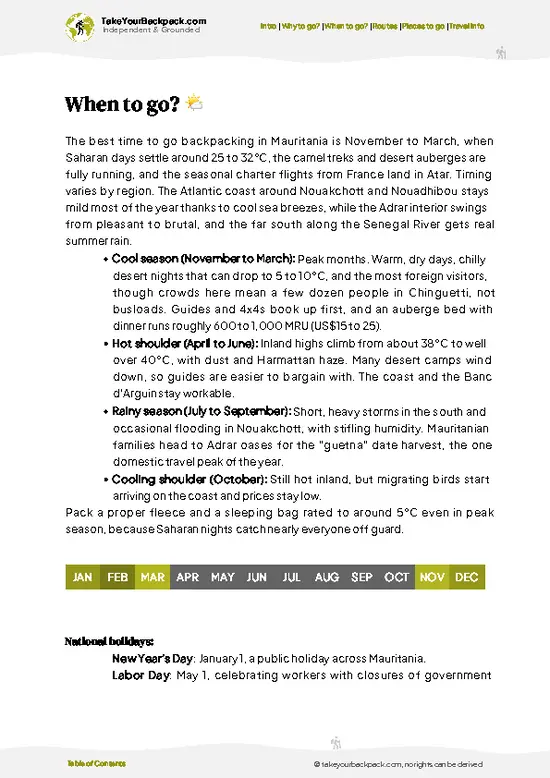
source: climatestotravel.comJANJanuary: excellent for travelingFEBFebruary: excellent for travelingMARMarch: good for travelingAPRApril: fair for travelingMAYMay: below average for travelingJUNJune: below average for travelingJULJuly: below average for travelingAUGAugust: below average for travelingSEPSeptember: fair for travelingOCTOctober: good for travelingNOVNovember: excellent for travelingDECDecember: excellent for traveling
when-to-go

✈️ The backpacker research shortcutMauritania Travel Guide

An offline-friendly backpacking guide with optimized travel routes, ranked highlights, transport advice, and the best areas to stay.
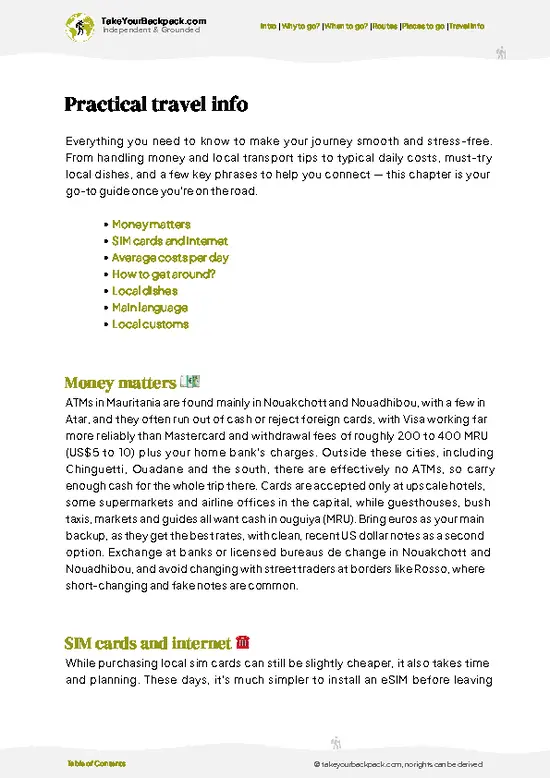
example page 0 from our offline Travel Guide for Mauritania
example page 1 from our offline Travel Guide for Mauritania
example page 2 from our offline Travel Guide for Mauritania
example page 3 from our offline Travel Guide for Mauritania
example page 4 from our offline Travel Guide for Mauritania
example page 5 from our offline Travel Guide for Mauritania
example page 6 from our offline Travel Guide for Mauritania
example page 7 from our offline Travel Guide for Mauritania
The digital guide (258 pages) contains:
59 highlights, ranked by travel appeal
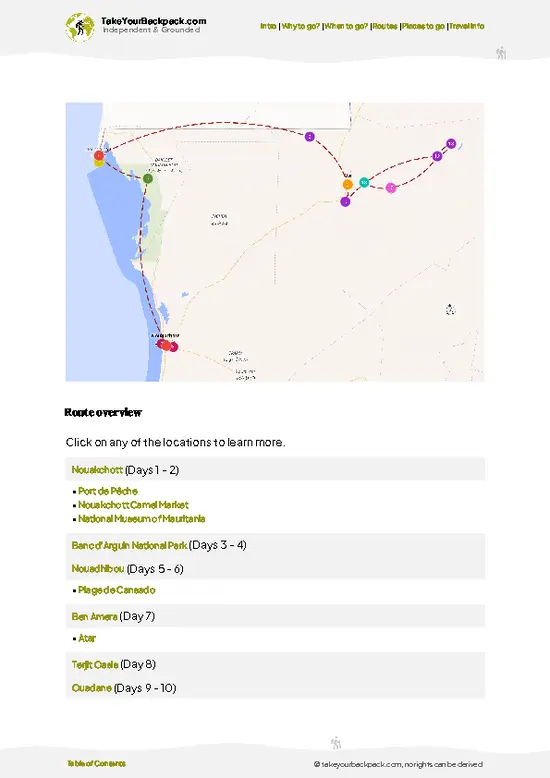
Optimized 5, 10 & 15-day travel routes
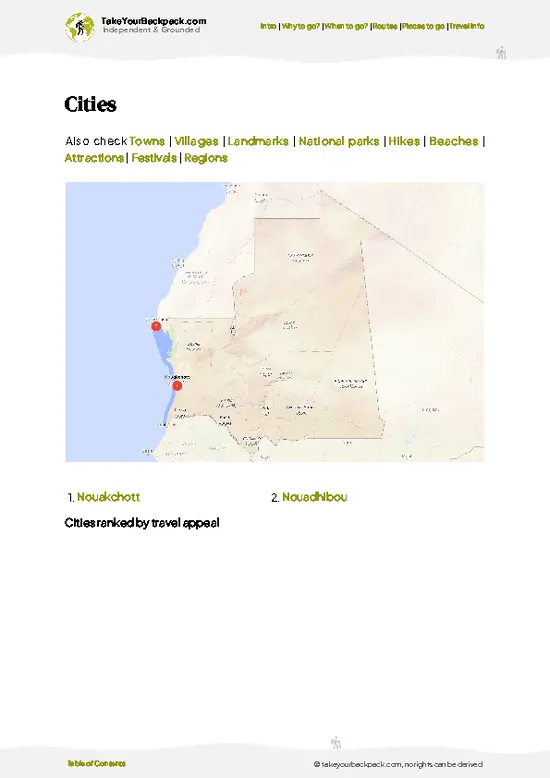
Cities, national parks, landmarks, beaches
How to get around
Offline-friendly for travel without Wi-Fi
👉 Click to see all 30+ guide features

📅 Plan smarter in minutes, not weeks
Month by month travel advice
Festivals & national holidays
Budget expectations

🗺️ Go to the right places, skip the overrated ones
Honest pros & cons of destinations
Top hikes, parks & viewpoints
Lesser-known places most travelers miss
Clear “worth it vs skip it” guidance

🛏️ Travel smoothly without rookie mistakes
Best areas to stay
Transport systems explained simply
Common scams & safety advice
SIM cards, money & practical tips

🌍 Understand the country, not just visit it
Culture & traditions
52 Essential phrases & customs
Festivals worth planning around
Traveler-friendly historical context
Insights that make places more meaningful

📱 Built for real travel conditions
Fully downloadable PDF
Works completely offline
Optimized for phone use
Useful in remote areas & buses
Everything in one place
Save weeks of stressful planning
Get instant access to your full guide. 30‑day money-back guarantee.
+ Add another guide for just US$7.80

By proceeding you agree to our terms.
Sent to your inbox immediately after payment • 100% Secure Checkout
Best Backpacking Travel Advisor 2025 tourism awardBest Backpacking
Travel Advisor
2025
What others say about Take Your Backpack Guides:
⭐⭐⭐⭐⭐
Fantastic, amazing amount of information!
⭐⭐⭐⭐⭐
My goodness this is amazing, it's what I've been looking for hats off too you!
⭐⭐⭐⭐⭐
I think this is absolutely BRILLIANT
⭐⭐⭐⭐
Very complete and informative. It's still missing places, but I gotta to commend you
⭐⭐⭐⭐⭐
This is truly amazing, thank you, can't wait to explore it with my kids!
⭐⭐⭐⭐⭐
Awesome resource, thank you!
⭐⭐⭐⭐⭐
This is amazing! Can't wait to explore the ones I haven't seen
⭐⭐⭐⭐
I love this! Well done, great idea.
⭐⭐⭐⭐⭐
Thanks for taking the time to make this gem!
⭐⭐⭐⭐⭐
This might be the best website I've ever seen.
⭐⭐⭐⭐⭐
Congratulations, and thank you so much for your work; it's incredibly valuable.
⭐⭐⭐⭐
In all seriousness I think you did a great job pointing out the important spots
⭐⭐⭐⭐⭐
10/10 very good
⭐⭐⭐⭐⭐
As someone who's only just starting to visit regularly this is awesome, thank you.
⭐⭐⭐⭐
Thank you very much! I'm going to visit my dad, it's going to be very useful!
⭐⭐⭐⭐⭐
This is really cool! We'll be travelling for the first time and this definitely come in handy.
⭐⭐⭐⭐⭐
You are now our minister of culture, congratulations 👨‍💼
⭐⭐⭐⭐⭐
Just wanted to tell you that this is a pearl! Going to follow your recommendations.
⭐⭐⭐⭐⭐
This is so cool. I'll definitely be using the resource for my travels soon.
⭐⭐⭐⭐⭐
This is very impressive! Good work.
⭐⭐⭐⭐⭐
This is an amazing and informative site. Very well done!

🛏️ Where to stay?Choosing the right base

When you’re heading to the Ksar of Aoujeft, you’ll want to find a spot that balances safety, social vibes, and budget-friendliness. The town of Aoujeft itself is your best bet. It’s small but welcoming, with a community that’s used to travelers. You’ll find a few local guesthouses where you can crash, and they often have communal spaces that encourage mingling.

Look for places near the main square; it’s where the action is. You’ll get a taste of local life, and it’s a great spot to grab a meal or a cup of mint tea. The atmosphere is relaxed, and you’ll likely meet fellow backpackers eager to … read more 👉
When you’re heading to the Ksar of Aoujeft, you’ll want to find a spot that balances safety, social vibes, and budget-friendliness. The town of Aoujeft itself is your best bet. It’s small but welcoming, with a community that’s used to travelers. You’ll find a few local guesthouses where you can crash, and they often have communal spaces that encourage mingling.

Look for places near the main square; it’s where the action is. You’ll get a taste of local life, and it’s a great spot to grab a meal or a cup of mint tea. The atmosphere is relaxed, and you’ll likely meet fellow backpackers eager to share stories and tips.

If you’re feeling adventurous, consider staying in nearby Atar. It’s a bit further from the Ksar but offers a wider range of accommodations and a more vibrant backpacker scene. The locals are friendly, and you can easily arrange transport to the Ksar from there.

Both areas provide a genuine experience of Mauritania’s culture without the touristy fluff. Just remember, this isn’t a luxury getaway; it’s about immersing yourself in the real magic of the desert and its people.

👛 Costs (as of 4 September 2026)Typical daily expenses

Visiting the Ksar of Aoujeft in Mauritania isn’t just about the stunning architecture; it’s also about navigating the costs that come with it. Here’s a breakdown of what you can expect to spend:
  • Entry Fee: Expect to pay around €2 to €5. This small fee grants you access to the site, but don’t forget to bring cash, as card payments might not be accepted.
  • Transportation: Getting there can be a bit of an adventure. A shared taxi from Atar to Aoujeft will set you back about €10 to €15. If you prefer a private taxi, be prepared to pay around €30 to €50. The roads can be rough, so factor in extra time for travel.
  • Accommodation: Options are limited but available. Basic guesthouses start at about €15 per night. If you’re looking for something a bit more comfortable, expect to pay around €30 to €50 for
read more 👉
Visiting the Ksar of Aoujeft in Mauritania isn’t just about the stunning architecture; it’s also about navigating the costs that come with it. Here’s a breakdown of what you can expect to spend:
  • Entry Fee: Expect to pay around €2 to €5. This small fee grants you access to the site, but don’t forget to bring cash, as card payments might not be accepted.
  • Transportation: Getting there can be a bit of an adventure. A shared taxi from Atar to Aoujeft will set you back about €10 to €15. If you prefer a private taxi, be prepared to pay around €30 to €50. The roads can be rough, so factor in extra time for travel.
  • Accommodation: Options are limited but available. Basic guesthouses start at about €15 per night. If you’re looking for something a bit more comfortable, expect to pay around €30 to €50 for a mid-range hotel. Booking in advance is wise, especially during peak seasons.
  • Food: Meals are affordable. Street food can cost as little as €2 to €5, while a sit-down meal at a local restaurant might range from €5 to €15. Don’t miss trying the local dishes; they’re part of the experience.
  • Guided Tours: Hiring a local guide can enhance your visit. Prices typically range from €10 to €30, depending on the length and depth of the tour. This investment can provide insights that you won’t find in guidebooks.

Be prepared for a unique experience that’s rich in culture and history, but also know that the costs can add up. Plan accordingly, and you’ll find the real magic of Aoujeft waiting for you.
⚠️ Prices can change and everyone travels differently, so take this as a rough guide. Hope it helps you plan your adventure!

FAQCommon questions from travelers

Ksar of Aoujeft is an ancient fortified village in Mauritania, known for its traditional Saharan architecture and historical significance as a caravan stop. It features mud-brick buildings and narrow alleys typical of ksar settlements in the region.
Visiting the Ksar of Aoujeft typically requires about half a day to explore the main structures and surrounding area thoroughly. This allows enough time to appreciate the architecture and take photographs without rushing.
To get to Ksar of Aoujeft, travelers usually drive from Atar, the nearest major town, which is about 70 kilometers away. The route involves unpaved desert roads, so a 4x4 vehicle is recommended for safe travel.
⚠️ Things can change over time, so always validate details locally before you go.

Other Mauritanian landmarks near Ksar of Aoujeft

Explore more nearby:

  • Terjit Oasis—palm-shaded pools, natural springs, canyon setting| 88 km away
  • Ksar of Ouadane—stone ruins, caravan crossroads, cliffside terraces| 230 km away
  • Richat Structure—geological formation, concentric rings, remote plateau| 261 km away

💡 Not sure where to go next?
Create a personalized itinerary for Mauritania including Ksar of Aoujeft and the places that fit your trip.

Generate my itinerary

👉 Discover all landmarks

Or checkout all Mauritania has to offer (think cities, towns, villages, national parks, hikes, beaches, festivals)
Country photo of Mauritania

We 💚 feedbackIs it worth it?

The Ksar of Aoujeft isn’t your Instagram fantasy. Expect crowds, but don’t let that deter you. The real magic lies in the crumbling walls and the stories they whisper. Stroll through the narrow alleys, and you might catch a local brewing mint tea, a moment that feels like a secret shared just with you. Just be ready for the heat; it can be relentless. Embrace the grit, and you’ll find a slice of Mauritania that’s raw and real, a true testament to resilience.

✍️ Help improve this page!
The information on this page is based on in-depth research, insights shared by experienced travelers, and feedback from the local travel community in Mauritania. While every effort is made to keep the information accurate and current, conditions can change — so if you spot anything incorrect or outdated, please get in touch.


🙋‍♂️ Give feedback

👋 Meet the founderWho’s Behind Take Your Backpack?

Johan, backpacker and founder of TakeYourBackpackHi, I’m Johan (Netherlands 🇳🇱), the creator of TakeYourBackpack. Over the past decade, I’ve backpacked through 80+ countries across six continents, gaining extensive experience with independent travel, long-term trips, and overland routes.

This site is built on a combination of firsthand travel experience and carefully curated insights from other backpackers. Many guides are based on places I’ve personally visited, while others bring together tips, observations, and practical advice shared by trusted travelers I’ve met along the way.

The goal is to provide realistic, experience-driven guidance — not generic itineraries — so you can explore destinations with better context, clearer expectations, and more confidence.

Get full Mauritania guide •
Instant download • 59 highlights • Full Offline guide