v2.webp)
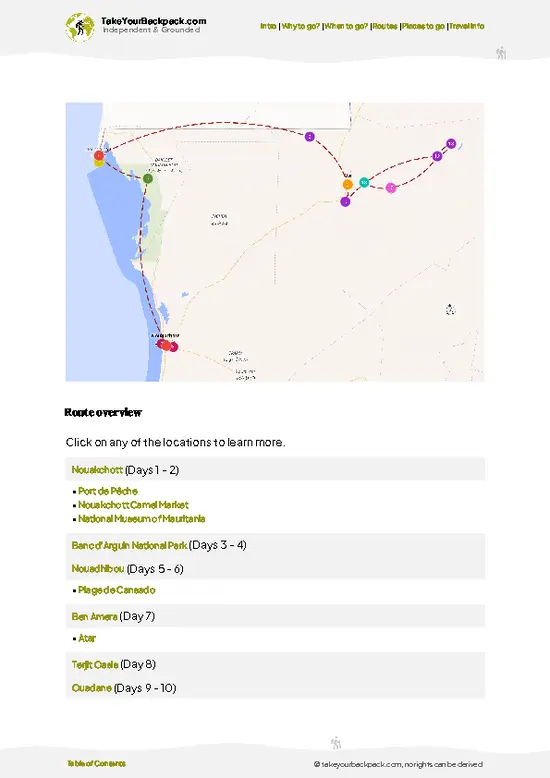
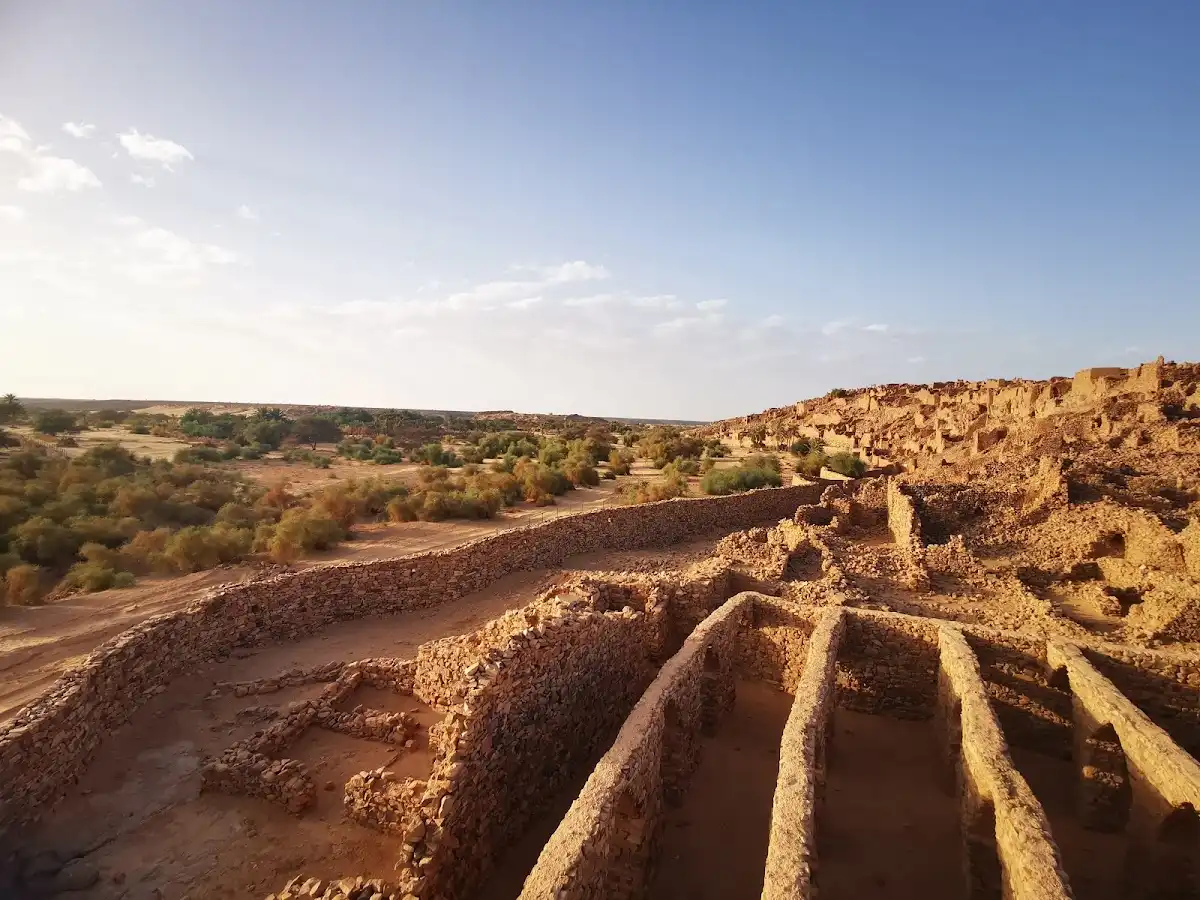
- Old Ouadane ruins: The abandoned hillside town is the reason to come. Roofless houses of stacked schist, narrow lanes and collapsed courtyards cover the slope, and walking them at your own pace shows how a trading post was laid out around shade and wind.
- The ruined mosque and its minaret: The old mosque still holds a square tower, and its remaining walls show the mihrab direction clearly. It is the best place to understand the religious life of the town when caravans stopped here.
- Manuscript libraries: Local families keep old handwritten Islamic texts, some centuries old, on legal, religious and scientific subjects. A guide can arrange a visit with the keeper, and you see the pages in a plain room rather than behind glass.
- The ridge viewpoint over the palm grove: From the upper edge of the old
- Old Ouadane ruins: The abandoned hillside town is the reason to come. Roofless houses of stacked schist, narrow lanes and collapsed courtyards cover the slope, and walking them at your own pace shows how a trading post was laid out around shade and wind.
- The ruined mosque and its minaret: The old mosque still holds a square tower, and its remaining walls show the mihrab direction clearly. It is the best place to understand the religious life of the town when caravans stopped here.
- Manuscript libraries: Local families keep old handwritten Islamic texts, some centuries old, on legal, religious and scientific subjects. A guide can arrange a visit with the keeper, and you see the pages in a plain room rather than behind glass.
- The ridge viewpoint over the palm grove: From the upper edge of the old town you look down on the dark green palm oasis and the sandy plain beyond. It is the classic photo of Ouadane, especially when low sun picks out each stone wall.
- New Ouadane and its palm gardens: The living village below has small shops, courtyards and date gardens. Walk through the palms in the afternoon and you hear irrigation water, goats and children, a useful contrast to the silent ruins above.
- The Richat Structure (Guelb er Richat): This enormous circular formation, roughly 40 km across, lies in the desert nearby, and Ouadane is the usual base for reaching it. Expect concentric rings of rock, wind-carved cliffs and a vast quiet that makes the trip by 4x4 worthwhile.
Spotted a mistake or missing something? Contact us.

Lifetime Adventure: 8-Day Private Tour to Mauritania

Tour in Mauritania

Nouakchott Explorer: Private Capital Tour

Adrar & Banc d'Arguin 10-Day Tour

The best of Nouadhibou walking tour

4-Day Mauritania Adventure & Culture

Romantic tour in Rosso

Mauritania in a nutshell Day Tour of Nouakchott

Mauritania eSIM (Instant Delivery)

 Best Backpacking
.jpg) Hi, I’m Johan (Netherlands 🇳🇱), the creator of TakeYourBackpack. Over the past 3 decades, I’ve backpacked through 90+ countries across six continents, gaining extensive experience with independent travel, long-term trips, and overland routes.
Hi, I’m Johan (Netherlands 🇳🇱), the creator of TakeYourBackpack. Over the past 3 decades, I’ve backpacked through 90+ countries across six continents, gaining extensive experience with independent travel, long-term trips, and overland routes.