×

Mayotte🇾🇹 | attractionsJardin Botanique de CoconiYlang-ylang, clove trees, vanilla vines, muddy shaded paths | things to do and best time to go

Explore Musée de MayotteExplore MUMA - Maison de l’Artisanat et des Métiers d’Art

Backpacking in Jardin Botanique de Coconi
🌟 Highlightattraction ranked #2
By Johan Kruseman 🇳🇱 | Updated October 22, 2026

Ylang-ylang flowers drop from the branches here, and a handful crushed between your fingers gives off a sweet, heavy perfume that clings to your skin for an hour. That is what Jardin Botanique de Coconi is best known for: a garden of the spice and perfume plants that shaped Mayotte’s farm economy. It lies in the west of Mayotte, inland from the lagoon coast, in farming country around the village of Coconi. The appeal is shade, birdsong and the smell of crushed leaves rather than any headline sight, and the paths can turn slick and muddy after rain, so wear shoes with grip. Public buses are sparse out here because the village is small, so an experienced traveler arranges a lift or a rental car. Carry water and repellent, since the humid understory is mosquito country. Expect quiet, and few other visitors. Bring a small bag for fallen cloves and cinnamon bark.

Discover everything you want to know in the 📖 Mayotte Travel Guide.


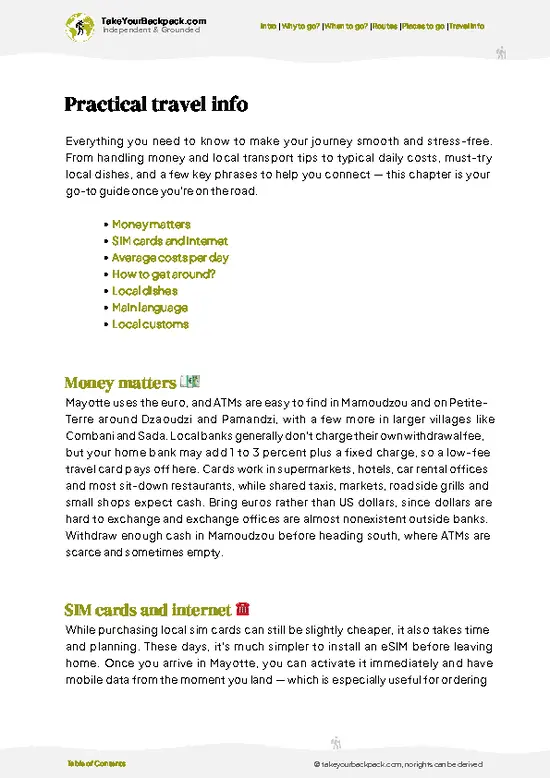
example page 0 from our offline Travel Guide for Mayotte
example page 1 from our offline Travel Guide for Mayotte
example page 2 from our offline Travel Guide for Mayotte
example page 3 from our offline Travel Guide for Mayotte
example page 4 from our offline Travel Guide for Mayotte
example page 5 from our offline Travel Guide for Mayotte
example page 6 from our offline Travel Guide for Mayotte
example page 7 from our offline Travel Guide for Mayotte
Loading the map 🌍
CLICK TO FILTER
towns
landmarks
national parks
hikes
beaches
attractions
festivals
regions
SHOW COUNTRY’S BESTSHOW ALL

✨ Why go?
Ranked #2 attraction in Mayotte
What sets this place apart

Jardin Botanique de Coconi lets you meet the plants behind Mayotte’s reputation as the “perfume island” without paying resort prices for the story. Most of the island is beach, reef and volcanic ridge, so a walk among working-economy crops fills in a side of Mayotte that snorkeling trips skip.
The strongest reason is ylang-ylang, the tree whose flowers are distilled for perfume bases. Seeing the drooping yellow blooms up close explains the stills you pass along rural roads. The second is the spice collection: clove, cinnamon and vanilla growing as living plants, with leaves you can rub and smell, which beats any market sachet. The third is the setting itself. Coconi sits in the agricultural heartland, so you get village life, red soil and small farm plots on the way, which is the Mayotte most … read more 👉
Jardin Botanique de Coconi lets you meet the plants behind Mayotte’s reputation as the “perfume island” without paying resort prices for the story. Most of the island is beach, reef and volcanic ridge, so a walk among working-economy crops fills in a side of Mayotte that snorkeling trips skip.
The strongest reason is ylang-ylang, the tree whose flowers are distilled for perfume bases. Seeing the drooping yellow blooms up close explains the stills you pass along rural roads. The second is the spice collection: clove, cinnamon and vanilla growing as living plants, with leaves you can rub and smell, which beats any market sachet. The third is the setting itself. Coconi sits in the agricultural heartland, so you get village life, red soil and small farm plots on the way, which is the Mayotte most backpackers never see.
Come for a slow morning among trees and quiet. It suits travelers who like plants, photography or simply a cool shaded walk away from the lagoon crowds.

💡 HighlightsMust-see experiences and standout moments

  1. Ylang-ylang trees: The garden’s signature plant, with long, drooping, greenish-yellow flowers and a sweet, almost banana-like perfume. This is the plant that built Mayotte’s fragrance trade, so start here.
  2. Clove trees: Tall, glossy-leaved trees whose unopened pink flower buds are the spice. Crush a leaf and the sharp, numbing smell is instantly familiar from the kitchen.
  3. Vanilla vines: A climbing orchid that twines up supports, with pale green pods that only turn aromatic after curing. It is a good look at how much hand labor sits behind one jar of vanilla.
  4. Cinnamon trees: Scrape a twig lightly and the warm bark smell appears. The leaves are leathery and the young growth is reddish, which makes the tree easy to pick out.
  5. Tropical fruit trees: Mango, breadfruit and other fruit trees mix into the
… read more 👉
  1. Ylang-ylang trees: The garden’s signature plant, with long, drooping, greenish-yellow flowers and a sweet, almost banana-like perfume. This is the plant that built Mayotte’s fragrance trade, so start here.
  2. Clove trees: Tall, glossy-leaved trees whose unopened pink flower buds are the spice. Crush a leaf and the sharp, numbing smell is instantly familiar from the kitchen.
  3. Vanilla vines: A climbing orchid that twines up supports, with pale green pods that only turn aromatic after curing. It is a good look at how much hand labor sits behind one jar of vanilla.
  4. Cinnamon trees: Scrape a twig lightly and the warm bark smell appears. The leaves are leathery and the young growth is reddish, which makes the tree easy to pick out.
  5. Tropical fruit trees: Mango, breadfruit and other fruit trees mix into the planting and give the walk deep, cool shade. Fallen fruit and leaf litter make the ground soft and fragrant underfoot.
  6. Forest birds and the brown lemur: The canopy edges around the garden carry birdsong from early morning. Mayotte’s native brown lemur, the maki, lives in the island’s wooded areas, so keep your eyes on the higher branches and move quietly.
If you have a single morning, pair the ylang-ylang trees with the clove and cinnamon trees, since all three sit among the spice plantings and make one continuous smell-and-touch walk at Jardin Botanique de Coconi.
Spotted a mistake or missing something? Contact us.

Things to do near Jardin Botanique de Coconi

Ratings based on Tripadvisor reviews. When you book through this link, you support our work at no extra cost to you.

🌤️ When to go?Seasonal considerations and timing

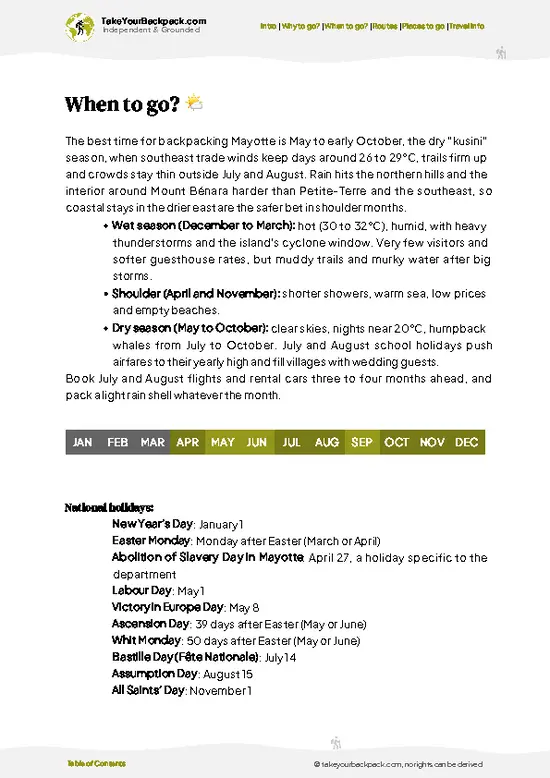
  • Dry Season (May to October): Late May to September is the easiest window for the garden’s paths and the nearby Coconi lagoon coast. Days run 26 to 30°C (79 to 86°F), nights dip to 19 to 22°C (66 to 72°F), and daylight lasts about 11 to 12 hours. Rain is rare, so trails stay firm.
  • Wet Season (November to April): Expect 28 to 32°C (82 to 90°F), heavy humidity and sudden downpours that turn red-earth paths slick. Plants are at their greenest and flowering peaks, but cyclone-season storms can close roads. Lodging rarely changes price, though flights from Réunion and Paris get cheaper outside school holidays.
  • July and August: Mainland French school holidays bring diaspora visitors, fuller flights and higher fares, though the garden itself stays quiet.
  • Time of Day: Mornings are cooler and birdsong
… read more 👉
  • Dry Season (May to October): Late May to September is the easiest window for the garden’s paths and the nearby Coconi lagoon coast. Days run 26 to 30°C (79 to 86°F), nights dip to 19 to 22°C (66 to 72°F), and daylight lasts about 11 to 12 hours. Rain is rare, so trails stay firm.
  • Wet Season (November to April): Expect 28 to 32°C (82 to 90°F), heavy humidity and sudden downpours that turn red-earth paths slick. Plants are at their greenest and flowering peaks, but cyclone-season storms can close roads. Lodging rarely changes price, though flights from Réunion and Paris get cheaper outside school holidays.
  • July and August: Mainland French school holidays bring diaspora visitors, fuller flights and higher fares, though the garden itself stays quiet.
  • Time of Day: Mornings are cooler and birdsong is best before the midday heat.
Book flights early for July and August, and aim for a weekday morning visit.


source: climatestotravel.comJANJanuary: below average for travelingFEBFebruary: below average for travelingMARMarch: below average for travelingAPRApril: fair for travelingMAYMay: excellent for travelingJUNJune: excellent for travelingJULJuly: highly recommended for travelingAUGAugust: highly recommended for travelingSEPSeptember: excellent for travelingOCTOctober: excellent for travelingNOVNovember: below average for travelingDECDecember: below average for traveling
when-to-go

✈️ The backpacker research shortcutMayotte Travel Guide

An offline-friendly backpacking guide with optimized travel routes, ranked highlights, transport advice, and the best areas to stay.
example page 0 from our offline Travel Guide for Mayotte
example page 1 from our offline Travel Guide for Mayotte
example page 2 from our offline Travel Guide for Mayotte
example page 3 from our offline Travel Guide for Mayotte
example page 4 from our offline Travel Guide for Mayotte
example page 5 from our offline Travel Guide for Mayotte
example page 6 from our offline Travel Guide for Mayotte
example page 7 from our offline Travel Guide for Mayotte
The digital guide (129 pages) contains:
✅ 27 highlights, ranked by travel appeal
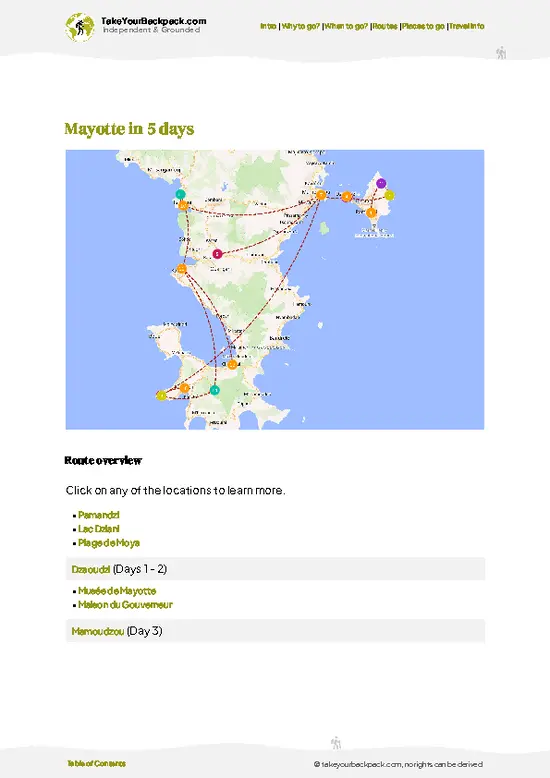
✅ Optimized 2, 3 & 5-day travel routes
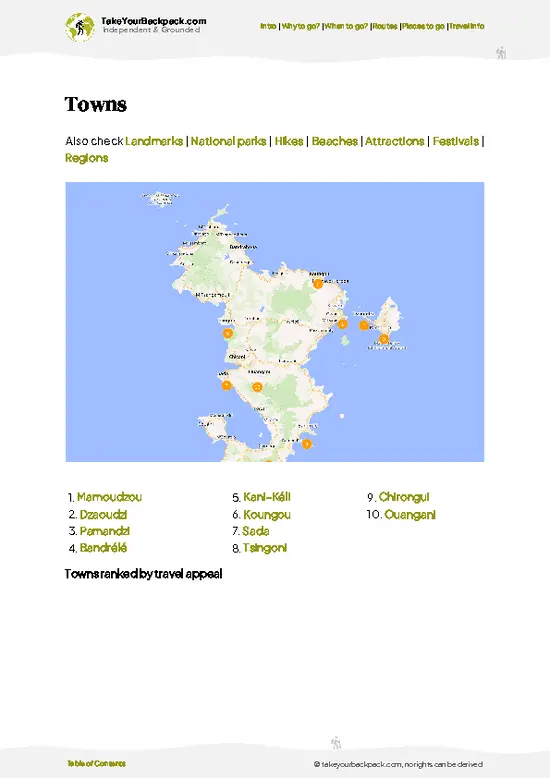
✅ Cities, national parks, landmarks, beaches
✅ How to get around
✅ Offline-friendly for travel without Wi-Fi
👉 Click to see all 30+ guide features

📅 Plan smarter in minutes, not weeks
✅ Month by month travel advice
✅ Festivals & national holidays
✅ Budget expectations

🗺️ Go to the right places, skip the overrated ones
✅ Honest pros & cons of destinations
✅ Top hikes, parks & viewpoints
✅ Lesser-known places most travelers miss
✅ Clear “worth it vs skip it” guidance

🛏️ Travel smoothly without rookie mistakes
✅ Best areas to stay
✅ Transport systems explained simply
✅ Common scams & safety advice
✅ SIM cards, money & practical tips

🌍 Understand the country, not just visit it
✅ Culture & traditions
✅ 52 Essential phrases & customs
✅ Festivals worth planning around
✅ Traveler-friendly historical context
✅ Insights that make places more meaningful

📱 Built for real travel conditions
✅ Fully downloadable PDF
✅ Works completely offline
✅ Optimized for phone use
✅ Useful in remote areas & buses
✅ Everything in one place
Stop searching, start planning
Get instant access to your full guide. 30‑day money-back guarantee.
+ Add another guide for just

By proceeding you agree to our terms.
Sent to your inbox immediately after payment • 100% Secure Checkout
Best Backpacking Travel Advisor 2025 tourism awardBest Backpacking
Travel Advisor
2025
What others say about Take Your Backpack Guides:
⭐⭐⭐⭐⭐
Fantastic, amazing amount of information!
⭐⭐⭐⭐⭐
My goodness this is amazing, it's what I've been looking for hats off too you!
⭐⭐⭐⭐⭐
I think this is absolutely BRILLIANT
⭐⭐⭐⭐
Very complete and informative. It's still missing places, but I gotta to commend you
⭐⭐⭐⭐⭐
This is truly amazing, thank you, can't wait to explore it with my kids!
⭐⭐⭐⭐⭐
Awesome resource, thank you!
⭐⭐⭐⭐⭐
This is amazing! Can't wait to explore the ones I haven't seen
⭐⭐⭐⭐
I love this! Well done, great idea.
⭐⭐⭐⭐⭐
Thanks for taking the time to make this gem!
⭐⭐⭐⭐⭐
This might be the best website I've ever seen.
⭐⭐⭐⭐⭐
Congratulations, and thank you so much for your work; it's incredibly valuable.
⭐⭐⭐⭐
In all seriousness I think you did a great job pointing out the important spots
⭐⭐⭐⭐⭐
10/10 very good
⭐⭐⭐⭐⭐
As someone who's only just starting to visit regularly this is awesome, thank you.
⭐⭐⭐⭐
Thank you very much! I'm going to visit my dad, it's going to be very useful!
⭐⭐⭐⭐⭐
This is really cool! We'll be travelling for the first time and this definitely come in handy.
⭐⭐⭐⭐⭐
You are now our minister of culture, congratulations 👨‍💼
⭐⭐⭐⭐⭐
Just wanted to tell you that this is a pearl! Going to follow your recommendations.
⭐⭐⭐⭐⭐
This is so cool. I'll definitely be using the resource for my travels soon.
⭐⭐⭐⭐⭐
This is very impressive! Good work.
⭐⭐⭐⭐⭐
This is an amazing and informative site. Very well done!

🛏️ Where to stay?How to pick the right area

Chirongui and the Bouéni side of the south are the nearest practical bases for Jardin Botanique de Coconi, with Mamoudzou as the livelier option for budget travelers. Hostels are scarce on Mayotte, so most backpackers rely on small guesthouses, gîtes and rooms booked through local hosts.

In the south, around Coconi, Chirongui and the Sazilé area, you get a calm village feel, quiet nights and easy access to lagoon beaches. Rooms here cost roughly €35 to 60 a night. The trade-off is limited food options and almost no public transport after late afternoon, so a rental car or a lift is useful.

Mamoudzou … read more 👉
Chirongui and the Bouéni side of the south are the nearest practical bases for Jardin Botanique de Coconi, with Mamoudzou as the livelier option for budget travelers. Hostels are scarce on Mayotte, so most backpackers rely on small guesthouses, gîtes and rooms booked through local hosts.

In the south, around Coconi, Chirongui and the Sazilé area, you get a calm village feel, quiet nights and easy access to lagoon beaches. Rooms here cost roughly €35 to 60 a night. The trade-off is limited food options and almost no public transport after late afternoon, so a rental car or a lift is useful.

Mamoudzou and nearby Kawéni suit solo travelers who want other people to talk to. Restaurants, supermarkets, the barge terminal to Petite-Terre and shared taxis (taxis collectifs) are all there. Expect €45 to 80 for a simple room, and plan on roughly 45 minutes to an hour by road to reach the garden. Keep valuables out of sight and avoid walking alone after dark.

Petite-Terre (Pamandzi) is a good alternative near the airport, with beaches and a relaxed pace, useful for early flights.

👛 Costs (as of 22 October 2026)What things cost and how to budget

Jardin Botanique de Coconi costs a backpacker about €62 a day, including a rental car share, food and a guesthouse room. Entry is modest and the real expense is getting around the island and sleeping nearby.
CategoryBudget RangeLocal Reality
Garden entry€0 to 5Access is cheap or free, and any fee is paid on site in euros.
Accommodation (low season)€30 to 50Simple guesthouse or gîte room in the south, with fewer options in the wet months.
Accommodation (high season)€35 to 60July and August fill up fast, so book ahead.
Food€10 to 18Roadside brochettes, rice and curries are cheap, while supermarkets in Mamoudzou stock imported French goods at higher prices.
Transport to the garden€5 to 15Shared taxis cover main roads, but a taxi or hitched ride is often needed for the final stretch.
Extras€0 to 10Water,
… read more 👉
Jardin Botanique de Coconi costs a backpacker about €62 a day, including a rental car share, food and a guesthouse room. Entry is modest and the real expense is getting around the island and sleeping nearby.
CategoryBudget RangeLocal Reality
Garden entry€0 to 5Access is cheap or free, and any fee is paid on site in euros.
Accommodation (low season)€30 to 50Simple guesthouse or gîte room in the south, with fewer options in the wet months.
Accommodation (high season)€35 to 60July and August fill up fast, so book ahead.
Food€10 to 18Roadside brochettes, rice and curries are cheap, while supermarkets in Mamoudzou stock imported French goods at higher prices.
Transport to the garden€5 to 15Shared taxis cover main roads, but a taxi or hitched ride is often needed for the final stretch.
Extras€0 to 10Water, snacks and optional guide or lagoon boat tips.
Total Daily Budget€62Based on high-season lodging with modest food and transport.
⚠️ Prices can change and everyone travels differently, so take this as a rough guide. Hope it helps you plan your adventure!

FAQCommon questions from travelers

Plan on one to two hours for Jardin Botanique de Coconi if you only want to walk the paths and look at the plants. Half a day works better if you add the nearby Coconi beaches or the Tsingoni area. Start in the morning, since the heat builds by late morning and the shade matters.
For most backpackers, Jardin Botanique de Coconi is worth the small cost, which is typically free to about €5. You get shaded walking among tropical plants without the expense of a tour, and the visit fits easily alongside southern beaches. Plant lovers will get the most out of it, while travelers wanting dramatic scenery may prefer the lagoon or Mount Choungui hike.
Reaching Jardin Botanique de Coconi is easiest by rental car from Mamoudzou, roughly 45 minutes to an hour along the main road toward the south, and the airport at Petite-Terre is about 30 to 45 minutes away once you cross by barge. Shared taxis run along main roads for around €2 to 5, but you may need a short taxi or lift for the last stretch. Rental cars cost roughly €35 to 50 a day, and the barge crossing adds a small fee.
⚠️ Things can change over time, so always validate details locally before you go.

Other Mahoran attractions near Jardin Botanique de Coconi

Explore more nearby:


💡 Not sure where to go next?
Create a personalized itinerary for Mayotte including Jardin Botanique de Coconi and the places that fit your trip.

Generate my itinerary

👉 Discover all attractions

Or checkout all Mayotte has to offer (think cities, towns, villages, national parks, hikes, beaches, festivals)
Country photo of Mayotte

We 💚 feedbackFinal thoughts on visiting Jardin Botanique de Coconi

Jardin Botanique de Coconi gets treated as a quick photo stop, and that is the mistake. Travelers rush through in twenty minutes and leave without ever smelling the plants. Slow down, rub a clove leaf and crushed ylang blossom, and go in the morning when it is cooler and the birds are active. Wear closed shoes, because the paths can stay damp.

✍️ Help improve this page!
The information on this page is based on in-depth research, insights shared by experienced travelers, and feedback from the local travel community in Mayotte. While every effort is made to keep the information accurate and current, conditions can change — so if you spot anything incorrect or outdated, please get in touch.


🙋‍♂️ Give feedback

👋 Meet the founderWho’s Behind Take Your Backpack?

Johan, backpacker and founder of TakeYourBackpackHi, I’m Johan (Netherlands 🇳🇱), the creator of TakeYourBackpack. Over the past 3 decades, I’ve backpacked through 90+ countries across six continents, gaining extensive experience with independent travel, long-term trips, and overland routes.

This site is built on a combination of firsthand travel experience and carefully curated insights from other backpackers. Many guides are based on places I’ve personally visited, while others bring together tips, observations, and practical advice shared by trusted travelers I’ve met along the way.

The goal is to provide realistic, experience-driven guidance — not generic itineraries — so you can explore destinations with better context, clearer expectations, and more confidence.