×

Mexico🇲🇽 | attractionsMuseo Tamayo Arte ContemporáneoRotating shows, raw concrete, sculpture terraces, Tamayo gifts | things to do and best time to go

Explore Museo SoumayaExplore Museo Universitario Arte Contemporáneo

Backpacking in Museo Tamayo Arte Contemporáneo
🌟 Highlightattraction ranked #8
By Johan Kruseman 🇳🇱 | Updated October 20, 2026

Most people come to Museo Tamayo Arte Contemporáneo for the rotating exhibitions of international contemporary art, and the concrete building itself earns a visit, yet the park around it gets overlooked. It sits in Chapultepec Park in Mexico’s capital, Mexico City, which means you can pair it with other museums nearby. Smart travelers go on a weekday, since weekends fill with families heading for the park and lines build at the ticket desk. Pay in pesos by card where possible, because small shops nearby prefer cash. The museum is modest in size, so budget a couple of hours instead of a day. I walked up from the Polanco side, expecting a grand entrance, and found a quiet, windowless slab of volcanic-gray concrete that seemed to hide on purpose. Inside, a sunken courtyard held a single sculpture.

Discover everything you want to know in the 📖 Mexico Travel Guide.


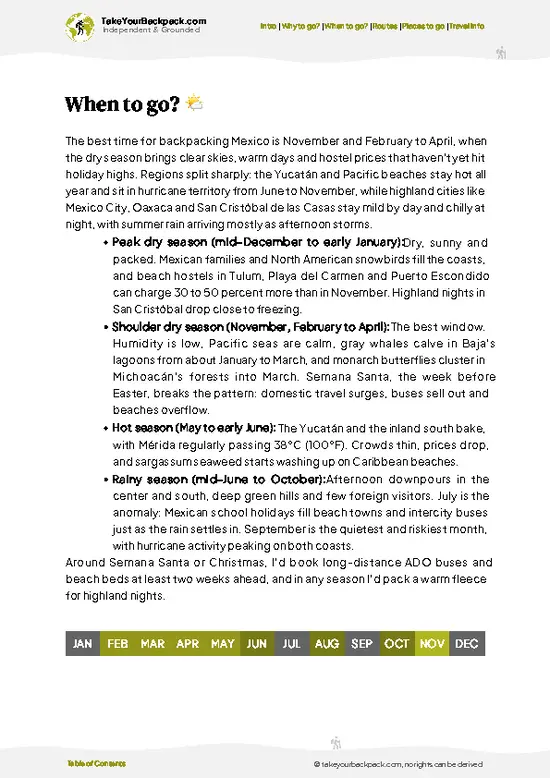
example page 0 from our offline Travel Guide for Mexico
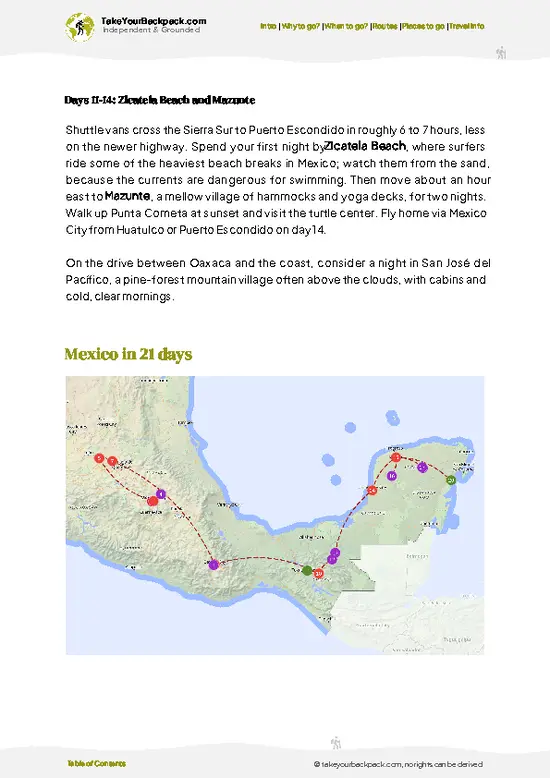
example page 1 from our offline Travel Guide for Mexico
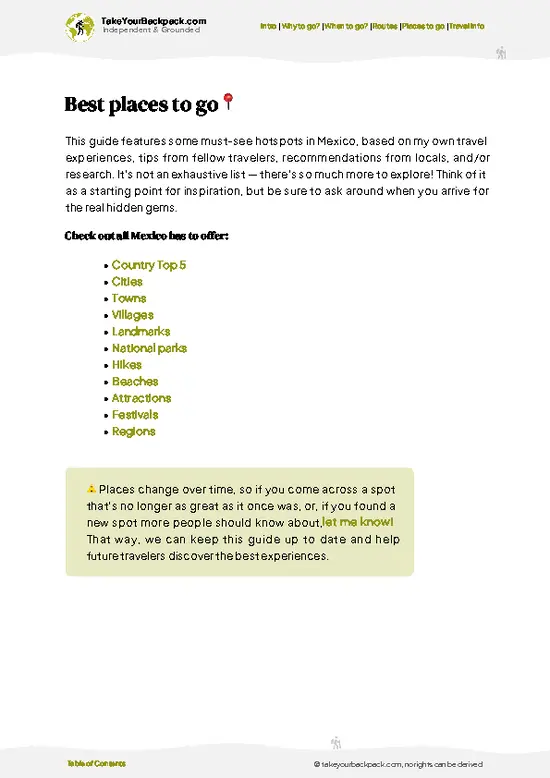
example page 2 from our offline Travel Guide for Mexico
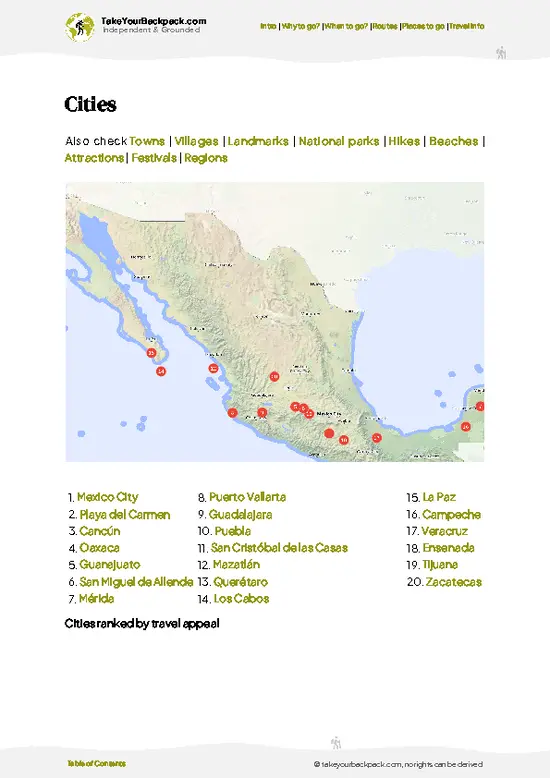
example page 3 from our offline Travel Guide for Mexico
example page 4 from our offline Travel Guide for Mexico
example page 5 from our offline Travel Guide for Mexico
example page 6 from our offline Travel Guide for Mexico
example page 7 from our offline Travel Guide for Mexico
Loading the map 🌍
CLICK TO FILTER
cities
towns
villages
landmarks
national parks
hikes
beaches
attractions
festivals
regions
SHOW COUNTRY’S BESTSHOW ALL

✨ Why go?
Ranked #8 attraction in Mexico
Why Museo Tamayo Arte Contemporáneo should be on your travel list

Museo Tamayo Arte Contemporáneo is the place in Mexico City where you can see current international art without the crowds of the larger museums beside it. Its collection grew from the personal holdings of Rufino Tamayo, the Oaxacan painter, who donated works by artists such as Picasso, Warhol and Francis Bacon. That means Rufino Tamayo’s own donated collection sits alongside shows by living artists, and the contrast is the draw. The building, a 1981 concrete design by Teodoro González de León and Abraham Zabludovsky, is worth studying on its own, with its angled planes and terraces that cut sharply into the park. It also makes a calm stop on a route through the capital, a short walk from the larger Museo Nacional de Antropología. If your trip is heavy on ruins and markets, a few hours here … read more 👉
Museo Tamayo Arte Contemporáneo is the place in Mexico City where you can see current international art without the crowds of the larger museums beside it. Its collection grew from the personal holdings of Rufino Tamayo, the Oaxacan painter, who donated works by artists such as Picasso, Warhol and Francis Bacon. That means Rufino Tamayo’s own donated collection sits alongside shows by living artists, and the contrast is the draw. The building, a 1981 concrete design by Teodoro González de León and Abraham Zabludovsky, is worth studying on its own, with its angled planes and terraces that cut sharply into the park. It also makes a calm stop on a route through the capital, a short walk from the larger Museo Nacional de Antropología. If your trip is heavy on ruins and markets, a few hours here shifts the pace and shows the modern side of Mexican culture.

💡 HighlightsKey sights and experiences for travelers

  1. Rotating international exhibitions: the main reason to come. Shows change several times a year and range from installation to video to painting by artists from across the world.
  2. The Tamayo permanent collection: works Rufino Tamayo gathered and donated, including pieces by Picasso, Joan Miró and Andy Warhol, shown in selections over time.
  3. The building’s brutalist architecture: raw concrete, deep angles and a stepped, almost fortress-like form designed by Teodoro González de León and Abraham Zabludovsky.
  4. The sculpture terraces: outdoor spaces where large works sit against the trees of Chapultepec, giving you art with natural light and a view of the park.
  5. The museum bookstore: a compact shop with art books, catalogues and design objects, good for a gift that is not a magnet.
  6. Chapultepec Park walk:
… read more 👉
  1. Rotating international exhibitions: the main reason to come. Shows change several times a year and range from installation to video to painting by artists from across the world.
  2. The Tamayo permanent collection: works Rufino Tamayo gathered and donated, including pieces by Picasso, Joan Miró and Andy Warhol, shown in selections over time.
  3. The building’s brutalist architecture: raw concrete, deep angles and a stepped, almost fortress-like form designed by Teodoro González de León and Abraham Zabludovsky.
  4. The sculpture terraces: outdoor spaces where large works sit against the trees of Chapultepec, giving you art with natural light and a view of the park.
  5. The museum bookstore: a compact shop with art books, catalogues and design objects, good for a gift that is not a magnet.
  6. Chapultepec Park walk: step outside after your visit and wander the shaded paths between the museum and the lake area, with vendors selling fruit and snacks.
Start with the rotating exhibitions, because they change and are the part of the museum you cannot see on a return trip, then leave the permanent collection and terraces for the end.
Spotted a mistake or missing something? Contact us.

Things to do around Museo Tamayo Arte Contemporáneo

Ratings based on Tripadvisor reviews. When you book through this link, you support our work at no extra cost to you.

🌤️ When to go?Best time to visit Museo Tamayo Arte Contemporáneo

  • Dry Season (November to April): Rain is rare, and days run 22 to 27°C (72 to 81°F) with cool nights near 6 to 10°C (43 to 50°F) in December and January. Chapultepec’s paths are at their most walkable, and daylight lasts about 11 to 12 hours.
  • Spring Heat (March to May): Afternoons reach 27 to 30°C (81 to 86°F), and the museum’s air conditioning becomes a real draw.
  • Rainy Season (June to October): Showers arrive most afternoons, with highs of 22 to 25°C (72 to 77°F). Mornings are usually dry, so see the galleries after a rain-free start. Crowds thin out and flight prices ease.
  • Weekdays vs. Weekends: Sundays bring free entry for Mexican residents and the busiest rooms, while Tuesday to Friday mornings are calm. The museum is closed on Mondays.
  • Holidays: Late December and Semana Santa raise accommodation
… read more 👉
  • Dry Season (November to April): Rain is rare, and days run 22 to 27°C (72 to 81°F) with cool nights near 6 to 10°C (43 to 50°F) in December and January. Chapultepec’s paths are at their most walkable, and daylight lasts about 11 to 12 hours.
  • Spring Heat (March to May): Afternoons reach 27 to 30°C (81 to 86°F), and the museum’s air conditioning becomes a real draw.
  • Rainy Season (June to October): Showers arrive most afternoons, with highs of 22 to 25°C (72 to 77°F). Mornings are usually dry, so see the galleries after a rain-free start. Crowds thin out and flight prices ease.
  • Weekdays vs. Weekends: Sundays bring free entry for Mexican residents and the busiest rooms, while Tuesday to Friday mornings are calm. The museum is closed on Mondays.
  • Holidays: Late December and Semana Santa raise accommodation prices across the city.
Arrive on a weekday morning and pair the visit with the neighboring Museo Nacional de Antropología.


source: climatestotravel.comJANJanuary: good for travelingFEBFebruary: good for travelingMARMarch: excellent for travelingAPRApril: highly recommended for travelingMAYMay: fair for travelingJUNJune: fair for travelingJULJuly: fair for travelingAUGAugust: fair for travelingSEPSeptember: highly recommended for travelingOCTOctober: excellent for travelingNOVNovember: highly recommended for travelingDECDecember: good for traveling
when-to-go

✈️ The backpacker research shortcutMexico Travel Guide

An offline-friendly backpacking guide with optimized travel routes, ranked highlights, transport advice, and the best areas to stay.
example page 0 from our offline Travel Guide for Mexico
example page 1 from our offline Travel Guide for Mexico
example page 2 from our offline Travel Guide for Mexico
example page 3 from our offline Travel Guide for Mexico
example page 4 from our offline Travel Guide for Mexico
example page 5 from our offline Travel Guide for Mexico
example page 6 from our offline Travel Guide for Mexico
example page 7 from our offline Travel Guide for Mexico
The digital guide (402 pages) contains:
✅ 138 highlights, ranked by travel appeal
✅ Optimized 7, 14 & 21-day travel routes
✅ Cities, national parks, landmarks, beaches
✅ How to get around
✅ Offline-friendly for travel without Wi-Fi
👉 Click to see all 30+ guide features

📅 Plan smarter in minutes, not weeks
✅ Month by month travel advice
✅ Festivals & national holidays
✅ Budget expectations

🗺️ Go to the right places, skip the overrated ones
✅ Honest pros & cons of destinations
✅ Top hikes, parks & viewpoints
✅ Lesser-known places most travelers miss
✅ Clear “worth it vs skip it” guidance

🛏️ Travel smoothly without rookie mistakes
✅ Best areas to stay
✅ Transport systems explained simply
✅ Common scams & safety advice
✅ SIM cards, money & practical tips

🌍 Understand the country, not just visit it
✅ Culture & traditions
✅ 52 Essential phrases & customs
✅ Festivals worth planning around
✅ Traveler-friendly historical context
✅ Insights that make places more meaningful

📱 Built for real travel conditions
✅ Fully downloadable PDF
✅ Works completely offline
✅ Optimized for phone use
✅ Useful in remote areas & buses
✅ Everything in one place
Stop searching, start planning
Get instant access to your full guide. 30‑day money-back guarantee.
+ Add another guide for just

By proceeding you agree to our terms.
Sent to your inbox immediately after payment • 100% Secure Checkout
Best Backpacking Travel Advisor 2025 tourism awardBest Backpacking
Travel Advisor
2025
What others say about Take Your Backpack Guides:
⭐⭐⭐⭐⭐
Fantastic, amazing amount of information!
⭐⭐⭐⭐⭐
My goodness this is amazing, it's what I've been looking for hats off too you!
⭐⭐⭐⭐⭐
I think this is absolutely BRILLIANT
⭐⭐⭐⭐
Very complete and informative. It's still missing places, but I gotta to commend you
⭐⭐⭐⭐⭐
This is truly amazing, thank you, can't wait to explore it with my kids!
⭐⭐⭐⭐⭐
Awesome resource, thank you!
⭐⭐⭐⭐⭐
This is amazing! Can't wait to explore the ones I haven't seen
⭐⭐⭐⭐
I love this! Well done, great idea.
⭐⭐⭐⭐⭐
Thanks for taking the time to make this gem!
⭐⭐⭐⭐⭐
This might be the best website I've ever seen.
⭐⭐⭐⭐⭐
Congratulations, and thank you so much for your work; it's incredibly valuable.
⭐⭐⭐⭐
In all seriousness I think you did a great job pointing out the important spots
⭐⭐⭐⭐⭐
10/10 very good
⭐⭐⭐⭐⭐
As someone who's only just starting to visit regularly this is awesome, thank you.
⭐⭐⭐⭐
Thank you very much! I'm going to visit my dad, it's going to be very useful!
⭐⭐⭐⭐⭐
This is really cool! We'll be travelling for the first time and this definitely come in handy.
⭐⭐⭐⭐⭐
You are now our minister of culture, congratulations 👨‍💼
⭐⭐⭐⭐⭐
Just wanted to tell you that this is a pearl! Going to follow your recommendations.
⭐⭐⭐⭐⭐
This is so cool. I'll definitely be using the resource for my travels soon.
⭐⭐⭐⭐⭐
This is very impressive! Good work.
⭐⭐⭐⭐⭐
This is an amazing and informative site. Very well done!

🛏️ Where to stay?How to pick the right area

Roma Norte and Condesa are the best bases, with Juárez (Zona Rosa) as the cheaper alternative, and all three sit within a short ride of the museum in Chapultepec’s first section. Roma Norte has the densest cluster of hostels, plus cafés, mezcal bars and street taco stands open late. The streets are lively and well lit, and solo travelers meet others easily at hostel rooftop nights and walking tours. Condesa is calmer and greener, centered on Parque México and leafy Amsterdam avenue, which suits travelers who want quieter evenings and easy morning runs. From both, you can reach Chapultepec by Metro, … read more 👉
Roma Norte and Condesa are the best bases, with Juárez (Zona Rosa) as the cheaper alternative, and all three sit within a short ride of the museum in Chapultepec’s first section. Roma Norte has the densest cluster of hostels, plus cafés, mezcal bars and street taco stands open late. The streets are lively and well lit, and solo travelers meet others easily at hostel rooftop nights and walking tours. Condesa is calmer and greener, centered on Parque México and leafy Amsterdam avenue, which suits travelers who want quieter evenings and easy morning runs. From both, you can reach Chapultepec by Metro, Metrobús or a short rideshare. Juárez costs a little less and has good Metro access on Line 1, with a growing nightlife scene that includes a well-known LGBTQ+ district. Polanco is right beside the museum and is very safe, but it is pricey and has few budget beds. Stick to main avenues after midnight and use rideshare rather than walking long distances in any neighborhood.

👛 Costs (as of 20 October 2026)Money, prices, and spending tips

Budget about US$30 to 75 a day for Museo Tamayo Arte Contemporáneo and its surroundings, with the museum itself costing under US$5. Travelers pay in Mexican pesos, and prices below are converted to US dollars.
CategoryBudget RangeLocal Reality
Museum entryUS$3 to 4Students and teachers with ID get a discount, and Sunday is free for Mexican residents only.
Accommodation (high season)US$15 to 30A hostel dorm in Roma Norte or Condesa, with private rooms around US$40 to 60.
FoodUS$8 to 18Tacos cost US$1 to 1.50 each, a set lunch (comida corrida) US$4 to 7, and museum-area cafés cost more.
Local transportUS$1 to 5The Metro costs about US$0.25 a ride, the Metrobús a little more, and a rideshare from Roma or Condesa runs US$2 to 4.
Nearby sightsUS$0 to 10Chapultepec Park is free, and the Museo Nacional
… read more 👉
Budget about US$30 to 75 a day for Museo Tamayo Arte Contemporáneo and its surroundings, with the museum itself costing under US$5. Travelers pay in Mexican pesos, and prices below are converted to US dollars.
CategoryBudget RangeLocal Reality
Museum entryUS$3 to 4Students and teachers with ID get a discount, and Sunday is free for Mexican residents only.
Accommodation (high season)US$15 to 30A hostel dorm in Roma Norte or Condesa, with private rooms around US$40 to 60.
FoodUS$8 to 18Tacos cost US$1 to 1.50 each, a set lunch (comida corrida) US$4 to 7, and museum-area cafés cost more.
Local transportUS$1 to 5The Metro costs about US$0.25 a ride, the Metrobús a little more, and a rideshare from Roma or Condesa runs US$2 to 4.
Nearby sightsUS$0 to 10Chapultepec Park is free, and the Museo Nacional de Antropología costs about US$5 to 6.
ExtrasUS$3 to 8A coffee, a craft beer, or the museum bookstore.
Total Daily BudgetUS$30 to 75Around US$50 for most backpackers.
⚠️ Prices can change and everyone travels differently, so take this as a rough guide. Hope it helps you plan your adventure!

FAQTraveler FAQ

Allow 1.5 to 2 hours for Museo Tamayo Arte Contemporáneo, which has a compact set of galleries and rotating exhibitions. Add another 2 to 4 hours if you combine it with the Museo Nacional de Antropología next door, or a full day for Chapultepec Park. It opens Tuesday to Sunday and is closed Mondays.
Yes, Museo Tamayo Arte Contemporáneo is good value at roughly US$3 to 4 for a collection that includes Rufino Tamayo’s own works plus international contemporary exhibitions. The building is a notable concrete modernist design set in Chapultepec Park. Students with ID get a discount, and Sunday is free for Mexican residents. The price is far below most contemporary art museums in Europe or the US.
From central Mexico City, take the Metro to Auditorio (Line 7) or Chapultepec (Line 1), then walk about 10 to 15 minutes through the park to Museo Tamayo Arte Contemporáneo. A rideshare from Roma Norte or Condesa takes 15 to 25 minutes and costs about US$2 to 4. The Metro fare is about US$0.25, and the museum sits on Paseo de la Reforma next to the Museo Nacional de Antropología.
⚠️ Things can change over time, so always validate details locally before you go.

Other Mexican attractions near Museo Tamayo Arte Contemporáneo

Explore more nearby:


💡 Not sure where to go next?
Create a personalized itinerary for Mexico including Museo Tamayo Arte Contemporáneo and the places that fit your trip.

Generate my itinerary

👉 Discover all attractions

Or checkout all Mexico has to offer (think cities, towns, villages, national parks, hikes, beaches, festivals)
Country photo of Mexico

We 💚 feedbackFinal thoughts on visiting Museo Tamayo Arte Contemporáneo

Museo Tamayo Arte Contemporáneo needs about two hours, three if you want to loiter on the terraces and wander the park afterward. I would book it for a morning on a weekday, then follow with a nearby museum so the day stays balanced. Anything longer and you start repeating yourself.

✈️ When did I visit Mexico?
As part of my 1.5 year travel around the world trip, I visited Mexico in February and March 2016. Had to hurry a bit as I didn’t want to miss the free performance of the Rolling Stones in Cuba.

✍️ Help improve this page!
The information on this page is based on my own backpacking experience in Mexico, supplemented with up-to-date research and feedback from other travelers. Travel details can change, so if you notice anything outdated or incomplete, feel free to let me know.


🙋‍♂️ Give feedback

👋 Meet the founderWho’s Behind Take Your Backpack?

Johan, backpacker and founder of TakeYourBackpackHi, I’m Johan (Netherlands 🇳🇱), the creator of TakeYourBackpack. Over the past 3 decades, I’ve backpacked through 90+ countries across six continents, gaining extensive experience with independent travel, long-term trips, and overland routes.

This site is built on a combination of firsthand travel experience and carefully curated insights from other backpackers. Many guides are based on places I’ve personally visited, while others bring together tips, observations, and practical advice shared by trusted travelers I’ve met along the way.

The goal is to provide realistic, experience-driven guidance — not generic itineraries — so you can explore destinations with better context, clearer expectations, and more confidence.